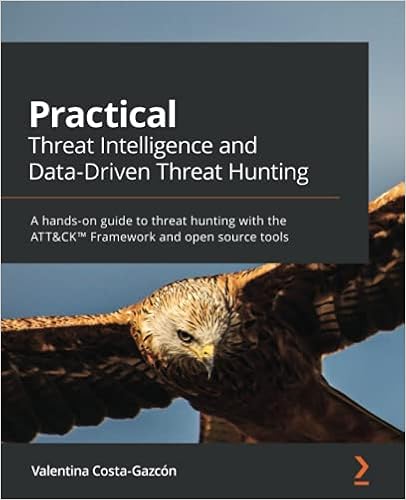
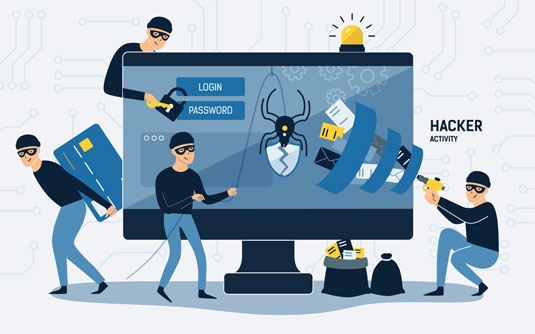
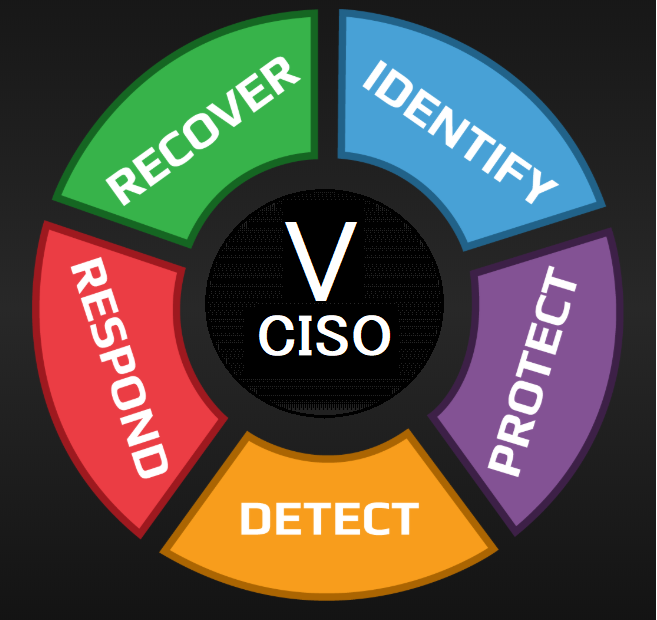
These two sites tell you what sorts of information you’re leaking from your browser.
The Browser Hacker’s Handbook

InfoSec Compliance & AI Governance For over 20 years, DISC InfoSec has been a trusted voice for cybersecurity professionals—sharing practical insights, compliance strategies, and AI governance guidance to help you stay informed, connected, and secure in a rapidly evolving landscape.
Sep 28 2021
Sep 27 2021
One of the major US ports, the Port of Houston, revealed that it was hit by a cyber attack in August that had no impact on its systems.
“The Port of Houston Authority (Port Houston) successfully defended itself against a cybersecurity attack in August. Port Houston followed its Facilities Security Plan in doing so, as guided under the Maritime Transportation Security Act (MTSA), and no operational data or systems were impacted as a result.” reads a statement issued on Thursday by Port officials.
Cybersecurity and Infrastructure Security Agency Director Jen Easterly disclosed the attack at a Senate committee hearing Thursday morning. She believed the attack was conducted by a “nation-state actor” that exploited a zero-day flaw in a Zoho user authentication device.
“We are working very closely with our interagency partners and the intelligence community to better understand this threat actor so that we can ensure that we are not only able to protect systems, but ultimately to be able to hold these actors accountable,” Easterly added.
Sep 27 2021
A slow-speed internet that makes you wait for ages before you can finally access a webpage is surely quite a pain! It tests your patience to the last limits and doesn’t allow you to complete your work on time. It is equally frustrating for game lovers, who always need an active internet connection to play the games. Alongside this, the slow internet hinders with user’s efficiency to a great deal.
If you are sick and tired of your slow-poke internet, here are a few ways through which you can augment the speed of your internet, easily.
This is surely an age-old formula to repair things and works quite well most of the time. If your internet connectivity is getting blocked or the connection gets interrupted quite a lot, you need to try this method for sure. All you need to do is to turn off the switch giving power to the router. Once you turn it on again, it will work well and deliver you with the speed you always wanted
Going back to the old typical cable connectivity might help you with your internet speed this time. Yes, you read that right! You may need to take that dangling wire out of your storage box and put it back to work. The speed it delivers will amaze you. This happens because there is no distraction, distortion, or blockade anymore, which might affect the signal strength of the Wi-Fi.

Sep 27 2021
While 92 percent of people know that using the same password or a variation is a risk, 65 percent still re-use passwords across accounts, drastically increasing the risks to their sensitive information, a LastPass report revealed.

While consumers have a solid understanding of proper password security and the actions necessary to minimize risk, they still pick and choose which information they apply that knowledge to, according to the report.
Strong cybersecurity habits are more important than ever this year, given the sheer volume of time individuals have spent online in the last 18 months and the corresponding spike in cyber-attacks. Yet the survey revealed that despite 71 percent of people working wholly or partly remote and 70 percent spending more time online for personal entertainment during the pandemic, people were still exhibiting poor password behavior.
Password Authentication for Web and Mobile Apps

Sep 26 2021
If you’ve already listened to this week’s Naked Security Podcast you’ll know that we had finally concluded that iOS 12, the version before the version before the latest-and-greatest iOS 15, which arrived this Monday…
…had been dumped forever by Apple.
Apple notoriously won’t tell you anything about the security situation in its products unless and until it has a patch out.
So when iOS 14 got updated in the last couple of patch cycles, but iOS 12 didn’t, we couldn’t tell whether it was still safe and didn’t need the patches, whether it needed the patches but they’d be a bit late, or whether it needed the patches but would never get them.
And with iOS 15 arriving as the new kid on the block this week, we assumed the worst, following the “one-in-one-out” principle.

iOS Application Security

Sep 24 2021
The Biden administration fired another shot in its battle against ransomware Tuesday as the U.S. Treasury Department took steps to disrupt the financial infrastructure behind ransoms, designating for sanctions the SUEX OTC, S.R.O. virtual currency exchange for laundering ransom payments.
By designating SUEX, the Treasury Department’s Office of Foreign Assets Control (OFAC) is blocking the exchange’s property (and interests in property) that are under U.S. jurisdiction. In addition, if a designated person owns 50% or more of an entity, they also can be blocked; those involved in some transactions or activities – whether individuals or financial institutions – could be exposed to sanctions or some other penalty.
While the actions taken against SUEX aren’t attached to a particular ransomware-as-a-service (RaaS) or ransomware variant, the agency said an analysis of the exchange’s activities found transactions made for at least eight ransomware variants.
“This advisory is really a final warning for companies to get their security operations in order,” said Jake Williams, co-founder and CTO at BreachQuest. “The vast majority of ransomware incidents we respond to were trivially preventable.”
The government, he said, “sees companies facilitating ransomware payments as encouraging future ransomware attacks.”
The new advisory may prevent organizations from paying attackers to recover their data, “making it even more critical that they do what they can now to ensure they don’t suffer a ransomware attack in the first place,” said Williams.
Praising the Biden administration for doing “more for cybersecurity awareness and direction than we’ve seen in the past,” Bill O’Neill, vice president of public sector at ThycoticCentrify, added that, “The idea of disincentivizing organizations from paying out a ransom to attackers will likely only end up backfiring and having an adverse effect economically.” While the average company most often folds to ransomware demands “because they lack the proper knowledge, resources and technology to wrest [back] control of the data that was stolen from them to begin with,” O’Neill said, “Penalizing business owners for complying will only hurt them twofold while doing nothing to ultimately stop attacks from happening.”
If attackers can’t get ransom, then they’ll turn to the black market to make money by selling the data they pilfered. “Their victims, however, will be exponentially worse off and possibly open to further attacks,” said O’Neill. “The better approach would be to continue introducing policies and programs to raise awareness and educate organizations about the best ways to stay safe and prevent attacks, as well as providing resources surrounding key technologies to implement to help further minimize risks.”
The sanctions might be a good first step, but John Bambenek, principal threat hunter at Netenrich, said, “What is more important in stopping ransomware is finding those involved and getting them brought to justice; these kinds of actions could also impair intelligence collection on those bad actors.”

Treasury Sanctions SUEX Exchange for Laundering Ransoms
Bitcoin Investigation Manual: Hunting Bitcoin in the AML-Money Laundering World

Sep 24 2021
“We get data from organizations that are testing vendors by trade, bug bounty vendors, and organizations that contribute internal testing data. Once we have the data, we load it together and run a fundamental analysis of what CWEs map to risk categories,” the Open Web Application Security Project (OWASP) explains.
“This installment of the Top 10 is more data-driven than ever but not blindly data-driven. We selected eight of the ten categories from contributed data and two categories from the Top 10 community survey at a high level.”
The reason for leaving space for direct input from application security and development experts on the front lines is the fact that it takes time to find ways to test new vulnerabilities, and they can offer knowledge on essential weaknesses that the contributed data may not show yet.
The list is then published so that it can be reviewed by practitioners, who may offer comments and suggestions for improvements.


Sep 23 2021
There are a range of security policies for dealing with users’ smartphones, from the most restrictive approach – no smartphone access allowed – to an open approach that allows personal phones to connect to the internal corporate network. We suggest that the right solution is somewhere in between.
You may have read about the Pegasus spyware in the news; the NSO Group’s software exploits flaws in iOS (iPhones) to gain access to data on an unsuspecting target’s phone. NSO sells Pegasus to governments, ostensibly to track criminals, but it’s often used by repressive regimes to spy on their opponents, political figures, and activists.
In the past, Pegasus infections were primarily achieved by sending a link to the victim’s phone; when the target clicked on it, they would trigger an exploit that would allow attackers to gain root access to the phone. Once the spyware obtains root access, it can read messages on apps like iMessage, WhatsApp, Telegram, Gmail and others. A sophisticated command and control network can report back to the operator and control the phone as well.
anti-spyware A Complete Guide

How To Protect Yourself From Adware Or Spyware

Sep 22 2021
VMware’s latest security update includes patches for 19 different CVE-numbered vulnerabilities affecting the company’s vCenter Server and Cloud Foundation products.
All of the bugs can be considered serious – they wouldn’t be enumerated in an official security advisory if they weren’t – but VMware has identified one of them, dubbed CVE-2021-22005, as more critical than the rest.
Indeed, VMware’s official FAQ for Security Advisory VMSA-2021-0020 urges that:
The ramifications of this vulnerability are serious and it is a matter of time – likely minutes after the disclosure – before working exploits are publicly available.
In particular, the company explains:
The most urgent [patch] addresses CVE-2021-22005, a file upload vulnerability that can be used to execute commands and software on the vCenter Server Appliance. This vulnerability can be used by anyone who can reach vCenter Server over the network to gain access, regardless of the configuration settings of vCenter Server.
VMware unabashedly says that “this needs your immediate attention,”, and we think it’s a good thing to see a software vendor talking about cybersecurity response in plain English instead of mincing its words.
VMware vSphere and Virtual Infrastructure Security

Sep 21 2021

Nick Kael, CTO at Ericom, discusses how phishing is gaining sophistication and what it means for businesses.
Hackers are upping their game, using an approach I call “Deep Sea Phishing,” which is the use of a combination of the techniques described below to become more aggressive. To keep pace, cybersecurity innovators have been working diligently to develop tools, techniques and resources to improve defenses. But how can organizations fight against evolving threats that have yet to be launched—or even conceived of?
For example, in February, 10,000 Microsoft users were targeted in a phishing campaign which sent emails purporting to be from FedEx, DHL Express and other couriers which contained links to phishing pages hosted on legitimate domains, with the goal of obtaining recipients’ work email credentials. Use of legitimate domains allowed the emails to evade security filters, and people’s pandemic-related reliance on delivery services and habituation to similar messages boosted success rates.
And in May, attackers launched a massive, sophisticated payment-themed phishing campaign. The phishing emails urged users to open an attached “payment advice” – which was, in fact, not an attachment at all but rather an image containing a link to a malicious domain. When opened, Java-based STRRAT malware was downloaded onto the endpoint and via a command-and-control (C2) server connection, ran backdoor functions such as collecting passwords from browsers, running remote commands and PowerShell, logging keystrokes and other criminal activity.
Phishing is no longer the basement-brewed, small-scale nuisance of cyber lore, either. Today, nearly 70 percent of cyberattacks – like like those cited above – are orchestrated by organized crime or nation-state affiliated actors. With many recovery tabs running into the millions, organizations need a solution that can safeguard them from attacks that have not yet been engineered — i.e., zero-day attacks that can cause the most damage.
But before we tackle the issue of defense, let’s first take a look at just what we’re defending against. The types of phishing tactics noted below are listed in ascending order of sophistication.

Sep 20 2021
hiring and retaining the best talent has quickly become a top priority for most organizations today. In the cybersecurity industry, which faces an immense skills shortage, this is especially true. In fact, according to CompTIA and Cyber Seek, a job-tracking database from the U.S. Commerce Department, there are nearly 500,000 open positions in cybersecurity nationwide as of Q2 2021, which makes hiring the right candidate for a technical role in IT security like finding a needle in a haystack. As a result, it’s never been more important to attract and develop employees in cybersecurity – and here are a few best practices for doing so.
Every employee and organization are different. Even in an industry with a talent deficit, employee/employer culture needs to be symbiotic. What an employee and an employer are looking for must be aligned and when it is, the opportunities are endless.

Cybersecurity Career Master Plan

Sep 20 2021
These scams can take many different forms, including:


Sep 19 2021
But creating an identity layer wasn’t imperative for the creators of the internet as they didn’t predict the emergence of online platforms that facilitate people-to-people interaction.
The digital presences most of us have are based on browsing or consumer habits and are siloed within various accounts and social networks. Indeed, they don’t present an accurate picture of our unique identifiers and who we are.
Establishing a verified digital identity is a complex process. Authenticating that a person performing an action online is who they say they are, and then validating that they exist is tedious for two major reasons.
Self-Sovereign Identity

Sep 18 2021
Using OMI on Microsoft Azure? Drop everything and patch this critical vulnerability, snappily named OMIGOD. But wait! You probably don’t know whether you’re using OMI or not.
Y’see, Open Management Infrastructure (OMI) is often silently installed on Azure—as a prerequisite. And, to make matters worse, Microsoft hasn’t rolled out the patch for you—despite publishing the code a month ago. So much for the promise of ‘The Cloud.’
What a mess. In today’s SB Blogwatch, we put the “mess” into message.
Your humble blogwatcher curated these bloggy bits for your entertainment. Not to mention: Difficult Hollywood.
What’s the craic? Simon Sharwood says—“Microsoft makes fixing deadly OMIGOD flaws on Azure your job”:
Your next step”
Microsoft Azure users running Linux VMs in the … Azure cloud need to take action to protect themselves against the four “OMIGOD” bugs in the … OMI framework, because Microsoft hasn’t. … The worst is rated critical at 9.8/10 … on the Common Vulnerability Scoring System.
…
Complicating matters is that running OMI is not something Azure users actively choose. … Understandably, Microsoft’s actions – or lack thereof – have not gone down well. [And it] has kept deploying known bad versions of OMI. … The Windows giant publicly fixed the holes in its OMI source in mid-August … and only now is advising customers.
…
Your next step is therefore obvious: patch ASAP.
‘OMIGOD’ Azure Critical Bugfix? Do It Yourself—Because Microsoft Won’t

Sep 17 2021

Download Modern Pentesting for security and development team
Find out how Cobalt service protect your Apps: Cobalt’s Pentest as a Service (PtaaS) platform coupled with an exclusive community of testers delivers the real-time insights you need to remediate risk quickly and innovate securely.
Please email with the subject “Beginner’s Guide to Compliance-Driven Pentesting” if interested to read this guide: Info@deurainfosec.com
Sep 17 2021
IBM Security Services today published a report detailing a raft of issues pertaining to cloud security, including the fact that there are nearly 30,000 cloud accounts potentially for sale on dark web marketplaces.
The report is based on dark web analysis, IBM Security X-Force Red penetration testing data, IBM Security Services metrics, X-Force Incident Response analysis and X-Force Threat Intelligence research.
The report found advertisements for tens of thousands of cloud accounts and resources for sale. Prices generally range from a few dollars to over $15,000 per account for access credentials depending on the amount of cloud resources that might be made accessible. On average, the price tag for cloud access rose an extra $1 for every $15 to $30 in credit the account held. Therefore, an account with $5,000 in available credit would be worth about $250, the report surmised.
In 71% of cases, threat actors offered access to cloud resources via the remote desktop protocol (RDP). X-Force Red found that 100% of their penetration tests into cloud environments in 2021 uncovered issues with either passwords or policy violations. Two-thirds of cloud breaches would likely have been prevented by more robust hardening of systems, such as properly implementing security policies and patching systems, the report noted.
More troubling still, IBM research indicates that vulnerabilities in cloud applications are growing, totaling more than 2,500 vulnerabilities for a 150% increase in the last five years. Almost half of the more than 2,500 disclosed vulnerabilities in cloud-deployed applications recorded to date were disclosed in the last 18 months.
The report also notes two-thirds of the incidents analyzed involved improperly configured application programming interfaces (APIs), mainly involving misconfigured API keys that allowed improper access. API credential exposure through public code repositories frequently resulted in access into cloud environments as well, the report noted.
API Security in Action

Sep 16 2021
Microsoft has been warning of a “widespread” phishing campaign in which fraudsters use open redirect links to lure users to malicious websites to harvest Office 365 and other credentials.
ITG Phishing Staff Awareness Training Program educates your staff on how to respond to these types phishing attacks 📧

Sep 16 2021
This, paired with the “anything you can do, I can do better” mantra adopted by today’s nation-state threat actors, has left mission-critical information vulnerable to attack as it undergoes the great cloud migration.
These agile threat actors – without any red tape to stand in their way – have already adopted a cloud-centric mindset, oftentimes at the expense of our national security. Meanwhile, emerging technologies like artificial intelligence and machine learning that lend themselves to assisting defensive efforts are rendered useless unless the defense community focuses more time, energy and resources on becoming cloud-centric.
Ultimately, the issue of national security hangs in the balance, and the best way to ensure we stay ahead of the curve is by using the cloud to “digitally overmatch” our opponents and unlock the full potential of digital transformation.
Originally coined by the Army, the concept of “digital overmatch” stems from the idea that the respective branches of the military can easily overwhelm their opponents on the ground due to their superior resources. Now, in the era of cyber-enabled conflict, this concept can also be applied to the non-Defense space. Given that data is such a strategic asset, defenders must ensure they can outpace and outmaneuver adversaries by using data-driven technologies such as the cloud, and deliver on-demand resources across all domains whenever and wherever they’re needed.
Without commercial and government innovation in cloud-native technology, federal agencies and the military are unable to maximize the full potential of their modernization strategy.
Cloud Computing Security: Foundations and Challenges