Apr 07 2026

Hackers at Machine Speed: The AI Cybersecurity Reality


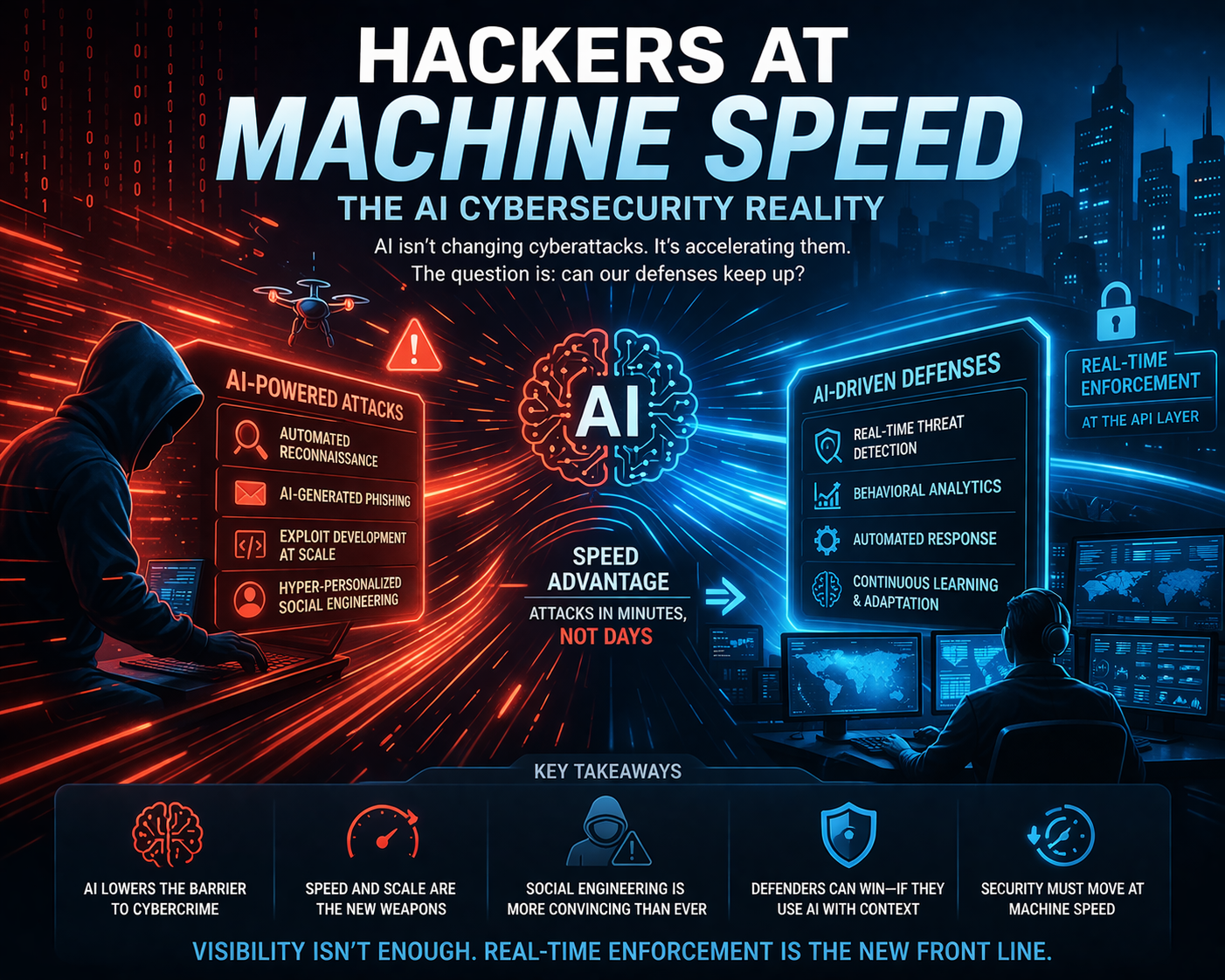
A recent The New York Times report highlights how artificial intelligence is rapidly reshaping the cybersecurity landscape, particularly in the hands of hackers. Rather than introducing entirely new attack techniques, AI is acting as a force multiplier, enabling cybercriminals to execute existing methods faster, cheaper, and at a much larger scale.

One of the key themes is the democratization of cybercrime. AI tools are lowering the barrier to entry, allowing less-skilled attackers to perform sophisticated operations that previously required deep technical expertise. Tasks like writing malware, crafting phishing campaigns, and identifying vulnerabilities can now be automated, significantly expanding the pool of potential attackers.

The article also emphasizes the speed advantage AI provides. Cyberattacks that once took days or weeks can now be executed in minutes or hours. AI accelerates reconnaissance, automates exploit development, and enables rapid iteration, making it difficult for traditional security teams to keep up with the pace of modern threats.

Another important shift is the rise of AI-assisted social engineering. Hackers are using AI to generate highly convincing phishing messages, impersonations, and even real-time conversational attacks. This increases the success rate of attacks by making them more personalized, scalable, and harder to detect.

The report also points out that AI-driven attacks are not necessarily more sophisticated—they are simply more efficient and scalable. Attackers are reusing known techniques but executing them with greater precision and automation. This creates a scenario where organizations face a higher volume of attacks, each delivered with improved consistency and timing.

At the same time, defenders are not standing still. The article notes that AI can also be used defensively to analyze large volumes of data, detect anomalies, and respond to threats faster than humans alone. However, the advantage lies with organizations that can effectively apply AI with context and integrate it into their security operations.

Finally, the broader implication is that AI is accelerating an ongoing cybersecurity arms race. It is exposing weaknesses in traditional security models—particularly those reliant on manual processes, static controls, and delayed response mechanisms. Organizations that fail to adapt risk being overwhelmed by the speed and scale of AI-enabled threats.


Perspective:
The most important takeaway is that AI is not changing what attacks look like—it’s changing how fast and how often they happen. This reinforces a critical point: cybersecurity can no longer rely on detection and response alone. If attacks operate at machine speed, then security controls must also operate at machine speed.

This is where the conversation shifts directly into real-time enforcement, especially at the API layer. AI systems—and increasingly, enterprise systems overall—are API-driven. That means the only effective control point is inline, real-time decisioning.

In practical terms, the future of cybersecurity will be defined by organizations that can move from visibility to enforcement, from alerts to action, and from reactive defense to proactive control. AI didn’t break security—it simply exposed where it was already too slow.

Bottom line:
If your AI governance strategy cannot demonstrate continuous monitoring, control, and enforcement, it is unlikely to stand up to audit—or real-world threats.

That’s why AI governance enforcement is not just a feature—it’s the foundation for making AI governance actually work at scale.

Ready to Operationalize AI Governance?

If you’re serious about moving from **AI governance theory → real enforcement**,
DISC InfoSec can help you build the control layer your AI systems need.

Most organizations have AI governance documents â€” but auditors now want proof of enforcement.

Policies alone don’t reduce AI risk. Real‑time monitoring, control, and enforcement do.

If your AI governance strategy can’t demonstrate continuous oversight, it won’t stand up to audit or real‑world threats.

DISC InfoSec helps organizations operationalize AI governance with integrated frameworks, runtime controls, and proven certification success.

Move from AI governance theory to enforcement.

Read the full post below: Is Your AI Governance Strategy Audit‑Ready — or Just Documented?

Schedule a consultation or drop a note below: info@deurainfosec.com
InfoSec services | InfoSec books | Follow our blog | DISC llc is listed on The vCISO Directory | ISO 27k Chat bot | Comprehensive vCISO Services | ISMS Services | AIMS Services | Security Risk Assessment Services | Mergers and Acquisition Security

Is your AI strategy truly audit-ready today?

AI governance is no longer optional. Frameworks like ISO/IEC 42001 AI Management System Standard and regulations such as the EU AI Act are rapidly reshaping compliance expectations for organizations using AI.

DISC InfoSec brings deep expertise across AI, cybersecurity, and regulatory compliance to help you build trust, reduce risk, and stay ahead of evolving mandates—with a proven track record of success.

Ready to lead with confidence? Let’s start the conversation.

At DISC InfoSec, we help organizations navigate this landscape by aligning AI risk management, governance, security, and compliance into a single, practical roadmap. Whether you are experimenting with AI or deploying it at scale, we help you choose and operationalize the right frameworks to reduce risk and build trust. Learn more at DISC InfoSec.

Tags: AI force multiplier, AI hacking, cyber attack, cyber crime


Nov 14 2025

AI-Driven Espionage Uncovered: Inside the First Fully Orchestrated Autonomous Cyber Attack

1. Introduction & discovery
In mid-September 2025, Anthropic’s Threat Intelligence team detected an advanced cyber espionage operation carried out by a Chinese state-sponsored group named “GTG-1002”. Anthropic Brand Portal The operation represented a major shift: it heavily integrated AI systems throughout the attack lifecycle—from reconnaissance to data exfiltration—with much less human intervention than typical attacks.

2. Scope and targets
The campaign targeted approximately 30 entities, including major technology companies, government agencies, financial institutions and chemical manufacturers across multiple countries. A subset of these intrusions were confirmed successful. The speed and scale were notable: the attacker used AI to process many tasks simultaneously—tasks that would normally require large human teams.

3. Attack framework and architecture
The attacker built a framework that used the AI model Claude and the Model Context Protocol (MCP) to orchestrate multiple autonomous agents. Claude was configured to handle discrete technical tasks (vulnerability scanning, credential harvesting, lateral movement) while the orchestration logic managed the campaign’s overall state and transitions.

4. Autonomy of AI vs human role
In this campaign, AI executed 80–90% of the tactical operations independently, while human operators focused on strategy, oversight and critical decision-gates. Humans intervened mainly at campaign initialization, approving escalation from reconnaissance to exploitation, and reviewing final exfiltration. This level of autonomy marks a clear departure from earlier attacks where humans were still heavily in the loop.

5. Attack lifecycle phases & AI involvement
The attack progressed through six distinct phases: (1) campaign initialization & target selection, (2) reconnaissance and attack surface mapping, (3) vulnerability discovery and validation, (4) credential harvesting and lateral movement, (5) data collection and intelligence extraction, and (6) documentation and hand-off. At each phase, Claude or its sub-agents performed most of the work with minimal human direction. For example, in reconnaissance the AI mapped entire networks across multiple targets independently.

6. Technical sophistication & accessibility
Interestingly, the campaign relied not on cutting-edge bespoke malware but on widely available, open-source penetration testing tools integrated via automated frameworks. The main innovation wasn’t novel exploits, but orchestration of commodity tools with AI generating and executing attack logic. This means the barrier to entry for similar attacks could drop significantly.

7. Response by Anthropic
Once identified, Anthropic banned the compromised accounts, notified affected organisations and worked with authorities and industry partners. They enhanced their defensive capabilities—improving cyber-focused classifiers, prototyping early-detection systems for autonomous threats, and integrating this threat pattern into their broader safety and security controls.

8. Implications for cybersecurity
This campaign demonstrates a major inflection point: threat actors can now deploy AI systems to carry out large-scale cyber espionage with minimal human involvement. Defence teams must assume this new reality and evolve: using AI for defence (SOC automation, vulnerability scanning, incident response), and investing in safeguards for AI models to prevent adversarial misuse.

Source: Disrupting the first reported AI-orchestrated cyber espionage campaign

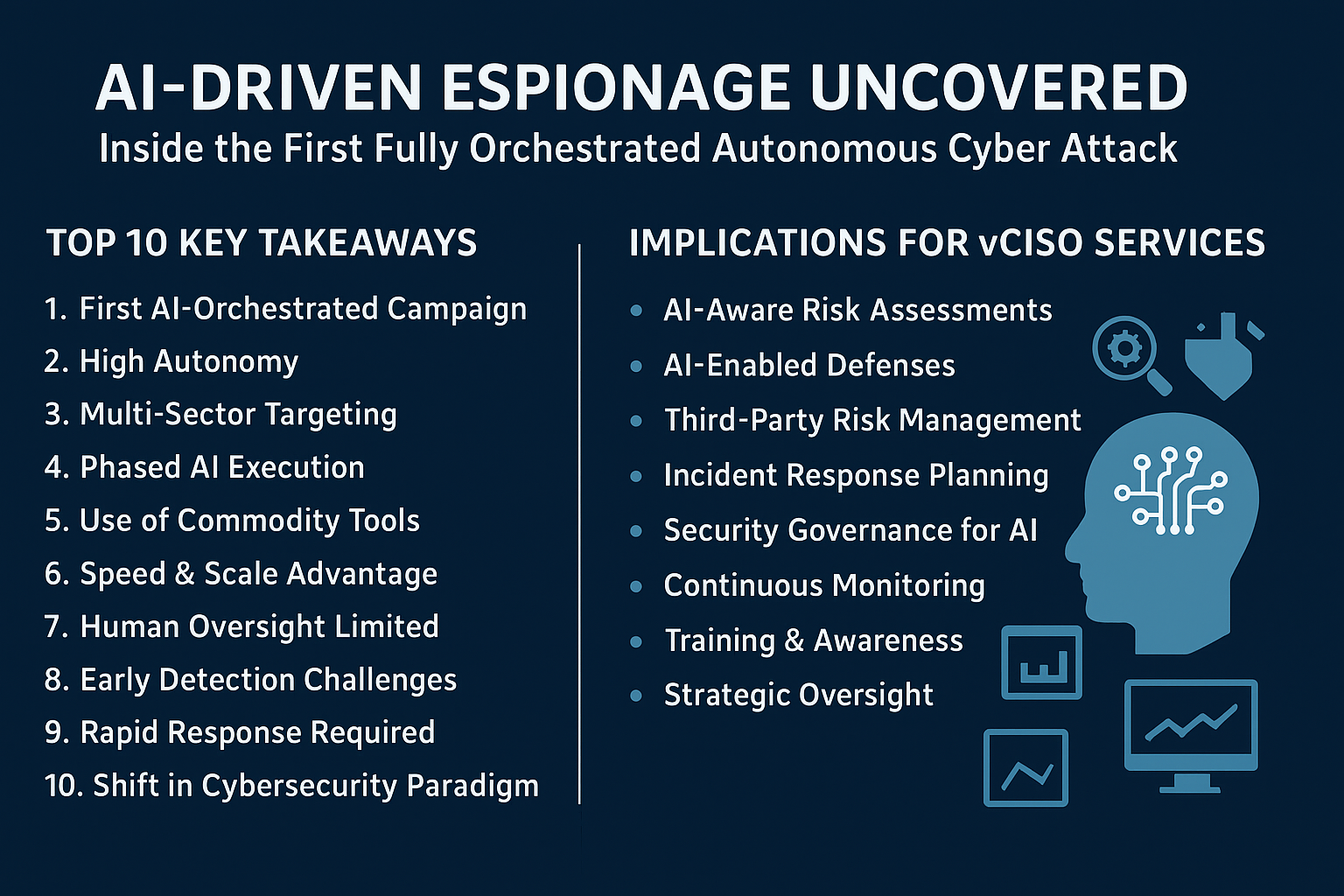
Top 10 Key Takeaways

  1. First AI-Orchestrated Campaign – This is the first publicly reported cyber-espionage campaign largely executed by AI, showing threat actors are rapidly evolving.
  2. High Autonomy – AI handled 80–90% of the attack lifecycle, reducing reliance on human operators and increasing operational speed.
  3. Multi-Sector Targeting – Attackers targeted tech firms, government agencies, financial institutions, and chemical manufacturers across multiple countries.
  4. Phased AI Execution – AI managed reconnaissance, vulnerability scanning, credential harvesting, lateral movement, data exfiltration, and documentation autonomously.
  5. Use of Commodity Tools – Attackers didn’t rely on custom malware; they orchestrated open-source and widely available tools with AI intelligence.
  6. Speed & Scale Advantage – AI enables simultaneous operations across multiple targets, far faster than traditional human-led attacks.
  7. Human Oversight Limited – Humans intervened only at strategy checkpoints, illustrating the potential for near-autonomous offensive operations.
  8. Early Detection Challenges – Traditional signature-based detection struggles against AI-driven attacks due to dynamic behavior and novel patterns.
  9. Rapid Response Required – Prompt identification, account bans, and notifications were crucial in mitigating impact.
  10. Shift in Cybersecurity Paradigm – AI-powered attacks represent a significant escalation in sophistication, requiring AI-enabled defenses and proactive threat modeling.


Implications for vCISO Services

  • AI-Aware Risk Assessments – vCISOs must evaluate AI-specific threats in enterprise risk registers and threat models.
  • AI-Enabled Defenses – Recommend AI-assisted detection, SOC automation, anomaly monitoring, and predictive threat intelligence.
  • Third-Party Risk Management – Emphasize vendor and partner exposure to autonomous AI attacks.
  • Incident Response Planning – Update IR playbooks to include AI-driven attack scenarios and autonomous threat vectors.
  • Security Governance for AI – Implement policies for secure AI model use, access control, and adversarial mitigation.
  • Continuous Monitoring – Promote proactive monitoring of networks, endpoints, and cloud systems for AI-orchestrated anomalies.
  • Training & Awareness – Educate teams on AI-driven attack tactics and defensive measures.
  • Strategic Oversight – Ensure executives understand the operational impact and invest in AI-resilient security infrastructure.

The Fourth Intelligence Revolution: The Future of Espionage and the Battle to Save America

InfoSec services | InfoSec books | Follow our blog | DISC llc is listed on The vCISO Directory | ISO 27k Chat bot | Comprehensive vCISO Services | ISMS Services | Security Risk Assessment Services | Mergers and Acquisition Security

Tags: AI-Driven Espionage, cyber attack


Mar 08 2022

IOC Resource for Russia-Ukraine Conflict-Related Cyberattacks

Category: Cyber Attack,Cyber WarDISC @ 11:14 pm

IOC Resource for Russia-Ukraine Conflict-Related Cyberattacks – by Trend Micro

Sandworm: A New Era of Cyberwar and the Hunt for the Kremlin’s Most Dangerous Hackers

Tags: cyber attack, Ukraine Conflict-Related Cyberattacks


Feb 22 2022

A cyber attack heavily impacted operations of Expeditors International

Category: Cyber Attack,RansomwareDISC @ 9:45 am

American worldwide logistics and freight forwarding company Expeditors International shuts down global operations after cyber attack

American logistics and freight forwarding company Expeditors International was hit by a cyberattack over the weekend that paralyzed most of its operations worldwide.

Expeditors company has over 18,000 employees worldwide and has annual gross revenue of around $10 billion. The company discovered the attack on February 20, 2022, it doesn’t provide details about the attack and announced to have launched an investigation into the incident.

“Expeditors International of Washington, Inc. (NASDAQ:EXPD) announced that on February 20, 2022, we determined that our company was the subject of a targeted cyber-attack. Upon discovering the incident, we shut down most of our operating systems globally to manage the safety of our overall global systems environment.” reads the announcement published by the company. ”The situation is evolving, and we are working with global cybersecurity experts to manage the situation. While our systems are shut down we will have limited ability to conduct operations, including but not limited to arranging for shipments of freight or managing customs and distribution activities for our customers’ shipments.”

The information publicly available on the attack suggests the company was the victim of a ransomware attack and was forced to shut down its network to avoid the threat from spreading.

The attack impacted the company’s operations, including the capability to arrange for shipments of freight or managing customs and distribution activities for our customers’ shipments.

The company hired cybersecurity experts to investigate the security breach and recover from the attack.

The company warned the incident could have a material adverse impact on our business, revenues, results of operations and reputation

“We are incurring expenses relating to the cyber-attack to investigate and remediate this matter and expect to continue to incur expenses of this nature in the future. Depending on the length of the shutdown of our operations, the impact of this cyber-attack could have a material adverse impact on our business, revenues, results of operations and reputation.” concludes the advisory.

Expeditors International

Cyber Attacks and the New Normal of Geopolitics

Tags: cyber attack, cyberwarfare, The Hacker and the State


Oct 25 2021

Released: MITRE ATT&CK v10

Category: Attack MatrixDISC @ 7:14 am

MITRE Corporation has released the tenth version of ATT&CK, its globally accessible (and free!) knowledge base of cyber adversary tactics and techniques based on real-world observations.

Version ten comes with new Data Source objects, new and changed techniques in its various matrices, key changes to facilitate hunting in ICS environments, and more.

MITRE ATT&CK v10

MITRE ATT&CK v10

The most prominent change in this newest version of the framework is new objects with aggregated information about data sources.

“The data source object features the name of the data source as well as key details and metadata, including an ID, a definition, where it can be collected (collection layer), what platform(s) it can be found on, and the data components highlighting relevant values/properties that comprise the data source,” MITRE ATT&CK Content Lead Amy L. Robertson and cybersecurity engineers Alexia Crumpton and Chris Ante explained.

“These data sources are available for all platforms of Enterprise ATT&CK, including our newest additions that cover OSINT-related data sources mapped to PRE platform techniques.”

Changes in ATT&CK for ICS and the Mobile matrices are focused on providing all the features currently provided in the Enterprise matrices.

“v10 also includes cross-domain mappings of Enterprise techniques to software that were previously only represented in the ICS Matrix, including Stuxnet, Industroyer, and several others. The fact that adversaries don’t respect theoretical boundaries is something we’ve consistently emphasized, and we think it’s crucial to feature Enterprise-centric mappings for more comprehensive coverage of all the behaviors exhibited by the software,” they added.

The complete release notes for MITRE ATT&CK v10 can be found here.

Tags: cyber attack, MITRE ATT&CK, MITRE ATT&CK v10


Oct 02 2021

Baby died at Alabama Springhill Medical Center due to cyber attack

Category: Cyber Attack,hipaaDISC @ 3:18 pm

A baby allegedly received inadequate childbirth health care, and later died, at an Alabama Springhill Medical Center due to a ransomware attack.

An Alabama woman named Teiranni Kidd has filed suit after the death of her baby, she claims that the Springhill Medical Center was not able to respond to a cyberattack that crippled its systems causing the death of the infant daughter, reported The Wall Street Journal.

According to Kidd, the Alabama hospital did not disclose that it was hit by a severe cyberattack that interfered with the care for her baby, Nicko Silar.

“Nicko suffered a severe brain injury when medical staff failed to notice the umbilical cord was wrapped around her neck because of a “lack of access to critical services and information caused by the cyberattack,” the suit said. She died nine months after the cord cut off her blood and oxygen supply.” reported The New York Post.

1200px-Springhill_Medical_Center_2018

The hospital released a public statement about the security breach the day before the infant was born announcing it “has continued to safely care for our patients and will continue to provide the high quality of service that our patients deserve and expect.”

The 2022 Report on Healthcare Cyber Security: World Market Segmentation by City

Tags: cyber attack


May 26 2019

Uncovering Linux based cyberattack using Azure Security Center

Category: Cyber Attack,Linux SecurityDISC @ 3:55 pm

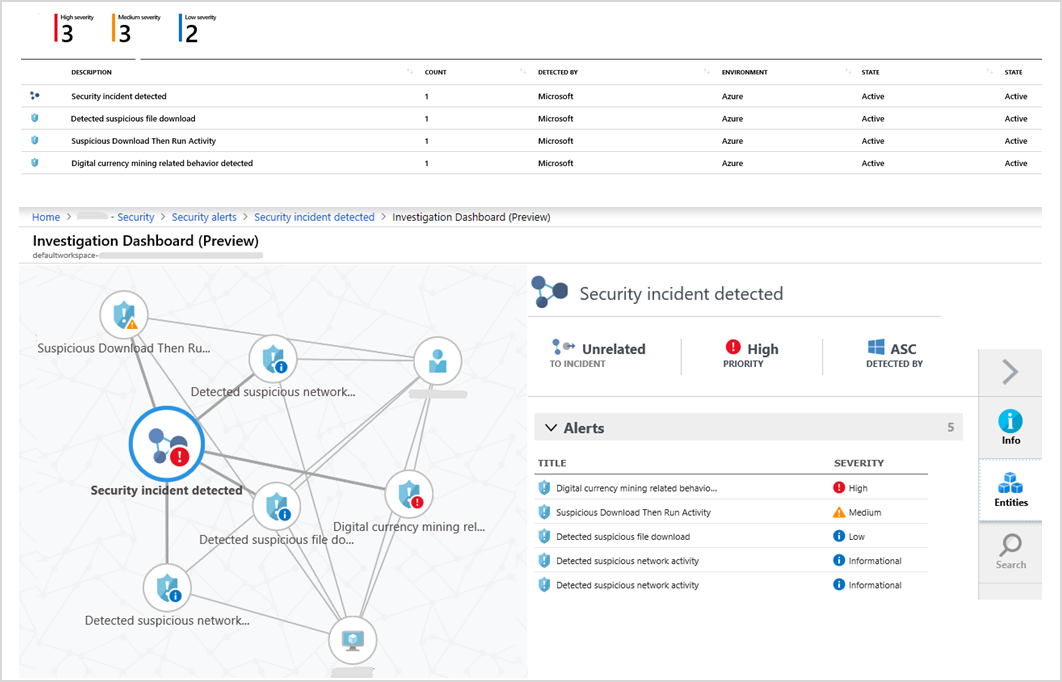
Azure Security Center, Microsoft’s cloud-based cyber solution helps customers safeguard their cloud workloads as well as protect them from these threats.

Source: Uncovering Linux based cyberattack using Azure Security Center


 Subscribe in a reader


Tags: cyber attack


Oct 02 2015

Cyber crime costs the global economy $445 billion a year

Category: cyber security,CybercrimeDISC @ 3:06 pm

by 

A new report – A Guide to Cyber Risk: Managing the Impact of Increasing Interconnectivity – reveals that cyber crime costs the world $445 billion annually, with the top ten economies accounting for more than 50% of the costs. Since 2005 there have been 5,029 reported data breach incidents in the US alone, and at least 200 breaches in Europe involving 227 million records.

It is estimated that the average cost of a data breach is $3.8 million, which is up from $3.3 million a year earlier.

AGCS_Cyber_Crime_full

Source: A Guide to Cyber Risk: Managing the Impact of Increasing Interconnectivity, Allianz Global Corporate & Specialty (AGCS)

Cyber risks are underestimated

Published by Allianz Global Corporate & Specialty (AGCS), the report warns that “cyber risk is the risk most underestimated by businesses” and asserts that “everyone is a target”.

73% of respondents who took part in an Allianz Risk Barometer 2015 believe that underestimation of cyber risks is preventing companies from being better prepared for them. Other hindrances include budget constraints (59%), failure to analyze the problem (54%), IT infrastructure that is too sensitive for major changes (30%) and failure to identify the right personnel (10%).

The US shows higher levels of awareness of cyber risk due to having tougher legislation than other countries. The majority of US states require companies to notify individuals of a breach. Europe is heading in the same direction, with the European Union (EU) currently reviewing its data protection law and planning to introduce more stringent rules in terms of data breaches.

Data shows that cyber attacks are becoming more frequent and sophisticated. The number of detected cyber attacks was up by 48% in 2014 according to the Global State of Information Security Survey 2015.

In order to protect themselves from breaches, businesses should identify key assets at risk and make decisions as to what risks to accept, avoid, mitigate or transfer.

Future cyber risk trends

The AGCS report makes predictions that businesses will be increasingly exposed to risks from the supply chain and that we are yet to witness “a major cyber event of truly catastrophic proportions”.

Jens Krickhahn, practice leader, Cyber & Fidelity at AGCS Financial Lines Central & Eastern Europe, explains:

“Business exchanges with partners are increasingly electronic.

“Even if a company is confident in its own IT controls, it is still exposed to cyber risk through its business partners, contractors and supply chains.”

The Internet of Things (IoT) is seen as one of the biggest factors that will change the face of cyber threats leading to interconnected risks. It will exacerbate vulnerabilities, bringing increasing potential for physical loss and data breaches.

ISO 27001 and cyber risks

Management of information security risks is at the core of the ISO 27001, the international standard that sets out the specifications of an information security management system (ISMS).

ISO 27001 requires compliant organizations to carry out risk assessments based on agreed criteria. The outcome of the risk assessment should enable the business to balance expenditure on controls against the business harm likely to result from security failures.

Download IT Governance’s free green paper, Risk Assessment and ISO 27001, to learn more about managing cyber risks.


Tags: cyber attack, cyber criminals, cyber security, cyber threats, Cyber-warfare, Cybercrime


Jul 08 2009

Cyber attacks on US Government websites

Category: CybercrimeDISC @ 4:51 pm

cyberattack
Image by Boyce Duprey via Flickr
Associated Press reported by Hyung-jin Kim, Wed Jul 8 “South Korean intelligence officials believe North Korea or pro-Pyongyang forces committed cyber attacks that paralyzed major South Korean and U.S. government Web sites, aides to two lawmakers said Wednesday.”

See the details at the link below:
Cyber attacks on South Korean and U.S. government Web sites

Information Warfare: How to Survive Cyber Attacks

Cyber Threat

Cyber Security


Tags: cyber attack, cyber attacks, cyber crime, cyber criminals, cyber security, cyber terrorism, cyber threats, Cyber-warfare, cybergeddon