InfoSec and Compliance – With 20 years of blogging experience, DISC InfoSec blog is dedicated to providing trusted insights and practical solutions for professionals and organizations navigating the evolving cybersecurity landscape. From cutting-edge threats to compliance strategies, this blog is your reliable resource for staying informed and secure. Dive into the content, connect with the community, and elevate your InfoSec expertise!
In a recent series of events, the U.S. government has faced significant security breaches, not from external cyberattacks, but through actions initiated by the Department of Government Efficiency (DOGE), a newly established entity led by a billionaire with an ambiguous governmental role. These breaches have profound implications for national security.
Initially, individuals associated with DOGE accessed the U.S. Treasury’s computer systems, granting them the capability to collect data on and potentially control approximately $5.45 trillion in annual federal payments. Subsequently, unauthorized DOGE personnel obtained classified information from the U.S. Agency for International Development, possibly transferring it to their own systems. Following this, the Office of Personnel Management (OPM), which maintains detailed personal data on millions of federal employees, including those with security clearances, was compromised. Additionally, Medicaid and Medicare records were breached.
In another alarming incident, partially redacted names of CIA employees were transmitted via an unclassified email account. DOGE personnel have also been reported to input Education Department data into artificial intelligence software and have commenced operations within the Department of Energy.
On February 8, a federal judge intervened, prohibiting the DOGE team from further accessing Treasury Department systems. However, given that DOGE operatives may have already copied data and altered software, the effectiveness of this injunction remains uncertain. Without strict adherence to established security protocols by federal employees, further breaches of critical government systems are anticipated.
The systems compromised by DOGE are integral to the nation’s infrastructure. For instance, the Treasury Department’s systems contain detailed blueprints of federal financial operations, while the OPM network holds comprehensive information on government personnel and contractors.
What sets this situation apart is the method of breach. Unlike traditional foreign adversaries who employ stealth and spend years infiltrating government systems, DOGE operatives, with limited experience and oversight, are openly accessing and modifying some of the United States’ most sensitive networks. This not only introduces potential new security vulnerabilities but also involves the dismantling of essential security measures, such as incident response protocols and auditing mechanisms, by replacing seasoned officials with inexperienced personnel.
A fundamental security principle, known as “separation of duties,” has been undermined in these instances. This principle ensures that no single individual has unchecked power over critical systems, requiring multiple authorized personnel to collaborate on significant actions. The erosion of this safeguard poses a substantial risk to national security.
Artificial intelligence (AI) and machine learning (ML) systems are increasingly integral to business operations, but they also introduce significant security risks. Threats such as malware attacks or the deliberate insertion of misleading data into inadequately designed AI/ML systems can compromise data integrity and lead to the spread of false information. These incidents may result in severe consequences, including legal actions, financial losses, increased operational and insurance costs, diminished competitiveness, and reputational damage.
To mitigate AI-related security threats, organizations can implement specific controls outlined in ISO 27001. Key controls include:
A.5.9 Inventory of information and other associated assets: Maintaining a comprehensive inventory of information assets ensures that all AI/ML components are identified and managed appropriately.
A.5.12 Information classification: Classifying information processed by AI systems helps in applying suitable protection measures based on sensitivity and criticality.
A.5.14 Information transfer: Securing the transfer of data to and from AI systems prevents unauthorized access and data breaches.
A.5.15 Access control: Implementing strict access controls ensures that only authorized personnel can interact with AI systems and the data they process.
A.5.19 Information security in supplier relationships: Managing security within supplier relationships ensures that third-party providers handling AI components adhere to the organization’s security requirements.
A.5.31 Legal, statutory, regulatory, and contractual requirements: Complying with all relevant legal and regulatory obligations related to AI systems prevents legal complications.
A.8.25 Secure development life cycle: Integrating security practices throughout the AI system development life cycle ensures that security is considered at every stage, from design to deployment.
By implementing these controls, organizations can effectively manage the confidentiality, integrity, and availability of information processed by AI systems. This proactive approach not only safeguards against potential threats but also enhances overall information security posture.
In addition to these controls, organizations should conduct regular risk assessments to identify and address emerging AI-related threats. Continuous monitoring and updating of security measures are essential to adapt to the evolving landscape of AI technologies and associated risks.
Furthermore, fostering a culture of security awareness among employees, including training on AI-specific threats and best practices, can significantly reduce the likelihood of security incidents. Engaging with industry standards and staying informed about regulatory developments related to AI will also help organizations maintain compliance and strengthen their security frameworks.
Some AI frameworks and platforms support remote code execution (RCE) as a feature, often for legitimate use cases like distributed computing, model training, and inference. However, this can also pose security risks if not properly secured. Here are some notable examples:
1. AI Frameworks with Remote Execution Features
A. Jupyter Notebooks
Jupyter supports remote kernel execution, allowing users to run code on a remote server while interacting via a local browser.
If improperly configured (e.g., running on an open network without authentication), it can expose an unauthorized RCE risk.
B. Ray (for Distributed AI Computing)
Ray allows distributed execution of Python tasks across multiple nodes.
It enables remote function execution (@ray.remote) for parallel processing in machine learning workloads.
Misconfigured Ray clusters can be exploited for unauthorized code execution.
C. TensorFlow Serving & TorchServe
These frameworks execute model inference remotely, often exposing APIs for inference requests.
If the API allows arbitrary input (e.g., executing scripts inside the model environment), it can lead to RCE vulnerabilities.
D. Kubernetes & AI Workloads
AI workloads are often deployed in Kubernetes clusters, which allow remote execution via kubectl exec.
If Kubernetes RBAC is misconfigured, attackers could execute arbitrary code on AI nodes.
2. Platforms Offering Remote Code Execution
A. Google Colab
Allows users to execute Python code on remote GPUs/TPUs.
Though secure, running untrusted notebooks could execute malicious code remotely.
B. OpenAI API, Hugging Face Inference API
These platforms run AI models remotely and expose APIs for users.
They don’t expose direct RCE, but poorly designed API endpoints could introduce security risks.
Untrusted model execution (e.g., Colab, TorchServe)
Run models in isolated environments
Securing AI Workloads Against Remote Code Execution (RCE) Risks
AI workloads often involve remote execution of code, whether for model training, inference, or distributed computing. If not properly secured, these environments can be exploited for unauthorized code execution, leading to data breaches, malware injection, or full system compromise.
1. Common AI RCE Attack Vectors & Mitigation Strategies
Attack Vector
Risk
Mitigation
Jupyter Notebook Exposed Over the Internet
Unauthorized access to the environment, remote code execution
✅ Use strong authentication (token-based or OAuth) ✅ Restrict access to trusted IPs ✅ Disable root execution
Ray or Dask Cluster Misconfiguration
Attackers can execute arbitrary functions across nodes
✅ Use firewall rules to limit access ✅ Enforce TLS encryption between nodes ✅ Require authentication for remote task execution
Compromised Model File (ML Supply Chain Attack)
Malicious models can execute arbitrary code on inference
✅ Scan models for embedded scripts ✅ Run inference in an isolated environment (Docker/sandbox)
Unsecured AI APIs (TensorFlow Serving, TorchServe)
API could allow command injection through crafted inputs
✅ Implement strict input validation ✅ Run API endpoints with least privilege
Kubernetes Cluster with Weak RBAC
Attackers gain access to AI pods and execute commands
✅ Restrict kubectl exec privileges ✅ Use Kubernetes Network Policies to limit communication ✅ Rotate service account credentials
Serverless AI Functions (AWS Lambda, GCP Cloud Functions)
Code execution environment can be exploited via unvalidated input
✅ Use IAM policies to restrict execution rights ✅ Validate API payloads before execution
2. Best Practices for Securing AI Workloads
A. Secure Remote Execution in Jupyter Notebooks
Jupyter Notebooks are often used for AI development and testing but can be exploited if left exposed.
✅ Restrict access to localhost (--ip=127.0.0.1) ✅ Run Jupyter inside a container (Docker, Kubernetes) ✅ Use VPN or SSH tunneling instead of exposing ports
B. Lock Down Kubernetes & AI Workloads
Many AI frameworks (TensorFlow, PyTorch, Ray) run in Kubernetes, where misconfigurations can lead to container escapes and lateral movement.
Jeffrey Caruso’s “Inside Cyber Warfare, 3rd Edition” delves into the complex dynamics of digital warfare, examining the roles of nation-states, corporations, and hackers. The book provides a comprehensive analysis of how cybersecurity intersects with geopolitics and emerging technologies, offering readers a nuanced understanding of the current cyber threat landscape.
A notable aspect of this edition is its in-depth exploration of artificial intelligence (AI) in cyber warfare. Caruso discusses how AI, including large language models, is being utilized in cyber attacks, highlighting the evolving nature of these threats. The book also addresses corporate accountability, scrutinizing how cybersecurity vendors and private companies handle security vulnerabilities.
Caruso provides a global perspective, analyzing cyber conflicts, misinformation campaigns, and the legal challenges associated with cyber warfare across various regions. He offers actionable insights by combining technical expertise with policy recommendations and practical guidance, making the content valuable for decision-makers. The book examines significant incidents, such as the 2015 Ukraine power grid attack, and discusses the increasing role of AI in threats like deepfakes and automated hacking.
“Inside Cyber Warfare, 3rd Edition” is tailored for a diverse audience. Cybersecurity professionals will appreciate the detailed analysis of warfare strategies and real-world attacks, while policymakers and legal experts can benefit from discussions on regulations and corporate accountability. General readers interested in cybersecurity and AI-driven threats will find the book both informative and thought-provoking.
Cyberwarfare in the age of AI introduces new and more sophisticated risks, significantly expanding the threat landscape. Here are some key risks:
AI-Powered Cyber Attacks – Attackers are leveraging AI to automate and enhance cyberattacks, making them more efficient and difficult to detect. AI can rapidly identify vulnerabilities, launch large-scale phishing campaigns, and adapt malware in real-time to evade traditional security defenses.
Deepfakes and Misinformation – AI-generated deepfakes and synthetic media pose serious threats in cyberwarfare. Adversaries can use these tools for disinformation campaigns, social engineering, and political destabilization, undermining trust in institutions and influencing public opinion.
Automated Defense vs. Offense Arms Race – AI is used not only by attackers but also for cyber defense. However, this creates an arms race where attackers continuously refine AI-driven threats, forcing defenders to rely on increasingly complex AI-based security solutions, which may introduce unforeseen vulnerabilities.
AI-Enabled Espionage and Surveillance – Nation-states can use AI to analyze vast amounts of intercepted data, track individuals, and identify targets with greater precision. AI-powered reconnaissance tools improve the ability to infiltrate networks and extract sensitive information with minimal human involvement.
Weaponization of Autonomous Systems – AI-powered cyber weapons can autonomously launch attacks without human oversight, increasing the risk of unintended escalation. If AI-driven systems misinterpret signals or act on faulty data, they could trigger large-scale cyber conflicts.
Data Poisoning and Model Manipulation – AI systems rely on data, which can be poisoned or manipulated by adversaries. If attackers corrupt training datasets or inject malicious inputs, they can cause AI models to make incorrect security decisions, weakening cyber defenses.
Increased Attack Surface with IoT and Smart Systems – The expansion of AI-driven IoT devices creates more entry points for cyberattacks. AI can be used to exploit vulnerabilities in critical infrastructure, including power grids, healthcare systems, and financial institutions, leading to large-scale disruptions.
The intersection of AI and cyberwarfare makes threats more dynamic, autonomous, and scalable, requiring governments and organizations to rethink their cybersecurity strategies to keep up with rapidly evolving risks.
Breakdown of how AI is revolutionizing ISO 27001 compliance, along with practical solutions:
1. AI-Powered Risk Assessments
Challenge: Traditional risk assessments are time-consuming, subjective, and prone to human bias. Solution: AI can analyze vast datasets to identify risks, suggest mitigations, and continuously update risk profiles based on real-time threat intelligence. Machine learning models can predict potential vulnerabilities and compliance gaps before they become critical.
2. Automated Documentation & Evidence Collection
Challenge: ISO 27001 requires extensive documentation, which can be tedious and error-prone. Solution: AI-driven tools can auto-generate policies, track changes, and map security controls to compliance requirements. Natural Language Processing (NLP) can extract key insights from audit logs and generate compliance reports instantly.
3. Continuous Compliance Monitoring
Challenge: Organizations struggle with maintaining compliance over time due to evolving threats and regulatory updates. Solution: AI can continuously monitor systems, detect deviations from compliance requirements, and provide real-time alerts. Predictive analytics can help organizations stay ahead of regulatory changes and proactively address security gaps.
4. Streamlined Internal & External Audits
Challenge: Audits are resource-intensive and often disruptive to business operations. Solution: AI can automate evidence collection, cross-check controls against ISO 27001 requirements, and provide auditors with a structured compliance report, reducing audit fatigue.
5. AI-Driven Security Awareness & Training
Challenge: Employee awareness remains a weak link in compliance efforts. Solution: AI can personalize training programs based on employees’ roles and risk levels. Chatbots and virtual assistants can provide real-time guidance on security best practices.
The AI-Driven ISO 27001 Compliance Solution You’re Building
Your AI-driven compliance solution can integrate these capabilities into a single platform that: ✅ Assesses & prioritizes risks automatically ✅ Generates and maintains ISO 27001 documentation effortlessly ✅ Monitors compliance continuously with real-time alerts ✅ Simplifies audits with automated evidence collection ✅ Enhances security awareness with adaptive training
Would love to hear more about your approach! Are you focusing on a specific industry, or building a general-purpose compliance solution/tool? Let’s explore how AI can revolutionize compliance strategies!
AI-Powered Risk Assessments which can help with ISO 27001 compliance
ISMS Policy Generator’s AI-Assisted Risk Assessment This tool offers a conversational AI interface to guide users through identifying and evaluating information security risks, providing step-by-step assistance tailored to an organization’s specific needs.
ISO 27001 Copilot An AI-powered assistant that streamlines risk assessment, document preparation, and ISMS management, making the compliance process more efficient.
Kimova AI’s TurboAudit Provides AI-driven solutions for ISO 27001 compliance, including intelligent tools for risk assessment, policy management, and certification readiness, facilitating continuous auditing and real-time compliance monitoring.
Secusy’s ISO 27001 Compliance Tool Offers comprehensive modules that simplify risk assessment and management by providing clear frameworks and tools to identify, evaluate, and mitigate information security risks effectively.
Synax Technologies’ AI-Powered ISO 27001 Solution Provides tools and methodologies to identify, assess, and manage potential information security risks, ensuring appropriate controls are in place to protect businesses from threats and vulnerabilities.
These AI-driven tools aim to automate and enhance various aspects of the ISO 27001 compliance process, making risk assessments more efficient and effective.
A roadmap to implement ISO 27001:2022. Here’s a high level step-by-step approach based on our experience with these projects. Keep in mind that while this is a general guide, the best approach is always tailored to your specific situation.
Understand the Context and Business Objectives : Start by understanding your organization’s broader business context, objectives, and the specific pressures and opportunities related to information security. This foundational step ensures that the ISMS will align with your organization’s strategic goals.
Engage Management and Secure Support : Once you have a clear understanding of the business context, engage with top management to secure their support. It’s crucial to present the implications, benefits, and requirements of implementing an ISMS to get their buy-in.
Buy the Official ISO/IEC 27001:2022 Document : Make sure you have the official standard document. This is essential for guiding your implementation process.
Define the Scope of the ISMS : Determine the scope of your ISMS, taking into account your organization’s needs and requirements. Decide whether to include the entire organization or specific parts of it.
Establish Leadership and Commitment : Appoint a dedicated team or individual responsible for the ISMS. Top management’s commitment is crucial, and they should provide the necessary resources and support.
Conduct a Risk Assessment : Identify, analyze, and evaluate information security risks. This involves understanding your assets, threats, vulnerabilities, and the potential impact of security incidents.
Develop a Risk Treatment Plan : Based on the risk assessment, decide how to treat the identified risks. Options include accepting, avoiding, transferring, or mitigating risks.
Implement Security Controls : Implement the controls you’ve selected in your risk treatment plan. These controls are detailed in Annex A of ISO 27001:2022 and further elaborated in ISO 27002:2022.
Create Necessary Documentation : Develop the required documentation, including the information security policy, statement of applicability, risk assessment and treatment reports, and procedures.
Implement Training and Awareness Programs : Ensure that all relevant staff are aware of their information security responsibilities and are trained accordingly.
Operate the ISMS : Put the ISMS into operation, ensuring that all procedures and controls are followed.
Monitor and Review the ISMS : Regularly monitor the performance of the ISMS, conduct internal audits, and hold management reviews to ensure its effectiveness.
Conduct Internal Audits : Perform regular internal audits to check compliance with the standard and identify areas for improvement.
Undergo Certification Audit : Once you’re confident that your ISMS meets the requirements, engage a certification body to conduct an external audit for ISO 27001:2022 certification.
Continual Improvement : Continuously improve the ISMS by addressing audit findings, implementing corrective actions, and adapting to changes in the business environment and threat landscape.
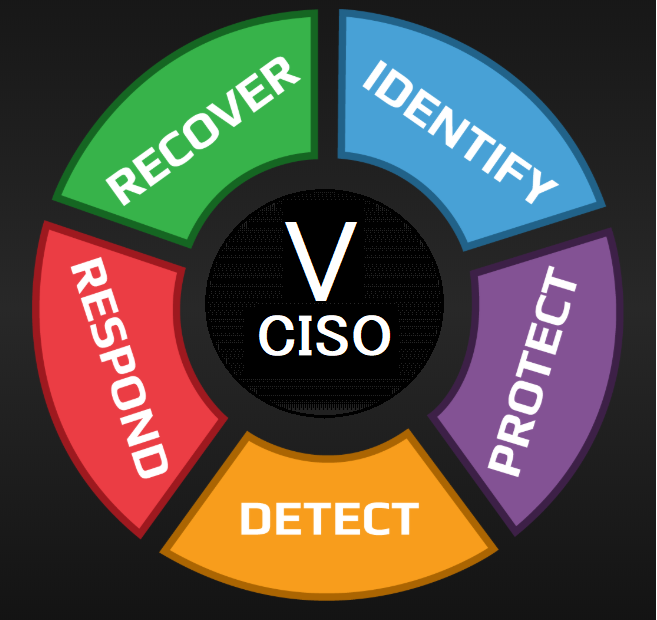
A Chief Information Security Officer (CISO) is a senior executive responsible for developing and overseeing an organization’s information security strategy, ensuring that data and technologies are adequately protected. However, not all organizations, especially small and medium-sized enterprises, have the resources to employ a full-time CISO. This is where a Virtual Chief Information Security Officer (vCISO) comes into play. A vCISO provides the expertise of a traditional CISO on a flexible, often part-time basis, allowing organizations to benefit from high-level security guidance without the commitment of a full-time hire.
Engaging a vCISO offers several advantages. Firstly, it provides access to seasoned security professionals who can assess current security postures, identify vulnerabilities, and develop comprehensive strategies tailored to the organization’s specific needs. This ensures that even without an in-house expert, the organization can maintain a robust security framework.
Secondly, a vCISO can assist in regulatory compliance by ensuring that the organization’s security practices align with industry standards and legal requirements. This is crucial in avoiding potential legal issues and financial penalties associated with non-compliance.
Additionally, vCISOs offer scalability. As the organization grows or as new threats emerge, the vCISO can adjust the security strategies accordingly, ensuring that the security measures evolve in tandem with the organization’s needs.
Cost-effectiveness is another significant benefit. Hiring a full-time CISO can be expensive, whereas a vCISO provides the necessary expertise at a fraction of the cost, making it an ideal solution for organizations with limited budgets.
In summary, a vCISO delivers the strategic leadership required to protect an organization’s information assets, offering flexibility, expertise, and cost savings. By leveraging the services of a vCISO, organizations can ensure robust security postures without the need for a full-time executive, thereby balancing security needs with financial considerations.
When evaluating the likelihood of an event, a precise numerical probability is more informative than a vague qualitative description. Imagine you’re at a doctor’s office, and the doctor says, “Your cholesterol levels are a bit high.” That’s vague—how high is “a bit”? Now, if the doctor says, “Your cholesterol level is 220 mg/dL, which puts you at a 30% higher risk of heart disease,” you have a clear, actionable understanding of your health. The same applies to cybersecurity—quantitative risk assessments provide precise, measurable data that help businesses make informed decisions, whereas qualitative assessments leave too much room for interpretation.
Many small and medium-sized businesses overlook cybersecurity, assuming they are too insignificant to be targeted. However, research shows that unsecured devices connected to the internet face attack attempts every 39 seconds. Without proactive security measures, businesses risk breaches, phishing attacks, and downtime. The challenge for many companies is determining where to start and which risks to prioritize, given limited resources.
A cybersecurity risk assessment helps businesses understand their vulnerabilities. While qualitative risk assessments categorize risks into vague levels such as “low,” “medium,” or “high,” quantitative risk assessments assign specific probabilities and financial impacts to threats. This approach enables companies to make more informed decisions based on concrete data rather than subjective judgments.
Quantitative risk assessments use statistical methods to calculate risk exposure. Analysts assess each risk, determine its likelihood, and estimate financial losses with a 90% confidence interval. This enables companies to see a clear dollar-based estimate of potential losses, making cybersecurity threats more tangible. Additionally, numerical risk assessments allow organizations to prioritize threats based on their financial impact.
Advanced mathematical models, such as Monte Carlo simulations, help forecast long-term risks. By simulating thousands of potential cybersecurity incidents, businesses can predict worst-case scenarios and refine their risk mitigation strategies. Unlike qualitative assessments, which rely on subjective interpretation, quantitative models provide objective, data-driven insights that enhance decision-making.
Why Quantitative Assessment is Superior
Quantitative risk assessments offer three key advantages over qualitative methods. First, they eliminate ambiguity by assigning numerical values to risks, making cybersecurity planning more precise. Second, they help prioritize threats logically, ensuring that organizations allocate resources effectively. Third, they facilitate communication with executives and stakeholders by translating cybersecurity risks into financial terms. Given these benefits, businesses should adopt a quantitative approach to cybersecurity risk management to make smarter, more informed decisions.
GhostGPT is a new artificial intelligence (AI) tool that cybercriminals are exploiting to develop malicious software, breach systems, and craft convincing phishing emails. According to security researchers from Abnormal Security, GhostGPT is being sold on the messaging platform Telegram, with prices starting at $50 per week. Its appeal lies in its speed, user-friendliness, and the fact that it doesn’t store user conversations, making it challenging for authorities to trace activities back to individuals.
This trend isn’t isolated to GhostGPT; other AI tools like WormGPT are also being utilized for illicit purposes. These unethical AI models enable criminals to circumvent the security measures present in legitimate AI systems such as ChatGPT, Google Gemini, Claude, and Microsoft Copilot. The emergence of cracked AI models—modified versions of authentic AI tools—has further facilitated hackers’ access to powerful AI capabilities without restrictions. Security experts have observed a rise in the use of these tools for cybercrime since late 2024, posing significant concerns for the tech industry and security professionals. The misuse of AI in this manner threatens both businesses and individuals, as AI was intended to assist rather than harm.
Hackers, compliance fines, and security gaps—these relentless enemies are constantly evolving, waiting for the perfect moment to strike. They threaten your business, your reputation, and your bottom line.
You, the Business Leader
You’ve built something great. You’re responsible for its success, its growth, and its security. But the ever-changing cybersecurity landscape is a battlefield—one that requires a strategic, expert approach to win.
The Guide: Your vCISO
Every hero needs a trusted guide. A vCISO (Virtual Chief Information Security Officer) is your secret weapon—an experienced security leader who provides the roadmap based on industry best practice framework, tools, and strategies to defeat cyber threats, mitigate risks and keep your business secure.
The Mission: Secure Your Business—Information Assets
Arm yourself for success against cyber threats...
For a limited time, we’re offering a FREE 30-Minutes vCISO Strategy session to help you: ✅ Identify your top security risks. Know where your risks are to meet them head on. ✅ Strengthen your compliance posture. Don’t get surprised by those regulators. ✅ Get a clear action plan to protect your business.
This is your chance to turn the tide in the battle against cyber threats—but time is running out.
⏳ Claim Your Free vCISO Consultation Now! ⏳
Contact US “Your Business Deserves Top-Tier Security” 💡
This guide from Cynomi provides a comprehensive roadmap for structuring and selling Virtual Chief Information Security Officer (vCISO) services. It covers key aspects such as market demand, pricing strategies, service delivery models, and business growth tactics.
Key Takeaways:
Growing Demand for vCISO Services
Small and mid-sized businesses (SMBs) increasingly seek vCISOs due to budget constraints and evolving cybersecurity threats.
Ransomware attacks and regulatory requirements drive demand for outsourced security leadership.
Structuring vCISO Services
Offer tiered service packages (basic, standard, premium) to cater to different client needs.
Focus on risk assessment, policy development, compliance, security awareness training, and incident response planning.
Automate assessments and reporting to scale service delivery efficiently.
Project-based pricing for one-time engagements like compliance audits.
Value-based pricing, where fees align with risk reduction and business impact.
Sales and Go-to-Market Strategy
Position vCISO services as a proactive solution rather than a cost burden.
Leverage case studies and cybersecurity statistics to demonstrate value.
Partner with MSPs/MSSPs to expand reach and integrate services.
Operational Efficiency
Utilize cybersecurity frameworks (NIST, ISO 27001) to streamline service offerings.
Automate risk assessments, policy generation, and compliance tracking to reduce workload.
Maintain ongoing client engagement through regular reporting and strategy updates.
Scaling and Differentiation
Specialize in industries with high compliance needs (e.g., healthcare, finance).
Use AI-driven tools to enhance service quality and responsiveness.
Continuously refine service packages based on market trends and client feedback.
Conclusion:
To successfully offer vCISO services, firms must structure their offerings strategically, price them effectively, and leverage automation for scalability. By focusing on value-driven sales and efficient service delivery, vCISO providers can build a sustainable and profitable business.
Contact us if you like a deeper dive into any specific section?
Cybersecurity is an ongoing journey, not a one-time goal. The first step toward a secure future is recognizing the ever-changing threat landscape and proactively safeguarding your business. Let DISC InfoSec assess your current security posture by conducting a comprehensive security evaluation. Identifying vulnerabilities and security gaps will enable you to prioritize efforts and make informed investment decisions to strengthen your defenses.
Aligning Security Strategy with the Right Cybersecurity Framework
As a vCISO, ensuring that client’s security strategy aligns with the appropriate cybersecurity framework is essential. Frameworks offer structured guidelines and best practices that help organizations effectively manage and mitigate cybersecurity risks.
The first step is to understand the client’s industry, location, and regulatory obligations. Different industries and regions have specific compliance requirements that dictate which frameworks are most relevant. Identifying these factors ensures compliance and helps select a framework that supports both regulatory adherence and business objectives.
To determine the right framework, consider:
Industry and geographic regulations:
Healthcare: HIPAA
InfoSec Industry Best Practice: ISO 27001
Finance: PCI-DSS, NYS DFS, or DORA (EU)
Defense: NIST SP 800-171, CMMC
General businesses handling EU data: GDPR
Existing compliance needs: If a client is already adhering to certain regulations, choosing a framework that aligns with those requirements simplifies integration and enhances security maturity.
By selecting the right framework, organizations can strengthen their cybersecurity posture, meet regulatory demands, and align security efforts with business goals.
A critical security vulnerability has been identified in Contec CMS8000 patient monitors, as reported by the Cybersecurity and Infrastructure Security Agency (CISA) and the U.S. Food and Drug Administration (FDA). This flaw permits remote attackers to gain unauthorized access, alter patient data, and disrupt device functionality, posing significant risks to healthcare facilities. Exploitation of this vulnerability could lead to manipulation of real-time vital sign monitoring, potentially resulting in severe medical errors or enabling ransomware attacks on these devices.
The vulnerability, designated as CVE-2025-0626 and CVE-2025-0683, stems from hardcoded credentials and an undocumented remote access protocol within the monitor’s firmware. Attackers can remotely authenticate using weak or publicly known factory-set usernames and passwords, access a command-line interface over an open network port, and execute arbitrary commands on the device. This access allows them to manipulate system settings and patient data without proper authorization.
The potential consequences of this security flaw are alarming. Unauthorized manipulation of patient monitors can lead to incorrect vital sign readings, causing healthcare professionals to make misguided treatment decisions. Additionally, attackers could disable the devices or demand ransom to restore functionality, directly impacting patient care and safety.
To mitigate these risks, it is imperative for healthcare providers to update the firmware of Contec CMS8000 patient monitors to the latest version provided by the manufacturer. Implementing strong, unique passwords and disabling unnecessary network services can further enhance security. Regular security assessments and network monitoring are also recommended to detect and respond to potential threats promptly.
Cybercriminals are becoming alarmingly faster at breaching networks, with the average time to compromise a system now just 48 minutes. This rapid escalation means organizations have even less time to detect and respond to attacks before significant damage occurs. The speed at which hackers operate underscores the urgent need for real-time threat detection and automated security responses to minimize risk and disruption.
One of the key drivers behind this increased efficiency is the use of AI and automation by attackers. Cybercriminals are leveraging advanced tools to scan for vulnerabilities, deploy malware, and escalate privileges within minutes. Traditional cybersecurity approaches that rely on manual detection and response are no longer sufficient. Organizations must adopt AI-driven defense mechanisms that can detect threats instantly and initiate automated countermeasures.
The rise of ransomware-as-a-service (RaaS) has also contributed to the growing speed of attacks. Even less-skilled hackers can now launch highly effective cyberattacks, thanks to pre-packaged hacking tools available on the dark web. This democratization of cybercrime means that businesses of all sizes are at risk, making proactive security strategies and employee awareness training essential.
“breakout time is the most critical window in an attack,” as successful threat containment at this stage prevents consequences “such as data exfiltration, ransomware deployment, data loss, reputational damage, and financial loss,”
To stay ahead, companies must prioritize cybersecurity resilience, implementing zero-trust security models, continuous monitoring, and AI-enhanced threat detection. The 48-minute rule highlights a new reality—if an organization is not prepared to detect and respond to threats in real time, it risks catastrophic breaches. Cybersecurity is no longer about reacting after an attack; it’s about preventing compromise before it happens.
“Cybercrime is now the third-largest economy in the world.”
The cybersecurity landscape in 2025 is evolving rapidly, driven by advancements in technology and increasingly sophisticated cyber threats. Organizations must prepare for a new era of cyber warfare, where AI-powered attacks, deepfake fraud, and supply chain vulnerabilities pose significant risks. Cybercriminals are leveraging automation to execute more efficient and harder-to-detect attacks, making traditional security measures insufficient. As businesses continue their digital transformation, the need for proactive and adaptive cybersecurity strategies has never been greater.
A key challenge in 2025 is the rise of AI-driven threats, where attackers use artificial intelligence to automate phishing campaigns, bypass security defenses, and create highly convincing deepfake scams. These AI-generated threats can manipulate financial transactions, impersonate executives, and spread misinformation at an unprecedented scale. Organizations must harness AI for defense, using machine learning for real-time threat detection, automated response mechanisms, and enhanced fraud prevention. The battle between offensive and defensive AI is at the heart of modern cybersecurity strategies.
Supply chain security is another critical concern. With businesses increasingly dependent on third-party vendors, cybercriminals are targeting these weaker links to infiltrate large organizations. A single compromise in a supplier’s system can have devastating ripple effects across an entire industry. To mitigate this risk, companies must implement zero-trust security models, conduct rigorous vendor risk assessments, and enforce strict access controls. Cyber resilience is no longer optional—it’s essential for survival.
Ultimately, the cybersecurity battlefield of 2025 demands a shift in mindset from reactive to proactive security. Organizations must embrace continuous monitoring, AI-driven security tools, and a culture of cyber awareness to stay ahead of evolving threats. Cybersecurity is no longer just an IT issue—it’s a business imperative that requires leadership engagement and strategic investment. Those who fail to adapt will find themselves vulnerable in an increasingly hostile digital landscape.
Securing AI in the Enterprise: A Step-by-Step Guide
Establish AI Security Ownership Organizations must define clear ownership and accountability for AI security. Leadership should decide whether AI governance falls under a cross-functional committee, IT/security teams, or individual business units. Establishing policies, defining decision-making authority, and ensuring alignment across departments are key steps in successfully managing AI security from the start.
Identify and Mitigate AI Risks AI introduces unique risks, including regulatory compliance challenges, data privacy vulnerabilities, and algorithmic biases. Organizations must evaluate legal obligations (such as GDPR, HIPAA, and the EU AI Act), implement strong data protection measures, and address AI transparency concerns. Risk mitigation strategies should include continuous monitoring, security testing, clear governance policies, and incident response plans.
Adopt AI Security Best Practices Businesses should follow security best practices, such as starting with small AI implementations, maintaining human oversight, establishing technical guardrails, and deploying continuous monitoring. Strong cybersecurity measures—such as encryption, access controls, and regular security audits—are essential. Additionally, comprehensive employee training programs help ensure responsible AI usage.
Assess AI Needs and Set Measurable Goals AI implementation should align with business objectives, with clear milestones set for six months, one year, and beyond. Organizations should define success using key performance indicators (KPIs) such as revenue impact, efficiency improvements, and compliance adherence. Both quantitative and qualitative metrics should guide AI investments and decision-making.
Evaluate AI Tools and Security Measures When selecting AI tools, organizations must assess security, accuracy, scalability, usability, and compliance. AI solutions should have strong data protection mechanisms, clear ROI, and effective customization options. Evaluating AI tools using a structured approach ensures they meet security and business requirements.
Purchase and Implement AI Securely Before deploying AI solutions, businesses must ask key questions about effectiveness, performance, security, scalability, and compliance. Reviewing trial options, pricing models, and regulatory alignment (such as GDPR or CCPA compliance) is critical to selecting the right AI tool. AI security policies should be integrated into the organization’s broader cybersecurity framework.
Launch an AI Pilot Program with Security in Mind Organizations should begin with a controlled AI pilot to assess risks, validate performance, and ensure compliance before full deployment. This includes securing high-quality training data, implementing robust authentication controls, continuously monitoring performance, and gathering user feedback. Clear documentation and risk management strategies will help refine AI adoption in a secure and scalable manner.
By following these steps, enterprises can securely integrate AI, protect sensitive data, and ensure regulatory compliance while maximizing AI’s potential.
A Fortune 50 company recently made the largest known ransomware payment—a staggering $75 million—to the Dark Angels ransomware gang after 100 terabytes of data were stolen. Surprisingly, the company did not disclose the attack, even though SEC regulations require public companies to report significant cyber incidents. Unlike typical ransomware cases, the company’s systems were not shut down; they paid purely to keep the data private, highlighting the immense value organizations place on reputation.
Many companies choose to silence cyberattacks out of fear—concerned that disclosure could lead to customer loss, stock declines, and lawsuits. Executives often believe they won’t be targeted, treat each attack as an isolated event, or try to downplay incidents. Even with stricter SEC rules, businesses are finding ways to disclose as little as possible, fueling a cycle where ransom payments encourage more attacks.
This quiet ransom-paying culture increases risks across industries, making companies more attractive targets. Hackers are incentivized to continue their attacks, knowing that major corporations would rather pay up than risk public fallout. The more companies cave to these demands, the more cybercriminals are emboldened.
The solution? Proactive cybersecurity investments to build resilience before an attack happens. However, as history shows, preventive measures are a hard sell—many organizations react only after a crisis, rather than prioritizing security before disaster strikes. Breaking this cycle requires a mindset shift toward long-term cyber preparedness over short-term damage control.
The article discusses the alarming rise in data breaches, with 2023 and 2024 setting a record for the number of reported incidents. A significant increase in ransomware attacks, phishing schemes, and vulnerabilities in third-party vendors has contributed to the surge. Organizations across various industries, including healthcare, finance, and government, are among the most affected, highlighting the growing sophistication of cybercriminals and the challenges in securing sensitive data.
Ransomware attacks remain a primary driver, where hackers lock organizations out of their own systems and demand payment for restoring access. These attacks are becoming more targeted and disruptive, often focusing on critical infrastructure or high-value data. Businesses have struggled to implement effective defenses, with some opting to pay ransoms despite the risks of enabling future attacks or non-recovery of stolen data.
The article also emphasizes the role of phishing, where cybercriminals deceive individuals into revealing credentials or clicking on malicious links. Such schemes exploit human behavior and are a major entry point for attacks. Coupled with the risks from third-party vendors—who often lack robust security measures—many organizations face heightened exposure to breaches outside their immediate control.
To address this growing problem, experts stress the importance of adopting proactive cybersecurity strategies. Businesses are encouraged to implement multi-layered defenses, including employee training, stronger identity verification, and advanced threat detection tools. Additionally, regulatory pressures are pushing companies to improve their breach reporting and response protocols, aiming to create a more secure digital environment in the face of evolving threats.
The article highlights the rising threat of deepfake technology as a growing concern for organizations and their leadership teams. Deepfake engineering uses AI to create highly realistic audio and video manipulations, which can be exploited for fraud, espionage, or reputational damage. These attacks target businesses through impersonation of executives, manipulation of video calls, and deceptive communications to mislead stakeholders or extract sensitive information.
The piece emphasizes the need for organizations to strengthen their defenses by implementing deepfake detection technologies, training employees to recognize manipulated content, and establishing policies to verify the authenticity of communications. As deepfake technology advances, it becomes a critical challenge for the C-suite to address proactively as part of their broader cybersecurity strategy.
Role-based social engineering training is the gold standard today, but it’s not foolproof. An even better approach would incorporate a personality assessment. Those who rank high in agreeableness and extroversion might require a different flavor of training to ensure that they don’t fall victim to the types of attacks that persuade others to want to help. Those that rank very high in obedience, for example, might need specific insights into how to avoid the appeal to authority attack, where someone pretends to be a VIP (made much easier with deepfake technology) to obtain information from their target.
A critical vulnerability (CVE-2023-39058) was identified in IBM Security Directory Suite, potentially allowing attackers to gain unauthorized access or control over affected systems. The flaw arises from improper input validation, enabling attackers to exploit the issue remotely. This vulnerability affects multiple versions of the software and poses a significant risk to organizations relying on it for identity and access management.
IBM has released patches to address the vulnerability and urges affected users to update their systems immediately. Organizations are advised to prioritize patching, review system logs for any signs of exploitation, and enhance their monitoring practices to mitigate potential risks.
The article highlights seven key cybersecurity projects that organizations should prioritize in 2025 to address emerging threats and enhance their security posture. These projects focus on leveraging advanced technologies, improving processes, and adapting to new regulations.
Summary:
Zero Trust Architecture: Organizations are increasingly adopting zero trust to minimize security risks by verifying all users and devices before granting access to resources.
AI-Powered Threat Detection: Leveraging artificial intelligence to detect and respond to sophisticated cyber threats in real time is becoming essential.
Cloud Security Enhancement: As cloud adoption grows, securing cloud environments and addressing risks like misconfigurations and unauthorized access remains a top priority.
Third-Party Risk Management: Businesses are focusing on assessing and mitigating risks posed by vendors and supply chain partners to safeguard sensitive data.
Endpoint Security Modernization: With remote work continuing, companies are upgrading endpoint protection to secure devices from advanced attacks.
Compliance Automation: Automating compliance workflows helps organizations meet regulatory requirements more efficiently while reducing human error.
Employee Awareness Programs: Regular training to combat phishing and social engineering attacks is vital for creating a security-conscious workforce.
These projects aim to strengthen resilience against evolving threats while aligning cybersecurity strategies with business objectives and regulatory demands.
The state threats outlined in the 2025 National Risk Register focus on risks posed by hostile states and their potential impact on critical national infrastructure (CNI), financial systems, and communications networks. Key findings include:
Cyber Attacks on Financial Systems: State and non-state actors could target financial market infrastructures (FMIs) and retail banks, leading to system failures, data breaches, and prolonged outages. Such incidents risk eroding public confidence in financial systems, disrupting transactions, and causing economic instability. Recovery from these attacks could take weeks to months, depending on the severity.
Disruption of Critical Infrastructure: Malicious attacks on telecommunications, such as transatlantic cables or space-based systems, could severely impact data communication, government operations, and emergency services. These risks, while low in likelihood, have significant consequences, including economic losses and interruptions to essential services like energy and transport.
Economic and Strategic Risks: The report emphasizes the potential consequences of geopolitical conflicts and economic vulnerabilities. Examples include the UK’s integration with European energy markets, where supply disruptions or price volatility could result from global or regional tensions, including threats to global oil trade routes.
In response, robust incident management frameworks and recovery plans, such as the UK’s Authorities’ Response Framework (ARF), are critical to mitigate the effects of these threats. The focus remains on resilience-building and safeguarding national security.
“The National Risk Register is the external [published] version of the [internal, classified] National Security Risk Assessment which is the government’s assessment of the most serious risks facing the UK.”
In 180 pages, the NRR describes of significant risks, threats and hazards categorized as: terrorism; cyber; state; geographic and diplomatic; accidents and systems failures; natural and environmental [plus] human, animal and plant health; societal; or conflict and instability. Each risk is described as a ‘reasonable worst case scenario’, most with plots of estimated probabilities over 2 years (if malicious) or 5 years (benign) against domestic impacts, along with the necessary response and recovery activities.
The introduction by Pat McFadden, chairman of the UK Cabinet resilience committee, refers to recent and current incidents, not just in the UK (e.g. Crowdstrike and US wildfires), emphasising resilience at a national level. [NIS 2, in contrast, concerns resilience both nationally and internationally across Europe, acknowledging the regional and in fact global nature of shared infrastructure, supply chains and threats.]
Pat concludes the intro with a call to action: “I encourage all risk and resilience professionals to consider the risks in this publication, and join our collective endeavor to make the UK more prosperous and resilient.” Hopefully we are doing more than ‘consider’, for example comparing and contrasting our corporate risk registers, priorities and actions against the NRR, and adopting a similarly dynamic risk management approach with frequent updates rather than the usual once-a-year.