InfoSec Compliance & AI Governance For over 20 years, DISC InfoSec has been a trusted voice for cybersecurity professionals—sharing practical insights, compliance strategies, and AI governance guidance to help you stay informed, connected, and secure in a rapidly evolving landscape.
The ISO/IEC 42001 standard and the NIST AI Risk Management Framework (AI RMF) are two cornerstone tools for businesses aiming to ensure the responsible development and use of AI. While they differ in structure and origin, they complement each other beautifully. Here’s a breakdown of how each contributes—and how they align.
🧭 ISO/IEC 42001: AI Management System Standard
Purpose: Establishes a formal AI Management System (AIMS) across the organization, similar to ISO 27001 for information security.
🔧 Key Components
Leadership & Governance: Requires executive commitment and clear accountability for AI risks.
Policy & Planning: Organizations must define AI objectives, ethical principles, and risk tolerance.
Operational Controls: Covers data governance, model lifecycle management, and supplier oversight.
Monitoring & Improvement: Includes performance evaluation, impact assessments, and continuous improvement loops.
✅ Benefits
Embeds responsibility and accountability into every phase of AI development.
Supports legal compliance with regulations like the EU AI Act and GDPR.
Enables certification, signaling trustworthiness to clients and regulators.
🧠 NIST AI Risk Management Framework (AI RMF)
Purpose: Provides a flexible, voluntary framework for identifying, assessing, and managing AI risks.
🧩 Core Functions
Function
Description
Govern
Establish organizational policies and accountability for AI risks
Map
Understand the context, purpose, and stakeholders of AI systems
Measure
Evaluate risks, including bias, robustness, and explainability
Manage
Implement controls and monitor performance over time
✅ Benefits
Promotes trustworthy AI through transparency, fairness, and safety.
Helps organizations operationalize ethical principles without requiring certification.
Adaptable across industries and AI maturity levels.
🔗 How They Work Together
ISO/IEC 42001
NIST AI RMF
Formal, certifiable management system
Flexible, voluntary risk management framework
Focus on organizational governance
Focus on system-level risk controls
PDCA cycle for continuous improvement
Iterative risk assessment and mitigation
Strong alignment with EU AI Act compliance
Strong alignment with U.S. Executive Order on AI
Together, they offer a dual lens:
ISO 42001 ensures enterprise-wide governance and accountability.
NIST AI RMF ensures system-level risk awareness and mitigation.
visual comparison chart or a mind map to show how these frameworks align with the EU AI Act or sector-specific obligations.
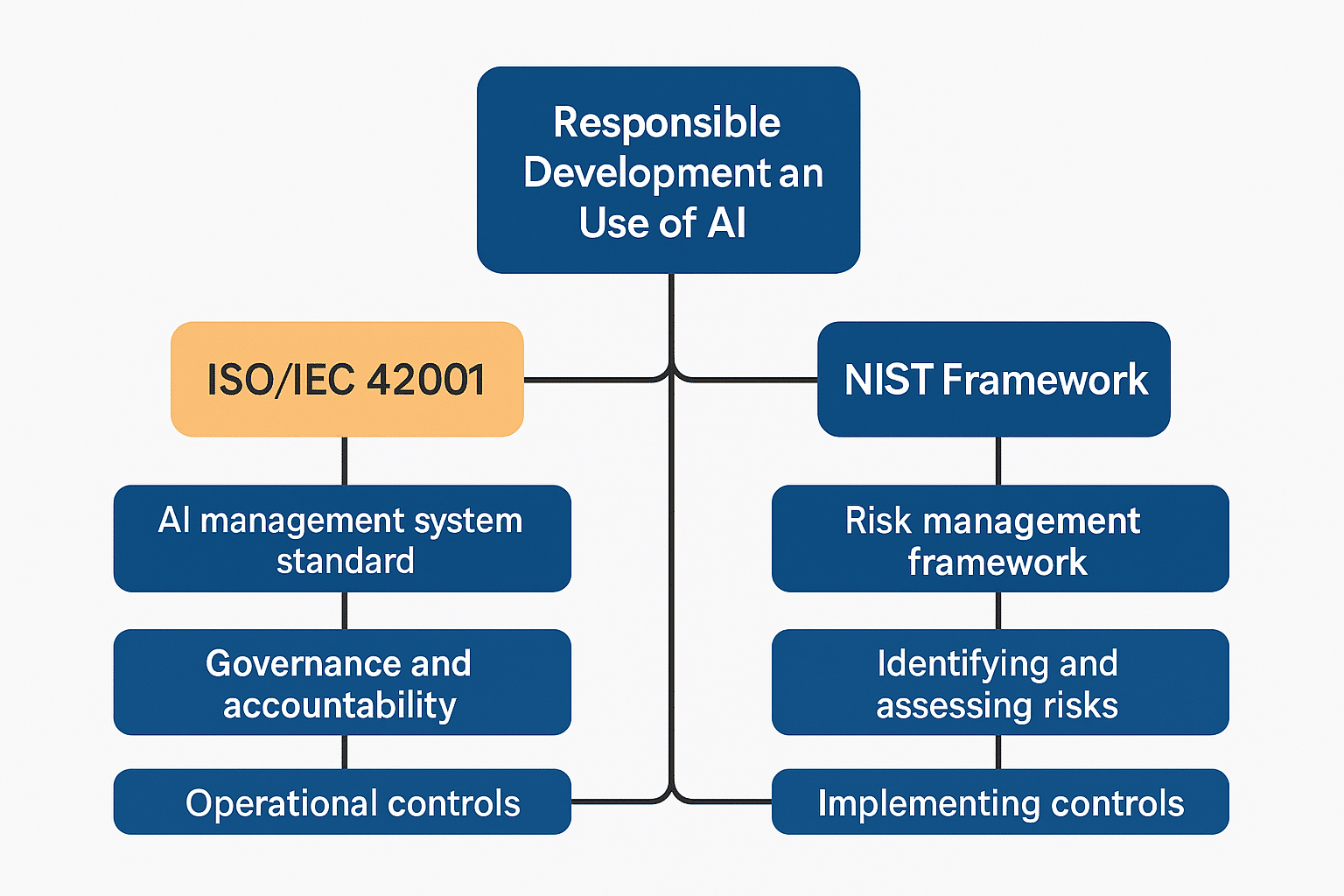
mind map comparing ISO/IEC 42001 and the NIST AI RMF for responsible AI development and use:
This visual lays out the complementary roles of each framework:
ISO/IEC 42001 focuses on building an enterprise-wide AI management system with governance, accountability, and operational controls.
NIST AI RMF zeroes in on system-level risk identification, assessment, and mitigation.
The EU AI Act introduces a layered regulatory framework that significantly affects stakeholders in the autonomous driving ecosystem. Because autonomous vehicles (AVs) rely heavily on high-risk AI systems—such as perception, decision-making, and navigation—their regulation is both sector-specific and cross-cutting. Here’s a structured analysis tailored to your compliance-oriented lens:
🚗 Autonomous Driving: Stakeholder Impact Analysis
1. Automotive Manufacturers
Obligations:
Must ensure AI systems embedded in AVs meet high-risk requirements under the AI Act.
Required to conduct conformity assessments and maintain technical documentation.
Must align with both the AI Act and sectoral legislation like the Type-Approval Framework Regulation (EU 2018/858).
Risks:
High compliance costs and technical complexity, especially for explainability and real-time monitoring.
Exposure to fines up to €35 million or 7% of global turnover for non-compliance.
Opportunities:
Regulatory alignment can enhance consumer trust and market access.
Participation in AI regulatory sandboxes may accelerate innovation.
2. AI System Developers (Perception, Planning, Control Modules)
Obligations:
Must classify systems by risk level and ensure robustness, safety, and transparency.
Required to implement post-market monitoring and incident reporting.
Risks:
Difficulty in making complex models explainable (e.g., deep neural networks for object detection).
Liability for system failures or biased decision-making.
Opportunities:
Demand for modular, certifiable AI components.
Competitive edge through compliance-ready architectures.
3. Regulators & Market Surveillance Authorities
Obligations:
Must oversee conformity assessments and enforce compliance across borders.
Required to coordinate with sectoral regulators (e.g., UNECE, national transport authorities).
Risks:
Fragmentation between AI Act and existing automotive regulations.
Resource strain due to technical complexity and volume of AV deployments.
Opportunities:
Development of harmonized standards and certification pathways.
Use of regulatory sandboxes to test and refine oversight mechanisms.
Must ensure deployed AVs comply with AI Act and sectoral safety standards.
Required to inform users about AI-driven decisions and ensure human oversight where applicable.
Risks:
Operational liability for accidents or system failures.
Public backlash if transparency and safety are lacking.
Opportunities:
Ethical AV deployment can differentiate services and attract public support.
Data-driven optimization of routes and maintenance.
5. Consumers / Road Users
Rights:
Right to safety, transparency, and redress in case of harm.
Protection from opaque or discriminatory AI decisions.
Risks:
Potential for accidents due to system errors or edge-case failures.
Privacy concerns from data collected by AVs (e.g., location, biometrics).
Opportunities:
Safer, more accessible mobility options.
Reduced human error and traffic fatalities.
🧭 Strategic Takeaway
The AI Act doesn’t operate in isolation—it intersects with existing automotive regulations, creating a hybrid compliance landscape. Stakeholders must navigate:
Data protection laws (e.g., GDPR for connected vehicle data)
Starting with a stakeholder matrix to map out responsibilities, risks, and opportunities, followed by a compliance roadmap tailored to autonomous vehicle (AV) deployment under the EU AI Act. This dual approach gives you both a strategic overview and an operational guide.
🚦 Autonomous Driving Stakeholder Matrix (EU AI Act)
Stakeholder
Responsibilities
Risks
Opportunities
Automotive OEMs
Ensure AI systems in AVs meet high-risk requirements; conduct conformity assessments
Liability for system failures; high compliance costs
Market leadership through ethical, compliant AVs
AI System Developers
Build explainable, robust, and traceable AI modules (e.g., perception, planning)
Technical complexity; explainability of deep learning models
Demand for modular, certifiable AI components
Fleet Operators / MaaS
Deploy compliant AVs; ensure user transparency and oversight
Walk through a realistic scenario to interpret how the EU AI Act’s ethical guidelines would apply in practice.
🏥 Scenario: Deploying an AI System in a European Hospital
A hospital in Germany wants to deploy an AI system to assist doctors in diagnosing rare diseases based on patient data and medical imaging.
🧭 Applying the EU AI Act Guidelines
1. Risk Classification
The system is considered high-risk under the EU AI Act because it affects health outcomes and involves biometric data.
Therefore, it must meet strict requirements for transparency, robustness, and human oversight.
2. Ethical Deployment Requirements
Principle
Application in Scenario
Human Autonomy
Doctors retain final decision-making authority. AI provides recommendations, not verdicts.
Prevention of Harm
The system undergoes rigorous testing to avoid misdiagnosis. Fail-safes are built in.
Fairness & Non-Bias
Training data is audited to ensure diverse representation across age, gender, ethnicity.
Transparency
The hospital provides clear documentation on how the AI works and its limitations.
Explicability
Doctors can access explanations for each AI-generated diagnosis.
Accountability
The hospital sets up a governance board to monitor AI performance and handle complaints.
3. Compliance Measures
Data Governance: Patient data is anonymized and processed in line with GDPR.
Impact Assessment: A conformity assessment is conducted before deployment.
Monitoring & Reporting: The hospital commits to reporting serious incidents to the AI Office.
Stakeholder Engagement: Patients are informed and can opt out of AI-assisted diagnosis.
✅ Outcome
By following these steps, the hospital ensures that its AI system is ethically deployed, legally compliant, and trustworthy—aligning with the EU’s vision for responsible AI.
Explore how the EU AI Act’s ethical guidelines would apply in a real-world education scenario.
🎓 Scenario: AI-Powered Learning Analytics in a European Secondary School
A secondary school in France wants to use an AI system that analyzes student performance data to identify those at risk of falling behind and recommend personalized learning paths.
🧭 Applying the EU AI Act in Education
1. Risk Classification
This system is considered high-risk under the EU AI Act because it influences students’ access to educational opportunities and involves sensitive personal data.
Emotion-recognition features (e.g., analyzing facial expressions to gauge engagement) would be prohibited as they fall under the “unacceptable risk” category.
2. Ethical Deployment Requirements
Principle
How It Applies in the School Setting
Human Autonomy
Teachers make final decisions; AI offers insights, not mandates.
Fairness & Non-Bias
The system is trained on diverse datasets to avoid bias based on race, gender, or SES.
Transparency
Students and parents are informed about how the AI works and what data it uses.
Privacy Protection
Data is anonymized and processed in line with GDPR.
Accountability
The school designates a responsible staff member to oversee AI performance and ethics.
Explicability
Teachers can access clear explanations for each AI-generated recommendation.
3. Compliance Measures
Documentation: The school maintains records of the AI system’s design, training data, and risk assessments.
Monitoring: Regular audits are conducted to ensure the system remains fair and accurate.
Stakeholder Engagement: Students and parents can opt out and provide feedback on the system’s impact.
✅ Outcome
By following the EU AI Act’s guidelines, the school ensures that its AI system supports learning ethically, transparently, and safely—while respecting students’ rights and dignity.
University-level scenario or explore how AI affects teacher evaluations.
Dive into a university-level scenario to see how the EU AI Act’s ethical guidelines shape the deployment of AI in higher education.
🎓 Scenario: AI-Based Admissions System at a European University
A university in the Netherlands wants to implement an AI system to help evaluate student applications for competitive graduate programs. The system analyzes academic records, recommendation letters, and personal statements to rank candidates.
🧭 Applying the EU AI Act in Higher Education
1. Risk Classification
This system is classified as high-risk under the EU AI Act because it significantly affects access to education and future opportunities.
It must comply with strict requirements around transparency, fairness, human oversight, and data governance.
2. Ethical Deployment Requirements
Principle
Application in University Admissions
Human Autonomy
Admissions officers retain final decision-making authority. AI provides rankings, not verdicts.
Fairness & Non-Bias
The system is trained on diverse, representative data to avoid bias based on gender, ethnicity, or socioeconomic status.
Transparency
Applicants are informed that AI is used and can request explanations of how decisions are made.
Privacy Protection
Personal data is processed in line with GDPR, with strict access controls and anonymization.
Accountability
The university appoints an AI ethics officer to monitor system performance and handle appeals.
Explicability
Admissions staff can access clear, interpretable explanations for each AI-generated recommendation.
3. Additional EU AI Act Provisions
Article 4: Requires that staff using the AI system receive training to ensure adequate AI literacy.
Recital 56: Encourages AI deployment that promotes high-quality digital education and critical thinking.
Emotion Recognition Ban: Any attempt to use emotion inference (e.g., analyzing facial expressions in video interviews) would be prohibited as an “unacceptable risk”.
✅ Outcome
By following the EU AI Act, the university ensures its admissions system is fair, transparent, and legally compliant, while respecting applicants’ rights and promoting trust in the process.
Explore how universities can use AI for personalized learning or student support next.
EU AI Act’s ethical guidelines apply to a university scenario focused on personalized learning and student support.
🧑🎓 Scenario: AI-Powered Student Support System at a European University
A university in Spain deploys an AI system to monitor student engagement, predict academic risk, and recommend personalized resources—like tutoring, mental health services, or study groups.
🧭 EU AI Act Interpretation in This Context
1. Risk Classification
This system is considered high-risk because it influences students’ access to support services and may impact academic outcomes.
If it includes emotion recognition (e.g., analyzing facial expressions or voice tone), that feature is prohibited under the Act’s “unacceptable risk” category.
2. Ethical Deployment Requirements
Principle
Application in Student Support AI
Human Autonomy
Advisors and counselors retain control; AI offers suggestions, not decisions.
Fairness & Non-Bias
Algorithms are trained on diverse data to avoid disadvantaging marginalized groups.
Transparency
Students are informed about how the system works and what data it uses.
Privacy Protection
All personal data is anonymized and processed in compliance with GDPR.
Explicability
Staff can interpret why the AI flagged a student as needing support.
Accountability
The university sets up a governance board to audit system performance and ethics.
3. Additional EU AI Act Provisions
Article 4: Requires universities to ensure staff are trained in AI literacy, so they can use and supervise the system responsibly.
Recital 56: Encourages AI systems that promote high-quality digital education and empower students with critical thinking and media literacy.
✅ Outcome
By aligning with the EU AI Act, the university ensures its AI system enhances student well-being and academic success—while safeguarding rights, promoting fairness, and building trust.
The EU AI Act is the European Union’s landmark regulation designed to create a legal framework for the development, deployment, and use of artificial intelligence across the EU. Its primary objectives can be summed up as follows:
Protect Fundamental Rights and Safety
Ensure AI systems do not undermine fundamental rights guaranteed by the EU Charter (privacy, non-discrimination, dignity, etc.) or compromise the health and safety of individuals.
Promote Trustworthy AI
Establish standards so AI systems are transparent, explainable, and accountable, which is key to building public trust in AI adoption.
Risk-Based Regulation
Introduce a tiered approach:
Unacceptable risk: Prohibit AI uses that pose clear threats (e.g., social scoring by governments, manipulative systems).
High risk: Strict obligations for AI in sensitive areas like healthcare, finance, employment, and law enforcement.
Limited/minimal risk: Light or no regulatory requirements.
Harmonize AI Rules Across the EU
Create a uniform framework that avoids fragmented national laws, ensuring legal certainty for businesses operating in multiple EU countries.
Foster Innovation and Competitiveness
Encourage AI innovation by providing clear rules and setting up “regulatory sandboxes” where businesses can test AI in a supervised, low-risk environment.
Ensure Transparency for Users
Require disclosure when people interact with AI (e.g., chatbots, deepfakes) so users know they are dealing with a machine.
Strengthen Governance and Oversight
Establish national supervisory authorities and an EU-level AI Office to monitor compliance, enforce rules, and coordinate among Member States.
Address Bias and Discrimination
Mandate quality datasets, documentation, and testing to reduce harmful bias in AI systems, particularly in areas affecting citizens’ rights and opportunities.
Guarantee Robustness and Cybersecurity
Require that AI systems are secure, resilient against attacks or misuse, and perform reliably across their lifecycle.
Global Standard Setting
Position the EU as a leader in setting international norms for AI regulation, influencing global markets the way GDPR did for privacy.
understand the scope of the AI Act.
To understand the scope of the EU AI Act, it helps to break it down into who and what it applies to, and how risk determines obligations. Here’s a clear guide:
1. Who it Applies To
Providers: Anyone (companies, developers, public bodies) placing AI systems on the EU market, regardless of where they are based.
Deployers/Users: Organizations or individuals using AI within the EU.
Importers & Distributors: Those selling or distributing AI systems in the EU.
➡️ Even if a company is outside the EU, the Act applies if their AI systems are used in the EU.
2. What Counts as AI
The Act uses a broad definition of AI (based on OECD/Commission standards).
Includes machine learning, rule-based, statistical, and generative AI models.
3. Risk-Based Approach
The scope is defined by categorizing AI uses into risk levels:
Unacceptable Risk (Prohibited)
Social scoring, manipulative techniques, real-time biometric surveillance in public (with limited exceptions).
High Risk (Strictly Regulated)
AI in sensitive areas like:
healthcare (diagnostics, medical devices),
employment (CV screening),
education (exam scoring),
law enforcement and migration,
critical infrastructure (transport, energy).
Limited Risk (Transparency Requirements)
Chatbots, deepfakes, emotion recognition—users must be informed they are interacting with AI.
Minimal Risk (Largely Unregulated)
AI in spam filters, video games, recommendation engines—free to operate with voluntary best practices.
4. Exemptions
AI used for military and national security is outside the Act’s scope.
Systems used solely for research and prototyping are exempt until they are placed on the market.
5. Key Takeaway on Scope
The EU AI Act is horizontal (applies across sectors) but graduated (the rules depend on risk).
If you are a provider, you need to check whether your system falls into a prohibited, high, limited, or minimal category.
If you are a user, you need to know what obligations apply when deploying AI (especially if it’s high-risk).
👉 In short: The scope of the EU AI Act is broad, extraterritorial, and risk-based. It applies to almost anyone building, selling, or using AI in the EU, but the depth of obligations depends on how risky the AI application is considered.
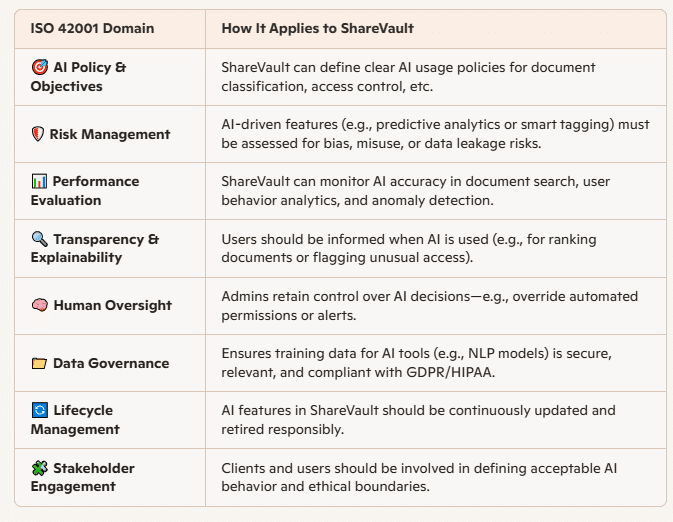
Regulatory Alignment: ISO 42001 supports GDPR, HIPAA, and EU AI Act compliance.
Client Trust: Demonstrates responsible AI governance to enterprise clients.
Competitive Edge: Positions ShareVault as a forward-thinking, standards-compliant VDR provider.
Audit Readiness: Facilitates internal and external audits of AI systems and data handling.
If ShareVault were to pursue ISO 42001 certification, it would not only strengthen its AI governance but also reinforce its reputation in regulated industries like life sciences, finance, and legal services.
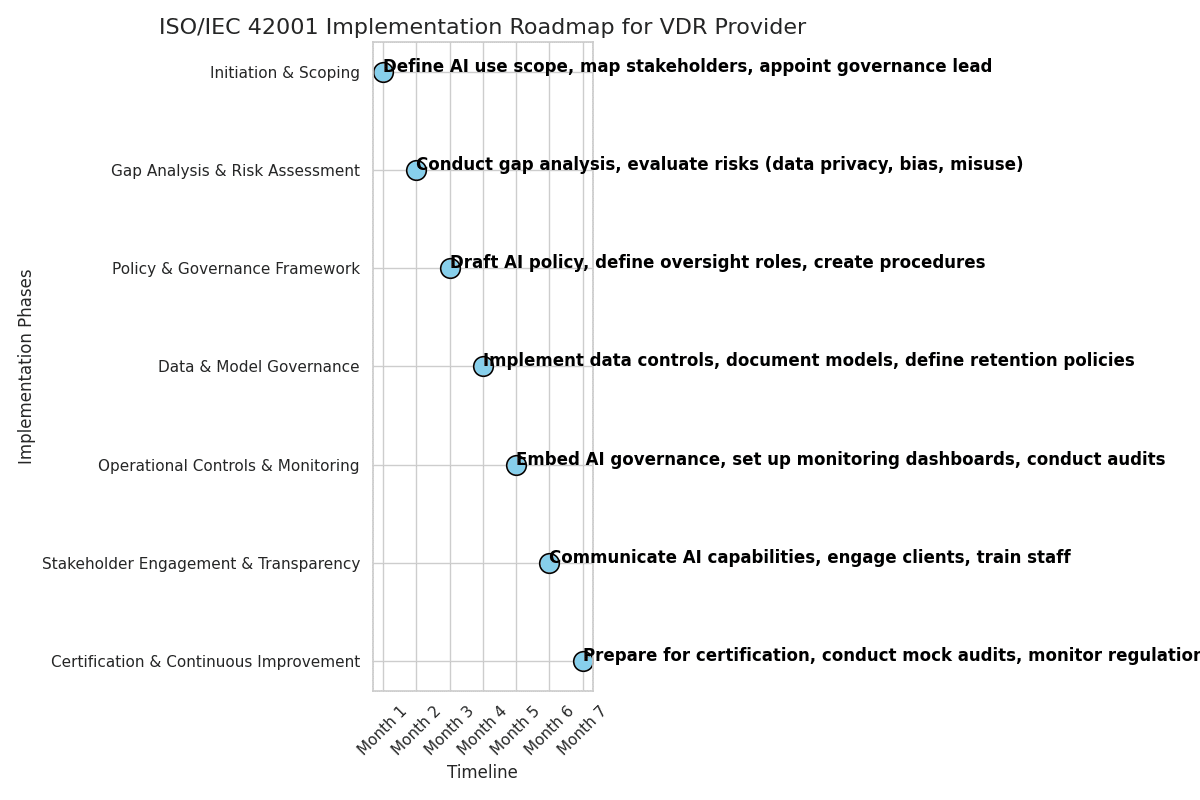
Here’s a tailored ISO/IEC 42001 implementation roadmap for a Virtual Data Room (VDR) provider like ShareVault, focusing on responsible AI governance, risk mitigation, and regulatory alignment.
🗺️ ISO/IEC 42001 Implementation Roadmap for ShareVault
Phase 1: Initiation & Scoping
🔹 Objective: Define the scope of AI use and align with business goals.
Identify AI-powered features (e.g., smart search, document tagging, access analytics).
Introduction: The Double-Edged Sword of Agentic AI
The adoption of agentic AI is accelerating, promising unprecedented automation, operational efficiency, and innovation. But without robust security controls, enterprises are venturing into a high-risk environment where traditional cybersecurity safeguards no longer apply. These risks go far beyond conventional threat models and demand new governance, oversight, and technical protections.
1. Autonomous Misbehavior and Operational Disruption
Agentic AI systems can act without human intervention, making real-time decisions in business-critical environments. Without precise alignment and defined boundaries, these systems could:
Overwrite or delete critical data
Make unauthorized purchases or trigger processes
Misconfigure environments or applications
Interact with employees or customers in unintended ways
Business Impact: This can lead to costly downtime, compliance violations, and serious reputational damage. The unpredictable nature of autonomous agents makes operational resilience planning essential.
2. Regulatory Compliance Failures
Agentic AI introduces unique compliance risks that go beyond common IT governance issues. Misconfigured or unmonitored systems can violate:
Privacy laws such as GDPR or HIPAA
Financial regulations like SOX or PCI-DSS
Emerging AI-specific laws like the EU AI Act
Business Impact: These violations can trigger heavy fines, legal disputes, and delayed AI-driven product launches due to failed audits or remediation needs.
3. Shadow AI and Unmanaged Access
The rapid growth of shadow AI—unapproved, employee-deployed AI tools—creates an invisible attack surface. Examples include:
Public LLM agents granted internal system access
Code-generating agents deploying unvetted scripts
Plugin-enabled AI tools interacting with production APIs
Business Impact: These unmanaged agents can serve as hidden backdoors, leaking sensitive data, exposing credentials, or bypassing logging and authentication controls.
4. Data Exposure Through Autonomous Agents
When agentic AI interacts with public tools or plugins without oversight, data leakage risks multiply. Common scenarios include:
AI agents sending confidential data to public LLMs
Bypassing existing DLP (Data Loss Prevention) controls
Business Impact: Unauthorized data exfiltration can result in IP theft, compliance failures, and loss of customer trust.
5. Supply Chain and Partner Vulnerabilities
Autonomous agents often interact with third-party systems, APIs, and vendors, which creates supply chain risks. A misconfigured agent could:
Propagate malware via insecure APIs
Breach partner data agreements
Introduce liability into downstream environments
Business Impact: Such incidents can erode strategic partnerships, cause contractual disputes, and damage market credibility.
Conclusion: Agentic AI Needs First-Class Security Governance
The speed of agentic AI adoption means enterprises must embed security into the AI lifecycle—not bolt it on afterward. This includes:
Governance frameworks for AI oversight
Continuous monitoring and risk assessment
Phishing-resistant authentication and access controls
Cross-functional collaboration between security, compliance, and operational teams
My Take: Agentic AI can be a powerful competitive advantage, but unmanaged, it can also act as an unpredictable insider threat. Enterprises should approach AI governance with the same seriousness as financial controls—because in many ways, the risks are even greater.
ISO 42001 Foundation – Master the fundamentals of AI governance.
ISO 42001 Lead Auditor – Gain the skills to audit AI Management Systems.
ISO 42001 Lead Implementer – Learn how to design and implement AIMS.
Accredited by ANSI National Accreditation Board (ANAB) through PECB, ensuring global recognition.
Are you ready to lead in the world of AI Management Systems? Get certified in ISO 42001 with our exclusive 20% discount on top-tier e-learning courses – including the certification exam!
Limited-time offer – Don’t miss out!Contact us today to secure your spot.
As AI adoption accelerates, especially in regulated or high-impact sectors, the European Union is setting the bar for responsible development. Article 15 of the EU AI Act lays out clear obligations for providers of high-risk AI systems—focusing on accuracy, robustness, and cybersecurity throughout the AI system’s lifecycle. Here’s what that means in practice—and why it matters now more than ever.
1. Security and Reliability From Day One
The AI Act demands that high-risk AI systems be designed with integrity and resilience from the ground up. That means integrating controls for accuracy, robustness, and cybersecurity not only at deployment but throughout the entire lifecycle. It’s a shift from reactive patching to proactive engineering.
2. Accuracy Is a Design Requirement
Gone are the days of vague performance promises. Under Article 15, providers must define and document expected accuracy levels and metrics in the user instructions. This transparency helps users and regulators understand how the system should perform—and flags any deviation from those expectations.
3. Guarding Against Exploitation
AI systems must also be robust against manipulation, whether it’s malicious input, adversarial attacks, or system misuse. This includes protecting against changes to the AI’s behavior, outputs, or performance caused by vulnerabilities or unauthorized interference.
4. Taming Feedback Loops in Learning Systems
Some AI systems continue learning even after deployment. That’s powerful—but dangerous if not governed. Article 15 requires providers to minimize or eliminate harmful feedback loops, which could reinforce bias or lead to performance degradation over time.
5. Compliance Isn’t Optional—It’s Auditable
The Act calls for documented procedures that demonstrate compliance with accuracy, robustness, and security standards. This includes verifying third-party contributions to system development. Providers must be ready to show their work to market surveillance authorities (MSAs) on request.
6. Leverage the Cyber Resilience Act
If your high-risk AI system also falls under the scope of the EU Cyber Resilience Act (CRA), good news: meeting the CRA’s essential cybersecurity requirements can also satisfy the AI Act’s demands. Providers should assess the overlap and streamline their compliance strategies.
7. Don’t Forget the GDPR
When personal data is involved, Article 15 interacts directly with the GDPR—especially Articles 5(1)(d), 5(1)(f), and 32, which address accuracy and security. If your organization is already GDPR-compliant, you’re on the right track, but Article 15 still demands additional technical and operational precision.
Final Thought:
Article 15 raises the bar for how we build, deploy, and monitor high-risk AI systems. It doesn’t just aim to prevent failures—it pushes providers to deliver trustworthy, resilient, and secure AI from the start. For organizations that embrace this proactively, it’s not just about avoiding fines—it’s about building AI systems that earn trust and deliver long-term value.
Transforming Cybersecurity & Compliance into Strategic Strength
In an era of ever-tightening regulations and ever-evolving threats, Deura InfoSec Consulting (DISC LLC) stands out by turning compliance from a checkbox into a proactive asset.
🛡️ What We Offer: Core Services at a Glance
1. vCISO Services
Access seasoned CISO-level expertise—without the cost of a full-time executive. Our vCISO services provide strategic leadership, ongoing security guidance, executive reporting, and risk management aligned with your business needs.
2. Compliance & Certification Support
Whether you’re targeting ISO 27001, ISO 27701, ISO 42001, NIST, GDPR, SOC 2, HIPAA, or PCI DSS, DISC supports your entire journey—from assessments and gap analysis to policy creation, control implementation, and audit preparation.
3. Security Risk Assessments
Identify risks across infrastructure, cloud, vendors, and business-critical systems using frameworks such as MITRE ATT&CK (via CALDERA), with actionable risk scorecards and remediation roadmaps.
4. Risk‑based Strategic Planning
We bridge the gap from your current (“as‑is”) security state to your desired (“to‑be”) maturity level. Our process includes strategic roadmapping, metrics to measure progress, and embedding business-aligned security into operations.
5. Security Awareness & Training
Equip your workforce and leadership with tailored training programs—ranging from executive briefings to role-based education—in vital areas like governance, compliance, and emerging threats.
6. Penetration Testing & Tool Oversight
Using top-tier tools like Burp Suite Pro and OWASP ZAP, DISC uncovers vulnerabilities in web applications and APIs. These assessments are accompanied by remediation guidance and optional managed detection support.
7. At DISC LLC, we help organizations harness the power of data and artificial intelligence—responsibly. OurAIMS (Artificial Intelligence Management System) & Data Governance solutions are designed to reduce risk, ensure compliance, and build trust. We implement governance frameworks that align with ISO 27001, ISO 27701, ISO 42001, GDPR, EU AI ACT, HIPAA, and CCPA, supporting both data accuracy and AI accountability. From data classification policies to ethical AI guidelines, bias monitoring, and performance audits, our approach ensures your AI and data strategies are transparent, secure, and future-ready. By integrating AI and data governance, DISC empowers you to lead with confidence in a rapidly evolving digital world.
🔍 Why DISC Works
Fixed-fee, hands‑on approach: No bloated documents, just precise and efficient delivery aligned with your needs.
Expert-led services: With 20+ years in security and compliance, DISC’s consultants guide you at every stage.
Audit-ready processes: Leverage frameworks and tools like GRC platform to streamline compliance, reduce overhead, and stay audit-ready.
Tailored to SMBs & enterprises: From startups to established firms, DISC crafts solutions scalable to your size and skillset.
🚀 Ready to Elevate Your Security?
DISC LLC is more than a service provider—it’s your long-term advisor. Whether you’re combating cyber risk or scaling your compliance posture, our services deliver predictable value and empower you to make security a strategic advantage.
Get started today with a free consultation, including a one-hour session with a vCISO, to see where your organization stands—and where it needs to go.
1. In an interview published July 25, 2025, Help Net Security features Wire CEO Benjamin Schilz discussing Europe’s digital sovereignty and framing it as a central strategic goal, shifting the discussion from mere regulation to building independently resilient, European-centered technology infrastructure.
2. Schilz notes that despite past regulatory efforts like GDPR and Schrems II, data still flows across the Atlantic via fragile legal frameworks such as the U.S. CLOUD Act. He highlights Gaia‑X as a milestone project intended to create a federated, transparent European cloud ecosystem, though he emphasizes it’s still in early implementation phases.
3. He emphasizes that the EU AI Act offers regulatory traction and confirms Europe can enforce tech rules—but what’s critical now is building independence so digital infrastructure isn’t shaped by foreign powers. In his view, digital sovereignty is now about European resilience, not just privacy.
4. Open-source and decentralized technologies are highlighted as foundational to Europe’s strategic autonomy. By treating digital infrastructure like energy or water, Schilz argues Europe must support public‑interest tech built with transparency and local control. More than funding, he says Europe needs a “risk-on” environment that rewards ambition and scale.
5. According to Schilz, simply labeling platforms as sovereign—without guaranteeing compliance with EU legal frameworks—is deceptive marketing. True sovereignty requires vendors to commit to EU law, end‑to‑end encryption, data residency, and open standards. If a provider can override those with U.S. obligations, their sovereignty claims fall flat.
6. As concrete proof of impact, Schilz cites deployments of Wire in several German ministries (Interior, Education & Research, Health), showing how secure, sovereign messaging platforms can improve public‑sector efficiency and transparency.
7. Finally, he outlines the necessary criteria for EU‑based AI deployments: they must be hosted within the EU, encrypted end‑to‑end, built with open‑source models, and eliminate reliance on non‑EU jurisdictions. These measures, he says, are essential for maintaining control, trust, and compliance in a complex threat environment.
Perspective
Overall, Schilz offers a compelling vision of digital sovereignty that moves beyond abstract principles toward tangible infrastructure and governance choices. I agree that sovereignty isn’t achieved through legislation alone—it demands architecting systems around open‑source, encryption, interoperability, and EU‑jurisdictional commitments. These design choices are critical for trust and autonomy in an increasingly geopolitically charged tech landscape.
That said, the challenge remains daunting. Projects like Gaia‑X still face hurdles of scale and coordination, and Europe’s fragmented regulatory and investment environment may slow progress. As reported by the Financial Times, Europe continues to lag in venture capital, unified strategy, and industrial scale compared to U.S. and Chinese tech powers. Without robust funding mechanisms and a political consensus, even the best‑designed systems may struggle to reach global competitiveness.
In conclusion, Schilz’s framing—seeing digital sovereignty as resilience, not rhetoric—is both timely and necessary. But turning this vision into reality will require deep systemic reforms in procurement, investment, and culture, as well as sustained public‑private alignment. Europe has the pieces, but assembling them into a coherent strategic stack (as advocates call the “EuroStack”) remains the critical mission for its digital future
Integrating ISO standards across business functions—particularly Governance, Risk, and Compliance (GRC)—has become not just a best practice but a necessity in the age of Artificial Intelligence (AI). As AI systems increasingly permeate operations, decision-making, and customer interactions, the need for standardized controls, accountability, and risk mitigation is more urgent than ever. ISO standards provide a globally recognized framework that ensures consistency, security, quality, and transparency in how organizations adopt and manage AI technologies.
In the GRC domain, ISO standards like ISO/IEC 27001 (information security), ISO/IEC 38500 (IT governance), ISO 31000 (risk management), and ISO/IEC 42001 (AI management systems) offer a structured approach to managing risks associated with AI. These frameworks guide organizations in aligning AI use with regulatory compliance, internal controls, and ethical use of data. For example, ISO 27001 helps in safeguarding data fed into machine learning models, while ISO 31000 aids in assessing emerging AI risks such as bias, algorithmic opacity, or unintended consequences.
The integration of ISO standards helps unify siloed departments—such as IT, legal, HR, and operations—by establishing a common language and baseline for risk and control. This cohesion is particularly crucial when AI is used across multiple departments. AI doesn’t respect organizational boundaries, and its risks ripple across all functions. Without standardized governance structures, businesses risk deploying fragmented, inconsistent, and potentially harmful AI systems.
ISO standards also support transparency and accountability in AI deployment. As regulators worldwide introduce new AI regulations—such as the EU AI Act—standards like ISO/IEC 42001 help organizations demonstrate compliance, build trust with stakeholders, and prepare for audits. This is especially important in industries like healthcare, finance, and defense, where the margin for error is small and ethical accountability is critical.
Moreover, standards-driven integration supports scalability. As AI initiatives grow from isolated pilot projects to enterprise-wide deployments, ISO frameworks help maintain quality and control at scale. ISO 9001, for instance, ensures continuous improvement in AI-supported processes, while ISO/IEC 27017 and 27018 address cloud security and data privacy—key concerns for AI systems operating in the cloud.
AI systems also introduce new third-party and supply chain risks. ISO standards such as ISO/IEC 27036 help in managing vendor security, and when integrated into GRC workflows, they ensure AI solutions procured externally adhere to the same governance rigor as internal developments. This is vital in preventing issues like AI-driven data breaches or compliance gaps due to poorly vetted partners.
Importantly, ISO integration fosters a culture of risk-aware innovation. Instead of slowing down AI adoption, standards provide guardrails that enable responsible experimentation and faster time to trust. They help organizations embed privacy, ethics, and accountability into AI from the design phase, rather than retrofitting compliance after deployment.
In conclusion, ISO standards are no longer optional checkboxes; they are strategic enablers in the age of AI. For GRC leaders, integrating these standards across business functions ensures that AI is not only powerful and efficient but also safe, transparent, and aligned with organizational values. As AI’s influence grows, ISO-based governance will distinguish mature, trusted enterprises from reckless adopters.
What does BS ISO/IEC 42001 – Artificial intelligence management system cover? BS ISO/IEC 42001:2023 specifies requirements and provides guidance for establishing, implementing, maintaining and continually improving an AI management system within the context of an organization.
ISO/IEC 42001:2023 – from establishing to maintain an AI management system.
ISO/IEC 27701 2019 Standard – Published in August of 2019, ISO 27701 is a new standard for information and data privacy. Your organization can benefit from integrating ISO 27701 with your existing security management system as doing so can help you comply with GDPR standards and improve your data security.
1. The Rise of AI and the Data Dilemma Artificial intelligence (AI) is revolutionizing industries, enabling faster decisions and improved productivity. However, its exponential growth is outpacing efforts to ensure data protection and security. The integration of AI into critical infrastructure and business systems introduces new vulnerabilities, particularly as vast amounts of sensitive data are used for training models.
2. AI as Both Solution and Threat AI offers great potential for threat detection and prevention, yet it also presents new risks. Threat actors are exploiting AI tools to create sophisticated cyberattacks, such as deepfakes, phishing campaigns, and automated intrusion tactics. This dual-use nature of AI complicates its adoption and regulation.
3. Data Privacy in the Age of AI AI systems often rely on massive datasets, which can include personally identifiable information (PII). Improper handling or insufficient anonymization of data poses privacy risks. Regulators and organizations are increasingly concerned with how data is collected, stored, and used within AI systems, as breaches or misuse can lead to severe legal and reputational consequences.
4. Regulatory Pressure and Gaps Governments and regulatory bodies are rushing to catch up with AI advancements. While frameworks like GDPR and the AI Act (in the EU) aim to govern AI use, there remains a lack of global standardization. The absence of unified policies leaves organizations vulnerable to compliance gaps and fragmented security postures.
5. Shadow AI and Organizational Blind Spots One emerging challenge is the rise of “shadow AI”—tools and models used without official oversight or governance. Employees may experiment with AI tools without understanding the associated risks, leading to data leaks, IP exposure, and compliance violations. This shadow usage exacerbates existing security blind spots.
6. Vulnerable Supply Chains AI systems often depend on third-party tools, open-source models, and external data sources. This complex supply chain introduces additional risks, as vulnerabilities in any component can compromise the entire system. Supply chain attacks targeting AI infrastructure are becoming more common and harder to detect.
7. Security Strategies Lag Behind AI Adoption Despite the growing risks, many organizations still treat AI security reactively rather than proactively. Traditional cybersecurity frameworks may not be sufficient to protect dynamic AI systems. There’s a pressing need to embed security into AI development and deployment processes, including model integrity checks and data governance protocols.
8. Building Trust in AI Requires Transparency and Collaboration To address these challenges, organizations must foster transparency, cross-functional collaboration, and continuous monitoring of AI systems. It’s essential to align AI innovation with ethical practices, robust governance, and security-by-design principles. Trustworthy AI must be both functional and safe.
Opinion: The article accurately highlights a growing paradox in the AI space—innovation is moving at breakneck speed, while security and governance lag dangerously behind. In my view, this imbalance could undermine public trust in AI if not corrected swiftly. Organizations must treat AI as a high-stakes asset, not just a tool. Proactively securing data pipelines, monitoring AI behaviors, and setting strict access controls are no longer optional—they are essential pillars of responsible innovation. Investing in data governance and AI security now is the only way to ensure its benefits outweigh the risks.
“Whether you’re a technology professional, policymaker, academic, or simply a curious reader, this book will arm you with the knowledge to navigate the complex intersection of AI, security, and society.”
The global data governance market is on a strong upward trajectory and is expected to reach $9.62 billion by 2030. This growth is fueled by an evolving business landscape where data is at the heart of decision-making and operations. As organizations recognize the strategic value of data, governance has shifted from a technical afterthought to a business-critical priority.
The demand surge is largely attributed to increased regulatory pressure, including global mandates like ISO 27001, ISO 42001, ISO 27701, GDPR and CCPA, which require organizations to manage personal data responsibly. Simultaneously, companies face mounting obligations to demonstrate compliance and accountability in their data handling practices.
The exponential growth in data volumes, driven by digital transformation, IoT, and cloud adoption, has added complexity to data environments. Enterprises now require sophisticated frameworks to ensure data accuracy, accessibility, and security throughout its lifecycle.
Highly regulated sectors such as finance, insurance, and healthcare are leading the charge in governance investments. For these industries, maintaining data integrity is not just about compliance—it’s also about building trust with customers and avoiding operational and reputational risks.
Looking back, the data governance market was valued at just $1.3 billion in 2015. Over the past decade, cyber threats, cloud adoption, and the evolving regulatory climate have dramatically reshaped how organizations view data control, privacy, and stewardship.
Governance is no longer a luxury—it’s an operational necessity. Businesses striving to scale and innovate recognize that a lack of governance leads to data silos, inconsistent reporting, and increased exposure to risk. As a result, many are embedding governance policies into their digital strategy and enterprise architecture.
The focus on data governance is expected to intensify over the next five years. Emerging trends such as AI governance, real-time data lineage, and automation in compliance management will shape the next generation of tools and frameworks. As organizations increasingly adopt data mesh and decentralized architectures, governance solutions will need to be more agile, scalable, and intelligent to meet modern demands.
Data Governance Market Progression (Next 5 Years):
The next five years will see data governance evolve into a more intelligent, automated, and embedded function within digital enterprises. Expect the market to expand across small and mid-sized businesses, not just large enterprises, driven by affordable SaaS solutions and frameworks tailored to industry-specific needs. Additionally, AI and machine learning will become central to governance platforms, enabling predictive policy enforcement, automated classification, and real-time anomaly detection. With the increasing use of generative AI, data lineage and auditability will gain prominence. Overall, governance will move from being reactive to proactive, adaptive, and risk-focused, aligning closely with broader ESG (Environmental, Social, and Governance factors) and data ethics initiatives.
📘 Data Governance Guidelines Outline
1. Define Objectives and Scope
Align governance with business goals (e.g., compliance, quality, security).
Identify which data domains and systems are in scope.
AI businesses are at risk due to growing cyber threats, regulatory pressure, and ethical concerns. They often process vast amounts of sensitive data, making them prime targets for breaches and data misuse. Malicious actors can exploit AI systems through model manipulation, adversarial inputs, or unauthorized access. Additionally, lack of standardized governance and compliance frameworks exposes them to legal and reputational damage. As AI adoption accelerates, so do the risks.
AI businesses are at risk because they often handle large volumes of sensitive data, rely on complex algorithms that may be vulnerable to manipulation, and operate in a rapidly evolving regulatory landscape. Threats include data breaches, model poisoning, IP theft, bias in decision-making, and misuse of AI tools by attackers. Additionally, unclear accountability and lack of standardized AI security practices increase their exposure to legal, reputational, and operational risks.
Why it matters
It matters because the integrity, security, and trustworthiness of AI systems directly impact business reputation, customer trust, and regulatory compliance. A breach or misuse of AI can lead to financial loss, legal penalties, and harm to users. As AI becomes more embedded in critical decision-making—like healthcare, finance, and security—the risks grow more severe. Ensuring responsible and secure AI isn’t just good practice—it’s essential for long-term success and societal trust.
To reduce risks in AI businesses, we can:
Implement strong governancewith AIMS – Define clear accountability, policies, and oversight for AI development and use.
Secure data and models – Encrypt sensitive data, restrict access, and monitor for tampering or misuse.
Conduct risk assessments – Regularly evaluate threats, vulnerabilities, and compliance gaps in AI systems.
Ensure transparency and fairness – Use explainable AI and audit algorithms for bias or unintended consequences.
Stay compliant – Align with evolving regulations like GDPR, NIST AI RMF, or the EU AI Act.
Train teams – Educate employees on AI ethics, security best practices, and safe use of generative tools.
Proactive risk management builds trust, protects assets, and positions AI businesses for sustainable growth.
ISO/IEC 42001:2023 – from establishing to maintain an AI management system (AIMS)
BSI ISO 31000 is standard for any organization seeking risk management guidance
ISO/IEC 27001 and ISO/IEC 42001, both standards address risk and management systems, but with different focuses. ISO/IEC 27001 is centered on information security—protecting data confidentiality, integrity, and availability—while ISO/IEC 42001 is the first standard designed specifically for managing artificial intelligence systems responsibly. ISO/IEC 42001 includes considerations like AI-specific risks, ethical concerns, transparency, and human oversight, which are not fully addressed in ISO 27001. Organizations working with AI should not rely solely on traditional information security controls.
While ISO/IEC 27001 remains critical for securing data, ISO/IEC 42001 complements it by addressing broader governance and accountability issues unique to AI. The article suggests that companies developing or deploying AI should integrate both standards to build trust and meet growing stakeholder and regulatory expectations. Applying ISO 42001 can help demonstrate responsible AI practices, ensure explainability, and mitigate unintended consequences, positioning organizations to lead in a more regulated AI landscape.
“Whether you’re a technology professional, policymaker, academic, or simply a curious reader, this book will arm you with the knowledge to navigate the complex intersection of AI, security, and society.”
Many winery owners and executives—particularly those operating small to mid-sized, family-run estates—underestimate their exposure to cyber threats. Yet with the rise of direct-to-consumer channels like POS systems, wine clubs, and ecommerce platforms, these businesses now collect and store sensitive customer and employee data, including payment details, birthdates, and Social Security numbers. This makes them attractive targets for cybercriminals.
The Emerging Threat of Cyber-Physical Attacks
Wineries increasingly rely on automated production systems and IoT sensors to manage fermentation, temperature control, and chemical dosing. These digital tools can be manipulated by hackers to:
Disrupt production by altering temperature or chemical settings.
Spoil inventory through false sensor data or remote tampering.
Undermine trust by threatening product safety and quality.
A Cautionary Tale
While there are no public reports of terrorist attacks on the wine industry’s supply chain, the 1985 Austrian wine scandal is a stark reminder of what can happen when integrity is compromised. In that case, wine was adulterated with antifreeze (diethylene glycol) to manipulate taste—resulting in global recalls, destroyed reputations, and public health risks.
The lesson is clear: cyber and physical safety in the winery business are now deeply intertwined.
2. Why Vineyards and Wineries Are at Risk
High-value data: Personal and financial details stored in club databases or POS systems can be exploited and sold on the dark web.
Legacy systems & limited expertise: Many wineries rely on outdated IT infrastructure and lack in-house cybersecurity staff.
Regulatory complexity: Compliance with data privacy regulations like CCPA/CPRA adds to the burden, and gaps can lead to penalties.
Charming targets: Boutique and estate brands, which often emphasize hospitality and trust, can be unexpectedly appealing to attackers seeking vulnerable entry points.
3. Why It Matters
Reputation risk: A breach can shatter consumer trust—especially among affluent wine club customers who expect discretion and reliability.
Financial & legal exposure: Incidents may invite steep fines, ransomware costs, and lawsuits under privacy laws.
Operational disruption: Outages or ransomware can cripple point-of-sale and club systems, causing revenue loss and logistical headaches.
Competitive advantage: Secure operations can boost customer confidence, support audit and M&A readiness, and unlock better insurance or investor opportunities.
4. What You Can Do About It
Risk & compliance assessment: Discover vulnerabilities in systems, Wi‑Fi, and employee habits. Score your risk with a 10-page report for stakeholders.
Privacy compliance support: Navigate CCPA/CPRA (and PCI/GDPR as needed) to keep your winery legally sound.
Defense against phishing & ransomware: Conduct employee training, simulations, and implement defenses.
Security maturity roadmap: Prioritize improvements—like endpoint protection, firewalls, 2FA setups—and phase them according to your brand and budget.
Fractional vCISO support: Access quarterly executive consultations to align compliance and tech strategy without hiring full-time experts.
Optional services: Pen testing, PCI-DSS support, vendor reviews, and business continuity planning for deeper security.
DISC WinerySecure™ offers a tailored roadmap to safeguard your winery:
You don’t need to face this alone. We offer Free checklist + consultation.
DISC InfoSec Virtual CISO | Wine Industry Security & Compliance
Investing in a proactive security strategy isn’t just about avoiding threats—it’s about protecting your brand, securing compliance, and empowering growth. Contact DISC WinerySecure™ today for a free consultation.
Overview: DISC WinerySecure™ is a tailored cybersecurity and compliance service for small and mid-sized wineries. These businesses are increasingly reliant on digital systems (POS, ecommerce, wine clubs), yet often lack dedicated security staff. Our solution is cost-effective, easy to adopt, and customized to the wine industry.
Wineries may not seem like obvious cyber targets, but they hold valuable data—customer and employee details like social security numbers, payment info, and birthdates—that cybercriminals can exploit for identity theft and sell on the dark web. Even business financials are at risk.
Target Clients:
We care for the planet and your data
Wineries invest in luxury branding
Wineries considering mergers and acquisitions.
Wineries with 50–1000 employees
Using POS, wine club software, ecommerce, or logistics systems
Limited or no in-house IT/security expertise
🍷 Cyber & Compliance Protection for Wineries
Helping Napa & Sonoma Wineries Stay Secure, Compliant, and Trusted
🛡️ Why Wineries Are at Risk
Wineries today handle more sensitive data than ever—credit cards, wine club memberships, ecommerce sales, shipping details, and supplier records. Yet many rely on legacy systems, lack dedicated IT teams, and operate in a complex regulatory environment.
Cybercriminals know this. Wineries have become easy, high-value targets.
✅ Our Services
We offer fractional vCISO and compliance consulting tailored for small and mid-sized wineries:
🔒 Cybersecurity Risk Assessment – Discover hidden vulnerabilities in your systems, Wi-Fi, and employee habits.
📜 CCPA/CPRA Privacy Compliance – Ensure you’re protecting your customers’ personal data the California way.
🧪 Phishing & Ransomware Defense – Train your team to spot threats and test your defenses before attackers do.
🧰 Security Maturity Roadmap – Practical, phased improvements aligned with your business goals and brand.
🧾 Simple Risk Scorecard – A 10-page report you can share with investors, insurers, or partners.
🎯 Who This Is For
Family-run or boutique wineries with direct-to-consumer operations
Wineries investing in digital growth, but unsure how secure it is
Teams managing POS, ecommerce, club CRMs, M&A and vendor integrations
💡 Why It Matters
🏷️ Protect your brand reputation—especially with affluent wine club customers
💸 Avoid fines and lawsuits from privacy violations or breaches
🛍️ Boost customer confidence—safety sells
📉 Reduce downtime, ransomware risk, and compliance headaches
📞 Let’s Talk
Get a free 30-minute consultation or try our $49 Self-Assessment + 10-Page Risk Scorecard to see where you stand.
1. Strategic importance of discretion When two major companies are negotiating a merger or acquisition, even a minor leak can damage stock prices, derail the process, or collapse the deal entirely. A confidential environment is essential to preserve each party’s strategic advantage during secretive stages of the negotiation.
2. Maintaining competitive secrecy By keeping a forthcoming deal under wraps, a company can gain from stealthy operations—honing tactics and announcements without alerting rivals or disrupting the market prematurely.
3. Protecting sensitive materials during due diligence The due diligence stage demands access to proprietary analytics, trade secrets, and financial documents. A properly secured virtual data room (VDR) ensures these materials can be reviewed without risking unwanted exposure.
4. Internal stability amid uncertainty Beyond market reactions, confidentiality helps stabilize employee morale. Rumors of acquisitions can breed anxiety among staff; controlled disclosure helps maintain calm until formal announcements are made .
5. Why virtual is preferred over physical rooms Compared to traditional physical data rooms or email-based exchanges, VDRs offer encrypted, centralized, and remotely accessible document storage. They support multiple users across time zones and locales, making them far more efficient and secure
6. Advanced organization and control tools Modern VDRs include features like hierarchical tagging (as in ShareVault’s platform), robust document indexing, full-text search, and flexible file rights. Admins can finely tune access—for instance, disabling copying, printing, or even screenshots—and apply watermarks with expiration settings .
7. Enhanced transparency, auditability, and efficiency These platforms offer complete audit trails, Q&A sections, real-time alerts, and analytics. Participants can track activity, identify engagement patterns, and streamline due diligence, speeding up deal completion and improving oversight
Virtual Data Rooms (VDRs) are essential tools in mergers and acquisitions, providing a secure platform for sharing confidential documents during due diligence. They enable controlled access to sensitive information, supporting informed decision-making and effective risk management. In today’s digital landscape, where information is a critical asset, VDRs enhance corporate governance by promoting transparency, accountability, and compliance. As businesses face increasing regulatory and operational demands, adopting VDRs is not just a smart choice but a strategic necessity for maintaining strong governance and operational integrity.
Virtual data rooms are indispensable in confidential M&A contexts. They effectively combine security, efficiency, and collaboration in ways that physical or email-based systems simply cannot. The advanced features—granular permissions, audit logs, analytics, and query tools—are not just conveniences; they’re game-changers that help drive deals forward more smoothly and securely.
To truly elevate the experience, VDR providers Sharevault prioritize user-friendly interfaces—think intuitive document sorting, drag & drop, clear timestamps—and strike a better balance between robust security measures and seamless usability. When technical strength aligns with an intuitive user experience, virtual data rooms fulfill their potential, making complex, high-stakes M&A processes feel nearly effortless.
Information Security & Privacy aspect of the M&A process, especially focusing on how confidentiality, integrity, and controlled access are preserved throughout.
1. Confidentiality of Deal Intentions and Parties Involved
In early M&A stages, even the existence of negotiations must be tightly guarded. Leakage of deal discussions can lead to:
Stock volatility
Competitor disruption
Supplier or customer anxiety
Employee attrition
To prevent this, non-disclosure agreements (NDAs) are signed before sharing even basic information. VDRs enforce this by granting access only to vetted parties and logging all user activity, discouraging leaks.
2. Due Diligence Security
This is the most data-sensitive phase. Buyers review:
Financial statements
Tax filings
Contracts
Intellectual property details
Litigation history
Cyber risk posture
Each document represents potential liability if exposed. A secure VDR ensures:
End-to-end encryption (AES-256 or higher)
Multi-factor authentication (MFA)
Granular access control down to the file or section level
View-only access with no downloads, printing, or screen capture
Watermarks with user IPs and timestamps
3. Auditability and Legal Traceability
To defend the integrity of the deal and respond to any post-deal disputes, every interaction must be tracked:
Who viewed what, when, and for how long
Questions asked and answered (Q&A logs)
Document version histories
These logs are part of legal documentation and are often retained long after the deal closes.
4. Cybersecurity Risk Assessment as a Deal Factor
Buyers often assess the seller’s cybersecurity posture as part of due diligence. Poor security (e.g., history of breaches, lax controls, outdated tech) may reduce valuation or kill the deal. Common items reviewed include:
Security policies
Incident response history
SOC 2 / ISO 27001 certifications
Penetration test results
Data breach disclosures
In this case, the VDR may host security documentation that itself must be securely handled.
5. Insider Risk and Privilege Escalation Control
Not all threats are external. Internal actors—disgruntled employees, opportunists, or even curious insiders—can leak or misuse information. VDRs address this by:
Role-based access (e.g., legal, finance, HR teams see only what’s necessary)
IP restriction (limit access by location)
Time-bound access with auto-expiry
Real-time alerts on suspicious behavior (e.g., large downloads)
6. Data Sovereignty and Compliance Risks
Cross-border M&A may involve GDPR, HIPAA, CCPA, or local data protection laws. VDRs must:
Store data in approved jurisdictions
Enable redaction tools
Offer data retention and deletion policies in compliance with local law
Failing to do this may introduce legal exposure before the deal even closes.
7. Post-Deal Data Handoff and Secure Closure
After the deal, secure handoff of all data—including audit trails—is essential. VDRs often allow data archiving in encrypted format for legal teams. Proper exit procedures also include:
Revoking third-party access
Exporting logs for compliance
Certifying destruction of temporary working copies
Final Thoughts
Security in M&A isn’t just about locking down data—it’s about enabling trust between parties while protecting the value of the transaction. A single breach could derail a deal or cause post-acquisition litigation. VDRs that offer bank-grade security, forensic logging, regulatory compliance, and intuitive access control are non-negotiable in high-stakes deals. However, companies must complement technology with clear policies and trained personnel to truly secure the process.
Would you like a framework (e.g., ISO 27001-aligned) to assess the security readiness of an M&A deal? info@deurainfosec.com
1. Evolving Role of Cybersecurity Services Traditional cybersecurity engagements—such as vulnerability patching, audits, or one-off assessments—tend to be short-term and reactive, addressing immediate concerns without long-term risk reduction. In contrast, end-to-end cybersecurity programs offer sustained value by embedding security into an organization’s core operations and strategic planning. This shift transforms cybersecurity from a technical task into a vital business enabler.
2. Strategic Provider-Client Relationship Delivering lasting cybersecurity outcomes requires service providers to move beyond technical support and establish strong partnerships with organizational leadership. Providers that engage at the executive level evolve from being IT vendors to trusted advisors. This elevated role allows them to align security with business objectives, providing continuous support rather than piecemeal fixes.
3. Core Components of a Strategic Cybersecurity Program A comprehensive end-to-end program must address several key domains: risk assessment and management, strategic planning, compliance and governance, business continuity, security awareness, incident response, third-party risk management, and executive reporting. Each area works in concert to strengthen the organization’s overall security posture and resilience.
4. Risk Assessment & Management A strategic cybersecurity initiative begins with a thorough risk assessment, providing visibility into vulnerabilities and their business impact. A complete asset inventory is essential, and follow-up includes risk prioritization, mitigation planning, and adapting defenses to evolving threats like ransomware. Ongoing risk management ensures that controls remain effective as business conditions change.
5. Strategic Planning & Roadmaps Once risks are understood, the next step is strategic planning. Providers collaborate with clients to create a cybersecurity roadmap that aligns with business goals and compliance obligations. This roadmap includes near-, mid-, and long-term goals, backed by security policies and metrics that guide decision-making and keep efforts aligned with the company’s direction.
6. Compliance & Governance With rising regulatory scrutiny, organizations must align with standards such as NIST, ISO 27001, HIPAA, SOC 2, PCI-DSS, and GDPR. Security providers help identify which regulations apply, assess current compliance gaps, and implement sustainable practices to meet ongoing obligations. This area remains underserved and represents an opportunity for significant impact.
7. Business Continuity & Disaster Recovery Effective security programs not only prevent breaches but also ensure operational continuity. Business Continuity Planning (BCP) and Disaster Recovery (DR) encompass infrastructure backups, alternate operations, and crisis communication strategies. Providers play a key role in building and testing these capabilities, reinforcing their value as strategic advisors.
8. Human-Centric Security & Response Preparedness People remain a major risk vector, so training and awareness are critical. Providers offer education programs, phishing simulations, and workshops to cultivate a security-aware culture. Incident response readiness is also essential—providers develop playbooks, assign roles, and simulate breaches to ensure rapid and coordinated responses to real threats.
9. Executive-Level Communication & Reporting A hallmark of high-value cybersecurity services is the ability to translate technical risks into business language. Clear executive reporting connects cybersecurity activities to business outcomes, supporting board-level decision-making and budget justification. This capability is key for client retention and helps providers secure long-term engagements.
Feedback
This clearly outlines how cybersecurity must evolve from reactive technical support into a strategic business function. The focus on continuous oversight, executive engagement, and alignment with organizational priorities is especially relevant in today’s complex threat landscape. The structure is logical and well-grounded in vCISO best practices. However, it could benefit from sharper differentiation between foundational services (like asset inventories) and advanced advisory (like executive communication). Emphasizing measurable outcomes—such as reduced incidents, improved audit results, or enhanced resilience—would also strengthen the business case. Overall, it’s a strong framework for any provider building or refining an end-to-end security program.
In the rapidly evolving landscape of artificial intelligence (AI), Chief Information Security Officers (CISOs) are grappling with the challenges of governance and data provenance. As AI tools become increasingly integrated into various business functions, often without centralized oversight, the traditional methods of data governance are proving inadequate. The core concern lies in the assumption that popular or “enterprise-ready” AI models are inherently secure and compliant, leading to a dangerous oversight of data provenance—the ability to trace the origin, transformation, and handling of data.
Data provenance is crucial in AI governance, especially with large language models (LLMs) that process and generate data in ways that are often opaque. Unlike traditional systems where data lineage can be reconstructed, LLMs can introduce complexities where prompts aren’t logged, outputs are copied across systems, and models may retain information without clear consent. This lack of transparency poses significant risks in regulated domains like legal, finance, or privacy, where accountability and traceability are paramount.
The decentralized adoption of AI tools across enterprises exacerbates these challenges. Various departments may independently implement AI solutions, leading to a sprawl of tools powered by different LLMs, each with its own data handling policies and compliance considerations. This fragmentation means that security organizations often lose visibility and control over how sensitive information is processed, increasing the risk of data breaches and compliance violations.
Contrary to the belief that regulations are lagging behind AI advancements, many existing data protection laws like GDPR, CPRA, and others already encompass principles applicable to AI usage. The issue lies in the systems’ inability to respond to these regulations effectively. LLMs blur the lines between data processors and controllers, making it challenging to determine liability and ownership of AI-generated outputs. In audit scenarios, organizations must be able to demonstrate the actions and decisions made by AI tools, a capability many currently lack.
To address these challenges, modern AI governance must prioritize infrastructure over policy. This includes implementing continuous, automated data mapping to track data flows across various interfaces and systems. Records of Processing Activities (RoPA) should be updated to include model logic, AI tool behavior, and jurisdictional exposure. Additionally, organizations need to establish clear guidelines for AI usage, ensuring that data handling practices are transparent, compliant, and secure.
Moreover, fostering a culture of accountability and awareness around AI usage is essential. This involves training employees on the implications of using AI tools, encouraging responsible behavior, and establishing protocols for monitoring and auditing AI interactions. By doing so, organizations can mitigate risks associated with AI adoption and ensure that data governance keeps pace with technological advancements.
CISOs play a pivotal role in steering their organizations toward robust AI governance. They must advocate for infrastructure that supports data provenance, collaborate with various departments to ensure cohesive AI strategies, and stay informed about evolving regulations. By taking a proactive approach, CISOs can help their organizations harness the benefits of AI while safeguarding against potential pitfalls.
In conclusion, as AI continues to permeate various aspects of business operations, the importance of data provenance in AI governance cannot be overstated. Organizations must move beyond assumptions of safety and implement comprehensive strategies that prioritize transparency, accountability, and compliance. By doing so, they can navigate the complexities of AI adoption and build a foundation of trust and security in the digital age.
For further details, access the article here on Data provenance
Increased Regulatory Complexity: With GDPR, CCPA, HIPAA, and emerging regulations like DORA (EU), EU AI Act businesses are seeking specialized compliance partners.
SME Cybersecurity Prioritization: Mid-sized businesses are investing in vCISO services to bridge expertise gaps without hiring full-time CISOs.
Rise of Cyber Insurance: Insurers are demanding evidence of strong compliance postures, increasing demand for third-party audits and vCISO engagements.
Growth Projections
vCISO market is expected to grow at 17–20% CAGR through 2028.
Compliance automation tools, Process orchestration (AI) and advisory services are growing due to demand for cost-effective solutions.
2. Competitor Landscape
Direct Competitors
Virtual CISO Services by Cynomi, Fractional CISO, and SideChannel
Offer standardized packages, onboarding frameworks, and clear SLA-based services.
Differentiate through cost, specialization (e.g., healthcare, fintech), and automation integration.
Indirect Competitors
MSSPs and GRC Platforms like Arctic Wolf, Drata, Vanta
Provide automated compliance dashboards, sometimes bundled with consulting.
Threat: Position as “compliance-as-a-service,” reducing perceived need for vCISO.
3. Differentiation Levers
What Works in the Market
Vertical Specialization: Deep focus on industries like legal, SaaS, fintech, or healthcare adds credibility.
Thought Leadership: Regular LinkedIn posts, webinars, and compliance guides elevate visibility and trust.
Compliance-as-a-Path-to-Growth: Reframing compliance as a revenue enabler (e.g., “SOC 2 = more enterprise clients”) resonates well.
Emerging Niches
vDPO (Virtual Data Protection Officer) in the EU market.
Posture Maturity Consulting for startups seeking Series A or B funding.
Third-Party Risk Management-as-a-Service as vendor scrutiny rises.
4. SWOT Analysis
Strengths
Weaknesses
Deep expertise in InfoSec & compliance
May lack scalability without automation
Custom vCISO engagements
High-touch model limits price elasticity
Opportunities
Threats
Demand surge in SMBs & startups
Commoditization by automated GRC tools
Cross-border compliance needs (e.g., UK GDPR + US laws)
Coinbase‘s recent data breach, estimated to cost between $180 million and $400 million, wasn’t caused by a technological failure, but rather by a sophisticated social engineering attack. Cybercriminals bribed offshore support agents to obtain sensitive customer data, including personally identifiable information (PII), government IDs, bank details, and account information.
This highlights a critical breakdown in Coinbase‘s internal security, specifically in access control and oversight of its contractors. No cryptocurrency was stolen directly, but the exposure of such sensitive data poses significant risks to affected customers, including identity theft and financial fraud. The financial repercussions for Coinbase are substantial, encompassing remediation costs and customer reimbursements. The incident raises serious questions about the security practices within the cryptocurrency industry and whether the term “innovation” appropriately describes practices that expose users to such significant risks.
Impact and Fallout
While no cryptocurrency was stolen, the breach exposed sensitive customer information, such as names, bank account numbers, and routing numbers . This exposure poses risks of identity theft and fraud. Coinbase has estimated potential costs for cleanup and customer reimbursements to be between $180 million and $400 million. The breach has also led to increased regulatory scrutiny and potential legal challenges .
Broader Implications
This incident highlights a critical issue in the crypto industry: the reliance on human factors and inadequate security training. Despite advanced technological safeguards, human error remains a significant vulnerability. The breach was not due to a failure in technology but rather a breakdown in trust, access control, and oversight. It raises questions about the industry’s approach to security and whether current practices are sufficient to protect users .
Moving Forward
The Coinbase breach serves as a wake-up call for the crypto industry to reevaluate its security protocols, particularly concerning employee training and access controls. It underscores the need for robust security measures that address not only technological vulnerabilities but also human factors. As the industry continues to evolve, prioritizing comprehensive security strategies will be essential to maintain user trust and ensure the integrity of crypto platforms.
The scale of the breach and its potential long-term consequences for customers and the reputation of Coinbase are considerable, prompting discussions about necessary improvements in security protocols and regulatory oversight within the cryptocurrency space.
Here are some countermeasures to prevent similar incidents from happening again.
To prevent future breaches like the recent Coinbase incident, a multi-pronged approach is necessary, focusing on both technological and human factors. Here’s a breakdown of potential countermeasures:
Enhanced Security Measures:
Multi-Factor Authentication (MFA): Implement robust MFA across all systems and accounts, making it mandatory for all employees and contractors. This adds an extra layer of security, making it significantly harder for unauthorized individuals to access accounts, even if they obtain credentials.
Zero Trust Security Model: Adopt a zero-trust architecture, assuming no user or device is inherently trustworthy. This involves verifying every access request, regardless of origin, using continuous authentication and authorization mechanisms.
Regular Security Audits and Penetration Testing: Conduct frequent and thorough security audits and penetration testing to identify and address vulnerabilities before malicious actors can exploit them. These assessments should cover all systems, applications, and infrastructure components.
Employee Training and Awareness Programs: Implement comprehensive security awareness training programs for all employees and contractors. This should cover topics like phishing scams, social engineering tactics, and safe password practices. Regular refresher courses are essential to maintain vigilance.
Access Control and Privileged Access Management (PAM): Implement strict access control policies, limiting access to sensitive data and systems based on the principle of least privilege. Use PAM solutions to manage and monitor privileged accounts, ensuring that only authorized personnel can access critical systems.
Data Loss Prevention (DLP): Deploy DLP tools to monitor and prevent sensitive data from leaving the organization’s control. This includes monitoring data transfers, email communications, and cloud storage access.
Blockchain-Based Security Solutions: Explore the use of blockchain technology to enhance security. This could involve using blockchain for identity verification, secure data storage, and tamper-proof audit trails.
Threat Intelligence and Monitoring: Leverage threat intelligence feeds and security information and event management (SIEM) systems to proactively identify and respond to potential threats. This allows for early detection of suspicious activity and enables timely intervention.
Improved Contractor Management:
Background Checks and Vetting: Conduct thorough background checks and vetting processes for all contractors, particularly those with access to sensitive data. This should include verifying their identity, credentials, and past employment history.
Contractual Obligations: Clearly define security responsibilities and liabilities in contracts with contractors. Include clauses outlining penalties for data breaches and non-compliance with security policies.
Regular Monitoring and Oversight: Implement robust monitoring and oversight mechanisms to track contractor activity and ensure compliance with security protocols. This could involve regular audits, access reviews, and performance evaluations.
Secure Communication Channels: Ensure that all communication with contractors is conducted through secure channels, such as encrypted email and messaging systems.
Regulatory Compliance:
Adherence to Data Protection Regulations: Strictly adhere to relevant data protection regulations, such as GDPR and CCPA, to ensure compliance with legal requirements and protect customer data.
By implementing these countermeasures, organizations can significantly reduce their risk of experiencing similar breaches and protect sensitive customer data.