InfoSec and Compliance – With 20 years of blogging experience, DISC InfoSec blog is dedicated to providing trusted insights and practical solutions for professionals and organizations navigating the evolving cybersecurity landscape. From cutting-edge threats to compliance strategies, this blog is your reliable resource for staying informed and secure. Dive into the content, connect with the community, and elevate your InfoSec expertise!
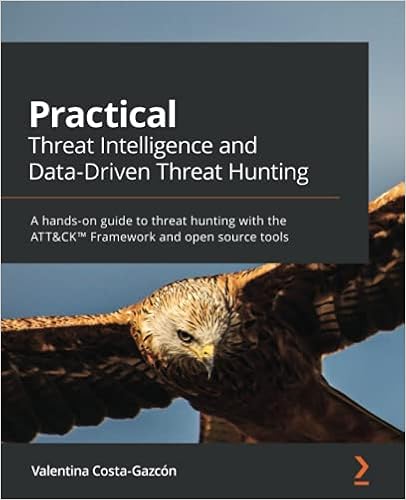
The Red Team Field Manual (RTFM) is a no fluff, but thorough reference guide for serious Red Team members who routinely find themselves on a mission without Google or the time to scan through a man page. The RTFM contains the basic syntax for commonly used Linux and Windows command line tools, but it also encapsulates unique use cases for powerful tools such as Python and Windows PowerShell. The RTFM will repeatedly save you time looking up the hard to remember Windows nuances such as Windows wmic and dsquery command line tools, key registry values, scheduled tasks syntax, startup locations and Windows scripting. More importantly, it should teach you some new red team techniques.
There is a way to avoid cybersecurity threats, and that’s incorporating effective practices in your daily use of the internet. Here are a few best tips for improving cybersecurity.
Use Strong and Varied Password
The “one password fits all platforms” philosophy is ideal for hackers. They only need to get a password to one network to access all of the others as well. To prevent this from happening, you need to set different passwords on all your accounts.
Memorizing all those passwords can be difficult, especially when you consider various platforms you use for studying. However, with password management apps, you won’t have to memorize them. In addition, you need to create a strong password. For a quick solution, you can use a strong random password generator.
Give Your Data Only to Proven Websites
Random websites can ask for detailed personal information if you want to get access to more content or download something. This can be a threat.
Take extra precautions when using unknown platforms. Before you decide to sign up, read their privacy policy and do some research on the company. For example, if you’re looking for an essay writing company, you can first read the info on the best ones on a credible Top Writers Review website. Reviews, Google results, and privacy policies can help you get to know the website better.
Don’t Download Attachments from Unknown Email Senders
Email phishing is among the most frequent types of cyberattacks. A simple email attachment such as a supposed e-book can be a gateway for malware or phishing attacks.
Whenever you get an email from an unknown recipient, don’t download the attachments. Even if the email seems legit, clarify first who the sender is and where they got your email before you download anything.
Stay Away from Unprotected Public WiFi
An unsecured public WiFi gives free access to the network to anyone – including the criminals.
If you are on the same network, it’s easier for cybercriminals to leach onto your device and access everything you have. Even if just want to quickly connect to research document translation companies for your study abroad papers, hackers can get to your data before you finish.
In situations when you can’t avoid using public WiFi, use a VPN and be vigilant. Virtual Private Network or VPN will encrypt all your internet activity. You can download a VPN app on your phone with a few clicks.
Use Platforms and Apps that Encrypt Data
Apps, platforms, and websites with encrypted data will keep your personal information and internet activity safe. Messaging apps with encryption are also more secure.
When browsing, pay attention to whether the websites with a padlock and “https” in their URL are encrypted. These types of websites won’t leak your data to unauthorized parties.
The privacy policy is yet another way of checking whether the app, platform or website is encrypted. For example, if you read in the policy that the site is covered by COPPA (Children’s Online Privacy Protection Act), it is secure. To ensure internet safety for its students, many educational institutions use apps and platforms covered by this act.
Be Vary of URLs in Messages
You might not find anything peculiar about your friend, teacher, or well-known company sending you an URL. Especially if the message comes in the form of a text message or WhatsApp message. Unfortunately, this is one of the tricks of cybercriminals.
This type of attack is quite common. Clicking on the links can completely open the door to your data. So, if you receive a message with a suspicious URL, first inquire what it is about. When a company sends you such a message, go to their official website instead of clicking on the link.
Conclusion
These simple steps of precaution will help you keep your data safe. Being more careful of what actions you take, pages you trust, and how you dispose of your data is necessary. A few tips like these can do a lot for your internet security.
Starting Kali Linux 2021.4, the Samba client is now configured for Wide Compatibility so that it can connect to pretty much every Samba server out there, regardless of the version of the protocol in use. This change should make it easier to discover vulnerable Samba servers “out of the box”, without having to configure Kali.
With the latest update of Kaboxer tools no longer look out of place, as it brings support for window themes and icon themes. This allows the program to properly integrate with the rest of the desktop and avoids the usage of ugly fallback themes.
Here is a comparison of how zenmap looks with the default Kali Dark theme, compared to the old appearance:
New Tools in Kali Linux 2021.4
Here’s a quick run down of what’s been added (to the network repositories):
Dufflebag – Search exposed EBS volumes for secrets
The metadata stored on the file led the researchers to several WordPress database dumps, which contained multiple administrator usernames and email addresses, as well as the hashed password for the Microsoft Vancouver website.
Security researchers – us at CyberNews included – routinely use search engines that index publicly accessible Internet of Things (IoT) devices and web servers for threat intelligence. This helps us warn users and organizations that their data is being exposed and help them plug the leaks.
Back in September, while gathering intelligence on an IoT search engine, our security researchers stumbled upon a DS_STORE file that was apparently stored on a web server owned by Microsoft Vancouver.
Leaving DS_STORE files on remote web servers is dangerous because they display their folder structure, which may result in leaks of sensitive or confidential data. This is exactly what happened with the leftover DS_STORE file present on the Microsoft Vancouver web server.
“By analyzing the file, our Investigations team was able to learn about the files hosted on the Microsoft Vancouver server, as well as several database dump files stored on the server.“
These database dumps contained multiple administrator usernames and email addresses, as well as the hashed password for Microsoft Vancouver’s WordPress website.
According to the company’s website, Microsoft Vancouver is home to teams that work on developing a variety of Microsoft products, including “Notes, MSN, Gears of War, Skype, and mixed reality applications, both for desktop and HoloLens.”
On September 27, CyberNews researchers reached out to Microsoft Canada via their official contact email in order to report their findings and help secure the exposed file.
Unfortunately, we did not hear back from the company right away. Even though warnings from security researchers can sometimes get overlooked by large organizations, several additional emails are usually enough to break through and reach the eyes of security teams. As such, we made multiple additional attempts at contacting Microsoft via customer support email addresses and phone numbers listed on the company’s official websites.
On December 2, public access to the DS_STORE file was finally disabled and it is no longer leaking sensitive data. After the file was secured, we reached out to Microsoft for additional comment regarding the incident but have yet to hear back.
There is a serious user problem out there, and whether the user makes a mistake or is intentionally malicious, it can impact the entire system and the organization. But is it really a user problem?
In their session at (ISC)2 Security Congress, Ira Winkler, CISO with Skyline Technology Solutions and Tracy Celaya-Brown, president, Go Consulting International, said the user problem is really a cybersecurity people problem.
“People can’t do things that we don’t give them permission to do,” Winkler said. As long as a user has the ability to do certain tasks, click on links or see a spearphishing email show up in their inbox, they will make mistakes that can take down the network. The problem is not that users cause a loss, but that they can potentially initiate a loss, according to Winkler and Celaya-Brown.
A Failure of Leadership
One mistake shouldn’t take down an entire network. One person shouldn’t have the ability to cause universal panic because of the access permissions they are given. But it happens all the time, and the reason is failure of cybersecurity leadership. Remember the Twitter hack a few years ago where some of the most famous names on the social media site were victims of account takeovers? Winkler pointed out that social engineering techniques coupled with the fact that about one-fifth of Twitter’s employees had permissions to change passwords led to that massive cybersecurity failure. Or, in other words, the human problem was enabled by cybersecurity people and leadership who fell short in their responsibilities. Of course, you want users that will behave the way cybersecurity leadership wants them to, but the cybersecurity team needs to take a closer look at their actions, too.
“We have to take a closer look at why problems occur,” said Winkler. “The problem isn’t a user clicking on a link. The problem occurred when the user received the message.”
A global survey of 5,123 active IT, security and privacy professionals conducted by YouGov on behalf of Cisco found well over a third of organizations (39%) are relying on what they consider to be outdated security technologies.
Overall, the survey found organizations that upgrade IT and security technologies quarterly are about 30% more likely to excel at keeping up with the business than those that upgrade only every few years. The survey also suggested that security operations teams that integrate people, processes and platforms see a 3.5X performance boost over rivals. Automation also more than doubles the performance of less experienced people, the survey suggested.
Wendy Nather, head of advisory chief information security officers (CISOs) for Cisco Duo, a multifactor authentication platform, said the survey makes it clear there is a clear benefit to relying on vendors such as Cisco or a managed service provider (MSP) that automates the update process. However, while outsourced detection and response teams are perceived to be superior, an internal security team is still faster in terms of mean-time-to-respond (MTTR) to a cybersecurity event (six days versus 13 days).
Not surprisingly, the survey also found organizations with integrated technologies are seven times more likely to achieve high levels of process automation. Organizations that claim to have mature implementations of zero-trust or secure access service edge (SASE) architectures are 35% more likely to report strong security operations. In addition, organizations that leverage threat intelligence achieve 50% faster mean-time-to-repair when recovering from a cybersecurity attack.
Finally, the survey found the probability of maintaining business resilience doesn’t improve until business continuity and disaster recovery capabilities cover at least 80% of critical systems and that organizations that regularly test their business continuity and disaster recovery capabilities in multiple ways are 2.5 times are more likely to maintain business resiliency. Organizations that make chaos engineering a standard practice are also twice as likely to achieve high levels of resiliency, according to the survey.
Nather said cybersecurity teams should also invest more in observability and threat intelligence tools. Many cybersecurity teams are overly confident in the level of security they have implemented only to discover that, once provided with access to metrics, that the amount of malware in their environment is much higher than they thought. Until that moment arrives, many organizations are suffering from cybersecurity ‘ignorance is bliss,’ she added.
Regardless of the current level of confidence in cybersecurity, Nater noted that the shift to remote work coupled with investments in digital business transformation initiatives will drive more organizations to revisit their cybersecurity strategies in 2022. Organizations will also need to reconsider their approach to cloud security given the number of misconfigurations that are made by DevOps teams using infrastructure-as-code (IaC) tools to provision infrastructure with little appreciation for DevSecOps best practices.
Ultimately, the issue organizations must come to terms with is that trying to protect legacy infrastructure is much harder than relying on either a cloud service or an as-a-service platform that is continuously updated by someone else. Unfortunately, not every organization can afford to rip and replace all their legacy infrastructure overnight.
Build, automate, and manage your infrastructure on the most popular cloud platform – AWS
Let’s try to understand what CRLF injection is. In response to an HTTP request from a web browser, a web server sends a response, which contains both the HTTP headers and the actual content of the website. There is a special combination of characters that separates the HTTP headers from the HTML response (the website content), namely a carriage return followed by a line feed.
When a header ends with a CRLF, a new header is created on the server. So, a web application or a user will know when a new line begins in a file or text block.
An attacker can inject information into HTTP responses by using the CRLF characters that separate HTTP responses. As long as the header and body end in *CRLF>*CRLF>, the browser will understand that the header ends. Consequently, they have the option to store data in the body of the answer, where HTML is stored.
If an attacker enters the ASCII code for carriage return (%0d) and line feed (%0a) in a HTTPS header, they could identify them easily. The result would look like this:
Developed by experts, ITG staff awareness training courses have been designed to give your employees the knowledge they need to protect your organization’s data while performing their roles, in compliance with relevant standards, laws and cyber security best practices.
2022 is going to be a year of building greater resiliency and integrating this into all aspects of business operations. This will require organizations of all levels to review how they are responding to a larger scale of sophisticated threats. To build on the efforts of 2021, CISOs need to address how they can implement innovation into their business without making themselves more vulnerable to damaging attacks.
Hackers are targeting printers of businesses around the world to print ‘anti-work’ slogans pushing workers to demand better pay.
Multiple employees are sharing on Twitter and Reddit the images of anti-work messages sent to the printers of their organizations. The messages encourage workers to protect their rights and discuss their pay with coworkers and demand better pay.
“The posts were made on the r/Antiwork subreddit which describes itself as a community ‘for those who want to end work, are curious about ending work, want to get the most out of a work-free life, want more information on anti-work ideas
“ARE YOU BEING UNDERPAID? You have a protected LEGAL RIGHT to discuss your pay with your coworkers. […] POVERTY WAGES only exist because people are ‘willing’ to work for them.” reads the message.
“How can the McDonald’s in Denmark pay their staff $22 an hour and still manage to sell a Big Mac for less than in America?” reads one of the receipts.
The printed receipt encouraged employees to form unions because ‘Unions’ are the only organizations that could “easily align everyone’s goals.”
To authenticate a user means to verify that the user is genuine. Classically, the way to authenticate a user is to request their login credentials and ensure those credentials match the credentials stored in your directory service or authentication server. The full history and background of authentication is more complex, but that’s the gist of it.
The need to ensure users are who they claim to be is critical in the context of today’s hybrid IT infrastructures. Organizational data and apps often exist outside the traditional corporate network perimeter in public cloud services. Furthermore, employees, business partners and contractors are accessing IT resources from home or public locations.
Many security professionals say that identity is the new perimeter. This claim about identity extends to devices and applications, but securing machine identities is another topic altogether. If identity is the new perimeter, then making authentication as secure as possible is paramount to protect your critical assets, including sensitive data about customers and intellectual property.
Why Passwords Aren’t Enough
In an ideal world, passwords would be sufficient to authenticate users and ensure that they are genuine. Unfortunately, passwords are susceptible to theft, often through poor password hygiene. Whether it’s reusing multiple passwords across different applications or not creating secure enough passwords to begin with, password theft is rife.
To understand how easy it is to steal a password, consider a study that looked at over 15 billion passwords. The results of this study revealed that the top four most commonly used passwords were:
123456
123456789
qwerty
Password
These passwords are all incredibly easy to guess even for a beginner cybercriminal looking to access a corporate network. This is confirmed by the fact that 80% of hacking incidents stem from stolen credentials or passwords guessed using brute force tactics.
Top 5 Cloud security challenges, risks and threats
Cloud services are an integral part of modern business. They provide a cost-effective way to store data; and with the rise in hybrid workforces, they deliver a reliable way for employees to access information remotely.
But as is often the case with technological solutions, the benefits of convenience comes with security risks. In this blog, we look at the top five Cloud security challenges that organisations face, and provide tips on how to overcome them.
This book, written by security architect Lee Newcombe, explains everything you need to know about Cloud security. It covers the key concepts of Cloud computing and the its security architectures, and then looks at the security considerations you must acknowledge.
It’s ideal for anyone looking at implementing Cloud services, whether that’s infrastructure-, platform-, software- or function-as-a-service.
KAX17 ran relay servers in various positions within the Tor network, including entry and exit nodes, researchers at the Tor Project have removed hundreds of servers set up by the threat actor in October and November 2021.
In August 2020, the security researcher that goes online with the moniker Nusenu revealed that in May 2020 a threat actor managed to control roughly 23% of the entire Tor network’s exit nodes. Experts warned that this was the first time that a single actor controlled such a large number of Tor exit nodes. A Tor exit relay is the final relay that Tor traffic passes through before it reaches the intended destination. The Tor traffic exits through these relays, this means that the IP address of the exit relay is interpreted as the source of the traffic. Tor Exit relays advertise their presence to the entire Tor network, so they can be used by any Tor user.
Controlling these relays it is possible to see which website the user connects to and, if an insecure connection is used, it is also possible to manipulate traffic. In May 2020, the threat actor managed to control over 380 Tor exit nodes, with a peak on May 22, when he controlled the 23.95% of Tor exit relay.
Nusenu toldThe Record that it has observed a recrudescence of the phenomenon associated to the same attacker.
“But a security researcher and Tor node operator going by Nusenu told The Record this week that it observed a pattern in some of these Tor relays with no contact information, which he first noticed in 2019 and has eventually traced back as far as 2017.” reads the post published by The Record. “Grouping these servers under the KAX17 umbrella, Nusenu says this threat actor has constantly added servers with no contact details to the Tor network in industrial quantities, operating servers in the realm of hundreds at any given point.”
It’s no wonder then that so many use phishing as their default attack method. Malicious emails can be used to reach many targets with relative ease, and criminals can purchase ready-made phishing kits that bundle together everything they need for a lucrative campaign.
After analyzing three months of phishing email traffic, we found that most attacks follow the money to either big tech or leading financial firms. Facebook, Apple and Amazon were the most popular tech brands being spoofed in phishing URLs. On the financial side, Charles Schwab was by far the most popular target, and was the most used brand URL overall, accounting for 13.5 percent of all cases. Chase Bank – an American subsidiary of JP Morgan Chase & Co – RBC Royal Bank and Wells Fargo were also widely used in phishing URLs.
Our investigation found that Chase has received a growing level of attention from cyber criminals over the last year, so we took a deeper dive into the tactics being used to target the bank’s customers.
The shift to mobile
One of the most prominent trends apparent in our investigation was the growing focus on mobile devices as part of phishing attacks. SMS text messages, WhatsApp and other mobile messaging services are increasingly used to launch attacks.
Attackers are adopting these methods in response to stronger email security solutions. The average mobile device is less likely to be well secured against phishing compared to a desktop endpoint. Even if the mobile device has a business email application on it, channels such as SMS and WhatsApp will bypass any anti-phishing protection it might have.
Threat actors may also mix email and mobile messaging in a single attack, for example sending a phishing email which includes a QR code that must be scanned by a smartphone, thereby jumping the attack over to the mobile endpoint. We have seen an uptick in QR-based attacks as the relatively overlooked technology became more popular during the pandemic. These attacks are again effective at evading traditional email security tools, as the QR code itself is not a malicious asset and its link destination cannot be read by detection technologies optimized for text URLs and virus signatures.
Mobile-based phishing attacks are also harder to identify due to mobile devices’ smaller screen and simplified layout, compounding the lack of security solutions on mobile.