InfoSec and Compliance – With 20 years of blogging experience, DISC InfoSec blog is dedicated to providing trusted insights and practical solutions for professionals and organizations navigating the evolving cybersecurity landscape. From cutting-edge threats to compliance strategies, this blog is your reliable resource for staying informed and secure. Dive into the content, connect with the community, and elevate your InfoSec expertise!
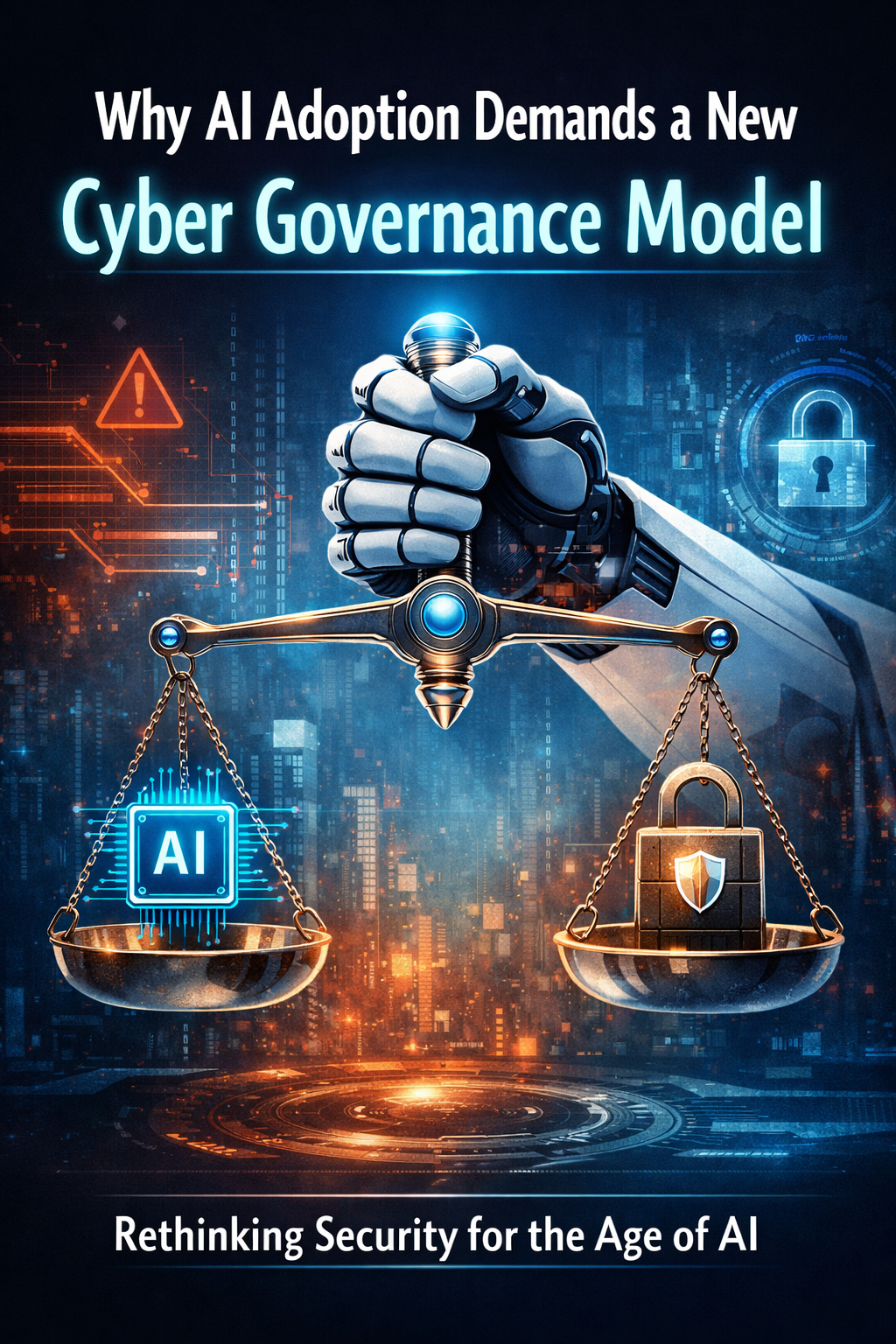
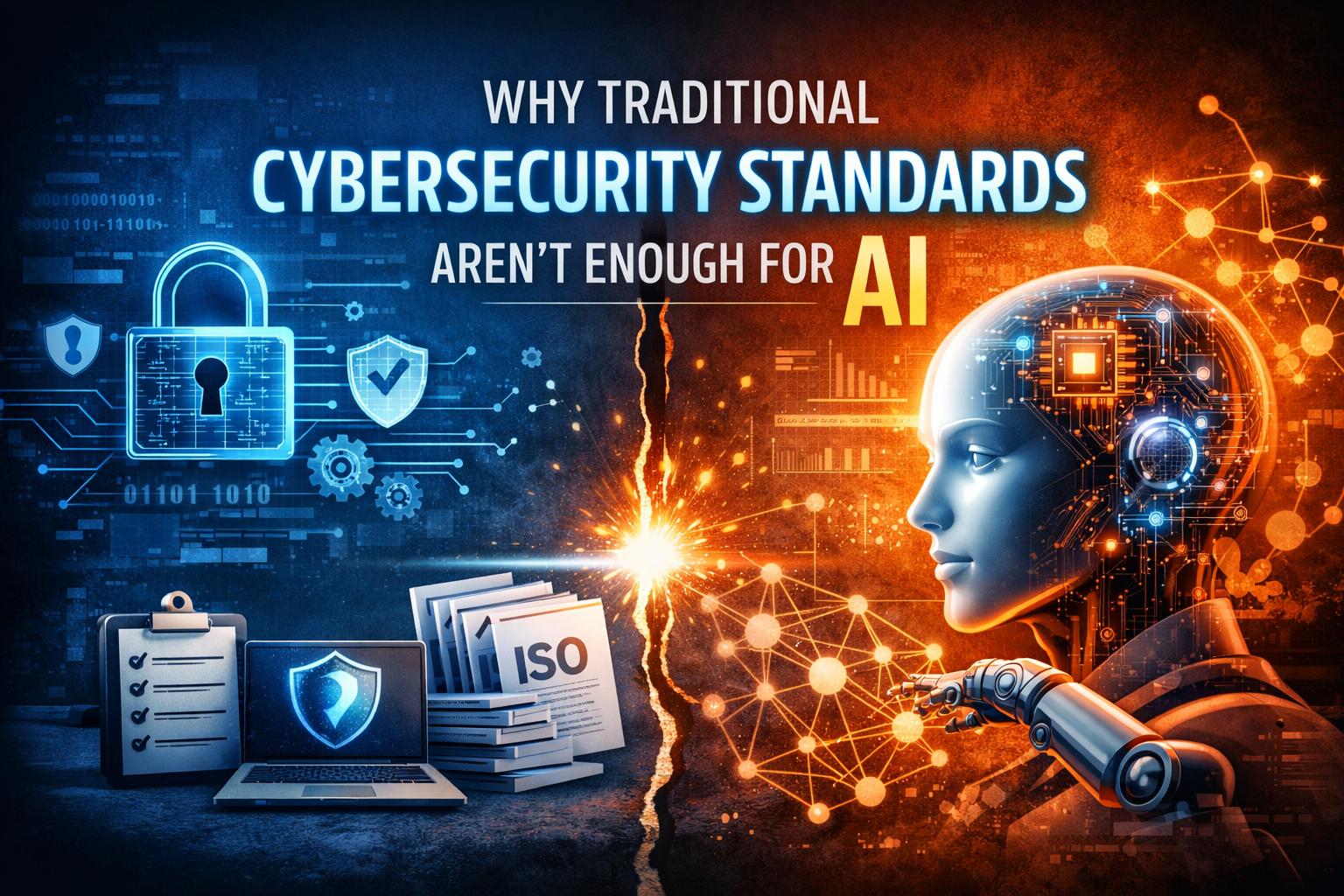
1. Rapid AI Adoption and Rising Risks AI tools are being adopted at an extraordinary pace across businesses, offering clear benefits like efficiency, reduced errors, and increased revenue. However, this rapid uptake also dramatically expands the enterprise attack surface. Each AI model, prompt, plugin, API connection, training dataset, or dependency introduces new vulnerability points, requiring stronger and continuous security measures than traditional SaaS governance frameworks were designed to handle.
2. Traditional Governance Falls Short for AI Many security teams simply repurpose existing governance approaches designed for SaaS vendors when evaluating AI tools. This is problematic because data fed into AI systems can be exposed far more widely and may even be retained permanently by the AI provider—something that most conventional governance models don’t account for.
3. Explainability and Trust Issues AI outputs can be opaque due to black-box models and phenomena like “hallucinations,” where the system generates confident but incorrect information. These characteristics make verification difficult and can introduce false data into important business decisions—another challenge existing governance frameworks weren’t built to manage.
4. Pressure to Move Fast Business units are pushing for rapid AI adoption to stay competitive, which puts security teams in a bind. Existing third-party risk processes are slow, manual, and rigid, creating bottlenecks that force organizations to choose between agility and safety. Modern governance must be agile and scalable to match the pace of AI integration.
5. Gaps in Current Cyber Governance Governance and Risk Compliance (GRC) programs commonly monitor direct vendors but often fail to extend visibility far enough into fourth or Nth-party risks. Even when organizations are compliant with regulations like DORA or NIS2, they may still face significant vulnerabilities because compliance checks only provide snapshots in time, missing dynamic risks across complex supply chains.
6. Limited Tool Effectiveness and Emerging Solutions Most organizations acknowledge that current GRC tools are inadequate for managing AI risks. In response, many CISOs are turning to AI-based vendor risk assessment solutions that can monitor dependencies and interactions continuously rather than relying solely on point-in-time assessments. However, these tools must themselves be trustworthy and validated to avoid generating misleading results.
7. Practical Risk-Reduction Strategies Effective governance requires proactive strategies like mapping data flows to uncover blind spots, enforcing output traceability, keeping humans in the oversight loop, and replacing one-off questionnaires with continuous monitoring. These measures help identify and mitigate risks earlier and more reliably.
8. Safe AI Management Is Possible Deploying AI securely is achievable, but only with robust, AI-adapted governance—dynamic vendor onboarding, automated monitoring, continuous risk evaluation, and policies tailored to the unique nature of AI tools. Security teams must evolve their practices and frameworks to ensure AI is both adopted responsibly and aligned with business goals.
My Opinion
The article makes a compelling case that treating AI like traditional software or SaaS tools is a governance mistake. AI’s dynamic nature—its opaque decision processes, broad data exposure, and rapid proliferation via APIs and plugins—demands purpose-built governance mechanisms that are continuous, adaptive, and integrated with how organizations actually operate, not just how they report. This aligns with broader industry observations that shadow AI and decentralized AI use (e.g., “bring your own AI”) create blind spots that static governance models can’t handle.
In short, cybersecurity leaders should move beyond check-the-box compliance and toward risk-based, real-time oversight that embraces human-AI collaboration, leverages AI for risk monitoring, and embeds governance throughout the AI lifecycle. Done well, this strengthens security and unlocks AI’s value; done poorly, it exposes organizations to unnecessary harm.
At DISC InfoSec, we help organizations navigate this landscape by aligning AI risk management, governance, security, and compliance into a single, practical roadmap. Whether you are experimenting with AI or deploying it at scale, we help you choose and operationalize the right frameworks to reduce risk and build trust. Learn more at DISC InfoSec.
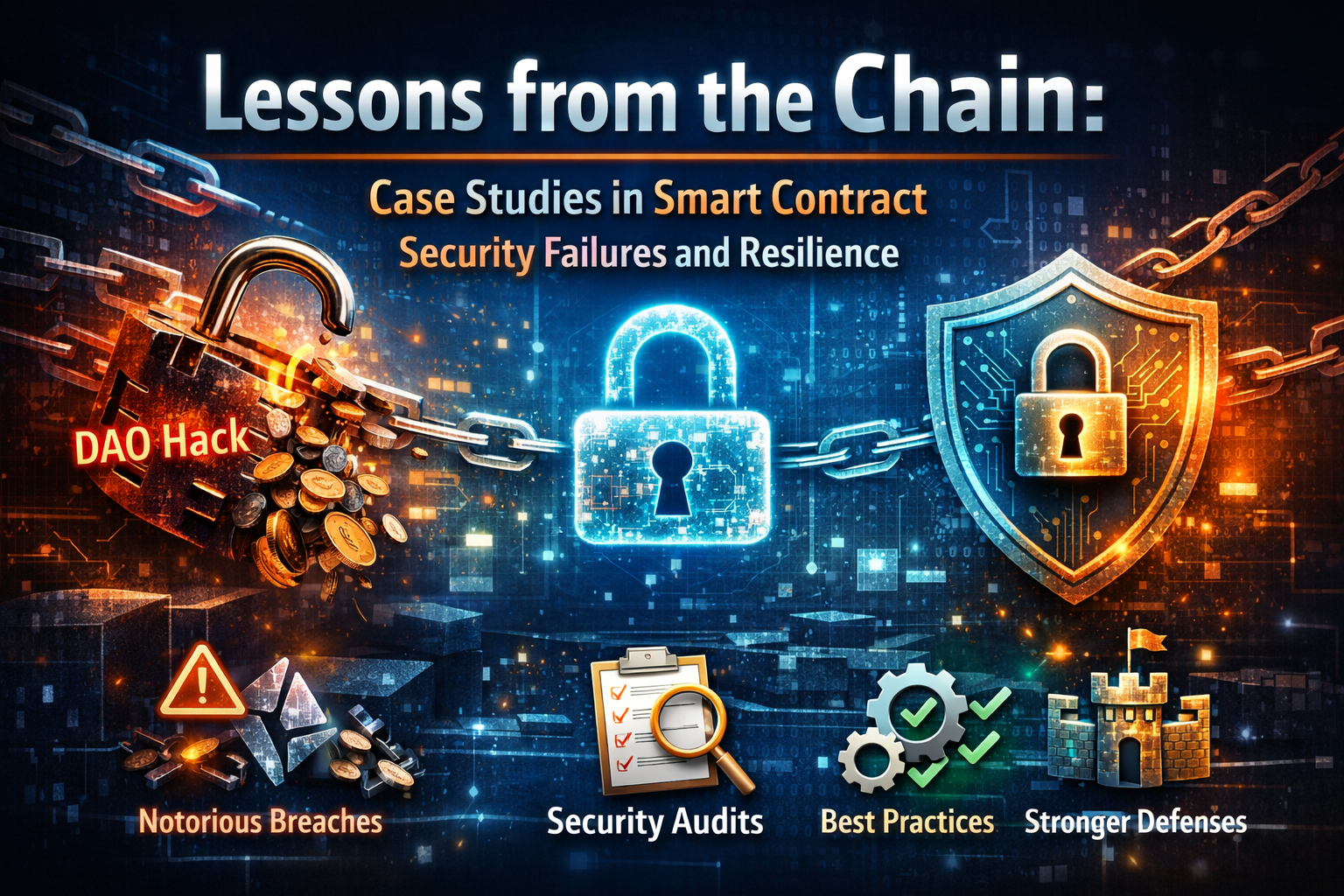
1. Smart contract security is best understood through real-world experience, where both failures and successes reveal how theoretical risks manifest in production systems. Case studies provide concrete evidence of how design choices, coding practices, and governance decisions directly impact security outcomes in blockchain projects.
2. By examining past incidents, developers and security leaders gain clarity on how vulnerabilities emerge—not only from flawed code, but also from poor assumptions, rushed deployments, and insufficient review processes. These lessons underscore that smart contract security is as much about discipline as it is about technology.
3. High-profile breaches, such as the DAO hack, serve as foundational learning points for the industry. These incidents exposed how subtle logic flaws and unanticipated interactions could be exploited, leading to massive financial losses and long-term reputational damage.
4. Beyond recounting what happened, such case studies break down the technical root causes—reentrancy issues, improper state management, and inadequate access controls—highlighting how oversights at the design stage can cascade into catastrophic failures.
5. A recurring theme across breaches is the absence of rigorous auditing and threat modeling. These events reinforced the necessity of independent security reviews, formal verification, and adversarial thinking before smart contracts are deployed on immutable ledgers.
6. In contrast, this also highlights projects that responded to early failures by fundamentally improving their security posture. These teams embedded security best practices from the outset, demonstrating that proactive design significantly reduces exploitability.
7. Successful implementations show how learning from industry mistakes leads to stronger architectures, including modular contract design, upgrade mechanisms, and clearly defined trust boundaries. Adaptation, rather than avoidance, became the path to resilience.
8. From these collective experiences, industry standards began to emerge. Structured auditing processes, standardized testing frameworks, bug bounty programs, and open collaboration among developers now form the backbone of modern smart contract security practices.
9. The chapter integrates these lessons into actionable guidance, helping readers translate historical insights into practical controls. This synthesis bridges the gap between knowing past failures and preventing future ones in active blockchain projects.
10. Ultimately, these case studies encourage a holistic, security-first mindset. By internalizing both cautionary tales and proven successes, developers and project leaders are empowered to make security an integral part of their development lifecycle, contributing to a safer and more resilient blockchain ecosystem.
It’s a strong and practical piece that strikes a good balance between cautionary lessons and actionable insights. I like that it doesn’t just recount high-profile hacks like the DAO incident but also highlights how teams adapted and improved security practices afterward. That makes it forward-looking, not just retrospective.
The emphasis on embedding security into the development lifecycle is especially important—it moves smart contract security from being an afterthought to a core part of project design. One minor improvement could be adding more concrete examples of modern tools or frameworks (like formal verification tools, auditing platforms, or automated testing suites) to make the guidance even more actionable.
Overall, it’s informative for developers, project managers, and even executives looking to understand blockchain risks, and it effectively encourages a proactive, security-first mindset.
At DISC InfoSec, we help organizations navigate this landscape by aligning AI risk management, governance, security, and compliance into a single, practical roadmap. Whether you are experimenting with AI or deploying it at scale, we help you choose and operationalize the right frameworks to reduce risk and build trust. Learn more at DISC InfoSec.
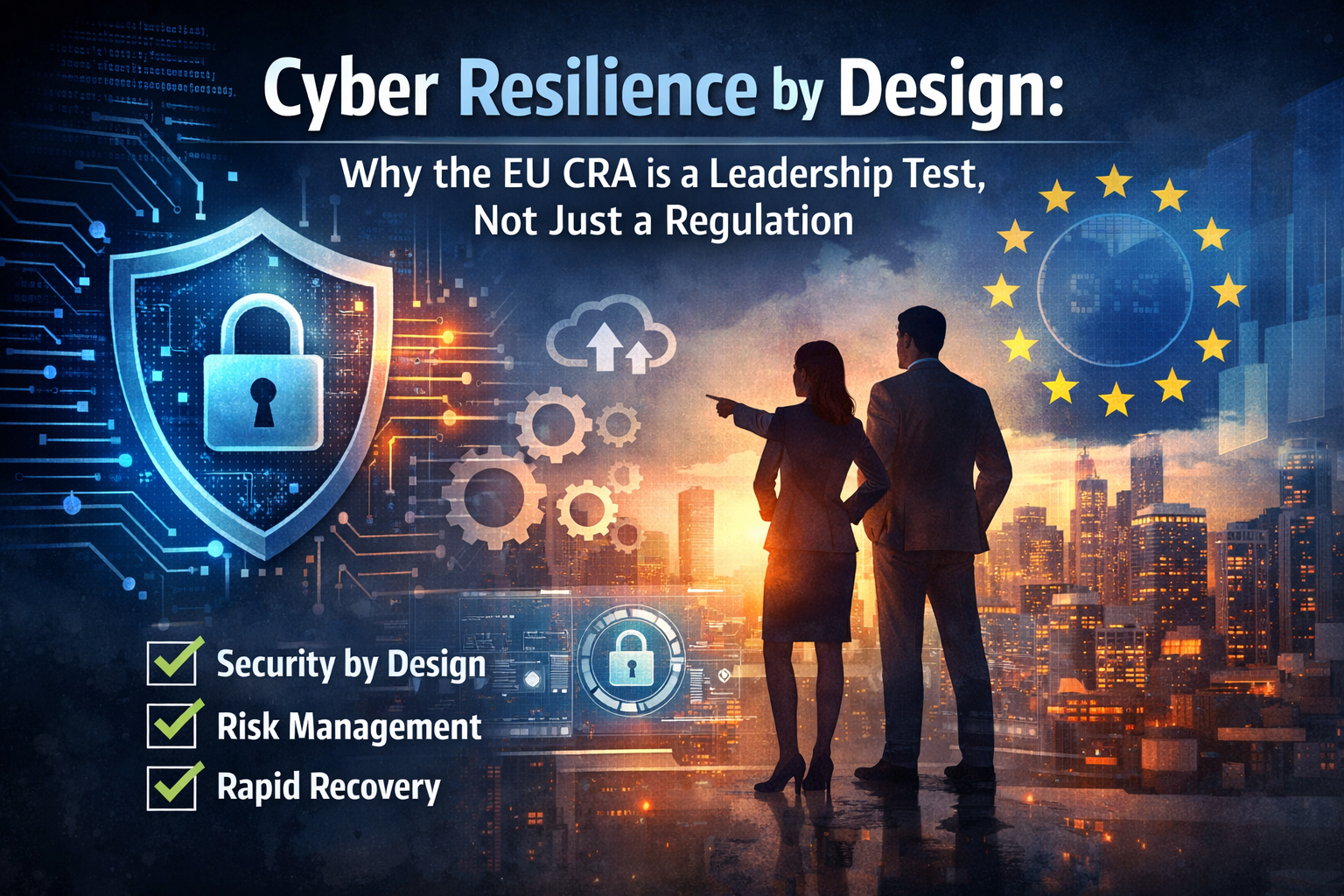
The EU Cyber Resilience Act (CRA) marks a significant shift in how cybersecurity is viewed across digital products and services. Rather than treating security as a post-development compliance task, the Act emphasizes embedding cybersecurity into products from the design stage and maintaining it throughout their entire lifecycle. This approach reframes cyber resilience as an ongoing responsibility that blends technical safeguards with organizational discipline.
At its core, the CRA reinforces the idea that resilience is not achieved through tools alone. Secure-by-design principles require coordinated processes, clear ownership, and accountability across product development, operations, and incident response. By aligning with lifecycle thinking—similar to disaster recovery planning—the Act pushes organizations to anticipate failure, prepare for disruption, and recover quickly when incidents occur.
Leadership plays a decisive role in making this shift effective. True cyber resilience demands a top-down commitment where executives actively prioritize security in strategic planning and resource allocation. When leaders set expectations that security is integral to innovation, teams are empowered to build resilient systems without viewing cybersecurity as a barrier to progress.
When organizations treat cybersecurity as a business enabler rather than a cost center, the benefits extend beyond compliance. They gain stronger risk management, greater operational continuity, and increased trust from customers and partners. In this way, the EU CRA aligns closely with disaster recovery principles—prepare early, plan holistically, and lead decisively—to create sustainable cyber resilience in an increasingly complex digital landscape.
My opinion:
The EU Cyber Resilience Act is one of the most pragmatic cybersecurity regulations to date because it shifts the conversation from after-the-fact compliance to engineering discipline and leadership accountability. That change is long overdue. Cybersecurity failures rarely happen because controls were unknown—they happen because security was deprioritized during design, delivery, or scaling.
What I particularly agree with is the implicit alignment between cyber resilience and disaster recovery thinking. Both accept that failure is inevitable and focus instead on preparedness, impact reduction, and rapid recovery. This mindset is far more realistic than the traditional “prevent everything” security narrative, especially in complex software supply chains.
However, regulation alone will not create resilience. Organizations that approach the CRA as a documentation exercise will miss its real value. The winners will be those whose leadership genuinely internalizes security as a strategic capability—one that protects innovation, brand trust, and long-term revenue. In that sense, the CRA is less a technical mandate and more a leadership test.
At DISC InfoSec, we help organizations navigate this landscape by aligning AI risk management, governance, security, and compliance into a single, practical roadmap. Whether you are experimenting with AI or deploying it at scale, we help you choose and operationalize the right frameworks to reduce risk and build trust. Learn more at DISC InfoSec.
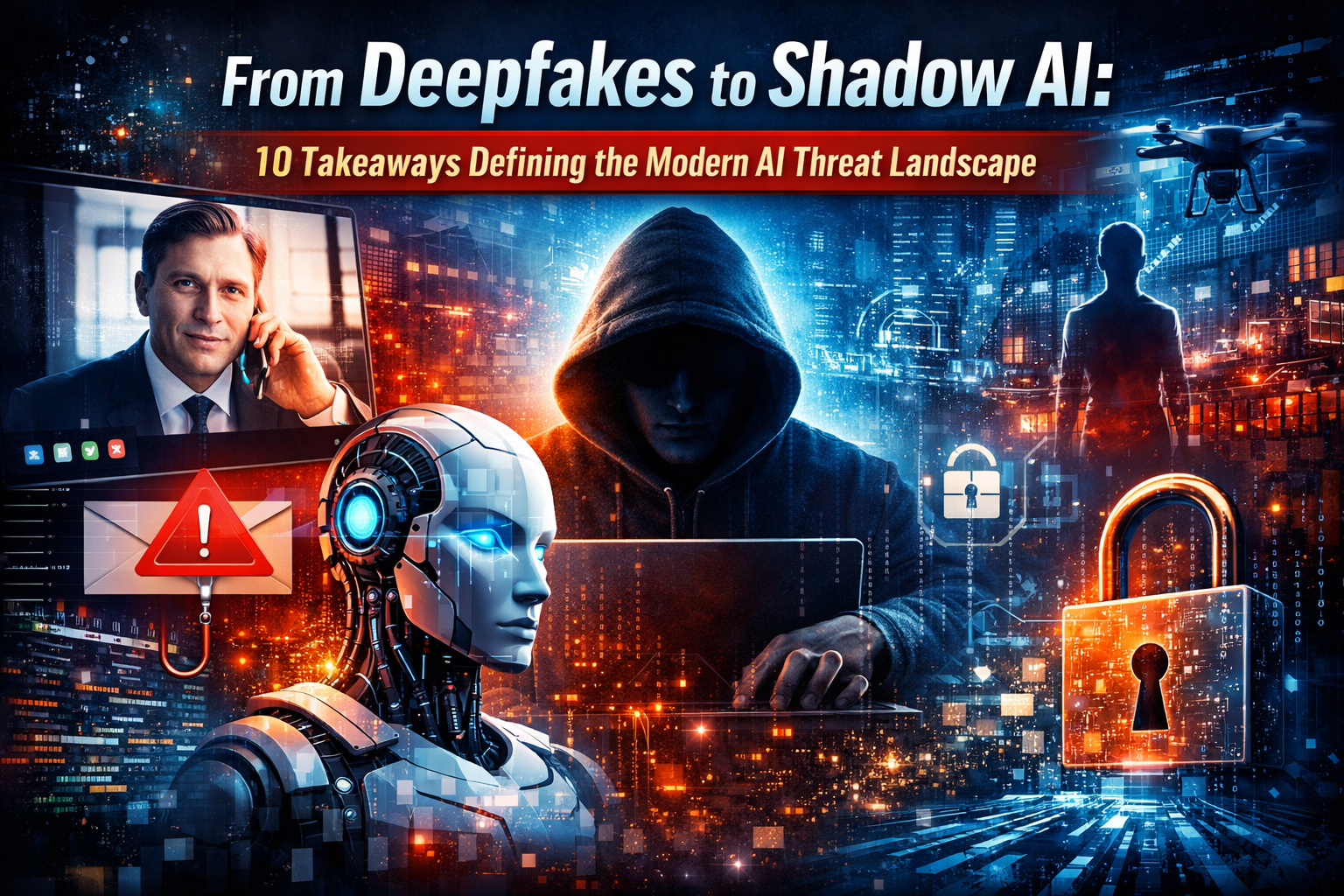
1. Growing AI Risks in Cybersecurity Artificial intelligence has rapidly become a central factor in cybersecurity, acting as both a powerful defense and a serious threat vector. Attackers have quickly adopted AI tools to amplify their capabilities, and many executives now consider AI-related cyber risks among their top organizational concerns.
2. AI’s Dual Role While AI helps defenders detect threats faster, it also enables cybercriminals to automate attacks at scale. This rapid adoption by attackers is reshaping the overall cyber threat landscape going into 2026.
3. Deepfakes and Impersonation Techniques One of the most alarming developments is the use of deepfakes and voice cloning. These tools create highly convincing impersonations of executives or trusted individuals, fooling employees and even automated systems.
4. Enhanced Phishing and Messaging AI has made phishing attacks more sophisticated. Instead of generic scam messages, attackers use generative AI to craft highly personalized and convincing messages that leverage data collected from public sources.
5. Automated Reconnaissance AI now automates what used to be manual reconnaissance. Malicious scripts scout corporate websites and social profiles to build detailed target lists much faster than human attackers ever could.
6. Adaptive Malware AI-driven malware is emerging that can modify its code and behavior in real time to evade detection. Unlike traditional threats, this adaptive malware learns from failed attempts and evolves to be more effective.
7. Shadow AI and Data Exposure “Shadow AI” refers to employees using third-party AI tools without permission. These tools can inadvertently capture sensitive information, which might be stored, shared, or even reused by AI providers, posing significant data leakage risks.
8. Long-Term Access and Silent Attacks Modern AI-enabled attacks often aim for persistence—maintaining covert access for weeks or months to gather credentials and monitor systems before striking, rather than causing immediate disruption.
9. Evolving Defense Needs Traditional security systems are increasingly inadequate against these dynamic, AI-driven threats. Organizations must embrace adaptive defenses, real-time monitoring, and identity-centric controls to keep pace.
10. Human Awareness Remains Critical Technology alone won’t stop these threats. A strong “human firewall” — knowledgeable employees and ongoing awareness training — is crucial to recognize and prevent emerging AI-enabled attacks.
My Opinion
AI’s influence on the cyber threat landscape is both inevitable and transformative. On one hand, AI empowers defenders with unprecedented speed and analytical depth. On the other, it’s lowering the barrier to entry for attackers, enabling highly automated, convincing attacks that traditional defenses struggle to catch. This duality makes cybersecurity a fundamentally different game than it was even a few years ago.
Organizations can’t afford to treat AI simply as a defensive tool or a checkbox in their security stack. They must build AI-aware risk management strategies, integrate continuous monitoring and identity-centric defenses, and invest in employee education. Most importantly, cybersecurity leaders need to assume that attackers will adopt AI faster than defenders — so resilience and adaptive defense are not optional, they’re mandatory.
The key takeaway? Cybersecurity in 2026 and beyond won’t just be about technology. It will be a strategic balance between innovation, human awareness, and proactive risk governance.
At DISC InfoSec, we help organizations navigate this landscape by aligning AI risk management, governance, security, and compliance into a single, practical roadmap. Whether you are experimenting with AI or deploying it at scale, we help you choose and operationalize the right frameworks to reduce risk and build trust. Learn more at DISC InfoSec.
The report highlights that defining AI remains challenging due to evolving technology and inconsistent usage of the term. To stay practical, ENISA focuses mainly on machine learning (ML), as it dominates current AI deployments and introduces unique security vulnerabilities. AI is considered across its entire lifecycle, from data collection and model training to deployment and operation, recognizing that risks can emerge at any stage.
Cybersecurity of AI is framed in two ways. The narrow view focuses on protecting confidentiality, integrity, and availability (CIA) of AI systems, data, and processes. The broader view expands this to include trustworthiness attributes such as robustness, explainability, transparency, and data quality. ENISA adopts the narrow definition but acknowledges that trustworthiness and cybersecurity are tightly interconnected and cannot be treated independently.
3. Standardisation Supporting AI Cybersecurity
Standardisation bodies are actively adapting existing frameworks and developing new ones to address AI-related risks. The report emphasizes ISO/IEC, CEN-CENELEC, and ETSI as the most relevant organisations due to their role in harmonised standards. A key assumption is that AI is fundamentally software, meaning traditional information security and quality standards can often be extended to AI with proper guidance.
CEN-CENELEC separates responsibilities between cybersecurity-focused committees and AI-focused ones, while ETSI takes a more technical, threat-driven approach through its Security of AI (SAI) group. ISO/IEC SC 42 plays a central role globally by developing AI-specific standards for terminology, lifecycle management, risk management, and governance. Despite this activity, the landscape remains fragmented and difficult to navigate.
4. Analysis of Coverage – Narrow Cybersecurity Sense
When viewed through the CIA lens, AI systems face distinct threats such as model theft, data poisoning, adversarial inputs, and denial-of-service via computational abuse. The report argues that existing standards like ISO/IEC 27001, ISO/IEC 27002, ISO 42001, and ISO 9001 can mitigate many of these risks if adapted correctly to AI contexts.
However, limitations exist. Most standards operate at an organisational level, while AI risks are often system-specific. Challenges such as opaque ML models, evolving attack techniques, continuous learning, and immature defensive research reduce the effectiveness of static standards. Major gaps remain around data and model traceability, metrics for robustness, and runtime monitoring, all of which are critical for AI security.
4.2 Coverage – Trustworthiness Perspective
The report explains that cybersecurity both enables and depends on AI trustworthiness. Requirements from the draft AI Act—such as data governance, logging, transparency, human oversight, risk management, and robustness—are all supported by cybersecurity controls. Standards like ISO 9001 and ISO/IEC 31000 indirectly strengthen trustworthiness by enforcing disciplined governance and quality practices.
Yet, ENISA warns of a growing risk: parallel standardisation tracks for cybersecurity and AI trustworthiness may lead to duplication, inconsistency, and confusion—especially in areas like conformity assessment and robustness evaluation. A coordinated, unified approach is strongly recommended to ensure coherence and regulatory usability.
5. Conclusions and Recommendations (5.1–5.2)
The report concludes that while many relevant standards already exist, AI-specific guidance, integration, and maturity are still lacking. Organisations should not wait for perfect AI standards but instead adapt current cybersecurity, quality, and risk frameworks to AI use cases. Standards bodies are encouraged to close gaps around lifecycle traceability, continuous learning, and AI-specific metrics.
In preparation for the AI Act, ENISA recommends better alignment between AI governance and cybersecurity governance frameworks to avoid overlapping compliance efforts. The report stresses that some gaps will only become visible as AI technologies and attack methods continue to evolve.
My Opinion
This report gets one critical thing right: AI security is not a brand-new problem—it is a complex extension of existing cybersecurity and governance challenges. Treating AI as “just another system” under ISO 27001 without AI-specific interpretation is dangerous, but reinventing security from scratch for AI is equally inefficient.
From a practical vCISO and governance perspective, the real gap is not standards—it is operationalisation. Organisations struggle to translate abstract AI trustworthiness principles into enforceable controls, metrics, and assurance evidence. Until standards converge into a clear, unified control model (especially aligned with ISO 27001, ISO 42001, and the NIST AI RMF), AI security will remain fragmented and audit-driven rather than risk-driven.
In short: AI cybersecurity maturity will lag unless governance, security, and trustworthiness are treated as one integrated discipline—not three separate conversations.
At DISC InfoSec, we help organizations navigate this landscape by aligning AI risk management, governance, security, and compliance into a single, practical roadmap. Whether you are experimenting with AI or deploying it at scale, we help you choose and operationalize the right frameworks to reduce risk and build trust. Learn more at DISC InfoSec.
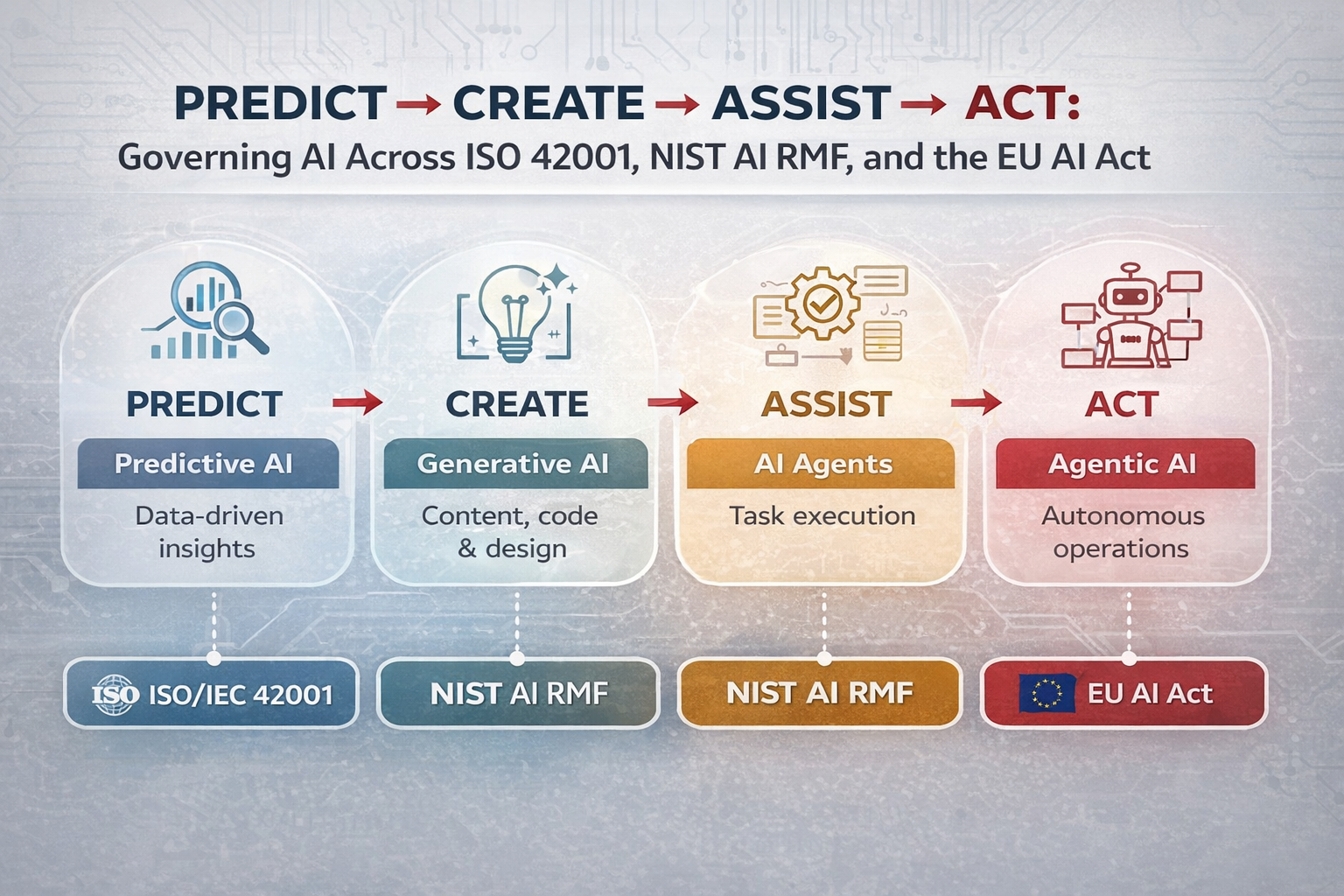
Predictive AI is the most mature and widely adopted form of AI. It analyzes historical data to identify patterns and forecast what is likely to happen next. Organizations use it to anticipate customer demand, detect fraud, identify anomalies, and support risk-based decisions. The goal isn’t automation for its own sake, but faster and more accurate decision-making, with humans still in control of final actions.
2️⃣ Generative AI – Create
Generative AI goes beyond prediction and focuses on creation. It generates text, code, images, designs, and insights based on prompts. Rather than replacing people, it amplifies human productivity, helping teams draft content, write software, analyze information, and communicate faster. Its core value lies in increasing output velocity while keeping humans responsible for judgment and accountability.
3️⃣ AI Agents – Assist
AI Agents add execution to intelligence. These systems are connected to enterprise tools, applications, and internal data sources. Instead of only suggesting actions, they can perform tasks—such as retrieving data, updating systems, responding to requests, or coordinating workflows. AI Agents expand human capacity by handling repetitive or multi-step tasks, delivering knowledge access and task leverage at scale.
4️⃣ Agentic AI – Act
Agentic AI represents the frontier of AI adoption. It orchestrates multiple agents to run workflows end-to-end with minimal human intervention. These systems can plan, delegate, verify, and complete complex processes across tools and teams. At this stage, AI evolves from a tool into a digital team member, enabling true process transformation, not just efficiency gains.
Simple decision framework
Need faster decisions? → Predictive AI
Need more output? → Generative AI
Need task execution and assistance? → AI Agents
Need end-to-end transformation? → Agentic AI
Below is a clean, standards-aligned mapping of the four AI types (Predict → Create → Assist → Act) to ISO/IEC 42001, NIST AI RMF, and the EU AI Act. This is written so you can directly reuse it in AI governance decks, risk registers, or client assessments.
AI Types Mapped to ISO 42001, NIST AI RMF & EU AI Act
At DISC InfoSec, we help organizations navigate this landscape by aligning AI risk management, governance, security, and compliance into a single, practical roadmap. Whether you are experimenting with AI or deploying it at scale, we help you choose and operationalize the right frameworks to reduce risk and build trust. Learn more at DISC InfoSec.
1 Protecting AI and ML model–serving APIs has become a new and critical security frontier. As organizations increasingly expose Generative AI and machine learning capabilities through APIs, attackers are shifting their focus from traditional infrastructure to the models themselves.
2 AI red teams are now observing entirely new categories of attacks that did not exist in conventional application security. These threats specifically target how GenAI and ML models interpret input and learn from data—areas where legacy security tools such as Web Application Firewalls (WAFs) offer little to no protection.
3 Two dominant threats stand out in this emerging landscape: prompt injection and data poisoning. Both attacks exploit fundamental properties of AI systems rather than software vulnerabilities, making them harder to detect with traditional rule-based defenses.
4 Prompt injection attacks manipulate a Large Language Model by crafting inputs that override or bypass its intended instructions. By embedding hidden or misleading commands in user prompts, attackers can coerce the model into revealing sensitive information or performing unauthorized actions.
5 This type of attack is comparable to slipping a secret instruction past a guard. Even a well-designed AI can be tricked into ignoring safeguards if user input is not strictly controlled and separated from system-level instructions.
6 Effective mitigation starts with treating all user input as untrusted code. Clear delimiters must be used to isolate trusted system prompts from user-provided text, ensuring the model can clearly distinguish between authoritative instructions and external input.
7 In parallel, the principle of least privilege is essential. AI-serving APIs should operate with minimal access rights so that even if a model is manipulated, the potential damage—often referred to as the blast radius—remains limited and manageable.
8 Data poisoning attacks, in contrast, undermine the integrity of the model itself. By injecting corrupted, biased, or mislabeled data into training datasets, attackers can subtly alter model behavior or implant hidden backdoors that trigger under specific conditions.
9 Defending against data poisoning requires rigorous data governance. This includes tracking the provenance of all training data, continuously monitoring for anomalies, and applying robust training techniques that reduce the model’s sensitivity to small, malicious data manipulations.
10 Together, these controls shift AI security from a perimeter-based mindset to one focused on model behavior, data integrity, and controlled execution—areas that demand new tools, skills, and security architectures.
My Opinion AI/ML API security should be treated as a first-class risk domain, not an extension of traditional application security. Organizations deploying GenAI without specialized defenses for prompt injection and data poisoning are effectively operating blind. In my view, AI security controls must be embedded into governance, risk management, and system design from day one—ideally aligned with standards like ISO 27001, ISO 42001 and emerging AI risk frameworks—rather than bolted on after an incident forces the issue.
At DISC InfoSec, we help organizations navigate this landscape by aligning AI risk management, governance, security, and compliance into a single, practical roadmap. Whether you are experimenting with AI or deploying it at scale, we help you choose and operationalize the right frameworks to reduce risk and build trust. Learn more at DISC InfoSec.
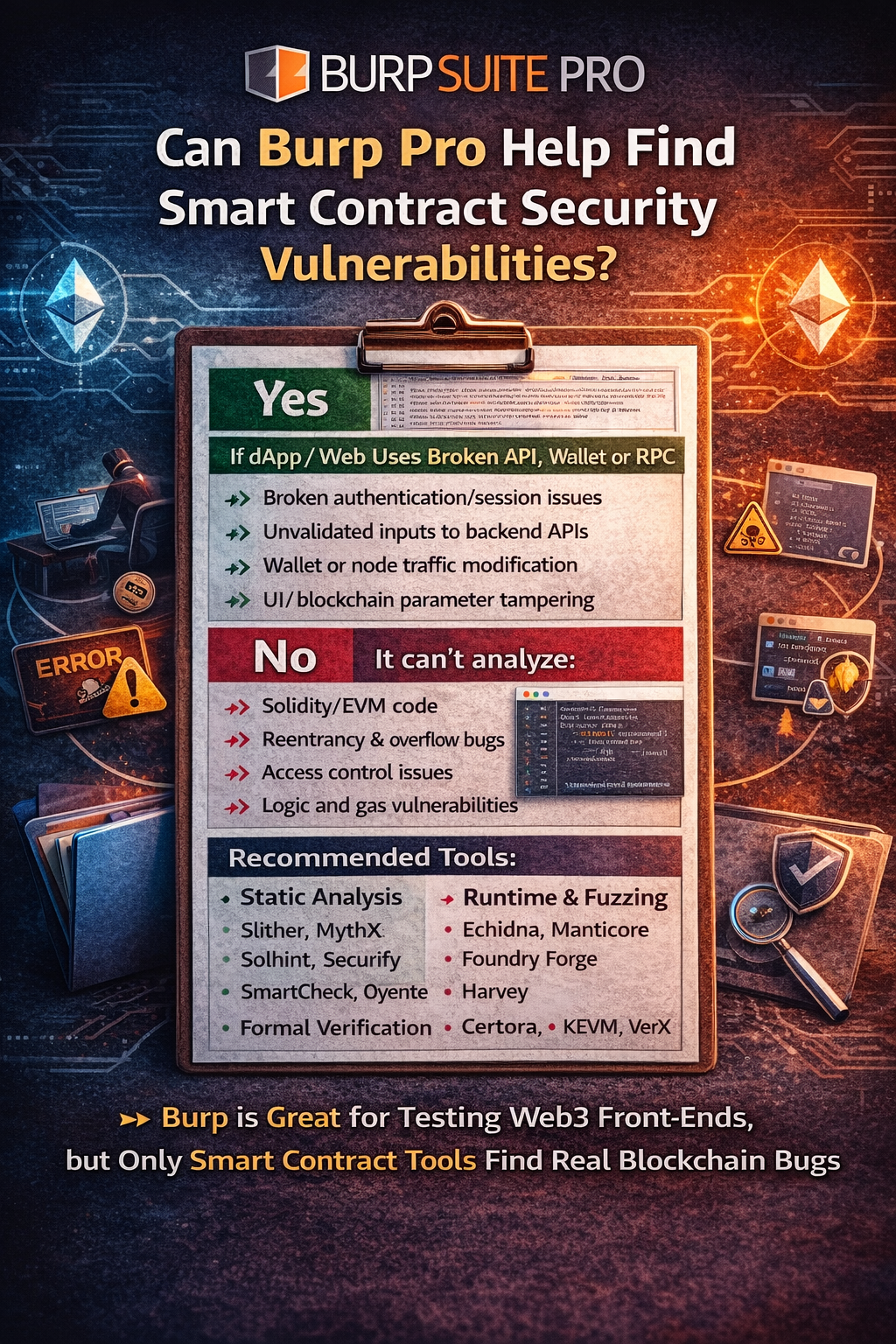
Burp Suite Professional is a powerful web application security testing tool, but it is not designed to find smart contract vulnerabilities on its own. It can help with some aspects of blockchain-related web interfaces, but it won’t replace tools built specifically for smart contract analysis.
Here’s a clear breakdown:
✅ What **Burp Pro Can Help With
Burp Suite Pro excels at testing web applications, and in blockchain workflows it can be useful for:
🔹 Web3 Front-End & API Testing
If a dApp has a web interface or API that interacts with smart contracts, Burp can help find:
Broken authentication/session issues
Unvalidated inputs passed to backend APIs
CSRF, XSS, parameter tampering
Insecure interactions between the UI and the blockchain node or relayer
Example: If a dApp form calls a backend API that builds a transaction request, Burp can help you test that request for injection or manipulation issues.
🔹 Proxying Wallet / Node Traffic
Burp can intercept and modify HTTP(S) traffic from MetaMask-like wallets or blockchain node RPC calls, letting you test:
Unsanitized parameters being sent to smart contract transaction endpoints
Authorization or logic flaws in how the UI constructs transactions
But: Burp will see only the network traffic — it cannot understand or reason about the smart contract bytecode or EVM logic.
❌ What **Burp Pro Can’t Do (on its own)
🚫 Smart Contract Vulnerability Detection
Burp cannot analyze:
EVM bytecode or Solidity code
Integer overflows/underflows
Reentrancy / Call stacking issues
Gas griefing attacks
Access control misconfigurations
Logic vulnerabilities unique to smart contract execution environments
These require blockchain-specific tools and static/dynamic analysis tailored to smart contract languages and runtimes.
Tools That Do Find Smart Contract Vulnerabilities
To properly analyze smart contracts, you need specialized tools such as:
✅ Static Analysis
Slither
MythX
Solhint
Securify
SmartCheck
Oyente
These inspect Solidity/EVM bytecode to find typical blockchain vulnerabilities.
✅ Runtime / Fuzzing
Echidna
Manticore
Foundry Forge + fuzzing
Harvey (Tools that execute the contract in test environments trying malformed inputs)
✅ Formal Verification & Theorem Provers
Certora
KEVM
VerX
These reason about contract logic mathematically.
How to Combine Burp with Smart Contract Testing
A real, end-to-end blockchain security assessment often uses both:
Layer
Best Tools
Web & API
Burp Suite Pro, ZAP, OWASP tools
Smart Contract Static
Slither, MythX, Securify
Smart Contract Dynamic
Echidna, Foundry/Forge, Manticore
Blockchain Interaction Logic
Manual review, unit tests, formal methods
Burp assists with the interface layer — how users and frontends interact with the blockchain — while other tools assess the contract layer itself.
Summary
Question
Answer
Does Burp Pro find smart contract bugs?
No — not on its own.
Can it help test blockchain-related UI/API logic?
Yes.
Do you still need smart-contract-specific tools?
Absolutely.
Recommendation
If your goal is comprehensive smart contract security: ✔ Use Burp to test the dApp/web/API layer ✔ Use Slither/MythX for static contract analysis ✔ Use fuzzers and runtime tools for behavior testing ✔ Add manual review/pen testing for logic/architectural flaws
At DISC InfoSec, we help organizations navigate this landscape by aligning AI risk management, governance, security, and compliance into a single, practical roadmap. Whether you are experimenting with AI or deploying it at scale, we help you choose and operationalize the right frameworks to reduce risk and build trust. Learn more at DISC InfoSec.
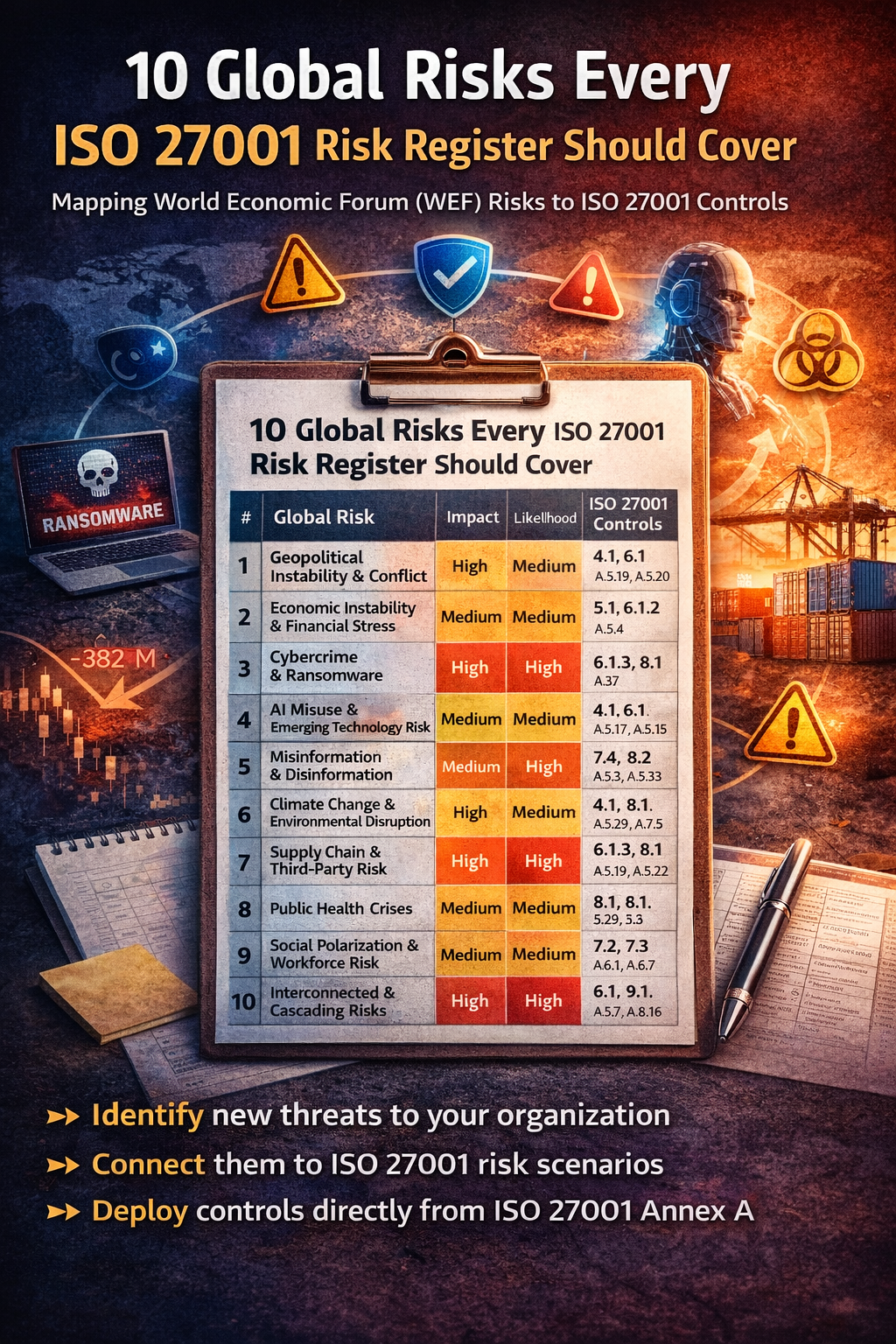
In developing organizational risk documentation—such as enterprise risk registers, cyber risk assessments, and business continuity plans—it is increasingly important to consider the World Economic Forum’s Global Risks Report. The report provides a forward-looking view of global threats and helps leaders balance immediate pressures with longer-term strategic risks.
The analysis is based on the Global Risks Perception Survey (GRPS), which gathered insights from more than 1,300 experts across government, business, academia, and civil society. These perspectives allow the report to examine risks across three time horizons: the immediate term (2026), the short-to-medium term (up to 2028), and the long term (to 2036).
One of the most pressing short-term threats identified is geopolitical instability. Rising geopolitical tensions, regional conflicts, and fragmentation of global cooperation are increasing uncertainty for businesses. These risks can disrupt supply chains, trigger sanctions, and increase regulatory and operational complexity across borders.
Economic risks remain central across all timeframes. Inflation volatility, debt distress, slow economic growth, and potential financial system shocks pose ongoing threats to organizational stability. In the medium term, widening inequality and reduced economic opportunity could further amplify social and political instability.
Cyber and technological risks continue to grow in scale and impact. Cybercrime, ransomware, data breaches, and misuse of emerging technologies—particularly artificial intelligence—are seen as major short- and long-term risks. As digital dependency increases, failures in technology governance or third-party ecosystems can cascade quickly across industries.
The report also highlights misinformation and disinformation as a critical threat. The erosion of trust in institutions, fueled by false or manipulated information, can destabilize societies, influence elections, and undermine crisis response efforts. This risk is amplified by AI-driven content generation and social media scale.
Climate and environmental risks dominate the long-term outlook but are already having immediate effects. Extreme weather events, resource scarcity, and biodiversity loss threaten infrastructure, supply chains, and food security. Organizations face increasing exposure to physical risks as well as regulatory and reputational pressures related to sustainability.
Public health risks remain relevant, even as the world moves beyond recent pandemics. Future outbreaks, combined with strained healthcare systems and global inequities in access to care, could create significant economic and operational disruptions, particularly in densely connected global markets.
Another growing concern is social fragmentation, including polarization, declining social cohesion, and erosion of trust. These factors can lead to civil unrest, labor disruptions, and increased pressure on organizations to navigate complex social and ethical expectations.
Overall, the report emphasizes that global risks are deeply interconnected. Cyber incidents can amplify economic instability, climate events can worsen geopolitical tensions, and misinformation can undermine responses to every other risk category. For organizations, the key takeaway is clear: risk management must be integrated, forward-looking, and resilience-focused—not siloed or purely compliance-driven.
Source: The report can be downloaded here: https://reports.weforum.org/docs/WEF_Global_Risks_Report_2026.pdf
Below is a clear, practitioner-level mapping of the World Economic Forum (WEF) global threats to ISO/IEC 27001, written for CISOs, vCISOs, risk owners, and auditors. I’ve mapped each threat to key ISO 27001 clauses and Annex A control themes (aligned to ISO/IEC 27001:2022).
WEF Global Threats → ISO/IEC 27001 Mapping
1. Geopolitical Instability & Conflict
Risk impact: Sanctions, supply-chain disruption, regulatory uncertainty, cross-border data issues
ISO 27001 Mapping
Clause 4.1 – Understanding the organization and its context
Clause 6.1 – Actions to address risks and opportunities
Annex A
A.5.31 – Legal, statutory, regulatory, and contractual requirements
Risk impact: Compound failures across cyber, economic, and operational domains
ISO 27001 Mapping
Clause 6.1 – Risk-based thinking
Clause 9.1 – Monitoring, measurement, analysis, and evaluation
Clause 10.1 – Continual improvement
Annex A
A.5.7 – Threat intelligence
A.5.35 – Independent review of information security
A.8.16 – Continuous monitoring
Key Takeaway (vCISO / Board-Level)
ISO 27001 is not just a cybersecurity standard — it is a resilience framework. When properly implemented, it directly addresses the systemic, interconnected risks highlighted by the World Economic Forum, provided organizations treat it as a living risk management system, not a compliance checkbox.
Here’s a practical mapping of WEF global risks to ISO 27001 risk register entries, designed for use by vCISOs, risk managers, or security teams. I’ve structured it in a way that you could directly drop into a risk register template.
At DISC InfoSec, we help organizations navigate this landscape by aligning AI risk management, governance, security, and compliance into a single, practical roadmap. Whether you are experimenting with AI or deploying it at scale, we help you choose and operationalize the right frameworks to reduce risk and build trust. Learn more at DISC InfoSec.
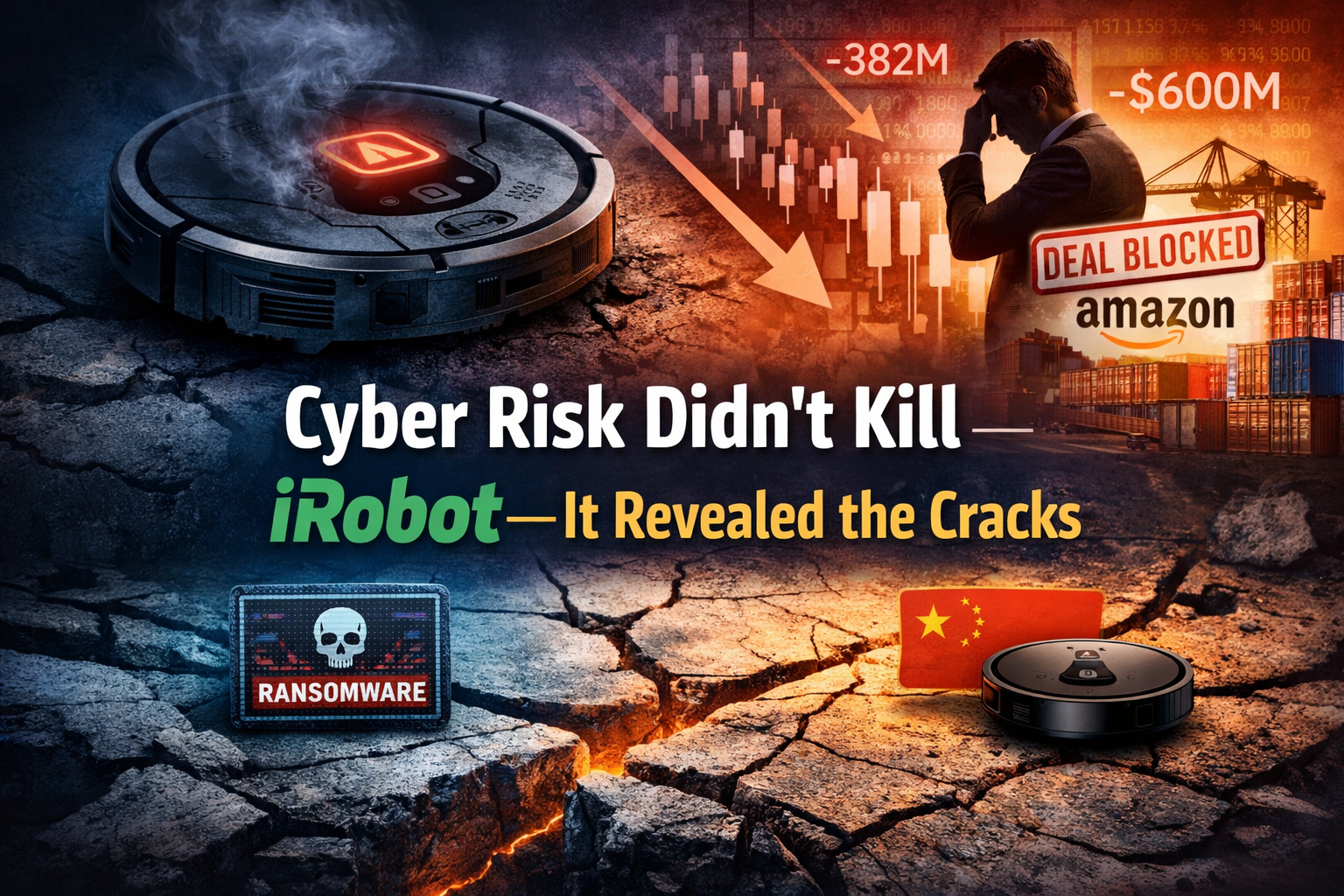
iRobot—the company behind Roomba? In December 2025, it filed for bankruptcy. While some initially blamed a cyberattack, the real story is far more nuanced and instructive.
The incident often cited traces back to February 2022, when Expeditors, a major global freight and logistics provider, suffered a ransomware attack. The company shut down critical systems for nearly three weeks. Because iRobot relied on Expeditors for outsourced logistics, its supply chain effectively came to a halt. Products were stuck in warehouses, retailer deliveries were delayed, and iRobot incurred roughly $900,000 in retailer chargebacks. The company later sued Expeditors for approximately $2.1 million, a case that dragged on into 2024.
However, when viewed in context, the cyber incident was financially insignificant compared to iRobot’s broader troubles. In 2022 alone, iRobot’s revenue dropped by $382 million. Between 2022 and 2024, total losses reached nearly $600 million. During this period, the company also took on around $200 million in debt while waiting for its proposed acquisition by Amazon—an acquisition that was ultimately blocked by regulators. On top of that, tariffs hit its Vietnam manufacturing operations.
The alleged cyber-related losses represented less than 1% of iRobot’s total financial damage. Notably, the bankruptcy filing itself does not even mention the cyberattack or the lawsuit against Expeditors.
What ultimately drove iRobot into bankruptcy was competitive and strategic failure. Chinese competitors such as Roborock entered the market with better-performing products at lower prices, rapidly eroding iRobot’s market share. With the Amazon deal collapsing and margins under pressure, the company simply could not recover.
The broader lesson is important. Third-party cyber incidents are real and can cause measurable harm—lost revenue, operational disruption, and legal costs. But cyber risk rarely destroys a healthy business on its own. Instead, it accelerates failure in organizations that are already structurally weak.
Cyber risk acts like a stress test. A resilient company can absorb a vendor outage and recover. A struggling company, facing the same disruption, may find that it exposes cracks that were already there.
That is why cyber resilience matters more than pure cyber prevention. It is about ensuring your organization can take a hit and continue operating. During vendor reviews, leaders should be asking hard questions: Do contracts include meaningful SLAs, liability caps, and indemnity clauses? Does cyber insurance cover business interruption caused by vendor outages? How concentrated is vendor risk—could one failure freeze operations? And have backup providers actually been tested under realistic conditions?
The most important question remains: if a critical vendor went offline for three weeks, could your organization absorb the impact—or would it push you past the breaking point?
My Opinion
Blaming iRobot’s collapse on a cyberattack is intellectually lazy. The Expeditors incident mattered, but it did not cause the bankruptcy. iRobot failed because of competitive pressure, strategic missteps, and overreliance on a deal that never closed. The cyber incident merely revealed how little margin for error the company had left.
For executives, the takeaway is clear: cyber risk is rarely the root cause of failure—it is the accelerant. Strong businesses treat cyber resilience as part of overall business resilience. Weak ones learn about it only after it’s too late.
At DISC InfoSec, we help organizations navigate this landscape by aligning AI risk management, governance, security, and compliance into a single, practical roadmap. Whether you are experimenting with AI or deploying it at scale, we help you choose and operationalize the right frameworks to reduce risk and build trust. Learn more at DISC InfoSec.
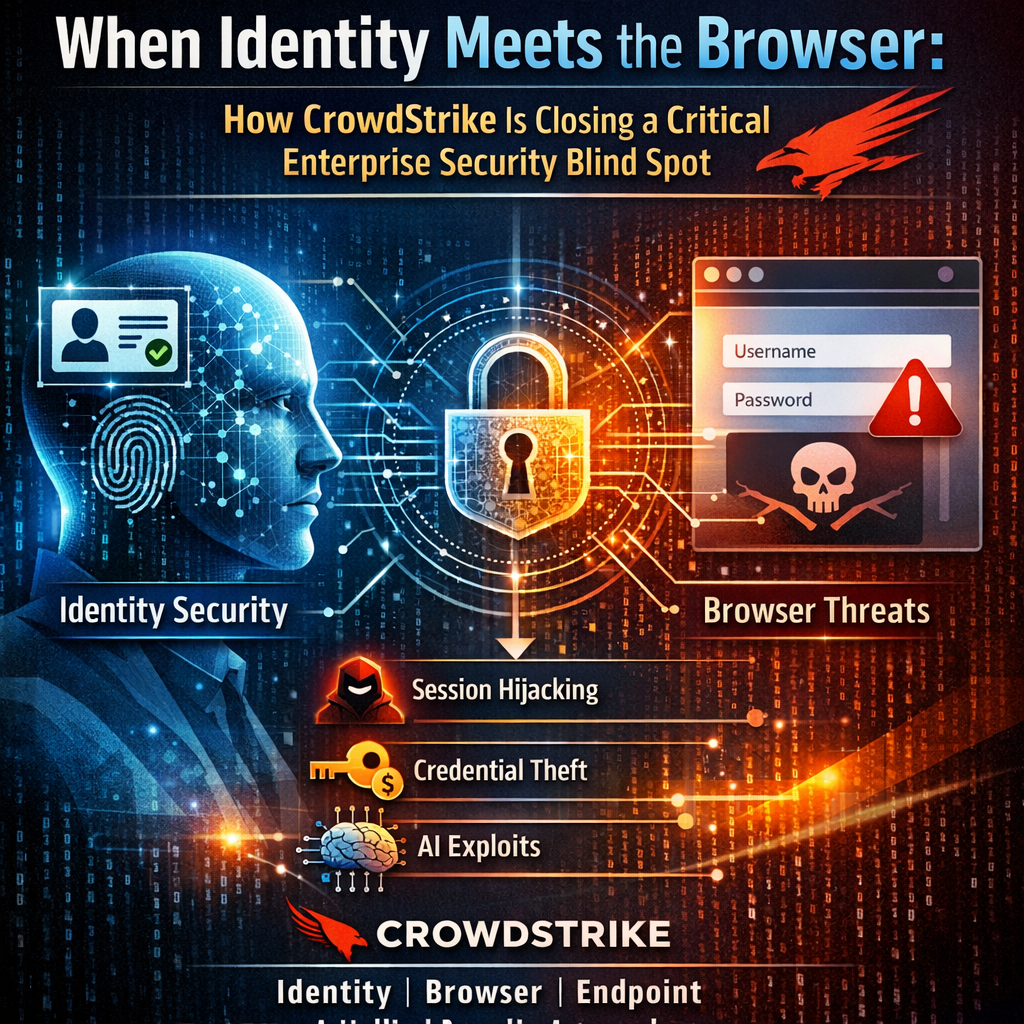
CrowdStrike recently announced an agreement to acquire Seraphic Security, a browser-centric security company, in a deal valued at roughly $420 million. This move, coming shortly after CrowdStrike’s acquisition of identity authorization firm SGNL, highlights a strategic effort to eliminate one of the most persistent gaps in enterprise cybersecurity: visibility and control inside the browser — where modern work actually happens.
Why Identity and Browser Security Converge
Modern attackers don’t respect traditional boundaries between systems — they exploit weaknesses wherever they find them, often inside authenticated sessions in browsers. Identity security tells you who should have access, while browser security shows what they’re actually doing once authenticated.
CrowdStrike’s CEO, George Kurtz, emphasized that attackers increasingly bypass malware installation entirely by hijacking sessions or exploiting credentials. Once an attacker has valid access, static authentication — like a single login check — quickly becomes ineffective. This means security teams need continuous evaluation of both identity behavior and browser activity to detect anomalies in real time.
In essence, identity and browser security can’t be siloed anymore: to stop modern attacks, security systems must treat access and usage as joined data streams, continuously monitoring both who is logged in and what the session is doing.
AI Raises the Stakes — and the Signal Value
The rise of AI doesn’t create new vulnerabilities per se, but it amplifies existing blind spots and creates new patterns of activity that traditional tools can easily miss. AI tools — from generative assistants to autonomous agents — are heavily used through browsers or browser-like applications. Without visibility at that layer, AI interactions can bypass controls, leak sensitive data, or facilitate automated attacks without triggering legacy endpoint defenses.
Instead of trying to ban AI tools — a losing battle — CrowdStrike aims to observe and control AI usage within the browser itself. In this context, AI usage becomes a high-value signal that acts as a proxy for risky behavior: what data is being queried, where it’s being sent, and whether it aligns with policy. This greatly enhances threat detection and risk scoring when combined with identity and endpoint telemetry.
The Bigger Pattern
Taken together, the Seraphic and SGNL acquisitions reflect a broader architectural shift at CrowdStrike: expanding telemetry and intelligence not just on endpoints but across identity systems and browser sessions. By aggregating these signals, the Falcon platform can trace entire attack chains — from initial access through credential use, in-session behavior, and data exfiltration — rather than reacting piecemeal to isolated alerts.
This pattern mirrors the reality that attack surfaces are fluid and exist wherever users interact with systems, whether on a laptop endpoint or inside an authenticated browser session. The goal is not just prevention, but continuous understanding and control of risk across a human or machine’s entire digital journey.
Addressing an Enterprise Security Blind Spot
The browser is arguably the new front door of enterprise IT: it’s where SaaS apps live, where data flows, and — increasingly — where AI tools operate. Because traditional security technologies were built around endpoints and network edges, developers often overlooked the runtime behavior of browsers — until now. CrowdStrike’s acquisition of Seraphic directly addresses this blind spot by embedding security inside the browser environment itself.
This approach extends beyond snippet-based URL filtering or restricting corporate browsers: it provides runtime visibility and policy enforcement in any browser across managed and unmanaged devices. By correlating this with identity and endpoint data, security teams gain unprecedented context for detecting session-based threats like hijacks, credential abuse, or misuse of AI tools.
This strategic push makes a lot of sense. For too long, security architectures treated the browser as a perimeter, rather than as a core execution environment where work and risk converge. As enterprises embrace SaaS, remote work, and AI-driven workflows, attackers have naturally gravitated to these unmonitored entry points. CrowdStrike’s focus on continuous identity evaluation plus in-session browser telemetry is a pragmatic evolution of zero-trust principles — not just guarding entry points, but consistently watching how access is used. Combining identity, endpoint, and browser signals moves defenders closer to true context-aware security, where decisions adapt in real time based on actual behavior, not just static policies.
However, executing this effectively at scale — across diverse browser types, BYOD environments, and AI applications — will be complex. The industry will be watching closely to see whether this translates into tangible reductions in breaches or just a marketing narrative about data correlation. But as attackers continue to blur boundaries between identity abuse and session exploitation, this direction seems not only logical but necessary.
At DISC InfoSec, we help organizations navigate this landscape by aligning AI risk management, governance, security, and compliance into a single, practical roadmap. Whether you are experimenting with AI or deploying it at scale, we help you choose and operationalize the right frameworks to reduce risk and build trust. Learn more at DISC InfoSec.
A ransomware attack is a type of cyberattack where attackers encrypt an organization’s files or systems and demand payment—usually in cryptocurrency—to restore access. Once infected, critical data becomes unusable, operations can grind to a halt, and organizations are forced into high-pressure decisions with financial, legal, and reputational consequences.
Why People Are Falling for Ransomware Attacks
Ransomware works because it exploits human behavior as much as technical gaps. Attackers craft emails, messages, and websites that look legitimate and urgent, tricking users into clicking links or opening attachments. Weak passwords, reused credentials, unpatched systems, and lack of awareness training make it easy for attackers to gain initial access. As attacks become more polished and automated, even cautious users and small businesses fall victim.
Why It’s a Major Threat Today
Ransomware attacks are increasing rapidly, especially against organizations with limited security resources. Small mistakes—such as clicking a malicious link—can completely shut down business operations, making ransomware a serious operational and financial risk.
Who Gets Targeted the Most
Small and mid-sized businesses are frequent targets because they often lack mature security controls. Hospitals, schools, startups, and freelancers are also heavily targeted due to sensitive data and limited downtime tolerance.
How Ransomware Enters Systems
Attackers commonly use fake emails, malicious attachments, phishing links, weak or reused passwords, and outdated software to gain access. These methods are effective because they blend in with normal business activity.
Warning Signs of a Ransomware Attack
Early indicators include files that won’t open, unusual file extensions, sudden ransom notes appearing on screens, and systems becoming noticeably slow or unstable.
The Cost of One Attack
A single ransomware incident can result in direct financial losses, extended business downtime, loss of critical data, and long-term reputational damage that impacts customer trust.
Why People Fall for It
Attackers design messages that look authentic and urgent. They use fear, pressure, and trusted branding to push users into acting quickly without verifying authenticity.
Biggest Mistakes Organizations Make
Common errors include clicking links without verification, failing to maintain regular backups, ignoring software updates, reusing the same password everywhere, and downloading pirated or cracked software.
How to Prevent Ransomware
Basic prevention includes using strong and unique passwords, enabling multi-factor authentication, keeping systems updated, and training employees to recognize phishing attempts.
What to Do If You’re Attacked
If ransomware strikes, immediately disconnect affected systems from the internet, notify IT or security teams, avoid paying the ransom, restore systems from clean backups, and act quickly to limit damage.
Myths About Ransomware
Many believe attackers won’t target them, antivirus alone is sufficient, or only large companies are at risk. In reality, ransomware affects organizations of all sizes, and layered defenses are essential.
How to Protect Your Business from Cyber Attacks
Employee Cybersecurity Education
Educating employees on phishing, password hygiene, and reporting suspicious activity is one of the most cost-effective security controls. Well-trained staff significantly reduce the likelihood of successful attacks.
Use an Internet Security Suite
A comprehensive security suite—including antivirus, firewall, and intrusion detection—helps protect systems from known threats. Keeping these tools updated is critical for effectiveness.
Prepare for Zero-Day Attacks
Organizations should assume unknown threats will occur. Security solutions should focus on containment and behavior-based detection rather than relying solely on known signatures.
Stay Updated with Patches
Regularly applying software and system updates closes known vulnerabilities. Unpatched systems remain one of the easiest entry points for attackers.
Back Up Your Data
Frequent, secure backups ensure business continuity. Backups should be stored separately from primary systems to prevent them from being encrypted during an attack.
Be Cautious with Public Wi-Fi
Public and unsecured Wi-Fi networks expose systems to interception and attacks. Employees should avoid unknown networks or use secure VPNs when remote.
Use Secure Web Browsers
Modern secure browsers reduce exposure to malicious websites and exploits. Choosing hardened, updated browsers adds another layer of defense.
Secure Personal Devices Used for Work
Personal devices accessing business data must meet organizational security standards. Unsecured endpoints can undermine even strong network defenses.
Establish Access Controls
Each employee should have a unique account with access limited to what they need. Enforcing least privilege reduces the impact of compromised credentials.
Ensure Systems Are Malware-Free
Regular system scans help detect hidden malware that may evade initial defenses. Early detection prevents long-term data theft and damage.
How to Protect Small and Mid-Sized Businesses (SMBs) from Cyber Attacks
For SMBs, cybersecurity must be practical, risk-based, and repeatable. Start with strong identity controls such as multi-factor authentication and unique passwords. Maintain regular, tested backups and keep systems patched. Limit access based on roles, monitor for unusual activity, and educate employees continuously. Most importantly, SMBs should adopt a simple incident response plan and consider periodic risk assessments aligned with frameworks like ISO 27001 or NIST CSF. Cybersecurity for SMBs isn’t about expensive tools—it’s about visibility, discipline, and readiness.
How Attacks Get In
📧 Phishing Emails
🔑 Weak / Reused Passwords
🧩 Unpatched Systems
👤 Excessive User Access
💾 No Reliable Backups
ISO 27001 controls
🔐 MFA & Identity Control (A.5.17)
🎓 Security Awareness (A.6.3)
🛡️ Malware Protection (A.8.7)
🔄 Patch Management (A.8.8)
🧭 Least Privilege Access (A.5.15 / A.5.18)
💽 Backups & Recovery (A.8.13)
🚨 Incident Response (A.5.24–26)
What the Business Feels
⏱️ Operational Downtime
💰 Financial Loss
📉 Reputation Damage
⚖️ Compliance Exposure
👔 Executive Accountability
Ransomware is not a technology failure — it’s a governance failure.
Subtext (smaller): vCISO oversight aligns ISO 27001 controls to real business risk.
At DISC InfoSec, we help organizations navigate this landscape by aligning AI risk management, governance, security, and compliance into a single, practical roadmap. Whether you are experimenting with AI or deploying it at scale, we help you choose and operationalize the right frameworks to reduce risk and build trust. Learn more at DISC InfoSec.
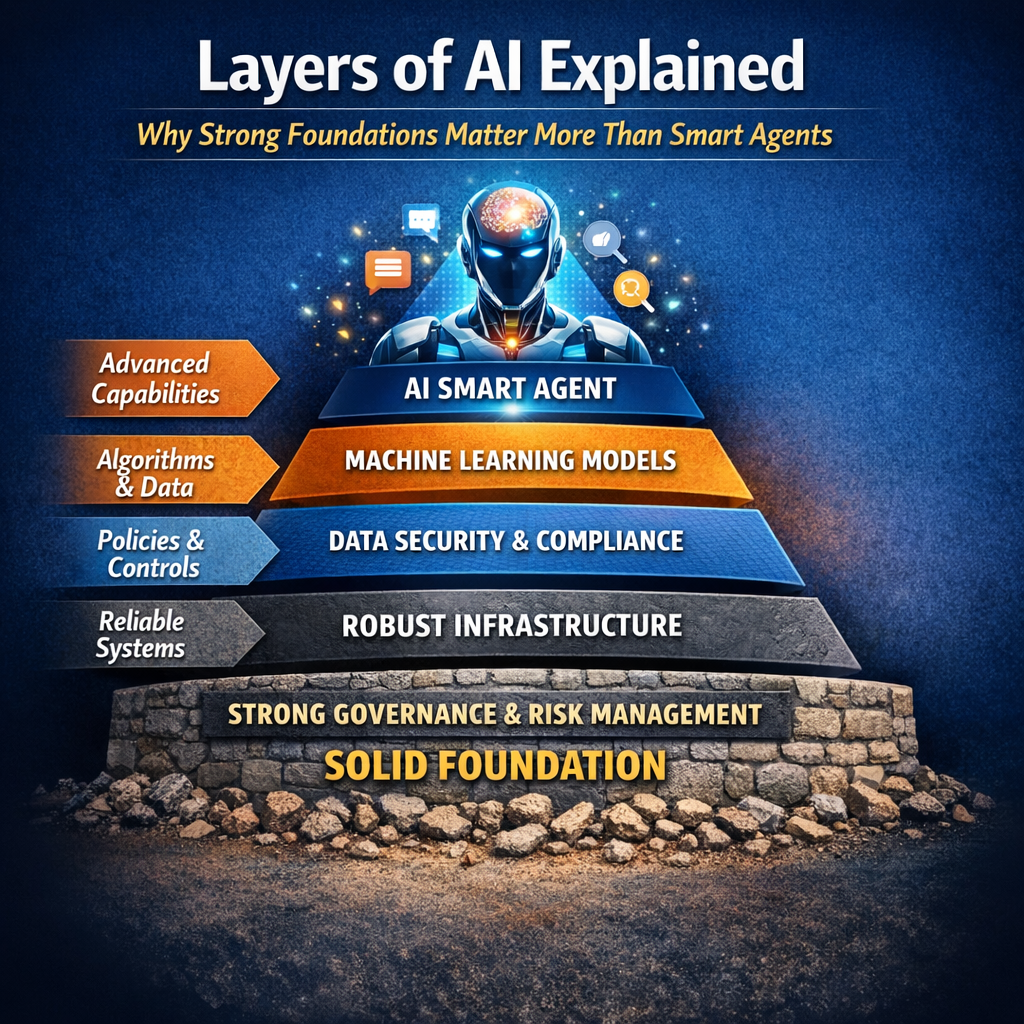
AI is often perceived as something mysterious or magical, but in reality it is a layered technology stack built incrementally over decades. Each layer depends on the maturity and stability of the layers beneath it, which is why skipping foundations leads to fragile outcomes.
The diagram illustrates why many AI strategies fail: organizations rush to adopt the top layers without understanding or strengthening the base. When results disappoint, tools are blamed instead of the missing foundations that enable them.
At the base is Classical AI, which relies on rules, logic, and expert systems. This layer established early decision boundaries, reasoning models, and governance concepts that still underpin modern AI systems.
Above that sits Machine Learning, where explicit rules are replaced with statistical prediction. Techniques such as classification, regression, and reinforcement learning focus on optimization and pattern discovery rather than true understanding.
Neural Networks introduce representation learning, allowing systems to learn internal features automatically. Through backpropagation, hidden layers, and activation functions, patterns begin to emerge at scale rather than being manually engineered.
Deep Learning builds on neural networks by stacking specialized architectures such as transformers, CNNs, RNNs, and autoencoders. This is the layer where data volume, compute, and scale dramatically increase capability.
Generative AI marks a shift from analysis to creation. Models can now generate text, images, audio, and multimodal outputs, enabling powerful new use cases—but these systems remain largely passive and reactive.
Agentic AI is where confusion often arises. This layer introduces memory, planning, tool use, and autonomous execution, allowing systems to take actions rather than simply produce outputs.
Importantly, Agentic AI is not a replacement for the lower layers. It is an orchestration layer that coordinates capabilities built below it, amplifying both strengths and weaknesses in data, models, and processes.
Weak data leads to unreliable agents, broken workflows result in chaotic autonomy, and a lack of governance introduces silent risk. The diagram is most valuable when read as a warning: AI maturity is built bottom-up, and autonomy without foundation multiplies failure just as easily as success.
This post and diagram does a great job of illustrating a critical concept in AI that’s often overlooked: foundations matter more than flashy capabilities. Many organizations focus on deploying “smart agents” or advanced models without first ensuring the underlying data infrastructure, governance, and compliance frameworks are solid. The pyramid/infographic format makes this immediately clear—visually showing that AI capabilities rest on multiple layers of systems, policies, and risk management.
My opinion: It’s a strong, board- and executive-friendly way to communicate that resilient AI isn’t just about algorithms—it’s about building a robust, secure, and governed foundation first. For practitioners, this reinforces the need for strategy before tactics, and for decision-makers, it emphasizes risk-aware investment in AI.
At DISC InfoSec, we help organizations navigate this landscape by aligning AI risk management, governance, security, and compliance into a single, practical roadmap. Whether you are experimenting with AI or deploying it at scale, we help you choose and operationalize the right frameworks to reduce risk and build trust. Learn more at DISC InfoSec.
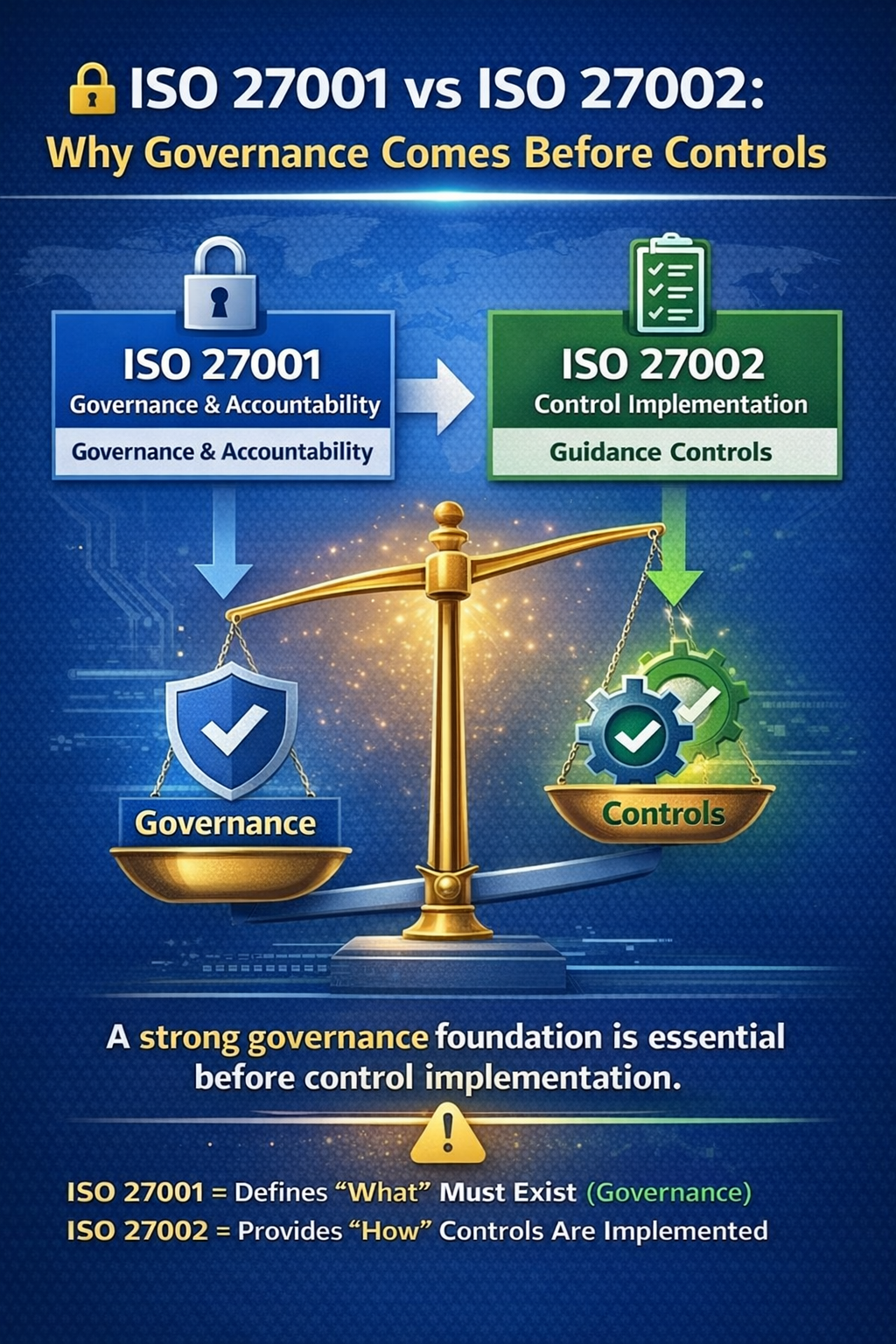
ISO 27001 is frequently misunderstood, and this misunderstanding is a major reason many organizations struggle even after achieving certification. The standard is often treated as a technical security guide, when in reality it is not designed to explain how to secure systems.
At its core, ISO 27001 defines the management system for information security. It focuses on governance, leadership responsibility, risk ownership, and accountability rather than technical implementation details.
The standard answers the question of what must exist in an organization: clear policies, defined roles, risk-based decision-making, and management oversight for information security.
ISO 27002, on the other hand, plays a very different role. It is not a certification standard and does not make an organization compliant on its own.
Instead, ISO 27002 provides practical guidance and best practices for implementing security controls. It explains how controls can be designed, deployed, and operated effectively.
However, ISO 27002 only delivers value when strong governance already exists. Without the structure defined by ISO 27001, control guidance becomes fragmented and inconsistently applied.
A useful way to think about the relationship is simple: ISO 27001 defines governance and accountability, while ISO 27002 supports control implementation and operational execution.
In practice, many organizations make the mistake of deploying tools and controls first, without establishing clear ownership and risk accountability. This often leads to audit findings despite significant security investments.
Controls rarely fail on their own. When controls break down, the root cause is usually weak governance, unclear responsibilities, or poor risk decision-making rather than technical shortcomings.
When used together, ISO 27001 and ISO 27002 go beyond helping organizations pass audits. They strengthen risk management, improve audit outcomes, and build long-term trust with regulators, customers, and stakeholders.
My opinion: The real difference between ISO 27001 and ISO 27002 is the difference between certification and security maturity. Organizations that chase controls without governance may pass short-term checks but remain fragile. True resilience comes when leadership owns risk, governance drives decisions, and controls are implemented as a consequence—not a substitute—for accountability.
At DISC InfoSec, we help organizations navigate this landscape by aligning AI risk management, governance, security, and compliance into a single, practical roadmap. Whether you are experimenting with AI or deploying it at scale, we help you choose and operationalize the right frameworks to reduce risk and build trust. Learn more at DISC InfoSec.
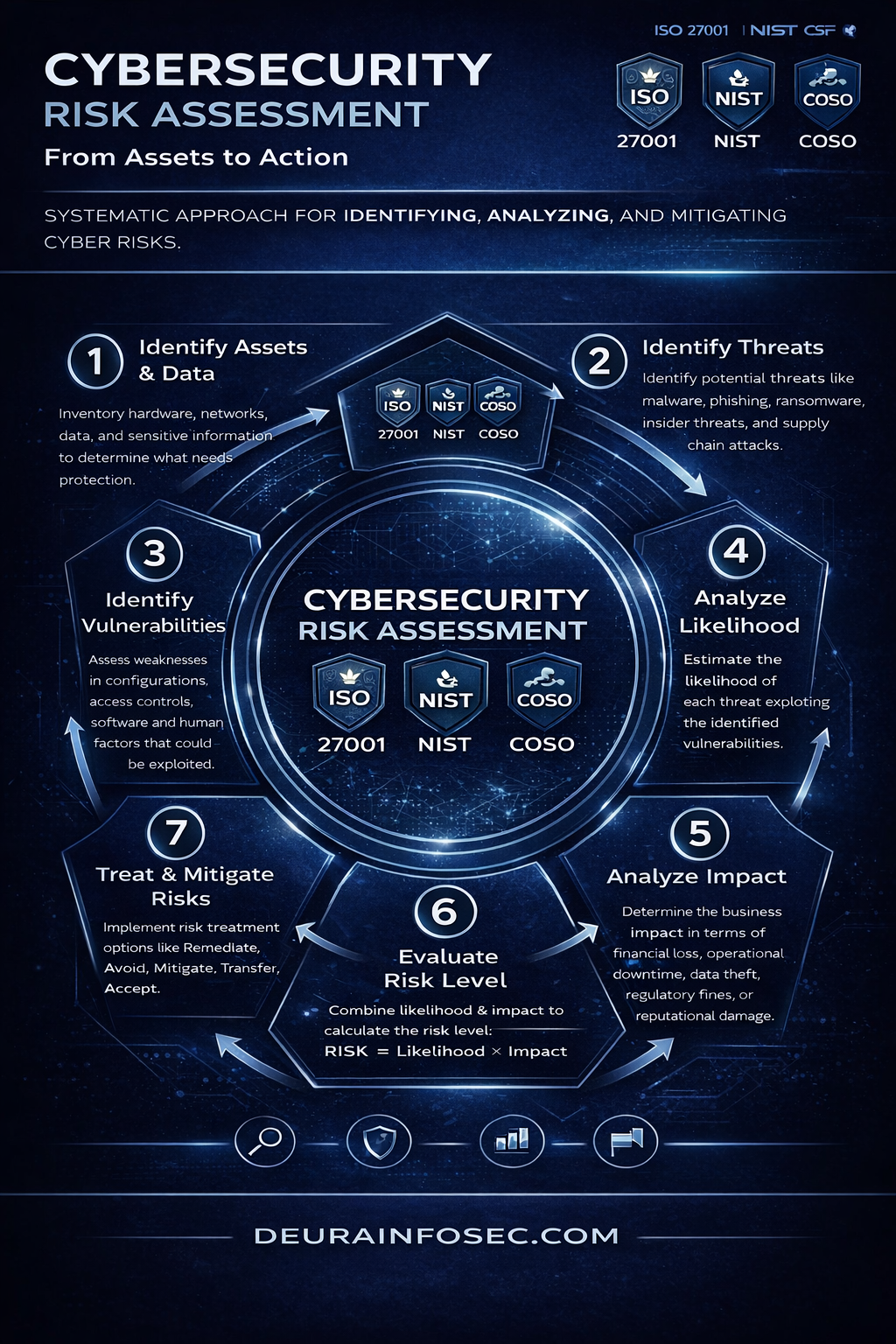
Below is a clear, structured explanation Cybersecurity Risk Assessment Process
What Is a Cybersecurity Risk Assessment?
A cybersecurity risk assessment is a structured process for understanding how cyber threats could impact the business, not just IT systems. Its purpose is to identify what assets matter most, what could go wrong, how likely those events are, and what the consequences would be if they occur. Rather than focusing on tools or controls first, a risk assessment provides decision-grade insight that leadership can use to prioritize investments, allocate resources, and accept or reduce risk knowingly. When aligned with frameworks like ISO 27001, NIST CSF, and COSO, it creates a common language between security, executives, and the board.
1. Identify Assets & Data
The first step is to identify and inventory critical assets, including hardware, software, cloud services, networks, data, and sensitive information. This step answers the fundamental question: what are we actually protecting? Without a clear understanding of assets and their business value, security efforts become unfocused. Many breaches stem from misconfigured or forgotten assets, making visibility and ownership essential to effective risk management.
2. Identify Threats
Once assets are known, the next step is identifying the threats that could realistically target them. These include external threats such as malware, ransomware, phishing, and supply chain attacks, as well as internal threats like insider misuse or human error. Threat identification focuses on who might attack, how, and why, based on real-world attack patterns rather than hypothetical scenarios.
3. Identify Vulnerabilities
Vulnerabilities are weaknesses that threats can exploit. These may exist in system configurations, software, access controls, processes, or human behavior. This step examines where defenses are insufficient or outdated, such as unpatched systems, excessive privileges, weak authentication, or lack of security awareness. Vulnerabilities are the bridge between threats and actual incidents.
4. Analyze Likelihood
Likelihood analysis evaluates how probable it is that a given threat will successfully exploit a vulnerability. This assessment considers threat actor capability, exposure, historical incidents, and the effectiveness of existing controls. The goal is not precision but reasonable estimation, enabling organizations to distinguish between theoretical risks and those that are most likely to occur.
5. Analyze Impact
Impact analysis focuses on the potential business consequences if a risk materializes. This includes financial loss, operational disruption, data theft, regulatory penalties, legal exposure, and reputational damage. By framing impact in business terms rather than technical language, this step ensures that cyber risk is understood as an enterprise risk, not just an IT issue.
6. Evaluate Risk Level
Risk level is determined by combining likelihood and impact, commonly expressed as Risk = Likelihood × Impact. This step allows organizations to rank risks and identify which ones exceed acceptable thresholds. Not all risks require immediate remediation, but all should be understood, documented, and owned at the appropriate level.
7. Treat & Mitigate Risks
Risk treatment involves deciding how to handle each identified risk. Options include remediating the risk through controls, mitigating it by reducing likelihood or impact, transferring it through insurance or contracts, avoiding it by changing business practices, or accepting it when the risk is within tolerance. This step turns analysis into action and aligns security decisions with business priorities.
8. Monitor & Review
Cyber risk is not static. New threats, technologies, and business changes continuously reshape the risk landscape. Monitoring and review ensure that controls remain effective and that risk assessments stay current. This step embeds risk management into ongoing governance rather than treating it as a one-time exercise.
Bottom line: A cybersecurity risk assessment is not about achieving perfect security—it’s about making informed, defensible decisions in an environment where risk is unavoidable. When done well, it transforms cybersecurity from a technical function into a strategic business capability.
At DISC InfoSec, we help organizations navigate this landscape by aligning AI risk management, governance, security, and compliance into a single, practical roadmap. Whether you are experimenting with AI or deploying it at scale, we help you choose and operationalize the right frameworks to reduce risk and build trust. Learn more at DISC InfoSec.
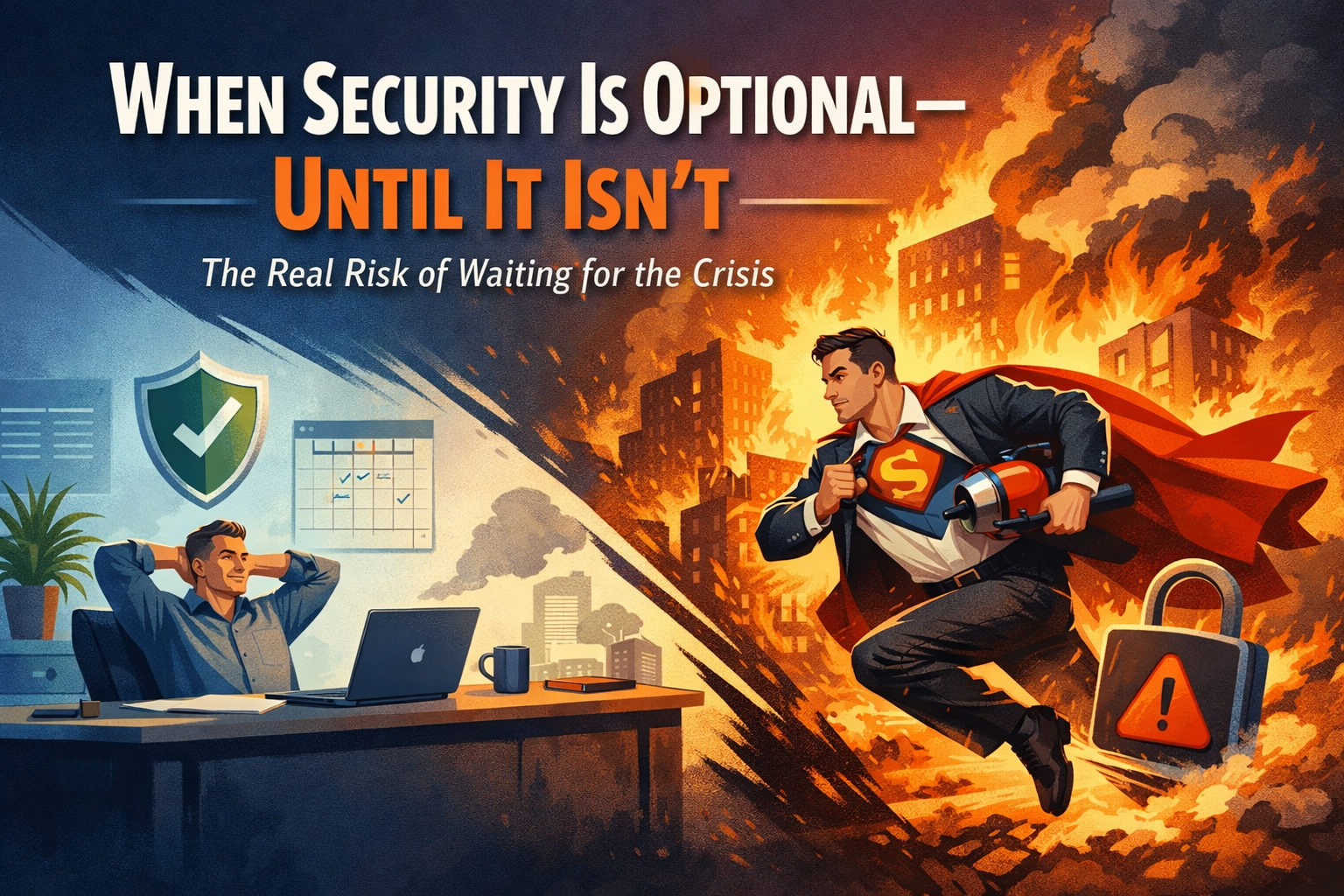
ISO/IEC 27001 is often described as “essential,” but in reality, it remains a voluntary standard rather than a mandatory requirement. Its value depends less on obligation and more on organizational intent.
When leadership genuinely understands how deeply the business relies on information, the importance of managing information risk becomes obvious. In such cases, adopting 27001 is simply a logical extension of good governance.
For informed management teams, information security is not a technical checkbox but a business enabler. They recognize that protecting data protects revenue, reputation, and operational continuity.
In these environments, frameworks like 27001 support disciplined decision-making, accountability, and long-term resilience. The standard provides structure, not bureaucracy.
However, when leadership does not grasp the organization’s information dependency, advocacy often falls on deaf ears. No amount of persuasion will compensate for a lack of awareness.
Pushing too hard in these situations can be counterproductive. Without perceived risk, security efforts are seen as cost, friction, or unnecessary compliance.
Sometimes, the most effective catalyst is experience rather than explanation. A near miss or a real incident often succeeds where presentations and risk registers fail.
Once the business feels tangible pain—financial loss, customer impact, or reputational damage—the conversation changes quickly. Security suddenly becomes urgent and relevant.
That is when security leaders are invited in as problem-solvers, not prophets—stepping forward to help stabilize, rebuild, and guide the organization toward stronger governance and risk management.
My opinion:
This perspective is pragmatic, realistic, and—while a bit cynical—largely accurate in how organizations actually behave.
In an ideal world, leadership would proactively invest in ISO 27001 because they understand information risk as a core business risk. In practice, many organizations only act when risk becomes experiential rather than theoretical. Until there is pain, security feels optional.
That said, waiting for an incident should never be the strategy—it’s simply the pattern we observe. Incidents are expensive teachers, and the damage often exceeds what proactive governance would have cost. From a maturity standpoint, reactive adoption signals weak risk leadership.
The real opportunity for security leaders and vCISOs is to translate information risk into business language before the crisis: revenue impact, downtime, legal exposure, and trust erosion. When that translation lands, 27001 stops being “optional” and becomes a management tool.
Ultimately, ISO 27001 is not about compliance—it’s about decision quality. Organizations that adopt it early tend to be deliberate, resilient, and better governed. Those that adopt it after an incident are often doing damage control.
At DISC InfoSec, we help organizations navigate this landscape by aligning AI risk management, governance, security, and compliance into a single, practical roadmap. Whether you are experimenting with AI or deploying it at scale, we help you choose and operationalize the right frameworks to reduce risk and build trust. Learn more at DISC InfoSec.
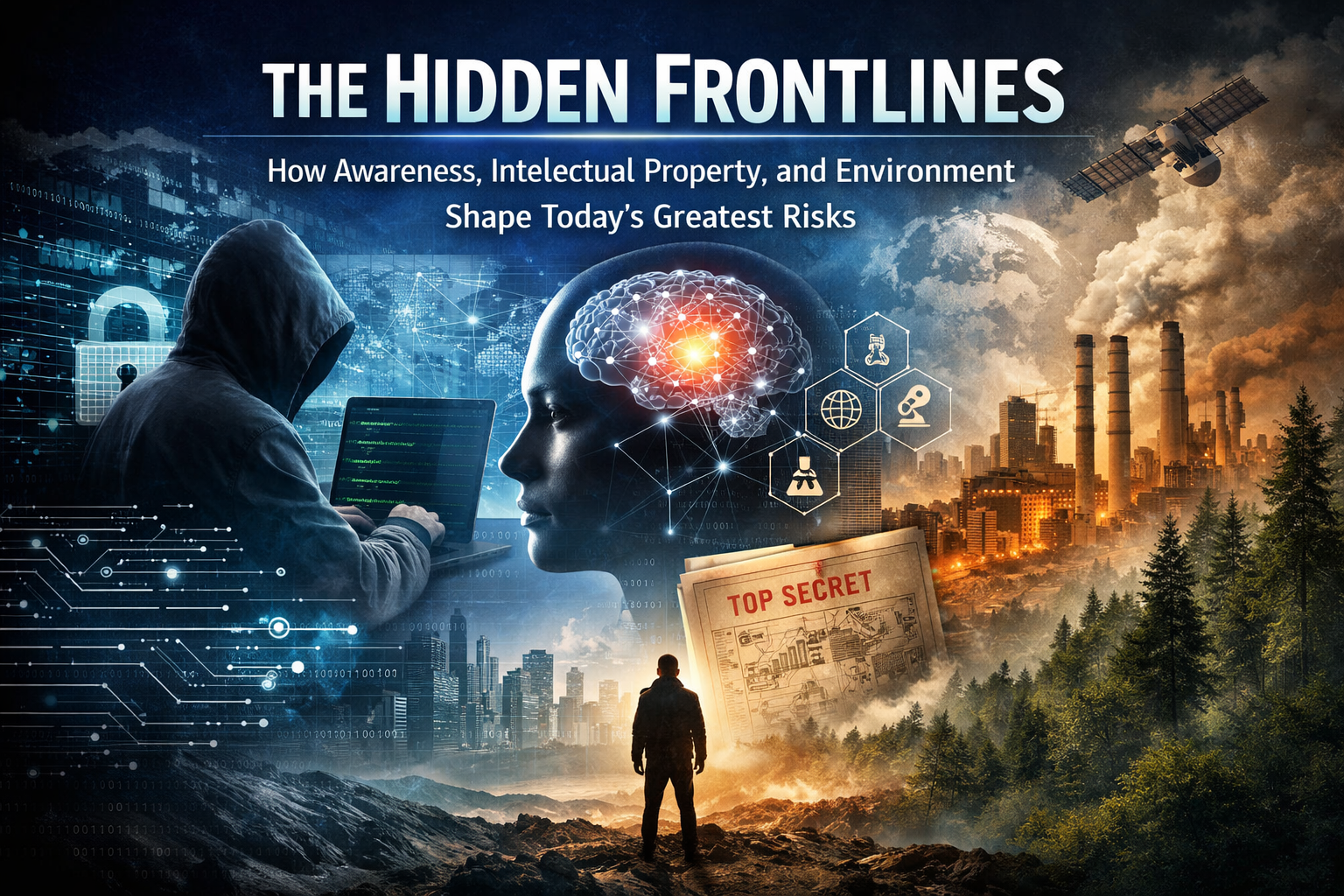
Today’s most serious risks are no longer loud or obvious. Whether you are protecting an organization, leading people, or building resilience in your own life, the real threats — and opportunities — increasingly exist below the surface, hidden in systems, environments, and assumptions we rarely question.
Leadership, cybersecurity, and performance are being reshaped quietly. The rules aren’t changing overnight; they’re shifting gradually, often unnoticed, until the impact becomes unavoidable. Staying ahead now requires understanding these subtle shifts before they turn into crises. Everything begins with awareness. Not just awareness of cyber threats, but of the deeper drivers of vulnerability and strength. Intellectual property, environmental influence, and decision-making systems are emerging as critical factors that determine long-term success or failure.
This shift demands a move away from late-stage reaction. Instead of responding after alarms go off, leaders must understand the battlefield in advance — identifying where value truly lives and how it can be exposed without obvious warning signs. Intellectual property has become one of the most valuable — and most targeted — assets in the modern threat landscape. As traditional perimeter defenses weaken, attackers are no longer just chasing systems and data; they are pursuing ideas, research, trade secrets, and innovation itself.
IP protection is no longer a legal checkbox or an afterthought. Nation-states, competitors, and sophisticated actors are exploiting digital access to siphon knowledge and strategic advantage. Defending intellectual capital now requires executive attention, governance, and security alignment. Cybersecurity is also deeply personal. Our environments — digital and physical — quietly shape how we think, decide, perform, and recover. Factors like constant digital noise, poor system design, and unhealthy surroundings compound over time, leading to fatigue, errors, and burnout.
This perspective challenges leaders to design not only secure systems, but sustainable lives. Clear thinking, sound judgment, and consistent performance depend on mastering the environment around us as much as mastering technology or strategy. When change happens quietly, awareness becomes the strongest form of defense. Whether protecting intellectual property, navigating uncertainty, or strengthening personal resilience, the greatest risks — and advantages — are often the ones we fail to see at first glance.
Opinion In my view, this shift marks a critical evolution in how we think about risk and leadership. The organizations and individuals who win won’t be those with the loudest tools, but those with the deepest awareness. Seeing beneath the surface — of systems, environments, and value — is no longer optional; it’s the defining capability of modern resilience and strategic advantage.
At DISC InfoSec, we help organizations navigate this landscape by aligning AI risk management, governance, security, and compliance into a single, practical roadmap. Whether you are experimenting with AI or deploying it at scale, we help you choose and operationalize the right frameworks to reduce risk and build trust. Learn more at DISC InfoSec.
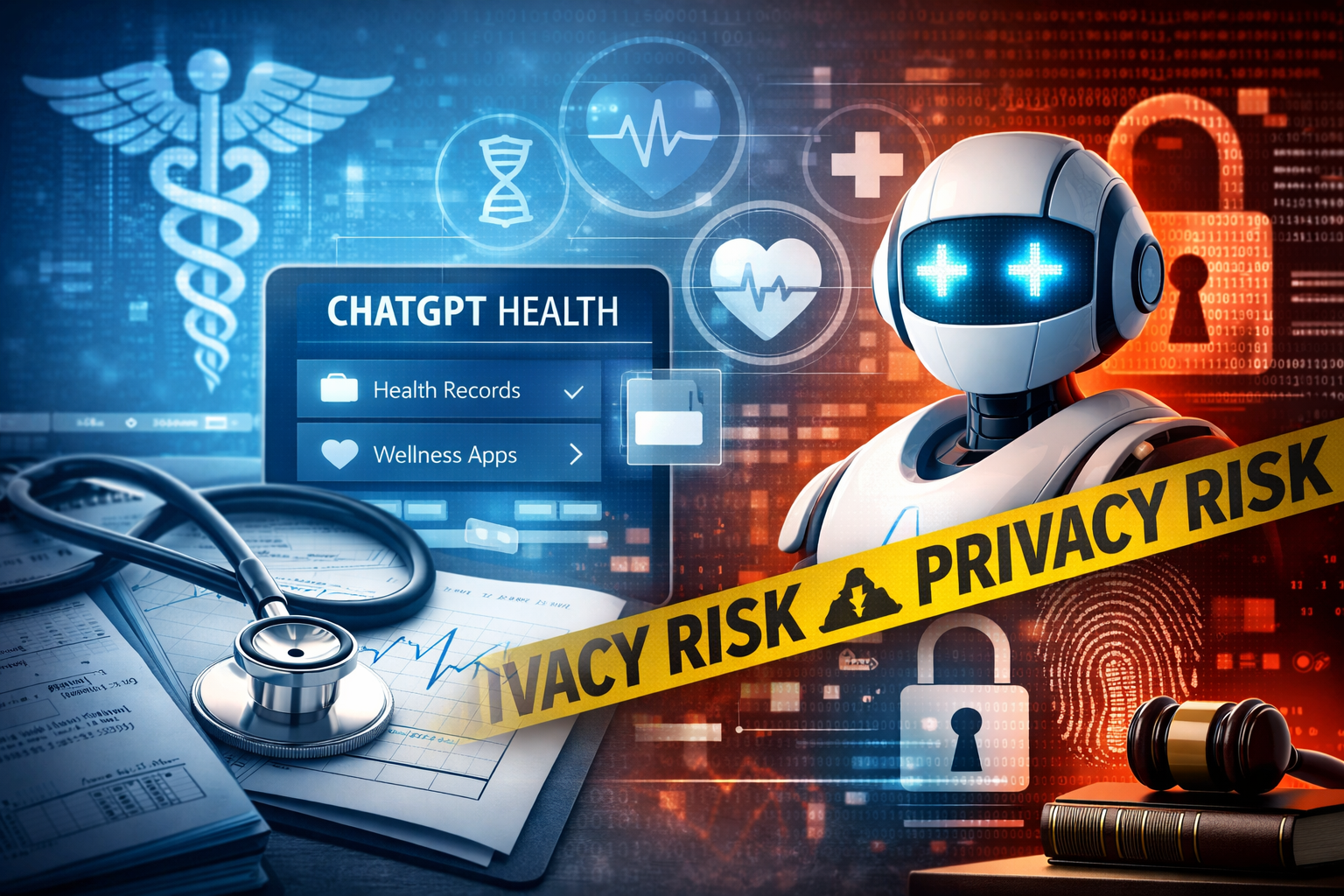
Potential risks of sharing medical records with a consumer AI platform
OpenAI recently introduced “ChatGPT Health,” a specialized extension of ChatGPT designed to handle health-related conversations and enable users to link their medical records and wellness apps for more personalized insights. The company says this builds on its existing security framework.
According to OpenAI, the new health feature includes “additional, layered protections” tailored to sensitive medical information — such as purpose-built encryption and data isolation that aims to separate health data from other chatbot interactions.
The company also claims that data shared in ChatGPT Health won’t be used to train its broader AI models, a move intended to keep medical information out of the core model’s training dataset.
OpenAI says millions of users widely ask health and wellness questions on its platform already, which it uses to justify a dedicated space where those interactions can be more contextualized and, allegedly, safer.
Privacy advocates, however, are raising serious concerns. They note that medical records uploaded to ChatGPT Health are no longer protected by HIPAA, the U.S. law that governs how healthcare providers safeguard patients’ private health information.
Experts like Sara Geoghegan from the Electronic Privacy Information Center warn that releasing sensitive health data into OpenAI’s systems removes legal privacy protections and exposes users to risk. Without a law like HIPAA applying to ChatGPT, the company’s own policies are the only thing standing between users and potential misuse.
Critics also caution that OpenAI’s evolving business model, particularly if it expands into personalization or advertising, could create incentives to use health data in ways users don’t expect or fully understand.
Key questions remain unanswered, such as how exactly the company would respond to law enforcement requests for health data and how effectively health data is truly isolated from other systems if policies change.
The feature’s reliance on connected wellness apps and external partners also introduces additional vectors where sensitive information could potentially be exposed or accessed if there’s a breach or policy change.
In summary, while OpenAI pitches ChatGPT Health as an innovation with enhanced safeguards, privacy advocates argue that without robust legal protections and clear transparency, sharing medical records with a consumer AI platform remains risky.
My Opinion
AI has immense potential to augment how people manage and understand their health, especially for non-urgent questions or preparing for doctor visits. But giving any tech company access to medical records without the backing of strong legal protections like HIPAA feels premature and potentially unsafe. Technical safeguards such as encryption and data isolation matter — but they don’t replace enforceable privacy laws that restrict how health data can be used, shared, or disclosed. In healthcare, trust and accountability are paramount, and without those, even well-intentioned tools can expose individuals to privacy risks or misuse of deeply personal information. Until regulatory frameworks evolve to explicitly protect AI-mediated health data, users should proceed with caution and understand the privacy trade-offs they’re making.
At DISC InfoSec, we help organizations navigate this landscape by aligning AI risk management, governance, security, and compliance into a single, practical roadmap. Whether you are experimenting with AI or deploying it at scale, we help you choose and operationalize the right frameworks to reduce risk and build trust. Learn more at DISC InfoSec.
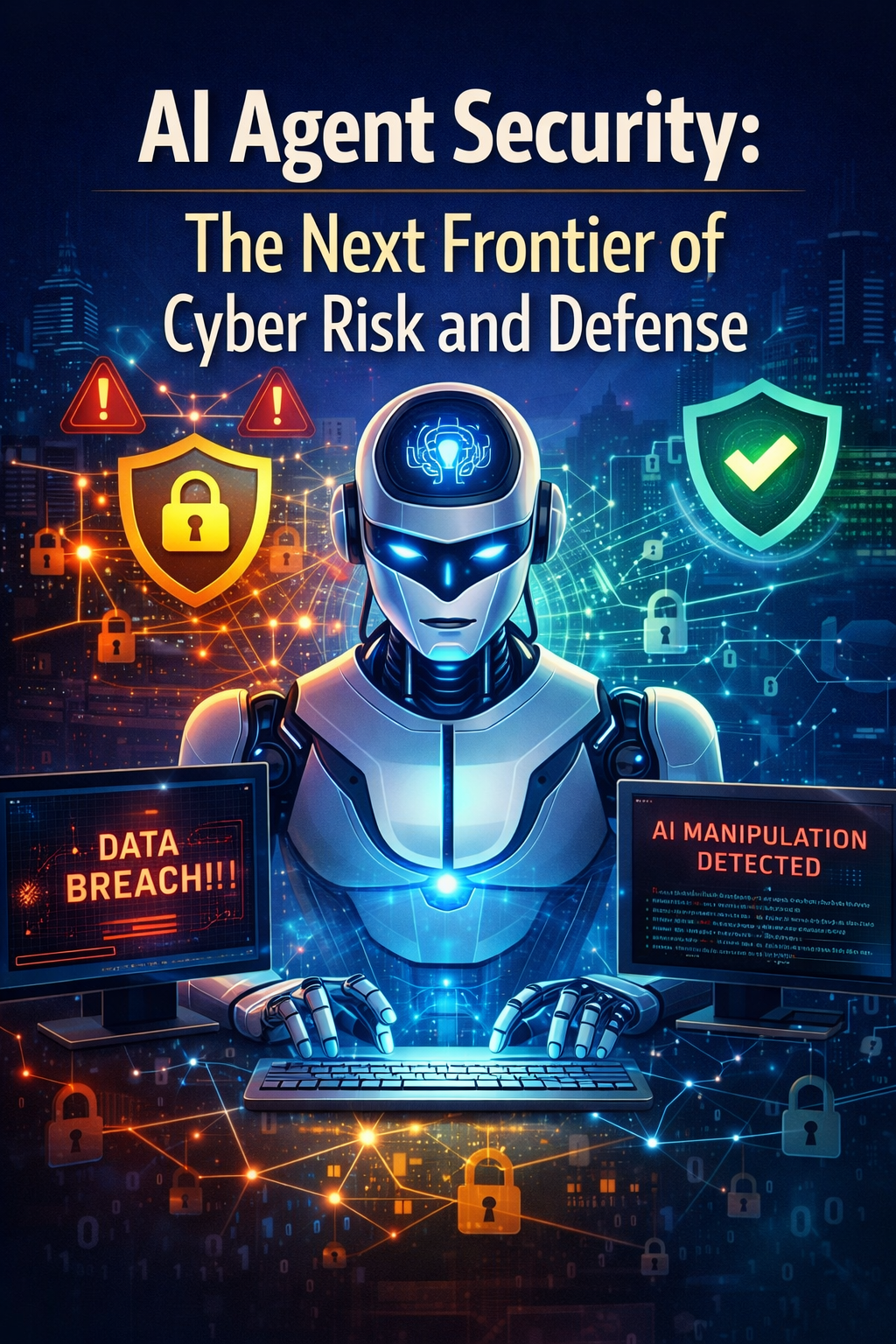
10 key reasons why securing AI agents is essential
1. Artificial intelligence is rapidly becoming embedded in everyday digital tools — from chatbots to virtual assistants — and this evolution has introduced a new class of autonomous systems called AI agents that can understand, respond, and even make decisions independently.
2. Unlike traditional AI, which simply responds to commands, AI agents can operate continuously, interact with multiple systems, and perform complex tasks on behalf of users, making them extremely powerful helpers.
3. But with that autonomy comes risk: agents often access sensitive data, execute actions, and connect to other applications with minimal human oversight — which means attackers could exploit these capabilities to do significant harm.
4. Hackers no longer have to “break in” through conventional vulnerabilities like weak passwords. Instead, they can manipulate how an AI agent interprets instructions, using crafted inputs to trick the agent into revealing private information or taking harmful actions.
5. These new attack vectors are fundamentally different from classic cyberthreats because they exploit the behavioral logic of the AI rather than weaknesses in software code or network defenses.
6. Traditional security tools — firewalls, antivirus software, and network encryption — are insufficient for defending such agents, because they don’t monitor the intent behind what the AI is doing or how it can be manipulated by inputs.
7. Additionally, security is not just a technology issue; humans influence AI through data and instructions, so understanding how people interact with agents and training users to avoid unsafe inputs is also part of securing these systems.
8. The underlying complexity of AI — its ability to learn and adapt to new information — means that its behavior can be unpredictable and difficult to audit, further complicating security efforts.
9. Experts argue that AI agents need guardrails similar to traffic rules for autonomous vehicles: clear limits, behavior monitoring, access controls, and continuous oversight to prevent misuse or unintended consequences.
10. Looking ahead, securing AI agents will require new defensive strategies — from building security into AI design to implementing runtime behavior monitoring and shaping governance frameworks — because agent security is becoming a core pillar of overall cyber defense.
Opinion
AI agents represent one of the most transformative technological shifts in modern computing — and their security challenges are equally transformative. While their autonomy unlocks efficiency and capability, it also introduces entirely new attack surfaces that traditional cybersecurity tools weren’t designed to handle. Investing in agent-specific security measures isn’t just proactive, it’s essential — the sooner organizations treat AI security as a strategic priority rather than an afterthought, the better positioned they’ll be to harness AI safely and responsibly.
At DISC InfoSec, we help organizations navigate this landscape by aligning AI risk management, governance, security, and compliance into a single, practical roadmap. Whether you are experimenting with AI or deploying it at scale, we help you choose and operationalize the right frameworks to reduce risk and build trust. Learn more at DISC InfoSec.
In October, California enacted the California Opt Me Out Act, a new privacy law designed to strengthen consumer control over personal data. The legislation officially came into effect on January 1 of this year.
The core goal of the Act is to make data privacy rights easier to exercise, not just easier to understand. It shifts the burden away from consumers having to navigate complex privacy settings on individual websites.
A key requirement of the law is that web browsers operating in California must support simple, standardized opt-out preference signals. These signals allow users to automatically communicate their privacy choices to websites they visit.
Instead of repeatedly clicking “Do Not Sell or Share My Personal Information” links, users can rely on browser-level signals to express their preferences consistently across the web.
The Act goes beyond traditional web tracking by recognizing the growing role of device-based identifiers. Californians are now able to opt out using marketing identifiers from mobile phones, smart TVs, and other connected devices.
Notably, the law also allows consumers to include vehicle identification numbers (VINs), acknowledging that modern vehicles generate and share significant amounts of personal and behavioral data.
By expanding opt-out rights across browsers, devices, and vehicles, the Act reflects a broader understanding of how personal data is collected in today’s connected ecosystem.
For businesses, this introduces new compliance expectations. Organizations must be able to recognize and honor these opt-out signals reliably, or risk falling out of compliance with California privacy regulations.
Overall, the California Opt Me Out Act represents a shift toward automated, user-centric privacy controls that reduce friction and increase transparency in how personal data is handled.
Opinion In my view, this law is an important evolution in privacy regulation. It moves privacy from static policies and manual consent banners toward enforceable, machine-readable signals. While it raises the compliance bar for organizations, it also sets a clear direction: privacy controls must be practical, scalable, and built into the technology people use every day—not buried behind legal jargon and multiple clicks.
At DISC InfoSec, we help organizations navigate this landscape by aligning AI risk management, governance, security, and compliance into a single, practical roadmap. Whether you are experimenting with AI or deploying it at scale, we help you choose and operationalize the right frameworks to reduce risk and build trust. Learn more at DISC InfoSec.