InfoSec Compliance & AI Governance For over 20 years, DISC InfoSec has been a trusted voice for cybersecurity professionals—sharing practical insights, compliance strategies, and AI governance guidance to help you stay informed, connected, and secure in a rapidly evolving landscape.
When moving to a cloud infrastructure, businesses should be looking toward a Zero Trust strategy. This security model protects the cloud from the inside out using the principle of least privilege to grant secure access to any company resource. Eliminating implicit trust helps prevent cloud-related data breaches and provides a security shield for remote workers that use BYOD (Bring Your Own Devices) to access corporate resources.
Zero Trust Prevents Compromised Credentials
Cloud environments are dynamic and require a lot of security, especially in a public cloud, where all data might not be protected and phishing attacks run rampant. In fact, 80% of cloud security incidents are due to stolen or lost credentials. Just earlier this year, the Lapsus$ ransomware group managed to breach a third party provider’s Okta authentication and even published screenshots for all to see.
This is where Zero Trust comes into the picture. Zero Trust helps mitigate unauthorized access in cloud environments by enforcing granular access to each user or device attempting to access a workload or resource. This added measure is essential for securing remote workers and third parties from any potential data leaks.
Organizations must adopt Zero Trust principles when building on cloud architectures. Here’s how your organization can successfully leverage the principles to keep cloud environments safe.
5 Ways Zero Trust Secures Cloud Environments
Always Assume a Threat
With traditional security methods, there’s no cause for concern until a threat is detected. And by that time, it’s too late. Zero trust automatically assumes by default that everyone using the network is a threat until verified.
Continuous Authentication
Following the ‘never trust, always verify’ motto, users will be continuously asked to verify themselves. Not on a one-time basis, but each time they require access to a cloud resource. Multi-Factor Authentication (MFA) technology is an integral component of a successful Zero Trust strategy.
Device Access Control
Zero Trust also monitors how many different devices are in the network as well as those trying to gain access at any given time. A proper Device Posture Check will ensure that every device is assessed for risk without any exposure to the network.
Microsegmentation
Microsegmentation is another way that Zero Trust protects cloud environments. It divides the infrastructure into smaller zones that require additional verification for access. This is also called minimizing the blast radius of a threat.
Lateral movement can occur when an attacker infiltrates the outside barrier and moves within the network. Even when the entry point is discovered with a traditional security method, it can be difficult to detect the threat. During the time it takes to find them, they can move laterally and exfiltrate data. Every user in the network is required to be verified when they enter different zones, drastically reducing the possibility of a breach.
Logging & Monitoring
Having several methods of verification means nothing without constant monitoring. Inspect and log all traffic to identify any suspicious behavior or anomalies. Analyzing the log data can help quickly identify threats and improve security policies.
October is Security Awareness Month, an exciting time as organizations around the world train people how to be cyber secure, both at work and at home. But what exactly is security awareness and, more importantly, why should we care about it?
The traditional approach does not work
Organizations, cybersecurity leaders and the cybersecurity community will all tell you the same thing: People represent the greatest security risk in today’s highly connected world. Organizations see it in their own incidents, and we see it in global data sets.
The most recent Verizon Data Breach Investigations Report (DBIR)- one of the industry’s most trusted reports – has pointed out that people were involved in over 80% of breaches globally. These incidents may involve people being targeted with phishing emails or smishing attacks, or people making mistakes (e.g., IT admins misconfiguring their cloud accounts and accidentally sharing sensitive data with the entire world).
If people represent such a high risk, what should we be doing about it?
The traditional approach has been (and often continues to be) to throw more technology at the problem. If cyber attackers are successfully phishing people with email, we will deploy security technologies that filter and stop phishing email attacks. If cyber attackers are compromising people’s passwords, we will implement multi-factor authentication. The problem is that cyber attackers bypass these technologies by targeting people.
As we get better at identifying and stopping phishing email attacks, cyber attackers target people’s mobile phones with smishing (SMS or message-based) attacks. As more and more organizations deploy MFA, cyber attackers began pestering people with MFA requests until they approve one (as recently happened at Uber).
This is where we also run into our second challenge: Security teams far too often blame people as the root cause of the human risk problem – as evidenced in often used phrases such as “People are the weakest link,” and “If our employees did what we told them to do, they and we would be secure.”
But when we look at cybersecurity from the average employee’s perspective, it turns out that the security community is often to blame. We have made cybersecurity so confusing, scary, and overwhelming that we have set people up for failure. People often have no idea what to do or, if they do know what to do, doing the right thing has become so difficult that they get it wrong or simply choose another option.
Just look at passwords, one of the biggest drivers of breaches. We’ve been saying for years that people continue to use weak passwords in an insecure manner, but the problem persists because the password policies we teach are confusing and constantly changing. For example, many organizations or websites have policies requiring complex passwords of 15 characters, including having upper and lower case letters, symbols, and numbers. Then we require people to change those passwords every ninety days but don’t provide a secure way to secure all those long, complex, and changing passwords.
Then we roll out MFA to help secure people but, once again, this is extremely confusing (even for me!). First, we have multiple different names for MFA, including two-factor authentication, two-step verification, strong authentication, or one-time passwords. Then we have multiple different ways to implement it including push notification, text messaging, FIDO token-based, authentication apps, etc. Every website you go to has a different name and implementation of this technology, and then we once again blame people for not using it.
From security awareness to managing human risk
Security awareness training has been the traditional approach, and it involves communicating to and training your workforce on how to be cyber secure. While a step in the right direction, we need to take this one step further: We need to manage human risk.
Managing human risk requires a far more strategic approach. It builds on security awareness, to include:
Risks: The security awareness team needs to be an integrated part of the security team, even reporting directly to the CISO. Their job should include working closely with other security elements (such as the security operations center, the cyber threat intelligence analysts, and the incident responders) to clearly identify the top human risks to the organization and the key behaviors that manage those risks. Once those key risks and behaviors have been identified and prioritized, then we can communicate with and train our workforce on those behaviors.
Policies: We need to start creating security policies, processes, and procedures that are far simpler for people to follow, we should be designing policies (and the tools that support them) with people in mind. If we want people to use strong authentication, we must focus on something that will be easy for people to learn and use. The more confusing and manual the process, the easier it is for cyber attackers to take advantage of that.
Security team: We need security teams to communicate to their workforce in simple, “human” terms that everyone can understand, including explaining the WHY of their requirements: Why are password managers important, what value does MFA have to them, and why enabling automatic updating is good for them. We must change the employees’ perception of the security team: from arrogant to approachable.
Managing human risk is becoming a fundamental part of every security leader’s strategy. Security awareness is the first step in the right direction as we attempt to communicate to, engage and train our workforce, but we need a more dedicated, strategic effort to truly manage human risk. Perhaps one day we will even grow and replace the role of the Security Awareness Officer with the Human Risk Officer.
The cybersecurity company Kaspersky detected almost 900 servers being compromised by sophisticated attackers leveraging the critical Zimbra Collaboration Suite (ZCS), which at the time was a zero-day without a patch for nearly 1.5 months.
“We investigated the threat and was able to confirm that unknown APT groups have actively been exploiting this vulnerability in the wild, one of which is systematically infecting all vulnerable servers in Central Asia”, Kaspersky
Zimbra Collaboration Suite (ZCS) Vulnerability
The vulnerability tracked as (CVE-2022-41352) is a remote code execution flaw that allows attackers to send an email with a malicious archive attachment that plants a web shell in the ZCS server while, at the same time, bypassing antivirus checks.
Kaspersky researchers say that various APT (advanced persistent threat) groups actively exploited the flaw soon after it was reported on the Zimbra forums.
Reports say a proof of concept for this vulnerability was added to the Metasploit framework, laying the groundwork for massive and global exploitation from even low-sophistication attackers.
Patch Available for the Vulnerability
Zimbra released a patch for this vulnerability; With ZCS version 9.0.0 P27, replacing the vulnerable component (cpio) with Pax and removing the weak part that made exploitation possible. Hence, update your devices immediately.
Researchers say performing disinfection on Zimbra is extremely difficult, since the attacker had access to configuration files containing passwords used by various service accounts.
Therefore, these credentials can be used to regain access to the server if the administrative panel is accessible from the internet.
Volexity stated that they identified approximately 1,600 ZCS servers that they believe were compromised by threat actors leveraging CVE-2022-41352 to plant webshells.
.@Volexity uncovers mass exploitation of #Zimbra Collaboration Servers (ZCS) via CVE-2022-27925 using authentication bypass. Over 1000 ZCS instances compromised worldwide. Read more about the exploit: https://t.co/NDtfZ5eFUZ#threatintel#dfir
Reports say the initial attacks started in September, targeting vulnerable Zimbra servers in India and some in Turkey. Therefore, it was probably a testing wave against low-interest targets to assess the effectiveness of the attack.
Notably, Kaspersky assessed that the threat actors compromised 44 servers during this initial wave. Later on the threat actors began to carry out mass targeting to compromise as many servers worldwide before admins patched the systems and close the door to intruders.
At present, the second wave had a greater impact, infecting 832 servers with malicious webshells. Hence, it is recommended to update your devices immediately.
While knowing full well that human lives may be at stake, criminal gangs have been increasingly targeting the healthcare sector with high-impact attacks like ransomware.
1. Tighten up email security
Healthcare providers should set up numerous layers of defense for a variety of email-borne threats. A good email security solution should be the first layer but will only be effective if it is able to detect multiple malicious signals (malicious IPs, suspicious URLs, hidden malware files, etc.).
Training staff to recognize malicious emails can be useful, but personnel should not bear the brunt of responsibility when it comes to catching signs of attack. Instead, training should focus on the importance of proper policies, such as confirming payments and transfers with a second channel outside of email.
2. Follow best practice for passwords and credentials
Obtaining login credentials is a primary goal in most cyberattacks, and many threat actors now specialize in selling information on to others. Investigations by the Trustwave SpiderLabs team found a large quantity of stolen login credentials and browser sessions enabling access to healthcare facilities advertised on dark web markets.
In addition to following best practices around phishing emails, all employees should be using complex passwords that can’t be easily guessed. When storing passwords, organizations must make sure to use modern and robust password hashing algorithms. Two-factor authentication should also be implemented across the organization as a priority (Note: SMS 2FA should not be considered secure).
3. Improve cyber security awareness
While the responsibility of spotting and stopping cyberattacks should not rest on ordinary healthcare personnel, a well-trained workforce can make a real difference in averting disaster. Attackers will be counting on healthcare staff being too busy and focused on supporting their patients to concentrate on security.
Security training is often limited to a few one-off PowerPoint-driven seminars, but this will do little to increase awareness. Healthcare providers should instead consider more in-depth exercises that replicate serious incidents such as ransomware attacks. This will help decision makers to gain experience in making snap decisions under pressure, better equipping them for when a real crisis looms.
4. Prepare for ransomware attacks
Ransomware is a threat to all sectors, but healthcare is particularly vulnerable to its disruptive effects. A paralyzed IT network will mean more than lost data or productivity – human lives may be on the line if data and equipment are locked down. Callous criminals are counting on healthcare providers caving and paying up to restore systems quickly. Further, attackers increasingly exfiltrate data to pile on more pressure and secure additional profits from dark web buyers.
A strong email security system will stop most malicious emails, but not all – and organizations should be prepared for that. Effective managed detection and response (MDR) capabilities, backed by a skilled team of threat hunters, will help identify and stop ransomware quickly to reduce its impact. A managed security service provider (MSSP) is one of the most affordable ways of acquiring these capabilities on a limited budget.
5. Secure extended IoT networks
Internet of Things (IoT)-enabled equipment has been hugely beneficial in enabling healthcare providers to automate and facilitate remote working. But if not properly monitored and patched, these connected devices can also provide threat actors with an easy attack path.
Hospitals are likely to have hundreds of devices deployed across their facilities, so keeping them all updated and patched can be an extremely resource-heavy task. Many health providers also struggle to accommodate the required downtime to update vital equipment.
Automating device discovery and update processes will make it easier to keep devices secured. Providers should also vet future purchases to ensure they have key security functionality and are accessible for maintenance and updates.
6. Understand supply chain risks
Healthcare providers sit in the center of extremely large and complex supply networks. Suppliers for medical materials, consultants, hardware, and facilities maintenance are just a few examples, alongside a growing number of digital services.
These suppliers often have a large degree of network connectivity or access to data, making them a prime target for threat actors seeking a way into the healthcare provider’s network. Organizations can also become the victim of a second-hand breach if a firm trusted to host or manage their data is attacked.
Supply chain risk can be reduced by vetting the security level of all third-party connections. This can be achieved without invasive network scans through publicly available information such as DNS server configurations and the presence of insecure ports open to the internet (e.g., MS-TERM-SERV, SMB, etc.).
7. Test out your preparations
Security is never a one-and-done affair. Even if the right solutions are in place, the workforce has been well-trained and processes are watertight, it is important to continually test defenses and look for ways to improve them.
Regular vulnerability scans are essential for keeping up with the shifting IT and cyber threat landscape. Application and network penetration tests will take things a step further by leveraging the ingenuity of experienced security personnel to look for a crack that can be found and exploited.
Larger healthcare providers such as hospitals may also consider physical penetration tests to determine if their facility’s IT infrastructure is vulnerable to an intruder on their grounds.
Defending against healthcare threats: Preparation is everything
Hospitals and other frontline healthcare providers are used to dealing with medical emergencies. Personnel have the equipment and processes they need in place, and they have the training to adopt the cool head needed to handle a crisis.
As attackers continue to target the sector, the same level of preparation is increasingly essential for cyber threats.
Criminal gangs are counting on budget cuts and staffing shortages to leave healthcare organizations vulnerable to their attacks. By focusing on these seven steps, providers will be able to present a hardened target that sends these callous opportunists in search of easier prey.
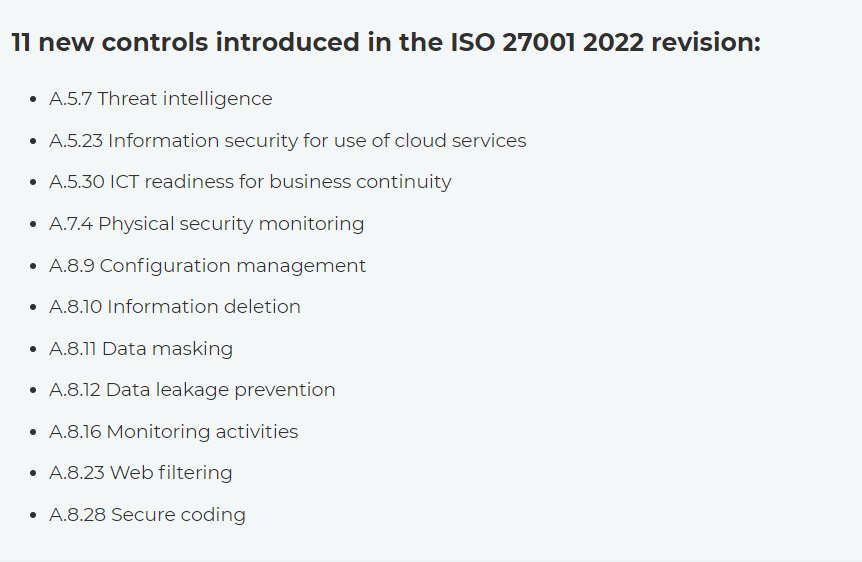
If you’re a security practitioner dealing with ISO 27001, you’re probably wondering what new things you will need to implement as part of the changes that will be made to this standard during 2022.
What you’ll notice is that some of these new controls are very similar to old controls from the 2013 revision; however, because these controls were categorized as new in ISO 27002:2022, I have listed all 11 in this article.
As the main source for this article, I’ve used guidelines from ISO 27002:2022 – I’ve given an overview of requirements, technology, people, and documentation, but if you’d like to learn about these controls in more depth, you can purchase the ISO 27002 2022 standard.
Finally, keep in mind that these controls are not mandatory – ISO 27001 allows you to exclude a control if (1) you identified no related risks, and (2) there are no legal/regulatory/contractual requirements to implement that particular control.
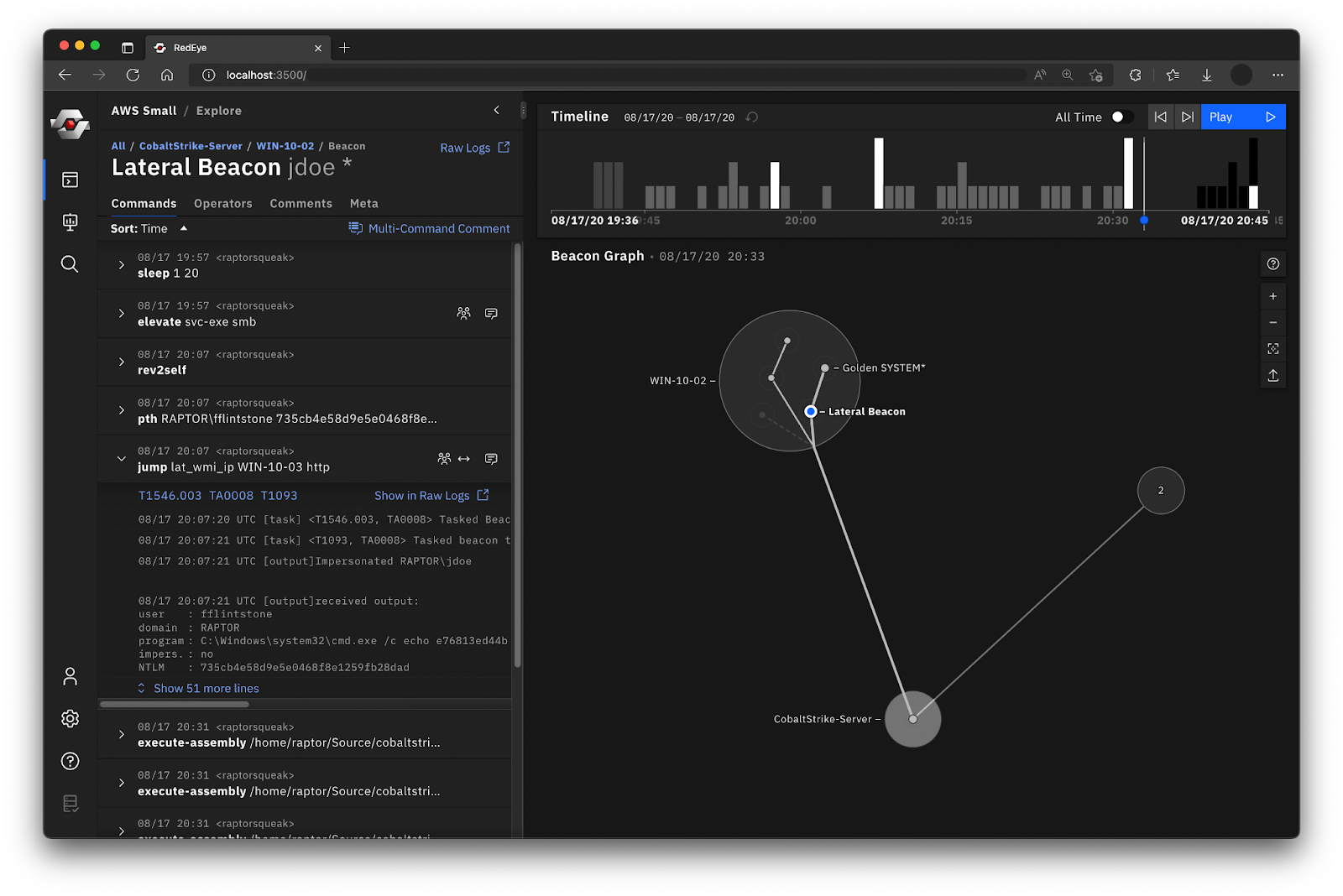
A new open-source analytical tool dubbed RedEye designed to make it easier for operators to visualize and report activities associated with C2 communication has been released by CISA.
Both the red and blue teams can benefit from RedEye, as it provides an easy way to gauge data, leading to specific decisions that can be made with confidence.
RedEye
A collaborative effort between CISA and DOE’s Pacific Northwest National Laboratory has given birth to this analytical tool.
A graphically displayed log of all servers and hosts associated with each campaign can be retrieved by RedEye users by correlating historical records of each campaign log.
In order to view relevant information about a campaign, users can upload campaign data via RedEye to view information such as:-
Beacons
Commands
During the process of parsing log files, such as those generated by Cobalt Strike, the tool presents the information in a format that can be easily understood.
As a result, users are able to tag activities displayed within the tool and comment on them. Operators can present findings and workflow to stakeholders using the presentation mode that is available on the RedEye application.
To discover the payload activity analysts can also analyze all the key events in a selected campaign. In addition to using RedEye to check the raw data received after an assessment, blue teams can also use it to understand it better.
This data can be used by them to see the attack path and the compromised hosts to take the appropriate action based on what they have learned.
RedEye offers a wide range of features and all its key features are presented in the below video made by CISA:-
Apart from RedEye, the CISA have also released several other open-source tools like:-
Malcom
ICS NPP
Sparrow
The following major platforms have been tested and proved to be compatible with RedEye:-
Linux (Ubuntu 18 and above, Kali Linux 2020.1 or newer)
macOS (El Capitan and above)
Windows 7 or newer
Moreover, the CISA’s repository on GitHub hosts the tool, and it is available for download via the repository.
In recent weeks, cybercrime and data breaches have become unavoidable topics in Australia. Many citizens have been forced to confront – for the first time – the reality of living in a disrupted digital world, where our personal data has become the most valuable commodity.
Of course, as tech leaders, this is a topic that keeps us awake at night. No part of our economy has proven immune from the impacts of cybercrime and data breaches.. Government agencies at all levels, large organisations, critical infrastructure providers, small-to-medium enterprises, families and individuals have all been targets.
Our customers sleep soundly at night in the knowledge there will be no unauthorised access to their physical digital infrastructure located in our data centres.
The $33 billion question
However, it’s not just CISOs who should be worried, particularly when considering this key question: What is the true cost to our economy of cybercrime?
The cost extends far beyond the financial. Aside from the financial costs there are the non-financial costs to individual companies that are victims of these attacks. This includes reputational damage, remedial distraction, service interruptions and process breakdowns. Cybercrime also poses a major threat to consumer trust, innovation, and growth across the digital economy.
In other words, security risk management is fast becoming every business leader’s problem – not just for CISOs and CSOs.
The four pillars of security risk management
At NEXTDC, we’ve been talking for some time about the importance of an integrated approach to security risk management around digital infrastructure. The conversation so far has been focused on how there must be a ‘mesh’ or integrated approach to physical and cyber security. These are the first two pillars of robust security risk management and, , they have converged to the point where you can’t have one without the other.
However, there are two additional pillars to security risk management. These are less well-known but are no less important – people and processes, and supply chain and business continuity. And responsibility for those extends far beyond the technology department.
The remainder of this article will focus on the people and processes pillar. A subsequent blog will address supply chains and business continuity.
What does converged security mean from a people and process perspective?
Most of us are familiar with the terms converged or integrated security risk management, but what does that really mean from a people and process perspective? For most organisations, it comes down to what it is you’re trying to protect against. In general, that will fall into one of two categories: accidental or deliberate (malicious) human actions.
While it’s usually the malicious actors who get the most airtime (put your hand up if you immediately visualise a shadowy figure in a hoodie hunched over a laptop when you hear the word ‘hacker’!) – the evidence suggests we should be far more worried about accidental actions.
Malicious actors are everywhere, constantly active and becoming increasingly sophisticated, but human error is still the greatest cause of data breaches. Robust physical environments – supported by cutting edge technology, education to create awareness amongst people and the right processes to support them – are still the most important component of holistic security strategy.
Build a ‘ready for anything’ security mesh
As pressure continues to mount around data protection and sovereignty, an enhanced security posture is best achieved by partnering strategically with a trusted provider. A supply chain partner who will take on not only the heavy lifting that gets you to your ideal state, faster and safely, but also without significant capital investment in infrastructure, personnel and meeting compliance.
Your provider’s security risk management must be completely aligned with yours, so ensure you ask the right questions during the evaluation process. Make sure you dig deep into factors such as:
Security awareness programs, policies and procedures for staff and suppliers (including personnel screening, both pre-employment and also right throughout tenure)
Compliance with the certification programs and standards relevant to your organisation and industry
Internal and external audit procedures.
Your customers, regulators, investors and partners are depending on you to get security risk management right and the consequences of falling short in this area can be very expensive and long lasting.
Black Lotus is a new, powerful Windows UEFI rootkit advertised on underground criminal forums, researcher warns.
Cybersecurity researcher Scott Scheferman reported that a new Windows UEFI rootkit, dubbed Black Lotus, is advertised on underground criminal forums. The powerful malware is offered for sale at $5,000, with $200 payments per new updates.
The researcher warns that the availability of this rootkit in the threat landscape represents a serious threat for organizations due to its evasion and persistence capabilities.
“Considering this tradecraft used to be relegated to APTs like the Russian GRU and APT 41 (China nexus), and considering prior criminal discoveries we’ve made (e.g. Trickbot‘s #Trickboot module), this represents a bit of a ‘leap’ forward, in terms of ease of use, scalability, accessibility and most importantly, the potential for much more impact in the forms of persistence, evasion and/or destruction.” wrote Scheferman.
Black Lotus is written in assembly and C and is only 80kb in size, the malicious code can be configured to avoid infecting systems in countries in the CIS region.
The malware supports anti-virtualization, anti-debugging, and code obfuscation. Black Lotus is able to disable security solutions, including Hypervisor-protected Code Integrity (HVCI), BitLocker, and Windows Defender. The rootkit is able to bypass security defenses like UAC and Secure Boot, it is able to load unsigned drivers used to perform a broad range of malicious activities.
The threat is very stealth, it can achieve persistence at the UEFI level with Ring 0 agent protection.
Black Lotus supports a full set of backdoor capabilities, it could be also used to potential target IT and OT environments.
Black Lotus is bringing APT capabilities to malicious actors in the threat landscape.
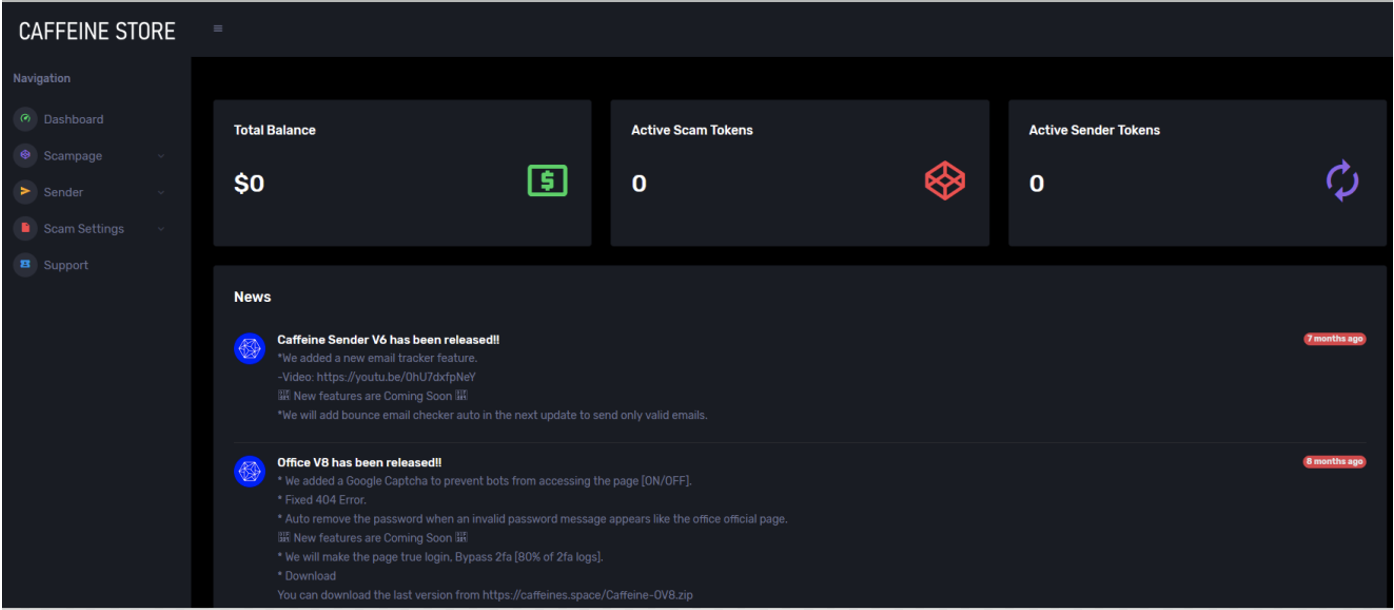
With the release of the PhaaS platform called ‘Caffeine’, threat actors can now easily launch their own sophisticated phishing attacks. Anyone who wants to start their own phishing campaign will be able to register on this platform through an open registration process.
Caffeine has been thoroughly tested by the analysts at Mandiant. This is a free and open-source platform that does not require any specific requirements like the following to use its portal for launching Phishing campaigns:-
No invites or referrals required
No approval needed
No social shares required
No specific joining or subscription to any social channel or hacking forum is needed
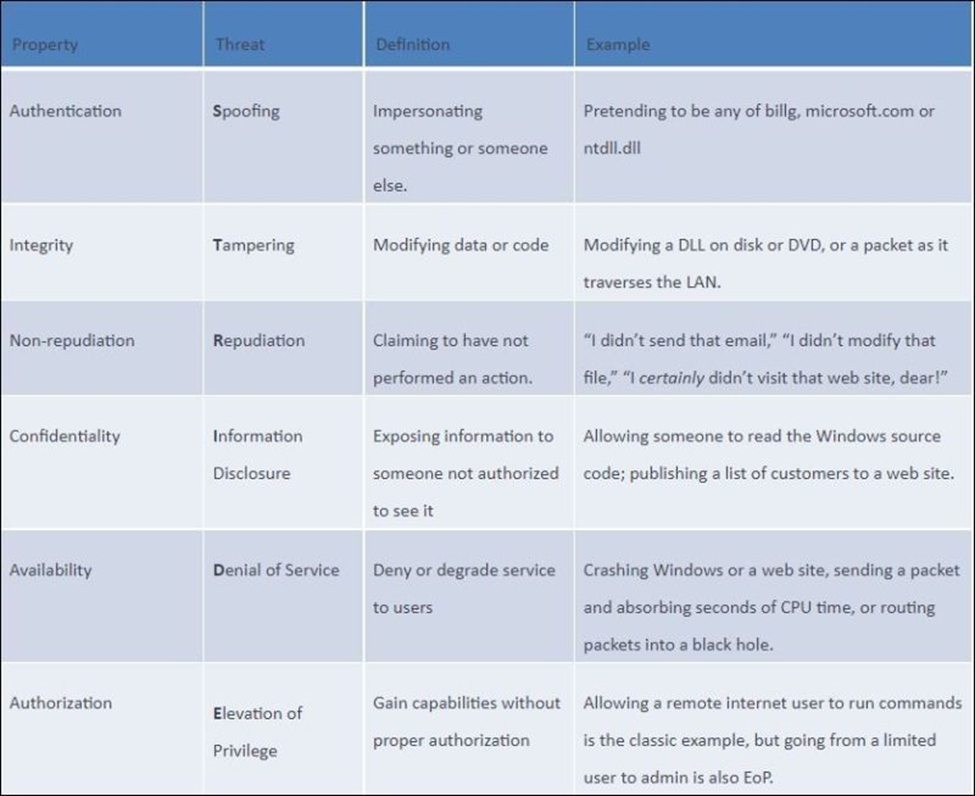
I’ve been meaning to talk more about what I actually do, which is help the teams within Microsoft who are threat modeling (for our boxed software) to do their jobs better. Better means faster, cheaper or more effectively. There are good reasons to optimize for different points on that spectrum (of better/faster/cheaper) at different times in different products. One of the things that I’ve learned is that we ask a lot of developers, testers, and PMs here. They all have some exposure to security, but terms that I’ve been using for years are often new to them.
I wanted to chime in and offer up this handy chart that we use. It’s part of how we teach people to go from a diagram to a set of threats. We used to ask them to brainstorm, and have discovered that that works a lot better with some structure.
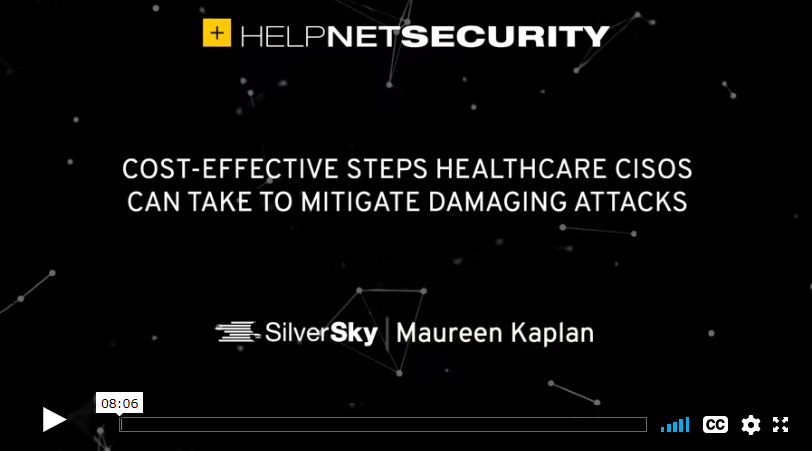
Cybersecurity measures are increasingly failing to close gaps, and the healthcare industry, in particular, has become a high-dollar target due to limited budgets and quick ransom pay-offs.
In this Help Net Security video, Maureen Kaplan, Chief Revenue Officer at SilverSky, discusses how attackers are now narrowing their focus from larger healthcare systems to smaller hospitals and specialty clinics to more easily retrieve patient data and use it for launching fraud and identity theft.
Due to the massive deficit of cyber defenses and limited security budgets of the healthcare industry, attackers have shifted their points of entry to systemic technology like EMR systems to wreak as much havoc as possible while demanding ransom.
Kaplan talks about the steps health IT leaders can take for a more cost-effective approach to safeguarding patient and employee data.
Want to feel like James Bond? Check out this easy-to-use encrypted flash drive.
Losing hardware is a pain, but everything is replaceable.
Allowing data to fall into someone else’s hands is the ultimate headache. Once your data is out there in the wild, it’s game over.
The “solution” is to encrypt your data. But the problem with that solution is that unless the encryption is easy and foolproof, users are going to sacrifice data security for convenience.
If you want easy-to-use high security encryption, then you need hardware that’s aimed at professionals, and that hardware doesn’t get much better than the Apricorn Aegis Secure Key 3.0.
Apricorn Aegis Secure Key 3.0 tech specs:
No software – so there’s nothing to keylog or to hack.
OS agnostic – the device is completely cross platform compatible.
Onboard keypad – all authentication takes place within the device itself.
All data, passwords and encryption keys are 256-bit encrypted at rest.
No host computer is involved in setup, authentication or encryption.
Forced enrollment – no default PINs ensures that data is not put at risk by employees who fail to change a factory set PIN before deployment.
IP68 rated against water and dust damage.
Separate administrator and user access.
Read-only options that can be enforced by the administrator or set by the user if allowed by policy.
Highly configurable with policy such as time out values, data recovery PINs, and programmable PIN lengths.
Brute force PIN attack protection.
Extruded aluminum enclosure with protective sleeve.
FIPS 140-2 Level 3 validated.
Can be automatically configured remotely using Apricorn’s Aegis Configurator tool.
Up to 195MB/s read speed/162MB/s write speed.
Super Speed USB 3.2 (backwards compatible with USB 3.0, 2.0 and 1.1)
Capacities ranging from 30GB to 2TB.
“For an added level of security, there’s also the ability to set a self-destruct PIN to quickly wipe the drive of its contents yet make it seem like it is fully working.”
Cybersecurity researchers at Kaspersky Security Labs have recently identified an unofficial version of WhatsApp for Android, which is dubbed by experts “YoWhatsApp.”
This unofficial version of WhatsApp is mainly designed to steal users’ account access keys or login credentials. There are many unofficial versions of legitimate apps that are advertised as being unofficial versions.
While these unofficial versions lure users by advertising features that the official versions do not have. Though YoWhatsApp is an unofficial version of WhatsApp, but, it’s a fully working messenger with some key additional features like we have mentioned below:-
UI customization
Blocking access to individual chats
Several emojis
Unofficial WhatsApp: YoWhatsApp
There is no difference between YoWhatsApp and the standard WhatsApp application in terms of permissions. The promotion of this unofficial Android mod is done using ads on popular Android apps such as the following ones:
Snaptube
Vidmate
n the latest version of YoWhatsApp, version 2.22.11.75, the threat actors were able to obtain the keys to the WhatsApp accounts of their victims and take full control.
It is claimed that YoWhatsApp will allow users to send files up to 700 MB using their service. While there is a limit of 100 MB per file that can be sent from the official app to your contacts, and this makes the YoWhatsApp more appealing.
In a modified version of WhatsApp, the app sends the user’s access keys to a server located remotely on the developer’s server.
From the basics to advanced techniques, here’s what you should know.
Source: Rancz Andrei via Alamy Stock Photo
Cybersecurity has been compared to a never-ending game of whack-a-mole, with an ever-changing cast of threats and threat actors. While the attacks that make headlines may change from year to year, the basic fact remains: Any network, no matter how obscure the organization it supports, most likely will come under attack at some point. Thus, attaining and maintaining a strong security posture is of critical importance for organizations of any size.
An organization’s security posture, however, is constantly changing. Employees join or leave the company; endpoints are added and discarded; and network and security technologies are deployed, decommissioned, configured, and updated. Each change in network elements can represent a potential attack vector for malware and other threats.
That’s why security teams should review their security processes periodically and keep aligned with new developments in defensive and offensive testing and modeling. Doing so can help move the needle on security maturity from the most basic to an advanced, much stronger security posture, and from a reactive to a proactive model.
The Basics: Vulnerability Scanning
The first step most IT organizations undertake is vulnerability scanning, which seeks out potential weaknesses in the network and endpoints that could be exploited by attackers. There’s a wide variety of scanners available as open source or commercial software, as managed services, and on cloud platforms like AWS and Alibaba. Some of the more popular scanners include Nessus, Burp Suite, Nmap, and Qualys, though each has its own area of focus. Several offer automatic patch remediation, as well.
Another consideration is whether to perform an external scan — which can discover potential vulnerabilities that hackers can exploit — or internal scanning that can find potential paths attackers would take once inside the network. Many, if not most, IT teams will do both.
While vulnerability scanning is relatively easy to use, it’s not the end-all, be-all of a security strategy. For example, scanning might not detect subtle misconfigurations or the more complicated attack paths that advanced persistent threats (APTs) might take. They’re also often prone to false positives and must be updated consistently.
Overall, though, vulnerability scanning is an important baseline step. Once it’s running well, the next step is penetration testing.
Penetration Testing
Penetration testing typically entails human ethical hackers who attempt to gain access to the network interior, much as an outside hacker would. Here, too, there’s a wide variety of tools and services available — many of the aforementioned vulnerability scanners offer tools that can be used in pen testing. Others include Metasploit, Kali Linux, Cobalt.io, and Acunetix.
Run periodically, pen testing can uncover weaknesses that aren’t found by vulnerability scanners. Furthermore, human-managed pen testing can explore more complex pathways and technique combinations that hackers increasingly leverage to exploit victims, such as phishing.
Not surprisingly, the biggest trends impacting networking and cybersecurity are essentially the same trends noted in penetration testing this year: rampant ransomware attacks, the newly distributed workforce, and the rise of Web applications and cloud usage to support remote workers. Each of these trends will require thoughtful consideration in choosing tools and designing plans for penetration testing.
While penetration testing can provide a great deal of benefit, it’s a good idea to periodically review the wealth of information on best practices available online.
Red Team/Purple Team
The third step in the quest for security maturity is usually the establishment of a red team that will manually attempt to attack and penetrate the organization’s security defenses. This may be a completely separate team, or it may be closely allied with the blue team (the defenders) in a combination called a purple team. As another option, some vendors offer red-team services on a subscription or one-off basis.
A red team will imitate the tactics, techniques, and procedures (TTPs) that attackers use — which usually turns up more points of vulnerability than penetration testing can reveal. The blue team can then begin to resolve these weaknesses, further hardening the network against attack.
But too often, red and blue teams devolve into an adversarial relationship that’s counterproductive. It’s also quite expensive to set up a red team, and given the shortage of cybersecurity professionals, it may not be feasible. Therefore, many CISOs are investigating two newer trends: adversary emulation and adversary simulation.
Using Adversary TTPs for Good
There are vast, freely available libraries of common tactics, techniques, and procedures used during attacks, such as MITRE’s ATT&CK framework. Adversary emulation and simulation leverage these libraries to evaluate security based on intelligence for specific attacks and then simulating the TTPs used.
For example, MITRE developed a sample adversary emulation plan for APT3, an advanced persistent threat that previously targeted mostly US entities. The emulation plan covers three phases from command-and-control setup to initial access; from host compromise through to execution; and data collection through exfiltration. The Center for Threat-Informed Defense has posted other emulation plans.
Adversary emulation lets security teams assess their defenses against real-world attacks. It can also be used to test the security infrastructure’s detection and response rates.
Looking Ahead
Security vendors are moving beyond simply advocating the concept of MITRE’s ATT&CK and MITRE Shield. Many vendors are leveraging one or both to improve their own products and services. For example, some security vendors map anomalies and events to the ATT&CK framework, making it easier for security teams to respond.
MITRE’s CALDERA also deserves attention. It provides an intelligent, automated adversary emulation system that can be programmed for a specific attack profile and launched into the network to test its defenses. Caldera can also be used to train blue teams on detecting and remediating specific attacks.
Keeping abreast of developments in key security processes is important for security teams as they strive to defend the network against changing threats. By so doing, they can move the organization closer to a far stronger security posture.
This book is the hands-on and methodology guide for pentesting with Kali Linux. You’ll discover everything you need to know about the tools and techniques hackers use to gain access to systems like yours so you can erect reliable defenses for your virtual assets. Whether you’re new to the field or an established pentester, you’ll find what you need in this comprehensive guide.
Build a modern dockerized environment
Discover the fundamentals of the bash language in Linux
Use a variety of effective techniques to find vulnerabilities (OSINT, Network Scan, and more)
Analyze your findings and identify false positives and uncover advanced subjects, like buffer overflow, lateral movement, and privilege escalation
Apply practical and efficient pentesting workflows
Learn about Modern Web Application Security Secure SDLC
If you’re getting started along the exciting path of hacking, cybersecurity, and pentesting, Linux Basics for Hackers is an excellent first step. Using Kali Linux, an advanced penetration testing distribution of Linux, you’ll learn the basics of using the Linux operating system and acquire the tools and techniques you’ll need to take control of a Linux environment.
First, you’ll learn how to install Kali on a virtual machine and get an introduction to basic Linux concepts. Next, you’ll tackle broader Linux topics like manipulating text, controlling file and directory permissions, and managing user environment variables. You’ll then focus in on foundational hacking concepts like security and anonymity and learn scripting skills with bash and Python. Practical tutorials and exercises throughout will reinforce and test your skills as you learn how to:
Cover your tracks by changing your network information and manipulating the rsyslog logging utility
Write a tool to scan for network connections, and connect and listen to wireless networks
Keep your internet activity stealthy using Tor, proxy servers, VPNs, and encrypted email
Write a bash script to scan open ports for potential targets
Use and abuse services like MySQL, Apache web server, and OpenSSH
Build your own hacking tools, such as a remote video spy camera and a password cracker
In this book you’ll learn an offensive approach to enhance your penetration testing skills by testing the sophisticated tactics employed by real hackers. You’ll go through laboratory integration to cloud services so that you learn another dimension of exploitation that is typically forgotten during a penetration test. You’ll explore different ways of installing and running Kali Linux in a VM and containerized environment and deploying vulnerable cloud services on AWS using containers, exploiting misconfigured S3 buckets to gain access to EC2 instances.
This book delves into passive and active reconnaissance, from obtaining user information to large-scale port scanning. Building on this, different vulnerability assessments are explored, including threat modeling. See how hackers use lateral movement, privilege escalation, and command and control (C2) on compromised systems. By the end of this book, you’ll have explored many advanced pentesting approaches and hacking techniques employed on networks, IoT, embedded peripheral devices, and radio frequencies.
For more information about this book, we have a video with the author you can watch here.
This is a comprehensive guide for those who are new to Kali Linux and penetration testing that will have you up to speed in no time. Using real-world scenarios, you’ll understand how to set up a lab and explore core penetration testing concepts.
Throughout this book, you’ll focus on information gathering and even discover different vulnerability assessment tools bundled in Kali Linux. You’ll learn to discover target systems on a network, identify security flaws on devices, exploit security weaknesses and gain access to networks, set up Command and Control (C2) operations, and perform web application penetration testing. In this updated second edition, you’ll be able to compromise Active Directory and exploit enterprise networks.
Finally, this book covers best practices for performing complex web penetration testing techniques in a highly secured environment.
Research from Netacea reveals that as of September 2022, there are over 1,600 professional refund service adverts on hacker forums.
Cybercrime’s continued shift to a service-driven economy has enabled several new professionalized hacking services with Refund Fraud-as-a-Service being one of the latest to rise in popularity over the last few years. This is according to Netacea’s latest threat report, which researched rising trends across a multitude of hacking forums.
Refund fraud is the abuse of refund policies for financial gain and costs e-commerce businesses more than $25 billion every year. Those interested in committing refund fraud can outsource the process to professional social engineers offering Refund-as-a-Service. This poses a significant challenge to retailers, as previously legitimate customers can enlist highly experienced fraudsters to perpetrate this fraud on their behalf, making it difficult to identify fraudulent activity. As online shopping continues its upward trend, professional fraudsters will look to cash in on the opportunity.
Over 540 new refund fraud service adverts were identified in the first three quarters of 2022
Refund fraud services increased by almost 150% from 2019 – 2021
Netacea’s report explores the current structure of the underground Refund-as-a-Service market, the changing tactics and methods used by adversarial groups to perform refund fraud, and how threat intelligence and fraud teams can work collaboratively to effectively combat it.
“As shown in the rise of ransomware-as-a-service attacks, cybercriminals have shifted to a service-based economy — and refund fraud is no exception” said Cyril Noel-Tagoe, Principal Security Researcher, Netacea. “As we approach Black Friday and the holiday season, e-commerce stores should take the necessary steps to reduce their risk of refund fraud, including educating employees on the methods and tactics fraudsters take.”
Additional steps include:
Delivery carriers should replace or complement signatures with one-time passwords to prevent refund fraudsters from claiming that packages did not arrive.
E-commerce stores and delivery carriers should work together to look for patterns in their data sets that may indicate fraudulent activity.
Reputation is power in the underground market. In the instance that an e-commerce store identifies the claim to be fraudulent after a refund payment has been made, the store should rebill the customer’s account. An influx of rebill complaints from customers may cause the refund fraud service to drop the retailer from their store list, to avoid negative reviews.
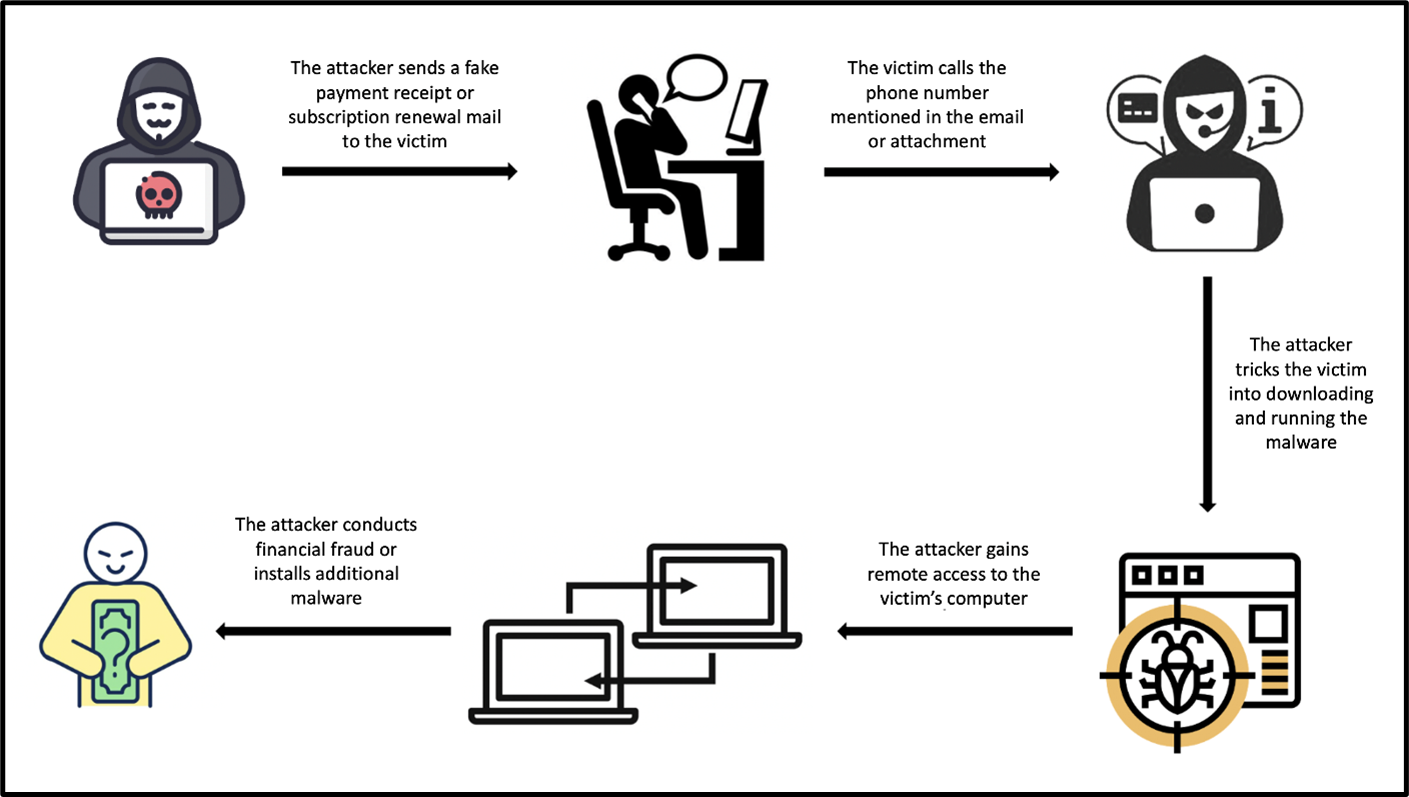
Trellix released a recent report on the evolution of BazarCall social engineering tactics. Initially BazarCall campaigns appeared in late 2020 and researchers at Trellix noticed a continuous growth in attacks pertaining to this campaign.
Reports say at first, it delivered BazaarLoader (backdoor) which was used as an entry point to deliver ransomware. A BazaarLoader infection will lead to the installation of Conti Ransomware in a span of 32 hours.
It was also found to be delivering other malware such as Trickbot, Gozi IFSB, IcedID and more. In this case, “BazarCall has ceaselessly adapted and evolved its social engineering tactics”. These campaigns were found to be most active in United States and Canada. They were also targeting some Asian countries like India and China.
What is BazarCall?
BazarCall begins with a phishing email but from there deviates to a novel distribution method – using phone call centers to distribute malicious Excel documents that install malware.
In BazarCall’s case, targeted users must dial the number. And when they do, the users are connected with actual humans on the other end of the line, who then provide step-by-step instructions for installing malware into their devices.
The second Tuesday of every month is Microsoft’s regular day for security updates, still known by almost everyone by its unofficial nickname of “Patch Tuesday”.
But the second Tuesday in October is also Ada Lovelace Day, celebrating Ada, Countess of Lovelace.
Ada was a true pioneer not only of computing, but also of computer science, and gave her name to the programming language Ada.
The Ada language, intriguingly, emerged from a US Department of Defense project aimed at “debabelising” the world of governmental coding, where every department semed to favour a different language, or a different language dialect, making it more difficult, more expensive, and less reliable to get them to work together.
Ada Lovelace’s era
You might be surprised to find, given how strongly Ada’s name is associated with the beginnings of computer science, that she lived in the first half of the nineteenth century, long before anything that we currently recognise as a computer, or even a calculator, existed.
(Ada died of uterine cancer in 1852 at just 36 years old.)
But although computers in their modern sense didn’t exist in the 1800s, they very nearly did.
Here’s how it almost happened.
Charles Babbage, in the early 1800s, famously devised a mechanical calculating device called the Difference Engine that could, in theory at least, automatically solve polynomial equations in the sixth degree, e.g. by finding values for X that would satisfy:
aX6 + bX5 +cX4 +dX3 +eX2 + fX + g = 0
The UK government was interested, because a device of this sort could be used for creating accurate mathematical tables, such as square roots, logarithms and trigonometric ratios.
And any machine good at trigonometric calculations would also be handy for computing things like gunnery tables that could revolutionise the accuracy of artillery at land and sea.
But Babbage had two problems.
Firstly, he could never quite reach the engineering precision needed to get the Difference Engine to work properly, because it involved sufficiently many interlocking gears that backlash (tiny but cumulative inaccuracies leading to “sloppiness” in the mechanism) would lock it up.
Secondly, he seems to have lost interest in the Difference Engine when he realised it was a dead end – in modern terms, you can think of it as a pocket calculator, but not as a tablet computer or a laptop.
So Babbage leapt ahead with the design of a yet more complex device that he dubbed the Analytical Engine, which could work out much more general scientific problems than one sort of polynomial equation.
Perhaps unsurprisingly, if regrettably in hindsight. the government wasn’t terribly interested in funding Babbage’s more advanced project.
Given that he hadn’t managed to build the mechanism needed for a much simpler equation solver, what chance did a giant, steam-powered, general-purpose computer have of ever delivering any useful results?
An IRONSCALES survey published in October 2021 shows over 80% of respondents experienced an increase in email phishing attacks since the start of the pandemic.
Phishing involves the utilization of legitimate-looking emails to steal the login credentials or other sensitive information of a target organization. While it’s just as much a risk for small and medium-sized businesses, in the public sector, phishing attacks could potentially be nation-state sponsored, making it a possible double whammy.
While taking advantage of the latest and greatest software to protect yourself from top cybersecurity threats is par for the course, what makes phishing so pernicious is that it relies on human error. With phishing emails looking more authentic than ever, they are harder to catch.
Distributed Denial of Service (DDoS) Attacks
A recent report says ransom DDoS attacks increased 29% year over year and 175% quarter over quarter in quarter four of 2021. Some of the biggest targets were the public sector, schools, travel organizations, and credit unions.
DDoS attacks are known to bring down some of the largest websites and are quite difficult to prevent. They are considered by some to be the most “powerful weapon” on the internet, easily making DDoS attacks one of the top cyber security threats to the government.
DDoS attacks can happen at any time, affect any part of a website, and disrupt and interrupt services, usually leading to massive financial damage.
Nation-State Sponsored Cyber Attacks
With mainstream media daily broadcasting events as they are occurring to every channel imaginable (cable TV, smartphones, social media, etc.) cyber warfare has become an increasingly common way to launch disinformation campaigns, perform cyber espionage or terrorism, and even cyber-sabotage targets.
Nation-state-sponsored cyber attacks aim to
Hinder communication
Gather intelligence
Steal intellectual property
Damage to digital and physical infrastructure
They are even used for financial gain.
Though cyber attacks are sometimes used in tandem with real life attacks, what makes cyber warfare especially challenging is that it happens virtually and often covertly. There usually isn’t any declaration of war. That makes it difficult to prove who is responsible for the attack.
Ransomware
Ransomware attacks may not be an emerging trend by any means. They may not even be anything new. But they do have a history of wreaking havoc on the public sector and therefore need to be taken seriously.
Rewind to 2019 when the U.S. was hit by an unrelenting barrage of ransomware attacks that ultimately affected at least 966 government agencies, educational establishments, and healthcare providers to $7.5 billion (Emsisoft).
These attacks resulted in 911 services being interrupted, surveillance systems going offline, badge scanners and building access systems not working, websites going down, extended tax payment deadlines, and much more.
The threat of ransomware attacks still looms today and is no less a concern in 2022 than they were in 2019. As far as cyber security threats to the government are concerned, ransomware attacks should be kept on the cybersecurity radar.
What The Public Sector Can Do to Stay Ahead?
Beyond taking full advantage of the latest tech, for the public sector to stay ahead of cyber security in the public sector, you have to create a culture of cybersecurity within your organizations, offering ongoing training to their teams.
You need to secure all infrastructure, including cloud, mobile, and Internet of Things (IoT). You also want to improve compromise detection and be fully prepared for any attack. Plans should be documented and practiced regularly, so detection and response are immediate.
Conclusion
The top cybersecurity threats are generally a consequence of new technologies the public sector is either looking to implement or is already implementing. It is harder to know all the variables and potential vulnerabilities with anything new.
This isn’t to suggest that old technologies are more reliable, however. Like antivirus software, the virus definitions must be continually updated for the software to remain effective. The public sector needs to stay on the cutting edge of best practices.
The public sector must also remain agile in adapting to new threats, whether offering ongoing cybersecurity training, hiring skilled consultants to keep their new technological infrastructures in check, partnering with experienced cybersecurity service providers like Indusface, or otherwise.

.png?ssl=1)