Jun 07 2021

The evolution of cybersecurity within network architecture

Category: Security ArchitectureDISC @ 10:09 am

A decade ago, security officers would have been able to identify the repercussions of an attack almost immediately, as most took place in the top-level layers of a system, typically through a malware attack. Now however, threat actors work over greater lengths of time, with much broader, long-term horizons in mind.

Leaders can no longer assume that their business systems are safe. The only certainty is that nothing is certain. The past year has been evidence of that, as large, well-trusted companies have faced catastrophic breaches, such as the SolarWinds and Microsoft attacks. These organizations were believed to have some of the best systems installed to protect their data, yet they were still successfully infiltrated.

Threat actors are also pervading through underlying networks, passing from router to router and accessing data stored far below the top level in a system. The refinement of their attacks mean that businesses can go unaware of a breach for longer periods of time, increasing the amount of damage that can be done.

Businesses should take all precautions necessary when it comes to security and assume that anything is possible and devise their security plans around the worst-case scenario. This means adopting the attitude that any one employee could be a hacker’s key to access company systems. Anyone could fall for one of the increasingly sophisticated attacks and click on a phishing email, resulting in a rabbit hole of malicious elements.

Visibility and analytics

Moving forwards, visibility and analytics will be instrumental in strengthening a business’ security approach. These elements deliver invaluable insights into a company’s security standpoint and can help identify any vulnerabilities that have gone unnoticed. Where security and connectivity within an organization have been the two main focus points of leaders, visibility and analytics have now become the third and fourth fundamental elements.

The value of this information cannot be overstated. For a company who has identified a breach attempt and shut all systems down, the first challenge is understanding how far the criminals managed to get before being detected, and what data had been accessed.

In the scenario when businesses are faced with threats from ransomware attackers and take part in negotiations, it helps to have an overview of all business systems. For example, if an attack took place over one week and a company is able to see all incoming and outgoing traffic, then they can deduce roughly how far the criminals could have got.

This could be vital in seeing through any deceptions from the hackers, who may claim to have accessed ten terabytes of data, when realistically they may only have secured a couple of files before being shut out. Only with complete visibility will businesses be able to counter a criminal’s threat.

Strengthening the architecture

There are a number of pathways that organizations can take to strengthen their network architecture against threats. Zero-trust approaches are highly recommended for businesses, especially in the age of remote working, as a way of limiting privileged accounts and the general amount of data left easily accessible. Requesting authentication before access not only protects the business’ external perimeter, but also any risks that exist within as well.

A lot of businesses will find themselves needing to re-address the very foundations of their infrastructure before any additional approaches can be taken. Integration is a massive part of strengthening a company’s network architecture as most will have existing technologies that will need to be combined into one fully functioning capability.

Not only will this allow for greater accessibility and flexibility, but it will also simplify the systems so that they are easier to manage. Achieving this integration will provide businesses with greater visibility into their platforms, making it significantly easier to identity and defend against incoming cyber threats.

Ensuring a secure future

Solutions such as Secure Access Service Edge (SASE) can assist in the strengthening of network architecture. SASE is the integration of networking and security solutions, such as zero trust and firewall-as-a-service (FWaaS), into a single service that can be delivered entirely through the cloud. This ability to deploy through the cloud allows for greater flexibility, making it easy to apply security services wherever they are needed. As a lot of applications used are cloud-based, including collaborative communications, seamless and secure transition to and from the cloud are crucial.

Cybersecurity will likely become more of a process model that is part of every new project. It will become imbedded in every business area, regardless of what their main function is. In such an extreme and sophisticated threat landscape, simply educating employees and home workers of security risks cannot be relied upon to protect companies from malicious attacks.

In an era where cybersecurity attacks are inevitable, strong network architecture and end-to-end visibility are the fundamentals to a resilient security posture. Providing a single point of control using solutions such as SASE will enable businesses to create a more streamlined network architecture, whether from remote locations or within the office. Regardless of their current standpoint, all businesses should be working towards one goal – implementing a business approach that combines the three crucial elements: security, network and visibility.

Tags: cybersecurity within network architecture, Network security architecture


Jun 04 2021

How to hack into 5500 accounts… just using “credential stuffing”

Category: Information Security,Password SecurityDISC @ 2:41 pm

We all ought to know by now that passwords that are easy to guess will get guessed.

We recently reminded ourselves of that by guessing, by hand, 17 of the top 20 passwords in the Have I Been Pwned (HIBP) Pwned Passwords database in under two minutes.

We tried the 10 all-digit sequences 112123 and so on up to 1234567890, and eight of them were in the top 20.

Then we tried other obvious digit combos such as 000000111111 and 123123 (we started with six digits because that’s Apple’s current minimum length, and because we noted that 123456 came out well ahead of 12345 and 1234).

The others were equally easy: qwertypasswordabc123password1iloveyou and qwertyuiop, the last being a useful reminder that length alone counts for very little.

Strong enough for everything?

What to do?

  • Don’t re-use passwords. And don’t try to invent a technique for modifying each password slightly from an original template to make them seem different, because the crooks are on the lookout for that.
  • Consider a password manager. Password managers generate random and unrelated passwords for each account, so there are no similarities a crook could figure out, even if one of the password gets compromised. Remember that you don’t have to put all your passwords into the manager app if you don’t want to: it’s OK to have a special way of dealing with your most important accounts, especially if you don’t use them often.
  • Turn on 2FA if you can. Two-factor authentication doesn’t guarantee to keep the crooks out, but it stops attacks like this one from being carried out so easily and on such a broad scale, because the passwords alone would not have been enough.
  • Report payment anomalies. Obviously, you need to look for outgoing payments that shouldn’t have happened, and for incoming payments that never arrived. But also look out for outgoing payments that somehow failed when they should have gone through, or for incoming funds you didn’t expect, no matter how small the amount. The sooner you report any errors, even if you didn’t lose any money, the sooner you help both yourself and everyone else.


Jun 04 2021

Quantum computing: How should cybersecurity teams prepare for it?

Category: cyber security,Information SecurityDISC @ 2:14 pm

Our community – that is, technologists, mathematicians and information assurance professionals – has generally adapted well to changes in the technology landscape.

At the start of the Cold War, the western security apparatus sought to understand the actions of their adversaries by intercepting radio signals bouncing off the ionosphere and analyzing the messages they carried. Later, when the Soviets moved to microwave transmissions, that same security apparatus deployed cutting-edge line-of-sight interception techniques.

Then, in 1977, after the Soviets began to successfully encrypt their communications, the NSA launched the Bauded Signals Upgrade program, delivering a supercomputer designed to compare encrypted messages with elements of plain text transmitted by mistake, allowing the agency to break many of the Soviets’ high-level codes. Time and time again, our innovation has kept us safe, but only when we have prepared to meet the threat.

Quantum information theory, which has been explored since the beginning of the 20th century, has led to an exciting yet dangerous new prospect: new quantum algorithms to solve computational problems which have thus far proven to be intractable – or at least unachievable within a useful period – by classical computers. One such problem is the breaking of the Advanced Encryption Standard, a key pillar of modern data encryption.

A joint research team of engineers from Google and the Swedish Royal Institute of Technology published a study that theorized the breaking of a 2048 bit key in just 8 hours, something that would take today’s classical computers over 300 trillion years. The catch? This theory requires a 20 million-qubit computer, and the largest quantum computer that exists today has only 65.

Their study, alongside many like it, tells us that quantum technology will present the greatest threat to the security of our critical systems in the history of computing. It may even be useful to us in future conflicts. However, quantum computers will need considerably more processing power than is available today and will require a significantly lower error rate if they are to be utilized for cyberspace operations.

To meet this challenge, institutions across the world are rushing to develop quantum computers that are capable of delivering on the promising theory.

The U.S. National Institute of Standards and Technology is currently evaluating over 60 methods for post-quantum cryptography, quantum key distribution, and other security applications. Early indications are that quantum technology will provide an ability to detect, defend, and even retaliate against all manner of future threats.

Away from security, most people understand that quantum computing has immense potential for good – with applications in the scientific and medical research fields easy to imagine. However, this vast computing power could also be used to undermine the classical computer systems that our nation relies upon so heavily.

DISC InfoSec Shop

Cryptography and Quantum Computing

Tags: Quantum computing


Jun 03 2021

The 5 biggest ransomware pay-outs of all time

Category: RansomwareDISC @ 11:25 pm

Just a few years ago, you may never have heard of ransomware. Nowadays, it’s a £10 billion-a-year industry and considered one of the biggest threats facing organizations, schools and essential services.

Dozens of ransomware cases are reported each month, with companies locked out of their files and facing extortionate demands. The current going rate for decryption keys is in the region of 0.3 bitcoin (about £100,000, or $140,000), but sometimes attackers set their sights much higher.

In this blog, we look at some of the times attackers have done that – as we review the five biggest reported ransomware payments.


Jun 02 2021

Critical 0day in the Fancy Product Designer WordPress plugin actively exploited

Category: Crypto,Zero dayDISC @ 9:41 pm

Researchers from the Wordfence team at WordPress security company Defiant warn that a critical zero-day vulnerability, tracked as CVE-2021-24370, in the Fancy Product Designer WordPress plugin is actively exploited in the wild.

Fancy Product Designer is a premium plugin that allows customers to design and customize any kind of product in their online stores, it is currently installed on more than 17,000 websites.

Experts pointed out that the vulnerability could be exploited only in certain configurations, but even if the plugin is not active.

Attackers are exploiting the flaw to extract order information from site databases, anyway, this vulnerability is likely not being attacked on a large scale.

Users could modify their products by uploading images and PDF files, but experts noticed that the checks in place to prevent malicious files from being uploaded are not sufficient and could be easily be bypassed

“Fancy Product Designer is a WordPress plugin that offers the ability for customers to upload images and PDF files to be added to products. Unfortunately, while the plugin had some checks in place to prevent malicious files from being uploaded, these checks were insufficient and could easily be bypassed, allowing attackers to upload executable PHP files to any site with the plugin installed.” reads the post published by the experts. “This effectively made it possible for any attacker to achieve Remote Code Execution on an impacted site, allowing full site takeover.”

The flaw has been rated with a CVSS score of 9.8 out of 10, an attacker could exploit the issue to upload executable PHP files to online stores that have the plugin installed.

Tags: plugin exploited


Jun 02 2021

“Have I Been Pwned” breach site partners with… the FBI!

Category: Password SecurityDISC @ 12:06 am

If your password gets stolen as part of a data breach, you’ll probably be told. But what if your password gets pwned some other way?

n case you’ve never heard of it, Have I Been Pwned, or HIBP as it is widely known, is an online service run out of Queensland in Australia by a data breach researcher called Troy Hunt.

The idea behind HIBP is straightforward: to give you a quick way of checking your own online accounts against data breaches that are already known to be public.

Of course, you’d hope that a company that suffered a data breach would let you know itself, so you wouldn’t need a third party website like HIBP to find out.

But there are numerous problems with relying on the combined goodwill and ability of a company that’s just suffered a breach, not least that the scale of the breach might not be obvious at first, if the company even realises at all.

And even if the company does do its best to identify the victims of the breach, it may not have up-to-date contact data for you; its warning emails might get lost in transit; or it might not be sure which users were affected.


May 30 2021

These 2 attacks allow to alter certified PDF Documents

Category: Cyber AttackDISC @ 10:21 am

Researchers from Ruhr-University Bochum have disclosed two new attack techniques, dubbed Evil Annotation and Sneaky Signature attacks, on certified PDF documents that could potentially allow attackers to modify visible content without invalidating their digital signature. The attacks are documented in 

, and .

The experts presented the results of the study at the 42nd IEEE Symposium on Security and Privacy (IEEE S&P 2021).

The attacks leverage the flexibility of PDF certification that allows signing or adding annotations to certified documents under different permission levels. The experts demonstrated that the EAA technique could be effective against 15 of 26 viewer applications while the SSA could work against 8 viewers.  

“The attack idea exploits the flexibility of PDF certification, which allows signing or adding annotations to certified documents under different permission levels. Our practical evaluation shows that an attacker could change the visible content in 15 of 26 viewer applications by using EAA and in 8 applications using SSA by using PDF specification compliant exploits.” reads the post published by the researchers.

The experts explained that the certification of signed content also allows users with specific permissions set by the certifier to apply certain modifications to the PDF document. This means that the user could write text to specific form fields, provide annotations, or add its own signature if permitted by the certifier.

The idea behind Evil Annotation Attack (EAA) is to modify a certified document by inserting annotations that include malicious code.

“The idea of the Evil Annotation Attack (EAA) is to show arbitrary content in a certified document by abusing annotations for this purpose. Since P3 certified document allow to add annotations, EAA breaks the integrity of the certification.” continues the post.

The idea behind the Sneaky Signature Attack (SSA) is to manipulate the appearance of arbitrary content within the PDF by adding overlaying signature elements to a PDF document that is certified at level P2, which means that it allows to fill forms.

These 2 attacks allow to alter certified PDF Documents

Tags: pdf hacking


May 28 2021

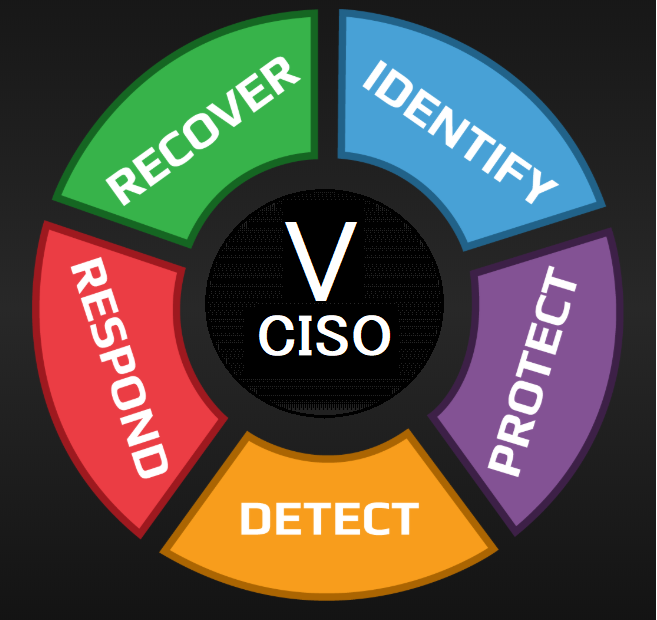
The evolution of the modern CISO

Category: CISO,vCISODISC @ 2:17 pm

The modern CISO

The role of CISO first emerged as organizations embraced digital revolutions and began relying on new data streams to help inform business decisions. As technology continued to advance and became more complex, so too did threat actors who saw new opportunities to disrupt businesses, by stealing or holding that data hostage for ransom.

As the years have gone by and cyberattacks have become more sophisticated, the role of the CISO has had to advance. The CISO has evolved from being the steward of data to also being a guardian for availability with the emergence of more destructive and disruptive attacks. The CISO also must be highly adaptable and serve as the connective tissue between security, privacy and ultimately, consumer trust.

The changing threat landscape

Previous blogs on CISO & vCISO

Virtual CISO - Virtual Chief Information Security Officer (vCISO)

Related latest CISO and vCISO titles

Tags: CISO, Fractional CISO, vCISO


May 27 2021

I hacked my friend’s website after a SIM swap attack

Category: Hacking,Smart PhoneDISC @ 10:01 am

Here’s how easily your phone number could be stolen, why a successful SIM swap scam is only the beginning of your problems, and how you can avoid becoming a victim of the attack

Just how easy is it to conduct a SIM swap attack and what can the attacker do once they have taken control of your phone number? In short, it’s worryingly easy and the criminals can do a lot once they have the keys to the kingdom.

We hear of SIM swapping – also known as SIM hijacking and SIM swap scams – all the time, and yet many people think it can’t ever happen to them. Indeed, people often tell me that they will never get hacked in any way and they actually even wonder why anyone would even target them. But the truth is that we are part of a huge numbers game for many malicious actors and they will continue to target the low-hanging fruit. So why don’t we just implement a few precautionary methods to reduce this risk?

I will come back to what you can do to mitigate the risks later, but first I want to tell you how I tested a SIM swap attack just so I could generate a talk and help people understand the risks. A real-life story is always better when helping people to be more cyber-aware. In fact, I ran a similar experiment last year when I showed how easy it is to hack anyone’s WhatsApp account by knowing their phone number. It was a very valuable lesson for the colleague-turned-victim.

I have known my friend – a let’s call him Paul – since school and we’ve been close friends ever since. I asked him recently if I could attempt to ethically hack him for the greater good and use anything that came from it in the name of cyber-awareness and helping protect people from future attacks. He was happy to oblige and even thought it would be fun to be part of an experiment.

How SIM swapping works

Tags: SIM swap attack


May 26 2021

Ransomware attribution: Missing the true perpetrator?

Category: Malware,RansomwareDISC @ 11:11 am

Admittedly, this does lead to doomsday scenarios offered up by authors on the multitude of platforms sharing doomsday scenarios, with weak attribution included to suit their own narrative.

While commentary on the impact of such a scenario is generally to be welcomed, the focus of attribution remains. Recent events have introduced the world at large to ransomware variants previously only discussed within the information security industry. However, one has to question whether their inclusion is even remotely accurate.

As has been documented, we live in a world where anybody with access to a computer can be a player in the ransomware industry. Through ransomware-as-a-service (RaaS) there exists a business model that supports ‘partners’ to carry out attacks against victims, and to share the profits with the developers of the ransomware. In return for this arrangement, such partners or affiliates are offered a dashboard and a sizeable share of profits, in a relationship that appears to suit both parties based on the rise in use of such a model.

And herein lies the issue.

Recent ransomware attacks, using tools such as DarkSide, were indeed carried out by such partners. Celebrations over the retirement of certain ransomware variants appear to be premature, with GandCrab serving as an indication of what may actually occur. The group behind GandCrab, which was incredibly active and claimed to have made $2bn, announced its retirement in 2019.

While this announcement was greeted positively at the time, questions were raised about why the number of affiliates dropped sharply a few short months earlier. Fast forward a few months and the growth of Sodinokibi may have answered those questions, while confirming that rumours of senior partners’ retirement from the ransomware scene may have been greatly exaggerated.

However, and this is the critical component, it is the affiliates that break into organizations, and it is these same people that deploy ransomware within the environment, while all the time the ire remains solely fixated on the ransomware developer.

While the developer(s) should not escape the ferocity of anger placed upon them, it seems the affiliates continue their activities and can simply move to any number of other schemes should actions lead to the disruption of the ransomware group they have agreed to work with.

In our continued focus toward holding those accountable for the disruption they cause, closer attention must be paid to such mercenaries who are largely responsible for the exponential growth of such attacks. It is their involvement and capabilities that have allowed such attacks to adapt and become so much more crippling than ever before.

Tags: Ransomware attribution


May 26 2021

New Disk Wiping Malware Targets Israel

Category: MalwareDISC @ 10:51 am

Advanced malware analysis

Tags: data destruction, Malware, ransomware


May 25 2021

New Bluetooth Flaws Let Attackers Impersonate Legitimate Devices

Category: BluetoothDISC @ 8:49 am

Adversaries could exploit newly discovered security weaknesses in Bluetooth Core and Mesh Profile Specifications to masquerade as legitimate devices and carry out man-in-the-middle (MitM) attacks.

“Devices supporting the Bluetooth Core and Mesh Specifications are vulnerable to impersonation attacks and AuthValue disclosure that could allow an attacker to impersonate a legitimate device during pairing,” the Carnegie Mellon CERT Coordination Center said in an advisory published Monday.

The two Bluetooth specifications define the standard that allows for many-to-many communication over the short-range wireless technology to facilitate data transfer between devices in an ad-hoc network.

The Bluetooth Impersonation AttackS, aka BIAS, enable a malicious actor to establish a secure connection with a victim, without having to know and authenticate the long-term key shared between the victims, thus effectively bypassing Bluetooth’s authentication mechanism.

“The BIAS attacks are the first uncovering issues related to Bluetooth’s secure connection establishment authentication procedures, adversarial role switches, and Secure Connections downgrades,” the researchers said. “The BIAS attacks are stealthy, as Bluetooth secure connection establishment does not require user interaction.”

“To confirm that the BIAS attacks are practical, we successfully conduct them against 31 Bluetooth devices (28 unique Bluetooth chips) from major hardware and software vendors, implementing all the major Bluetooth versions, including Apple, Qualcomm, Intel, Cypress, Broadcom, Samsung, and CSR.”

In addition, four separate flaws have been uncovered in Bluetooth Mesh Profile Specification versions 1.0 and 1.0.1. A summary of the flaws is as follows –

  • CVE-2020-26555 – Impersonation in Bluetooth legacy BR/EDR pin-pairing protocol (Core Specification 1.0B through 5.2)
  • CVE-2020-26558 – Impersonation in the Passkey entry protocol during Bluetooth LE and BR/EDR secure pairing (Core Specification 2.1 through 5.2)
  • N/A – Authentication of the Bluetooth LE legacy pairing protocol (Core Specification 4.0 through 5.2)
  • CVE-2020-26556 – Malleable commitment in Bluetooth Mesh Profile provisioning (Mesh profile 1.0 and 1.0.1)
  • CVE-2020-26557 – Predictable AuthValue in Bluetooth Mesh Profile provisioning (Mesh profile 1.0 and 1.0.1)
  • CVE-2020-26559 – Bluetooth Mesh Profile AuthValue leak (Mesh profile 1.0 and 1.0.1)
  • CVE-2020-26560 – Impersonation attack in Bluetooth Mesh Profile provisioning (Mesh profile 1.0 and 1.0.1)

“Our attacks work even when the victims are using Bluetooth’s strongest security modes, e.g., SSP and Secure Connections. Our attacks target the standardized Bluetooth authentication procedure, and are therefore effective against any standard compliant Bluetooth device,” the researchers said.

The Android Open Source Project (AOSP), Cisco, Cradlepoint, Intel, Microchip Technology, and Red Hat are among the identified vendors with products impacted by these security flaws. AOSP, Cisco, and Microchip Technology said they are currently working to mitigate the issues.

The Bluetooth Special Interest Group (SIG), the organization that oversees the development of Bluetooth standards, has also issued security notices for each of the six flaws. Bluetooth users are recommended to install the latest recommended updates from device and operating system manufacturers as and when they are available.

Source: The Hacker News

Tags: IoT security


May 25 2021

A leadership guide for mitigating security risks with low code platforms

Category: Risk Assessment,Security Risk AssessmentDISC @ 8:32 am

The lingering question of application code security follows, as stories of security breaches continue to pour, and remote teams across the world adopt low code for faster application delivery. Even as Gartner predicts that 65% of applications will be built using the low-code paradigm by 2024, it is important to understand the security implications that come with it and discuss how we can mitigate possible risks.

Most low code platforms enable non-technical users to build applications quickly and offer in-built security for various aspects of the application, such as APIs, data access, web front-ends, deployment, etc. Some go deeper with functionalities purpose-built for professional developers, with abilities to customize at a platform level. That said, no platform can claim to be the silver bullet when it comes to abstracting all security risks.

Business leaders should assess both internal and external risks that arise, and make sure there are certain guard rails enforced to secure low code-built applications. Let’s discuss some of these in detail.

The Enterprise Risk Management Program (ERMP) Guide provides program-level risk management guidance that directly supports your organization’s policies and standardizes the management of cybersecurity risk and also provides access to an editable Microsoft Word document template that can be utilized for baselining your organizations risk management practices. Unfortunately, most companies lack a coherent approach to managing risks across the enterprise:When you look at getting audit ready, your policies and standards only cover the “why?” and “what?” questions of an audit. This product addresses the “how” questions for how your company manages risk.

The ERMP provides clear, concise documentation that provides a “paint by numbers” approach to how your organization manages risk.The ERMP addresses fundamental needs when it comes to what is expected in cybersecurity risk management, how risk is defined, who can accept risk, how risk is calculated by defining potential impact and likelihood, necessary steps to reduce risk.Just as Human Resources publishes an “employee handbook” to let employees know what is expected for employees from an HR perspective, the ERMP does this from a cybersecurity risk management perspective.Regardless if your cybersecurity program aligns with NIST, ISO, or another framework, the Enterprise Risk Management Program (ERMP) is designed to address the strategic, operational and tactical components of IT security risk management for any organization.

Policies & standards are absolutely necessary to an organization, but they fail to describe HOW risk is actually managed. The ERMP provides this middle ground between high-level policies and the actual procedures of how risk is managed on a day-to-day basis by those individual contributors who execute risk-based controls.


May 24 2021

GDPR compliance without the complexity

Category: GDPRDISC @ 12:53 pm
GDPR Toolkit

Most management systems, compliance, and certification projects require documented policies, procedures, and work instructions. GDPR compliance is no exception. Documentation of policies and processes are vital to achieve compliance.

ITG GDPR Documentation Toolkit gives you a complete set of easily customizable GDPR-compliant documentation templates to help you demonstrate your compliance with the GDPR’s requirements quickly, easily, and affordably.


“Having recently kicked off a GDPR project with a large international organisation I was tasked with creating their Privacy Compliance Framework. The GDPR toolkit provided by IT Governance proved to be invaluable providing the project with a well organised framework of template documents covering all elements of the PIMS framework. It covers areas such as Subject Access Request Procedure, Retention of Records Procedure and Data Protection Impact Assessment Procedure helping you to put in practice policies and procedures to enable the effective management of personal information on individuals. For anyone seeking some support with their GDPR plans the toolkit is well work consideration.”

– Chris Prantl

Tags: #GDPR #DataBreachNotification, gdpr compliance, GDPR implementation, GDPR toolkit


May 24 2021

Windows HTTP flaw also impacts WinRM servers

Category: Windows SecurityDISC @ 9:09 am

Microsoft Patch Tuesday for May 2021 security updates addressed 55 vulnerabilities in Microsoft including a critical HTTP Protocol Stack Remote Code Execution vulnerability tracked as CVE-2021-31166. The flaw could be exploited by an unauthenticated attacker by sending a specially crafted packet to a targeted server utilizing the HTTP Protocol Stack (http.sys) to process packets.

This stack is used by the Windows built-in IIS server, which means that it could be easily exploited if the server is enabled. The flaw is wormable and affects different versions of Windows 10, Windows Server 2004 and Windows Server 20H2.

The security researcher Axel Souchet has published over the weekend a proof-of-concept exploit code for the wormable flaw that impacted Windows IIS.

The PoC exploit code allows to crash an unpatched Windows system running an IIS server, it does not implement worming capabilities. Anyway, attackers could start triggering the vulnerability in the wild, the PoC code could be improved to be actively exploited.

Now, the security researcher Jim DeVries reported that the issue also impacts Windows 10 and Server devices running the Windows Remote Management (WinRM) service. a component of the Windows Hardware Management feature set which also makes use of the vulnerable HTTP.sys.

Windows Remote Management (WinRM) is the Microsoft implementation of WS-Management Protocol, a standard Simple Object Access Protocol (SOAP)-based, firewall-friendly protocol that allows hardware and operating systems, from different vendors, to interoperate.

The WinRM service is enabled by default on Windows servers running versions 2004 or 20H2 for this reason it only poses a serious risk to corporate environments, DeVries explained to BleepingComputer.

Windows Security and Hardening

Tags: WinRM servers


May 24 2021

AIs and Fake Comments

Category: AIDISC @ 8:49 am

This month, the New York state attorney general issued a report on a scheme by “U.S. Companies and Partisans [to] Hack Democracy.” This wasn’t another attempt by Republicans to make it harder for Black people and urban residents to vote. It was a concerted attack on another core element of US democracy ­– the ability of citizens to express their voice to their political representatives. And it was carried out by generating millions of fake comments and fake emails purporting to come from real citizens.

This attack was detected because it was relatively crude. But artificial intelligence technologies are making it possible to generate genuine-seeming comments at scale, drowning out the voices of real citizens in a tidal wave of fake ones.

As political scientists like Paul Pierson have pointed out, what happens between elections is important to democracy. Politicians shape policies and they make laws. And citizens can approve or condemn what politicians are doing, through contacting their representatives or commenting on proposed rules.

Democracy and Fake News: Information Manipulation and Post-Truth Politics – the analysis of post-truth politics.

The volume sheds light on some topical questions connected to fake news, thereby contributing to a fuller understanding of its impact on democracy. In the Introduction, the editors offer some orientating definitions of post-truth politics, building a theoretical framework where various different aspects of fake news can be understood. The book is then divided into three parts: Part I helps to contextualize the phenomena investigated, offering definitions and discussing key concepts as well as aspects linked to the manipulation of information systems, especially considering its reverberation on democracy. Part II considers the phenomena of disinformation, fake news, and post-truth politics in the context of Russia, which emerges as a laboratory where the phases of creation and diffusion of fake news can be broken down and analyzed; consequently, Part II also reflects on the ways to counteract disinformation and fake news. Part III moves from case studies in Western and Central Europe to reflect on the methodological difficulty of investigating disinformation, as well as tackling the very delicate question of detection, combat, and prevention of fake news.

Tags: AIs and Fake Comments, Information Manipulation


May 22 2021

Air India data breach impacts 4.5 million customers

Air India data breach impacts 4.5 million customers

Source: Bleepingcomputer

Air India disclosed a data breach after personal information belonging to roughly 4.5 million of its customers was leaked two months following the hack of Passenger Service System provider SITA in February 2021.

The Indian national carrier first informed passengers that SITA was the victim of a cyberattack on March 19.

“This is to inform that SITA PSS our data processor of the passenger service system (which is responsible for storing and processing of personal information of the passengers) had recently been subjected to a cybersecurity attack leading to personal data leak of certain passengers,” Air India said in a breach notification sent over the weekend. 

“This incident affected around 4,500,000 data subjects in the world.”

The airline added that the breach impacted the data of passengers registered between August 2011 and February 2021.

Nevertheless, after investigating the security incident, it was found that no credit card information or password data was accessed during the breach.

However, Air India urges its passengers to change their credentials to block potential breach attempts and ensure their data security.

“The breach involved personal data registered between 26th August 2011 and 3rd February 2021, with details that included name, date of birth, contact information, passport information, ticket information, Star Alliance, and Air India frequent flyer data (but no passwords data were affected) as well as credit cards data,” Air India added [PDF].

“However, in respect of this last type of data, CVV/CVC numbers are not held by our data processor.”

The protection of our customers’ personal data is of highest importance to us and we deeply regret the inconvenience caused and appreciate the continued support and trust of our passengers. — Air India

Data breach impacts Star Alliance members

Almost a dozen more air carriers besides Air India informed passengers that some of their data was accessed during a breach of SITA’s Passenger Service System (PSS), which handles transactions from ticket reservations to boarding.

SITA also confirmed the incident saying that it reached out to affected PSS customers and all related organizations in early March.

At the time, a SITA spokesperson told BleepingComputer that the breach impacts data of passengers from multiple airlines, including:

  • Lufthansa – combined with its subsidiaries, it is the second-largest airline in Europe in terms of passengers carried; Star Alliance member and Miles & More partner
  • Air New Zealand – flag carrier airline of New Zealand
  • Singapore Airlines – flag carrier airline of Singapore
  • SAS – Scandinavian Airlines (disclosure here); 
  • Cathay Pacific – flag carrier of Hong Kong
  • Jeju Air – the first and largest South Korean low-cost airline
  • Malaysia Airlines – flag carrier airline of Malaysia
  • Finnair – flag carrier and largest airline of Finland

Some of these air carriers (including Air India) are part of the Star Alliance, a global airline network with 26 members, including Lufthansa, the largest in Europe.

Star Alliance told BleepingComputer that its members also share customer details relevant to awarding traveling benefits. 

The information is limited to membership names, frequent flyer program membership numbers, and program tier status.

Big Breaches

Tags: Air India data breach


May 22 2021

What is Social Engineering?

Category: social engineeringDISC @ 2:37 pm

Harden the human firewall against the most current threats

Social Engineering: The Science of Human Hacking reveals the craftier side of the hacker’s repertoire―why hack into something when you could just ask for access? Undetectable by firewalls and antivirus software, social engineering relies on human fault to gain access to sensitive spaces; in this book, renowned expert Christopher Hadnagy explains the most commonly-used techniques that fool even the most robust security personnel, and shows you how these techniques have been used in the past. The way that we make decisions as humans affects everything from our emotions to our security. Hackers, since the beginning of time, have figured out ways to exploit that decision making process and get you to take an action not in your best interest. This new Second Edition has been updated with the most current methods used by sharing stories, examples, and scientific study behind how those decisions are exploited.

Networks and systems can be hacked, but they can also be protected; when the “system” in question is a human being, there is no software to fall back on, no hardware upgrade, no code that can lock information down indefinitely. Human nature and emotion is the secret weapon of the malicious social engineering, and this book shows you how to recognize, predict, and prevent this type of manipulation by taking you inside the social engineer’s bag of tricks.

  • Examine the most common social engineering tricks used to gain access
  • Discover which popular techniques generally don’t work in the real world
  • Examine how our understanding of the science behind emotions and decisions can be used by social engineers
  • Learn how social engineering factors into some of the biggest recent headlines
  • Learn how to use these skills as a professional social engineer and secure your company
  • Adopt effective counter-measures to keep hackers at bay

By working from the social engineer’s playbook, you gain the advantage of foresight that can help you protect yourself and others from even their best efforts. Social Engineering gives you the inside information you need to mount an unshakeable defense.


May 22 2021

Cybersecurity, emerging technology and systemic risk: What it means for the medical device industry?

Category: hipaaDISC @ 2:13 pm

The WEF singled out five global cybersecurity challenges:

1. Increasing sophistication of cyberattacks and cyber adversaries
2. Widening cybersecurity skills gap
3. Lack of intelligence and operational information sharing
4. Keeping up with regulatory changes and uncertainty
5. Underinvestment and lack of business buy-in

Below, expert insights into these five challenges, as well as paths forward for the medical device industry.

Cybersecurity, emerging technology and systemic risk

Safety Risk Management for Medical Devices

Tags: medical device industry, Safety Risk Management for Medical Devices


May 21 2021

Information security: What is Pass the Hash Attack and how to mitigate the attack

Category: Windows SecurityDISC @ 12:12 pm

A Pass the Hash (PTH) attack is a technique whereby an attacker captures a password hash as opposed to the password itself (characters) thereby gaining access (authentication) to the networked systems. This technique is used to steal credentials and enable lateral movement within a network. In a Windows environment, the challenge-response model used by NTLM security is abused to enable a malicious user to authenticate as a valid domain user without knowing their password.  Now that Kerberos has replaced NTLM as the preferred authentication method for Windows domains, NTLM is still enabled in many Windows domains for compatibility reasons. And so, pass the hash attacks remain an effective tool in the hands of attackers. It is worth noting that there are other attacks associated with Keberos such as Pass the ticket and Kerberos-brute force attack etc. I will be discussing this in my next guide. Below are some articles relating to this topic: NT LAN Manager: How to prevent NTLM credentials from being sent to remote servers, Active Directory Authentication methods:How do Kerberos and NTLM work, and How to configure a service account for Kerberos delegation.

Tags: hash attack, hash crack, Windows, windows server


« Previous PageNext Page »