InfoSec and Compliance – With 20 years of blogging experience, DISC InfoSec blog is dedicated to providing trusted insights and practical solutions for professionals and organizations navigating the evolving cybersecurity landscape. From cutting-edge threats to compliance strategies, this blog is your reliable resource for staying informed and secure. Dive into the content, connect with the community, and elevate your InfoSec expertise!
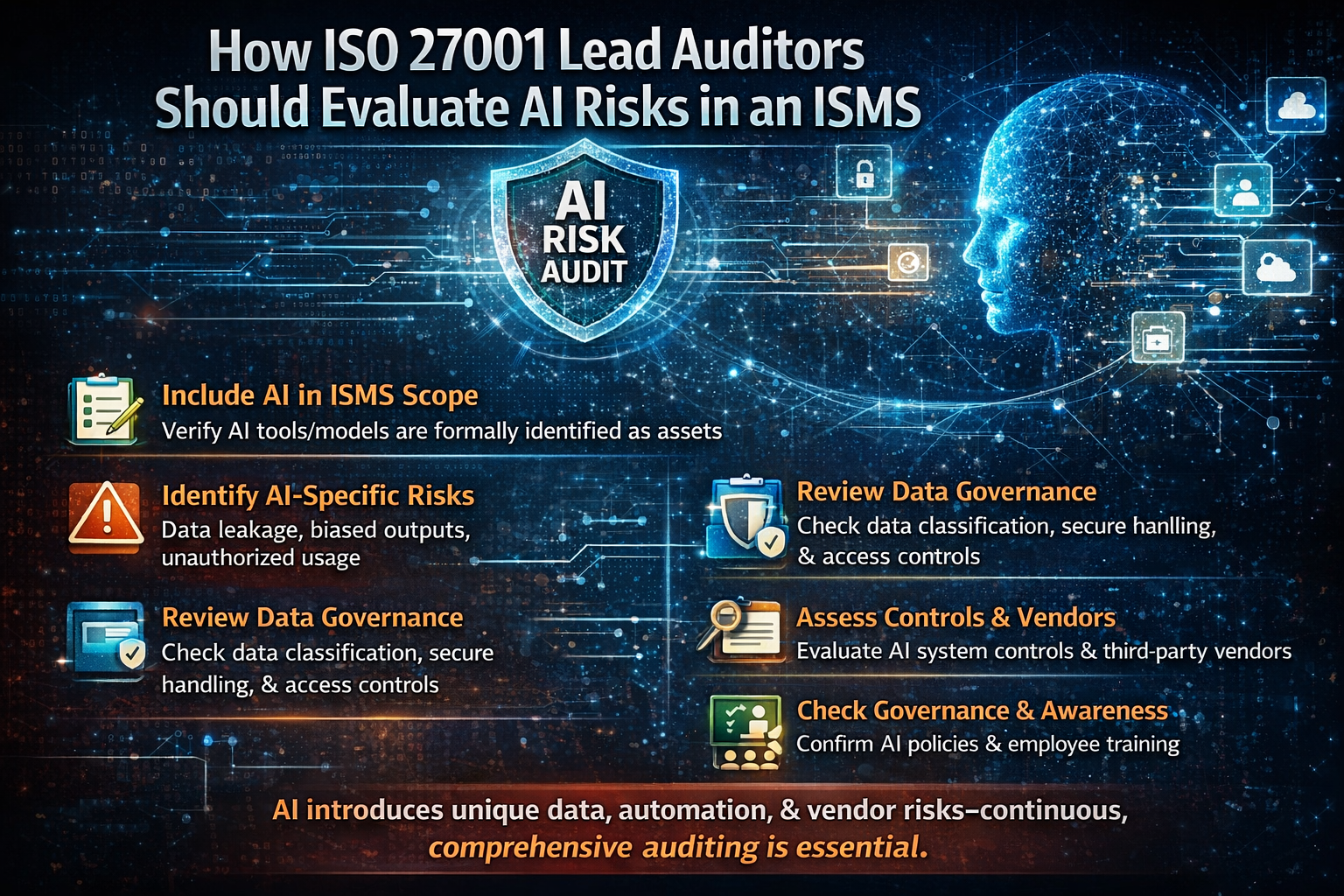
With AI adoption accelerating, ISO 27001 lead auditors must expand how they evaluate risks within an ISMS. AI is not just another technology component—it introduces new challenges related to data usage, automation, and decision-making. As a result, auditors need to move beyond traditional controls and ensure AI is properly integrated into the organization’s risk and governance framework.
First, AI must be explicitly included within the ISMS scope. Auditors should verify that all AI tools, models, and platforms are formally identified as assets. If organizations are using AI without documenting it, this creates a significant visibility gap and undermines the effectiveness of the ISMS.
Second, auditors need to identify and assess AI-specific risks that are often overlooked in traditional risk assessments. These include data leakage through prompts or training datasets, biased or unreliable outputs, unauthorized use of public AI tools, and risks such as model manipulation or poisoning. These threats should be formally captured and managed within the risk register.
Third, strong data governance becomes even more critical in an AI-driven environment. Since AI systems rely heavily on data, auditors should ensure proper data classification, access controls, and secure handling of sensitive information. Additionally, there must be transparency into how AI systems process and use data, as this directly impacts risk exposure.
Fourth, auditors should review controls around AI systems and assess third-party risks. This includes verifying access controls, monitoring mechanisms, secure deployment practices, and ongoing updates. Given that many AI capabilities rely on external vendors or cloud providers, thorough vendor risk management is essential to prevent external dependencies from becoming security weaknesses.
Fifth, governance and awareness play a key role in managing AI risks. Organizations should establish clear policies for AI usage and ensure employees understand how to use AI tools securely and responsibly. Without proper governance and training, even well-designed controls can fail due to misuse or lack of awareness.
My perspective: AI is fundamentally reshaping the ISMS landscape, and auditors who treat it as just another asset will miss critical risks. The real shift is toward continuous, data-centric, and vendor-aware risk management. AI introduces dynamic risks that evolve quickly, so static, annual risk assessments are no longer sufficient. Organizations need ongoing monitoring, tighter integration with DevSecOps, and alignment with emerging frameworks like ISO 42001. Those who adapt early will not only reduce risk but also gain a competitive advantage by demonstrating mature, AI-aware security governance.
Ensure your ISMS is AI-ready. Partner with DISC InfoSec to assess, govern, and secure your AI systems before risks become incidents. Learn more today!
At DISC InfoSec, we help organizations navigate this landscape by aligning AI risk management, governance, security, and compliance into a single, practical roadmap. Whether you are experimenting with AI or deploying it at scale, we help you choose and operationalize the right frameworks to reduce risk and build trust. Learn more at DISC InfoSec.
In the AI-driven era, organizations are no longer just protecting traditional IT assets—they are safeguarding data pipelines, training datasets, models, prompts, decision logic, and automated actions. AI systems amplify risk because they operate at scale, learn dynamically, and often rely on opaque third-party components.
An Information Security Management System (ISMS) provides the governance backbone needed to:
Control how sensitive data is collected, used, and retained by AI systems
Manage emerging risks such as model leakage, data poisoning, hallucinations, and automated misuse
Align AI innovation with regulatory, ethical, and security expectations
Shift security from reactive controls to continuous, risk-based decision-making
ISO 27001, especially the 2022 revision, is highly relevant because it integrates modern risk concepts that naturally extend into AI governance and AI security management.
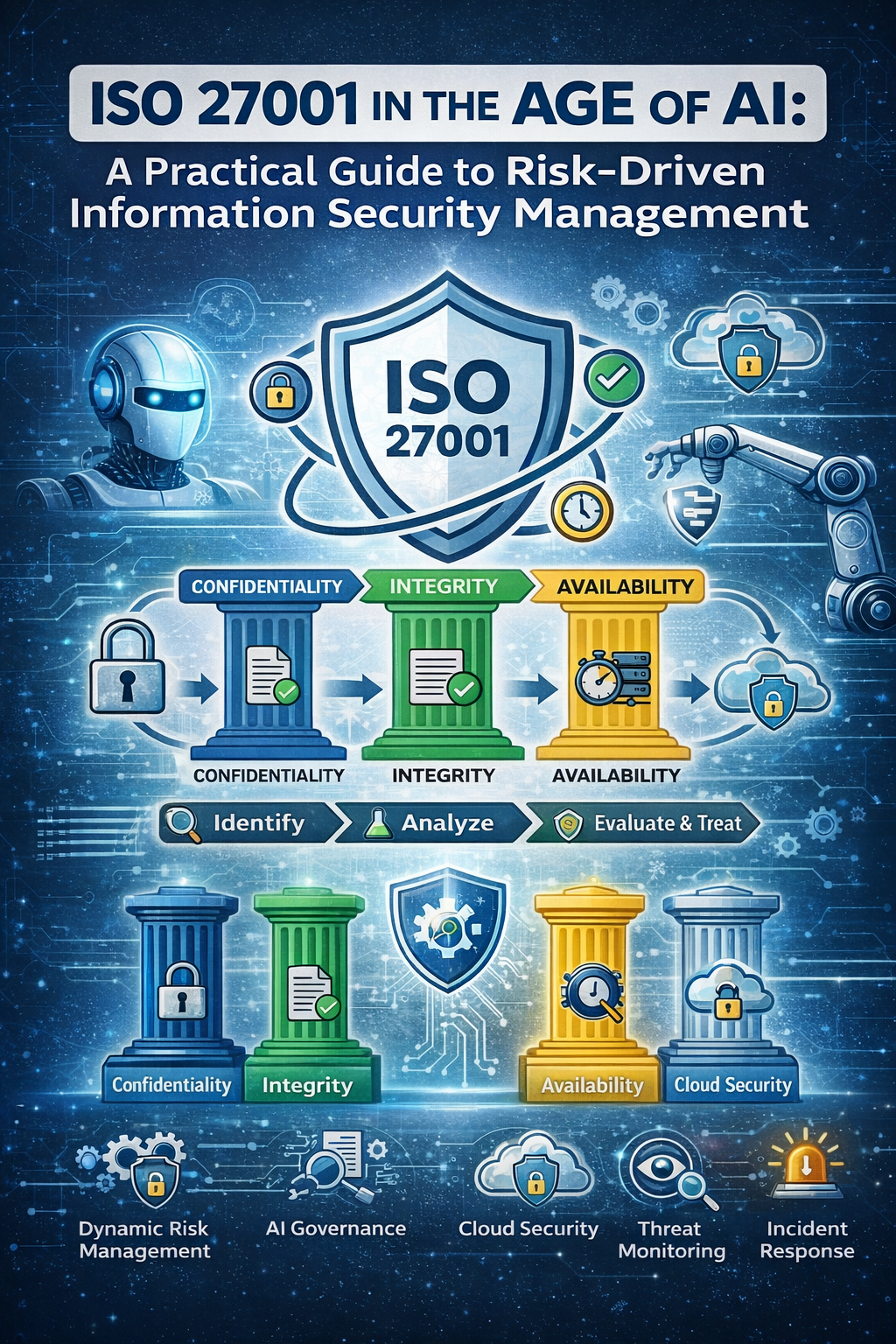
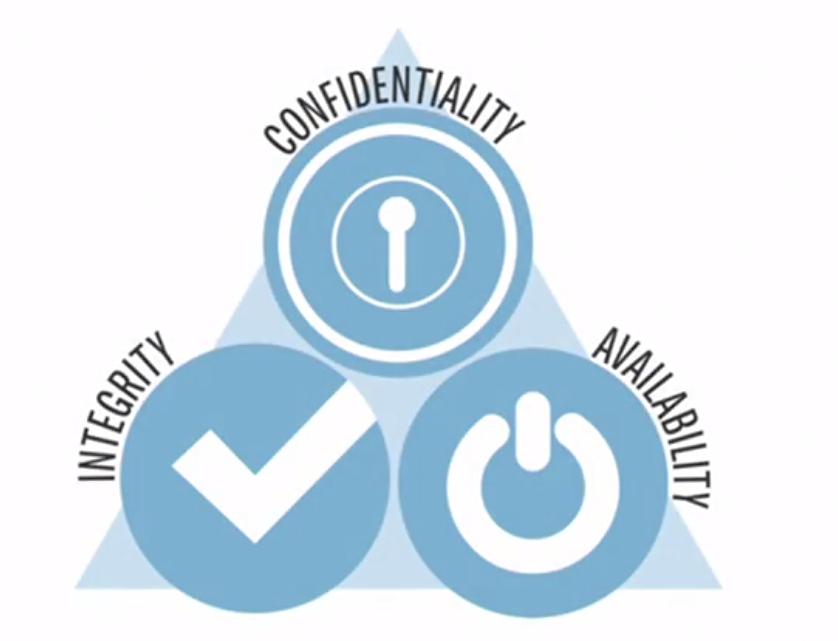
1. Core Philosophy: The CIA Triad
At the foundation of ISO 27001 lies the CIA Triad, which defines what information security is meant to protect:
Confidentiality Ensures that information is accessed only by authorized users and systems. This includes encryption, access controls, identity management, and data classification—critical for protecting sensitive training data, prompts, and model outputs in AI environments.
Integrity Guarantees that information remains accurate, complete, and unaltered unless properly authorized. Controls such as version control, checksums, logging, and change management protect against data poisoning, model tampering, and unauthorized changes.
Availability Ensures systems and data are accessible when needed. This includes redundancy, backups, disaster recovery, and resilience planning—vital for AI-driven services that often support business-critical or real-time decision-making.
Together, the CIA Triad ensures trust, reliability, and operational continuity.
2. Evolution of ISO 27001: 2013 vs. 2022
ISO 27001 has evolved to reflect modern technology and risk realities:
2013 Version (Legacy)
114 controls spread across 14 domains
Primarily compliance-focused
Limited emphasis on cloud, threat intelligence, and emerging technologies
2022 Version (Modern)
Streamlined to 93 controls grouped into 4 themes: People, Organization, Technology, Physical
Strong emphasis on dynamic risk management
Explicit coverage of cloud security, data leakage prevention (DLP), and threat intelligence
Better alignment with agile, DevOps, and AI-driven environments
This shift makes ISO 27001:2022 far more adaptable to AI, SaaS, and continuously evolving threat landscapes.
3. ISMS Implementation Lifecycle
ISO 27001 follows a structured lifecycle that embeds security into daily operations:
Define Scope – Identify what systems, data, AI workloads, and business units fall under the ISMS
Risk Assessment – Identify and analyze risks affecting information assets
Statement of Applicability (SoA) – Justify which controls are selected and why
Implement Controls – Deploy technical, organizational, and procedural safeguards
Employee Controls & Awareness – Ensure roles, responsibilities, and training are in place
Internal Audit – Validate control effectiveness and compliance
Certification Audit – Independent verification of ISMS maturity
This lifecycle reinforces continuous improvement rather than one-time compliance.
4. Risk Assessment: The Heart of ISO 27001
Risk assessment is the core engine of the ISMS:
Step 1: Identify Risks Identify assets, threats, vulnerabilities, and AI-specific risks (e.g., data misuse, model bias, shadow AI tools).
Step 2: Analyze Risks Evaluate likelihood and impact, considering technical, legal, and reputational consequences.
Step 3: Evaluate & Treat Risks Decide how to handle risks using one of four strategies:
Avoid – Eliminate the risky activity
Mitigate – Reduce risk through controls
Transfer – Shift risk via contracts or insurance
Accept – Formally accept residual risk
This risk-based approach ensures security investments are proportionate and justified.
5. Mandatory Clauses (Clauses 4–10)
ISO 27001 mandates seven core governance clauses:
Context – Understand internal and external factors, including stakeholders and AI dependencies
Leadership – Demonstrate top management commitment and accountability
Planning – Define security objectives and risk treatment plans
Support – Allocate resources, training, and documentation
Operation – Execute controls and security processes
Performance Evaluation – Monitor, measure, audit, and review ISMS effectiveness
Improvement – Address nonconformities and continuously enhance controls
These clauses ensure security is embedded at the organizational level—not just within IT.
6. Incident Management & Common Pitfalls
Incident Response Flow
A structured response minimizes damage and recovery time:
Assess – Detect and analyze the incident
Contain – Limit spread and impact
Restore – Recover systems and data
Notify – Inform stakeholders and regulators as required
Common Pitfalls
Organizations often fail due to:
Weak or inconsistent access controls
Lack of audit-ready evidence
Unpatched or outdated systems
Stale risk registers that ignore evolving threats like AI misuse
These gaps undermine both security and compliance.
My Perspective on the ISO 27001 Methodology
ISO 27001 is best understood not as a compliance checklist, but as a governance-driven risk management methodology. Its real strength lies in:
Flexibility across industries and technologies
Strong alignment with AI governance frameworks (e.g., ISO 42001, NIST AI RMF)
Emphasis on leadership accountability and continuous improvement
In the age of AI, ISO 27001 should be used as the foundational control layer, with AI-specific risk frameworks layered on top. Organizations that treat it as a living system—rather than a certification project—will be far better positioned to innovate securely, responsibly, and at scale.
At DISC InfoSec, we help organizations navigate this landscape by aligning AI risk management, governance, security, and compliance into a single, practical roadmap. Whether you are experimenting with AI or deploying it at scale, we help you choose and operationalize the right frameworks to reduce risk and build trust. Learn more at DISC InfoSec.
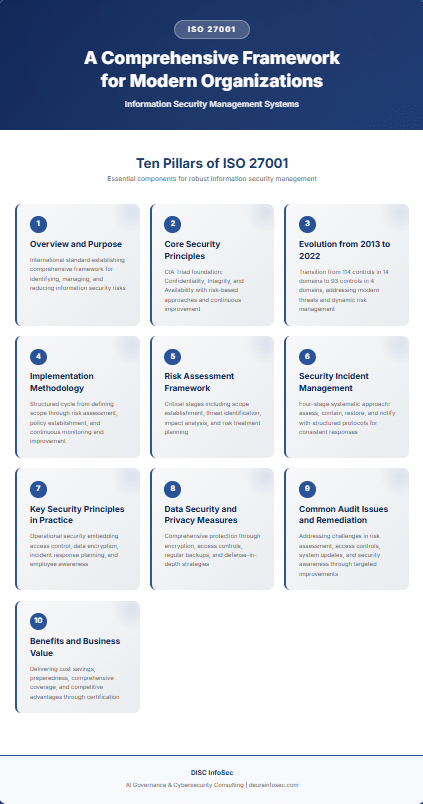
ISO 27001: Information Security Management Systems
Overview and Purpose
ISO 27001 represents the international standard for Information Security Management Systems (ISMS), establishing a comprehensive framework that enables organizations to systematically identify, manage, and reduce information security risks. The standard applies universally to all types of information, whether digital or physical, making it relevant across industries and organizational sizes. By adopting ISO 27001, organizations demonstrate their commitment to protecting sensitive data and maintaining robust security practices that align with global best practices.
Core Security Principles
The foundation of ISO 27001 rests on three fundamental principles known as the CIA Triad. Confidentiality ensures that information remains accessible only to authorized individuals, preventing unauthorized disclosure. Integrity maintains the accuracy, completeness, and reliability of data throughout its lifecycle. Availability guarantees that information and systems remain accessible when required by authorized users. These principles work together to create a holistic approach to information security, with additional emphasis on risk-based approaches and continuous improvement as essential methodologies for maintaining effective security controls.
Evolution from 2013 to 2022
The transition from ISO 27001:2013 to ISO 27001:2022 brought significant updates to the standard’s control framework. The 2013 version organized controls into 14 domains covering 114 individual controls, while the 2022 revision restructured these into 93 controls across 4 domains, eliminating fragmented controls and introducing new requirements. The updated version shifted from compliance-driven, static risk treatment to dynamic risk management, placed greater emphasis on business continuity and organizational resilience, and introduced entirely new controls addressing modern threats such as threat intelligence, ICT readiness, data masking, secure coding, cloud security, and web filtering.
Implementation Methodology
Implementing ISO 27001 follows a structured cycle beginning with defining the scope by identifying boundaries, assets, and stakeholders. Organizations then conduct thorough risk assessments to identify threats, vulnerabilities, and map risks to affected assets and business processes. This leads to establishing ISMS policies that set security objectives and demonstrate organizational commitment. The cycle continues with sustaining and monitoring through internal and external audits, implementing security controls with protective strategies, and maintaining continuous monitoring and review of risks while implementing ongoing security improvements.
Risk Assessment Framework
The risk assessment process comprises several critical stages that form the backbone of ISO 27001 compliance. Organizations must first establish scope by determining which information assets and risk assessment criteria require protection, considering impact, likelihood, and risk levels. The identification phase requires cataloging potential threats, vulnerabilities, and mapping risks to affected assets and business processes. Analysis and evaluation involve determining likelihood and assessing impact including financial exposure, reputational damage, and utilizing risk matrices. Finally, defining risk treatment plans requires selecting appropriate responses—avoiding, mitigating, transferring, or accepting risks—documenting treatment actions, assigning teams, and establishing timelines.
Security Incident Management
ISO 27001 requires a systematic approach to handling security incidents through a four-stage process. Organizations must first assess incidents by identifying their type and impact. The containment phase focuses on stopping further damage and limiting exposure. Restoration and securing involves taking corrective actions to return to normal operations. Throughout this process, organizations must notify affected parties and inform users about potential risks, report incidents to authorities, and follow legal and regulatory requirements. This structured approach ensures consistent, effective responses that minimize damage and facilitate learning from security events.
Key Security Principles in Practice
The standard emphasizes several operational security principles that organizations must embed into their daily practices. Access control restricts unauthorized access to systems and data. Data encryption protects sensitive information both at rest and in transit. Incident response planning ensures readiness for cyber threats and establishes clear protocols for handling breaches. Employee awareness maintains accurate and up-to-date personnel data, ensuring staff understand their security responsibilities. Audit and compliance checks involve regular assessments for continuous improvement, verifying that controls remain effective and aligned with organizational objectives.
Data Security and Privacy Measures
ISO 27001 requires comprehensive data protection measures spanning multiple areas. Data encryption involves implementing encryption techniques to protect personal data from unauthorized access. Access controls restrict system access based on least privilege and role-based access control (RBAC). Regular data backups maintain copies of personal data to prevent loss or corruption, adding an extra layer of protection by requiring multiple forms of authentication before granting access. These measures work together to create defense-in-depth, ensuring that even if one control fails, others remain in place to protect sensitive information.
Common Audit Issues and Remediation
Organizations frequently encounter specific challenges during ISO 27001 audits that require attention. Lack of risk assessment remains a critical issue, requiring organizations to conduct and document thorough risk analysis. Weak access controls necessitate implementing strong, password-protected policies and role-based access along with regularly updated systems. Outdated security systems require regular updates to operating systems, applications, and firmware to address known vulnerabilities. Lack of security awareness demands conducting periodic employee training to ensure staff understand their roles in maintaining security and can recognize potential threats.
Benefits and Business Value
Achieving ISO 27001 certification delivers substantial organizational benefits beyond compliance. Cost savings result from reducing the financial impact of security breaches through proactive prevention. Preparedness encourages organizations to regularly review and update their ISMS, maintaining readiness for evolving threats. Coverage ensures comprehensive protection across all information types, digital and physical. Attracting business opportunities becomes easier as certification showcases commitment to information security, providing competitive advantages and meeting client requirements, particularly in regulated industries where ISO 27001 is increasingly expected or required.
My Opinion
This post on ISO 27001 provides a remarkably comprehensive overview that captures both the structural elements and practical implications of the standard. I find the comparison between the 2013 and 2022 versions particularly valuable—it highlights how the standard has evolved to address modern threats like cloud security, data masking, and threat intelligence, demonstrating ISO’s responsiveness to the changing cybersecurity landscape.
The emphasis on dynamic risk management over static compliance represents a crucial shift in thinking that aligns with your work at DISC InfoSec. The idea that organizations must continuously assess and adapt rather than simply check boxes resonates with your perspective that “skipping layers in governance while accelerating layers in capability is where most AI risk emerges.” ISO 27001:2022’s focus on business continuity and organizational resilience similarly reflects the need for governance frameworks that can flex and scale alongside technological capability.
What I find most compelling is how the framework acknowledges that security is fundamentally about business enablement rather than obstacle creation. The benefits section appropriately positions ISO 27001 certification as a business differentiator and cost-reduction strategy, not merely a compliance burden. For our ShareVault implementation and DISC InfoSec consulting practice, this framing helps bridge the gap between technical security requirements and executive business concerns—making the case that robust information security management is an investment in organizational capability and market positioning rather than overhead.
The document could be strengthened by more explicitly addressing the integration challenges between ISO 27001 and emerging AI governance frameworks like ISO 42001, which represents the next frontier for organizations seeking comprehensive risk management across both traditional and AI-augmented systems.
Download A Comprehensive Framwork for Modern Organizations
At DISC InfoSec, we help organizations navigate this landscape by aligning AI risk management, governance, security, and compliance into a single, practical roadmap. Whether you are experimenting with AI or deploying it at scale, we help you choose and operationalize the right frameworks to reduce risk and build trust. Learn more at DISC InfoSec.
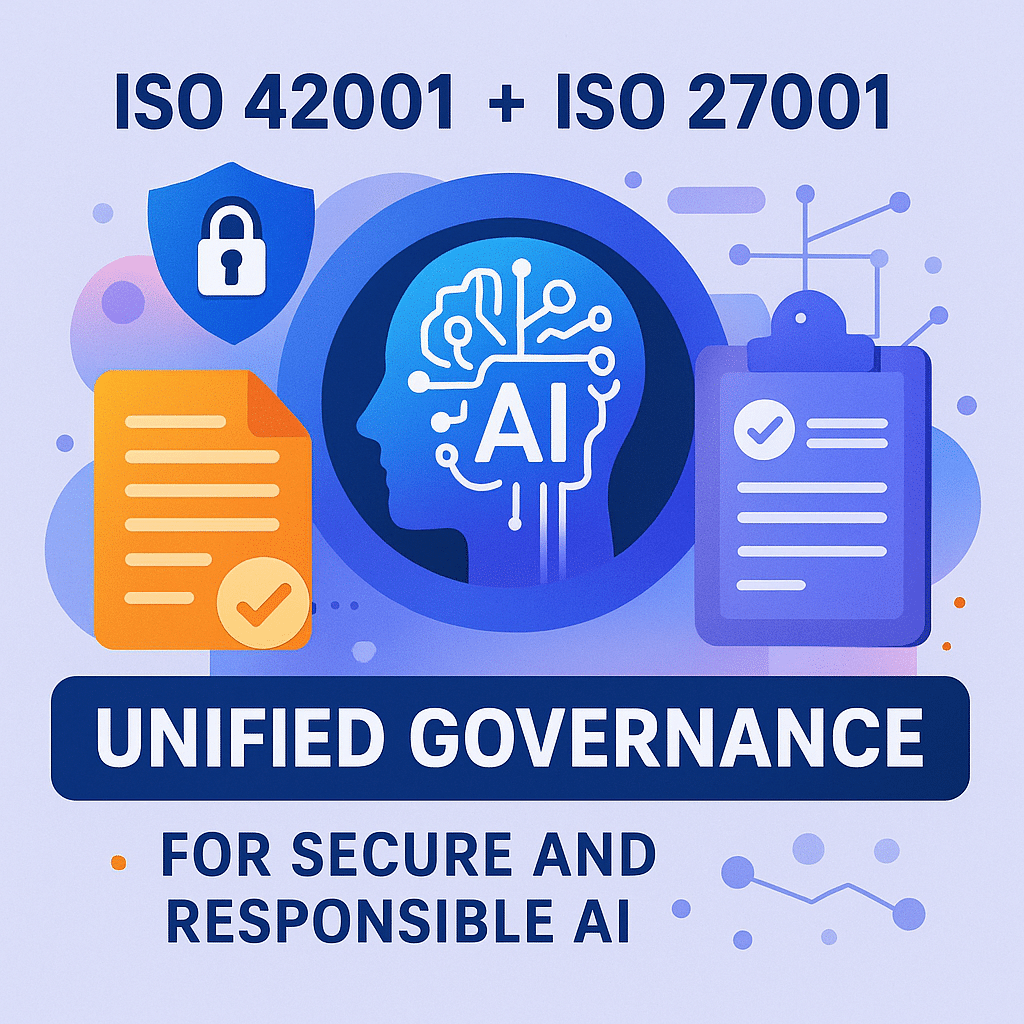
As organizations increasingly adopt AI technologies, integrating an Artificial Intelligence Management System (AIMS) into an existing Information Security Management System (ISMS) is becoming essential. This approach aligns with ISO/IEC 42001:2023 and ensures that AI risks, governance needs, and operational controls blend seamlessly with current security frameworks.
The document emphasizes that AI is no longer an isolated technology—its rapid integration into business processes demands a unified framework. Adding AIMS on top of ISMS avoids siloed governance and ensures structured oversight over AI-driven tools, models, and decision workflows.
Integration also allows organizations to build upon the controls, policies, and structures they already have under ISO 27001. Instead of starting from scratch, they can extend their risk management, asset inventories, and governance processes to include AI systems. This reduces duplication and minimizes operational disruption.
To begin integration, organizations should first define the scope of AIMS within the ISMS. This includes identifying all AI components—LLMs, ML models, analytics engines—and understanding which teams use or develop them. Mapping interactions between AI systems and existing assets ensures clarity and complete coverage.
Risk assessments should be expanded to include AI-specific threats such as bias, adversarial attacks, model poisoning, data leakage, and unauthorized “Shadow AI.” Existing ISO 27005 or NIST RMF processes can simply be extended with AI-focused threat vectors, ensuring a smooth transition into AIMS-aligned assessments.
Policies and procedures must be updated to reflect AI governance requirements. Examples include adding AI-related rules to acceptable use policies, tagging training datasets in data classification, evaluating AI vendors under third-party risk management, and incorporating model versioning into change controls. Creating an overarching AI Governance Policy helps tie everything together.
Governance structures should evolve to include AI-specific roles such as AI Product Owners, Model Risk Managers, and Ethics Reviewers. Adding data scientists, engineers, legal, and compliance professionals to ISMS committees creates a multidisciplinary approach and ensures AI oversight is not handled in isolation.
AI models must be treated as formal assets in the organization. This means documenting ownership, purpose, limitations, training datasets, version history, and lifecycle management. Managing these through existing ISMS change-management processes ensures consistent governance over model updates, retraining, and decommissioning.
Internal audits must include AI controls. This involves reviewing model approval workflows, bias-testing documentation, dataset protection, and the identification of Shadow AI usage. AI-focused audits should be added to the existing ISMS schedule to avoid creating parallel or redundant review structures.
Training and awareness programs should be expanded to cover topics like responsible AI use, prompt safety, bias, fairness, and data leakage risks. Practical scenarios—such as whether sensitive information can be entered into public AI tools—help employees make responsible decisions. This ensures AI becomes part of everyday security culture.
Expert Opinion (AI Governance / ISO Perspective)
Integrating AIMS into ISMS is not just efficient—it’s the only logical path forward. Organizations that already operate under ISO 27001 can rapidly mature their AI governance by extending existing controls instead of building a separate framework. This reduces audit fatigue, strengthens trust with regulators and customers, and ensures AI is deployed responsibly and securely. ISO 42001 and ISO 27001 complement each other exceptionally well, and organizations that integrate early will be far better positioned to manage both the opportunities and the risks of rapidly advancing AI technologies.
10-page ISO 42001 + ISO 27001 AI Risk Scorecard PDF
Integrating ISO standards across business functions—particularly Governance, Risk, and Compliance (GRC)—has become not just a best practice but a necessity in the age of Artificial Intelligence (AI). As AI systems increasingly permeate operations, decision-making, and customer interactions, the need for standardized controls, accountability, and risk mitigation is more urgent than ever. ISO standards provide a globally recognized framework that ensures consistency, security, quality, and transparency in how organizations adopt and manage AI technologies.
In the GRC domain, ISO standards like ISO/IEC 27001 (information security), ISO/IEC 38500 (IT governance), ISO 31000 (risk management), and ISO/IEC 42001 (AI management systems) offer a structured approach to managing risks associated with AI. These frameworks guide organizations in aligning AI use with regulatory compliance, internal controls, and ethical use of data. For example, ISO 27001 helps in safeguarding data fed into machine learning models, while ISO 31000 aids in assessing emerging AI risks such as bias, algorithmic opacity, or unintended consequences.
The integration of ISO standards helps unify siloed departments—such as IT, legal, HR, and operations—by establishing a common language and baseline for risk and control. This cohesion is particularly crucial when AI is used across multiple departments. AI doesn’t respect organizational boundaries, and its risks ripple across all functions. Without standardized governance structures, businesses risk deploying fragmented, inconsistent, and potentially harmful AI systems.
ISO standards also support transparency and accountability in AI deployment. As regulators worldwide introduce new AI regulations—such as the EU AI Act—standards like ISO/IEC 42001 help organizations demonstrate compliance, build trust with stakeholders, and prepare for audits. This is especially important in industries like healthcare, finance, and defense, where the margin for error is small and ethical accountability is critical.
Moreover, standards-driven integration supports scalability. As AI initiatives grow from isolated pilot projects to enterprise-wide deployments, ISO frameworks help maintain quality and control at scale. ISO 9001, for instance, ensures continuous improvement in AI-supported processes, while ISO/IEC 27017 and 27018 address cloud security and data privacy—key concerns for AI systems operating in the cloud.
AI systems also introduce new third-party and supply chain risks. ISO standards such as ISO/IEC 27036 help in managing vendor security, and when integrated into GRC workflows, they ensure AI solutions procured externally adhere to the same governance rigor as internal developments. This is vital in preventing issues like AI-driven data breaches or compliance gaps due to poorly vetted partners.
Importantly, ISO integration fosters a culture of risk-aware innovation. Instead of slowing down AI adoption, standards provide guardrails that enable responsible experimentation and faster time to trust. They help organizations embed privacy, ethics, and accountability into AI from the design phase, rather than retrofitting compliance after deployment.
In conclusion, ISO standards are no longer optional checkboxes; they are strategic enablers in the age of AI. For GRC leaders, integrating these standards across business functions ensures that AI is not only powerful and efficient but also safe, transparent, and aligned with organizational values. As AI’s influence grows, ISO-based governance will distinguish mature, trusted enterprises from reckless adopters.
What does BS ISO/IEC 42001 – Artificial intelligence management system cover? BS ISO/IEC 42001:2023 specifies requirements and provides guidance for establishing, implementing, maintaining and continually improving an AI management system within the context of an organization.
ISO/IEC 42001:2023 – from establishing to maintain an AI management system.
ISO/IEC 27701 2019 Standard – Published in August of 2019, ISO 27701 is a new standard for information and data privacy. Your organization can benefit from integrating ISO 27701 with your existing security management system as doing so can help you comply with GDPR standards and improve your data security.
The Strategic Synergy: ISO 27001 and ISO 42001 – A New Era in Governance
After years of working closely with global management standards, it’s deeply inspiring to witness organizations adopting what I believe to be one of the most transformative alliances in modern governance:ISO 27001 and the newly introduced ISO 42001.
ISO 42001, developed for AI Management Systems, was intentionally designed to align with the well-established information security framework of ISO 27001. This alignment wasn’t incidental—it was a deliberate acknowledgment that responsible AI governance cannot exist without a strong foundation of information security.
Together, these two standards create a governance model that is not only comprehensive but essential for the future:
ISO 27001 fortifies the integrity, confidentiality, and availability of data—ensuring that information is secure and trusted.
ISO 42001 builds on that by governing how AI systems use this data—ensuring those systems operate in a transparent, ethical, and accountable manner.
This integration empowers organizations to:
Extend trust from data protection to decision-making processes.
Safeguard digital assets while promoting responsible AI outcomes.
Bridge security, compliance, and ethical innovation under one cohesive framework.
In a world increasingly shaped by AI, the combined application of ISO 27001 and ISO 42001 is not just a best practice—it’s a strategic imperative.
High-level summary of the ISO/IEC 42001 Readiness Checklist
1. Understand the Standard
Purchase and study ISO/IEC 42001 and related annexes.
Familiarize yourself with AI-specific risks, controls, and life cycle processes.
Review complementary ISO standards (e.g., ISO 22989, 31000, 38507).
2. Define AI Governance
Create and align AI policies with organizational goals.
Assign roles, responsibilities, and allocate resources for AI systems.
Establish procedures to assess AI impacts and manage their life cycles.
Ensure transparency and communication with stakeholders.
3. Conduct Risk Assessment
Identify potential risks: data, security, privacy, ethics, compliance, and reputation.
Use Annex C for AI-specific risk scenarios.
4. Develop Documentation and Policies
Ensure AI policies are relevant, aligned with broader org policies, and kept up to date.
Maintain accessible, centralized documentation.
5. Plan and Implement AIMS (AI Management System)
Conduct a gap analysis with input from all departments.
Create a step-by-step implementation plan.
Deliver training and build monitoring systems.
6. Internal Audit and Management Review
Conduct internal audits to evaluate readiness.
Use management reviews and feedback to drive improvements.
Track and resolve non-conformities.
7. Prepare for and Undergo External Audit
Select a certified and reputable audit partner.
Hold pre-audit meetings and simulations.
Designate a central point of contact for auditors.
Address audit findings with action plans.
8. Focus on Continuous Improvement
Establish a team to monitor post-certification compliance.
Regularly review and enhance the AIMS.
Avoid major system changes during initial implementation.
“The SOA can easily be produced by examining the risk assessment to identify the necessary controls and risk treatment plan to identify those that are planned to be implemented. Only controls identified in the risk assessment can be included in the SOA. Controls cannot be added to the SOA independent of the risk assessment. There should be consistency between the controls necessary to realize selected risk treatment options and the SOA. The SOA can state that the justification for the inclusion of a control is the same for all controls and that they have been identified in the risk assessment as necessary to treat one or more risks to an acceptable level. No further justification for the inclusion of a control is needed for any of the controls.”
This paragraph from ISO 27005 explains the relationship between the Statement of Applicability (SoA) and the risk assessment process in an ISO 27001-based Information Security Management System (ISMS). Here’s a breakdown of the key points:
SoA Derivation from Risk Assessment
The SoA must be based on the risk assessment and risk treatment plan.
It should only include controls that were identified as necessary during the risk assessment.
Organizations cannot arbitrarily add controls to the SoA without a corresponding risk justification.
Consistency with Risk Treatment Plan
The SoA must align with the selected risk treatment options.
This ensures that the controls listed in the SoA effectively address the identified risks.
Justification for Controls
The SoA can state that all controls were chosen because they are necessary for risk treatment.
No separate or additional justification is needed for each individual control beyond its necessity in treating risks.
Why This Matters:
Ensures a risk-driven approach to control selection.
Prevents the arbitrary inclusion of unnecessary controls, which could lead to inefficiencies.
Helps in audits and compliance by clearly showing the link between risks, treatments, and controls.
Practical Example of SoA and Risk Assessment Linkage
Scenario:
A company conducts a risk assessment as part of its ISO 27001 implementation and identifies the following risk:
Risk: Unauthorized access to sensitive customer data due to weak authentication mechanisms.
Risk Level: High
Risk Treatment Plan: Implement multi-factor authentication (MFA) to reduce the risk to an acceptable level.
How This Affects the SoA:
Control Selection:
The company refers to Annex A of ISO 27001 and identifies Control A.9.4.1 (Use of Secure Authentication Mechanisms) as necessary to mitigate the risk.
This control is added to the SoA because the risk assessment identified it as necessary.
Justification in the SoA:
The SoA will list A.9.4.1 – Secure Authentication Mechanisms as an included control.
The justification can be: “This control has been identified as necessary in the risk assessment to mitigate the risk of unauthorized access to customer data.”
No additional justification is needed because the link to the risk assessment is sufficient.
What Cannot Be Done:
The company cannot arbitrarily add a control, such as A.14.2.9 (Protection of Test Data), unless it was identified as necessary in the risk assessment.
Adding controls without risk justification would violate ISO 27005’s requirement for consistency.
Key Takeaways:
Every control in the SoA must be traceable to a risk.
The SoA cannot contain controls that were not justified in the risk assessment.
Justification for controls can be standardized, reducing documentation overhead.
This approach ensures that the ISMS remains risk-based, justifiable, and auditable.
The document highlights the comprehensive vCISO (virtual Chief Information Security Officer) services offered by DISC LLC to help organizations build and strengthen their security programs. Here’s a summarized rephrasing:
Key Services:
InfoSec Consultancy: Tailored solutions to protect businesses from cyber threats.
Security Risk Assessment: Identifying and mitigating vulnerabilities in IT infrastructures.
Cybersecurity Risk Management: Proactively managing and reducing cyber risks.
ISO 27001 Compliance: Assistance in achieving certification through robust risk management.
ISMS Risk Management: Developing resilient Information Security Management Systems.
Approach:
DISC LLC specializes in bridging the gap between an organization’s current security posture (“as-is”) and its desired future state (“to-be”) through:
Gap assessments to evaluate maturity levels.
Strategic roadmaps for transitioning to a higher level of maturity.
Implementing essential policies, procedures, and defensive technologies.
Continuous testing, validation, and long-term improvements.
Why Choose DISC LLC?
Expertise from seasoned InfoSec professionals.
Customized, business-aligned security strategies.
Proactive risk detection and mitigation.
Their services also include compliance readiness, managed detection & response (MDR), offensive control validation (penetration testing), and oversight of security tools. DISC LLC emphasizes continuous improvement and building a secure future.
The second page outlines DISC LLC’s approach to revitalizing cybersecurity programs through their vCISO services, focusing on gap assessments, strategy development, and continuous improvement. Here’s a concise summary and rephrased version:
Key Highlights:
Assess Current State: Evaluate the “as-is” security maturity level and identify gaps compared to the desired “to-be” future state.
Define Objectives: Build a strong case for enhancing cybersecurity and set a clear vision for the organization’s future security posture.
Strategic Roadmap: Create a transition plan detailing the steps needed to achieve the target state, including technical, management, and operational controls.
Implementation:
Recruit key personnel.
Deploy essential policies, procedures, and defensive technologies (e.g., XDR, logs).
Establish critical metrics for performance tracking.
Continuous Improvement: Regular testing, validation, and strengthening of controls to reduce cyber risks and support long-term transformation.
Services Offered:
vCISO Services: Strategy and program leadership.
Gap Assessments: Identify and address security maturity gaps.
Compliance Readiness: Prepare for standards like ISO and NIST.
Offensive Control Validation: Penetration testing services.
DISC LLC emphasizes building a secure future through tailored solutions, ongoing program enhancement, and leveraging advanced technologies. For more details, they encourage reaching out via their provided contact information.
Here are 10 key benefits of ISO 27001 certification for small and medium-sized businesses (SMBs)
Enhanced Data Security: Protect sensitive information against breaches, reducing the risk of financial loss or reputational damage.
Customer Trust: Demonstrate a commitment to safeguarding client data, boosting customer confidence and loyalty.
Regulatory Compliance: Meet legal and regulatory requirements (e.g., GDPR, HIPAA), avoiding penalties and ensuring smooth operations.
Competitive Advantage: Stand out in the marketplace by showcasing internationally recognized security standards.
Improved Risk Management: Identify and mitigate risks proactively with structured risk assessments and controls.
Operational Efficiency: Streamline security processes and eliminate redundancies, reducing inefficiencies and costs.
Scalability: Adapt security measures to grow alongside your business, ensuring protection as operations expand.
Incident Response: Prepare robust plans to detect, respond to, and recover from incidents quickly, minimizing downtime.
Employee Awareness: Cultivate a security-conscious workforce through regular training and awareness programs.
Partnership Opportunities: Meet vendor and partner requirements for security certifications, enabling new collaborations and business growth.
Overcoming Challenges
Resistance to Change: Highlight benefits to gain employee buy-in.
Resource Constraints: Use a phased approach to certification.
Integration Complexity: Leverage common principles with other frameworks like ISO 9001 for seamless integration.
The Way Forward ISO 27001 isn’t just about protecting data—it’s about building trust, improving operations, and achieving competitive advantage. Start embedding its principles today for a stronger, more secure organization.
Being certified with ISO 27001 can bring numerous advantages for medium to enterprise level organizations:
Minimizes the risk of cyber-attacks on your company.
Facilitates the demonstration of compliance with various regulations and standards.
Lowers operational expenses by implementing only necessary controls.
Prevents damage to reputation and financial penalties.
Enhances customer retention through a compelling security narrative.
Attracts new business opportunities by confidently addressing security concerns.
Streamlines the process of completing security questionnaires, freeing up valuable time.
Cultivates a stronger security culture and awareness within the organization.
Reduces Cyber Liability Premiums by potentially over 200%
Contact us to explore how we can turn security challenges into strategic advantages.
The document highlights the integration of penetration testing within ISO 27001’s framework, emphasizing its critical role in identifying system vulnerabilities and maintaining security posture. It links pen testing to the standard’s risk management and continuous improvement principles, focusing on Annex A controls, such as Operations Security and Compliance.
It details the importance of scoping, balancing business needs with potential risks. The guide underscores embedding pen testing into broader risk assessment efforts to enhance resilience.
There are three stages in your ISMS project when penetration testing can make a significant contribution:
As part of the risk assessment process, to uncover vulnerabilities in any Internet-facing IP addresses, web applications or internal devices and applications, and link them to identifiable threats.
As part of the risk treatment plan, to ensure that security controls work as designed.
As part of the ongoing performance evaluation and improvement processes, to ensure that controls continue to work as required and that new and emerging vulnerabilities are identified and dealt with.
ISO 27001 says that you must identify information security risks within the scope of the ISMS (Clause 6.1.2.c). This involves identifying all assets and information systems within scope of the ISMS, and then identifying the risks and vulnerabilities those assets and systems are subject to.
A penetration test can help identify these risks and vulnerabilities. The results will highlight detected issues and guide remedial action, and are a key input for your risk assessment and treatment process. Once you understand the threats you face, you can make an informed decision when selecting controls.
For further details, access the full document here.
Contact us to explore how we can turn security challenges into strategic advantages.
The blog post provides a detailed guide on conducting an ISO 27001 audit, which is crucial for ensuring compliance with information security standards. It covers both internal and certification audits, explaining their purposes, the audit process, and steps such as setting the audit criteria, reviewing documentation, conducting a field review, and reporting findings. The article also emphasizes the importance of having an independent auditor and following up on corrective actions to ensure proper risk management.
It’s predicted that more than $1 trillion in IT spending will be directly or indirectly affected by the shift to cloud during the next five years. This is no surprise as the cloud is one of the main digital technologies developing in today’s fast-moving world. It’s encouraging that CEOs recognize that it’s crucial for them to champion the use of digital technologies to keep up with today’s evolving business environment.
However, there are still concerns about using cloud services and determining the best approach for adoption. It’s important to acknowledge that adapting to emerging technologies can be challenging, particularly with the constantly expanding range of products and services. As a business improvement partner, DISC collaborates with clients to identify key drivers and develop best practice standards that enhance resilience.
What Influences Organizations to Store Information on the Cloud?
Organizations should align their business strategy and objectives to determine the most suitable approach to cloud computing. This could involve opting for public cloud services, a private cloud, or a hybrid cloud solution, depending on their resources and priorities.
Security concerns remain the leading barrier to cloud adoption, especially with public cloud solutions. In fact, 91% of organizations are very or moderately worried about the security of public cloud environments. These concerns are not limited to IT departments; 61% of IT professionals believe that cloud data security is also a significant concern for executives.
Despite these challenges, many organizations are influenced by the benefits of managing information on the cloud. These benefits include:
Agility: you can respond more quickly and adapt to business changes
Scalable: cloud platforms are less restrictive on storage, size, number of users
Cost savings: no physical infrastructure costs or charges for extra storage, exceeding quotas etc
Enhanced security: standards and certification can show robust security controls are in place
Adaptability: you can easily adjust cloud services to make sure they best suit your business needs
Continuity: organizations are using cloud services as a backup internal solution
Standards to help you Manage Information on the Cloud
Standards that focus on putting appropriate frameworks and controls in place to manage cloud security.
ISO/IEC 27001international standard for an Information security management system (ISMS). It is the foundation of all our cloud security solutions. It describes the requirements for a best practice system to manage information security including understanding the context of an organization, the responsibilities of top management, resource requirements, how to approach risk, and how to monitor and improve the system.
It also provides a generic set of controls required to manage information and ensures you assess your information risks and control them appropriately. It’s relevant to all types of organizations regardless of whether they are involved with cloud services or not, to help with managing information security against recognized best practices.
ISO/IEC 27017is an international code of practice for cloud security controls. It outlines cloud-specific controls to manage security, building on the generic controls described in ISO/IEC 27002. It’s applicable to both Cloud Service Providers (CSPs) and organizations procuring cloud services.
It provides support by outlining roles and responsibilities for both parties, ensuring all cloud security concerns are addressed and clearly owned. Having ISO/IEC 27017 controls in place is especially important when you procure cloud services that form part of a service you sell to clients.
ISO/IEC 27018 is an international code of practice for Personally Identifiable Information (PII) on public clouds. It builds on the general controls described in ISO/IEC 27002 and is appropriate for any organization that processes PII. This is particularly important considering the changing privacy landscape and focus on protecting sensitive personal data.
All businesses need to continually evolve their cybersecurity management in order to effectively manage the cyber risks associated with cloud use. Request to learn more.
Adopt these standards today to ensure your organization effectively manages data in the cloud.
How to build a world class ISMS:
ISO 27001 serves as the foundation for ISO 27017, ISO 27018, and ISO 27701.
After conducting the risk assessment, it’s essential to compare the controls identified as necessary with those listed in Annex A to ensure no important controls were overlooked in managing the risks. This serves as a quality check for the risk assessment, not as a justification for using or not using any controls from Annex A. This process should be done for each risk identified in the assessment to see if there are opportunities to enhance it.
Any controls that you discover were unintentionally “omitted” from the risk assessment can come from any source (NIST, HIPAA, PCI, or CIS Critical Security Controls) and are not restricted to those in Annex A.
One should consider CIS Controls to strengthen one of the above frameworks when building your ISMS. CIS Controls is updated frequently than frameworks and are highly effective against the top five attack types found in industry threat data, effectively defending against 86% of the ATT&CK (sub)techniques in the MITRE ATT&CK framework.
Statement of Applicability (SoA) is typically developed after conducting a risk assessment in ISO 27001. The risk assessment identifies the information security risks that the organization faces and determines the appropriate controls needed to mitigate those risks.
In ISO 27001, the Statement of Applicability (SoA) is a key document that outlines which information security controls from Annex A ( or from (NIST, HIPAA, PCI, or CIS Critical Security Controls)) are applicable to an organization’s Information Security Management System (ISMS). The SoA provides a summary of the controls selected to address identified risks, justifies why each control is included or excluded, and details how each applicable control is implemented. It serves as a reference to demonstrate compliance with ISO 27001 requirements and helps in maintaining transparency and accountability in the ISMS.
The SoA is essential for internal stakeholders and external auditors to understand the rationale behind the organization’s approach to managing information security risks.
Cloud shared responsibilities:
Most companies appear to be operating in the hybrid or public cloud space, often without fully realizing it, and need to gain a better understanding of this environment.
Cloud shared responsibilities refer to the division of security and compliance responsibilities between a cloud service provider (CSP) and the customer. This model outlines who is responsible for specific aspects of cloud security, depending on the type of cloud service being used: Infrastructure as a Service (IaaS), Platform as a Service (PaaS), or Software as a Service (SaaS).
The division of responsibilities varies based on the cloud service model:
IaaS: The CSP manages the basic infrastructure, but the customer is responsible for everything else, including operating systems, applications, and data.
PaaS: The CSP manages the infrastructure and platform, while the customer focuses on application development, data management, and user access.
SaaS: The CSP handles most security aspects, including applications and infrastructure, while the customer is primarily responsible for data security and user access management.
Understanding the shared responsibility model is crucial for ensuring that both the CSP and the customer are aware of their respective roles in maintaining cloud security, compliance and last but not the least managing risks in the cloud environment.
In summary, The shift to cloud computing is expected to influence over $1 trillion in IT spending over the next five years as companies increasingly adopt digital technologies to stay competitive. Despite the benefits of cloud computing—such as agility, scalability, cost savings, and enhanced security—many organizations face challenges, particularly around security concerns, which are a major barrier to cloud adoption. To navigate these challenges, businesses need to align their cloud strategies with their objectives, choosing between public, private, or hybrid cloud solutions. Additionally, implementing standards like ISO/IEC 27001, ISO/IEC 27017, and ISO/IEC 27018 can help manage cloud security and compliance effectively by providing frameworks for managing information security risks and ensuring data protection. Understanding the shared responsibility model is also crucial for cloud security, as it defines the distinct roles of cloud service providers and customers in maintaining a secure cloud environment.
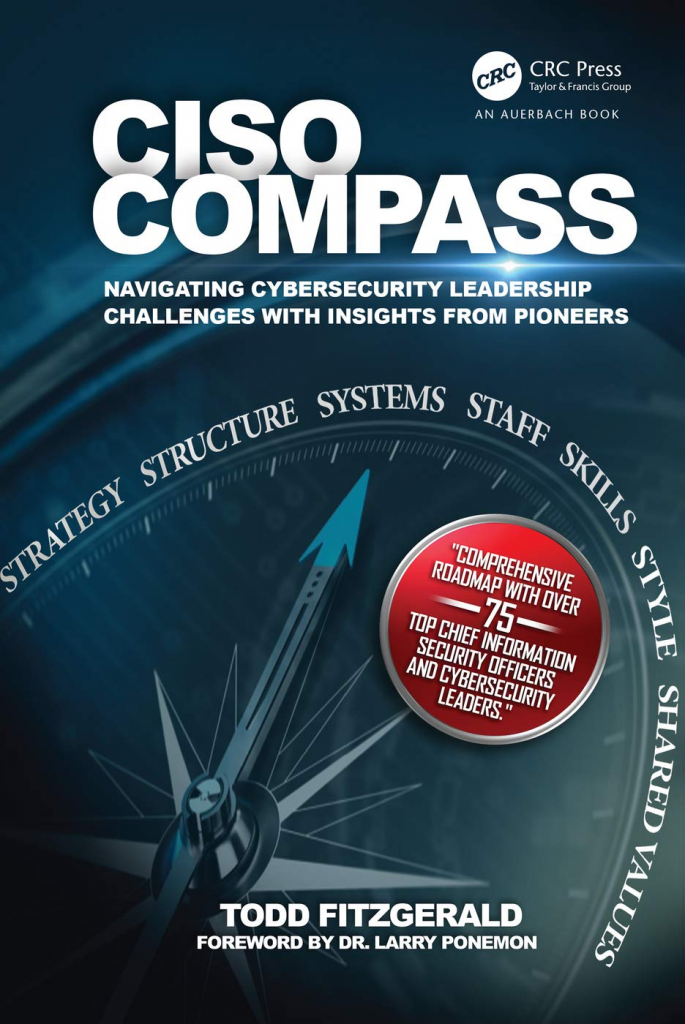
Todd Fitzgerald, co-author of the ground-breaking (ISC)2CISO Leadership: Essential Principles for Success, Information Security Governance Simplified: From the Boardroom to the Keyboard, co-author for the E-C Council CISO Body of Knowledge, and contributor to many others including Official (ISC)2 Guide to the CISSP CBK, COBIT 5 for Information Security, and ISACA CSX Cybersecurity Fundamental Certification, is back with this new book incorporating practical experience in leading, building, and sustaining an information security/cybersecurity program.
CISO COMPASS includes personal, pragmatic perspectives and lessons learned of over 75 award-winning CISOs, security leaders, professional association leaders, and cybersecurity standard setters who have fought the tough battle. Todd has also, for the first time, adapted the McKinsey 7S framework (strategy, structure, systems, shared values, staff, skills and style) for organizational effectiveness to the practice of leading cybersecurity to structure the content to ensure comprehensive coverage by the CISO and security leaders to key issues impacting the delivery of the cybersecurity strategy and demonstrate to the Board of Directors due diligence. The insights will assist the security leader to create programs appreciated and supported by the organization, capable of industry/ peer award-winning recognition, enhance cybersecurity maturity, gain confidence by senior management, and avoid pitfalls.
The book is a comprehensive, soup-to-nuts book enabling security leaders to effectively protect information assets and build award-winning programs by covering topics such as developing cybersecurity strategy, emerging trends and technologies, cybersecurity organization structure and reporting models, leveraging current incidents, security control frameworks, risk management, laws and regulations, data protection and privacy, meaningful policies and procedures, multi-generational workforce team dynamics, soft skills, and communicating with the Board of Directors and executive management. The book is valuable to current and future security leaders as a valuable resource and an integral part of any college program for information/ cybersecurity.
There are numerous ways of approaching the implementation of an ISMS. The most common method to follow is a ‘Plan Do Check Act’ process.
ISO 27001 is the international security standard that details the requirements of an ISMS.
ISO 27001, along with the best-practice guidelines contained in ISO 27002, serve as two excellent guides to get you started with implementing an ISMS.
A certified ISMS, independently audited by an approved certification body, can serve as the necessary reassurance to customers and potential clients that the organization has taken the steps required to protect their information assets from a range of identified risks.
The strength of an ISMS is based on the robustness of the information security risk assessment, which is key to any implementation.
The ability to recognize the full range of risks that the organization and its data may face in the foreseeable future is a precursor to implementing the necessary mitigating measures (known as ‘controls’).
ISO 27001 provides a list of recommended controls that can serve as a checklist to assess whether you have taken into consideration all the controls necessary for legislative, business, contractual, or regulatory purposes.
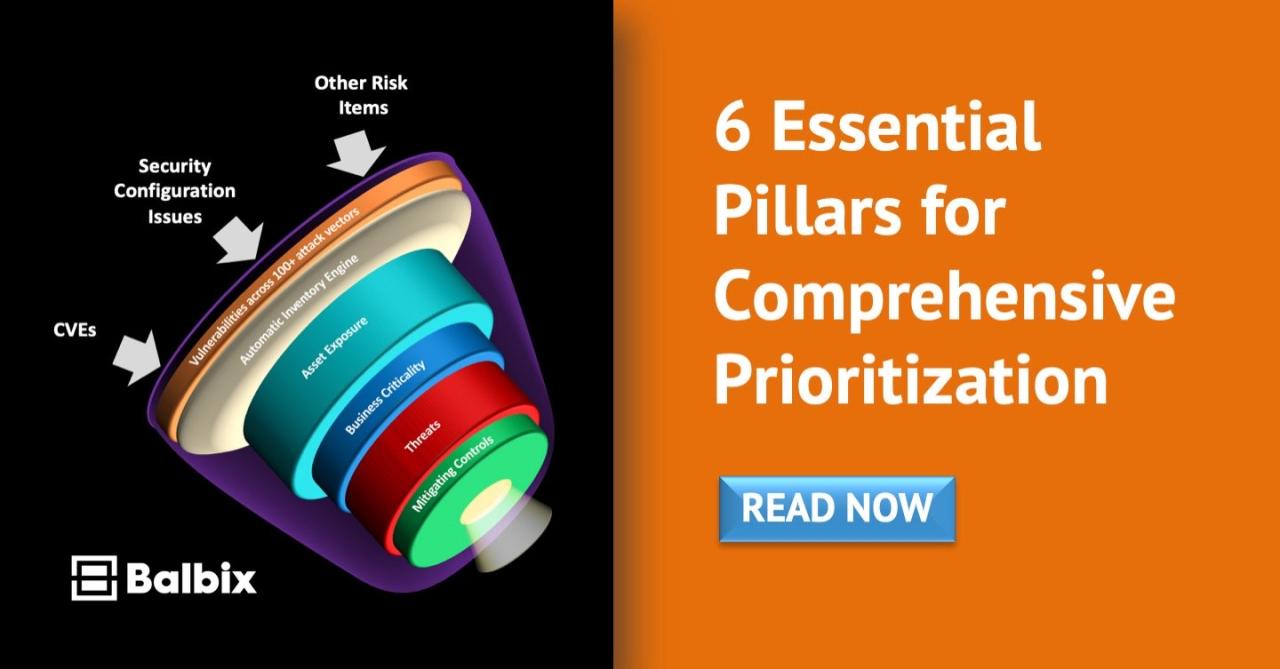
Do you know which of your vulnerabilities are critical, those which can wait a day, vs ones that are just noise? Read this handy guide to get the 6 essential pillars for comprehensive InfoSec prioritization:
The Five Laws of Cybersecurity | Nick Espinosa | TEDxFondduLac
httpv://www.youtube.com/watch?v=_nVq7f26-Uo
Your 5 Year Path: Success in Infosec
httpv://www.youtube.com/watch?v=Uv-AfK7PkxU
Top 20 Security Controls for a More Secure Infrastructure
The best practice guide for an effective infoSec function: iTnews has put together a bit of advice from various controls including ISO 27k and NIST CSF to guide you through what’s needed to build an effective information security management system (ISMS) within your organization.
This comprehensive report is a must-have reference for executives, senior managers and folks interested in the information security management area.
Combine with the ISO 9001:2015 QMS Documentation Toolkit and/or the ISO 14001:2015 EMS Documentation Toolkit to create an ISO 27001- compliant integrated management system (IMS).
With the number of ISO 27001 certifications rising fast in the US, organizations will be looking to implement an ISO 27001-compliant information security management system (ISMS) quickly, before any of their competitors.
However, the hardest part of achieving ISO 27001 certification is providing the documentation for the ISMS. Often – particularly in more complex and larger businesses – the documentation can be up to a thousand pages. Needless to say, this task can be lengthy, stressful and complicated.
IT Governance Publishing’s (ITGP) ISO 27001 toolkits offer this documentation in pre-written templates, along with a selection of other tools to:
Help save you months of work as all the toolkits contain pre-written templates created by industry experts that meet ISO 27001:2013 compliance requirements.
Reduce costs and expenses as you tackle the project alone.
Save the hassle of creating and maintaining the documents yourself.
Accelerate your management system implementation by having all of the tools and resources you need at your disposal.
Ensure nothing is left out of your ISMS documentation.
When an organization’s need help with their ISMS projects, they’re normally at a loss.
The two major challenges they face are creating supporting documentation and performing a risk assessment.
With wide range of fixed-price toolkits, these toolkits can provide you with the official ISO 27000 standards, implementation guidance, documentation templates, and risk assessment software to aid your project.
If you’re starting to implement complex standards like ISO 27001 or ISO 22301, you’re probably looking for a way to make your job easier. Who wouldn’t? After all, reinventing the wheel doesn’t sound like a very interesting job.
So, you start looking for some tool to help you with these information security and business continuity standards, but beware – not every tool will help you: you might end up with a truck wheel that doesn’t fit the car you’re driving.
Types of tools
Let’s start first with what types of tools you’ll find in the market that are made specifically for ISO 27001 and ISO 22301:
a) Automation tools – these tools help you semi-automate part of your processes – e.g., performing the risk assessment, writing the business continuity plans, managing incidents, keeping your documentation, assisting in measurement, etc.
b) Tools for writing documentation – these tools help you develop policies and procedures – usually, they include documentation templates, tutorials for writing documentation, etc.
Pros and cons of automation tools
Automation tools are generally useful for larger companies – for example, using spreadsheets for assessing risks can be a problem if you have, e.g., 100 departments, because when you have to merge those results this becomes very difficult. Or, if you have 50 different recovery plans and you want to change the same detail in each of them, using a tool is probably much easier.
However, applying such automation tools to smaller companies can prove to be very expensive – most of these tools are not priced with smaller companies in mind, and even worse – training employees for using such tools takes too much time. Therefore, for smaller companies, performing risk assessment using Excel or writing business continuity plans in Word is a very quick and affordable solution.
There are some tools for which I personally see no purpose – for example, tools for keeping ISO documentation. For that purpose, larger companies will use their existing document management system (e.g., SharePoint), while smaller companies can upload the documentation to shared folders with defined access rights – it doesn’t have to be any more sophisticated than that.
Can you automate everything?
One important fact needs to be emphasized here: automation tools cannot help you manage your information security or business continuity. For instance, you cannot automate writing your Access control policy – to finalize such a document, you need to coordinate your CISO, IT department and business side of the organization, and only after you reach an agreement can you write this policy. No automation can do that for you.
Yes, you can semi-automate the measurement of success of particular controls, but again a human needs to interpret those results to understand why the control was performing well or poorly – this part of the process cannot be automated, and neither can the decision on which corrective or preventive actions need to be taken as a result of gained insight.
What to watch out for when looking for documentation writing tools
You won’t need tools for writing your policies, procedures, and plans if you already developed your documentation based on a framework that it similar to ISO 27001 – e.g., COBIT, Cybersecurity Framework, or NFPA 1600. Also, if you hired a consultant, then it will be his duty to write all the documents (see also: 5 criteria for choosing an ISO 22301 / ISO 27001 consultant).
In other cases you will find documentation writing tools (i.e., documentation templates) quite useful because they will speed up writing your policies and procedures. The main question here is how to choose the right ones – here are a couple of tips:
Are they appropriate for your company size? If you are a small company and the templates are made for big companies, they will be overkill for you, and vice versa.
Which kind of help do you receive for writing documents? Are there any guidelines, tutorials, support, or anything similar that comes with the templates?
Experience of the authors? It would be best if the author has experience in both consulting and auditing, so that the templates are practical for daily operations, but also acceptable for the certification audit.
So, to conclude: yes – in most cases tools can help you with your ISO 27001 and ISO 22301 implementation. Since there are many tool providers in the market, make sure you perform thorough research before you decide to use one.







 standards, implementation guidance, documentation templates, and risk assessment software to aid your project.