Jan 25 2021

New campaign targeting security researchers

Category: Information Security,Information WarfareDISC @ 6:10 pm

Over the past several months, the Threat Analysis Group has identified an ongoing campaign targeting security researchers working on vulnerability research and development at different companies and organizations. The actors behind this campaign, which we attribute to a government-backed entity based in North Korea, have employed a number of means to target researchers which we will outline below. We hope this post will remind those in the security research community that they are targets to government-backed attackers and should remain vigilant when engaging with individuals they have not previously interacted with.

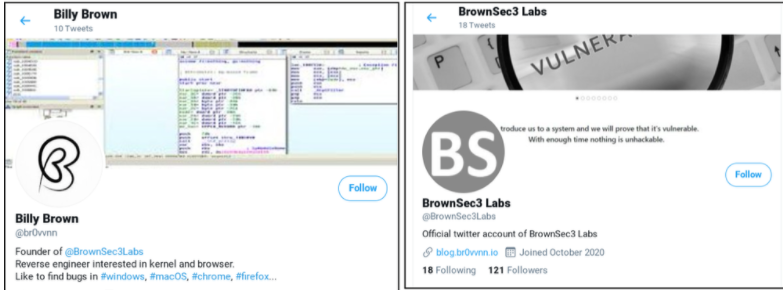
In order to build credibility and connect with security researchers, the actors established a research blog and multiple Twitter profiles to interact with potential targets. They’ve used these Twitter profiles for posting links to their blog, posting videos of their claimed exploits and for amplifying and retweeting posts from other accounts that they control.

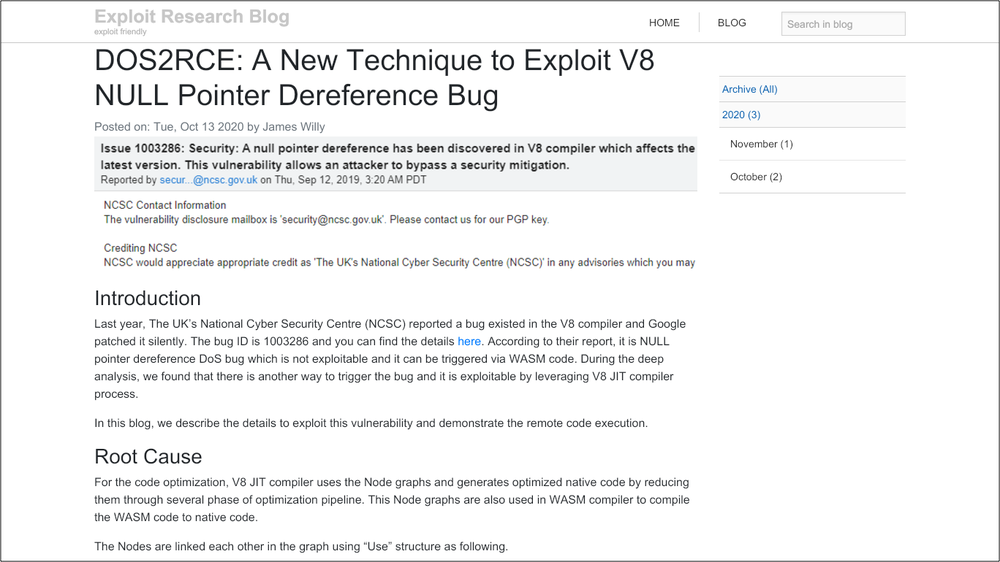
Their blog contains write-ups and analysis of vulnerabilities that have been publicly disclosed, including “guest” posts from unwitting legitimate security researchers, likely in an attempt to build additional credibility with other security researchers.

A screenshot from the actors' blog of an analysis done by the actor about a publicly disclosed vulnerability.
Example of an analysis done by the actor about a publicly disclosed vulnerability.

While we are unable to verify the authenticity or the working status of all of the exploits that they have posted videos of, in at least one case, the actors have faked the success of their claimed working exploit. On Jan 14, 2021, the actors shared via Twitter a YouTube video they uploaded that proclaimed to exploit CVE-2021-1647, a recently patched Windows Defender vulnerability. In the video, they purported to show a successful working exploit that spawns a cmd.exe shell, but a careful review of the video shows the exploit is fake. Multiple comments on YouTube identified that the video was faked and that there was not a working exploit demonstrated. After these comments were made, the actors used a second Twitter account (that they control) to retweet the original post and claim that it was “not a fake video.”

Source: New campaign targeting security researchers


Jan 25 2021

Insider Attack on Home Surveillance Systems

Category: Cyber surveillance,Insider ThreatDISC @ 11:23 am


Jan 25 2021

VisualDoor: SonicWall SSL-VPN Exploit

Category: Information Security,VPNDISC @ 12:28 am

TL;DR: SonicWall “Virtual Office” SSL-VPN Products ship an ancient version of Bash vulnerable to ShellShock, and are therefore vulnerable to unauthenticated remote code execution (as a “nobody” user) via the /cgi-bin/jarrewrite.sh URL.

The exploit is incredibly trivial. We simply spaff a shellshock payload containing a bash /dev/tcp backconnect at it, and we get a shell. Now, the environment on these things is incredibly limited – its stripped down Linux. But we have bash, openssl, and FTP. So you could always download your own toolkit for further exploitation.

Anyway, here is the public exploit. It is incredibly trivial and recycles the telnetlib handler for reverse shells from exploits released by Stephen Seeley. https://github.com/darrenmartyn/visualdoor.

Source: VisualDoor: SonicWall SSL-VPN Exploit


Jan 24 2021

The Prescription Coffee Mug

Category: cyber security,Information SecurityDISC @ 3:13 pm
https://www.facebook.com/DISCInfoSec/posts/4014648401879607


Jan 24 2021

Hacker leaks data of 2.28M users of dating site MeetMindful

Category: Data Breach,HackingDISC @ 12:13 pm


Jan 23 2021

New Attack Could Let Hackers Clone Your Google Titan 2FA Security Keys via The Hacker News

Category: 2FA,HackingDISC @ 11:13 pm
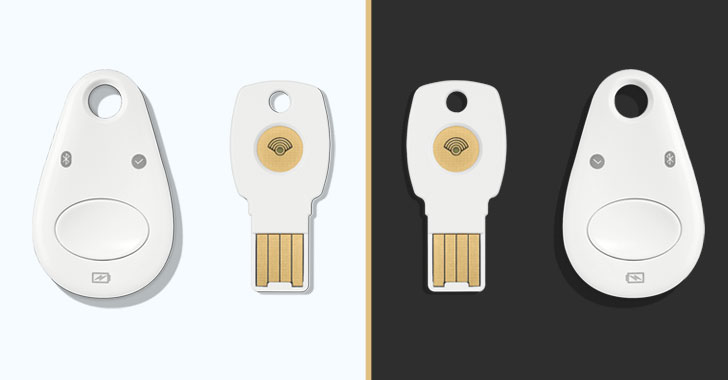
cloning google titan security keys

Hardware security keys—such as those from Google and Yubico—are considered the most secure means to protect accounts from phishing and takeover attacks.

But a new research published on Thursday demonstrates how an adversary in possession of such a two-factor authentication (2FA) device can clone it by exploiting an electromagnetic side-channel in the chip embedded in it.

The vulnerability (tracked as CVE-2021-3011) allows the bad actor to extract the encryption key or the ECDSA private key linked to a victim’s account from a FIDO Universal 2nd Factor (U2F) device like Google Titan Key or YubiKey, thus completely undermining the 2FA protections.

“The adversary can sign in to the victim’s application account without the U2F device, and without the victim noticing,” NinjaLab researchers Victor Lomne and Thomas Roche said in a 60-page analysis.

“In other words, the adversary created a clone of the U2F device for the victim’s application account. This clone will give access to the application account as long as the legitimate user does not revoke its second factor authentication credentials.”

Source: New Attack Could Let Hackers Clone Your Google Titan 2FA Security Keys


Jan 23 2021

Hacker blunder leaves stolen passwords exposed via Google search

Category: Information Security,Password SecurityDISC @ 2:18 pm

Source: Hacker blunder leaves stolen passwords exposed via Google search

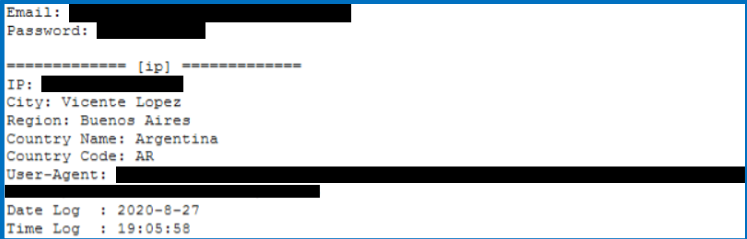
Hackers hitting thousands of organizations worldwide in a massive phishing campaign forgot to protect their loot and let Google the stolen passwords for public searches.

The phishing campaign has been running for more than half a year and uses dozens of domains that host the phishing pages. It received constant updates to make the fraudulent Microsoft Office 365 login requests look more realistic.

Creds in plain sight

Despite relying on simple techniques, the campaign has been successful in bypassing email protection filters and collected at least 1,000 login credentials for corporate Office 365 accounts.

Researchers at cybersecurity companies Check Point and Otorio analyzing this campaign discovered that the hackers exposed the stolen credentials to the public internet.

In a report published today, they explain that the attackers exfiltrated the information to domains they had registered specifically for the task. Their mistake was that they put the data in a publicly visible file that Google indexed.

As a result, Google could show results for queries of a stolen email address or password, as seen in the screenshot above:


Jan 23 2021

SANS Virtual Summits Will Be FREE for the Community in 2021


Jan 22 2021

US administration adds “subliminal” ad to White House website

Category: InfoSec jobsDISC @ 11:44 pm

Well, it turns out that the new 2021 White House website added a job ad, too, presumably hoping to get some publicity and to attract job applicants to the US Digital Service (USDS).

The USDS describes itself as a part of the public service that aims to use “design and technology to deliver better services to the American people”, and its goal is to attract at least some of those technophiles that might otherwise be lured to join the fast-paced, dollar-sign world of commercial cloud-based products and services.

After all, today’s technology business juggernauts are in a position to offer eye-watering starting salaries and the promise of fast-paced, ever-changing coding challenges based on the very latest hardware platforms and programming languages.


Jan 22 2021

Key 2021 Insights: Proactive Security Needed for Ransomware, Phishing

Category: Information Security,Phishing,RansomwareDISC @ 12:03 pm

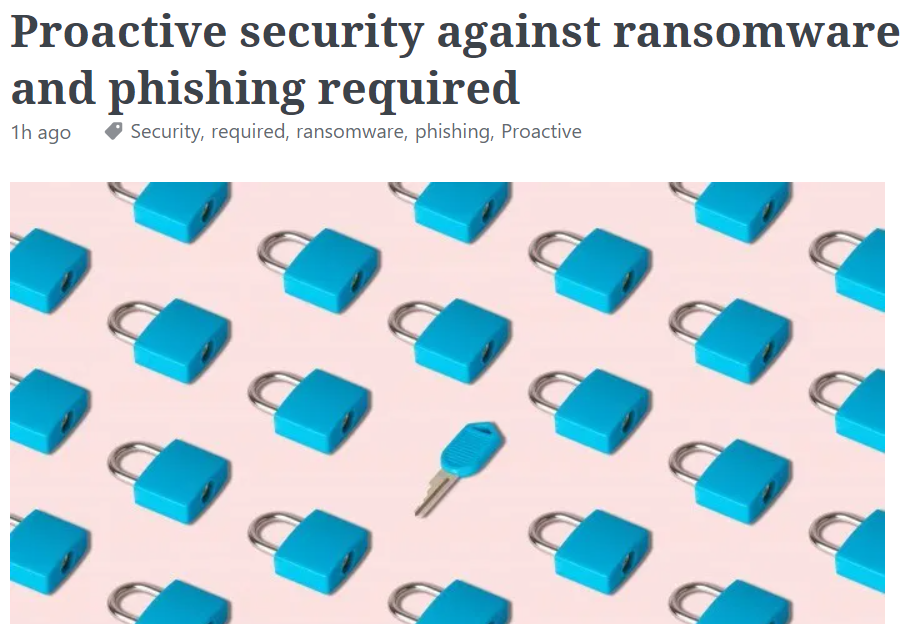
Healthcare leaders will need to shift into a proactive security approach into 2021, if they hope to defend against the onslaught of ransomware and phishing threats.

The ransomware surge during the last few months has already continued into 2021. And though the malware will remain a key trend into this year, healthcare industry stakeholders will need adopt a proactive security approach and secure key entry points, including phishing threats and vulnerable endpoints.

Listen to the full podcast to learn more about Xtelligent Healthcare Media’s predictions for 2021. And don’t forget to subscribe on iTunes, Spotify, or Google Podcasts.

Xtelligent Healthcare Media Editors recently compiled predictions for the healthcare sector in the year ahead on a Healthcare Strategies podcast episode. In the healthcare security space, leaders can expect continued email-based attacks and other schemes that prey on COVID-19 fears.

Source: Proactive Security Needed for Ransomware, Phishing


Jan 22 2021

SVR Attacks on Microsoft 365

Category: Cyber AttackDISC @ 12:27 am


Jan 22 2021

70% of Financial Service Firms Hit by COVID Cyber Attacks

Category: Information SecurityDISC @ 12:23 am

A new report has emerged detailing that 70% of financial service firms have been hit by  COVID-related cyber attacks in the past twelve months that were more damaging due to the unusual circumstances of the COVID-19 virus. 

The numbers come from Keeper Security, who took responses from more than 370 information technology leaders in the UK while compiling a global report into financial service firms being targeted by cyber attacks. 

Authors of the report state that 70% of financial service firms were hit by cyber attacks, with the majority of IT leaders saying that COVID-19 working conditions made the attacks more severe. 


Jan 21 2021

WordPress Security: The Ultimate Guide

Category: Information Security,Web SecurityDISC @ 2:49 pm

WordPress Security: The Ultimate Guide

WordPress security can be intimidating, but it doesn’t hhttps://ithemes.com/wordpress-security-the-ultimate-guide/?ave to be. In this comprehensive guide to WordPress security, we’ve simplified the basics of securing your WordPress website so that any non-technical person can understand and protect their website from hacker attacks.

This guide to WordPress security is broken down into 10 easily digestible sections. Each section will guide you through a specific aspect of WordPress security. By the end of the guide, you will learn the different types of vulnerabilities, the motives of hackers, and how to secure everything from your server to the individual users of your WordPress website.

Source: WordPress Security: The Ultimate Guide


Jan 21 2021

DEF CON 28 Safe Mode IoT Village

Category: HackingDISC @ 11:51 am


Jan 20 2021

Health Insurer Fined $5.1M For 17-Month-Long Data Breach

Category: hipaaDISC @ 11:54 pm

An American health insurer has been fined $5.1M for a potential HIPAA violation after a data breach saw more than 9.3 million customers impacted and their personal health information potentially accessed. 

The health insurer was fined after news of a 17-month data breach came to light, which forced the Excellus Health Plan, Inc. to pay the Office for Civil Rights (OCR) a $5.1 million settlement.

The settlement came after the Department of Health and Human Services identified a series of violations of the Health Insurance Portability and Accountability (HIPAA) Act, which aims to protect the confidentiality and integrity of protected health information (PHI). 


Jan 20 2021

Web application firewalls bypasses collection and testing tools


Jan 20 2021

More Ways To Make Passwords

Category: Password SecurityDISC @ 11:06 pm


Jan 20 2021

Sophisticated Watering Hole Attack

Category: Cyber AttackDISC @ 3:11 pm

Google’s Project Zero has exposed a sophisticated watering-hole attack targeting both Windows and Android:

Some of the exploits were zero-days, meaning they targeted vulnerabilities that at the time were unknown to Google, Microsoft, and most outside researchers (both companies have since patched the security flaws). The hackers delivered the exploits through watering-hole attacks, which compromise sites frequented by the targets of interest and lace the sites with code that installs malware on visitors’ devices. The boobytrapped sites made use of two exploit servers, one for Windows users and the other for users of Android

The use of zero-days and complex infrastructure isn’t in itself a sign of sophistication, but it does show above-average skill by a professional team of hackers. Combined with the robustness of the attack code — ­which chained together multiple exploits in an efficient manner — the campaign demonstrates it was carried out by a “highly sophisticated actor.”


Jan 20 2021

List of DNSpooq vulnerability advisories, patches, and updates

Category: DNS Attacks,Information SecurityDISC @ 11:37 am
DNSpooq

Yesterday, seven Dnsmasq vulnerabilities were disclosed, collectively known as DNSPooq, that attackers can use to launch DNS Cache Poisoning, denial of service, and possibly remote code execution attacks, on affected devices.

Dnsmasq is a widely used open-source Domain Name System (DNS) forwarding application commonly installed on routers, operating systems, access points, and other networking equipment. 

Vendors have started to release information on how customers can protect themselves from DNSPooq. To make it easier to find this information, BleepingComputer will be listing security advisories as they are released. 

The related CVEs from JSOF’s DNSpooq advisory are listed below, along with their descriptions.

NameCVSSDescription
CVE-2020-256818.1Dnsmasq versions before 2.83are susceptible to a heap-based buffer overflow in sort_rrset() when DNSSEC is used. This can allow a remote attacker to write arbitrary data into target device’s memory that can lead to memory corruption and other unexpected behaviors on the target device.
CVE-2020-256828.1Dnsmasq versions before 2.83 are susceptible to buffer overflow in extract_name() function due to missing length check, when DNSSEC is enabled. This can allow a remote attacker to cause memory corruption on the target device.
CVE-2020-256835.9Dnsmasq versions before 2.83 are susceptible to a heap-based buffer overflow when DNSSEC is enabled. A remote attacker, who can create valid DNS replies, could use this flaw to cause an overflow in a heap-allocated memory. This flaw is caused by the lack of length checks in rfc1035.c:extract_name(), which could be abused to make the code execute memcpy() with a negative size in get_rdata() and cause a crash in dnsmasq, resulting in a Denial of Service.
CVE-2020-256875.9Dnsmasq versions before 2.83are vulnerable to a heap-based buffer overflow with large memcpy in sort_rrset() when DNSSEC is enabled. A remote attacker, who can create valid DNS replies, could use this flaw to cause an overflow in a heap-allocated memory. This flaw is caused by the lack of length checks in rfc1035.c:extract_name(), which could be abused to make the code execute memcpy() with a negative size in sort_rrset() and cause a crash in dnsmasq, resulting in a Denial of Service.
CVE-2020-256844A lack of proper address/port check implemented in dnsmasq versions
CVE-2020-256854A lack of query resource name (RRNAME) checks implemented in dnsmasq’s versions before 2.83 reply_query function allows remote attackers to spoof DNS traffic that can lead to DNS cache poisoning.
CVE-2020-256864Multiple DNS query requests for the same resource name (RRNAME) by dnsmasq versions before 2.83 allows for remote attackers to spoof DNS traffic, using a birthday attack (RFC 5452), that can lead to DNS cache poisoning.

BleepingComputer suggests checking this page throughout the coming days to see if new information is available for devices you may be using.

Source: List of DNSpooq vulnerability advisories, patches, and updates


Jan 19 2021

FreakOut botnet target 3 recent flaws to compromise Linux devices

Category: BotnetDISC @ 10:26 am

The botnet appeared in the threat landscape in November 2020, in some cases the attacks leveraged recently disclosed vulnerabilities to inject OS commands. The attacks aimed at compromising the tarted systems to create an IRC botnet, which can later be used to conduct several malicious activities, including DDoS attacks and crypto-mining campaign.

The attacks observed by Check Point aimed at devices that run one of the following products:

  • TerraMaster TOS(TerraMaster Operating System) – the operating system used for managing TerraMaster NAS (Network Attached Storage) servers
  • Zend Framework –  a collection of packages used in building web application and services using PHP, with more than 570 million installations
  • Liferay Portal – a free, open-source enterprise portal. It is a web application platform written in Java that offers features relevant for the development of portals and websites

Once infected a device, it will be later used as an attacking platform.


« Previous PageNext Page »