InfoSec Compliance & AI Governance For over 20 years, DISC InfoSec has been a trusted voice for cybersecurity professionals—sharing practical insights, compliance strategies, and AI governance guidance to help you stay informed, connected, and secure in a rapidly evolving landscape.
Fortunately, there is an alternative way for procuring security expertise: by retaining the services of managed security service providers (MSSPs) and managed detection and response (MDR) providers.
MSSPs usually assist organizations’ IT departments in managing the IT infrastructure and keeping it secure by managing security equipment/systems, monitoring security logs, supervising patch management, and similar preventative security measures. MDR providers concentrate on monitoring network traffic and data, providing threat hunting/detection services and responding to discovered threats – capabilities that are difficult for most SMBs to cultivate in-house due to resource limitations.
For example, when the existence of the Log4Shell vulnerability and a PoC for it was revealed, Milton Security, a California-based MDR provider, has been inundated with concerns and requests from customers, prospects, and the public asking to help make sense of the situation, provide credible and timely updates, and monitor networks for any suspicious activity that might be related to Log4j exploitation.
But they have also been getting a lot of requests for their application security testing, penetration testing, incident response, and even their vCISO service.
Winning the perpetual fight against crime by building a modern Security Operations Center (SOC)
As cybercrime sophistication reaches new heights, what can organizations do to tackle these new threats?
Phishing, identity theft, and ransomware are not new types of cyberattacks. What is new is bad actors increasingly using automation and other advanced technologies to more quickly identify and exploit vulnerabilities in organizations’ defenses to access or steal sensitive data without being detected.
One commonality among most attackers is their desire to achieve the most lucrative outcome. They view themselves as a business, and like any business, they want to increase their ROI. Using automated bots is an easy and inexpensive way to identify vulnerable targets and launch their attacks.
Therefore, organizations must build and enforce barriers that the criminal determines are too complex and expensive to overcome. One way to do so is by conducting extensive vetting during the new customer onboarding process that challenges customers to verify their identities. A rigorous approach to onboarding not only ensures the person creating a new user account is who they say they are and builds trust, but it will also compel a bad actor to give up and move on to their next target.
There is a serious user problem out there, and whether the user makes a mistake or is intentionally malicious, it can impact the entire system and the organization. But is it really a user problem?
In their session at (ISC)2 Security Congress, Ira Winkler, CISO with Skyline Technology Solutions and Tracy Celaya-Brown, president, Go Consulting International, said the user problem is really a cybersecurity people problem.
“People can’t do things that we don’t give them permission to do,” Winkler said. As long as a user has the ability to do certain tasks, click on links or see a spearphishing email show up in their inbox, they will make mistakes that can take down the network. The problem is not that users cause a loss, but that they can potentially initiate a loss, according to Winkler and Celaya-Brown.
A Failure of Leadership
One mistake shouldn’t take down an entire network. One person shouldn’t have the ability to cause universal panic because of the access permissions they are given. But it happens all the time, and the reason is failure of cybersecurity leadership. Remember the Twitter hack a few years ago where some of the most famous names on the social media site were victims of account takeovers? Winkler pointed out that social engineering techniques coupled with the fact that about one-fifth of Twitter’s employees had permissions to change passwords led to that massive cybersecurity failure. Or, in other words, the human problem was enabled by cybersecurity people and leadership who fell short in their responsibilities. Of course, you want users that will behave the way cybersecurity leadership wants them to, but the cybersecurity team needs to take a closer look at their actions, too.
“We have to take a closer look at why problems occur,” said Winkler. “The problem isn’t a user clicking on a link. The problem occurred when the user received the message.”
A global survey of 5,123 active IT, security and privacy professionals conducted by YouGov on behalf of Cisco found well over a third of organizations (39%) are relying on what they consider to be outdated security technologies.
Overall, the survey found organizations that upgrade IT and security technologies quarterly are about 30% more likely to excel at keeping up with the business than those that upgrade only every few years. The survey also suggested that security operations teams that integrate people, processes and platforms see a 3.5X performance boost over rivals. Automation also more than doubles the performance of less experienced people, the survey suggested.
Wendy Nather, head of advisory chief information security officers (CISOs) for Cisco Duo, a multifactor authentication platform, said the survey makes it clear there is a clear benefit to relying on vendors such as Cisco or a managed service provider (MSP) that automates the update process. However, while outsourced detection and response teams are perceived to be superior, an internal security team is still faster in terms of mean-time-to-respond (MTTR) to a cybersecurity event (six days versus 13 days).
Not surprisingly, the survey also found organizations with integrated technologies are seven times more likely to achieve high levels of process automation. Organizations that claim to have mature implementations of zero-trust or secure access service edge (SASE) architectures are 35% more likely to report strong security operations. In addition, organizations that leverage threat intelligence achieve 50% faster mean-time-to-repair when recovering from a cybersecurity attack.
Finally, the survey found the probability of maintaining business resilience doesn’t improve until business continuity and disaster recovery capabilities cover at least 80% of critical systems and that organizations that regularly test their business continuity and disaster recovery capabilities in multiple ways are 2.5 times are more likely to maintain business resiliency. Organizations that make chaos engineering a standard practice are also twice as likely to achieve high levels of resiliency, according to the survey.
Nather said cybersecurity teams should also invest more in observability and threat intelligence tools. Many cybersecurity teams are overly confident in the level of security they have implemented only to discover that, once provided with access to metrics, that the amount of malware in their environment is much higher than they thought. Until that moment arrives, many organizations are suffering from cybersecurity ‘ignorance is bliss,’ she added.
Regardless of the current level of confidence in cybersecurity, Nater noted that the shift to remote work coupled with investments in digital business transformation initiatives will drive more organizations to revisit their cybersecurity strategies in 2022. Organizations will also need to reconsider their approach to cloud security given the number of misconfigurations that are made by DevOps teams using infrastructure-as-code (IaC) tools to provision infrastructure with little appreciation for DevSecOps best practices.
Ultimately, the issue organizations must come to terms with is that trying to protect legacy infrastructure is much harder than relying on either a cloud service or an as-a-service platform that is continuously updated by someone else. Unfortunately, not every organization can afford to rip and replace all their legacy infrastructure overnight.
Build, automate, and manage your infrastructure on the most popular cloud platform – AWS
2022 is going to be a year of building greater resiliency and integrating this into all aspects of business operations. This will require organizations of all levels to review how they are responding to a larger scale of sophisticated threats. To build on the efforts of 2021, CISOs need to address how they can implement innovation into their business without making themselves more vulnerable to damaging attacks.
This is sometimes due to budgets, as many organizations have not placed a high enough priority on cybersecurity, despite the growing number of high-profile attacks. But even those who are paying high salaries are finding that generous compensation is still not enough to hire and retain talent in this field. While 33% of CISOs surveyed by ISSA said that salary was the reason they left one organization for another, that doesn’t explain most departures or job switches.
Meanwhile, despite high salaries, many currently employed cybersecurity professionals are feeling overwhelmed and under intense pressure, both because they are often short on manpower and because the stakes of their jobs are even higher now with the increased number and severity of attacks. The ISSA survey showed that 62% of cybersecurity employees face a heavier workload due to their organizations not being able to hire enough workers, and 38% say they feel burnt out.
If money isn’t enough, what else can companies do to attract and keep cybersecurity talent?
Write job descriptions that show off the skills employees will gain, not just what skills they need to apply. Cybersecurity is a rapidly growing and dynamic field offering many opportunities. But the field, by its very nature, requires that the best professionals are constantly learning on the job to keep up with the latest technologies and the latest types of threats and attacks. By letting candidates know what types of things they will learn on the job and what experiences they will gain, a company can set itself apart and offer the added value of professional growth, giving it an advantage in the recruitment process.
Look beyond academic education. Academic degrees in cybersecurity and related fields are no doubt helpful, but they are not the only way to become qualified for a job in the sector. If someone does not have a degree, it does not mean that they will not be an excellent candidate, especially if they have the relevant experience. This includes those coming from military or government backgrounds. In fact, with the rise in state-backed cyberattacks, any level of cybersecurity experience in government or military organizations is a considerable advantage and may be more valuable than those with academic degrees or years of corporate experience. A number of new programs, including one backed by Microsoft, also promise to offer training without necessarily granting degrees; these are also worthwhile credentials for candidates.
Teach and mentor on the job. Organizations should realize that current employees in their IT and related departments may be able, with the right training, to learn cybersecurity skills. This can be a way to build up a cybersecurity team internally. Those receiving training in-house should also be assigned mentors who can help them along the way. Building a team internally gives employees opportunities to grow, which can also lead to increased job satisfaction and retention.
Integrate cybersecurity into the overall business strategy, and let recruits know this. Companies should involve the cybersecurity team in all steps of their business, from product development to marketing, and not just relegate them to being on call for incident responses, or when something goes wrong.
While there are no guarantees that a business can detect a supply chain attack before it happens, there are 10 best practices that a business can consider to help mitigate risk and validate the security of its supply chain.
1. Evaluate the impact each supplier can have on your business if the supplier’s IT infrastructure is compromised. While a full-risk assessment is preferred, smaller organizations might not have the resources to conduct one. At a minimum, however, they should analyze the worst-case scenarios and ask questions such as:
How would a ransomware attack on this supplier’s systems impact my business?
How would my business be affected if the supplier’s source code was compromised by a Trojan virus?
If the supplier’s databases are compromised and data is stolen, how would that impact my business?
2. Evaluate internal IT resources and competencies for each supplier. Do they have a dedicated cybersecurity team led by a security manager or a CISO? It is important to identify the supplier’s security leadership because that is who can answer your questions. If the team is non-existent or poorly staffed with no real leadership, you may want to reconsider engaging with this supplier.
3. Meet with the supplier’s security manager or CISO to discover how they protect their systems and data. This can be a short meeting, phone call, or even an email conversation, depending on the risks identified in step 1.
4. Request evidence to verify what the supplier is claiming. Penetration reports are a useful way to do this. Be sure the scope of the test is appropriate and, whenever possible, request a report on two consecutive tests to verify that the supplier is acting on its findings.
5. If your supplier is a software provider, ask for an independent source code review. In some cases, the supplier may require an NDA to share the full report or may choose not to share it. When this happens, ask for an executive summary.
6. If your supplier is a cloud provider, you can scan the supplier’s networks, perform a Shodan search, or ask the supplier for a report of their own scans. If you plan to scan yourself, obtain a permit from the supplier and ask them to segregate customer addresses from their own so you are not scanning something irrelevant.
7. If the supplier is a software or cloud provider, find out if the supplier is running a bug bounty reward program. These programs help an organization find and fix vulnerabilities before attackers have a chance to exploit them.
8. Ask your suppliers how they are prioritizing their risks. For example, the Common Vulnerability Scoring System (CVSS) is a free and open industry standard for assessing the severity of computer system security vulnerabilities and assign severity scores so the supplier can prioritize risk responses.
9. Request the supplier’s patching reports. The fact that they have a report demonstrates their commitment to security and managing vulnerabilities. If possible, try to get a report that is produced by an independent entity.
10. Steps 1 through 9 should be repeated annually, depending on the risk to and impact on your business. For a low-impact supplier, this may be performed less often. For a supplier that is mission-critical to the business’s success and is high risk, the business may want to develop a permanent evaluation process. However, large SaaS and IaaS providers may not be willing to participate in ongoing evaluations.
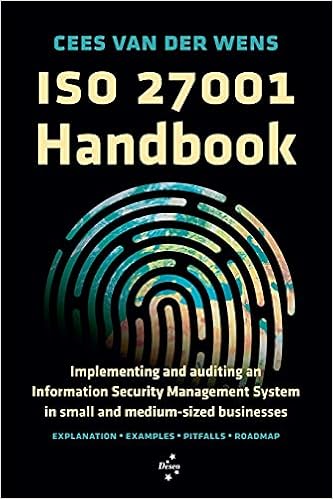
If you want to understand ISO 27001, this handbook is all you need. It not only explains in a clear way what to do, but also the reasons why.
This book helps you to bring the information security of your organization to the right level by using the ISO/IEC 27001 standard.
An organization often provides services or products for years before the decision is taken to obtain an ISO/IEC 27001 certificate. Usually, a lot has already been done in the field of information security, but after reading the requirements of the standard, it seems that something more needs to be done: an ‘information security management system’ must be set up. A what?
This handbook is intended to help small and medium-sized businesses establish, implement, maintain and continually improve an information security management system in accordance with the requirements of the international standard ISO/IEC 27001. At the same time, this handbook is also intended to provide information to auditors who must investigate whether an information security management system meets all requirements and has been effectively implemented.
This handbook assumes that you ultimately want your information security management system to be certified by an accredited certification body. The moment you invite a certification body to perform a certification audit, you must be ready to demonstrate that your management system meets all the requirements of the Standard. In this book, you will find detailed explanations, more than a hundred examples, and sixty-one common pitfalls. It also contains information about the rules of the game and the course of a certification audit.
As if disruption to the global supply chain post-pandemic isn’t bad enough, cybercriminals are selling access, sometimes in the form of credentials, to shipping and logistics companies in underground markets.
That’s a worrisome, if not unexpected, development; a cybersecurity incident at a company that operates air, ground and maritime cargo transport on multiple continents and moves billions of dollars worth of goods could prove devastating to the global economy.
“At the moment, the global supply chain is extremely fragile. This makes the industry a top target from cybercriminals who will look to take advantage of today’s current situation,” said Joseph Carson, chief security scientist and advisory CISO at ThycoticCentrify. “The global chip shortage is resulting in major delays, with some stock unavailable or backlogged for more than six months, making it a prime attraction for cybercriminals to attempt to expose and monetize this via various scams. This includes redirecting shipments by changing logistic details or causing disruptions via ransomware.”
The actors, ranging from newcomers to prolific network access brokers, are selling credentials they obtained by leveraging known vulnerabilities in remote desktop protocol (RDP), VPN, Citrix and SonicWall and other remote access solutions, according to the Intel 471 researchers tracking them.
“No business or IT security team would willingly allow bad actors to exploit known vulnerabilities in remote access technologies, but this is exactly what is happening,” said Yaniv Bar-Dayan, CEO and co-founder of Vulcan Cyber, who believes much of the problem is a result of poor cybersecurity hygiene.
In one instance last August, an actor that has worked with groups deploying Conti ransomware said they had accessed “corporate networks belonging to a U.S.-based transportation management and trucking software supplier and a U.S.-based commodity transportation services company,” the researchers wrote in a blog post. “The actor gave the group access to an undisclosed botnet powered by malware that included a virtual network computing (VNC) function.” The group then used the botnet “to download and execute a Cobalt Strike beacon on infected machines, so group members in charge of breaching computer networks received access directly via a Cobalt Strike beacon session,” they said.
When company leaders and IT staff begin looking at their options around improving their security and discover hundreds of possible solutions, they can become overwhelmed. However, the best thing they can do is just start somewhere. IT and security specialists can get started by simply identifying the most critical risk areas in their business. Once they’ve taken that crucial first step, they can build the next steps around that risk assessment.
Cybersecurity is an ongoing strategic project. The initial goal shouldn’t be perfection. Instead, the goal can simply be to be better than yesterday.
Just start with a risk assessment
IT and security specialists can begin by pinpointing their organizations’ most critical risk areas and then taking the steps to secure them. IT specialists should conduct a full data and asset inventory and assess where the greatest risk lies.
Security professionals work hard to plan secure IT environments for organizations, but the developers who are tasked with implementing and carrying these plans and procedures are often left out of security planning processes, creating a fractured relationship between development and security.
This was the conclusion from a VMware and Forrester study of 1,475 IT and security managers, including CIOs and CISOs and managers with responsibility for security strategy and decision-making.
The report found security is still perceived as a barrier in organizations, with 52% of developer respondents saying they believed that security policies are stifling their ability to drive innovation.
Only one in five (22%) developers surveyed said they strongly agree that they understand which security policies they are expected to comply with and more than a quarter (27%) of the developers surveyed are not involved at all in security policy decisions, despite many of these decisions greatly impacting their roles.
The research indicated that security needs a perception shift and should be more deeply embedded across people, processes and technologies.
This means involving developers in security planning earlier and more often; learning to speak the language of the development team rather than asking development to speak security, sharing KPIs and increasing communication to improve relationships and automating security to improve scalability, the report recommended.
“Regardless of whether if it’s customer-facing functionality or a business logic concern, every line of code developed should prioritize security as a design feature,” he said. “Once security is taken as seriously as other drivers for DevOps adoption, then a fully holistic integration can be achieved.”
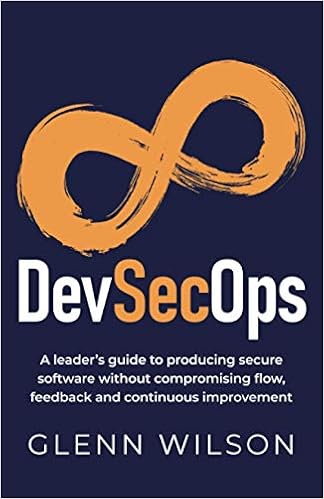
#DevSecOps: A leader’s guide to producing secure software without compromising flow, feedback and continuous improvement
At their core, boards approve the strategic direction of an organization as well as how the organization allocates resources and mitigates risk. Security leaders have to present metrics that align with business objectives to make an impact at the board level. Here’s why many security metrics often fall short of this goal:
Metrics such as the number of daily phishing alerts don’t provide context—that is, they don’t inform CISOs if the numbers are good news or bad news. If metrics don’t point to next steps such as changing processes, better configuration of products or identifying opportunities for automation, the path to action is unclear.
Metrics often illustrate how tools are being used, not the results they yield and what those actually mean. Metrics based on tools are considered the low-hanging fruit of the security world—they’re easily available, but they don’t help solve problems.
Often, organizations don’t address people, processes and technology—three key pillars necessary to construct a big-picture view of how a company’s security model is performing.
While these are metrics to avoid, there’s are different metrics that matter to leadership and are understandable to many more stakeholders—not just the security team. These metrics focus on the effectiveness of resources being deployed (i.e. the security program tools and people) as well as ensuring you have the proper visibility to mitigate risk.
The cloud broadens an organization’s attack surface to the point that CISOs must guard data across multiple clouds, tools, and on-premises locations. This further complicates their main objective of minimizing the risk of unauthorized data access and makes their job of ensuring information assets and technologies are adequately protected an arduous task.
Even worse, traditional security and governance models are ineffective for cloud architecture, partly because each cloud vendor has unique mechanisms for accessing data, which increases the chance of administrators making costly mistakes.
Conventional, centralized, or dictated approaches secure data by routing requests, access, and policies through IT – which limits the speed that a user could leverage the information. The array of clouds and cloud resources requires a more fluid approach to secure access.
Decentralized methods don’t work either, because business units have too much freedom in implementing policies about how data is used and with what tools. This creates silos and conflicts across business units and platforms, as cloud architectures need more uniformity across settings, tools, and departments.
The delegated governance model is becoming the more appropriate style, as it is ideal for streamlining multi-cloud security by combining the best of the above methods. It leverages IT’s uniform, top down policies (customized by line of business data stewards) and is based on IT’s provisioning of a secure platform for the business to access their tools of choice. The platform then distributes these central policies—configured by data stewards—into any repository or tool across clouds and on-premises for zero trust security.
Further, a recent Sophos survey found that the average post-attack remediation costs, including lost business, grew to nearly $2 million per incident in 2021, about 10 times the size of the ransom payment itself.
CISOs and hands-on security professionals are implementing several tactics to defend their organization, and these include proactive threat hunting and technical defenses like multi-factor authentication.
While these practices are helpful, they are focused on preventing attacks from happening in the first place while the harsh reality is that it’s no longer a question of if hackers are going to get in, but when. With so much at stake, why are data recovery and restoration often put on the back burner of the security conversationwhen it could be the most valuable tool in the security arsenal?
Penetration testing has been one of the industries that are relatively slow adopters of automation. As security firms started automating many parts of the cybersecurity process including scanning and threat intelligence updates, security testing for some time was still mostly about traditional methods.
“In the past few years, the use of automation in many spheres of cybersecurity has increased dramatically, but penetration testing has remained stubbornly immune to it,” as noted CISO Alex Haynes explains in an article exploring the potential of AI replacing humans in this field.
This is perfectly understandable, considering that penetration testing needs to be thorough and supervised by experts. Many of its parts are repetitive, but they require the scrutiny of human cybersecurity professionals to be carried out effectively. AI and machine learning technology has yet to reach a level advanced enough to competently handle the complexities of security testing.
However, the past years have produced excellent examples of solutions that take advantage of automation. These pen-testing platforms employ automation in specific areas that make excellent sense. These existing solutions provide convincing evidence of the benefits of automation in this field of cybersecurity.
Consumers seem somehow unable or unwilling to protect themselves. But our research reveals an interesting knock-on effect from this: consumers welcome organizations who take the security initiative – and actively move their business to them.
Good security is good for business
This situation is a huge opportunity for organizations to make security a differentiator. Our research reveals that consumers value companies they perceive as more secure, with 64% saying they would recommend a large organization that they think makes a big effort to keep their data secure. A business with clearly visible cybersecurity will reassure consumers and create confidence in its digital products and services, carving itself a competitive advantage.
The fundamentals of a formal, effective application security plan should start with business objectives, tools, processes and most of all, data, with the primary driver for securing applications focused on protecting data.
While it is important to surgically address the insecurities in a mission-critical application, it is equally important to continuously upskill the development and security teams, and create a culture where security is not looked at simply a ‘check-the-box’ item.
According to Setu Kulkarni, vice president of strategy at WhiteHat Security, the first step is to identify the right inflection points for injecting application security.
“CISOs need to recognize that no SDLC is built the same and no application is at the same level of maturity within its life cycle,” he said. “We have learned that testing applications continuously in production is critical to identify the real, exploitable vulnerabilities that create the maximum risk of being breached in production.”
Kulkarni noted one way to (almost always) ensure that security does not become an afterthought is to “top & tail” – in other words, make sure that your team gets a voice when the exit criteria is being defined during the requirements phase, and make sure the team is testing in pre-production and production.
“Everything in between is really a negotiation based on the maturity of the SDLC and the application itself. The most consequential best practice is to ensure that the Dev, Sec and Ops teams get accurate and actionable insight from the AppSec tests that are executed,” he said. “After all, the only way to eventually have security operate at the speed of DevOps is through some level of automation, and the efficacy of automation is directly proportional to the accuracy of the data used to drive the automation.”
Doug Dooley, COO of Data Theorem, pointed out that the business driver for AppSec is about privacy, trust and reputation that is directly tied to the brand of those who build and publish the applications.
He noted traditional AppSec testing focused on static and dynamic application security testing, including static application security testing (SAST) and dynamic application security training (DAST).
“However, with a more modern application stack, AppSec programs are starting to factor in third-party risks introduced by open source and software development kits, covered by software composition analysis,” Dooley explained.
Further, cloud-native applications make infrastructure services just another software extension of the application buildout, so many AppSec programs increasingly add cloud security tools, such as cloud security posture management (CSPM).
Provides a process and roadmap for any company to develop its unified Cybersecurity and Cyber Resiliency strategies. It demonstrates a methodology for companies to combine their disassociated efforts into one corporate plan with buy-in from senior management that will efficiently utilize resources, target high risk threats, and evaluate risk assessment methodologies and the efficacy of resultant risk mitigations. The book discusses all the steps required from conception of the plan from preplanning (mission/vision, principles, strategic objectives, new initiatives derivation), project management directives, cyber threat and vulnerability analysis, cyber risk and controls assessment to reporting and measurement techniques for plan success and overall strategic plan performance. In addition, a methodology is presented to aid in new initiative selection for the following year by identifying all relevant inputs.
“This is the tour de force on designing, implementing and maintaining a modern cyber security and resiliency program. This book is a necessity for all information security and resiliency professionals.” – Howard Taylor, CISO of Radware
OUTLINE
This book lays out a systematic process for developing corporate strategy in the area of cyber (meaning IT) security and resilience.
In its 10th annual Risk Barometer, Allianz found that cyber incidents ranked third in a list of the most important global business risks for the upcoming year, coming in second behind risks stemming from the pandemic itself. We can expect cyber incidents to increase in frequency and sophistication as cyber criminals continue to leverage the various security lapses that accompany remote workforces.
However, something that has changed recently is how business leaders and boards of directors are viewing cyber risk. While previously seen as an issue solely for security and technology leaders to manage, executives are now pressuring security departments to financially quantify cyber risks facing their organizations.
In fact, a recent survey of 100 senior security professionals found that 70% of respondents have received pressure to produce cyber risk quantification for their business. Further, half of the respondents reported they have a lack of confidence in their ability to communicate and report the financial impacts of cyber risks, with a quarter saying they do not have a cyber risk quantification technology deployed at their company.
Why are executives pressuring CISOs to start financially quantifying cyber risk for their business? This process allows CISOs to identify and rank risk scenarios that are most critical to their enterprise, based on factors such as which attacks would have the biggest financial impact, and how equipped the company is to defend itself against any given attack.
Automated risk quantification makes this process even easier, removing the guesswork out of these decisions and streamlining the process of getting to actionable information. The potential for human error and subjectivity are removed completely from the equation.
Previously, security leaders have relied on theoretical models of risk like the Common Vulnerability Scoring System (CVSS). Even with this system, it can be difficult to prioritize the vulnerabilities that rank highest in terms of severity. This is even more challenging for leaders across the enterprise who may be unfamiliar with this system. Cyber risk quantification provides security leaders with a way to communicate the most pressing cyber threats facing a company that do not rely on a scoring system that is incomprehensible to anyone outside of the security department.
By assigning a dollar value to potential cyber incidents, business leaders have better visibility into the most pressing – and costly – threats facing the enterprise. With this information, the business and security teams can align their efforts and prioritize the largest risks, rather than dedicating resources to lower priority risks.
Teams can focus their efforts on ensuring the business has adequate controls and processes in place to defend against the costlier risks and make additional investments accordingly. It can also make it easier for leaders and boards to justify spending more time or money to proactively defend against certain risks.
For CISOs, cyber risk quantification also provides an easier way to communicate the value of their work to leadership. Security leaders can calculate the return on investment of their tools and teams in the context of risk reduction for the enterprise. This gives leaders better visibility into the risks facing their organizations in terms that are understandable and actionable. Conversely, cyber risk quantification can help to identify any issues with an organization’s existing cybersecurity program and measure improvement over time.
Overall, shifting to this type of risk-led approach for cybersecurity will result in data-driven and actionable insights that will allow leaders across all business departments to understand and act on the most critical cyber risks facing their enterprise.
We know that attacks are going to continue, whether they’re state-sponsored or cyber criminals, and it is critical for an enterprise to have a comprehensive view into your risk landscape. Now is the time for security leaders to adopt cyber risk quantification and more easily demonstrate how cybersecurity organizations are protecting their business operations from disruption and catastrophic harm.













![The Smartest Person in the Room: The Root Cause and New Solution for Cybersecurity by [Christian Espinosa]](https://m.media-amazon.com/images/I/41KIWmjt6sL.jpg)