Jun 22 2009

Access to computers on sale

Category: CybercrimeDISC @ 3:09 pm

Cybercrime

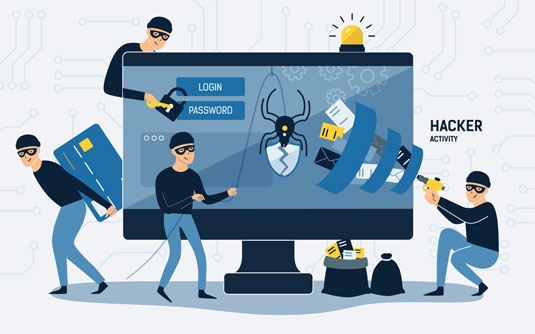
According to SF chronicle article by Deborah Gage (June 17, 2009, c1) a troublesome online network for buying and selling access to infected computers has been discovered by security researchers. The name of the group is GoldenCashWorld which sell access to online infected computers such as web server, mail server, database server etc. Infected computers are utilized to send spam, SQL injections, XSS attacks, buffer overflow attacks and spread viruses and worms.

According to the article this underground network already have access to more than 100,000 websites and 40% of these compromised computers reside in the United States. This is a growing threat to individuals and business assets in United States which should be taken seriously by National Cyber security Divisions.
GoldenCashWorld is a global underground ring which requires an international law to crack this nut.

Online Secure Remote Backup solution
Online crime ring detected
Guide to Computer Forensics and Investigations

Cyber Crime Growing Global Threat
httpv://www.youtube.com/watch?v=ZHmFiueQm5A


Reblog this post [with Zemanta]

Tags: buffer overflow, cyber crime, GoldenCashWorld, NCD, online infected computer, San Francisco Chronicle, Spam, SQL injection, xss


Jun 17 2009

Credit card authorization process weakness

Category: Information Security,pci dssDISC @ 3:09 pm

A diagram showing the front side of a typical ...
Image via Wikipedia

Credit Repair Kit For Dummies (For Dummies (Business & Personal Finance))

Credit card authorization sequence:

1) Creditholder swipes card at merchant. A request is sent to merchants bank
2) Merchants bank “asks” processor to determine the cardholder bank
3) Processing network finds cardholders bank and request approval for purchase
4) Cardholders bank approves purchase and generates a approval code
5) Processor sends an approval code merchants bank
6) Merchants bank sends approval code to merchant
7) Purchase is complete and cardholder receives a receipt

“Every time you swipe your credit card and wait for the transaction to be approved, sensitive data including your name and account number are ferried from store to bank through computer networks, each step a potential opening for hackers.”

Weak security enables credit card hacks

Credit Card Fraud Made Easy
httpv://www.youtube.com/watch?v=m5UE5fXRyKs


Reblog this post [with Zemanta]

Tags: Credit card, credit card privacy, credit card secure, credit card security, credit card theft, secured card, visa card


Jun 10 2009

How ARRA and HITECH provisions affect HIPAA compliance

Category: hipaaDISC @ 4:02 pm
HIPAA Compliant Seal

Image by Kestelnon via Flickr

HIPAA Plain and Simple

How ARRA and HITECH provisions will affect HIPAA compliance. We will highlight the changes to HIPAA due to these new provisions and discuss a possible solution, how to comply with these new HIPAA security and privacy requirements. American Recovery and Reinvestment Act of 2009 (ARRA) was signed into a law on February 17, 2009. The Health Information Technology for Economic and Clinical Health Act (HITECH) provisions of ARRA include important changes in Health Insurance Portability & Accountability Act (HIPAA).

2/17/210 applies to business associate – Covered Entity (CE) can apply the HIPAA provisions to Business Associates (BA) through business associate agreement. The HIPAA Administrative Simplification Security Rule “shall apply to a business associate of a covered entity in the same manner that such sections apply to the covered entity. With the change in the HITECH privacy provisions of ARRA, the business associate now has responsibility and liability directly for a breach. CE should revise their business associate contracts to reflect the changes before the deadline.

Civil Action & Penalties – State Attorney General can prosecute neglect and individual can receive monetary compensation. HIPAA now have teeth with monetary, civil and criminal prosecution.

Breach Notification – Notification to individual, HHS and media – Notification become more formal if the affected residents are more than 500. Use appropriate public media for cases involving more than 500 individuals. A breach requires notification, which is activated when there is an incident of “unsecured protected health information”.

Accounting for disclosure – CE is accountable for its BA disclosure of Protected Health Information (PHI)

Sale of Protected health Information – CE and BA cannot receive payment in exchange of PHI without an individual authorization. CE and BA are required to tell patients about disclosure of PHI for payment, treatment and administrative operation.

HIPAA compliance and how to manage your risks to healthcare assets:

HIPAA requires CE to have appropriate administrative, technical and physical safeguards to protect the privacy of health information. However HIPAA did not provide specific guidance as to what measure and controls will be appropriate.

ISO 27001 provides the basis to build an Information Security management System (ISMS), where organization can develop its own ISMS by applying controls from ISO 27002 code of practice. Only those controls apply which relate to its business objectives and the potential risks to the business. One document which is required to build ISMS is the Statement of Applicability (SoA) which explains why each of the 133 controls from ISO27002 is included in SoA and justification of the remaining controls which are not included. You can build ISMS suitable to your HIPAA needs, a healthcare organization could use its ISMS to ensure that HIPAA security standards required controls were selected from ISO 27002 and appropriately implemented. You need to certify ISMS (ISO 27001) to provide an ongoing assurance to HHS and healthcare business associates which can provide an edge in this downturn economy and more opportunities to enhance business worldwide.

5 HIPAA Rules Regarding Text Messaging

Resources:
CMS audit checklist
NIST guide for implementing HIPAA

Reblog this post [with Zemanta]

Tags: American Recovery and Reinvestment Act of 2009, arra, Health Insurance Portability and Accountability Act, hipaa, hipaa laws, hipaa privacy, hipaa security, hippa compliance, hitech, Protected Health Information


Jun 04 2009

Virtualization and compliance

Category: Cloud computing,VirtualizationDISC @ 1:04 am

Virtualization madness
Image by lodev via Flickr

The core technology utilized in the cloud computing is virtualization. Some organization may not want to jump into cloud computing because of inherent risks can take a shot at virtualization in their data centers. Virtualization can be utilized to reduce hardware cost and utility cost. Organization that might have 100 servers can consolidate into 10, where each physical machine will support 10 virtual systems will not only reduce the size of data center, but also hardware cost, and huge utility bill savings.

Virtualization was being utilized to increase efficiency and cost saving, which is now turning into centralized management initiative for many organizations. In centralized management patches, viruses and spam filter and new policies can be pushed to end points from central management console. Policies can be utilized to impose lock out period, USB filtering and initiate backup routines, where policies can take effect immediately or next time when user check in with the server.

The way virtualization works is OS sits on an open source hypervisor which provides 100% hardware abstractions where drivers become irrelevant. With OS image backed up at management console, which allows virtualization technology a seamless failover and high availability for desktop and servers.

As I mentioned earlier, virtualization allows enforcing of policies on end points (desktops). As we know compliance drive security agenda. If these policies are granular enough which can be map to existing regulations and standards (SOX, PCI and HIPAA) then virtualization solution can be utilized to implement compliance controls to endpoints. It is quite alright if the mapping is not 100% that is where the compensating controls come into play. The compliance to these various regulations and standards is not a onetime process. As a matter of fact standard and regulation change over time due to different threats and requirements. True security requires nonstop assessment, remediation’s and policy changes as needed.

Reblog this post [with Zemanta]

Tags: Cloud computing, Data center, Health Insurance Portability and Accountability Act, hipaa, Hypervisor, Open source, PCI, Security, sox, Virtualization


May 28 2009

PCI compliance is essential and why you have to

Category: pci dssDISC @ 3:18 pm
Image result for pci dss compliance


During this down turn economy organized cyber crime is a booming underground business these days. Most of the security expert and FBI agree that cybercrimes are on the rise and pose a biggest threat to US vital infrastructure. Cybercriminals are thieves in cyberspace who will swipe the sensitive data and sell to other criminals in their community, who might turn around and ask for ransom to keep the data private or perhaps resell to the highest bidder again in the black market. The risk of getting caught is minimized by legal jurisdiction and neglected by huge monetary gains. Motivated by potential gains, cybercriminals are determined to exploit the vulnerabilities of the target rich environment. Another issue to this problem is that our personal and private information has potential to be exploited at various locations such as banks, credit card companies, credit debit card processor, credit report companies and merchants etc…

Level 1, 2 and 3 merchants usually follow security best practice, allocate enough resources and try to maintain PCI compliance. On the other hand level 4 merchant are usually not compliant and have security vulnerabilities which are easy picking for cybercriminals, which is a primary reason why more security breaches happens to level 4 merchants. PCI was apparently created to safeguard the credit card and debit card data. PCI DSS standard are managed by PCI Security Standard Council.

The most significant reason to comply with PCI is because you have to.


PCI DSS address the baseline security for payment card infrastructure and ROI is a total cost of ownership. PCI DSS cannot guarantee absolute security but making organization to adhere to due care security justify its cost and use. As far as liability goes the security breach will be very detrimental in the state of non compliance which will include fines, legal fee and possibly lose the credit card processing ability. To motivate themselves, merchants should also remember that their customer’s data is worth a lot of money to cyber criminals.

The trick is keeping the state of compliance – true security of credit card holder data requires nonstop assessment and remediation to ensure that likelihood and impact of the security breach is kept as low as possible. PCI compliance is not a project; it’s an ongoing process of assessment. PCI assessor utilized defined set of controls objectives to assess the state of compliance. PCI provides an option of doing internal assessment with an officer sign off.
Merchants should monitor and assess to keep compliance on ongoing basis. Implement defense in depth mechanism and apply security control at every layer (network, application, operating system, and data). The idea is to make their job hard enough so the attacker moves on to easier target.

Check my previous posts regarding PCI DSS.
pci-dss-misconceptions-and-facts
pci-dss-significance-and-contractual-agreement

Vulnerability Scanner that scans your machine, reports back on vulnerabilities, and provides solutions to fix them


Recommended books to implement PCI DSS compliance process


Tags: Credit card, defense in depth, level 4 merchant, Merchant Services, pci dss, PCI Security Standard Council, roi, Security, Total cost of ownership


May 18 2009

Security breach and notification

Category: Security BreachDISC @ 1:05 am

California Flag
Image by victoriabernal via Flickr

California was the first state in the nation to pass a data breach notification law in 2003, and it’s now planning to broaden the notification for companies doing business in the state. Notification will require specific information about the breach to the consumer and send notices to the state authorities at the same time.

The notices which consumers currently receive are basically too little too late, meaning they might say that your information may have been compromised and these notices may be released several months after the incident.

notice

California’s new legislation will force the organization to admit the extent of the compromise, so consumers can assess their own risks in a timely manner. Heartland, the credit card processor, has been sued by the banks to recover the breach notification cost. Should the credit card processing company which had a security breach be responsible for the cost of the notification?

Current notification does not inform you where and how your credit card information was compromised so that at least you can stop shopping from that merchant. When consumers ask specific questions regarding the breach to the credit card company customer service representative, they will deny any knowledge of the breach and will say something along the lines of, when all the legal information has been taken care the credit card company will send you a detailed letter about the breach.
Now in case of a processor security breach, the credit card company might issue notices to several hundred thousand people. Without specifics, that particular notice might have “crying wolf” effect and consumers might not take any action.

Last week a well publicized security breach at UC Berkeley exposed the records of 160,000 people. The hackers had access to the vulnerable system for more than six months before they were discovered, which clearly shows lack of monitoring control and due care.
When a young college student affected by the breach receives a “may have been breached” notice he or she immediately will worry about his/her credit and possibility of identity theft. Now the question is why a student has to bear the burden of the negligence by the merchant or campus and lack of reasonable security safeguards. After issuing such notice that the private information “may have been compromised,” the responsibility of keeping an eye on your credit is transferred to you. The problem is some fraudulent transactions might not be noticed for at least a year.


Reblog this post [with Zemanta]


Tags: Computer security, Credit card, due care, Identity Theft, Law, privacy, sb 1386, University of California Berkeley


May 06 2009

Rise of cybercrime and management responsibility

Category: Information Security,Information WarfareDISC @ 5:08 pm

ITIL Security Management
Image via Wikipedia
According to SF Chronicle article by Deborah Gage (May 8, 2009, c2) consumer reports magazine’s annual “State of the Net” survey finds that cybercrimes has held steady since 2004, with one out of five consumers becoming victims in last two years at a cost to economy of $8 billion. Consumer report can be found on at www.consumerreports.org

Uncertain economic time brings new threats and scams and most of the security experts agree that there’s a possibility of increase in cybercrime for this year. Survey also found that around 1.7 million people were victims of identity theft and 1.2 million had replaced their computers because of infected software.

First why all the signs are showing uptick in cybercrimes and second what are we going to do about it.

Management should start considering security as total cost of ownership instead of wasting time on what is ROI of information security. If there is a security breach, somebody in the management should be held accountable not an IT or security personnel. Management will keep demonstrating lax attitude toward data protection and security in general unless there are serious consequences like spending time in jail for lack of security controls (basic due diligence) and not taking appropriate actions for the risks that posed a significant threat to the organization.

PCI, HIPAA and SOX compliance are a good start in a right direction for management to take information security into consideration, but these compliance initiatives don’t address the security of a whole organization. They address security risks of a business unit in an organization. If management is really serious about security then ISO 27002 code of practice is one of the option which should be considered to address the security of the whole organization and ultimately organization should achieve ISO 27001 certification which will build a comprehensive information security management system to manage ongoing risks.

[TABLE=2]

Reblog this post [with Zemanta]


Tags: Information Security, International Organization for Standardization, isms, iso 27001, iso 27002, Operating system, Policy, Security


Apr 28 2009

PCI DSS Misconceptions and Facts

Category: pci dssDISC @ 7:13 pm

Information Security Wordle: PCI Data Security...

M1 – We are relatively small company so we don’t have to worry about PCI compliance
F1 – The PCI DSS must be met by all organizations that transmit, process or store payment card data

M2 – PCI DSS is either a regulation or a standard
F2 – It‘s a neither a standard nor a regulation. It is a contractual agreement between card associations, the merchant banks and merchants

M3 – We neither understand PCI and nor have in house expertise to address compliance
F3 – PCI document clarify most of the questions in business terms but get help to interpret technical questions. Due care imply to understand your requirements to comply and protect your data

M4 – PCI has no ROI and simply too much for a small business
F4 – PCI address a baseline security for payment card infrastructure and its ROI is a total cost of ownership

M5 – Why bother when some companies get breached even though they were compliant
F5 – PCI DSS compliance is not a onetime process it is an ongoing process to maintain it

M6 – PCI compliance cannot be that hard, all we have to do is fill out the questionnaires
F6 – Yes, on the questionnaires has to be validated through scan. Vulnerabilities need to be resolved before submitting the report to merchant bank

M7 – My application and POS equipment are PCI compliant
F7 – PCI DSS compliance apply to an organization neither to an application nor an equipment

M8 – PCI compliance addresses the security of the whole organization
F8 – PCI DSS does not addresses the CIA for the whole organization but only card holder data security

M9 – Data breach will not affect the business revenue
F9 – Become level 1 (cost of monitoring), lose card acquiring ability, forensic charges and fines

M10 – We don’t need to scan PCI assets
F10 – Quarterly scanning is mandatory for all merchants (Level 1-4)

M11 – Merchants can use any application to transmit, process and store PCI data
F11 – Not really, beginning 2010, merchants can only use payment applications validated under the payment application data security standard (PA-DSS)

M12 – We have compensating control in place so we are covered
F12 – You still have to prove how well compensating control covers the PCI requirement. Compensating controls are harder to do and cost more money in the long run


Documentation Compliance Toolkit


PCI Compliance


Practical guide to implementation (Soft Cover)


Practical guide to implementation (Download)


Reblog this post [with Zemanta]


Tags: Company, Financial services, Merchant Services, Payment card industry, pci dss, Security


Apr 22 2009

RSA and cybersecurity

Category: Information SecurityDISC @ 6:52 pm

SAN FRANCISCO - FEBRUARY 6:  Art Coviello, Exe...
Image by Getty Images via Daylife
This week I was in attendance with thousands of people from all over the globe at RSA conference in Moscone Center San Francisco. The conference offers variety of training tracks and this year included two new tracks physical security & governance and risk & compliance. Since Novell CNE was one of my first professional certification, I was glad to see Novell making some headway’s in information security arena, especially Deloitte was promoting Novell identity management solution in the conference.

The cloud computing is the buzz word for this year conference. As far as virtual environment boundaries are concerned , it’s hard to say where it start and where it ends which complicate the matters and complexity of the cloud will introduce new threats and risks. With that in mind cyber security appears to be worse than last year. Attendance might be bit low this year due to budget cut but the conference floor was packed with vendors and enthusiastic audiences.

Most of the security expert understand that companies are cutting budgets and might be decreasing their investment in security. Having a proactive security strategy and spending the security dollars wisely is the key to success of a business in this downturn economy. One thing to understand about information security, there is no ROI (return on investment) in security. ROI is a total cost of ownership.

Another concern in the conference is that the threats and fraud goes up during downturn economy. Companies should have comprehensive policies to tackle insider threats regarding disgruntled employees who might be at verge of getting laid off to prevent them from stealing intellectual property.

There is an outstanding line of keynote speakers like Melissa Hathaway, federal acting senior director of cyberspace. She advised the current (Obama) administration. She will be discussing issues like how much federal government should be involved in protecting critical assets like power grids. The conference like RSA helps security professionals to sharpen their skills and work in collaborative manners to successfully defend their organizations from attackers.

RSA Conference 2009 Highlights
httpv://www.youtube.com/watch?v=BAxAagvmu6w

Reblog this post [with Zemanta]


Tags: Cloud computing, Consultants, Information Security, Melissa Hathaway, Moscone Center, Obama, RSA Conference, San Francisco, Security


Apr 15 2009

Growing social networks and widening threats

Category: Information Privacy,MalwareDISC @ 2:08 am

Jump on the social media bandwagon
Image by Matt Hamm via Flickr
The worm targeted a social network Twitter with four attacks and created havoc for couple of days. This worm happens to self replicated itself when clicked on but didn’t steal 6 million users personal information.
According to SF chronicle article by Michael Liedtke (Apr. 14 2009, c2) Twitter deleted 10,000 tweets after a worm makes a squirm.

“The worm was intended to promote a Twitter knock off, StalkDaily.com. It displayed unwanted messages on infected Twitter accounts, urging people to visit the website.”

With all the resources of a big company Twitter was unable to quarantine the worm and the only way to get rid of the worm was to delete 10,000 Twitter messages, known tweets. The social network growth is widening the threats and making an inviting target for hackers and scam artist with a treasure trove of personal information. People personal and in some cases private information is up for grab unless we enact policy protections against these scam artists to pursue legal action.

How to clean Twitter worm “StalkDaily” aka “Mikeyy”

Reblog this post [with Zemanta]


Tags: facebook, San Francisco Chronicle, Social network, Twitter


Apr 09 2009

Social networks and revealing anonymous

Category: Information PrivacyDISC @ 3:02 am

Image representing Twitter as depicted in Crun...
Image via CrunchBase

Privacy is a fundamental human right and in US a constitutional right. Advancement in technology are breaking every barrier to our privacy; at this rate individuals will be stripped of their privacy unless we enact policy protections. In this situation we need to define reasonable privacy for a society in general while keeping threats and public safety as a separate issue. Social networks are becoming a repository of sensitive information and usually privacy is anonymize by striping names and addresses. Fake profiles have been created on social network to be anonymous and a user may create multiple profiles with contradictory or fake information.

Arvind Narayanan and Dr. Vitaly Shmatikov from Univ. of Texas at Austin established an algorithm which reversed the anonymous data back into names and addresses.

The algorithm looks at the relationships between all the members of social networks an individual has established. More heavily an anonymous individual is involved in the social media, easier it gets for the algorithm to determine the identity of anonymous individual.

One third of those who are both on Flickr & Twitter can be identified from the completely anonymous Twitter graph, which deduces that anonymity is not enough to keep privacy on social network. The idea of “de-anonym zing” social networks extends beyond Twitter and Flickr. It is equally applicable in other social networks where confidential and medical data can be exposed such as medical records in healthcare.

“If an unethical company were able to de-anonymize the graph using publicly available data, it could engage in abusive marketing aimed at specific individuals. Phishing and spamming also gain from social-network de-anonymization. Using detailed information about the victim gleaned from his or her de-anonymized social-network profile, a phisher or a spammer will be able to craft a highly individualized, believable message”

Now is it reasonable to say that social network wears no clothes?

Personally identifiable information
California Senate Bill 1386 defines “personal information” as follows:
• Social security number.
• Driver’s license number or California Identification Card number.
• Account number, credit or debit card number, in combination with any required security code, access code, or password that would permit access to an individual’s financial account.

Names, addresses, email addresses and telephone numbers do not fall under the scope of SB 1386.

HIPAA Privacy defines “Individually identifiable health information” as follows
1. That identifies the individual; or
2. With respect to which there is a reasonable basis to believe the information can be used to identify the individual.
The term “reasonable basis” leaves the defining line open to interpretation by case law.

Arvind Narayanan and Dr. Vitaly Shmatikov paper.


Social network privacy video


httpv://www.youtube.com/watch?v=X7gWEgHeXcA

Reblog this post [with Zemanta]


Tags: Anonymity, Flickr, Personally identifiable information, privacy, Security, Social network, Twitter, Vitaly Shmatikov


Apr 02 2009

Cloud computing and security

Category: Cloud computingDISC @ 5:55 pm
File:Cloud comp architettura.png

https://commons.wikimedia.org/wiki/File:Cloud_comp_architettura.png

Cloud computing provide common business applications online that run from web browser and is comprised of virtual servers located over the internet. Main concern for security and privacy of user is who has access to their data at various cloud computing locations and what will happen if their data is exposed to an unauthorized user. Perhaps the bigger question is; can end user trust the service provider with their confidential and private data.

“Customers must demand transparency, avoiding vendors that refuse to provide detailed information on security programs. Ask questions related to the qualifications of policy makers, architects, coders and operators; risk-control processes and technical mechanisms; and the level of testing that’s been done to verify that service and control processes are functioning as intended, and that vendors can identify unanticipated vulnerabilities.”

Three categories of cloud computing technologies:

  • Infrastructure as a Service (IaaS)
  • Platform as a Service (PaaS)
  • Software as a Service (SaaS)

Cloud computing is offering lots of new services which increase the exposure and add new risk factors. Of course it depends on applications vulnerabilities which end up exposing data and cloud computing service provider transparent policies spelling out responsibilities which will increase end user trust. Cloud computing will eventually be used by criminals to gain their objectives. The transparent policies will help to sort out legal compliance issues and to decide if the responsibility of security breach lies on end user or service provider shoulders.

Complexities of cloud computing will introduce new risks and complexity is the enemy of security. The organizations and end users should be mindful of this security principle before introducing this new variable into their risk equation. As a consumer you need to watch out and research your potential risks before buying this service and consider getting a comprehensive security assessment from a neutral third party before committing to a cloud vendor.

Possible risks involved in cloud computing
Complete data segregation
Complete mediation
Separation of duties
Regulatory compliance (SOX, HIPAA, NIST, PCI)
User Access
Physical Location of data
Availability of data
Recovery of data
Investigative & forensic support
Viability and longevity of the provider
Economy of mechanism

Continue reading “Cloud computing and security”


Tags: Cloud computing, cloudcomputing, compliance, Computer security, iaas, IBM, Information Privacy, Infrastructure as a service, paas, Platform as a service, Policy, privacy, saas, Security, security assessment, Security Breach, Services


Mar 26 2009

Conficker C worm and April fool

Category: MalwareDISC @ 3:24 pm

My creation! (APRIL FOOL)
Image by david ian roberts via Flickr

Worm like conficker is a digital time bomb which is hard coded to trigger on April 1 (April fool’s day). Antivirus companies are doing their best to minimize the impact of conficker worm. Conficker first variant was introduced few months back and have already caused significant amount of damage to businesses. Conficker is using MD6 hash algorithm, first known case where this new algorithm has been used. Across the globe, there are about 15 million computer infected with conficker worm.

“In computer, a worm is a self replicating virus that does not alter files but resides in active memory and duplicates itself”

This happens to be third variant of conficker in the wild which is named “conficker c” which pose a significant threat to businesses and security expert are still trying to figure out the potential impact of this worm. In new variant, the worm has tendency to morph into something else which makes it harder for antivirus software to detect it. What is known about this worm so far is that at a predefined time on April 1st the infected machine will execute the worm which will be later be exploited by the worm originator. The originator or controller of the worm will control the infected machines and it’s anybody’s guess right now what commands will be given to these zombies. It can be to steal private and personal information, spam, DDoS, or simply wipe the infected machine hard drive. Also bad guys don’t have to give the commands to zombie machines on April 1st, it can be any time after April 1st.

Possible countermeasures:
• Keep up-to-date patches (Microsoft Ms08-067 security update)
• Keep antivirus signature files up-to-date (latest DAT)
• Disable Auto run
• Try different antivirus software to verify and take advantage of McAfee free online scan services
Free Sophos Conficker clean-up tool
• Make sure your machine is not infected with “conficker c” then you don’t have to worry about April 1st

Microsoft is offering a $250,000 reward for information that leads to the arrest and conviction of the conficker worm’s makers.

[TABLE=12]

httpv://www.youtube.com/watch?v=YqMt7aNBTq8

Reblog this post [with Zemanta]


Tags: Antivirus software, April Fools Day, conficker, Malicious Software, McAfee, Microsoft, Security, Viruses


Mar 20 2009

Web 2.0 and social media business risks

Category: Web 2.0DISC @ 3:01 am

A tag cloud with terms related to Web 2.

Web 2.0 is major force and has numerous business benefits but it is posing companies to potential new risks.
Social networking sites, such as Facebook, LinkedIn and Twitter, have become the preferred method of communication for a whole generation of people and the ability to post “Status Updates” is fast becoming the new Email. Linkedin is adding one user per second and Facebook has reached 150 million users in just five years.

Some of the associated risks which organizations face as a result relate to phishing, harvesting of email addresses and of course the dangers of (relatively) simple social networking, not only to hack the employee’s present organization, say, but to the organization of losing an employee and all their leads because clients follow ‘their man/woman’ to their new job by tracing where they are at through sites such as LinkedIn. Hackers can follow the conversation on social media to identify the user problem or pain point and pretend to offer a solution which happen to be a malware to steal private and confidential data.

And then of course there is the downside of staff using bandwidth and their work time for purposes other than for which they are employed, and possibly preventing others (due to bandwidth/processing restrictions) from doing what they should. Many of these sites openly encourage people to download video clips.

The solution?
Usually the controls in ISO 27002 code of practice can be selected and applied in a manner to address the associated risks through a combination of management and technical policies, but of course this should be as the result of a risk assessment and should balance the three attributes of C, I and A.

Web-20

For clear best practice guidance on how to tackle ‘Threat 2.0’, you should download
Web 2.0: Trends, benefits and risks!


This 112-page best practice report from IT Governance separates the hype from the tangible reality and provides:


1. A workable description of what ‘Web 2.0’ is and what it means, within the business environment, complete with a glossary of Web 2.0 terms.
2. A description of the business benefits to be derived from Web 2.0 technologies, with examples taken from real-life case studies.
3. An identification and discussion of ‘Threat 2.0’ – the information security risks inherent in Web 2.0 technologies, together with latest best-practice recommendations for mitigation.

During financial crisis when companies are cutting budgets. It is imperative that information security will have some budget cut but any drastic budget cut might not be wise. A major security breach might put the organization in irrecoverable situation. In this tough economy security professionals have to do an extraordinary job to sell the security to management and show them how security due diligence can make business safe, successful and compliant.

Do you think the advantages of social media outweigh the potential risks?

Reblog this post [with Zemanta]


Tags: facebook, iso 27002, linkedin, Security, Social network, Social network service, Twitter, Video clip, Web 2.0


Mar 17 2009

Congressional data mining and security

Category: Information SecurityDISC @ 12:42 am

Data mining
Image by moonhouse via Flickr
“By slipping a simple, three-sentence provision into the gargantuan spending bill passed by the House of Representatives last week, a congressman from Silicon Valley is trying to nudge Congress into the 21st Century. Rep. Mike Honda (D-Calif.) placed a measure in the bill directing Congress and its affiliated organs — including the Library of Congress and the Government Printing Office — to make its data available to the public in raw form. This will enable members of the public and watchdog groups to craft websites and databases showcasing government data that are more user-friendly than the government’s own.”

Would be great if this passes BUT, Government would have to have security provisions so hackers could not manipulate databases in this case raw data. Without proper controls, databases can be easily modified and stolen, so before making the raw data available to public, Congress might need a comprehensive legislation to protect the confidentiality, integrity and availability of the data.

Security principles and controls which should be considered in database legislation?
• Principles of least privilege
• Separation of duties
• Defense in depth at every level
• Strong auditing and monitoring controls
• Security risk assessment to assess risks based on ISO 27002 and NIST 800-53
• Comprehensive risk management program to manage risks

Congressional Data Mining: Coming Soon? (Mother Jones)


httpv://www.youtube.com/watch?v=wqpMyQMi0to

Reblog this post [with Zemanta]


Tags: Business, Data mining, database, defense in depth, iso 27002, Mike Honda, National Institute of Standards and Technology, Risk Assessment, Risk management, Security, separation of duities, Silicon Valley


Mar 12 2009

Cybersecurity and congressional hearing

Category: Information WarfareDISC @ 2:02 am

United States Central Command
Cybersecurity experts were at congress floor this week to discuss security strategy and threats to federal government infrastructure for not having an appropriate strategy and funding.

“Where are we today in cyber security? From one perspective, we are in remarkably bad shape. In the last year, we have seen the networks of the two Presidential campaigns, secure networks at the U.S. Central Command and computer networks in Congress and other Federal agencies penetrated by outsiders.” Dr. Jim Lewis, Center for Strategic and International Studies

“But in our rush to network everything, few stopped to consider the security ramifications of this new world we were creating. And so we find ourselves in an extremely dangerous situation today – too many vulnerabilities exist on too many critical networks which are exposed to too many skilled attackers who can inflict too many damages to our systems. Unfortunately, to this day, too few people are even aware of these dangers, and fewer still are doing anything about it.” Rep. Yvette Clarke, D-N.Y., who chairs the subcommittee

Amit Yoran said that research and development must be bolstered, standards for securing systems must be reformed, and a legal analysis of the governance, authority and privacy requirements is needed. cybersecurity focuses on monitoring adversaries, determining their methods and techniques, tracking their activities to a point of origin, and determination of compromise scope, intent and objective.

Copies of written testimony from 3/10 proceedings are available on the Committee on Homeland Security site.

Detection of cyber attacks and emergency response plan is a paramount to be successful against cybersecurity attacks. I think federal government needs a new proactive paradigm for cybersecurity, which inspect the packet (deep packet inspection) to distinguish malicious packet from normal packet. This way malicious packet can be dealt appropriately at perimeter before it create a havoc at inside network or at end user desktop.


httpv://www.youtube.com/watch?v=5rDEw3uSK54

Reblog this post [with Zemanta]


Tags: Amit Yoran, Barack Obama, Center for Strategic and International Studies, Computer security, Congress, Federal government of the United States, Security, United States


Mar 04 2009

HIPAA accountability and security program

Category: hipaa,Security Risk AssessmentDISC @ 7:34 pm

Logo of the United States Department of Health...
Last year the department of Health and Human Services (HHS) started penalizing healthcare organizations for security breaches and lack of security program. Healthcare stimulus bill says that HHS will post a breach of healthcare organization on their website. In both cases the intent is clear that HHS want to hold healthcare organizations accountable for security lapses.

World Privacy Forum (WPF) states in recent report that medical identity theft is on the rise and it leaves false information in medical records that can torment victims’ medical lives for years. Medical identity theft mostly carried out by insiders with legitimate access to medical and insurance billing. Patient medical files, and addresses can be changed to reflect phony medical care, and insurance payments are forwarded to different address.

HHS has given ample warning and time to healthcare organization to get their house in order. Healthcare stimulus bill which require digitizing healthcare records will demand even more stringent security program from healthcare organizations. Time is of the essence for healthcare organizations to start their security strategy planing now to implement their security program before HHS come knocking at their door.

Risk Management Process:

Like other compliance initiatives, HIPAA also require organizations to build a security risk management program to manage their daily risks. The process of risk management consists of risk assessment (analyzing the risks), design/select control, implement control, test control, maintain/ monitor control. At high level, risk management is accomplished by balancing risk exposure against mitigation costs and implementing appropriate countermeasures and controls.

rm-process

Risk assessment states the security posture of an organization at a given point in time. Therefore organization should conduct risk assessment of their assets on a regular basis. Risk assessment looks at the impact and likelihood of threat/ vulnerability pair to assess the risk. What is the likelihood of a threat to exploit a given vulnerability and what will be the impact of the threat if the given vulnerability is exploited. If either likelihood/impact is low, the overall risk is low.

Performing vulnerability assessment of critical assets on monthly basis is highly recommend to find out new vulnerabilities and making sure the hardened systems configuration have not changed. Also any changes introduced to a system will require checking the necessary system configurations are intact.

A Five-step Roadmap to HIPAA Security Compliance

Related videos by youtube
httpv://www.youtube.com/watch?v=3Srhrow67f8

Reblog this post [with Zemanta]


Tags: Health care, Health Insurance Portability and Accountability Act, Identity Theft, Risk management, Security, Security Risk Assessment, United States Department of Health and Human Services


Feb 25 2009

Small business and assessment of IT risks

Category: Security Risk AssessmentDISC @ 5:02 pm

Network and Information Security Agency
According to a study released by European Union ENISA, Small-to-Medium-Sized (SME) enterprises require extra guidance in assessment of IT security risks of their assets.

Agency also established that in the first implementation it is improbable that SME can utilize a risk assessment & risk management approach without external assistance and simplified information security approach was extremely useful for security awareness on the part of business to improve their information security management approach. One of the main drivers that have pushed ENISA towards a simplified Risk Assessment and Management approach was the idea that SMEs need simple, flexible, efficient and cost-effective security solutions.

Regarding the entire process applied for the life-cycle of the simplified approach, ENISA has applied the Plan-Do-Check-Act model:
o PLAN: creation of a simplified Risk Assessment & Risk Management approach for SMEs
o DO: run pilots in different contexts inside EU
o CHECK: get feedback from pilots and aggregate and analyze it
o ACT: review and improve the simplified approach starting from the feedback
It is expected that through repetitions of the above life-cycle a proper maturity of the simplified ENISA method will be achieved.
ra-process
Diagram: Overview of the phases of the ENISA simplified approach
ENISA simplified and standardized approach for risk assessment for SMEs is designed for untrained users and organization with small IT infrastructure. Security of SMEs is crucial for European economy, since they represent 99% of all enterprises in EU and around 65 million jobs, said ENISA said.

ENISA report and findings

As economic slowdown is looming ahead in US economy, it makes sense to adopt a lifecycle approach which is simplified, standardized in managing and securing the SMEs data. SME is the core engine of US economy as well; taking a standard based approach for data protection will not only serve to increase awareness and secure businesses but will also satisfy various compliance needs. Complexity is an enemy of security and SME most of the time don’t have inside expertise to tackle organizations information security needs. The main idea is to build a simple, flexible and cost efficient risk assessment and risk management program for non-expert users and management with relatively less complex IT infrastructure which fits the needs of all SME. This program will serve as an IT risk assessment tool; fulfill the needs of several regulations and serves as a great security awareness tool as well. As business needs change, risk assessment and risk management process can be improved utilizing Deming PDCA model. Start with a base model program and improve the process to tailor your business needs down the road.

Another methodology which is worth mentioning here for simplified risk assessment approach for SME is Facilitated Risk Analysis and Assessment Process (FRAAP) created by Tom Peltier which can be utilized to identify and quantify threats to IT infrastructure. Tom also teaches a class how to complete a risk assessment in 5 days or less utilizing FRAAP and his book on “Information security risk analysis” where he explains his FRAAP methodology.

Computer Security
httpv://www.youtube.com/watch?v=MUQzEJ82TrQ

Reblog this post [with Zemanta]


Tags: Business, Computer security, Consultants, European Network and Information Security Agency, European Union, information security risk analysis, Risk management, Security, Security Risk Assessment, Small and medium enterprises, SME


Feb 18 2009

Economic turmoil and BCP

Category: BCP,Information SecurityDISC @ 6:42 pm

information
Due to economic insecurity all the warning signs are pointing that this year is going to top the record for information security and privacy incidents. Organizations may not be in a position to take business limiting risk and bypass security fundamental like Business Continuity Planning (BCP). During this economic uncertainty organizations have to pay more attention to liability, regulatory penalties and negative PR which might cause an irrecoverable damage to business in today’s market.


“BCP is the creation and validation of a practiced logistical plan for how organization will recover and restore partially or completely interrupted critical functions within a predetermine time after a disaster or extended disruption”

The first step in business continuity process is to consider the potential impact of each disaster or disruption. Next step is to determine the likelihood of the disruption or how likely this disruption will occur within a year and how many times. Both impact and likelihood will determine the risk to the organization critical asset in a sense if impact of the disruption is high the risk is high or if likelihood of the incident is high the risk is high. High risk disruption will attract more attention during planning process.

Risk Analysis:
• Understand the function of probabilities and risk reduction
• Identify potential risks to the organization
• Identify outside expertise required
• Identify vulnerabilities / threats / exposures
• Identify risk reduction / mitigation alternatives
• Identify credible information sources
• Interface with management to determine acceptable risk levels
• Document and present findings

BCP Plan:
• Understand clear objectives, available alternatives, their advantages, disadvantages, and cost ranges, including mitigation as a recovery strategy
• Identify viable recovery strategies with business functional areas
• Consolidate strategies
• Identify off-site storage requirements and alternative facilities
• Develop business unit consensus
• Present strategies to management to obtain commitment

Assessing the Effectiveness of a BCP Plan for an Individual Business Unit:
Business unit contingency planning was never more important than now. The success of BCP planning depends upon the feasibility and appropriateness of the plan. However, only comprehensive TESTING of the contingency plans could validate that and everyone hates testing. It is important that the Contingency Plan clearly identify those responsible for declaring a disaster and executing the plan. BS 25999-2:2007 is the specification for implementing, establishing, and improving a business continuity management system (BCMS) within an organization.

The requirements in the standard are generic and are intended to be applicable to all organizations, regardless of type, size and nature of business. The extent of application of these requirements depends on the organization’s operating environment and complexity. BS 25999-2 can be used by internal and external parties, including certification bodies, to assess an organization’s ability to meet its own business continuity needs, as well as any customer, legal or regulatory needs.

Purchase BS25999-2:2007 online today and prove business resilience to customers and partners.

[TABLE=16]

BSI – What is Business Continuity Management?
httpv://www.youtube.com/watch?v=DkQsmSg1PFU&NR=1

Reblog this post [with Zemanta]


Tags: Business, Business continuity planning, Business Services, Contingency plan, Emergency Management, Fire and Security, Information Security, Risk management


Feb 13 2009

Global economic insecurity and rise of insider threats

Category: Insider ThreatDISC @ 6:04 pm

information

According to BBC news article by Maggie Shiels (Feb 11, 2009) the world’s biggest software maker has warned companies to expect an increase in “insider” security attacks by disgruntled, laid-off workers. Microsoft said so-called “malicious insider” breaches were on the rise and would worsen in the present downturn.


Below are the high points:
• With 1.5 million predicted job losses in the US alone, there’s an increased risk and exposure to these attacks

• Insider threat is one of the most significant threats companies face. Said Microsoft Doug Leland

• The malicious insider is classed as the greatest security concern because they have access, and relatively easy access to corporate assets

• During economic insecurity people are motivated by revenge, fear or greed

• 88% of data breaches were caused by simple negligence on the part of staff

• Employees steal information to sell to a third party, to get back at a company for being laid off or demoted or to try and get a job at another company

• Even though Insiders attacks are lower in numbers but they could be more devastating because the employee knew where “the crown jewels” were kept – unlike a hacker who had to go on something of a “fishing expedition” to find a company’s valuable assets

• The outstanding, unsolved, unaddressed risk management problem that has existed for years is that everyone is focusing on the hacker

• Data loss prevention systems specialize in the detection of precisely these events

Here is the article: Malicious insider attacks to rise

To find the correct balance between data security and data availability, organizations are urged to buy a copy Data Breaches: Trends, costs and best practices.

Even in good time management focused on driving shareholder value by increasing revenue and profits. I think during this economic downturn information security will be the last thing on their mind which will not only compound the problem but gives an edge to a attacker and simply a bad business decisions considering the circumstances. It’s about time to start paying attention to regulatory compliance for sake of securing organization assets. Good place to start is to have some sort of baseline based on information security framework and come up with a strategy to improve that baseline. ISO assessment can be utilized to baseline the organization security posture and is a great first step towards ISO 27002 compliance or for that matter any compliance audit.

What do you think board rooms are appropriately prepared to tackle or perhaps slow down the wave of data breaches coming our way?

• Related article
Unstable Economy and Insider Threats
Economic Crisis Tops Security Threats to U.S

Detecting Insider Threats
httpv://www.youtube.com/watch?v=2Ce3S6DkvwY

Reblog this post [with Zemanta]


Tags: BBC, Consultants, Data loss prevention products, Information Security, International Organization for Standardization, iso 27002, Microsoft, Risk management, Security


« Previous PageNext Page »