InfoSec Compliance & AI Governance For over 20 years, DISC InfoSec has been a trusted voice for cybersecurity professionals—sharing practical insights, compliance strategies, and AI governance guidance to help you stay informed, connected, and secure in a rapidly evolving landscape.
Microsoft reported a previously unknown vulnerability known as a zero-day flaw that was present in many versions of Windows and Office and was being actively exploited in the wild. The vulnerability, which was tracked and given the identifier CVE-2023-36884, was used by nation-state actors and cybercriminals to acquire remote code execution by using infected Office documents. The massive information technology company is looking into allegations of many vulnerabilities that allow remote code execution and affect Windows and Office products. The firm said that it is aware of high-targeted attacks that aim to exploit these weaknesses using specially created Office documents. These attacks were exposed by the corporation. Microsoft is attempting to remedy the issue, and security researchers have suggested that it may be remedied with an out-of-band patch that can be sent prior to the August Patch Tuesday update.
Customers that make use of Microsoft Defender for Office are safeguarded against attachments that make an effort to take advantage of this vulnerability.
The adoption of the Block all Office programs from starting child processes Attack Surface Reduction Rule will prevent the vulnerability from being used in the present attack chains. This rule will reduce the attack surface.
In order to avoid being exploited, organizations that are unable to make use of these precautions may prevent themselves from being exploited by setting the FEATURE_BLOCK_CROSS_PROTOCOL_FILE_NAVIGATION registry entry. Please be aware that despite the fact that the aforementioned registry adjustments would prevent the problem from being exploited, they could disrupt the normally operating functionality of specific use cases that are linked to these apps. In this registry entry, add the names of the applications in the following list as values of type REG_DWORD with data 1:
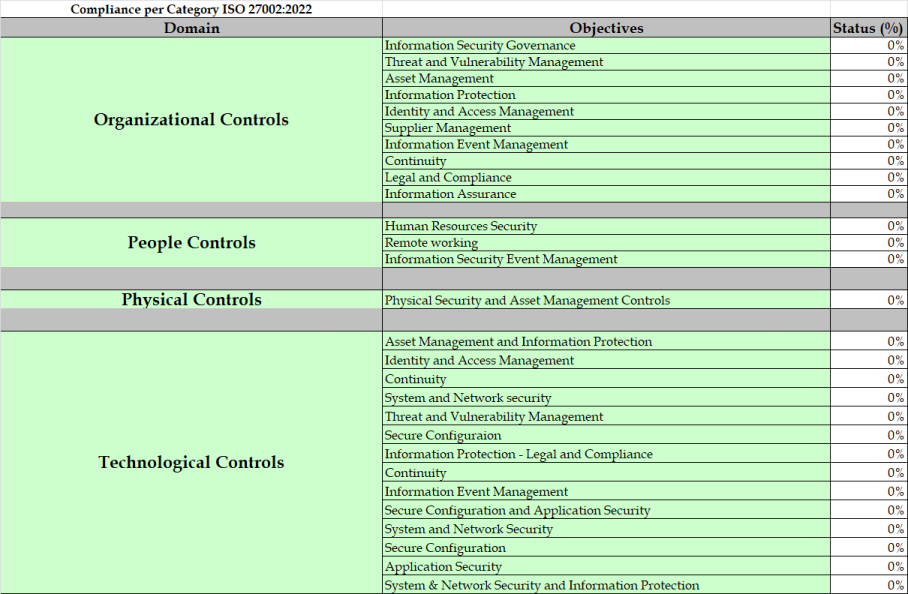
ISO 27001 is an internationally recognized Information Security Standard that is widely acclaimed. It is published by the International Organization for Standardization (ISO) and provides a certifiable framework comprising security policies and procedures. The standard aims to assist organizations in safeguarding their data by implementing an Information Security Management System (ISMS).
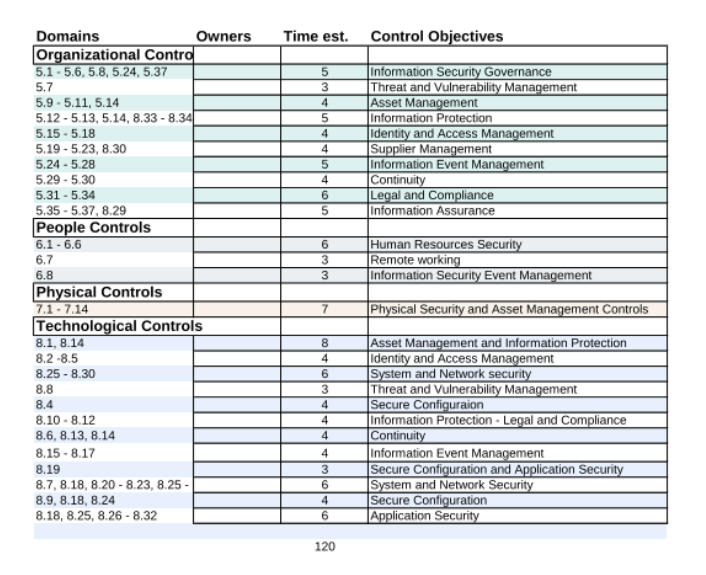
To obtain ISO 27001 certification, organizations must fulfill the requirements for establishing, implementing, maintaining, and continuously improving an Information Security Management System (ISMS) that aligns with their specific business needs. The ISO 27001 standard consists of two distinct parts: Clauses and Annex A. The Clauses outline the general requirements for an ISMS, while Annex A provides a set of controls and objectives that organizations can choose to implement based on their risk assessment and security requirements.
Clauses 4-10 in ISO 27001 consist of mandatory requirements that all organizations seeking certification must fulfill. Each clause includes several sub-requirements. Here is a brief overview of each clause:
Clause 4: Context of the Organization – Organizations must determine the scope of their ISMS, identify internal and external issues relevant to information security, and define the interested parties.
Clause 5: Leadership – Top management should demonstrate leadership and commitment to the ISMS by establishing policies, assigning responsibilities, and promoting awareness.
Clause 6: Planning – This clause emphasizes the importance of risk assessment and treatment, setting objectives, and planning to achieve them.
Clause 7: Support – Organizations must provide the necessary resources, competence, awareness, communication, and documented information to support the ISMS.
Clause 8: Operation – This clause covers the implementation of risk treatment plans, management of changes, and effective operation of controls and processes.
Clause 9: Performance Evaluation – Organizations need to monitor, measure, analyze, and evaluate the performance of the ISMS and conduct internal audits.
Clause 10: Improvement – This clause focuses on nonconformities, corrective actions, continual improvement, and the management of incidents and improvements.
Meeting these mandatory requirements is crucial for organizations seeking ISO 27001 certification.
Annex A of ISO 27001 comprises a collection of security controls that are not obligatory but can be selectively implemented based on the specific needs of an organization. By conducting a risk assessment, organizations can identify the security controls that align with their security program and effectively address their risks and vulnerabilities. This approach allows organizations to tailor the implementation of controls to their unique requirements and enhance their overall information security posture.
After establishing the necessary policies, procedures, and documentation for ISO 27001 compliance and ISMS is operational, organizations can engage an accredited certification body to perform an audit. This audit assesses the implementation and effectiveness of the Information Security Management System (ISMS) against the ISO 27001 requirements. If the audit is successful and the organization meets all the necessary criteria, an ISO 27001 certificate will be issued, validating the organization’s adherence to the standard and their commitment to information security.
By adhering to ISO 27001 standards, organizations can establish robust policies, procedures, and technology measures that effectively safeguard their data, regardless of its location. This comprehensive approach significantly reduces the risk of cyber-attacks and fosters a culture of information security within the organization.
Obtaining ISO 27001 certification serves as a notable competitive advantage for businesses, irrespective of their industry or size. The certification acts as concrete evidence to customers that the organization is dedicated to protecting their data and fulfilling contractual security obligations. Moreover, ISO 27001 certification holds international recognition, making it instrumental in expanding global business opportunities and establishing trust with partners worldwide.
DISC LLC offers the expertise of a team comprised of former ISO auditors and experienced practitioners who can assist in preparing your organization for a successful ISO 27001 audit. Their services aim to guide you towards certification by identifying and addressing any gaps that may exist within your current security program. They provide support in implementing the required policies, procedures, and technologies to meet the ISO 27001 standards. With their knowledge and experience, DISC LLC can help your organization navigate the certification process and ensure a solid foundation for information security.
Following the attainment of ISO 27001 certification, we offer services to manage and maintain your Information Security Management System (ISMS). Our expert team will diligently oversee and guide your ISMS to ensure ongoing compliance with ISO 27001 requirements, thereby facilitating future certifications. By entrusting us with the management of your ISMS, you can focus on your core business activities while maintaining the necessary level of information security and sustaining your commitment to ISO 27001 standards.
We’d love to hear from you! If you have any questions, comments, or feedback, please don’t hesitate to contact us. Our team is here to help and we’re always looking for ways to improve our services. You can reach us by email (info@deurainfosec.com), or through our website’s contact form.
In the first half of 2023, Mandiant Managed Defense has observed a threefold increase in the number of attacks using infected USB drives to steal secrets. Mandiant tracked all of the cases and found that the majority of the incidents could be attributed to several active USB-based operation campaigns affecting both the public and private sectors globally.
Previously, we covered one of the campaigns that leverages USB flash drives as an initial infection vector and concentrates on the Philippines. In this blog post, we are covering two additional USB-based cyber espionage campaigns that have been observed by Managed Defense:
SOGU Malware Infection via USB Flash Drives Across Industries and Geographies
This is the most prevalent USB-based cyber espionage attack using USB flash drives and one of the most aggressive cyber espionage campaigns targeting both public and private sector organizations globally across industry verticals. It uses USB flash drives to load the SOGU malware to steal sensitive information from a host.
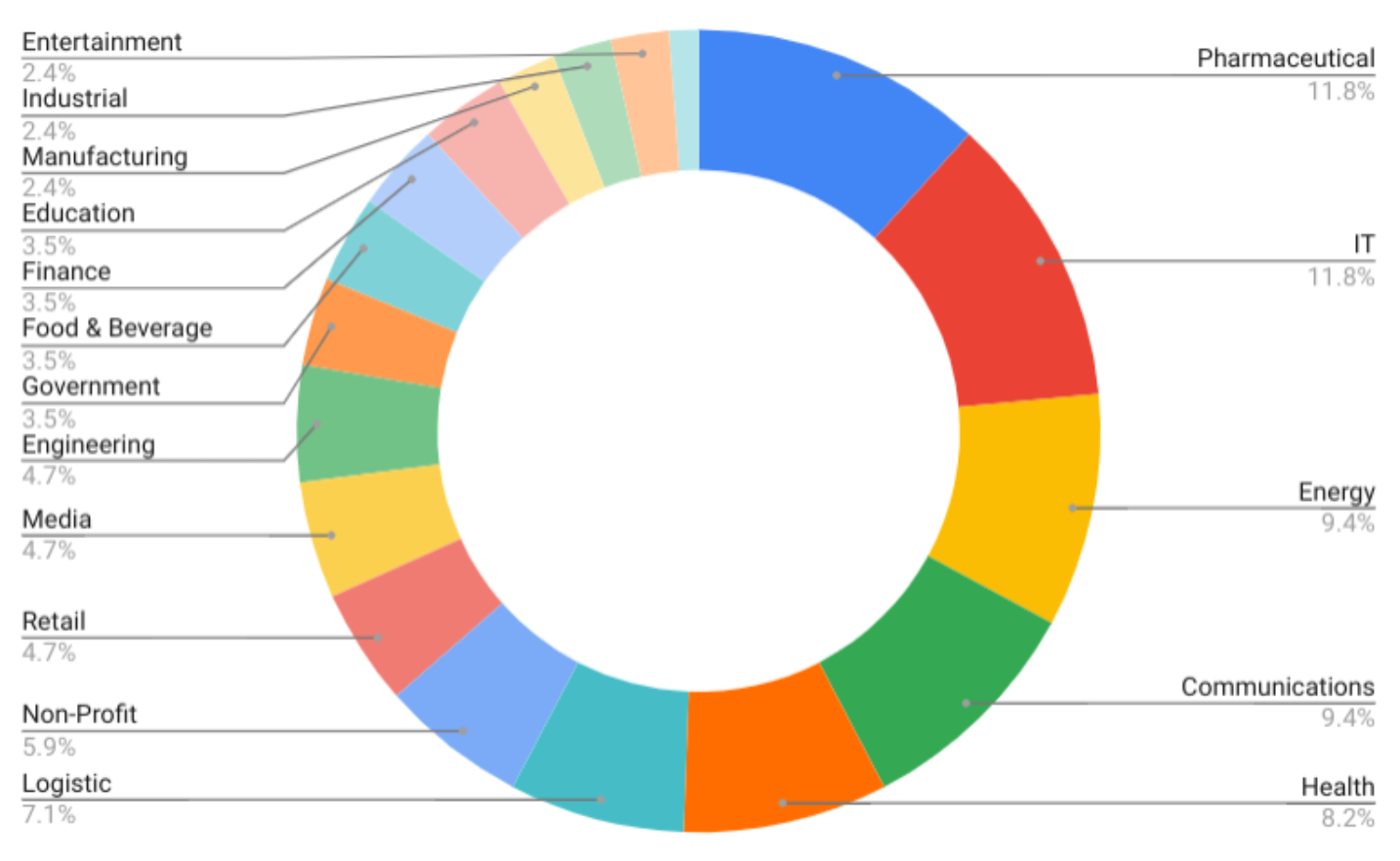
Mandiant attributes this campaign to TEMP.Hex, a China-linked cyber espionage actor. TEMP.Hex likely conducted these attacks to collect information in support of Chinese national security and economic interests. These operations pose a risk to a variety of industries, including construction and engineering, business services, government, health, transportation, and retail in Europe, Asia, and the United States.
SNOWYDRIVE Malware Infection via USB Flash Drives, Targets Oil and Gas Organizations in Asia
This campaign uses USB flash drives to deliver the SNOWYDRIVE malware. Once SNOWYDRIVE is loaded, it creates a backdoor on the host system, giving attackers the ability to remotely issue system commands. It also spreads to other USB flash drives and propagates throughout the network.
Mandiant attributes this campaign to UNC4698, a threat actor that has targeted oil and gas organizations in Asia. Once the actor has gained access to the system, they execute arbitrary payloads using the Windows Command Prompt, use removable media devices, create local staging directories, and modify the Windows registry.
SOGU Malware Infection via USB Flash Drives Across Industries and Geographies
Third parties (vendors of products or services) are responsible for a significant portion of cybersecurity incidents or data breaches at customer organizations.
Amid all the focus on third parties, what is often not discussed is that customers themselves might be in a position to possibly detect or contain the damage from certain security incidents on their own, regardless of the third party’s association with the cause of the incident.
The concept or principle of shared responsibilities between customers and their third parties was originally conceived and popularized in the context of public cloud service providers and their customers.
I don’t think the shared responsibilities principle should be limited to public cloud services. It could apply just as well as a core tenet to the security of any product or service that customers source from their third parties. This discipline of information security—of customers managing security risks in the product or services sourced from third parties—is commonly referred to as third-party risk management (TPRM). Terms such as “vendor risk management” or “supply chain risk management” are also used synonymously.
The shared responsibilities tenet of TPRM is illustrated well in the MOVEit breach that has been in the news over the past month.
It is clear from the vendor’s own account that the breach resulted from security vulnerabilities in the vendor’s product, MOVEit Transfer. What might be missed on the vendor’s page, however, is that the vendor did not detect the vulnerability on their own.
It appears they might have learned about the vulnerability from the calls they received from their customers indicating suspicious activity on May 28, 2023. This was likely within a day of when the adversary started exploiting the vulnerability, as reported by Mandiant.
The customers who detected the adversary’s activity had likely done a diligent job of implementing the vendor-suggested security best practices, especially the practice related to reviewing audit logs for anomalous behavior.
By having such effective detection mechanisms in place, as well as implementing the other security best practices suggested by the vendor, it wouldn’t be far-fetched to say that these customers might have been in a position to act in a timely manner and prevent significant impact from the adversary’s actions.
On the other hand, there are likely many other customers who may not have undertaken the due diligence to implement the vendor-suggested best practices and operate those practices effectively. Such customers may not have discovered the exploit in time, which could have resulted in sensitive data being stolen by the adversary.
In my view and experience, the shared responsibilities tenet often does not get due recognition or necessary focus at customer organizations. TPRM programs at the organizations are usually focused on assessing risks posed by vendors (i.e., the vendor portion of the shared responsibilities). They may not “close the loop” by evaluating how well their own organizations have implemented their part of the shared responsibilities.
I believe the ecosystem of customers and third parties could implement and operationalize shared responsibilities in their TPRM programs through several means, including but not limited to:
• Contracts: Emphasize each party’s portion of the shared responsibilities in contract documents.
• Transparency And Communication: Vendors should provide necessary and actionable details regarding customers’ part of the shared responsibilities in their self-assessment reports, as well as communicate the responsibilities to customers in a proactive manner, especially when new features require updates to shared responsibilities.
• Program Charters: Customer TPRM programs should update their program charters and governance to emphasize that the program’s objective is not limited to assessing risks posed by the vendor, but that it should also assess and mitigate risks associated with how their own organizations use the goods or services provided by the vendors.
• Governance And Ownership: Customer TPRM programs should clarify the roles and responsibilities of internal sponsors and other stakeholder teams that use vendor services.
Discover all the ways MITRE ATT&CK can help you defend your organization. Build your security strategy and policies by making the most of this important framework
What is the MITRE ATT&CK Framework?
MITRE ATT&CK (Adversarial Tactics, Techniques, and Common Knowledge) is a widely adopted framework and knowledge base that outlines and categorizes the tactics, techniques, and procedures (TTPs) used in cyberattacks. Created by the nonprofit organization MITRE, this framework provides security professionals with insights and context that can help them comprehend, identify, and mitigate cyber threats effectively.
The techniques and tactics in the framework are organized in a dynamic matrix. This makes navigation easy and also provides a holistic view of the entire spectrum of adversary behaviors. As a result, the framework is more actionable and usable than if it were a static list.
According to Etay Maor, Senior Director of Security Strategy at Cato Networks, “The knowledge provided in the MITRE ATT&CK framework is derived from real-world evidence of attackers’ behaviors. This makes it susceptible to certain biases that security professionals should be aware of. It’s important to understand these limitations.”
Novelty Bias – Techniques or actors that are new or interesting are reported, while techniques that are being used over and over are not.
Visibility Bias – Intel report publishers have visibility biases that are based on how they gather data, resulting in visibility for some techniques and not others. Additionally, techniques are also viewed differently during incidents and afterward.
Producer Bias – Reports published by some organizations may not reflect the broader industry or world as a whole.
Victim Bias – Some victim organizations are more likely to report, or to be reported on, than others.
Availability Bias – Report authors often include techniques that quickly come to mind in their reports.
MITRE ATT&CK Defender Use Cases
The MITRE ATT&CK framework helps security professionals research and analyze various attacks and procedures. This can help with threat intelligence, detection and analytics, simulations, and assessment and engineering. The MITRE ATT&CK Navigator is a tool that can help explore and visualize the matrix, enhancing the analysis for defensive coverage, security planning, technique frequency, and more.
Etay Maor adds, “The framework can go as deep as you want it to be or it can be as high level as you want it to be. It can be used as a tool to show the mapping and if we’re good or bad at certain areas, but it could go as deep as understanding the very specific procedure and even the line of code that was used in a specific attack.”
Here are a few examples of how the framework and the Navigator can be used:
Threat Actor Analysis
Security professionals can leverage MITRE ATT&CK to investigate specific threat actors. For example, they can drill down into the matrix and learn which techniques are used by different actors, how they are executed, which tools they use, etc. This information helps investigate certain attacks. It also expands the researchers’ knowledge and way of thinking by introducing them to additional modes of operation attackers take.
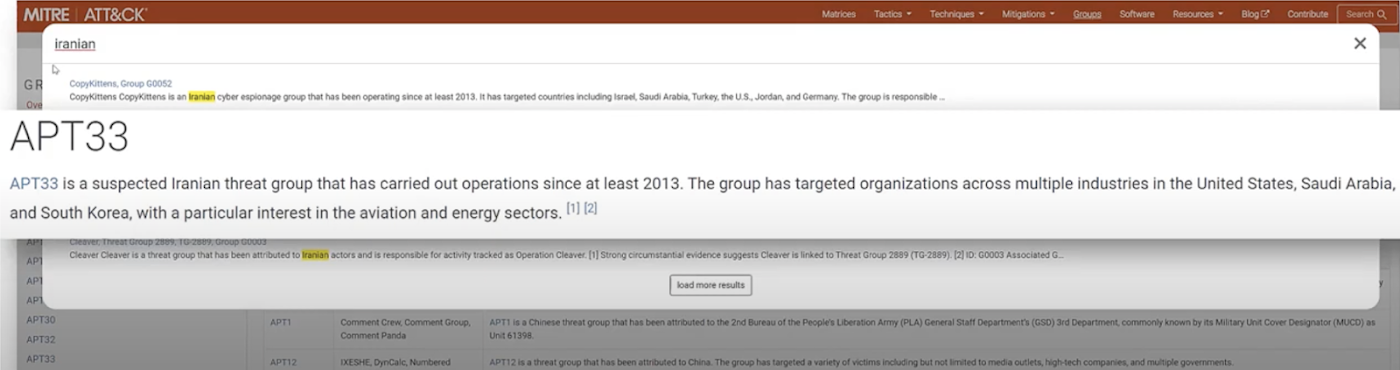
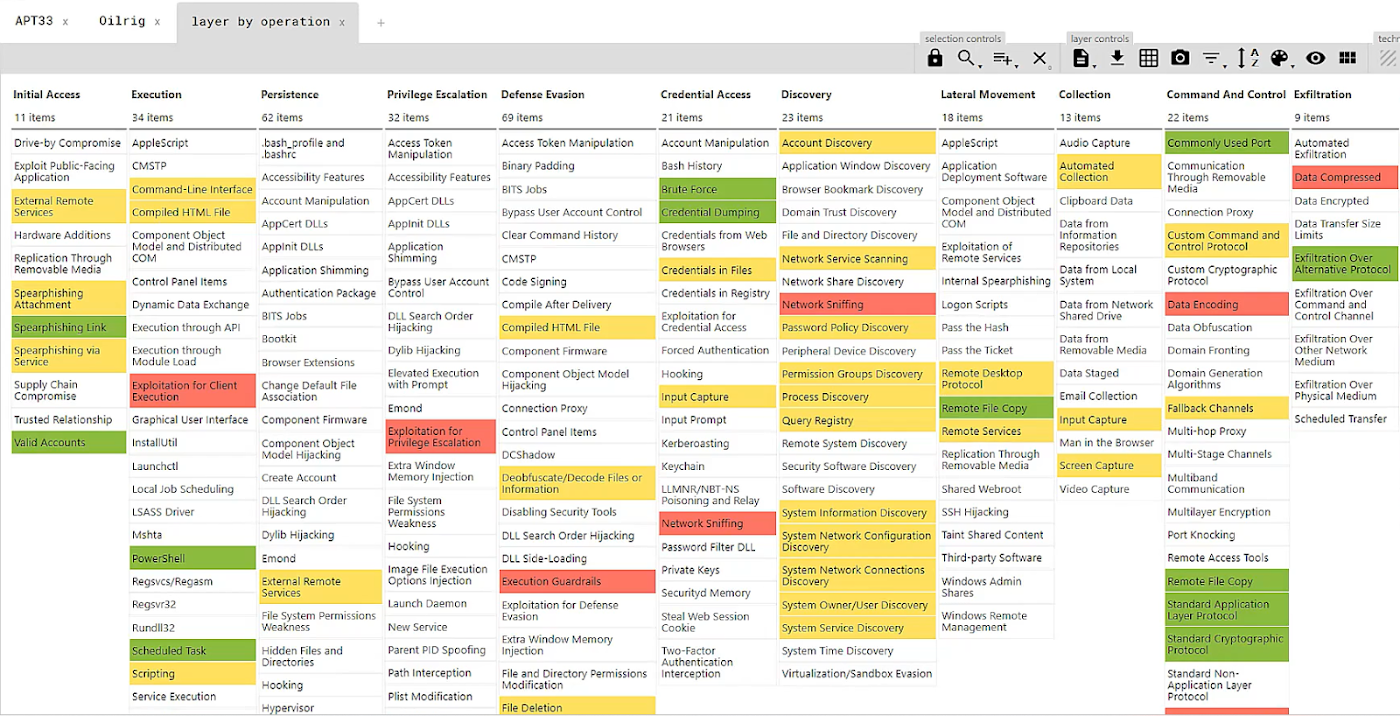
At a higher level, the framework can be used to answer C-level questions about breaches or threat actors. For example, if asked- “We think we might be a target for Iranian nation state threat actors.” The framework enables drilling down into Iranian threat actors like APT33, showing which techniques they use, attack IDs, and more.
Multiple Threat Actor Analysis
Apart from researching specific actors, the MITRE ATT&CK framework also allows analyzing multiple threat actors. For example, if a concern is raised that “Due to recent political and military events in Iran we believe there will be a retaliation in the form of a cyber attack. What are the common attack tactics of Iranian threat actors?”, the framework can be used to identify common tactics used by a number of nation-state actors.
Here’s what a visualized multiple threat actor analysis could look like, with red and yellow representing techniques used by different actors and green representing an overlap.
Gap Analysis
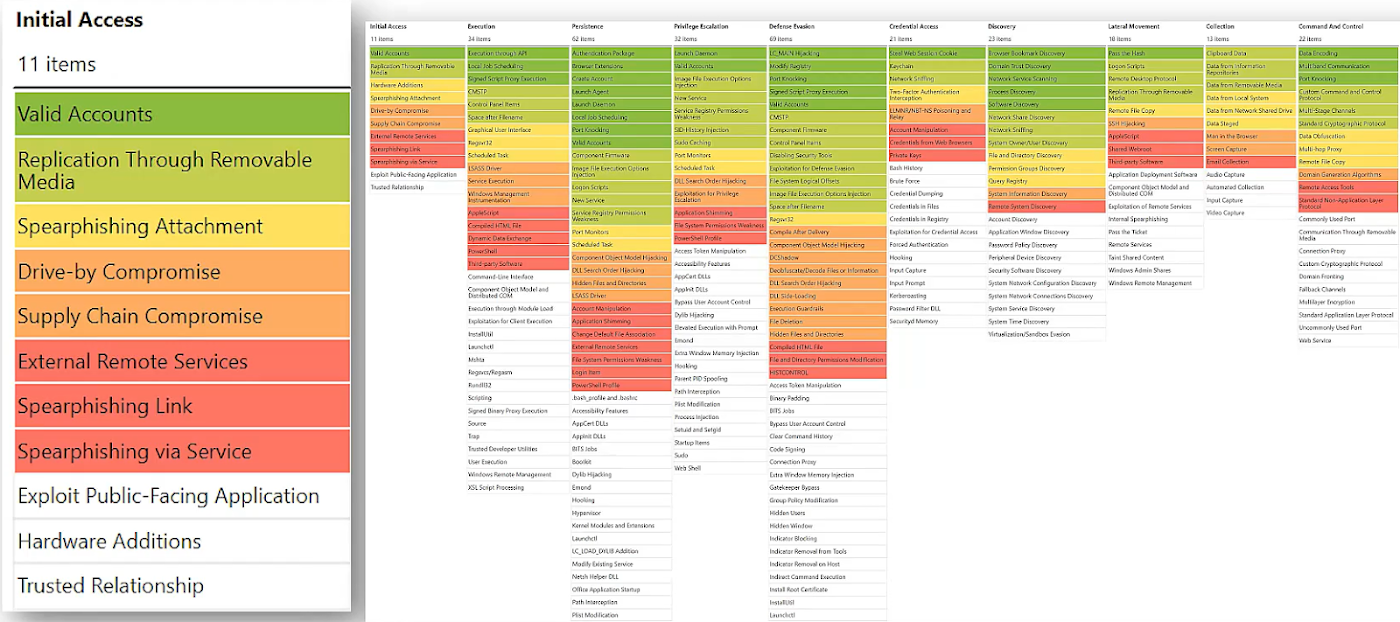
The MITRE ATT&CK framework also helps analyze existing gaps in defenses. This enables defenders to identify, visualize and sort which ones the organization does not have coverage for.
Here’s what it could look like, with colors used for prioritization.
Atomic Testing
Finally, the Atomic Red Team is an open source library of tests mapped to the MITRE ATT&CK framework. These tests can be used for testing your infrastructure and systems based on the framework, to help identify and mitigate coverage gaps.
The MITRE CTID (Center for Threat-Informed Defense)
The MITRE CTID (Center for Threat-Informed Defense) is an R&D center, funded by private entities, that collaborates with both private sector organizations and nonprofits. Their objective is to revolutionize the approach to adversaries through resource pooling and emphasizing proactive incident response rather than reactive measures. This mission is driven by the belief, inspired by John Lambert, that defenders must shift from thinking in lists to thinking in graphs if they want to overcome attackers’ advantages.
Etay Maor comments, “This is very important. We need to facilitate collaboration between the Defenders across different levels. We’re very passionate about this.”
A significant initiative within this context is the “Attack Flow” project. Attack Flow tackles the challenge faced by defenders, who often focus on individual, atomic attacker behaviors. Instead, Attack Flow uses a new language and tools to describe the flow of ATT&CK techniques. These techniques are then combined into patterns of behavior. This approach enables defenders and leaders to gain a deeper understanding of how adversaries operate, so they can refine their strategies accordingly.
Unless you really are superhuman, you can’t expect to do all those things (and more) exceptionally well … so a more pragmatic approach starts with self-awareness and a personal/career strategy. One possibility is to run a SWOT analysis on yourself:
What are your Strengths as a person – not just the areas where you clearly shine and the achievements you are most proud of, but the things likely to be brought up in your eulogy?
In what areas are you comparatively Weak? What causes you the most stress or grief? What parts of the job would you prefer to shy away from, given the choice?
Where are your Opportunities to grow, develop, mature and flourish? In career terms, what would take you to “the next level”? Are there things you can plan and prepare for?
What about the Threats, the things (or people or situations …) that might derail you from your path to ultimate success?
Hinson tip: if you find this process confusing and awkward, discreetly seek the assistance and guidance of close colleagues, friends and family members. Google for HR tools and techniques such as the Myers-Briggs approach. Take a cold, hard, dispassionate look at your own CV: if you were tasked to appoint your own replacement before leaving the organisation, would your CV pass muster? What might raise concerns among the interview panel? Which aspects beg questions? Issues from your past will naturally dissolve over time, but perhaps you can address them more proactively to speed-up the dissipation, for example through self-study, training or seeking out chances to make and demonstrate progress. Making a genuine effort will highlight matters to bring up (or avoid!) at annual bonus appraisal or interview time so there’s a pay-off to aim for. Literally.
As career advice goes, that’s all very well … but in essence it applies to almost any management position, so what’s different about the pragmatic CISO?
Pragmatism in this area involves acknowledging that, with the best will in the world, we cannot all reach and stay at the very top of our game all the time. When the going gets hard, we may struggle, stumble, perhaps even fall … which is when the value of preparation, resilience and contingency thinking comes into play. Being sacked or made redundant, for instance, is as much an opportunity to seize as an issue to overcome.
Optimism is another aspect. Pragmatism typically involves tolerating higher information risks in the interest of not overly constraining the business. Keep your natural paranoia in check by cutting some slack for information risk owners who elect to accept risks that you, personally, would not. As a competent professional advisor, your job is simply to make sure the risk owners are well informed and understand the risks – and for that you are accountable. If they decide to overrule your advice for business reasons, they are accountable for their decisions – and fair enough: they understand the business context better than you. Maybe, in fact, they are correct.
Teamwork is another part of the solution. If you admit to being comparatively weak in, say, constantly scanning the horizon for emerging risks, it might just be the very thing that someone in your team, a colleague elsewhere in the organisation, or an external advisor might excel at – so work with them. If they are junior to you, taking on the additional responsibility may be an excellent opportunity for them, and a chance to deepen your relationship.
For too long the cybersecurity world focused exclusively on information technology (IT), leaving operational technology (OT) to fend for itself. Traditionally, few industrial enterprises had dedicated cybersecurity leaders. Any security decisions that arose fell to the plant and factory managers, who are highly skilled technical experts in other areas but often lack cybersecurity training or knowledge.
In more recent years, an uptick in cyberattacks against industrial facilities and the trend of IT/OT convergence driven by Industry 4.0 have highlighted the vacuum of ownership around OT security. According to a new Fortinet report, most organizations are looking to Chief Information Security Officers (CISOs) to solve the problem.
Fortunately, CISOs are no strangers to change or difficult challenges. The position itself is less than 20 years old, yet in those two decades CISOs have navigated some of the most disruptive cybersecurity events that were truly watershed moments in technology.
Still, most CISOs have made their mark securing IT environments — and IT security strategies and tools rarely translate to an OT context. While the soft skills of collaboration and team-building will certainly help CISOs as they bring the factory floor into their realm of responsibility, they must also make a concentrated effort to understand the OT landscape’s unique topography and distinctive security challenges.
Safety over everything
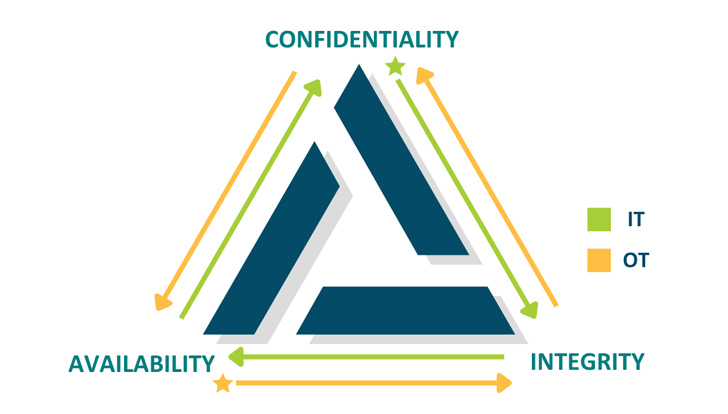
The CIA triad — Confidentiality, Integrity & Availability — is a key concept in cybersecurity. Critically, IT and OT prioritize the elements of the triad differently — although safety is always the common denominator.
Image 1: The CIA triad of IT security is reversed in the OT world, where availability is the highest priority.
In IT, safety means that data is protected through confidentiality. People get hurt when their sensitive, private data is compromised. For the enterprise, securing data saves them from breaches, fines, and reputational damage.
In OT, safety means that cyber-physical systems are reliable and responsive. People get hurt when a blast furnace or an industrial boiler does not function properly. For the enterprise, availability keeps systems running on time down to the millisecond, which ensures productivity and profitability.
Somewhat ironically, the AIC triad of the OT world has resulted in systems and tools that prioritize physical safety but often come with few or no cybersecurity features at all. It will be the CISO’s responsibility to identify and implement security solutions that protect OT systems from cyberthreats without disrupting their operations.
Levels of segmentation
In both OT and IT, segmentation limits the network’s attack surface. In OT, the Purdue Model serves as a framework for how and why systems can and should communicate with each other.
In a highly simplified nutshell, the Purdue Model comprises five layers.
Levels 4 and 5 are the outermost layers that include web and email servers, IT infrastructure, and users firewalling in remotely.
Levels 2 and 3 are the operational layers that operate the software and applications that run OT environments.
Levels 0 and 1 hold the devices, sensors, programmable logic controllers (PLCs), and distributed control systems (DCS) that do the actual work and must be protected from outside interference.
The purpose of these layers is to create both logical and physical separation between process levels. The closer you get to the cyber-physical operation of industrial systems like injectors, robotic arms, and industrial presses, the more checks and balances are in place to protect them.
While the concept of segmentation will not be new to CISOs, they will need to understand that the separation of zones is much stricter in OT environments and must be enforced at all times. Industrial enterprises adhere to the Purdue model or other similar frameworks to ensure safety and security and to meet many regulatory compliance mandates.
Downtime is not an option
In IT, downtime for upgrades and patches is no big deal, especially in a Software-as-a-Service (SaaS) world where new updates are released practically in real time.
Whether for safety or profit, OT systems are always up and running. They cannot be stopped or paused to download a new operating system or apply even a critical patch. Any process that requires downtime is simply a non-starter for the vast majority of OT systems. For this reason, CISOs should not be surprised to discover decades-old systems (likely running on software that reached its end-of-life date long ago) that still serve as a crucial piece of the operation.
The challenge facing CISOs will be to identify security controls that will not interrupt or interfere with delicate OT processes. The right solutions will “wrap” the existing OT infrastructure in a layer of security that protects critical processes without changing, complicating, or crowding them.
All access is “remote” access
Traditionally, OT systems have been protected through isolation. Now that organizations are connecting these environments to capitalize on Industry 4.0 or to allow easier access for contractors, all access must be monitored, controlled, and recorded.
The IT environment is a digital place where business happens. Business users conduct their work and systems exchange data all within this space, day in and day out. To put it another way, humans are intended to actively participate in and make changes to the IT environment.
OT systems and environments are built to run without human intervention — “set it and forget it.” Humans are meant to set them up and then let them run. Users do not remain logged into an OT environment all day the way business users would in an IT system.
In this context, anyone accessing the OT environment is effectively an outsider. Whether it is a vendor connecting remotely, a business user coming in through the IT network, or even an OT operator accessing the environment on-site, every connection comes from the outside. Recognizing this key point will help CISOs to understand that industrial secure remote access (I-SRA) tools should be used for all access scenarios, not only those that IT would consider to be “remote.”
Basic functions like vulnerability scanning can interrupt OT processes and knock systems completely offline, and most devices do not have enough CPU/RAM to support endpoint security, anti-virus, or other agents.
Most IT tools route traffic through the cloud. In OT, this can compromise availability and cannot support the numerous unconnected components common to OT environments.
The life cycles of IT tools are typically much shorter than the life cycles of OT devices. Due to the always-up nature of OT environments, any tool that needs frequent patching, updates, or downtime is not applicable.
Forcing IT-designed tools into OT environments only adds complexity without addressing the fundamental security requirements and priorities of these environments. The sooner a CISO realizes that OT systems deserve security solutions designed for their distinctive needs, the faster they will be on their way to implementing the best tools and policies.
Soft skills are the keys to CISO success
Given that most cybersecurity leaders currently tend to come from IT security roles, it makes sense that many CISOs will have a (perhaps unconscious) bias toward IT philosophies, tools, and practices. To effectively secure OT environments, CISOs will need to become students again and lean on others to learn what they do not yet know.
The good news is that CISOs generally have a propensity to ask the right questions and seek support from the right experts while still pushing the envelope and demanding positive outcomes. At the end of the day, a CISO’s job is to lead people and teams of experts to accomplish the greater goal of securing the enterprise and enabling the business. Those willing to bridge the OT security divide through strong leadership and a willingness to learn should quickly find themselves on the road to success.
Chief Information Security Officers (CISOs) hold a critical and challenging role in today’s rapidly evolving cybersecurity landscape. Here are the common security challenges CISOs face.
As organizations increasingly rely on technology to drive their operations, CISOs face complex security challenges that demand their expertise and strategic decision-making.
These challenges arise from the constant emergence of sophisticated cyber threats, the need to protect sensitive data, and the ever-evolving regulatory landscape.
The role of a CISO requires balancing proactive risk mitigation with the ability to respond swiftly to incidents and breaches.
This article will delve into the top challenges CISOs face, including protecting digital assets, managing security incidents, ensuring compliance, dealing with insider threats, and the relentless pursuit of cyber resilience.
By understanding these challenges, CISOs can develop robust cybersecurity strategies and lead their organizations toward a secure and resilient future.
Who is a CISO?
Chief Information Security Officer (CISO) is a senior executive responsible for overseeing and administering an organization’s information security plan.
A CISO’s primary responsibility is safeguarding the confidentiality, availability, and integrity of an organization’s information assets and systems.
They are accountable for creating and enforcing strategies, policies, and procedures to defend against cyber threats, protect sensitive data, and mitigate security risks.
CISOs play a crucial role in maintaining an organization’s security posture by establishing and enforcing security standards, conducting risk assessments, and implementing appropriate security controls.
They collaborate with other executives, IT teams, and stakeholders to align security initiatives with business objectives and ensure that security measures are integrated into the organization’s operations.
In addition to their technical expertise, CISOs often engage in risk management, incident response planning, security awareness training, and compliance with regulatory requirements.
They stay updated on the latest cybersecurity trends, threats, and technologies to address emerging risks and implement appropriate security measures effectively.
The role of a CISO has become increasingly important as cyber threats evolve in complexity and frequency.
CISOs are responsible for safeguarding the organization’s sensitive information, maintaining the trust of customers and stakeholders, and ensuring business continuity in the face of cybersecurity challenges.
What are all the Roles and Responsibilities of CISO?
Developing and Implementing Information Security Strategy: The CISO is responsible for developing and implementing an overarching information security strategy aligned with the organization’s business objectives. This includes setting security goals, defining security policies and procedures, and establishing risk management frameworks.
Leading the Security Team: The CISO manages and provides leadership to the security team, including hiring, training, and supervising security personnel. They ensure the team has the necessary skills, resources, and support to carry out their responsibilities effectively.
Overseeing Security Operations: The CISO oversees day-to-day security operations, including incident response, vulnerability management, threat intelligence, and security monitoring. They ensure appropriate controls, technologies, and processes are in place to protect the organization’s assets.
Risk Management: The CISO is responsible for identifying and assessing security risks to the organization’s information systems and assets. They develop and implement risk management strategies to safeguard critical data and systems, including risk mitigation, transfer, and acceptance.
Compliance and Regulatory Requirements: The CISO ensures that the organization complies with relevant security regulations, industry standards, and legal requirements. They stay updated on emerging regulations and ensure appropriate controls and processes are in place to meet compliance obligations.
Security Incident Response: The CISO leads the organization’s response to security incidents, including data breaches, malware attacks, and other security breaches. They establish incident response plans, coordinate efforts, and collaborate with relevant stakeholders, such as legal, PR, and law enforcement agencies.
Security Awareness and Training: The CISO promotes a culture of security awareness throughout the organization. They develop and deliver security awareness programs and training initiatives to educate employees on security best practices and minimize human-related security risks.
Vendor and Third-Party Risk Management: The CISO assesses and manages security risks associated with third-party vendors and partners. They establish vendor security requirements, conduct due diligence, and monitor compliance with security standards and contractual obligations.
Security Governance and Reporting: The CISO provides regular reports and updates on the organization’s security posture to executive management, board members, and other relevant stakeholders. They ensure that security metrics and key performance indicators (KPIs) are established to measure the effectiveness of security programs.
Incident Investigation and Forensics: In the event of security incidents, the CISO oversees the investigation and forensic analysis to identify the root cause, assess the impact, and prevent future occurrences. As required, they collaborate with internal and external resources, such as forensic experts and law enforcement agencies.
Security Challenges CISOs Face
CISOs face various common security challenges as they strive to protect their organizations’ digital assets and information. Perimeter 81 Guide helps CISOs to prevent their network from being at Risk. Some of the key challenges they encounter include:
Sophisticated Cyberattacks: CISOs must defend against increasingly sophisticated cyber threats, including advanced persistent threats (APTs), ransomware attacks, social engineering, and zero-day exploits. These attacks can bypass traditional security measures and require constant vigilance and adaptive security strategies.
Insider Threats: CISOs need to address the risks posed by insiders, including employees, contractors, or partners who have authorized access to systems and data. Insider threats can involve accidental data breaches, negligence, or malicious intent, requiring a balance between enabling productivity and implementing controls to prevent unauthorized access or data leakage.
Compliance and Regulatory Requirements: CISOs must ensure their organizations comply with industry-specific regulations, such as GDPR, HIPAA, PCI-DSS, or SOX, and evolving privacy laws. Navigating complex compliance requirements and maintaining a robust security posture to meet these standards can be a significant challenge.
Cloud Security: As organizations increasingly adopt cloud services and infrastructure, CISOs must address the unique security challenges associated with cloud computing. This includes securing data stored in the cloud, managing access controls, and ensuring the security of cloud service providers (CSPs) and their environments.
Security Skills Gap: CISOs often need more skilled cybersecurity professionals. The industry’s rapid growth and evolving threat landscape have resulted in high demand for cybersecurity talent, making recruiting and retaining qualified professionals challenging.
Third-Party Risk: Organizations rely on third-party vendors and suppliers, introducing potential security risks. CISOs must assess the security posture of third parties, establish contractual security obligations, and monitor their adherence to security standards to mitigate the risk of breaches through these external connections.
Security Awareness and Training: Human error remains a significant factor in cybersecurity incidents. CISOs must promote a strong security culture, provide regular training and awareness programs, and educate employees about cybersecurity best practices to minimize the risk of social engineering, phishing attacks, and other user-related vulnerabilities.
Incident Response and Recovery: CISOs must develop and test robust incident response plans to manage and recover from security incidents effectively. This involves identifying and containing breaches, conducting forensic investigations, and implementing remediation measures to minimize the impact and prevent future incidents.
Emerging Technologies: Adopting technologies like the Internet of Things (IoT), artificial intelligence (AI), and blockchain introduces new security challenges. CISOs must understand the security implications of these technologies, assess risks, and implement appropriate controls to protect against potential vulnerabilities and attacks.
Budget and Resource Constraints: CISOs often face budget limitations and the need to prioritize security initiatives. Balancing the allocation of resources to address immediate security needs while investing in long-term security capabilities can be a significant challenge.
What are the Security Compliance CISO Should Follow
As a Chief Information Security Officer (CISO), there are several security compliance frameworks and regulations that you should consider following, depending on the nature of your organization and its operations. Here are some of the key security compliance frameworks and regulations:
General Data Protection Regulation (GDPR): If your organization deals with the personal data of individuals in the European Union (EU), GDPR sets requirements for the protection, processing, and transfer of personal data. It includes principles for data minimization, consent, data breach notification, and the rights of individuals.
Payment Card Industry Data Security Standard (PCI DSS): PCI DSS applies to organizations that handle credit card information. It sets requirements for securing payment card data, including network security, encryption, access controls, and regular vulnerability assessments.
Health Insurance Portability and Accountability Act (HIPAA): HIPAA applies to organizations in the healthcare industry that handle protected health information (PHI). It establishes requirements for the privacy and security of PHI, including access controls, encryption, risk assessments, and breach notification.
Sarbanes-Oxley Act (SOX): SOX applies to publicly traded companies in the United States. It sets requirements for financial reporting and establishes controls and processes to ensure the accuracy and integrity of financial statements. While not solely focused on security, it includes provisions for protecting financial data.
National Institute of Standards and Technology (NIST) Cybersecurity Framework: The NIST Cybersecurity Framework provides guidelines and best practices for managing cybersecurity risks. It covers risk assessment, security controls, incident response, and continuous monitoring.
ISO 27001: ISO 27001 is an international standard that provides a framework for establishing, implementing, maintaining, and continually improving an information security management system (ISMS). It covers various aspects of information security, including risk management, access controls, incident management, and security awareness.
Federal Information Security Management Act (FISMA): FISMA applies to U.S. federal agencies and sets requirements for securing federal information and systems. It mandates risk assessments, security controls, incident response planning, and continuous monitoring.
Security Challenges CISOs Face to Manage Security Team
Managing a security team as a Chief Information Security Officer (CISO) requires effective leadership, communication, and coordination. Here are some key aspects to consider when managing a security team:
Establish Clear Roles and Responsibilities: Clearly define the roles and responsibilities of each team member to ensure everyone understands their specific duties and areas of expertise. This clarity helps streamline operations and avoid confusion.
Set Goals and Objectives: Define strategic goals and objectives for the security team aligned with the organization’s overall security strategy. Communicate these goals to the team and regularly track progress to ensure everyone is working towards the same objectives.
Provide Guidance and Mentorship: Offer team members guidance, mentorship, and professional development opportunities. Encourage skill development, certifications, and staying up-to-date with the latest security trends and technologies—support team members in their career growth.
Foster Collaboration and Communication: Promote a collaborative and open communication culture within the team. Encourage knowledge sharing, cross-functional collaboration, and effective communication channels. Regular team meetings, brainstorming sessions, and updates are valuable for aligning efforts.
Support Decision-Making: Empower team members to make decisions within their areas of responsibility. Provide guidance and support when needed, but encourage autonomy and ownership in decision-making. Foster an environment where team members feel comfortable taking calculated risks.
Establish Incident Response Procedures: Develop clear incident response procedures and ensure the team is well-prepared to handle security incidents effectively. Conduct regular drills, tabletop exercises, and simulations to test and improve the team’s incident response capabilities.
Stay Informed and Adapt: Stay up-to-date with the latest security threats, industry trends, and best practices. Encourage continuous learning and professional development for the team. Adapt security strategies and measures as the threat landscape evolves.
Collaborate with Other Departments: Work closely with other departments, such as IT, legal, HR, and executive management, to ensure security initiatives are aligned with business objectives and integrated into overall organizational operations. Build relationships and foster a culture of security awareness throughout the organization.
Regularly Evaluate and Improve: Regularly evaluate the team’s performance, processes, and procedures. Collect feedback from team members and stakeholders to identify areas for improvement. Implement changes and adjustments as necessary to enhance the team’s effectiveness and efficiency.
Lead by Example: Demonstrate strong leadership skills, integrity, and a commitment to security best practices. Lead by example in adhering to security policies and procedures. Encourage a positive and supportive work environment.
Final Thoughts
CISOs face many common security challenges as protectors of their organization’s digital assets and information.
From sophisticated cyberattacks and insider threats to compliance requirements and resource constraints, these challenges highlight the complex and evolving nature of the cybersecurity landscape.
CISOs must navigate these challenges by adopting a proactive and strategic approach to security, leveraging advanced technologies, fostering a strong security culture, and collaborating with stakeholders.
To overcome these challenges, CISOs must stay abreast of emerging threats, continuously evaluate and improve their security measures, and prioritize investments in critical security capabilities.
They must also foster strong partnerships with internal teams, third-party vendors, and industry peers to collectively address security challenges and share best practices.
While the security challenges CISOs face may seem daunting, they also present opportunities for innovation and growth.
By effectively addressing these challenges, CISOs can enhance their organizations’ security posture, safeguard critical assets, and instill confidence in customers and stakeholders.
Ultimately, the role of a CISO requires a comprehensive and adaptable approach to cybersecurity, where staying one step ahead of threats and continuously improving security measures are paramount.
By embracing these challenges, CISOs can help shape a secure and resilient future for their organizations in an increasingly interconnected and threat-filled digital landscape.
This attack method can help attackers surpass all barriers to exploit side channels, which so far were not possible.
This ground-breaking method can help adversaries extract encryption keys from a device simply by analyzing the video footage of its power LED.
The cybersecurity researchers from the Ben-Gurion University of the Negev and Cornell University have revealed how a side-channel attack targeting a smart card reader’s power LED can recover encryption keys.
This ground-breaking method can help adversaries extract encryption keys from a device simply by analyzing the video footage of its power LED. This happened because the CPU’s cryptographic computations can change the power consumption of a device and impact the brightness of its power LED.
This ingenious attack method leverages the connection between a device’s power consumption and the brightness of its power LED. Adversaries can obtain secret keys from the RGB values as the LED’s brightness changes when the CPU performs cryptographic operations.
They exploited the flickering of the power LED during this operation and used their understanding of the card reader’s inner workings to decode the keys and gain access.
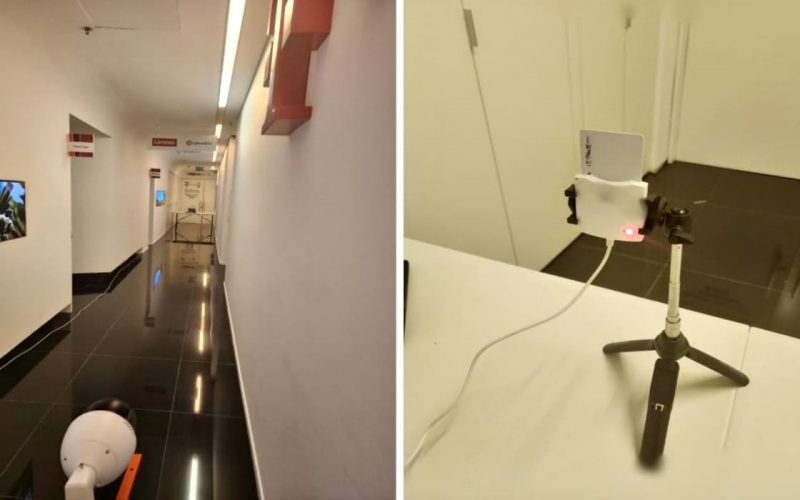
The team conducted two side-channel cryptanalytic timing attacks using this video-based cryptanalysis method. After examining the video footage of the power LED, they recovered a 256-bit ECDSA key from the smart card using a compromised internet-connected security camera. They placed the camera at a distance of 16 meters from the smart card reader.
Next, they recovered a 378-bit SIKE key from a Samsung Galaxy S8 by analyzing the video footage of the power LED of Logitech Z120 USB speakers connected to the USB hub they used to charge the Galaxy S8.
“This is caused by the fact that the power LED is connected directly to the power line of the electrical circuit, which lacks effective means (e.g., filters, voltage stabilizers) of decoupling the correlation with the power consumption,” researchers explained in their report.
But, this technique is not as simple as it seems because merely observing the LED with a camera cannot help recover security keys, even if the frame rate is considerably high. To record the rapid changes in an LED’s brightness using a standard webcam or smartphone camera, turning on the rolling shutter effect is essential, as this is when camera sensors start recording images line by line.
In a regular setting, the camera will record the entire image sensor. Using the same technique, attackers can exploit the video camera of an internet-connected security camera or even an iPhone 13 camera to obtain cryptographic keys. Cybersecurity researchers have shown concerns as this attack method will help attackers surpass all barriers to exploit side channels, which so far were not possible. The method’s non-intrusiveness makes it even more sinister.
However, as with every attack, there are some limitations to this one. For example, apart from being placed at a 16m distance, the camera should be in the direct line of sight view of the LED, and signatures should be recorded for 65 minutes.
Countering such attacks is possible if LED manufacturers add capacitors to reduce power consumption fluctuations. An alternate solution is covering the power LED with black tape to prevent information exposure.
Researchers have shared their explosive findings in a paper titled “Video-Based Cryptanalysis: Extracting Cryptographic Keys from Video Footage of a Device’s Power LED,” available here (PDF).
The White House National Security Council cautioned on Wednesday that it will review any attempted takeover of foreign commercial surveillance software by an American company to determine whether the acquisition poses a “counterintelligence threat” to the U.S. government.
The statement came in response to reporting from the Guardian revealing that a chewing gum heir and producer of several Adam Sandler movies is considering a bid for the NSO Group, including its powerful Pegasus spyware.
The Biden administration is concerned about the spread of foreign commercial surveillance tools like Pegasus and believes they “pose a serious counterintelligence and security risk to U.S. personnel and systems,” the statement said.
The Hollywood producer, Robert Simonds, was responsible for more than 30 movies that made in excess of $6 billion earlier in his career and more recently had worked as the chairman of STX Entertainment, which Variety calls a “fully integrated entertainment outlet” focused on expanding into emerging global markets on a variety of platforms. Simonds’ credits with Sandler include “Happy Gilmore,” “The Wedding Singer” and “Billy Madison.”
According to the Guardian, Simonds was recently picked to run the Luxembourg-based holding company controlling NSO. Sources told the Guardian that Simonds is considering ways to take over some of the spyware firm’s assets in an effort to give the Five Eyes intelligence partnership of the US, the UK, Canada, Australia and New Zealand exclusive access to the potent technology.
Pegasus and similar tools are being “misused around the world to enable human rights abuses and target journalists, human rights activists, political opposition members, or others perceived as dissidents and critics,” the White House statement said, noting that the Biden administration has launched a government-wide effort to stop Pegasus and other foreign commercial surveillance software from spreading. In March, the administration issued an executive order barring all U.S. government agencies from using the spyware, among other measures.
In its statement the White House also warned that U.S. companies should “be aware that a transaction with a foreign entity on the Entity List will not automatically remove the designated entity from the Entity List.” The list, published by the United States Department of Commerce’s Bureau of Industry and Security (BIS), restricts trade with specified foreigners, foreign entities, or governments. Companies included on the Entity List must meet strict licensing requirements for exports.
NSO has been on the Entity List since 2021. Despite the controversy swirling around the firm, its unprecedented technology has long attracted the attention of investors. Pegasus can hack into users’ phones remotely, activating the camera and microphone without a user knowing, as well as intercept all communications, including over encrypted apps like Signal.
Last July, the American defense firm L3Harris decided not to pursue a bid for NSO after initial explorations led to a backlash from the Biden administration
In this course, you’ll learn how to protect information to ensure its integrity, confidentiality, authenticity, and non-repudiation.
You will develop a basic understanding of cryptographic concepts and how to apply them, implement secure protocols, key management concepts, critical administration and validation, and Public Key Infrastructure.
Networks and Communications Security
In this course, you will learn about the network structure, data transmission methods, transport formats, and the security measures used to maintain integrity, availability, authentication, and confidentiality of the information being transmitted. Concepts for both public and private communication networks will be discussed.
Course objectives:
1. Describe network-related security issues 2. Identify protective measures for telecommunication technologies 3. Define processes for controlling network access 4. Identify processes for managing LAN-based security 5. Describe procedures for operating and configuring networked-based security devices 6. Define procedures to implement and operate wireless technologies
Security Awareness Training
This course is a complete foundational security awareness training program that covers a wide array of topics for nearly every type of end-user and learner level. The content is designed to allow organizations to be able to provide a comprehensive training program to help them protect their information assets against threats.
This training lasts approximately 2 hours, was designed to be engaging, and is based on real scenarios staff may face. The training is modular and must not be completed in one sitting.
Security Operations and Administration
This course addresses basic security concepts and the application of those concepts in the day to day operation and administration of enterprise computer systems and the information that they host. Ethical considerations in general, and the (ISC)² Code of Ethics in particular, provide the backdrop for any discussion of information security and SSCP candidates will be tested on both. Information security professionals often find themselves in positions of trust and must be beyond reproach in every way.
Several core information security principles stand above all others and this domain covers these principles in some depth. The CIA triad of confidentiality, integrity and availability forms the basis for almost everything that we do in information security and the SSCP candidate must not only fully understand these principles but be able to apply them in all situations. additional security concepts covered in this domain include privacy, least privilege, non-repudiation and the separation of duties.
Systems and Application Security
In this course, you will gain an understanding of computer code that can be described as harmful or malicious. Both technical and non-technical attacks will be discussed. You will learn how an organization can protect itself from these attacks. You will learn concepts in endpoint device security, cloud infrastructure security, securing big data systems, and securing virtual environments.
Course objectives:
1. Identify malicious code activity 2. Describe malicious code and the various countermeasures 3. Describe the processes for operating endpoint device security 4. Define mobile device management processes 5. Describe the process for configuring cloud security 6. Explain the process for securing big data systems 7. Summarize the process for securing virtual environments
An specialist in Russian cybersecurity who was sought by the United States has been arrested by officials in Kazakhstan, according to his employer, who made the announcement on Wednesday. At the same time, authorities in Moscow said that they will also pursue his extradition.
According to a statement released by the business, Nikita Kislitsin, an employee of the Russian cybersecurity firm F.A.C.C.T., was arrested on June 22. The Kazakh authorities are now reviewing an extradition request from the United States of America. Nikita Kislitsin was arrested in 2012 and accused of selling the usernames and passwords of American clients of the social networking firm Formspring. The facts of the arrest and the motivation for it are not clear; nonetheless, the case against Kislitsin was filed. After Group-IB left Russia earlier this year, the spinoff business that was established there and was branded as F.A.C.C.T. had Kislitsin working as the head of network security for both companies.
According to a statement released by Group-IB on Telegram, the arrest of Kislitsin is not connected to his employment there in any way. The F.A.C.C.T. said that the allegations brought against Kislitsin originated from his time “as a journalist and independent researcher,” but they could not disclose any other information. Kislitsin served as the editor-in-chief of the Russian publication “Hacker,” which is primarily concerned with information security and hacking at one point in his career.
In a separate proceeding that took place on Wednesday, a Moscow court issued a warrant for Kislitsin’s arrest on allegations that are associated with the unlawful access of confidential computer information. Russia has indicated that it would demand his extradition from Kazakhstan as well.
Researchers at Censys have identified hundreds of devices deployed within federal networks that have internet-exposed management interfaces.
Researchers at Censys have analyzed the attack surfaces of more than 50 Federal Civilian Executive Branch (FCEB) organizations and sub-organizations and discovered more than 13,000 distinct hosts across 100 autonomous systems.
The experts focused on roughly 1,300 of these hosts that were accessible online and discovered hundreds of devices with management interfaces exposed to the public internet.
These devices clearly are not compliant with the BOD 23-02 directive released in June by the US CISA with the objective of mitigating the risks associated with remotely accessible management interfaces.
“The Directive requires federal civilian executive branch (FCEB) agencies to take steps to reduce their attack surface created by insecure or misconfigured management interfaces across certain classes of devices.” states CISA.
Censys specifically looked for publicly accessible remote management interfaces associated with networked devices, including routers, access points, firewalls, VPNs, and other remote server management technologies.
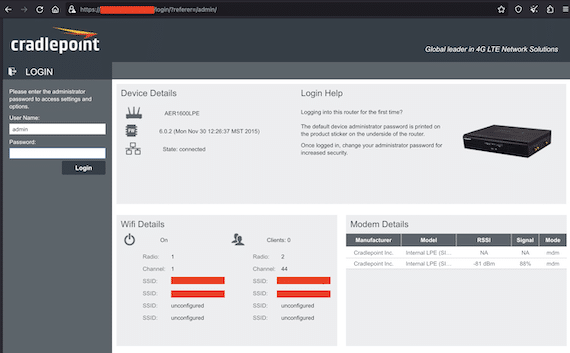
“In the course of our research, we discovered nearly 250 instances of web interfaces for hosts exposing network appliances, many of which were running remote protocols such as SSH and TELNET.” reads the analysis published by Censys. “Among these were various Cisco network devices with exposed Adaptive Security Device Manager interfaces, enterprise Cradlepoint router interfaces exposing wireless network details, and many popular firewall solutions such as Fortinet Fortiguard and SonicWall appliances.”
The researchers discovered 15 instances of exposed remote access protocols such as FTP, SMB, NetBIOS, and SNMP that were running on hosts exposed by Federal Civilian Executive Branches (FCEB). These protocols are known to be plagued by multiple security vulnerabilities that can be exploited by threat actors to compromise them and gain remote unauthorized access to government infrastructure.
The report also states that multiple out-of-band remote server management devices such as Lantronix SLC console servers were exposed only despite CISA’s directive stating that “these out-of-band interfaces should never be directly accessible via the public internet.”
The study also revealed that multiple federal civilian executive branch were exposing managed file transfer tools, such as MOVEit transfer, GoAnywhere MFT, VanDyke VShell file transfer, and SolarWinds Serv-U file transfer. These devices are often the targets of attacks from different threat actors.
“Exposed physical Barracuda Email Security Gateway appliances, which recently made headlines after a critical zero day was discovered being actively exploited to steal data” concludes the report. “Over 150 instances of end-of-life software, including Microsoft IIS, OpenSSL, and Exim. End-of-life software is more susceptible to new vulnerabilities and exploits because it no longer receives security updates, making it an easy target.”
According to BOD 23-02, FCEB agencies have to secure the devices within 14 days of identifying one of these devices.
Since April, Sudan has been rocked by fighting between two factions of its army. At first, the violence was contained in the capital city, Khartoum, but in recent days fighting has flared up in western Darfur, ground zero for a genocide that started back in 2003 and left hundreds of thousands dead.
Arab militiamen, known as janjaweed, or “devils on horseback,” were able to kill so many in Darfur in such a short time because the area is so remote — there was no one to witness the atrocities or hold the perpetrators to account, so they continued apace.
That’s what makes this latest conflict so different: Technology is allowing third-party observers to document human rights abuses in near real time thanks to, among other things, low-orbit satellites.
Researchers like Nathaniel Raymond, the executive director of Yale’s Humanitarian Research Lab, have been using satellites not just to document the violence, but with the right on-the-ground intelligence, to predict attacks before they happen.
The team recently documented evidence of war crimes in Ukraine with a report that provided both photographic and other proof that Russia was behind the systematic relocation of thousands of children from Ukraine into Russia and Russian-controlled regions of Ukraine.
Now Raymond and the team are working with the U.S. State Department to document human rights abuses in Sudan. It is a bit of a homecoming for them — they pioneered the use of satellite analysis and open-source intelligence in Darfur more than a decade ago and now they are back with better tools and a focus on ending a crisis that is decades in the making.
This conversation has been edited for length and clarity.