InfoSec Compliance & AI Governance For over 20 years, DISC InfoSec has been a trusted voice for cybersecurity professionals—sharing practical insights, compliance strategies, and AI governance guidance to help you stay informed, connected, and secure in a rapidly evolving landscape.
Atlassian fixed a critical zero-day flaw in its Confluence Data Center and Server software, which has been exploited in the wild.
Software giant Atlassian released emergency security updates to address a critical zero-day vulnerability, tracked as CVE-2023-22515 (CVSS score 10), in its Confluence Data Center and Server software.
The flaw CVE-2023-22515 is a privilege escalation vulnerability that affects Confluence Data Center and Server 8.0.0 and later. A remote attacker can trigger the flaw in low-complexity attacks without any user interaction.
The company is aware that the vulnerability has been exploited in attacks.
“Atlassian has been made aware of an issue reported by a handful of customers where external attackers may have exploited a previously unknown vulnerability in publicly accessible Confluence Data Center and Server instances to create unauthorized Confluence administrator accounts and access Confluence instances.” reads the advisory published by the company.
“Instances on the public internet are particularly at risk, as this vulnerability is exploitable anonymously.”
According to the advisory, the vulnerability doesn’t impact Atlassian Cloud sites. If customer’s Confluence site is accessed via an atlassian.net domain, it is hosted by Atlassian and is not vulnerable to this issue.
“It’s unusual, though not unprecedented, for a privilege escalation vulnerability to carry a critical severity rating. Atlassian’s advisory implies that the vulnerability is remotely exploitable, which is typically more consistent with an authentication bypass or remote code execution chain than a privilege escalation issue by itself.” reads a post published by Rapid7. “It’s possible that the vulnerability could allow a regular user account to elevate to admin — notably, Confluence allows for new user sign-ups with no approval, but this feature is disabled by default.”
If admins are unable to upgrade their Confluence instances, as an interim measure the company recommends restricting external network access to them.
Atlassian also recommends mitigating known attack vectors for this vulnerability by blocking access to the /setup/* endpoints on Confluence instances.
The software firm also recommends checking instances for the following indicators of compromise:
unexpected members of the confluence-administrator group
unexpected newly created user accounts
requests to /setup/*.action in network access logs
presence of /setup/setupadministrator.action in an exception message in atlassian-confluence-security.log in the Confluence home directory
In September 2022, threat actors were observed targeting unpatched Atlassian Confluence servers as part of an ongoing crypto mining campaign.
Trend Micro researchers warned of a crypto mining campaign targeting Atlassian Confluence servers affected by the CVE-2022-26134 RCE vulnerability disclosed in early June 2022.
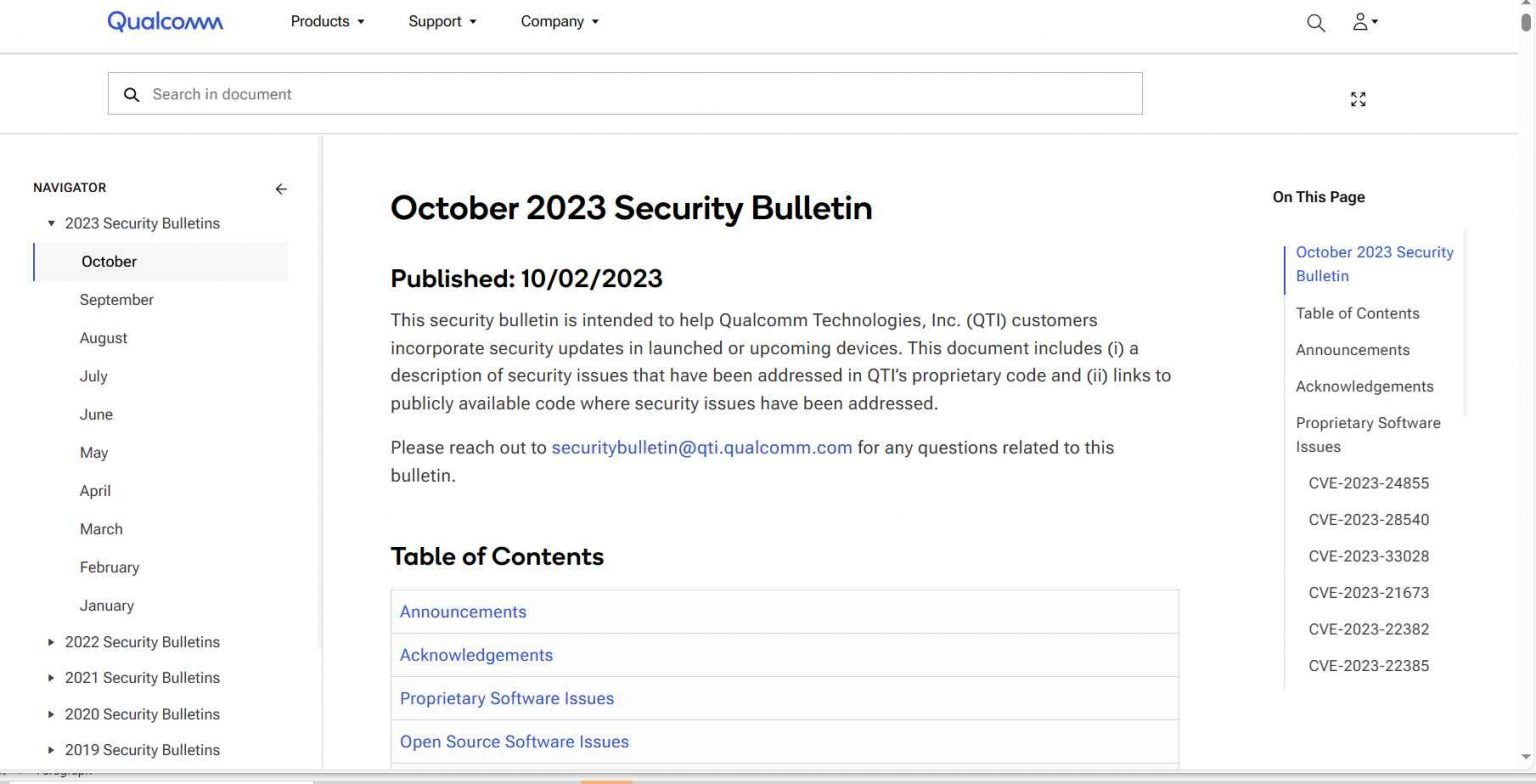
Qualcomm recently issued warnings about three zero-day vulnerabilities within its GPU and Compute DSP drivers that are currently being exploited by hackers. These warnings were initiated based on information received from Google’s Threat Analysis Group (TAG) and Project Zero teams. According to their reports, there is limited but targeted exploitation of vulnerabilities identified as CVE-2023-33106, CVE-2023-33107, CVE-2022-22071, and CVE-2023-33063.
In response to these imminent threats, Qualcomm has rolled out security updates designed to rectify the issues present within its Adreno GPU and Compute DSP drivers. The company has promptly communicated this information to the affected Original Equipment Manufacturers (OEMs), urging them to implement these security updates without delay.
One of the significant flaws, CVE-2022-22071, which was initially disclosed in May 2022, is categorized as a high-severity issue, with a CVSS v3.1 score of 8.4. This vulnerability is a use-after-free bug that can be exploited locally and affects widely-used chips, including the SD855, SD865 5G, and SD888 5G.
However, Qualcomm has opted to remain tight-lipped regarding the details of the other actively exploited vulnerabilities, namely CVE-2023-33106, CVE-2022-22071, and CVE-2023-33063. Further information on these vulnerabilities is expected to be disclosed in the company’s security bulletin scheduled for December 2023.
In addition to these, Qualcomm’s recent security bulletin also shed light on three other critical vulnerabilities, each with severe implications:
CVE-2023-24855 involves memory corruption within Qualcomm’s Modem component. This occurs when processing security-related configurations prior to the AS Security Exchange and has a CVSS v3.1 score of 9.8.
CVE-2023-28540 relates to a cryptographic issue within the Data Modem component, resulting from insufficient authentication processes during TLS handshakes, with a CVSS v3.1 score of 9.1.
CVE-2023-33028 involves memory corruption in the WLAN firmware which occurs during the copying of pmk cache memory without conducting necessary size checks, and it holds a CVSS v3.1 score of 9.8.
In light of these findings, Qualcomm disclosed an additional 13 high-severity flaws along with three more vulnerabilities classified as critical, all of which were identified by the company’s engineers. In total, Qualcomm has released updates to address 17 vulnerabilities across various components while highlighting that three zero-day vulnerabilities are currently being actively exploited.
Of these identified vulnerabilities, three have been classified as critical, 13 are high-severity, and one is medium-severity. Qualcomm’s advisory noted: “There are indications from Google Threat Analysis Group and Google Project Zero that CVE-2023-33106, CVE-2023-33107, CVE-2022-22071, and CVE-2023-33063 may be under limited, targeted exploitation.”
To safeguard against these vulnerabilities, patches for issues in the Adreno GPU and Compute DSP drivers have been issued and are readily available. OEMs have been duly notified and strongly urged to deploy these security patches at the earliest convenience to prevent potential exploitation.
Users of Qualcomm products are advised to stay vigilant and apply updates provided by OEMs as soon as they are released to ensure their devices are protected from these vulnerabilities. This proactive approach to device security is crucial in mitigating the risk of exploitation and maintaining the integrity and functionality of devices that play a pivotal role in various technological applications.
A critical Zip Slip vulnerability was discovered in the open-source data cleaning and transformation tool ‘OpenRefine’, which allowed attackers to import malicious code and execute arbitrary code.
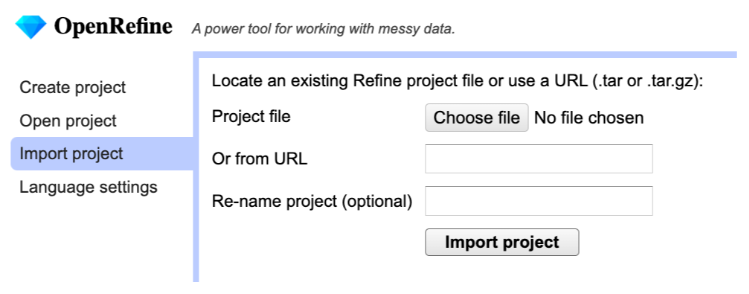
OpenRefine is a strong Java-based, free, open-source tool for handling messy data. This includes cleaning it, converting it into a different format, and expanding it with web services and external data.
According to SonarCloud, the Zip Slip vulnerability in OpenRefine allows attackers to overwrite existing files or the extraction of contents to unexpected locations. This vulnerability is caused by insufficient path validation while extracting archives.
Details of the OpenRefine Zip Slip Vulnerability
The project import feature of OpenRefine versions 3.7.3 and earlier is vulnerable to a Zip Slip vulnerability (CVE-2023-37476) with a CVSS score of 7.8.
Although OpenRefine is only intended to execute locally on a user’s computer, a user can be tricked into importing a malicious project file. Once this file is imported, the attacker will be able to run arbitrary code on the victim’s computer.
Web Interface of OpenRefine Tool
“The vulnerability gives attackers a strong primitive: writing files with arbitrary content to an arbitrary location on the filesystem. For applications running with root privileges, there are dozens of possibilities to turn this into arbitrary code execution on the operating system: adding a new user to the passwd file, adding an SSH key, creating a cron job, and more”, researchers said.
Fix Available
OpenRefine Version 3.7.4, published on July 17, 2023, has a fix for the issue.
In light of this, Users are recommended to update to OpenRefine 3.7.4 as soon as feasible.
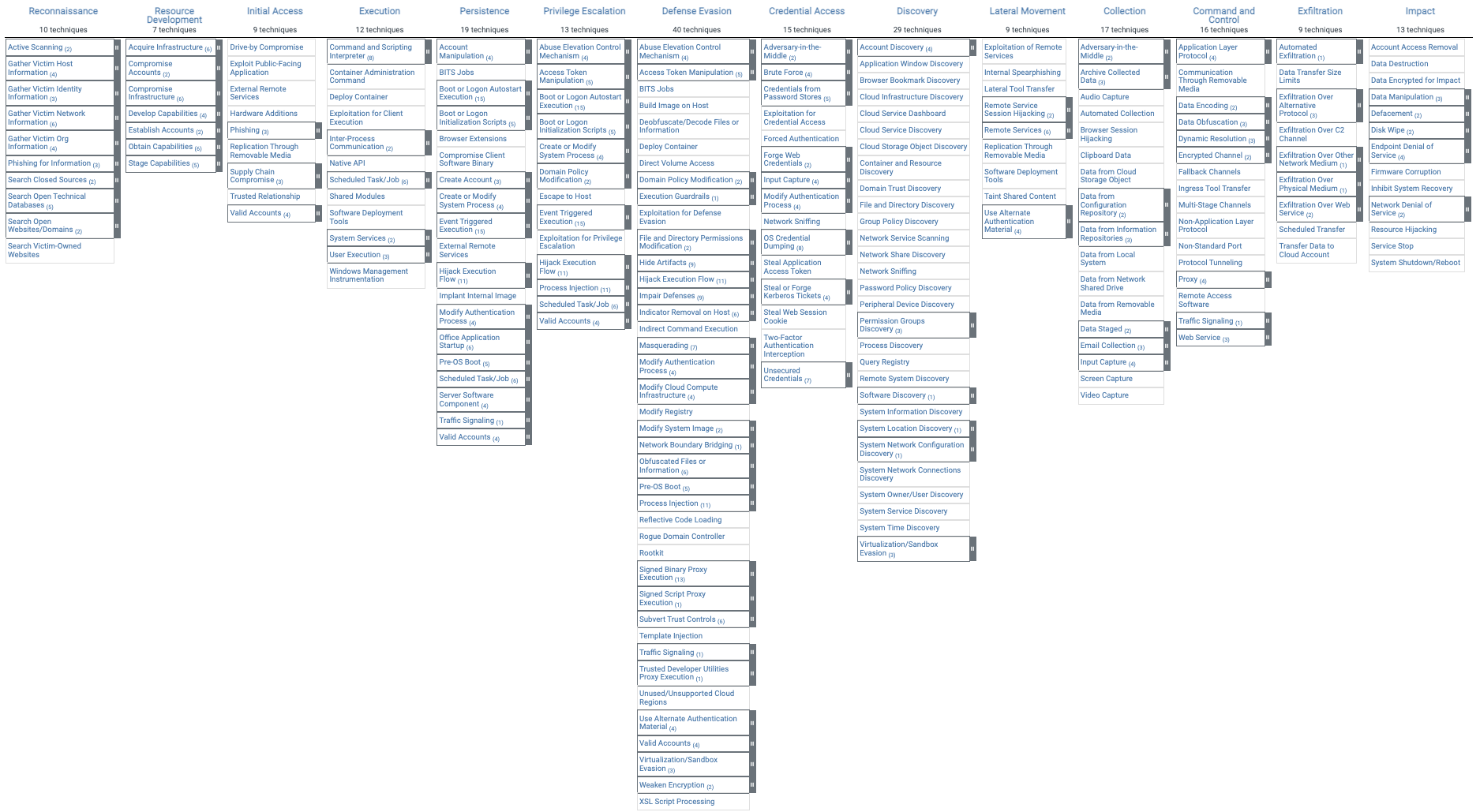
MITRE ATT&CK, a common language for cybersecurity professionals to communicate with each other and better understand real-world adversary behaviors, celebrates its 10th anniversary this fall. In this Help Net Security interview, project leader Adam Pennington discusses the framework, how defenders can best use it, and what’s next.
What were the main drivers behind the creation of the MITRE ATT&CK framework back in 2013?
The framework was born out of an internal exercise performed at MITRE’s Ft. Meade, Md. site in 2013. We put sensors on desktop computers to analyze a series of red and blue team cyber operations, which wasn’t common back then. White team observers noticed that the red team’s actions weren’t representative of real-world adversary behavior. When they requested that the red team adjust their tactics, they lacked a unified language to explain themselves.
The white team changed course by pulling actual cyber-attack scenarios from honey pots of real data for the blue and red teams to design operations around. Ultimately, the exercise culminated with a basic Excel spreadsheet outlining different intrusion techniques using a common language. It was incredibly helpful to us internally, so on the chance it would be useful to the rest of the world, we released it publicly as MITRE ATT&CK.
How has the framework evolved over the past decade, especially in the last five years, where we’ve seen a surge in its popularity?
What started out as an Excel spreadsheet identifying one adversary and one tactic has transformed into a framework referenced and contributed to by users across the world. By the time it reached the public, there were around 100 behaviors, and in 2016 we began tracking groups and software based on open-source threat intelligence reporting. In 2018, we amassed enough interest to launch ATT&CKcon (the fourth iteration of the user conference will run Oct. 24-25 at MITRE’s McLean, Va., headquarters).
In the last five years, we’ve expanded the core framework with ATT&CK for industrial control systems, mobile, Linux, various cloud platforms (Office 365, Azure, etc.), network devices (computer switches and routers), and more. We continue to make information digestible and user friendly by including both what adversary tactics are, and techniques users can employ to defend against them. To that end, we recently added pseudocode analytics directly to ATT&CK that people can use in their defenses as an “easy button.”
How does the framework stay up to date with real-world observations and contributions? How often is it updated?
As I’m answering this question, we’ve gotten at least one contribution from a community member via email—evidence that we receive updates often! ATT&CK is heavily community driven. Our framework isn’t effective without users keeping us abreast of the latest threats.
Additionally, we monitor social media, public reports from various government entities, and updates from incident response firms. Behind the scenes, we have large teams maintaining and organizing information for each respective arena.
We release a new version of ATT&CK every six months. After trying out shorter and longer timeframes, we found six months to be the sweet spot satisfying both organizations that bake ATT&CK into their products and defenses and those who want information fast.
Given the evolving nature of cyber threats, what long-term value does the MITRE ATT&CK framework offer to cybersecurity professionals?
ATT&CK continues to evolve right alongside adversaries, but historically this is a space that changes slowly over time. Bad actors exhibit relatively routine methods once they’ve gained entry into a network. Even though the exact piece of software, IP address, or even the human on the other end may differ, there are fundamental attack sequences that don’t often fluctuate. Behaviors documented in ATT&CK a decade ago are still seen today.
On the other hand, there are new spaces ripe for intrusion like cloud-based products. We’re expanding the framework in step with new technologies.
For organizations that find the initial implementation process complex, what advice do you have to ease this learning curve?
Start with bite size pieces. Time and time again, we’ve seen cybersecurity teams from small organizations attempt to comprehensively integrate ATT&CK into their defenses, just to quickly realize they’re in over their heads. The framework is not one-size-fits-all.
To solve for this challenge, we recommend multiple strategies focused on starting small. The framework is divided into techniques, so an organization may begin with a single tactic relevant to their system. For example, if you’re concerned with identity management, you can dig into how adversaries are stealing passwords and identify overlap between their behaviors. Once you reach those prioritization points, it’s easier work backwards and add protections against them.
What are some of the less obvious applications of the framework that professionals in the cybersecurity industry should be aware of?
We’re pleasantly surprised to see how ATT&CK is being leveraged in academic environments, from high schools to universities. One high school in Virginia invited our team to come in and speak to the work, which they previously integrated into their curriculum.
Several private sector organizations also have woven the framework into employee education. I recently spoke to somebody whose company regularly discusses a “technique of the week” pulled from the ATT&CK database.
What future enhancements or expansions do you envision for the MITRE ATT&CK framework?
As adversaries explore new exploitation methods, we’ll be there cataloging their every move. Our team continues to advance threat intelligence reporting on spaces growing in popularity, such as Linux and operating systems beyond Windows.
The goal is, and has always been, to build a community of cyber defenders. We know ATT&CK is a boon for larger organizations, but we’re working on ways to make it more accessible for smaller and less-resourced entities.
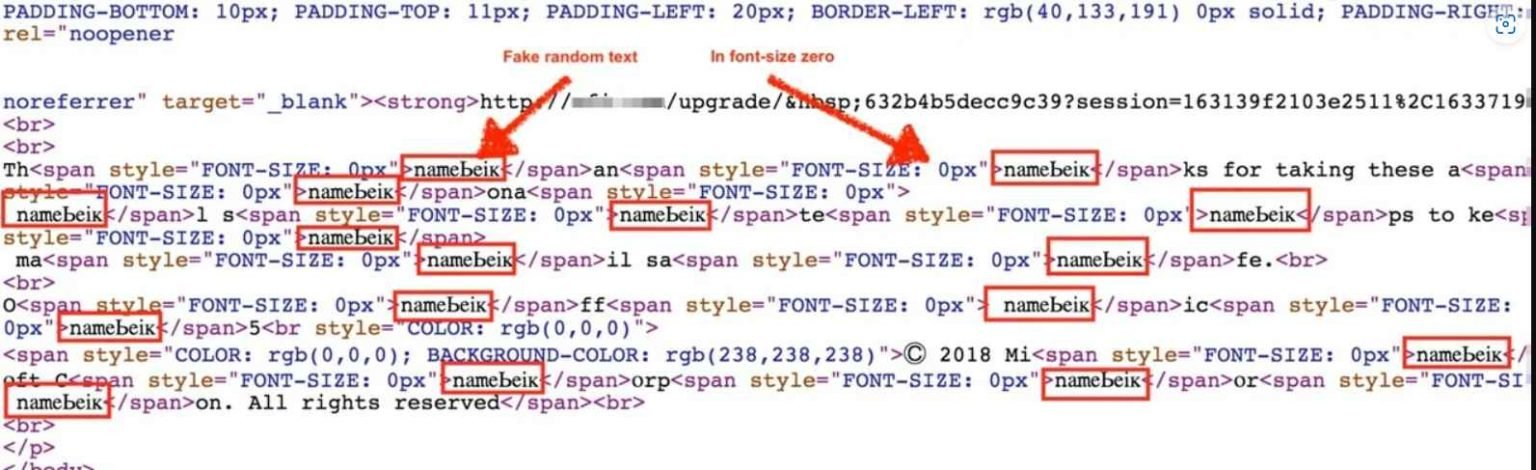
Threat actors have begun utilizing an innovative approach to zero-point font obfuscation, a pre-existing technique, in an attempt to deceive users of Microsoft Outlook. They do so by creating an illusion that certain phishing emails have been thoroughly scanned and cleared by antivirus programs, thus increasing the chances of these deceptive emails bypassing security protocols. This not only aids in evading security measures but also enhances the probability of recipients falling prey to these fraudulent schemes.
Jan Kopriva, an analyst at the SANS Internet Storm Center, encountered a phishing email that cleverly employed text written in zero-pixel size font. This technique, originally documented by Avanan (a subsidiary of Check Point) researchers in 2018 and known as ZeroFont Phishing, was being utilized in a distinct and innovative manner, according to Kopriva’s observations. Historically, cyber attackers have integrated zero font size text within phishing emails to disrupt the continuity of text that is visible, making it increasingly difficult for automated email scanning systems like those implemented by Outlook to flag suspicious emails.
However, Kopriva noticed a variation in the use of the ZeroFont technique, which diverged from its original purpose. Instead of utilizing it to obstruct automated scanning systems from labeling the email as potentially harmful or fraudulent, it was applied to craft an illusion of trustworthiness for the recipient. Kopriva elaborated that the technique was being used to modify the text that is usually displayed in Outlook’s listing pane—a section adjacent to the body of emails that provides users with a sneak peek into the email content.
Rather than presenting the typical email subject line followed by the initial few lines of the email—which could potentially raise red flags about a phishing attempt—the listing pane under this technique displayed the subject line and an additional line of text. This added text falsely indicated that the email had undergone a security scan and was deemed safe by a threat protection service.
Avanan researchers have also discovered another manipulation of this technique, dubbed the “One Font” technique. In these instances, threat actors embed extremely small text within the zero- or one-point font range as part of their strategy to develop more elusive and sophisticated phishing scams. This minuscule font size effectively dismantles email scanning techniques relying on semantic analysis, generating confusion for the scanning systems while remaining undetectable to the recipients due to its unreadable size.
In the specific phishing email Kopriva analyzed, the attackers ingeniously incorporated text that implied the email had been verified and secured. This was achieved by inserting text in zero font size ahead of the email’s actual content. As a result, in Outlook’s listing pane, the user would see text confirming the email’s security status immediately below the subject line—instead of the true opening line of the phishing email. This deceptive approach takes advantage of Outlook’s method of displaying email text, thus exploiting it to the attacker’s benefit.
Kopriva acknowledged the possibility that this tactic has been deployed undetected for a while now. Nonetheless, it represents an additional tool in the arsenal of cyber threat actors, enhancing their ability to launch effective phishing campaigns. As defenders against cyber threats, awareness of this tactic is crucial. He recommends that organizations actively engaged in conducting security awareness training focused on phishing should incorporate information on this technique. This knowledge would empower employees to recognize and appropriately respond to deceptive emails employing this technique as an anti-detection strategy, thus fortifying organizational defenses against such cyber threats.
If you want a cyber liability policy, or want the lowest possible premiums, it is important to understand the security controls that most cyber underwriters expect to see. They will differ based on carrier, individual underwriter, organization size, industry, etc. and are subject to change.
The cyber insurance market continues to be marked by volatility, keeping insureds and underwriters alike on their toes.
In early 2021, the market shifted very abruptly, and increasing frequency, severity, and the sophistication of cybercrime pushed cyber underwriters to re-evaluate their approach to pricing, appetite, coverage, and underwriting.
Insureds renewing cyber insurance programs in the last 18 months know that underwriters have substantially upped their game when it comes to underwriting cyber risk.
At the beginning of this shift to a hard market, there was a definitive change to more detailed and technical underwriting. There was also inconsistency regarding the network security controls that were considered the most important, but today, the markets are in closer alignment.
Below are the top 10 network security controls that most cyber underwriters expect to see. They will differ based on carrier, individual underwriter, organization size, industry, etc. and are subject to change.
1) Comprehensive Multi-factor Authentication (MFA) plus Strong Password Controls
MFA (privileged access, remote access, remote cloud-based apps/O365) and strong password controls protect an organization against phishing, social engineering and password brute-force attacks and help prevent logins from attackers exploiting weak or stolen credentials. For many cyber underwriters, this is the most important control.
2) Network Segregation and Network Segmentation
Network segregation (separation of critical networks from the internet) and network segmentation (splitting larger networks into smaller segments) help reduce the risk and potential impact of ransomware attacks and will improve IT professionals’ auditing and alerting capabilities, which will assist in identifying cyber threats and responding to them.
3) Strong Data Backup Strategy
A strong data backup strategy is typically part of a solid disaster recovery/business continuity plan.
Underwriters want to see daily data backups, backups stored in more than one location, access rights limited to data backups, etc.
4) Disabled Administrative Privileges on Endpoints
Disabling administrative privileges on endpoints improves security posture. An administrative end-user on an endpoint for even a few minutes can lead to catastrophic data breaches if the endpoint is compromised.
5) Security Awareness Training for Employees
Security awareness has never been more important. The threat environment is evolving rapidly. Regular and frequent employee training is a must in today’s environment.
6) Endpoint Detection and Response (EDR) and Anti-Malware
EDR provides advanced measures for detecting threats and provides the ability to identify the origin of an attack as well as how it is spreading.
Anti-malware is a version of EDR — it scans your system for known malware such as trojans, worms, and ransomware, and upon detecting them, removes them. Underwriters look for both.
7) Sender Policy Framework (SPF)
SPF plays an important role in email authentication. It helps prevent emails from unauthorized senders from hitting an employee’s inbox. Underwriters look for this defensive tool.
8) 24/7 Security Operation Center (SOC)
A dedicated SOC acts as the first line of defense against cyber threats. The analysis and threat hunting conducted by SOC teams help prevent attacks from occurring in the first place.
SOCs provide increased visibility and control over security systems, enabling the organization to stay ahead of potential attackers. Cyber underwriters view this as a key proactive approach to network security.
9) Security Information Event Management (SIEM) Platform
SIEM tools collect and aggregate log and event data to help identify and track breaches.
They are powerful systems that provide security professionals with insight into what is happening in their IT environment and help track relevant events that have happened in the past.
10) Strong Service Accounts Security in Active Directory
Assigning service accounts in built-in privileged groups, such as the local Administrators or Domain Admins group, can be risky. Underwriters want service accounts removed from Domain Admin groups.
The implementation of these top 10 network security controls does not represent the full extent of the cyber underwriting process nor will they be the basis for a premium discount.
There are a host of additional controls, policies, procedures, and processes that underwriters will be evaluating. But checking these boxes will provide insureds with a solid foundation designed to meet the baseline expectations of cyber underwriters.
Google has designated a brand new CVE number for a major security vulnerability that has been discovered in the libwebp image library, which is used for displaying pictures in the WebP format. This flaw has been found to be exploited in the wild by malicious users. A major vulnerability that existed in Google Chrome for Windows, macOS, and Linux was addressed by a security update that was provided by Google. A CVE ID of CVE-2023-4863 has been assigned to the security flaw, and the vulnerability has been rated as having a severity of 8.8 (High).
As a result of the analysis of the vulnerability, it was found that the libwebp library included a heap buffer overflow vulnerability. This vulnerability allows a threat actor to conduct an out-of-bounds memory write by using a crafted HTML page to trigger the issue.
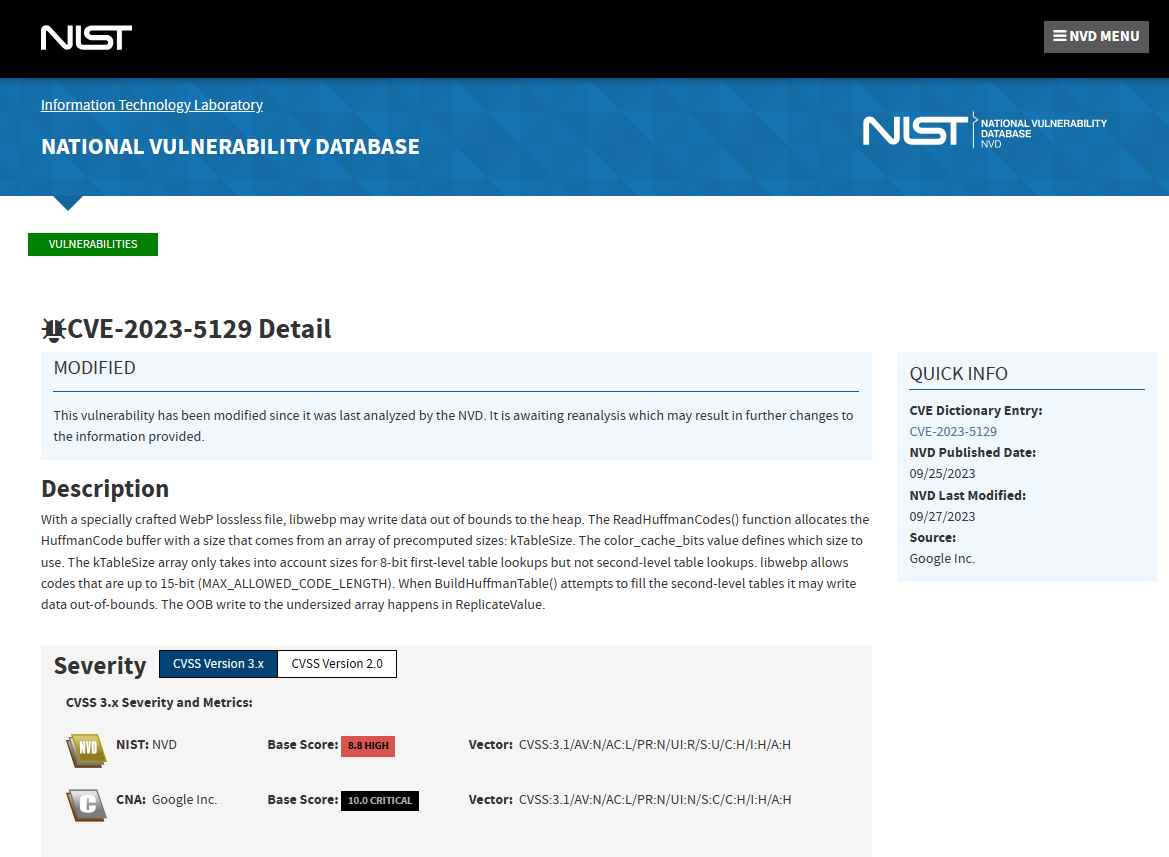
However, Google has once again reported this vulnerability, which is now known as CVE-2023-5129 and is being monitored. After further investigation, it was discovered that the vulnerability known as CVE-2023-41064 and this one also impacted the same libwebp library. The development comes after Apple, Google, and Mozilla provided remedies to address a flaw that may enable arbitrary code execution when processing a carefully designed picture. The bug is tracked separately as CVE-2023-41064 and CVE-2023-4863. The execution of arbitrary code might lead to a security breach. It is likely that both problems are solutions to the same fundamental issue that exists in the library. CVE-2023-41064 is claimed to have been linked with CVE-2023-41061 as part of a zero-click iMessage attack chain termed BLASTPASS to deliver a mercenary malware known as Pegasus, as stated by the Citizen Lab. At this time, we do not have access to any other technical specifics.
But the choice to “wrongly scope” CVE-2023-4863 as a vulnerability in Google Chrome belied the reality that it also affects practically every other program that depends on the libwebp library to handle WebP pictures, showing that it had a wider effect than was originally supposed. CVE-2023-4863 was discovered by Google security researchers and is tracked by the CVE identifier.
An investigation carried out by Rezillion over the last week has uncovered a comprehensive list of frequently used software programs, code libraries, frameworks, and operating systems that are susceptible to the CVE-2023-4863 vulnerability.
Additionally, the security researcher who found the vulnerabilities CVE-2023-41064 and CVE-2023-4863 reported both of them. This indicates that the researcher brought this issue to the attention of both firms, which led to the creation of two distinct CVEs in the past.
Vulnerability scanners delve into systems to uncover security gaps. The primary mission? To fortify organizations against breaches and shield sensitive data from exposure.
Beyond merely pinpointing weaknesses, vulnerability scanning is a proactive measure to anticipate potential attacker entry points. The essence of this process lies not just in detection but in remediation and refining strategies, ensuring that vulnerabilities are prioritized.
Here’s a list of 5 free, open-source vulnerability scanners you can try today.
Nuclei
Nuclei is a scanner designed to probe modern applications, infrastructure, cloud settings, and networks, assisting in identifying and correcting vulnerabilities. Internally, Nuclei relies on the principle of templates. These YAML files detail how to identify, rank, and fix specific security threats. A global community of security professionals and researchers actively contributes to the template library. This ecosystem, continuously updated within the Nuclei tool, has received over 5000 templates.
Nikto
Nikto is a web server scanning tool that conducts in-depth tests on web servers. It checks for over 6700 potentially dangerous files/programs, including certain files or programs, inspects for outdated versions of more than 1250 servers, and looks for particular issues in over 270 server versions. Nikto isn’t crafted for discreet operations. It aims to assess a web server as swiftly as possible, leaving evident traces in log files or being detectable by IPS/IDS systems. Nevertheless, it supports LibWhisker’s methods to counteract IDS, whether to experiment with or evaluate an IDS setup.
Cariddi
Cariddi enables you to take a list of domains, crawl URLs, and scan for endpoints, secrets, API keys, file extensions, tokens, and more.
OpenVAS
OpenVAS is a comprehensive vulnerability scanning tool. It offers both unauthenticated and authenticated testing, supports a range of high-level and low-level internet and industrial protocols, provides performance optimization for large-scale scans, and features a robust internal scripting language to design any vulnerability test.
Wapiti
Wapiti is a tool designed to assess the security of your websites or web applications. It conducts “black-box” scans, meaning it doesn’t analyze the source code. Instead, it navigates through the webpages of the live web application, searching for scripts and forms to input data. After identifying the list of URLs, forms, and their respective inputs, Wapiti functions like a fuzzer, introducing payloads to determine if a script is susceptible to vulnerabilities.
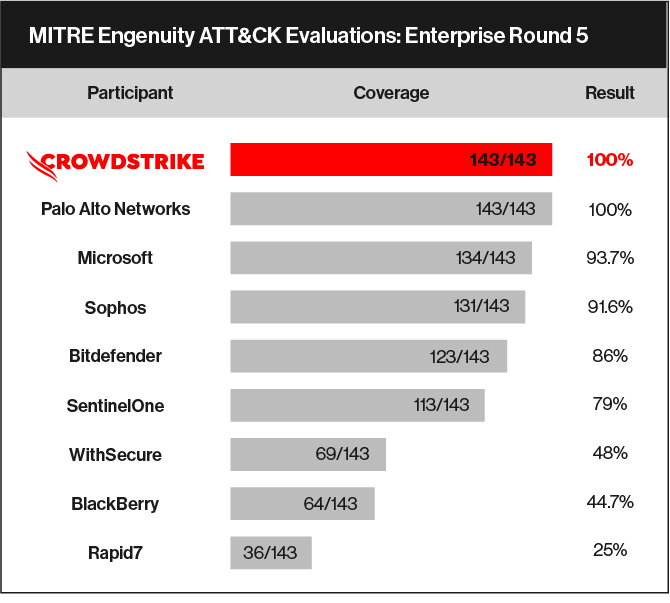
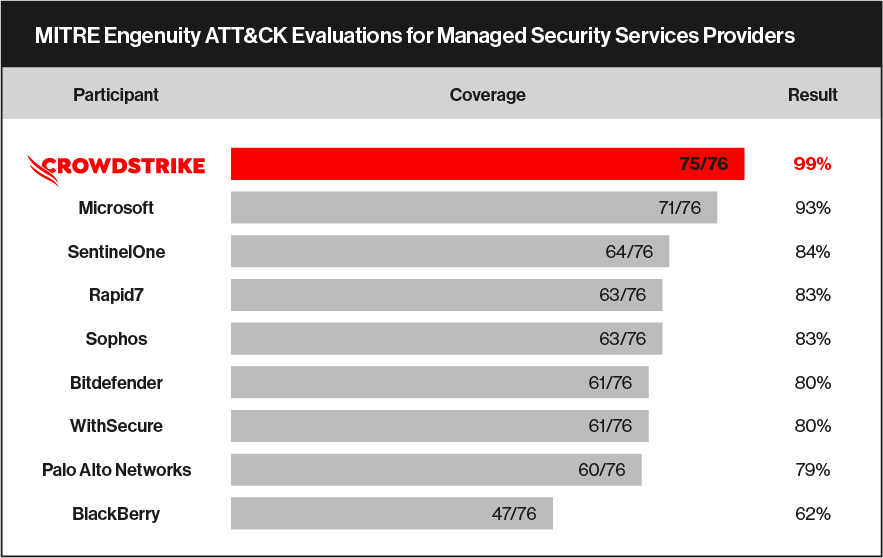
CrowdStrike achieved the highest coverage across the last two consecutive MITRE Engenuity ATT&CK® Evaluations. We achieved 100% protection, 100% visibility and 100% analytic detection coverage in the Enterprise Round 5 evaluation — which equates to 100% prevention and stopping the breach. We also achieved the highest detection coverage in the Managed Security Services Providers testing.
However, interpreting the results of the Round 5 test can quickly become very confusing, with endless representations of test results from every provider. Unlike other third-party analysts, MITRE doesn’t place vendors on a quadrant or graph, or provide a comparative score. It leaves interpretation up to each vendor and customers themselves — meaning you’ll be flooded with claims of “winning” the evaluation.
In MITRE, there are no winners or leaders, only raw data on a vendor’s coverage against either a known or unknown adversary. Without better guidelines and enforcement from MITRE, the results will continue to confuse customers, given the wildly different solutions being tested and approaches to the evaluation.
Evaluations like MITRE can help clarify your choice. We use the evaluations to further sharpen the capabilities of the CrowdStrike Falcon® platform, as well as ensure our customers understand our point of view on cybersecurity: Stopping the breach requires complete visibility, detection and protection that you can actually use in a real-world scenario.
How Should You Interpret the Results?
First, it’s important to understand the nuances of the two types of evaluations run by MITRE: open-book and closed-book tests.
Open-book testing for known attackers: The MITRE ATT&CK Enterprise Evaluations, such as the recent Round 5, give vendors months of advance notice on the adversary being emulated and their tactics, techniques and procedures (TTPs), and then measure for coverage in a noiseless lab environment.
Figure 1. CrowdStrike detects 143 (100%) steps during the MITRE Engenuity ATT&CK Evaluation: Enterprise Round 5 with high-quality analytics (Tactic and Technique)
Not all results are equal, which is hard to see in a comparative chart like this, as vendors have the opportunity to tune their systems in advance and apply configuration changes on-the-fly with teams of experts who may be working behind the scenes 24/7 during the testing period. For instance, we’ve seen vendors make updates to operating systems for the test, while others manually fix verdicts or add new context and detections.
Round 5 emulated Turla, which CrowdStrike classifies as VENOMOUS BEAR, a sophisticated Russia-based adversary. Given their advanced tactics, few vendors were able to identify all of their tradecraft, with the average visibility being 83%. High-quality analytic detection of Tactic and Technique were even less, with the average dropping to 66% — with CrowdStrike achieving full 100% coverage with analytic detections.
High-quality analytics are extremely important, as they provide insight into what an adversary is attempting to achieve and how they are attempting to achieve it. High-quality analytic detection provides the context that analysts need, letting them spend less time trying to determine if the alert is a true or false positive, and also provides insight into what an adversary is trying to do. With tactic and technique detections, security analysts can spend more doing what matters: stopping breaches.
In a comparative chart like the one above, it isn’t possible to see if the capability provided is noisy annotated telemetry or important context added to a high-fidelity alert.
Closed-book testing for unknown attackers: MITRE’s Managed Security Services Providers test is a truer measure of how vendors will protect a customer in the real world, with no do-overs or chances to hunt for additional evidence. The only notification vendors receive in advance is a start date, with no visibility into the adversary being emulated or their TTPs. MITRE runs the test, and you get a coverage score.
Figure 2. CrowdStrike detected 99% of adversary techniques during MITRE ATT&CK Evaluations for Managed Security Services Providers.
To find the cybersecurity partner for you, it’s worth reviewing and correlating performance across many different tests that use different TTPs and force products to behave differently to find the true outcome of the platform. Ensure you look at the results of both open-book and closed-book tests, including those that measure false positives and performance, and know exactly what vendors did to achieve their results. Most importantly, make sure you can achieve those same outcomes in your enterprise. Sophisticated adversaries don’t provide the luxury of a heads-up, and customers won’t have potentially dozens of people working behind the scenes on their deployment in the real world.
Stopping Breaches Matters
Next, it’s critical to evaluate how effectively a vendor can stop adversaries without manual intervention. In the open-book Round 5 test, the average blocking rate was 86%, compared to CrowdStrike’s 100% protection. Even more important than the coverage is understanding how the scores were achieved.
When digesting the MITRE results, ask vendors these three questions, and ask them to prove it:
Did they use easily bypassed signatures or custom detections requiring prior knowledge?
Are the analytic detections and protections high-fidelity and suitable at enterprise scale?
How can I reproduce this result in my own environment?
For comparison, the CrowdStrike Falcon platform stopped 13 of the 13 scenarios with no prior knowledge, using advanced AI and behavior detection. Our AI-powered prevention will be just as effective in your environment as in MITRE’s testing, against both known and unknown adversaries in the real world.
How Do You Bring It All Together?
At the end of the day, how a platform achieved its results matters as much as coverage itself. With open-book tests like the Enterprise Evaluation Round 5, you could hire enough experts to manually add custom tags, detections and context to achieve perfect coverage. That’s why you’ll see vendors shouting their coverage from the rooftops — as at face value many did well.
All comparative charts, including the ones we’ve shown above, only tell part of the story. What’s important is looking at the details: how you do it matters as much as what you do. If you can’t actually achieve the results in your environment, it’s simply a number on a comparative chart. It can’t stop adversaries and it can’t stop breaches.
Ask your provider, including us, how they achieved their scores — and ensure it wasn’t a herculean manual effort that could never work in the real world. It’s also important to understand exactly what the full bill-of-materials looks like to reproduce the results. Some vendors require a complex point product deployment, others an expensive combination of software and network security hardware, and others a significant headcount investment to operate.
The factor to consider most carefully are vendors that use custom test configurations that are impossible to reproduce in a real-world production environment. With CrowdStrike, our platform will always be delivered via our single lightweight agent that’s easy to deploy, easy to manage and never requires a reboot. We consolidate cybersecurity, with better outcomes, at a much better ROI.
We stand behind our platform and the way we delivered our superior coverage across both MITRE’s open-book and closed-book testing for known and unknown adversaries — providing true breach prevention for the real world.
We encourage everyone in the industry to follow MITRE’s intention: Its testing yields valuable raw data that needs to be applied in your environment — with the context around how a vendor achieved its results — to be meaningful. And to our friends at MITRE, the time is now to shut down the endless noise and ensure customers understand your purpose: to make the world safer with better-informed decisions.
Though we can’t see it, the world brims with more technology than ever. These days, devices with internet connectivity live within the ever-growing Internet of Things (IoT)—a worldwide “web” where wireless communication and information technology work together. Since the early 2000s, smart cars have appeared within the IoT, sporting more comfortable, efficient, and safer rides. Despite their advancements, they remain constant targets for cyberattacks and hacking.
What is Automotive Hacking?
Functionally, automotive hacking is like traditional cyberattacks; the actor breaks into the system, gaining abilities to change files, open doors to other networks, or harvest unused resources. Automotive hacking occurs similarly, but the target is a car rather than a home computer or business database.
The target is the car’s electronic control unit (ECU), which connects to many communication channels and networks. The ECU is also intimately related to the car itself; hackers can do anything with this access, from changing the radio to steering takeovers. Some may outright steal the vehicle.
What are the Risks of Automotive Hacking?
A stolen car is a problem, but hackers aren’t typically interested in committing glaring crime sprees. They’re more concerned with insidious results. For example, a hacker could break into a car’s ECU to jump to another network. Then, they could access databases or servers as they please. Before jumping to a better vantage point, they could unleash a long list of problems for the car owner:
Broken or destroyed cybersecurity functions: making the car even more vulnerable.
Programmed behaviors: some may remove alarms and notifications from activation.
Data and personal information theft: opening owners to financial issues and fraud.
Forced temperature conditions: causing cars to shut down in high-temp states.
How Hackers Can Gain Access to Vehicles?
A smart car is under threat from many angles. Depending on the end goal of the assailant, the attack may take various forms, from over the internet to physical interaction with the car. Those wanting to access the ECU to jump away are less likely to come in contact with the vehicle. The hacker’s available technology limits their access gateways:
Forced Access
Hackers can break into an ECU by plugging an infected USB data port into the car. Like other computers, cars can suffer from malware and viruses, but their consequences may be more deadly. For this reason, owners of modern cars must be vigilant of what and who is plugging things into their cars.
Extended Key Fob Range
Although fobs are a common feature of many cars, they are also a significant system weakness in smart cars. The more utility the car fob has, the more access the hacker could gain by breaking into it. A hacker’s access lets them start or stop the car, open the windows and doors, and even trigger alarms.
Smartphone Access
Hackers can get smartphone access in many ways; regarding vehicles, hackers can attack from the internet, over applications, or through a network. A corrupt smartphone exposes more than personal and financial information; it also opens any connected devices and networks to the threat. Connected automotive applications are another common access point for skilled hackers.
Telematics
Another weakness is the technology used to gather and analyze data from fleet vehicles. Telematic tech allows for seamless information interaction from any location but is readily exploitable for hackers. Those with a successful attack have network access, organization data, and personal client or consumer information.
How to Prevent Automotive Hacking?
Smart cars, despite being giant, rolling targets, have come a long way since their inception. Car manufacturers invest in more cybersecurity every year. The manufacturers and application developers are only part of the solution, however. Car owners must take proactive steps to help defend their property and network.
Manufacturer-Endorsed Software Only
One can rarely trust third-party applications. Devices that connect to them (or accept their Terms and Conditions) can quickly become infected with problems. Only use reputable applications; Google and Apple Maps are good examples, though cautious consumers may want to read their policies before agreeing.
Smart cars and internet connectivity will further entwine in the coming decades. As fast as cybersecurity tech advances, the faster hackers evolve their attacks. Smart cars and everything they interact with are at risk of falling victim to cyber threats. Taking necessary precautions on time can protect against identity theft and prevent becoming a victim of cyberattacks.
Up-to-Date Software
Gone are the days when consumers could ignore their system updates for weeks (or years). These days, software updates are the most significant protection individuals have against cyber threats. Car owners should check their systems regularly for compliance.
Password Protect
Like cellphones, many smart cars have “About” information that may provide access to the ECU. The only way to prevent its use is by routinely monitoring the accounts and properly configuring access. Administration passwords are not permanent solutions.
Internet Access via VPN
Virtual private networks (VPNs) mask a device’s IP address with an alternative. It allows consumers to have another layer of protection between themselves and the internet. VPNs are crucial to securing vehicle gadgets, engines, and internal components.
Strictly Need-Basis GPS
The Global Positioning System (GPS) of a modern car is one of the car’s most significant weaknesses. GPS opens the system to transmissions, which can lead to direct attacks. Hackers could also target their internal connections if the GPS works through a third party.
Install a Firewall
Removing the connectivity from a modern car is impossible. Consumers must protect the connection to prevent successful cyberattacks. Installing the proper firewall will do more than alert the owner to threats; it will also restrict communications from all unauthorized parties. Firewalls are considered a necessary line of defense.
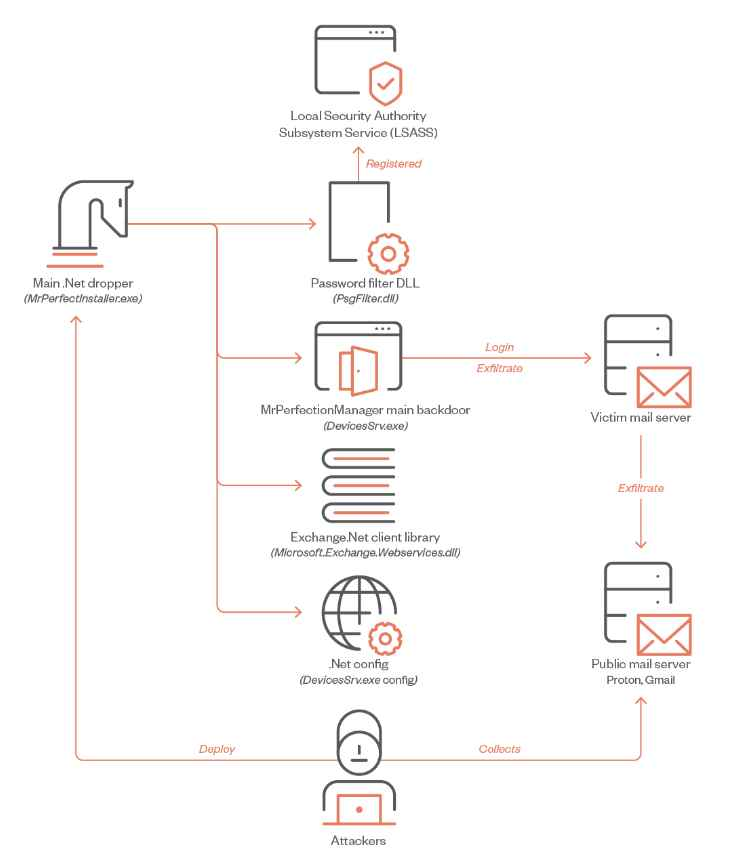
As part of an ongoing cyber espionage effort, the Iranian nation-state hacking group known as OilRig has continued to target government entities in the Middle East. This cyber espionage campaign makes use of a newly discovered backdoor in order to exfiltrate data. OilRig (APT34) is an Iranian cyberespionage gang that has been active since 2014 and has been targeting different sectors and governments in the Middle East, including Chemical, Energy,Finance and Telecom.
Following the commencement of the DNSpionage operation in 2018-2019 targeting Lebanon and the UAE, OilRig began the HardPass operation in 2019-2020 utilizing LinkedIn to target individuals in the energy and government sectors.
In recent weeks, the experts in charge of cybersecurity at trendmicro have discovered and assessed two campaigns run by the OilRig APT group:
Outer Space (2021)
Juicy Mix (2022)
Due to the operations’ concentration on the Middle East, Israeli organizations were the only ones targeted by these cyberespionage efforts. They gained access to the network by posing as genuine businesses using VBS droppers to plant C# and.NET backdoors and post-compromise data mining tools.
An Overview of the Campaign
Outer Space: It was an OilRig campaign from the year 2021 that employed an Israeli HR website as a command and control server for the Solar backdoor. . Here, with just the most fundamental functionalities, the Solar linked to the SC5k downloader, while the MKG was utilized for data exfiltration from browsers.
OilRig started a new campaign in 2022 called “Juicy Mix.” It targeted Israeli organizations with improved tools, compromised a job site for command and control, and then attacked an Israeli healthcare organization with a Mango backdoor, two hidden browser-data dumpers, and a Credential Manager stealer. Juicy Mix was a hit.
In order to get access to the target system, both attacks used VBS droppers, which were most likely distributed using spear phishing emails.
These droppers distributed Mango, made sure the infection would remain, and linked to the command and control server. Concealing the base64 encoding and basic string deobfuscation that the embedded backdoor employed at the same time was accomplished using these methods.
After inserting the backdoor, the dropper transmits the compromised computer’s name to the command and control server in the form of a base64-encoded POST request. This is done after it has scheduled Mango (or Solar) to run every 14 minutes.
During the Outer Space campaign, OilRig launches Solar, a backdoor that is both simple and flexible. It is able to download and run files, as well as independently exfiltrate prepared data.
Mango, which had previously been known as Solar, has been replaced in Juicy Mix by OilRig’s Mango, which, although having similar features and a workflow, has substantial differences.
In the same way as Solar did, Mango starts an in-memory job that runs every 32 seconds, talks with the C&C server, and carries out orders. Mango, on the other hand, is distinct in that it replaces Solar’s Venus assignment with a whole new exfiltration command.
Post-compromise tools
The following post-compromise tools are included below for your convenience:
Downloader for SampleCheck5000, often known as SC5k
Data scrapers for browsers
Windows Credential Manager stealer
OilRig makes its way from Solar to Mango via implants that function similarly to backdoors. While they do make use of specialized technology for data collecting, they nevertheless rely on more traditional methods to get user information.
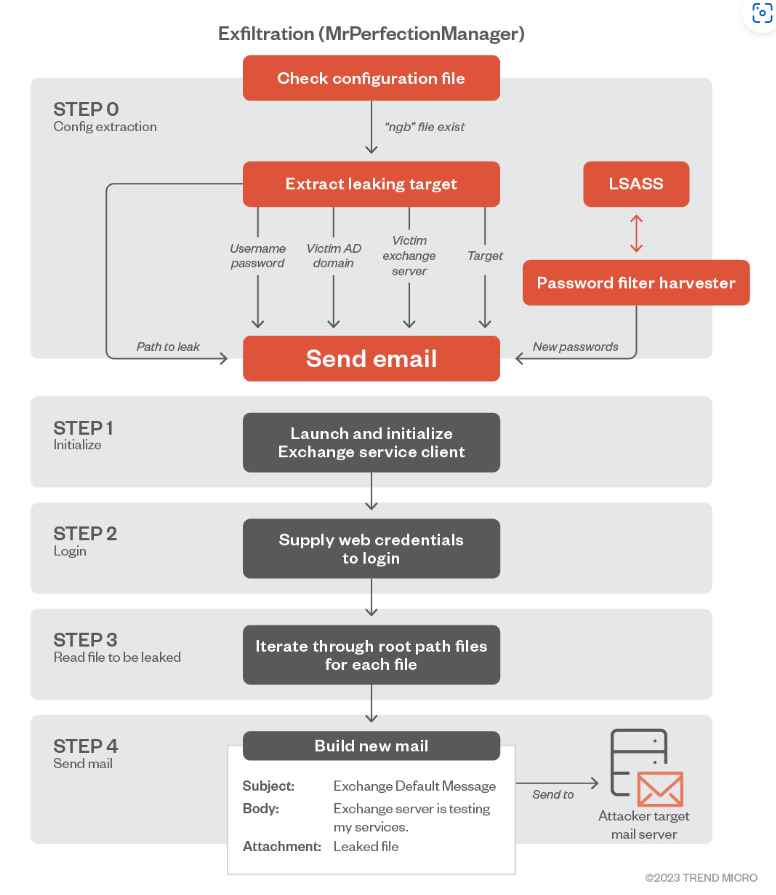
The parallels between the first-stage dropper and Saitama, the victimology patterns, and the usage of internet-facing exchange servers as a communication technique were identified in the case of Karkoff, which is how the campaign is connected to APT34.
If anything, the rising number of malicious tools connected with OilRig illustrates the threat actor’s “flexibility” to come up with new malware depending on the targeted environments and the privileges held at a particular stage of the assault. This “flexibility” may be inferred from the fact that the threat actor has created a growing number of harmful tools linked with OilRig.
The National Student Clearinghouse (NSC) reported that nearly 900 colleges and universities across the U.S. had data stolen during attacks by a Russia-based ransomware gang exploiting the popular MOVEit file-sharing tool.
The nonprofit manages educational reporting, data exchange, verification, and research services for 3,600 colleges and universities as well as 22,000 high schools.
In June, the organization first confirmed that it was affected by exploitation of the tool, which was targeted via several critical vulnerabilities by the ransomware gang Clop.
Dozens of schools published notices confirming that student and alumni data was accessed in the breach but it was never clear just how many colleges or universities were affected.
In filings with California regulators last week, the National Student Clearinghouse provided a list of affected schools totalling nearly 890 — covering almost every state and including several of the largest, most prominent universities in the U.S.
The U.S. Department of Education requires 3,600 colleges and universities nationwide to use the MOVEit tool to share information with the NSC, which provides this data to the National Student Loan Data System (NSLDS) on behalf of the schools.
The stolen information includes personally identifiable information such as Social Security numbers and dates of birth.
NSC says it notified law enforcement after discovering the incident and told regulators in Maine on August 31 that it is sending breach notification letters to 51,689 people. NSC also sent letters to each school affected by the breach.
“The unauthorized party obtained certain files within the Clearinghouse’s MOVEit environment, which may have included information from the student record database on current or former students,” NSC said in an advisory released this summer. “We have no evidence that the affected files included the enrollment and degree files that organizations submit to the Clearinghouse for reporting requirements and for verifications.”
Security firm Emsisoft estimates that more than 62 million people and 2,000 organizations were affected by the MOVEit breaches. Several class action lawsuits have been filed against Progress Software, the company behind MOVEit.
Sean Matt, one of the lawyers behind the lawsuits, called it a “cybersecurity disaster of staggering proportions.”
“Millions of individuals are now at the mercy of cybercriminals due to a single security vulnerability in the design of the MOVEit software. The data compromised in this incident — social security numbers, banking information and even the names of people’s children — will undoubtedly lead to years of strife and concern,” he said.
“This is not just a data breach, but an unacceptable breach of the public’s trust in Progress and other companies that have a responsibility to protect the private data they collect.”
With the rising number of cyber-attacks, organizations must make sure they are ready to defend themselves. That means equipping cybersecurity teams with sufficient skills to identify and effectively stop an attack in its tracks. Worryingly, only 17% of tech workers are completely confident in their cybersecurity skills, while 21% have no confidence at all. Given that 74% of data breaches are caused by human error, it is crucial that upskilling practices are in place.
One of the best ways to develop the necessary skills is through hands-on learning which allows employees to practice in a low-risk environment and better understand the methods used by cyber-attackers. This kind of experience is vital for security teams to be able to anticipate threats and capably protect the business.
The importance of testing security teams’ skills
Automated defense technologies are highly effective for commodity threats – those which are based on programs that are readily available and require no customization to launch an attack. But integrating AI/ML capabilities into security operations can generate a false sense of security. Attackers can still create the exact same program with millions of different file hashes or apply human ingenuity to evade known defenses.
Anti-virus is built on a massive signature-database-shaped house of cards that easily crumbles by changing text within programs. The same applies for network signatures, endpoint detection and response. There are certain behaviors that traditional defense technologies focus on, but ultimately, malware is just software. The more it can blend into common software activity, the less likely it is that an attack will be detected. And this is easier than it seems.
Security teams need easily replicable techniques to emulate threat scenarios to test their defense skills against the skill level of cyber-attackers. Testing is how businesses find out the cybersecurity teams’ skill level without waiting for a breach.
At least yearly, there should be a full red team assessment; the red team is made up of offensive security professionals whose role is to exploit the company’s vulnerabilities and overcome cybersecurity controls. But given attackers always operate in real time, there should be a weekly exercise for individual tactics, techniques and procedures (TTPs).
Start with the basics
Even the most advanced cyberattacks leverage basic techniques that have been around for years. Businesses need to focus on fully leveraging the tools they have to detect even the most basic of techniques and then move their way up to more advanced techniques from there. That will remove the most common threat from the equation first. This allows them time to identify and build the expertise and infrastructure required to be mature enough to defend against the most advanced or dangerous threats.
Anticipate the risk by using threat simulation learning models
One example of such an exercise is a blue team friendly attack simulation. The blue team here refers to security experts who are aware of the organization’s objectives and security strategy and are trying to defend and respond to attacks performed by the red team. One group poses as the opposing force, or in this case, cyber criminals, while testing the ability of the defenders to detect and protect against such attacks.
However, these types of simulations are performed on extensive cyber ranges that take a lot of time and effort to create, and don’t always accurately reflect the enterprise environment. In addition, it requires security teams to take several days off to play through the exercise. The quality of these simulations depends on the team that developed it and the complexity of the available cyber range resources. The rapid evolution of threats means that the work cyber teams do can have a short shelf life, as does the ability to properly prepare defenders.
Defenders need to be able to rapidly test against new tactics and techniques in their everyday environment. This allows them to quickly check the efficacy of their monitoring tools, as well as their people and processes, on an ongoing basis, that is accurate to current threats. This is important to the concept of ‘becoming the threat’. What cybersecurity teams really need is the ability to test individual tactics in their organization’s live environment, without the overhead of a full red team exercise.
Hone skills and build confidence through hands-on learning
Simulations are a good way to understand how to best defend and respond against different attacks and determine whether employees need to upskill. At its basic level, if the blue team wins, they can be confident when it comes to a cybersecurity threat. But if they lose, the organization still has work to improve their defense strategy.
When simulating various TTPs, you can categories them two ways. First by level of expertise required to perform the specific attack. Second, by the area, or type of data in which the attack should be detected.
The concept of defense in depth is that even if you miss one component of an attack, you can ideally catch others so that you can prevent the attackers achieving their goal. Measurement is based on the time it takes for a team to detect and respond to a particular TTP once launched, by category of the technique. Skill, process, and technology gaps can then be mapped by identifying where response times were low, or there was no response time at all.
Up to date skills central to staying ahead of the hackers
Cyber teams play a constant cat and mouse game to keep up with the evolving threat landscape. However, organizations can adopt specific practices to ensure teams have built in skills to defend against cyber-attacks and protect the business.
Providing employees with first-hand experiences of how a cyber-attack plays out can break down the barrier between the defender and the attacker to better understand the threat and anticipate the risks. This type of learning pathway is crucial for an organization who needs to know how well equipped their teams are for when a cyber-attack inevitably occurs. Only then can decisions be made to fill skills gaps with additional training or if their current level of expertise is enough to protect the business.
When it comes to cyber-attacks, security teams must act extremely quickly to minimize the impact in stressful environments. Hands-on threat simulations will arm cybersecurity experts with the skills and confidence necessary to react to a cyber-attack calmly and efficiently, whilst protecting the company’s sensitive data and avoiding costly damages.
In a recent disclosure, BIND 9, a widely-used DNS (Domain Name System) server software, has been found vulnerable to two critical security flaws, labeled CVE-2023-4236 and CVE-2023-3341.
These vulnerabilities, if exploited, could have serious consequences, making it imperative for users to take swift action.
This vulnerability arises from a flaw in the networking code responsible for handling DNS-over-TLS queries in BIND 9.
Under high DNS-over-TLS query load, an internal data structure is incorrectly reused, leading to an assertion failure. Consequently, a vulnerable named instance may terminate unexpectedly.
Thankfully, this flaw does not affect DNS-over-HTTPS code, as it employs a distinct TLS implementation. However, for those relying on DNS-over-TLS, the impact can be severe.
The second critical vulnerability, CVE-2023-3341, relates to the control channel code within BIND 9.
This flaw allows attackers to exploit a stack exhaustion issue by sending specially crafted messages over the control channel.
This can lead to names unexpectedly terminating, causing potential disruption.
Notably, the attack is effective in environments with limited stack memory available to each process or thread, making it difficult to predict its impact.
For users of BIND 9, immediate action is necessary to address these vulnerabilities. ISC (Internet Systems Consortium), the organization behind BIND, has provided solutions to mitigate these risks.
For CVE-2023-4236:
– Upgrade to BIND 9.18.19 or BIND Supported Preview Edition 9.18.19-S1.
– Consider disabling DNS-over-TLS connections if not required.
For CVE-2023-3341:
– Upgrade to BIND 9.16.44, 9.18.19, or 9.19.17, depending on your current version.
– Ensure that control-channel connections are limited to trusted IP ranges when enabling remote access.
No active exploits have been reported for these vulnerabilities. However, proactive measures are crucial to safeguard your systems against potential threats.
ISC extends its gratitude to the individuals who responsibly reported these vulnerabilities.
Robert Story from the USC/ISI DNS root server operations team brought CVE-2023-4236 to ISC’s attention, while Eric Sesterhenn from X41 D-Sec GmbH identified CVE-2023-3341.
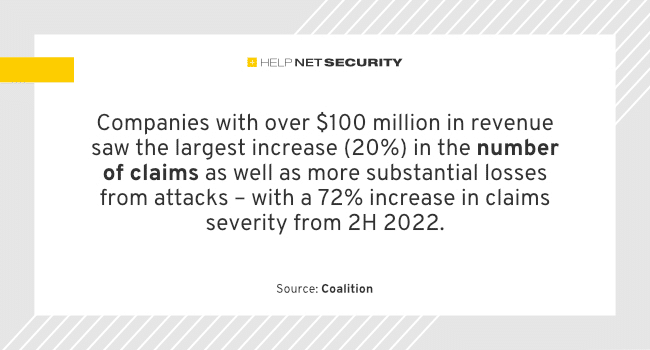
Coalition found that both claims frequency and severity rose for businesses in early 2023 across all revenue bands. Companies with over $100 million in revenue saw the largest increase (20%) in the number of claims as well as more substantial losses from attacks – with a 72% increase in claims severity from 2H 2022.
“The cyber threat landscape has become more volatile, and, as a result, we’ve seen claims become more severe and more common than ever,” said Chris Hendricks, Head of Coalition Incident Response.
“To help prevent these costly and disruptive incidents, organizations need to take an active role in improving their security defenses and make risk management a top priority,” added Hendricks.
Coalition’s report also saw a resounding increase in ransomware claims frequency in 1H 2023, which grew by 27% from 2H 2022. Claims severity also reached a record high, increasing 61% from the previous half and 117% over last year.
Moreover, cybercriminals increased their demands: the average ransom demand was $1.62 million, a 47% increase over the previous six months and a 74% increase over the past year.
Email security remained critical to claims reduction
The company also recovered an unprecedented $23 million in stolen funds — all of which went directly back to policyholders. Notably, Coalition’s total FTF (funds transfer fraud) recovery amount was nearly three times greater than 2H 2022. The average recovery amount was $612,000 per FTF claim, representing 79% of all FTF losses in instances where recovery was possible.
FTF claims frequency increased by 15% in 1H 2023, and FTF severity increased by 39% to an average loss of more than $297,000. This half, Coalition negotiated ransomware payments down to an average of 44% of the initial amount demanded.
Businesses using Google Workspace for email were markedly more secure than those using Microsoft Office 365 (M365) and on-premises Microsoft Exchange. M365 users were more than twice as likely to experience a claim compared to Google Workspace users. On-premises Microsoft Exchange users were nearly three times more likely to experience a claim than businesses using Google Workspace.
Overall, companies using Google Workspace experienced a 25% risk reduction for FTF or BEC claims and a 10% risk reduction for ransomware claims.
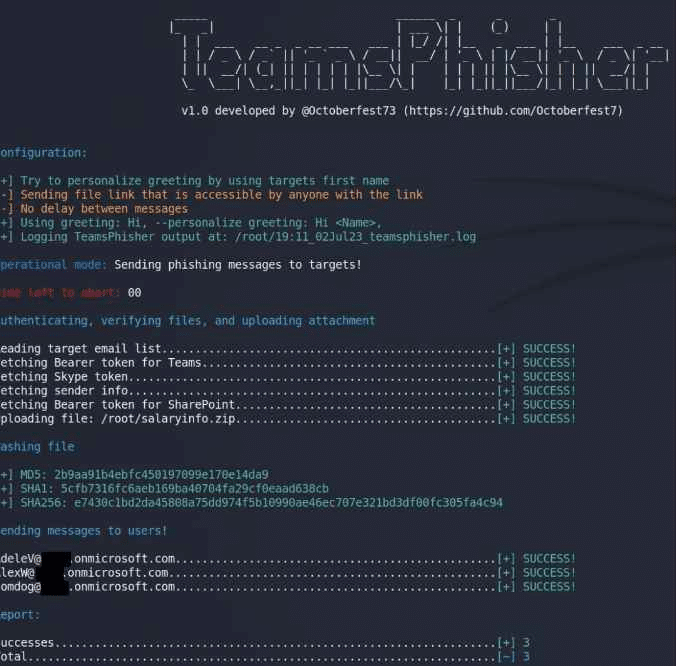
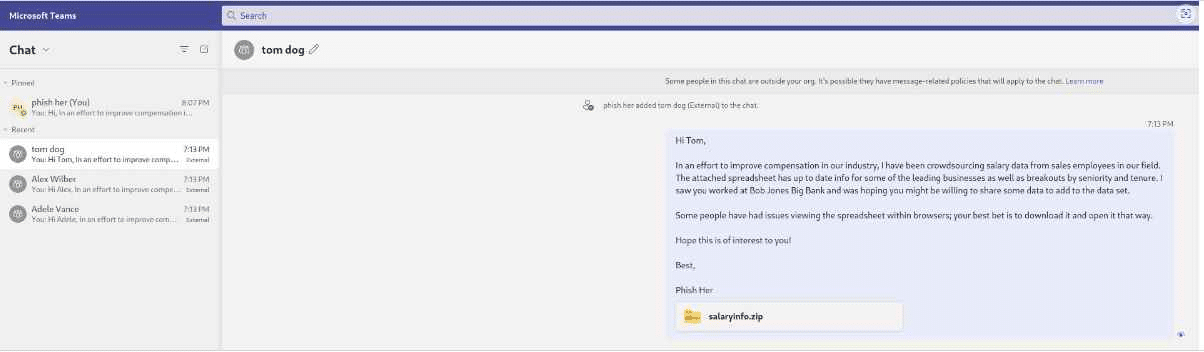
TeamsPhisher is a Python3 software that was designed to make it easier for phishing messages and attachments to be sent to users of Microsoft Teams whose companies or organizations permit connection with outside parties. It is not feasible to transfer files to users of Teams who are not part of one’s company in most circumstances. Recently, Max Corbridge (@CorbridgeMax) and Tom Ellson (@tde_sec) from JUMPSEC published a means to circumvent this limitation by modifying HTTP requests made by Teams in order to change who is sent a message with an attached file.
TeamsPhisher utilizes a number of other techniques, including some of Andrea Santese’s (@Medu554) older ones, in addition to this one.For the authentication component of the attack flow as well as other basic utility functions, it relies significantly on TeamsEnum, a brilliant piece of work that was developed by Bastian Kanbach (@bka) of SSE.
TeamsPhisher’s goal is to include the most useful aspects of the aforementioned projects in order to provide a method that is robust, fully adaptable, and highly effective for authorized Red Team operations to use Microsoft Teams for phishing in access-related circumstances.
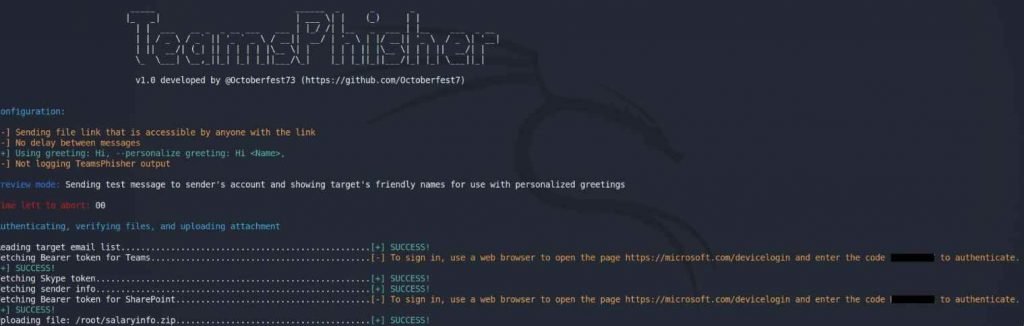
You will need to provide TeamsPhisher with an attachment, a message, and a list of people to target. After that, it will go over the list of targets while simultaneously uploading the attachment to the sender’s Sharepoint.
First, TeamsPhisher will enumerate the target user and check to see whether that person really exists and is able to receive messages from the outside world. After that, it will initiate a new conversation with the person you choose. Note that this is technically a “group” conversation since TeamsPhisher contains the target’s email address twice; this is a clever hack from @Medu554 that will circumvent the “Someone outside your organization messaged you, are you sure you want to view it” splash screen that might offer our targets a reason to stop and think twice about viewing the message.
The user who was identified will get the message that was sent to them along with a link to the attachment that was stored in Sharepoint after a new thread has been established between our sender and the target.
After this first message has been sent, the newly established thread will be visible in the sender’s Teams GUI and may be engaged with manually, if necessary, on a case-by-case basis. Users of TeamsPhisher are required to have a Microsoft Business account (as opposed to a personal one such as @hotmail, @outlook, etc.) that is licensed for both Teams and Sharepoint in order to utilize the software.
This indicates that you will require an AAD tenant as well as at least one user who has a license that corresponds to it. At the time of publishing, the AAD licensing center does have some free trial licenses available for download that are capable of meeting all of the prerequisites for using this product.
Before you may utilize the account with TeamsPhisher, you will have to ensure that you have at least once successfully logged into the personal Sharepoint site of the user with whom you will be exchanging messages. This should be something along the lines of tenantname-my.sharepoint.com/personal/myusername_mytenantname_onmicrosoft.com or tenantname-my.sharepoint.com/personal/myusername_mytenantname_mycustomdomain_tld. Alternatively, you could also use tenantname-my.sharepoint.com/personal/myusername_mytenantname_onmicrosoft.com.
In terms of the needs of the local community, We strongly advise upgrading to the most recent version of Python3. You will also require the authentication library developed by Microsoft:
To upload the file to a Sharepoint site, you will need to manually give the site’s name. This would most likely be required in the event if the sender’s tenant makes use of a unique domain name (for example, one that does not adhere to the xxx.onmicrosoft.com norm). Just the singular name should be used; for instance, if your SharePoint site is located at mytest.sharepoint.com, you should use the –sharepoint mytest option.
Replace TeamPhisher’s standard greeting (“Hi,”) with a personalized greeting that will be appended to the message that is supplied by the –message option. For instance, “Good afternoon,” or “Sales team,” are examples.
By default, the Sharepoint link that is provided to targets may be accessed by anybody who has the link; to restrict access to the Sharepoint file so that it can only be viewed by the target who got it, use the –securelink option. It’s possible that this will help shield your virus from the blue team.
TeamsPhisher will make an effort to determine the first name of each person it is targeting and will use that name in the welcome it sends to them. For instance, tom.jones@targettenant.onmicrosoft.com would get an email with the greeting “Hi Tom, ” as the first line of the message. This is not ideal and is dependant on the format of the emails that are being targeted; use the –preview option to see whether or not this is a suitable match for the list of emails that you are targeting.
The preview version of TeamsPhisher will be executed. This will NOT send any messages to the target users; instead, the “friendly” name that would be used by the –personalize option will be shown. In addition, a sample message that is indicative of what targets would receive with the current settings will be delivered to the sender’s Teams. You may log in to check how your message appears and make any required adjustments to it.
You may choose to have a delay of x seconds between each message sent to targets. Can be of assistance with rate-limiting concerns that may arise.
TeamsPhisher will determine which accounts are unable to receive messages from third-party organizations, which accounts do not exist, and which accounts have subscription plans that are incompatible with the attack vectors.
TeamsPhisher now enables login with sender accounts using multifactor authentication (MFA), thanks to code contributed by the TeamsEnum project.
If you use the –securelink flag, the recipients of the message will see a popup asking them to verify themselves before they can view the attachment in Sharepoint. You have the ability to determine if this adds an excessive number of additional steps or whether it adds ‘legitimacy’ by sending them via the actual Microsoft login feature.
Mitigation By changing the choices associated with external access, which can be found in the Microsoft Teams admin center under Users > External access, companies may reduce the risk that is provided by the vulnerability that has been discovered.
Organizations are provided with the freedom to pick the optimal rights to match their requirements by Microsoft, including the ability to whitelist just particular external tenants for communications and a global block that prevents any communications from occurring.
Apple released emergency security updates to address three new actively exploited zero-day vulnerabilities.
Apple released emergency security updates to address three new zero-day vulnerabilities (CVE-2023-41993, CVE-2023-41991, CVE-2023-41992) that have been exploited in attacks in the wild.
The three flaws were discovered by Bill Marczak of The Citizen Lab at The University of Toronto’s Munk School and Maddie Stone of Google’s Threat Analysis Group. The two research teams have already discovered multiple actively exploited zero-days in Apple products that were exploited in targeted attacks against high-profile individuals, such as opposition politicians, dissidents, and journalists.
CVE-2023-41993 is an arbitrary code execution issue that resides in the Webkit.
An attacker can trigger the flaw by tricking the victim into visiting specially crafted web content that may lead to arbitrary code execution. The IT giant addressed the flaw with improved checks.
The second zero-day flaw, tracked as CVE-2023-41991, resides in the Security framework. An attacker can exploit this vulnerability to bypass signature validation using malicious apps. The company fixed the vulnerability by fixing a certificate validation issue.
The third zero-day, tracked as CVE-2023-41992, resides in the Kernel Framework. A local attacker can trigger the flaws to elevate their privileges. Apple fixed the flaw with improved checks.
“Apple is aware of a report that this issue may have been actively exploited against versions of iOS before iOS 16.7.” reads the advisory published by the company.
The company fixed the three zero-day vulnerabilities with the release of macOS 12.7/13.6, iOS 16.7/17.0.1, iPadOS 16.7/17.0.1, and watchOS 9.6.3/10.0.1.
Fixes are available for iPhone XS and later, iPad Pro 12.9-inch 2nd generation and later, iPad Pro 10.5-inch, iPad Pro 11-inch 1st generation and later, iPad Air 3rd generation and later, iPad 6th generation and later, iPad mini 5th generation and later
Apple has already patched 16 actively exploited zero-day vulnerabilities in 2023, below is the list of the flaws fixed by the company:
A recent report by Kolide and Dimensional Research has disclosed that three-quarters of employees resort to utilizing their personal and often unmanaged mobile devices and laptops for work purposes, with nearly half of the surveyed companies permitting such unmanaged devices to access secure resources. The report, based on responses from 334 IT, security, and business professionals, highlights the diverse motivations behind this practice, with three specific reasons indicating that a substantial number of employees use personal devices as a means to circumvent their organization’s security policies.
The dangers of shadow IT
The prevalence of shadow IT in enterprise environments is a well established fact.
When the organization’s IT department refuses to sign off on a needed solution or they drag their feet when asked to approve it, workers in other departments are tempted to deploy it without the IT workers’ knowledge.
The problem is compounded by the widespread use of personal/unmanaged devices, as the IT department has no way of knowing what’s happening on them, whether they are regularly patched/upgraded or whether they have been compromised.
“When engineers do production-level work on personal devices, an organization’s risk of a breach skyrockets. A bad actor can use a security flaw in an unmanaged device to break into the production environment, as in the LastPass breach. Even a simple smash-and-grab of a laptop can turn into a nightmare if that laptop is full of PII, and IT has no way to remotely wipe it,” Kolide researchers noted.
Employees shouldn’t be blamed for flawed security policies
Workers use their personal devices for work to (among other things) access websites and applications that have been restricted by the IT department, and because getting through security measures is frustrating.
This, and the fact that only 47% of the pollees said that they always follow all the cybersecurity policies, shows that the security policies in place are not working for all.
“Unfortunately, we don’t have data on which specific policies respondents felt justified in going around, but we can make two inferences from this response: Any security policy that workers can ignore at will does not have adequate safeguards around it, and if workers who generally try to follow the rules ignore a security policy, either they don’t understand the risks associated with a specific behavior, or the policy itself is flawed,” the researchers said.
Employers and workers need more open, honest dialogue about security, they pointed out. Security and IT professionals must make an effort to understand why workers feel they have to go around policies.
Finally, the results of the survey also debunk the myth that security training is useless and a despised nuisance.
“In the strongest data point of our survey, 96% of workers (across teams and seniority) reported that training was either helpful, or would be helpful if it were better designed. The message here is that people want to be educated on how to behave safely,” the researchers concluded.
MOVEit transfer service pack has been discovered with three vulnerabilities associated with SQL injections (2) and a Reflected Cross-Site Scripted (XSS). The severity for these vulnerabilities ranges between 6.1 (Medium) and 8.8 (High).
Progress-owned MOVEit transfer was popularly exploited by threat actors who attacked several organizations as part of a ransomware campaign. The organizations previously reported to be affected by MOVEit vulnerability include Shell, BBC, British Airways, CalPERS, Honeywell, and US government agencies.
This SQL injection vulnerability was discovered on the MOVEit Transfer machine interface, which could lead to gaining unauthorized access to the MOVEit Transfer database. A threat actor could exploit this vulnerability by submitting a crafted payload to the MOVEit Transfer machine interface.
Successful exploitation could result in the modification and disclosure of MOVEit database content. However, a threat actor must be authenticated to exploit this vulnerability. Progress has given the severity of this vulnerability as 8.8 (High).
Products affected by this vulnerability include MOVEit Transfer, either MySQL or MSSQL DB, all versions. Users are recommended to upgrade to the September Service Pack to fix this vulnerability.
This other SQL injection vulnerability exists in the MOVEit Transfer web interface, which could possibly lead to gaining unauthorized access to the MOVEit Transfer database. A threat actor could exploit this vulnerability by submitting a crafted payload to the MOVEit Transfer web interface.
Successful exploitation could result in the modification and disclosure of MOVEit database content. The prerequisite for a threat actor to exploit this vulnerability includes access to a MOVEit system administrator account. Progress has given the severity of this vulnerability as 7.2 (High).
Products that are affected by this vulnerability include MOVEit Transfer, either MySQL or MSSQL DB, all versions. To prevent this vulnerability, users are recommended to Upgrade to the September Service Pack and limit sysadmin account access.
This Reflected XSS vulnerability was found in the MOVEit Transfer’s web interface, which a malicious payload can exploit during the package composition procedure. A threat could craft a malicious payload and target MOVEit Transfer users. When interacting with the payload, the threat actor can execute malicious JavaScript on the victim’s browser.
Progress has given the severity of this vulnerability as 6.1 (Medium). Products affected due to this vulnerability include MOVEit Transfer, either MySQL or MSSQL DB, all versions. To prevent this vulnerability, users are recommended to Upgrade to September Service Pack and limit sysadmin account access.
A comprehensive list of vulnerable product versions, documentation, release notes, and fixed versions has been given below.
A security advisory has been released by Progress which includes a comprehensive list of the affected products and the vulnerabilities that have been identified.





.webp)