Master Your Emotions: A Practical Guide to Overcome Negativity and Better Manage Your Feelings
InfoSec and Compliance – With 20 years of blogging experience, DISC InfoSec blog is dedicated to providing trusted insights and practical solutions for professionals and organizations navigating the evolving cybersecurity landscape. From cutting-edge threats to compliance strategies, this blog is your reliable resource for staying informed and secure. Dive into the content, connect with the community, and elevate your InfoSec expertise!

Mar 25 2023
Pwn2Own Vancouver 2023 is ended, contestants disclosed 27 unique zero-days and the organization awarded a total of $1,035,000 and a Tesla Model 3. The team Synacktiv (@Synacktiv) (Benoist-Vanderbeken, David Berard, Vincent Dehors, Tanguy Dubroca, Thomas Bouzerar, and Thomas Imbert) won the competition, they earned 53 points, $530,000, and a Tesla Model 3.
On the third day, contestants were awarded $185,000 after demonstrating 5 zero-day exploits targeting the Ubuntu Desktop, Windows 11, and the VMware Workstation software.

The day began with the hack of Ubuntu Desktop by Kyle Zeng from ASU SEFCOM, he used a double-free bug and earned $30,000 and 3 Master of Pwn points.
Thomas Imbert (@masthoon) from Synacktiv (@Synacktiv) used a UAF against Microsoft Windows 11. They earn $30,000 and 3 Master of Pwn points.
The researchers Mingi Cho of Theori used a UAF against Ubuntu Desktop, the team earned $30,000 and 3 Master of Pwn points.
The STAR Labs (@starlabs_sg) team used an uninitialized variable and UAF to hack the VMWare Workstation virtualization software. They earned $80,000 and 8 Master of Pwn points. The STAR Labs team also attempted to demonstrate an exploit against Microsoft Teams, but failed to do it within the time allotted.
Bien Pham (@bienpnn) from Qrious Security successfully targeted Ubuntu Desktop, but used a known exploit, for this reason, the attempt was classified as “Collision”. The team earned $15,000 and 1.5 Master of Pwn points.
“That’s a wrap for Pwn2Own Vancouver! Contestants disclosed 27 unique zero-days and won a combined $1,035,000 (and a car)! Congratulations to the Masters of Pwn, Synacktiv (@Synacktiv), for their huge success and hard work! They earned 53 points, $530,000, and a Tesla Model 3.” reads the wrap for the hacking competition that was published by The Zero Day Initiative.
Mar 24 2023
Over the last several years, endpoints have played a crucial role in cyberattacks. While there are several steps organizations can take to help mitigate endpoint threats – such as knowing what devices are on a network (both on-premises and off-site), quarantining new or returning devices, scanning for threats and vulnerabilities, immediately applying critical patches, etc. – there is still much to be done to ensure endpoint security.
To achieve that, it’s important to understand some of the primary attack vectors hackers use against endpoints.
Phishing, especially spear-phishing, is an effective way for gaining access to endpoints to harvest user credentials.
It is not itself an exploit, but a method that threat actors use to deliver a payload – whether it’s a link to a fake Microsoft 365 web portal (for credential harvesting), or a macro-enabled word document with a malware payload that executes on opening.
Because of this nuance, it’s critical that security analysts implement not only email filtering (a crude defense, at best) but endpoint tools that would block the deployment of malware payloads delivered by email: antivirus (AV) and antimalware (AM). Implementing AV/AM products creates a safety net, blocking malware execution if a phishing email successfully bypasses corporate email filters.
We recently saw how threat actors deployed phishing to infect user endpoints at a massive scale with the IceXLoader malware. The malware is bundled into an innocent-looking ZIP file delivered as an email attachment. Once opened, the malware extracts itself to a hidden file directory on the C drive of an endpoint, providing a beachhead for the attacker to perform additional attacks to further breach the corporate network.
Vulnerabilities are made possible by bugs, which are errors in source code that cause a program to function unexpectedly, in a way that can be exploited by attackers. By themselves, bugs are not malicious, but they are gateways for threat actors to infiltrate organizations. These allow threat actors to access systems without needing to perform credential harvesting attacks and may open systems to further exploitation. Once they are within a system, they can introduce malware and tools to further access assets and credentials.
For attackers, vulnerability exploitation is a process of escalation, whether through privileges on a device or by pivoting from one endpoint to other assets. Every endpoint hardened against exploitation of vulnerabilities is a stumbling block for a threat actor trying to propagate malware in a corporate IT environment.
There are routine tasks and maintenance tools that allow organizations to prevent these vulnerabilities getting exploited by attackers. Patch management tools can scan devices, install patches (fixes), and provide reports on the success or failure of these actions. In addition, organizations can leverage configuration management tools to maintain OS configuration files in the desired secure state.
Software vulnerabilities exist in products (software) installed within an OS environment. For example, Google Chrome gets frequent patches from Google, primarily because it is a massive target for exploitation.
As with OS vulnerabilities, the best defense against exploits are the frequently released third-party patches/updates, the implementation of which can be facilitated by endpoint management tools.
Additionally, enforcing acceptable use policies can help reduce the opportunities for end users to engage in behaviors that could put their endpoints and company assets at risk.
And beyond security information and event management (SIEM) and antivirus tools, organizations can drastically decrease the impact caused by a successfully executed ransomware attack by:
The changing cyberattack landscape requires IT and security departments to be nimble and evolve in tandem with threats. The fixes of yesterday may not work today – while the threats could be the same, their tactics are likely different. When working to mitigate network threats, do not forget the increasingly vital role endpoints play.

Endpoint security Complete Self-Assessment Guide
InfoSec Threats | InfoSec books | InfoSec tools | InfoSec services
Mar 24 2023
It is the third day of the PWN2OWN VANCOUVER 2023 hacking contest. So far, security researchers managed to crack the operating systems Ubuntu, macOS and Windows 11, and other products, including Tesla cars and Adobe Reader.
Security researchers who managed to hack their targets win price money and the hacked devices, even if it is a Tesla.
Six of the eight hacks on day one were successful, a seventh was also successful, but it used an exploit that was known previously. Only one attempt failed to hack the target in time.

Here is the day one overview:
A total price money of $375,000 was awarded to the successful researchers and teams. The Tesla Model 3 changed owner as well.
On day two, security researchers managed to hack Oracle VirtualBox, Microsoft Teams, another Tesla, and Ubuntu Desktop.
Here is the day two overview:
The researchers received $475,000 in price money on the second day.
Attacks against Ubuntu Desktop, Microsoft Teams, Microsoft Windows 11, and VMWare Workstation are planned for the third and final day of the hacking competition.
Additional information about the successful hacks and exploits have not been released to the public. Companies whose products have been exploited will create security patches to protect their devices and applications from potential attacks targeting the bugs.
Expect security updates for all hacked products in the coming days and weeks.
InfoSec Threats | InfoSec books | InfoSec tools | InfoSec services
Mar 23 2023
One of the most popular and widely used web servers for Java is Apache Tomcat. It is small, simple to install, and highly pleasant for constructing Java web applications. It can also be used to create applications that are a bit more sophisticated than the conventional JSP application online since it can include JSF implementations like MyFaces, Primefaces, RichFaces, and others (standard library, defined in J2EE for the development of dynamic web applications using Java).
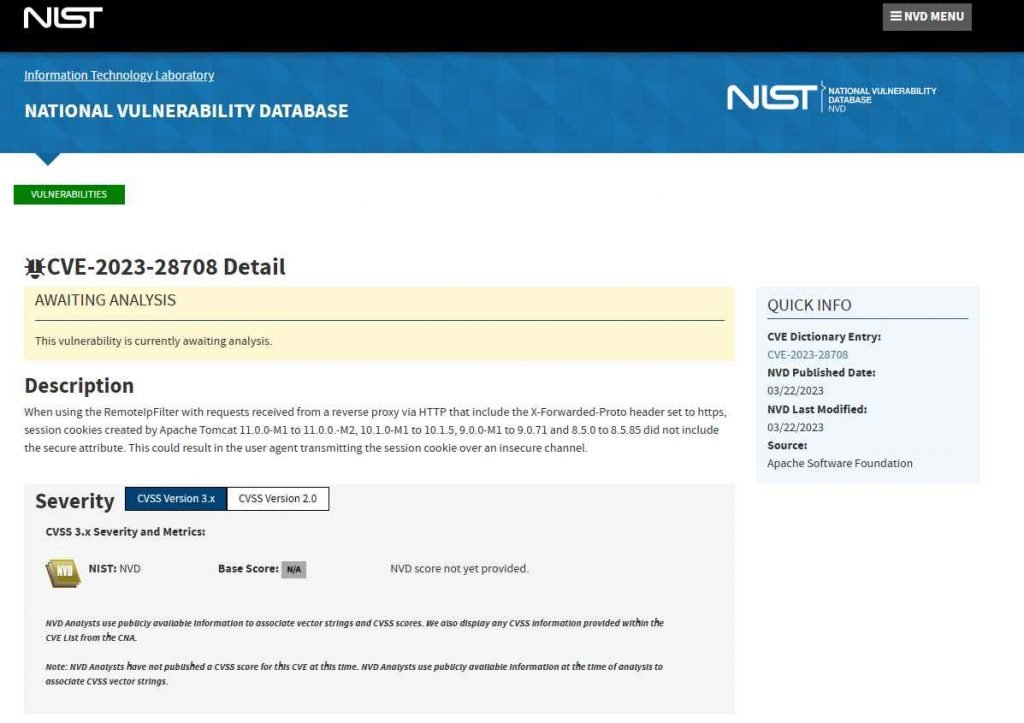
All of this is very beneficial, and in fact, many web application developers use it on their computers in order to be able to develop quickly and to be able to focus on what really interests them: ensuring that the logic of their Java pages and classes works as it should. All of this is very beneficial. It really is that straightforward… a software developer typically does not worry about the safety of the Tomcat server that he has installed on the computer that his employer has provided for him. In fact, the concept of security is so foreign to him that it does not even enter his mind very often. “pure Java” HTTP web server environments are made available by the Apache Tomcat server, which incorporates the technologies of Jakarta Servlet, Jakarta Expression Language, and WebSocket. These technologies allow Java code to be executed in these environments. Because of this, it is a frequently chosen option among developers who want to use Java to build online apps.
Up to and including versions 8.5.85/9.0.71/10.1.5/11.0.0-M2 of Apache Tomcat have been determined to have a vulnerability that has been rated as problematic (Application Server Software). An unidentified feature of the component known as RemoteIpFilter Handler is broken as a result of this bug. The manipulation using an unknown input results in a vulnerability involving the unsecured transmission of credentials. The user name and password are not adequately protected when they are being sent from the client to the server via the login pages, which are not using suitable security measures.
Session cookies generated by Apache Tomcat versions 11.0.0-M1 to 11.0.0.-M2, 10.1.0-M1 to 10.1.5, 9.0.0-M1 to 9.0.71 and 8.5.0 to 8.5.85 did not include the secure attribute when used in conjunction with requests received from a reverse proxy over HTTP and which had the X-Forwarded-Proto header set to https. Because of this, the user agent could send the session cookie through an unsecured connection. Hence, this might be dangerous.
The vulnerability was disclosed on March 22nd, 2023. The advisory is now available for download at lists.apache.org, where it is also shared. Since March 21st, 2023, this vulnerability has been assigned the identifier CVE-2023-28708. There is neither a technical description nor an exploit that is readily accessible to the public. The attack method has been given the designation of T1557 by the MITRE ATT&CK project.
This vulnerability may be remedied by upgrading to version 8.5.86, 9.0.72, 10.1.6, or 11.0.0-M3 respectively.
Mar 23 2023
There were over 4,100 publicly disclosed data breaches in 2022, exposing about 22 billion records. Criminals can use stolen data for identity theft, financial fraud or to launch ransomware attacks. While these threats loom large on the horizon, attack surface management (ASM) seeks to combat them.
ASM is a cybersecurity approach that continuously monitors an organization’s IT infrastructure to identify and remediate potential points of attack. Here’s how it can give your organization an edge.
Here are some key terms in ASM:
Security teams can use ASM practices and tools to prevent risks in the following ways:
There are four core processes in attack surface management:
You can learn more about the four core processes and how attack surface management works on the IBM blog.
Anyone who works in attack surface management must ensure the security team has the most complete picture of the organization’s attack vectors — so they can identify and combat threats that present a risk to the organization.
Hiring companies look for people with a background and qualifications in information systems or security support. The minimum expectations typically include the following:
Cyber Asset Attack Surface Management (CAASM) is an emerging technology that presents a unified view of cyber assets. This powerful technology helps cybersecurity teams understand all the systems and discover security gaps in their environment.
There is no one-size-fits-all ASM tool — security teams must consider their company’s situation and find a solution that fits their needs.
Some key criteria include the following:
With a good ASM solution, your security team can get a real cyber criminal’s perspective into your attack surface. You can find, prioritize and solve security issues quickly and continuously. Ultimately, a diligent attack surface management strategy helps protect your company, employees and customers.

InfoSec Threats | InfoSec books | InfoSec tools | InfoSec services
Mar 22 2023
Are you interested in how to better protect yourself from cyber-attacks? We know cybersecurity can be overwhelming and appear incredibly complicated, but it doesn’t have to be that way. In this blog post, we will review some of the key ways you can get a deeper dive into learning more about cybersecurity so you have all the resources and tools necessary for protecting yourself and your data. With these tips in hand, we guarantee you will soon become a pro at safeguarding your important information!

For those looking to further their knowledge and job prospects in the field of cybersecurity, obtaining a degree online is one of the best ways to do so. With an online masters degree in cybersecurity, you can learn from the comfort of your own home yet receive top-quality education from professional educators. You will also have access to online tools and resources that can help you in understanding various concepts related to cybersecurity. Further, since online learning has become more accepted in recent years, online degrees are widely respected by employers, making them a great way to stand out from other job candidates and gain recognition for your abilities.
Besides getting a degree, taking courses can help you become certified or increase your skill set in this fast-growing field. With many universities and colleges offering various types of cybersecurity classes, there’s always an opportunity to learn something new about digital security. Besides providing certificates at the end of each course, it also gives you hands-on experience which is necessary for any job in this sector. For those who cannot attend college full-time, taking an online course is also an option; there are plenty of websites and e-learning platforms offering face-to-face tutorials as well as self-paced learning that suit your schedule and budget.
Cyber Security Training Courses
Professional Certificates, Bachelors & Masters Program
Keeping up to date on the latest cybersecurity news and trends is key to staying as safe as possible online. One of the best ways to stay informed is to read industry blogs and articles specifically devoted to security topics. These resources are widely available and typically written by experts with in-depth, up-to-date knowledge on their respective topic areas. Familiarizing yourself with these, even if you only skim articles here and there, can instill a strong base of knowledge and help arm you against cyber threats both now and in the coming years.
Another fantastic way to become more knowledgeable about cybersecurity is by attending webinars and virtual conferences. These events present a great opportunity to stay up-to-date with the ever-evolving cybersecurity industry, as well as learn best practices for cybersecurity prevention. Moreover, through these presentations and interactive discussions, you can gain insider insights from renowned experts and create connections that could open the door to new career opportunities. Attending webinars or virtual conferences about cybersecurity is an excellent way for individuals who are looking to make a career change in the field or gain additional knowledge in their field of expertise to stay ahead of the curve.
7 free online cybersecurity courses you can take right now
If you are looking to get more information about cybersecurity, one highly recommended solution is to reach out to professionals already in the field. Connecting with people who have experience in the area of cyber security can be extremely beneficial. Not only will they be able to provide insight into the day-to-day operations of a cyber security role and which industry trends are making waves now, but they may also be willing to mentor you or provide advice on how best to further your own career path. Taking advantage of related opportunities such as these can help ensure that your career objectives stay aligned with the ever-changing world of cybersecurity.
Programming, software development, ISO27k and AWS online courses
Finally, staying on top of industry news and trends is an excellent way to keep up-to-date with the latest developments in cybersecurity. By subscribing to newsletters or following accounts dedicated to the sector, you can stay ahead of any new technologies or security threats. Additionally, attending webinars, conferences, and other events can help you interact directly with experts on topics ranging from IT governance to network security. Doing so will let you find out firsthand how new developments in cybersecurity are impacting the field, allowing you to adjust your approach as needed.
All in all, staying informed on the latest developments and trends within the cybersecurity industry is key for anyone hoping to make a career out of it. By reading blogs, attending webinars and virtual conferences, reaching out to professionals in the field for advice or mentorship, and following news related to this sector you can stay ahead of any new technologies or security threats. With these tips at hand, there’s no reason why you can’t become an expert in cyber security yourself!
https://www.facebook.com/DISCInfoSec
InfoSec Threats | InfoSec books | InfoSec tools | InfoSec services
Mar 20 2023
As a result of a recent data breach, the NBA notified all its fans about the fact that a significant amount of personal information was compromised.
While using the information gathered, phishing attacks can be conducted by the threat actors on the individuals who have been affected. A third-party newsletter service was said to be holding the personal information exposed in the leak.
In addition to managing five professional sports leagues, the NBA also manages a media organization. And here below, we have listed those five sports leagues:-
In over 215 countries and territories worldwide, with over 50 languages spoken, NBA programming and games are broadcast worldwide.
NBA Cyber Incident
A number of fans have been notified of the cyber security incident through an email sent out with the tag “Notice of Cybersecurity Incident.”
According to the NBA, neither its systems nor the credentials of the fans affected by the incident were compromised. But, some theft of the personal information belonged to some fans.
Further, the association reported that the names and email addresses were accessed and copied by an unauthorized third party. But, in this instance, sensitive information, such as usernames and passwords, was not exposed.
Apart from this, a third-party provider and an external cybersecurity service are being engaged by the NBA to assist in the investigation of the issue to know the extent of the impact and resolve the issue as soon as possible.
NBA warned fans of phishing attacks
NBA warned that phishing attacks and various scams could be targeted at the affected individuals due to the sensitive nature of the data involved, reported Bleeping Computer.
It was strongly recommended to the affected fans that they remain vigilant when they open any suspicious emails that they receive. In the notification emails, the NBA informs fans that it will never send them an email asking for any of this information:-
It is also recommended for fans who have been impacted verify the authenticity of any emails they receive by ensuring that the sender’s email address ends with “@nba.com.”
Check that the embedded links point to a trustworthy website, and don’t open email attachments that they haven’t been expecting to receive.

NBA warns fans over data breach, personal details copied
InfoSec Threats | InfoSec books | InfoSec tools | InfoSec services
Mar 20 2023
The research demonstrates that embracing automation in cybersecurity leads to significant business benefits, such as addressing talent gaps and effectively combating cyber threats. According to the survey, organizations will continue investing in cybersecurity automation in 2023, even amid economic turbulence.
“As organizations look for long-term solutions to keep pace with increasingly complex cyberattacks, they need technologies that will automate time-consuming, repetitive tasks so security teams have the bandwidth to focus on the threats that matter most,” said Marc van Zadelhoff, CEO, Devo. “This report confirms what we’re already hearing from Devo customers: adopting automation in the SOC results in happier analysts, boosted business results, and more secure organizations.”
According to the study, security pros suspect their organization would stop them from using unauthorized AI tools, but that’s not stopping them.
Organizations fail to adopt automation effectively, forcing security pros to use rogue AI tools to keep up with workloads.
Security teams will prioritize investments in cybersecurity automation in 2023 to solve organizational challenges, despite economic turbulence and widespread organizational cost-cutting.
Adopting automation in the SOC helps organizations combat security staffing shortages in a variety of ways.

InfoSec Threats | InfoSec books | InfoSec tools | InfoSec services
Mar 19 2023
The ChatGPT-powered Blackmamba malware works as a keylogger, with the ability to send stolen credentials through Microsoft Teams.
HYAS Institute researcher and cybersecurity expert, Jeff Sims, has developed a new type of ChatGPT-powered malware named Blackmamba, which can bypass Endpoint Detection and Response (EDR) filters.

This should not come as a surprise, as in January of this year, cybersecurity researchers at CyberArk also reported on how ChatGPT could be used to develop polymorphic malware. During their investigation, the researchers were able to create the polymorphic malware by bypassing the content filters in ChatGPT, using an authoritative tone.
As per the HYAS Institute’s report (PDF), the malware can gather sensitive data such as usernames, debit/credit card numbers, passwords, and other confidential data entered by a user into their device.

Once it captures the data, Blackmamba employs MS Teams webhook to transfer it to the attacker’s Teams channel, where it is “analyzed, sold on the dark web, or used for other nefarious purposes,” according to the report.
Jeff used MS Teams because it enabled him to gain access to an organization’s internal sources. Since it is connected to many other vital tools like Slack, identifying valuable targets may be more manageable.
Jeff created a polymorphic keylogger, powered by the AI-based ChatGPT, that can modify the malware randomly by examining the user’s input, leveraging the chatbot’s language capabilities.
The researcher was able to produce the keylogger in Python 3 and create a unique Python script by running the python exec() function every time the chatbot was summoned. This means that whenever ChatGPT/text-DaVinci-003 is invoked, it writes a unique Python script for the keylogger.
This made the malware polymorphic and undetectable by EDRs. Attackers can use ChatGPT to modify the code to make it more elusive. They can even develop programs that malware/ransomware developers can use to launch attacks.

Jeff made the malware shareable and portable by employing auto-py-to-exe, a free, open-source utility. This can convert Python code into .exe files that can operate on various devices, such as macOS, Windows, and Linux systems. Additionally, the malware can be shared within the targeted environment through social engineering or email.
It is clear that as ChatGPT’s machine learning capabilities advance, such threats will continue to emerge and may become more sophisticated and challenging to detect over time. Automated security controls are not infallible, so organizations must remain proactive in developing and implementing their cybersecurity strategies to protect against such threats.
Polymorphic malware is a type of malicious software that changes its code and appearance every time it replicates or infects a new system. This makes it difficult to detect and analyze by traditional signature-based antivirus software because the malware appears different each time it infects a system, even though it performs the same malicious functions.
Polymorphic malware typically achieves its goal by using various obfuscation techniques such as encryption, code modification, and different compression methods. The malware can also mutate in real time by generating new code and unique signatures to evade detection by security software.
The use of polymorphic malware has become more common in recent years as cybercriminals seek new and innovative ways to bypass traditional security measures. The ability to morph and change its code makes it difficult for security researchers to develop effective security measures to prevent attacks, making it a significant threat to organizations and individuals alike.
Chat GPT: Is the Future Already Here?
AI-Powered ‘BlackMamba’ Keylogging Attack Evades Modern EDR Security
BlackMamba GPT POC Malware In Action
Professional Certificates, Bachelors & Masters Program
InfoSec Threats | InfoSec books | InfoSec tools | InfoSec services
Mar 18 2023
CISOs can and should push back when they’re presented with budget costs that affect the business. Here’s how.

Today’s enterprise security executives face situations that could really hurt the company’s bottom line. Security teams are trying to modernize security operations in an increasingly porous network environment with ever more sophisticated threats. There are also economic pressures from layoffs, budget cuts, and restructuring.
Even worse, CFOs have heard from CISOs the doom-and-gloom predictions of the potential fiscal disaster of data breaches so often that it’s no longer resonating with them.
The doomer scenario is not hypothetical — global compliance requirements and privacy regulations drive the cost of a breach even higher than just the technical costs. However, CFOs and other C-level executives have heard these warnings so often now that it’s just background information that doesn’t drive their decision making.
Is there a more effective way to help the CFO understand why security needs to be far better funded? Yes: Present the CFO with a shared-risk scenario.
Allan Alford, who was a CISO in various industries including technology, communications, and business services before morphing into a CISO consultant, says CISOs should use a different approach to describe cybersecurity issues to the CFO. They should begin by asking the CFO to identify the six most important strategic elements of the business — possibly including the supply chain, manufacturing operations, sensitive future product plans, etc. — then detail their plans for protecting each of those critical areas, Alford says.
The CISO can present the situation to the CFO in the following manner: “Thanks for sharing those priorities. Now, you are saying we need to cut the security budget by 37%. Given the state of the economy in our sectors, that is completely understandable. To make the cuts possible, can you tell me which of these six areas I should stop protecting? We will also need to bring in the line-of-business executive so that you can explain how these changes will impact that area.”
Historically, CISOs, CSOs, CROs, and other security-adjacent executives have been good soldiers, accepting the CFO-ordered cuts and deciding where changes have to be made, Alford says. This conflicts with the CISO’s job: to protect the company — including all intellectual property and all assets.
If the CFO decides to cut back security funding, they need to work with the COO, the CEO, the board, and other senior executives to decide which operations they can afford to not protect. It should not be left to the CISO to make those calls or defend the choices.
In fairness, the decision is rarely black-and-white. But if the CISO positions the budget decisions in this manner, the CFO will see the actual business impact the reductions would have. When the CFO is forced to decide where the cuts will happen and to choose which top-priority division is left undefended, the conversation shifts, Alford says. The CISO can say to the CFO, “We’ll jointly figure out what risks are tolerable, but make no mistake: A 37% cut will put various units at extreme risk. Can the business afford that deep a cut in our defenses?”
The CISO can present cost-effective alternatives to reduce security defenses, rather than eliminating them entirely. Now there is the possibility of negotiating a smaller budget cut. Maybe that 37% cut becomes a 23% cut.
The conversation shouldn’t begin and end with the CFO, says Daniel Wallance, an associate partner with McKinsey. It should involve the board’s risk committee, the CEO, the COO, and other colleagues who have a role in security spending, such as the CIO and the CRO.
“There is also spend coming from risk management [and] compliance on top of IT. I would engage those functions, as they have shared [security] responsibility and they may actually have dedicated resources,” Wallance says. “I need this to not be a one-on-one conversation. I want to make it a group.”
These conversations with other security executives should happen before and after the CFO meeting, but not during.
The CISO needs to meet with the other security players before meeting with the CFO to learn what overlaps and redundancies currently exist. The CISO also needs to know how much budget flexibility those other executives are willing to offer. That will be crucial information to have while working with the CFO. After meeting with the CFO, the CISO can go back to the other executives and see what they can negotiate as a group.
The actual CISO-CFO meeting should be just the two executives, to avoid making the CFO feel ganged up on. The discussion should be as friendly as possible to allow for reasonable compromises.
Involving the board’s risk committee is critical, as it is ultimately the board’s role — working with the CEO — to dictate the company’s risk tolerance. If the CFO’s requested budget reductions conflict with that risk tolerance, the board needs to know about it.
“The CISO should be meeting with the risk committee regularly,” Wallance says. “The business may not understand the implications of the budget cut. The CFO is not the only person at issue here.”
Larger trends in the economy also affect CISO budgetary needs.
There is a realistic existential threat to cyber insurance, the net that CFOs have relied on for more than 20 years. Lloyds of London said that it would stop covering the losses from state actor attacks, which is problematic given how difficult it is to prove an attack’s origin and who funded it. Insurance giant Zurich warned it might abandon cyber insurance entirely. And an Ohio Supreme Court decision raised the prospect of other cyber insurance limitations. Those changes could sharply increase the pressure on the CFO to better fund security, given that the enterprise will now be on the hook for the full amount of damages.
A complicating factor is the much-ballyhooed cybersecurity talent shortage. Whether the gap is as big as some say, it’s true that the cost of talent today is higher than what most budgets allow. So, yes, you will have difficulty finding qualified people, but increase the salary enough and, poof — no more talent shortage.
Richard Haag, the VP for compliance services at consulting firm Intersec Worldwide Inc., maintained that the difficulty in acquiring sufficiently experienced talent is a powerful argument in those CFO discussions.
“[I]n security, labor is about the only thing that can possibly be cut. You can’t just swap out firewalls. These agreements are locked in,” Haag says. “You need to say ‘I can barely protect your top strategic areas now. With the cuts you want, I simply won’t be able to defend your top targets and certainly not your not-so-top targets. I need more people, certainly not fewer people.'”
Alford also suggests the CISO point out how they negotiate lower vendor costs. Document it and share it with the CFO to demonstrate that the budget is being spent wisely.
“Demonstrate your efficiencies by driving vendor discounts as low as you can get them to go. CFOs want to know the money is being well spent, and ‘we got a heck of a deal’ does that well,” Alford says.
Finally, the CISO can also make the case for better security delivering more revenue. Does higher security investment make prospective customers more comfortable? Is lack of security making some existing customers leave? For example, if a financial institution chooses to reimburse customers in all fraud situations — rather than what most FIs do, which is to only reimburse in some situations — it could boast that its customers are better protected against fraud, prompting customers to leave competitors. That move would justify higher cybersecurity spend because of the greater acceptance of fraud costs.
“If you can shorten that sales cycle and prove that security gained more sales, it can be highly persuasive to CFOs: ‘Today, three customers walked away, but tomorrow none will,'” Alford says.
Mar 17 2023
Cyberattacks are growing more complex as technology advances. Many businesses concentrate their cybersecurity efforts solely on external attacks, which leaves more openings for internal risks. Some companies fail to recognize the danger of losing confidential information owing to employee negligence or malice. Unquestionably, ‘insider threats’ is one of the most neglected aspects of cybersecurity. According to statistics on insider threats, these threats may originate from employees, business contractors, or other reliable partners with simple access to your network. However, insider threat reports and recent developments have shown a sharp rise in the frequency of insider attacks. Because of these, cybersecurity professionals are now paying more attention to the detrimental effects of insider attacks.
In general, security experts need more confidence in their ability to identify and thwart insider threats successfully. 74% of respondents in an insider attack said their company was moderately to extremely vulnerable. 74% of respondents—a 6% increase from 2021—also claim that insider threat assaults have become more regular. In 2022, 60% of respondents said they had an insider attack, while 8% said more than 20. Insider assaults are more challenging to identify and thwart than external attacks, according to 48% of respondents. It can be challenging for defenses to distinguish between insider threats and regular user activity since insider threats employ genuine accounts, passwords, and IT technologies. Overall, insider threats are becoming a more significant threat. These findings imply that security teams should prepare for them in 2023.
Organizations must be able to address the risks from malicious insiders who intentionally steal sensitive data for personal reasons and users who can accidentally expose information due to negligence or simple mistakes.
Here are the top 5 threats security teams should look out for in 2023:
Employee Negligence
Employee carelessness or ignorance may result in unintentional data leaks, improper handling of sensitive information, or a failure to adhere to security policies and procedures. Negligence is to blame for more than two of every three insider incidents. Workers could not be cognizant of the possible hazards they bring to the company or might not prioritize security measures. They act carelessly, repeating passwords for personal and professional accounts or leaving flash drives with private data at a coffee shop without intending to cause harm. Some are unaware of their involvement and fall victim to social engineering techniques like phishing scams. Others may engage in negligent behavior, such as evading security measures for convenience.
Malicious Insiders
Insiders who intend to cause harm to the company by stealing data, interfering with business processes, or selling confidential information are considered malicious insiders. These people might be driven by greed, retaliation, or a desire to upend the business. These people are currently employed. They might not be the most ardent supporters of your business, and they frequently vent their resentment by erasing or changing important data sets, leaking confidential information, or taking other sabotage measures. Turn cloaks are malicious insiders who consciously do something terrible to an organization. A trustworthy business partner, contractor, or employee could be the insider. Turn cloaks may have ideological, vengeful, or pecuniary motivations. Some engage in clandestine activities like stealing private information or sensitive documents.
Insider Collusion
When two or more employees collaborate to steal information, commit fraud, or participate in other nefarious acts, this is called insider collusion. As a result of the employees’ collaboration and potential ability to conceal their activities, this type of danger might be challenging to identify. Whether intentionally or unintentionally, these threats serve a foreign power. They might be forced to divulge information by outsiders through blackmail or bribery, or they might be tricked into disclosing their login information via social engineering. The most challenging insider risks to identify are moles, which are potentially the most damaging. Moles function similarly to turn cloaks, except they join a firm intending to harm the organization. Whether they support a nation-state or an unknown cause, they are frequently motivated by an intense political motive.
Third-Party Vendors and Contractors
Companies with access to sensitive data or systems may be at risk of insider threats from third-party suppliers and contractors. These individuals might adhere to different security procedures than full-time employees and have a lower stake in the company’s success. Not every insider works for the company. Suppliers, contractors, vendors, and other outside parties with limited inside access can pose an equal threat to staff members with the same rights. Most businesses outsource some of their work to specialized companies or outside agencies. These third parties are occasionally easy targets for cyber attackers because they lack advanced security protocols. Suppose these companies are provided privileged access to part of your company network. In that case, you can bet that the bad actors will infiltrate your system after compromising the partner’s security network, resulting in a third-party data breach.
Security Policy Evaders
The group of workers that prefer to ignore security policies and protocols is last but certainly not least. The business frequently has security policies created to safeguard its personnel and data. Some regulations could be burdensome and inconvenient, and some employees might choose the simple route. Contemporary businesses have security procedures in place to protect their critical data. These safeguards may bother some employees, who may devise workarounds that raise the risk of a data leak. These workarounds could jeopardize the security and data protection of the organization. Policy evaders might be considered insider threats since they purposefully break security policies, procedures, and best practices.
Conclusion
Organizations can employ technological solutions like access restrictions, monitoring, data loss prevention technologies and insider threat solutions “to rein in their insider risk and prevent threats.” A thorough security plan should be in place and periodically reviewed and updated when new risks arise. Your company’s reputation, future growth, customers, and employees can all be protected by knowing how insider threats show themselves.
About the Author: Mosopefoluwa Amao is a certified Cybersecurity Analyst and Technical writer. She has experience working as a Security Operations Center (SOC) Analyst with a history of creating relevant

Managing the Insider Threat: No Dark Corners and the Rising Tide Menace
Mar 16 2023
The Exynos Modems manufactured by Samsung Semiconductor were found to have eighteen 0-day vulnerabilities, as revealed by Project Zero. Internet-to-baseband remote code execution was possible due to the four vulnerabilities that were deemed to be the most serious among these eighteen flaws (CVE-2023-24033 and three further vulnerabilities that have not yet been allocated CVE-IDs). Tests that were carried out by Project Zero have shown that the aforementioned four vulnerabilities make it possible for an attacker to remotely compromise a phone at the baseband level without any interaction from the user; all that is required is for the attacker to know the phone number of the victim. We anticipate that highly competent adversaries would be able to swiftly design an operational exploit to compromise impacted devices in a stealthy and remote manner if they were just given access to modest extra research and development resources.
The fourteen other similar vulnerabilities (CVE-2023-26072, CVE-2023-26073, CVE-2023-26074, CVE-2023-26075, CVE-2023-26076, and nine additional vulnerabilities that have yet to be granted CVE-IDs) were not as serious since they need either a hostile mobile network operator or an attacker with local access to the device.
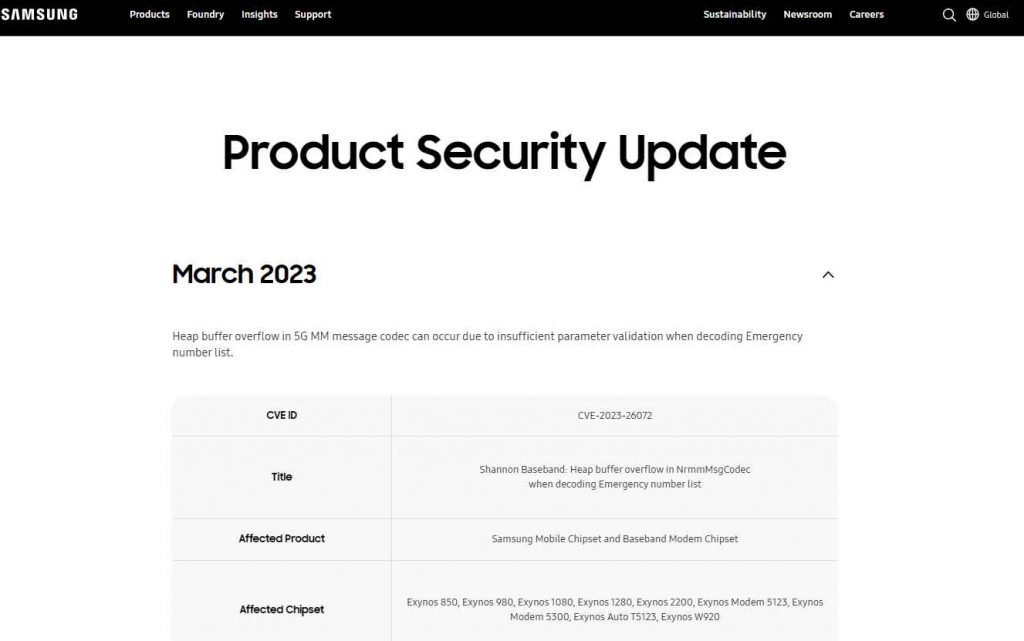
The list of Exynos chipsets that are susceptible to these vulnerabilities may be found in the advisory published by Samsung Semiconductor. On the basis of information obtained from public sources that provide a mapping of chipsets to devices, the following devices are likely to be affected:
Devices from Samsung’s S22, M33, M13, M12, A71, A53, A33, A21, A13, A12, and A04 series;
Devices from Vivo’s S16, S15, S6, X70, X60, and X30 series
Devices from Google’s Pixel 6 and Pixel 7 series
Any wearables that use the Exynos W920 chipset and vehicles that use the Exynos Auto T5123 chipset.
Timelines for patches to address these vulnerabilities will differ depending on the manufacturer. Those who have devices that are vulnerable may protect themselves from baseband remote code execution vulnerabilities in the meanwhile by turning off Wi-Fi calling and Voice-over-LTE (VoLTE) in the settings of their devices.
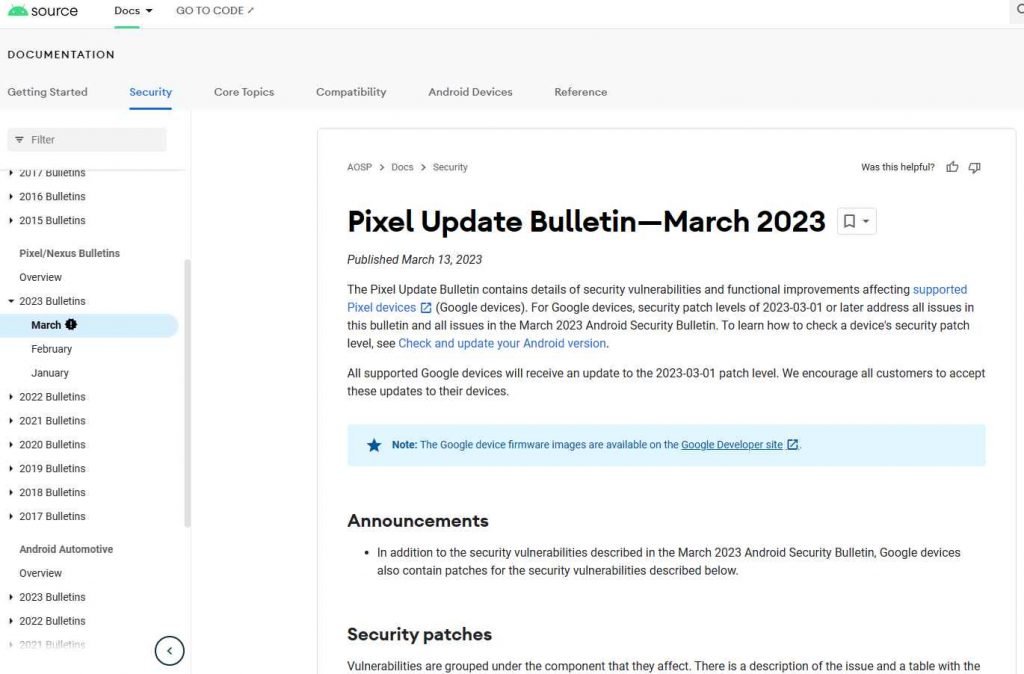
Due to the unusual combination of the level of access that these vulnerabilities provide and the speed at which they believe a reliable operational exploit could be crafted, the Google Security Team has decided to make an exception to their standard disclosure policy and delay the disclosure of the four most severe vulnerabilities. This decision was made because the Google Security Team believes that a reliable operational exploit could be crafted relatively quickly.
But, they will maintain their tradition of openness by publicly publishing disclosure policy exclusions, and after all of the concerns have been identified, they will add these problems to the list. Five of the remaining fourteen vulnerabilities (CVE-2023-24072, CVE-2023-24073, CVE-2023-24074, CVE-2023-24075, and CVE-2023-24076) have surpassed Project Zero’s regular 90-day limit and have been publicly revealed in their issue tracker. The other nine vulnerabilities will be publicly disclosed at that time if they are still unfixed.
End users are strongly urged by the Google Security Team to upgrade their devices as soon as is practically practicable in order to guarantee that they are using the most recent releases, which patch security flaws that have been made public as well as those that have not been made public. It is very vital to maintain vigilance and adopt the appropriate safety measures in order to safeguard one’s personal information and electrical devices from possible security risks.
Mar 16 2023
A joint advisory issued by the Cybersecurity and Infrastructure Security Agency (CISA), Federal Bureau of Investigation (FBI), and Multi-State Information Sharing and Analysis Center (MS-ISAC) revealed that multiple threat actors, including a nation-state actor, exploited a critical vulnerability in Progress Telerik to breach an unnamed US federal agency.
The three-year-old vulnerability, tracked as CVE-2019-18935 (CVSS score: 9.8), is a .NET deserialization issue that resides in the Progress Telerik UI for ASP.NET AJAX. Exploitation can result in remote code execution.
“CISA analysts determined that multiple cyber threat actors, including an Advanced Persistent Threat (APT) actor, exploited a .NET deserialization vulnerability in Progress Telerik user interface for ASP.NET AJAX. Exploitation of this vulnerability allowed malicious actors to successfully execute remote code on a federal civilian executive branch (FCEB) agency’s Microsoft Internet Information Services (IIS) web server.” reads the advisory. “Actors were then able to upload malicious dynamic-link library (DLL) files (some masqueraded as portable network graphics [PNG] files) to the C:\Windows\Temp\ directory.”
Threat actors exploited the vulnerability to execute arbitrary code on a Microsoft Internet Information Services (IIS) web server used by a federal civilian executive branch (FCEB) agency.
In 2020 and 2021, this flaw was included by the US National Security Agency (NSA) in the list of the top 25 vulnerabilities exploited by Chinese state-sponsored hacking groups in attacks in the wild.
The flaw was also used in the past by the NetWalker ransomware gang in its operations.
The joint alert recommends network defenders review the Malware Analysis Report, MAR-10413062-1.v1 Telerik Vulnerability in U.S. Government IIS Server, to reference CISA’s analysis for the identified malicious files.
According to the MAR, CISA received 18 files for analysis from a forensic analysis engagement conducted at a Federal Civilian Executive Branch (FCEB) agency. Experts reported that 11 of the dynamic link library (DLL) files employed in the attack allows threat actors to read, create, and delete files on the target systems.
“If the DLL contains a hardcoded Internet Protocol (IP) address, status messages will be sent to the IP. One DLL file will attempt to collect the target system’s Transmission Control Protocol (TCP) connection table, and exfiltrate it to a remote Command and Control server (C2).” reads the MAR. “Five of the files drop and decode a reverse shell utility that can send and receive data and commands. In addition, the files drop and decode an Active Server Pages (ASPX) webshell. Two DLL files are capable of loading and executing payloads.”
US CISA has also provided Indicators of Compromise (IOCs) and YARA rules for detection in the Malware Analysis Report (MAR).

Mar 15 2023
Whether your looking to develop a career in data privacy or cybersecurity, we have the perfect training solution for you! Pick bestselling ITG self-paced online training courses today and receive 15% off till March 31st 2023

Mar 15 2023
A powerful new AI model called GPT-4 has been released recently by OpenAI, which is capable of comprehending images and texts. The company describes this as the next-stage milestone in its effort to scale up deep learning.
In November 2022, ChatGPT was launched and has since been used by millions of people worldwide. The all-new GPT-4 is now available through ChatGPT Plus, while it is the paid GPT subscription option of OpenAI available for $20 per month.
However, currently, there is a cap on the usage amount, and to access the API, the developers need to be registered on a waitlist.
The GPT-4 can also perform a number of tasks at once, with a maximum word count of 25,000. That is eight times more than the ChatGPT can.

Here below, we have mentioned the pricing tags:-
A prompt token is part of a word that has been fed into GPT-4 in order for it to function. While the content that is generated by the GPT-4 is referred to as completion tokens.
In addition, Microsoft recently announced that it is using the GPT-4 version for its Bing Chat chatbot. Since the investment from Microsoft into OpenAI has amounted to $10 billion.
Stripe is another early adopter of GPT-4, which uses it to scan business websites. By doing so, it provides a summary of the results to customer service staff as part of the scanning process.
A new subscription tier for language learning has been developed by Duolingo based on the GPT-4. In order to provide financial analysts with access to information retrieved from company documents, Morgan Stanley is creating a GPT-4-powered system.
It appears that Khan Academy is also working towards automating some sort of tutoring process using GPT-4 that can help students.
A simulated bar exam was given to GPT-4, and it performed particularly well in it, as it managed to achieve scoring around the top 10% of test takers. Interestingly, GPT-3.5, on the other hand, scored in the bottom 10% of the group.
The GPT-4 algorithm is a form of generative artificial intelligence, similar to the ChatGPT algorithm. With the help of algorithms and predictive text, the generating AI constructs the content based on the prompts that are presented by the user.
As you can see in the image below, GPT-4 generates recipes based on images that have been uploaded.
The reasoning skills of GPT-4 are more advanced than those of ChatGPT. In order to find available meeting times, the model can, for instance, search for three schedules with three available times.
In short, the GPT-4 is much smarter and more capable as compared to the GPT-3.5. GPT-4 is capable of receiving and processing textual and visual information, one of its most impressive features.
At the moment, it is not yet possible for OpenAI customers to utilize the image understanding capability of GPT-4. However, currently, OpenAI is testing this technology with only one partner, Be My Eyes.
OpenAI has warned that, just like its predecessors, the GPT-4 is still not entirely reliable. This model needs to be further improved by the entire community by building on top of the model, exploring it, and contributing to it through collective efforts.
There is still a lot of work to be done, and the company affirmed that they are looking forward to working together to improve it.
CHATGPT-4 Revealed 500 Prompts to Ride the AI Wave (Mastering ChatGPT-4 Prompts & Beyond)
Mar 14 2023
Apache HTTP Server is one of the web servers that is used the most often throughout the globe. It is responsible for providing power to millions of websites and apps. Recent vulnerabilities found in the server, on the other hand, have the ability to disclose sensitive information and make it easier for attackers to carry out further attacks. The Apache HTTP Server has recently been found to contain two significant vulnerabilities, both of which are detailed below. It is imperative that you rapidly upgrade Apache HTTP Server to the most recent version in order to protect your system against the vulnerabilities described.
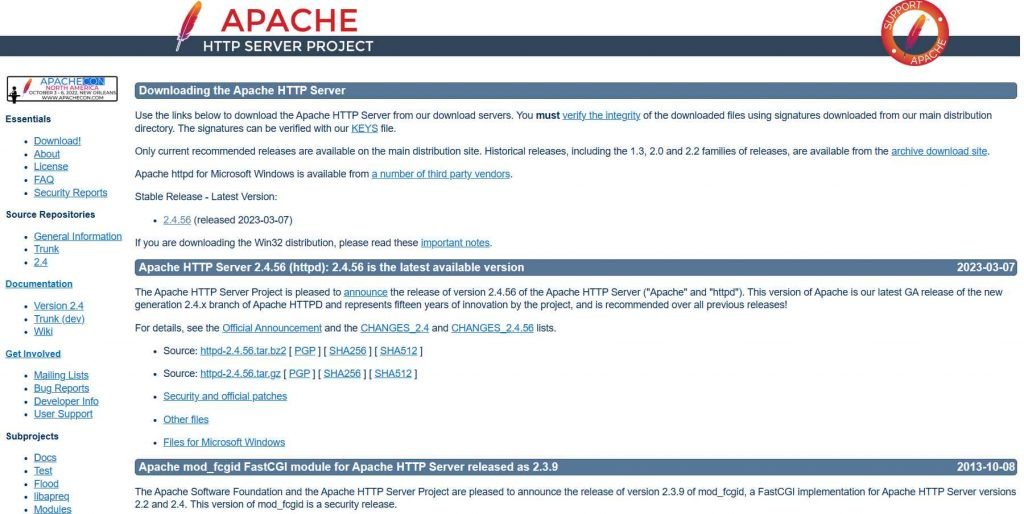
Apache HTTP Server request splitting vulnerability, CVE-2023-25690. This vulnerability is brought about by an issue that occurs in mod proxy whenever it is activated with a RewriteRule or ProxyPassMatch of some kind. This vulnerability might be used by a remote attacker to overcome access constraints in the proxy server, route undesired URLs to existing origin servers, and poison cache. Attacks using HTTP Request Smuggling are possible on Apache HTTP Server versions 2.4.0 through 2.4.55, if the server is configured with certain mod proxy settings. It occurs when mod proxy is enabled along with some form of RewriteRule or ProxyPassMatch. In these configurations, a non-specific pattern matches some portion of the user-supplied request-target (URL) data, and the matched data is then re-inserted into the proxied request-target utilizing variable substitution. This causes CVE-2023-25690 to be triggered. This might result in requests being split or smuggled, access rules being bypassed, and unwanted URLs being proxied to existing origin servers, all of which could lead to cache poisoning.
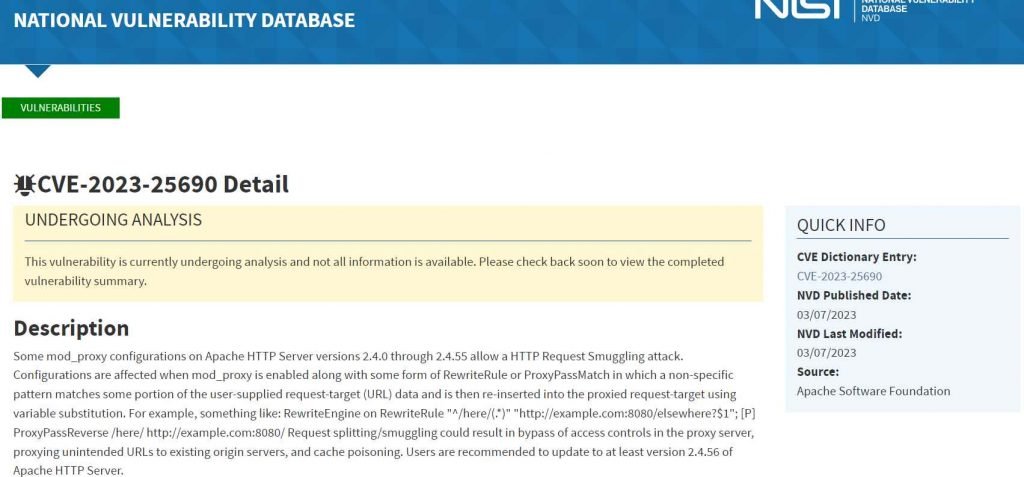
Versions of the Apache HTTP Server ranging from 2.4.30 to 2.4.55 are impacted by the problem. This attack is carried out by introducing unusual characters into the header of the origin response, which has the potential to either truncate or divide the response that is sent to the client. An attacker might take use of this vulnerability to inject their own headers into the request, causing the server to produce a split response.
Mar 14 2023
Guardio Labs discovered a Chrome Extension that promotes rapid access to fake ChatGPT functionality capable of stealing Facebook accounts and establishing hidden account backdoors.
Using a maliciously imposed Facebook app “backdoor” that grants the threat actors super-admin powers stands out.
“By hijacking high-profile Facebook business accounts, the threat actor creates an elite army of Facebook bots and a malicious paid media apparatus,” Guardio Labs reports.
“This allows it to push Facebook paid ads at the expense of its victims in a self-propagating worm-like manner.”
The Guardio Labs research team discovered a new version of the malicious fake ChatGPT browser extension. This time, it has been updated with a frightening method to take control of your Facebook accounts and a sophisticated worm-like way for spreading.
On Facebook-sponsored posts, the malicious stealer extension dubbed “Quick access to Chat GPT” is advertised as a fast way to launch ChatGPT straight from your browser.
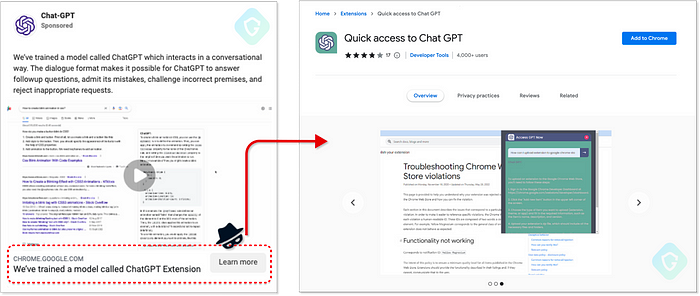
Reports say although the extension gives you that (by merely connecting to the official ChatGPT’s API), it also gathers all the data it can from your browser, steals cookies from allowed active sessions to any service you have, and uses targeted methods to take over your Facebook account.
Using two fake Facebook applications, portal and msg kig, backdoor access is maintained, and complete control of the target profiles is attained. Adding apps to Facebook accounts is a fully automated procedure.
Mar 14 2023
| Cyber Security Courses | Links |
| Finding your cybersecurity-career path | edx.sjv.io/BXm2G4 |
| MYCS computer science for beginners | edx.sjv.io/e4yQ5r |
| IBM cybersecurity fundamentals | edx.sjv.io/gbMAjv |
| Ethical hacking essentials ehe | edx.sjv.io/e4yAJZ |
| Online master science cybersecurity Georgia tech | edx.sjv.io/NK1QOP |
| Usmx umgc cloud computing | edx.sjv.io/LPAxb3 |
| w3cx front end web developer | edx.sjv.io/2rbQPM |
| Snhux data management with python and sql | edx.sjv.io/qn5ERq |
| Python data science | edx.sjv.io/AoqqJN |
| Introduction to python programming | edx.sjv.io/mgDDPy |
| Online master of science computer science utaustinx | edx.sjv.io/rnkzvj |
| Master of information and cybersecurity | edx.sjv.io/5bXXzj |
| Linux foundation x introduction to devops practices and tools | edx.sjv.io/LPAZZY |
| Uwashingtonx essentials cybersecurity | edx.sjv.io/jWxOO0 |
| Hecmontrealx ux design and evaluation | edx.sjv.io/ORVmbn |
| Cybersecurity the cisos view | edx.sjv.io/MXGNbo |
| Ec council cybersecurity essentials | edx.sjv.io/9W4JE3 |
| building-a-cybersecurity-toolkit | edx.sjv.io/6b3gdG |
| Programming basics | edx.sjv.io/DV9ked |
| Computer science 101 | edx.sjv.io/DV9ke2 |
| Umd usmx agile project management | edx.sjv.io/Vyz6BO |
| Computer forensic | edx.sjv.io/ORVm4W |
| Delftx inclusive and sustainable cities | edx.sjv.io/5b27Y2 |
| Cybersecurity and privacy in the IoT | edx.sjv.io/6b3gVN |
| Cybersecurity risk management | edx.sjv.io/YgEy2O |
| Linuxfoundationx secure software development fundamentals | edx.sjv.io/QOZ60Y |
| Harvardx leadership and communication | edx.sjv.io/WDWGg3 |
| AWS getting started with cloud security | edx.sjv.io/3P6dYv |
| AWS cloud technical essentials | edx.sjv.io/kj7ZGn |
| Building modern python applications on aws | edx.sjv.io/DVjnzj |
| Getting started with data analytics on aws | edx.sjv.io/rnAOxQ |
| Cyberwar surveillance and security | edx.sjv.io/7mRJd3 |
| Online master data science utaus | edx.sjv.io/jWxO5n |
| Harvardx data science | edx.sjv.io/KeooMv |
| Uc san diego x data science | edx.sjv.io/b3WWYg |
| Introduction to computer science and programming | edx.sjv.io/qn520O |
| Ritx cybersecurity | edx.sjv.io/5b27qD |
| Linux basics the command line interface | edx.sjv.io/n1r2Aa |
| Ibm full stack cloud application development | edx.sjv.io/Ryg6Yy |
| Basic network and database security | edx.sjv.io/qn52d5 |
| Scripting and programming foundations | edx.sjv.io/P0JAvz |
| Application security for developers | edx.sjv.io/zaZqxW |
| Unlocking information security part 1 | edx.sjv.io/n1D1NX |
| Unlocking information security part 2 | edx.sjv.io/kjDbBN |
| Berkeleyx entrepreneurship for all the startup guide by silicon valley insiders | edx.sjv.io/DV91Xd |
| Programming for everybody getting started with pyt | edx.sjv.io/e4yxkZ |
| Google cloud computing foundations | edx.sjv.io/15nkma |
| Harvardx computer science for web programming | edx.sjv.io/MXGzQN |
| Mit sloan machine learning in business online program | edx.sjv.io/AoxeKD |
| Cyber security basics a hands on approach | edx.sjv.io/jWxEQ5 |
| Imd blockchain and the future of finance online program | edx.sjv.io/zaZWD6 |
| Introduction to linux | edx.sjv.io/yRJzPW |
| Google power searching with google | edx.sjv.io/rnkVqv |
| Basic network and database security | edx.sjv.io/BXqXKq |
| AI chatbots without programming | edx.sjv.io/0J0jVV |
| Imd cybersecurity risk and strategy online program | edx.sjv.io/0JkGQO |
| Network security protocols | edx.sjv.io/dobXWW |
| Digital forensics essentials dfe | edx.sjv.io/7mWA6Y |
| The quantum internet and quantum computers how w2 | edx.sjv.io/QORREP |
| Wharton strategic management | edx.sjv.io/5bXXvo |
| Umd usmx agile project management | edx.sjv.io/e4OOL6 |
| tumx-lean-six-sigma-green-belt-certification | edx.sjv.io/x900gx |
| Harvardx tiny machine learning | edx.sjv.io/GjAA7n |
| Berkeleyx science-of happiness at work | edx.sjv.io/ZdPP7K |
| Uqx business leadership | edx.sjv.io/0JkkVO |
Professional Certificates, Bachelors & Masters Program
InfoSec Threats | InfoSec books | InfoSec tools | InfoSec services
Mar 13 2023
Vendor Security Checklist – by Ministry of Security

Third Party Risk Management

Previous posts on Vendor Assessment
DISC performs Vendor assessment, we’d love to hear from you! If you have any questions, comments, or feedback, please don’t hesitate to contact us. Our team is here to help and we’re always looking for ways to improve our services. You can reach us by email (info@deurainfosec.com), or through our website’s contact form
InfoSec Threats | InfoSec books | InfoSec tools | InfoSec services