InfoSec Compliance & AI Governance For over 20 years, DISC InfoSec has been a trusted voice for cybersecurity professionals—sharing practical insights, compliance strategies, and AI governance guidance to help you stay informed, connected, and secure in a rapidly evolving landscape.
As a resource, the internet is a wonderful place for children to learn, explore ideas, and express themselves creatively. The internet is also key in a child’s social development, helping to strengthen communication skills, for example when playing games or chatting with friends.
However, parents should be aware that all these activities often come with risks. Kids online can be exposed to inappropriate content, cyberbullying, and even predators.
While keeping an eye on what your children see and do online helps protect them against these risks, it’s not easy monitoring your kids without feeling like you’re invading their privacy. Just asking what websites they visit may give the impression that you don’t trust your child.
The key to combatting any big risk is education. It’s important for you and your children to be aware of the dangers, how to protect against them, and how to identify the warning signs. This is why we’ve put together this guide, to help both you and your kids* understand how to navigate the internet safely.
*Look out for our “For Kids” tips below, which you can share with your kids and teens.
A 2020 study by the Pew Research Center found that:
86% of parents of a child under age 11 limit their child’s screen time, while 75% check what their child does online.
71% of parents of a child age 11 or under are concerned their child has too much screen time.
66% of parents think parenting is harder today than it was 20 years ago, with 21% blaming social media in general.
65% of parents believe it’s acceptable for a child to have their own tablet computer before age 12.
Save 15% off books, toolkits, self-paced training courses, and selected Live Online training courses. Use code BF15 at checkout to claim your discount. But hurry, offer ends tomorrow 30 November, midnight PDT*.
This Black Friday ITG is offering you 15% off ITGP books, ITGP toolkits, self-paced training courses, and selected Live Online training courses.
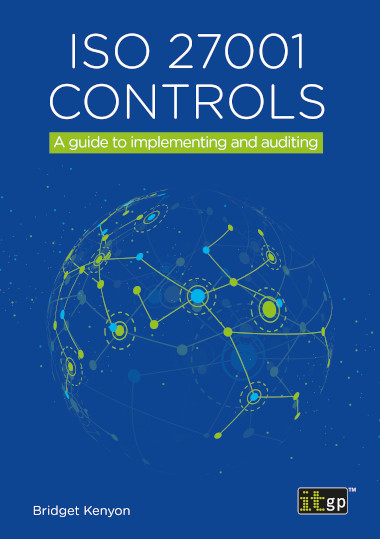
The California Privacy Rights Act (CPRA) – An implementation and compliance guide This book gives you a comprehensive understanding of the CPRA, covering key terms, security requirements, the breach notification procedure, and the penalties for non-compliance. ISO 27001 controls – A guide to implementing and auditing The must-have book to understand the requirements of an ISMS (information security management system) based on ISO 27001.
Certified ISO 27001 ISMS Foundation Self-Paced Online Training Course This course provides a complete introduction to the key elements required to achieve ISO 27001 compliance.
At the end of April, Apple’s introduction of App Tracking Transparency tools shook the advertising industry to its core. iPhone and iPad owners could now stop apps from tracking their behavior and using their data for personalized advertising. Since the new privacy controls launched, almost $10 billion has been wiped from the revenues of Snap, Meta Platform’s Facebook, Twitter, and YouTube.
Now, a similar tool is coming to Google’s Android operating system—although not from Google itself. Privacy-focused tech company DuckDuckGo, which started life as a private search engine, is adding the ability to block hidden trackers to its Android app. The feature, dubbed “App Tracking Protection for Android,” is rolling out in beta from today and aims to mimic Apple’s iOS controls. “The idea is we block this data collection from happening from the apps the trackers don’t own,” says Peter Dolanjski, a director of product at DuckDuckGo. “You should see far fewer creepy ads following you around online.”
The vast majority of apps have third-party trackers tucked away in their code. These trackers monitor your behavior across different apps and help create profiles about you that can include what you buy, demographic data, and other information that can be used to serve you personalized ads. DuckDuckGo says its analysis of popular free Android apps shows more than 96 percent of them contain trackers. Blocking these trackers means Facebook and Google, whose trackers are some of the most prominent, can’t send data back to the mothership—neither will the dozens of advertising networks you’ve never heard of.
From a user perspective, blocking trackers with DuckDuckGo’s tool is straightforward. App Tracking Protection appears as an option in the settings menu of its Android app. For now, you’ll see the option to get on a waitlist to access it. But once turned on, the feature shows the total number of trackers blocked in the last week and gives a breakdown of what’s been blocked in each app recently. Open up the app of the Daily Mail, one of the world’s largest news websites, and DuckDuckGo will instantly register that it is blocking trackers from Google, Amazon, WarnerMedia, Adobe, and advertising company Taboola. An example from DuckDuckGo showed more than 60 apps had tracked a test phone thousands of times in the last seven days.Most Popular
My own experience bore that out. Using a box-fresh Google Pixel 6 Pro, I installed 36 popular free apps—some estimates claim people install around 40 apps on their phones—and logged into around half of them. These included the McDonald’s app, LinkedIn, Facebook, Amazon, and BBC Sounds. Then, with a preview of DuckDuckGo’s Android tracker blocking turned on, I left the phone alone for four days and didn’t use it at all. In 96 hours, 23 of these apps had made more than 630 tracking attempts in the background.
Using your phone on a daily basis—opening and interacting with apps—sees a lot more attempted tracking. When I opened the McDonald’s app, trackers from Adobe, cloud software firm New Relic, Google, emotion-tracking firm Apptentive, and mobile analytics company Kochava tried to collect data about me. Opening the eBay and Uber apps—but not logging into them—was enough to trigger Google trackers.
At the moment, the tracker blocker doesn’t show what data each tracker is trying to send, but Dolanjski says a future version will show what broad categories of information each commonly tries to access. He adds that in testing the company has found some trackers collecting exact GPS coordinates and email addresses.
“You should see far fewer creepy ads following you around online.”
A group of hackers compromised a popular London-based news website that focuses on the Middle East with the goal of hacking its visitors, according to researchers.
IMAGE: JUSTIN SETTERFIELD/GETTY IMAGES
On Tuesday, cybersecurity firm ESET published a report detailing the hacking campaign, which spanned from March 2020 until August of this year. During this time, according to the report, hackers compromised around 20 websites, including Middle East Eye, a popular independent news site that covers the Middle East and Africa and is based in the UK.
The hackers compromised these websites in what are technically known as watering hole attacks, a type of cyberattack where hackers use legitimate websites to target people who visit them. In this case, the hackers did not target all visitors of the websites, but only specific ones, according to ESET.
“We were never able to get the final payload. So it shows that attackers are very careful in the selection of the targets,” Matthieu Faou, a researcher at ESET, told Motherboard in a phone call.
Because the researchers could not retrieve the malware, “we don’t know who are the final targets,” Faou said.
ESET researchers explained in the report that the hackers also compromised several government websites in Iran, Syria, and Yemen, as well as the sites of an Italian aerospace company and a South African government owned defense conglomerate—all websites with links to the Middle East. The hackers, according to ESET, may have been customers of the Israeli spyware vendor Candiru, a company that was recently put on a denylist by the US Government.
Candiru is one of the most mysterious spyware providers out there. The company has no website, and it has allegedly changed names several times. Candiru offers “high-end cyber intelligence platform dedicated to infiltrate PC computers, networks, mobile handsets,” according to a document seen by Haaretz. The Israeli newspaper was the first one to report Candiru’s existence in 2019. Since then, several cybersecurity companies and groups such as Kaspersky Lab, Microsoft, Google, and Citizen Lab, have tracked its malware.
If you want to understand ISO 27001, this handbook is all you need. It not only explains in a clear way what to do, but also the reasons why.
This book helps you to bring the information security of your organization to the right level by using the ISO/IEC 27001 standard.
An organization often provides services or products for years before the decision is taken to obtain an ISO/IEC 27001 certificate. Usually, a lot has already been done in the field of information security, but after reading the requirements of the standard, it seems that something more needs to be done: an ‘information security management system’ must be set up. A what?
This handbook is intended to help small and medium-sized businesses establish, implement, maintain and continually improve an information security management system in accordance with the requirements of the international standard ISO/IEC 27001. At the same time, this handbook is also intended to provide information to auditors who must investigate whether an information security management system meets all requirements and has been effectively implemented.
This handbook assumes that you ultimately want your information security management system to be certified by an accredited certification body. The moment you invite a certification body to perform a certification audit, you must be ready to demonstrate that your management system meets all the requirements of the Standard. In this book, you will find detailed explanations, more than a hundred examples, and sixty-one common pitfalls. It also contains information about the rules of the game and the course of a certification audit.
The Pakistan Ministry of Information Technology has announced that a new cybersecurity policy and accompanying cybersecurity agency has been approved for the South Asian nation.
The new policy aims to support both public and private institutions, including national information systems and critical infrastructure, replacing a system whereby government institutions have separate security operations.
It comes at a delicate time for Pakistan, which recently accused India of using the Israeli spyware Pegasus to spy on Prime Minister Imran Khan – and designates cyber-attacks on any Pakistani institution as an attack on national sovereignty.
“The IT ministry and all relevant public and private institutions will be provided all possible assistance and support to ensure that their data, services, ICT products and systems are in line with the requirements of cybersecurity,” said IT minister Syed Aminul Haq, as quoted in localpress.
Cybersecurity researchers warn of a now-patched critical remote code execution (RCE) vulnerability, tracked as CVE-2021-22205, in GitLab’s web interface that has been actively exploited in the wild.
The vulnerability is an improper validation issue of user-provided images the can lead to arbitrary code execution. The vulnerability affects all versions starting from 11.9.
“An issue has been discovered in GitLab CE/EE affecting all versions starting from 11.9. GitLab was not properly validating image files that is passed to a file parser which resulted in a remote command execution. This is a critical severity issue (AV:N/AC:L/PR:L/UI:N/S:C/C:H/I:H/A:H, 9.9). It is now mitigated in the latest release and is assigned CVE-2021-22205.” reads the advisory published by GitLab.
GitLab addressed the vulnerability on April 14, 2021, with the release of 13.8.8, 13.9.6, and 13.10.3 versions.
The vulnerability was reported by the expert vakzz through the bug bounty program of the company operated through the HackerOne platform.
The vulnerability was actively exploited in the wild, researchers from HN Security described an attack one of its customers. Threat actors created two user accounts with admin privileges on a publicly-accessible GitLab server belonging to this organization. The attackers exploited the flaw to upload a malicious payload that leads to remote execution of arbitrary commands.
“Meanwhile, we noticed that a recently released exploit for CVE-2021-22205 abuses the upload functionality in order to remotely execute arbitrary OS commands. The vulnerability resides in ExifTool, an open source tool used to remove metadata from images, which fails in parsing certain metadata embedded in the uploaded image, resulting in code execution as described here.” reads the analysis published by HN Security.
The flaw was initially rated with a CVSS score of 9.9, but the score was later changed to 10.0 because the issue could be triggered by an unauthenticated attackers.
Researchers from Rapid7 reported that of the 60,000 internet-facing GitLab installations:
Historically, vulnerability management and threat management have been separate disciplines, but in a risk-focused world, they need to be brought together. Defenders struggle to integrate vulnerability and threat information and lack a consistent view of how adversaries use vulnerabilities to achieve their goals. Without this context, it is difficult to appropriately prioritize vulnerabilities.
To bridge vulnerability management and threat management, the Center for Threat-Informed Defense, with support from participants including AttackIQ and JP Morgan Chase, developed a methodology to use the adversary behaviors described in MITRE ATT&CK® to characterize the impact of vulnerabilities from CVE®. Vulnerability reporters and researchers can use the methodology to describe the impact of vulnerabilities more clearly and consistently. When used in a vulnerability report, ATT&CK’s tactics and techniques enable defenders to quickly understand how a vulnerability can impact them, helping defenders integrate vulnerability information into their risk models and identify appropriate compensating security controls.
This methodology aims to establish a critical connection between vulnerability management, threat modeling, and compensating controls. CVEs linked to ATT&CK techniques can empower defenders to better assess the true risk posed by specific vulnerabilities in their environment. We have applied the methodology and mapped several hundred CVEs to ATT&CK to validate the model and demonstrated its value. To fully realize our goal, we need community support to apply the methodology at scale.
Working from home comes with a slew of security concerns. Businesses planning to look at remote work as a long-term strategy should take the time to reassess any “band-aid” security solutions that may have been applied at the beginning of the pandemic and look at ways that security can be prioritized permanently.
There was $590 million in suspicious activity related to ransomware in the first six months of 2021, exceeding the entire amount in 2020, when $416 million was reported, according to a report released Friday by the U.S. Treasury Department’s Financial Crimes Enforcement Network.
The average amount of reported ransomware transactions per month in 2021 was $102.3 million, according to the report. If the current trend continues, suspicious activity reports filed in 2021 “are projected to have a higher ransomware-related transaction value than SARs filed in the previous 10 years combined,” according to the report. SARs is shorthand for suspicious activity reports.
U.S. based cybersecurity companies filed most of the SARs related to ransomware while banks and cryptocurrency exchanges filed more than a third of the reports. The reports reflect just how quickly ransomware attacks have grown.
The report offers new insight into the scale of ransomware attacks devastating U.S. businesses and impacting critical infrastructure. A Treasury spokesperson said the SARs don’t represent all ransomware payments.
Reporting ransomware payments to the Treasury via a suspicious activity report is often a requirement of cybersecurity insurance policies, according to a person familiar with the matter.
The Treasury Department also identified 68 ransomware variants, noting that the most commonly reported types were REvil, Conti and DarkSide. Ransomware groups often sell their malware, or variant, to affiliates who then use it to plot attacks, in what is known as ransomware-as-a-service. REvil, Conti and DarkSide are suspected by cybersecurity firms of being tied to Russia in some way — because they use the Russian language or are suspected of being based there.
The report was filed as the Treasury Department issued guidance to the virtual currency industry to prevent exploitation by entities sanctioned by the U.S. and ransomware groups. It is part of a broader effort by the Biden administration to attempt to curb ransomware attacks. In ransomware attacks, hackers encrypt a victim’s files and promise to unlock them if they are paid a fee.
Among the more notable attacks were those in May on Colonial Pipeline Co. in May that squeezed fuel supplies on the East Coast and on the meatpacker JBS SA.
The Treasury report stated that ransomware actors are increasingly requesting payment in cryptocurrencies like Monero, which are designed to enhance anonymity.
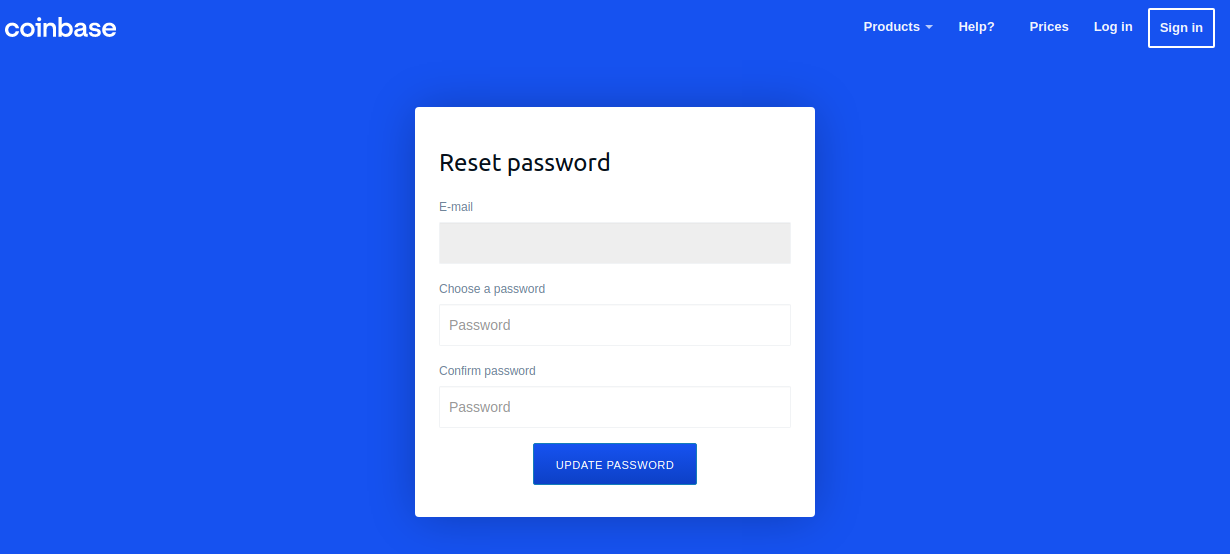
A recent phishing campaign targeting Coinbase users shows thieves are getting smarter about phishing one-time passwords (OTPs) needed to complete the login process. It also shows that phishers are attempting to sign up for new Coinbase accounts by the millions as part of an effort to identify email addresses that are already associated with active accounts.
Coinbase is the world’s second-largest cryptocurrency exchange, with roughly 68 million users from over 100 countries. The now-defunct phishing domain at issue — coinbase.com.password-reset[.]com — was targeting Italian Coinbase users (the site’s default language was Italian). And it was fairly successful, according to Alex Holden, founder of Milwaukee-based cybersecurity firm Hold Security.
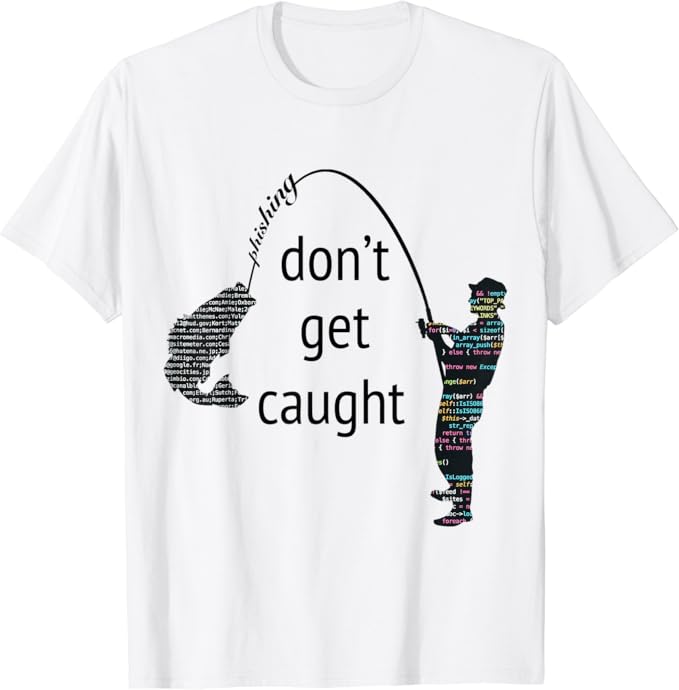
Unfortunately, anti-phishing advice often seems to fall on deaf ears, because phishing is an old cybercrime trick, and lots of people seem to think it’s what computer scientists or mathematical analysts call a solved game.
Tic-tac-toe (noughts and crosses outside North America), for example, is a solved game, because it’s easy to create a list of every possible play, and figure out the best possible move from every game position on the list. (If neither player makes a mistake then the game will always be a draw.)
Even games that are enormously more complex have been “solved” in this way too, such as checkers (draughts)…
…and in comparison to playing checkers, spotting phishing scams feels like an easy contest that the recipient of the message should always win.
And if phishing is a “solved game”, surely it’s not worth worrying about any more?
A proof of concept exploit for two authentication bypass vulnerabilities in Dahua cameras is available online, users are recommended to immediately apply updates.
A remote attacker can exploit both vulnerabilities by sending specially crafted data packets to the vulnerable cameras.
“The identity authentication bypass vulnerability found in some Dahua products during the login process. Attackers can bypass device identity authentication by constructing malicious data packets.” reads the advisory published by the vendor in early September.
The flaw received a CVSS v3 score of 8.1, the vendor recommended its customers to install security updates.
The list of affected models is very long, it includes IPC-X3XXX,HX5XXX, HUM7XX, VTO75X95X, VTO65XXX, VTH542XH, PTZ Dome Camera SD1A1, SD22, SD49, SD50, SD52C, SD6AL, Thermal TPC-BF1241, TPC-BF2221, TPC-SD2221, TPC-BF5XXX, TPC-SD8X21, TPC-PT8X21B, NVR1XXX, NVR2XXX, NVR4XXX, NVR5XXX, NVR6XX.
It could be quite easy for threat actors in the wild to find exposed Dahua devices using a search engine like Shodan and attempt to hack them using the available PoC code. In order to protect Dahua devices, users have to install the latest firmware version.
As you probably know (or, at least, as you know now!), October is Cybersecurity Awareness Month, which means it’s a great opportunity to do three things: Stop. Think. Connect.
Those three words were chosen many years ago by the US public service as a short and simple motto for cybersecurity awareness.
Cybersecurity Awareness Month 2021 Toolkit: Key messaging, articles, social media, and more to promote Cybersecurity Awareness Month 2021
Cybersecurity Awareness Month 2021 Kick-off Week
Cybersecurity Awareness Month 2021 has officially begun! join CISA in spreading cybersecurity awareness and encourage everyone to own their role in protecting Internet-connected devices. “Do Your Part. #BeCyberSmart.”
The focus of Cybersecurity Awareness Month’s first week is “Do Your Part. #BeCyberSmart.”
Cybersecurity starts with YOU and is everyone’s responsibility. There are currently an estimated 5.2 billion Internet users—over 65% of the world’s population![1] This number will only grow, making the need to #BeCyberSmart more important than ever.
Cybersecurity Awareness Month’s second week focuses on steps individuals and organizations can take to reduce their risks to phishing and ransomware.
This year has seen an increase in phishing incidents that often lead to ransomware attacks. These attacks disrupt the way we work, learn, and socialize. With our homes, schools, and business more connected than ever, it’s vital to #BeCyberSmart.
Cybersecurity Awareness Month’s third week is Cybersecurity Career Awareness Week. This week, learn the vital role cybersecurity professionals play in global society and security. Also, learn how you can explore #Cybersecurity as your next career.
The final week of Cybersecurity Awareness Month looks at how #Cybersecurity is a year-round effort and should be one of individuals and organizations first considerations when they create or buy new devices and connected services.
For ways on how organizations and individuals can incorporate cybersecurity best practices into their decision making processes, visit www.cisa.gov/cybersecurity-awareness-month.
First appearing in March, the group has been leveraging ProxyShell against targets in 10 countries and employs a variety of malware to steal data from compromised networks.
A new APT group has emerged that’s specifically targeting the fuel and energy complex and aviation industry in Russia, exploiting known vulnerabilities like Microsoft Exchange Server’s ProxyShell and leveraging both new and existing malware to compromise networks.
Researchers at security firm Positive Technologies have been tracking the group, dubbed ChamelGang for its chameleon-like capabilities, since March. Though attackers mainly have been seen targeting Russian organizations, they have attacked targets in 10 countries so far, researchers said in a report by company researchers Aleksandr Grigorian, Daniil Koloskov, Denis Kuvshinov and Stanislav Rakovsky published online Thursday.
To avoid detection, ChamelGang hides its malware and network infrastructure under legitimate services of established companies like Microsoft, TrendMicro, McAfee, IBM and Google in a couple of unique ways, researchers observed.
Researchers have demonstrated that someone could use a stolen, unlocked iPhone to pay for thousands of dollars of goods or services, no authentication needed.
An attacker who steals a locked iPhone can use a stored Visa card to make contactless payments worth up to thousands of dollars without unlocking the phone, researchers are warning.
The problem is due to unpatched vulnerabilities in both the Apple Pay and Visa systems, according to an academic team from the Universities of Birmingham and Surrey, backed by the U.K.’s National Cyber Security Centre (NCSC). But Visa, for its part, said that Apple Pay payments are secure and that any real-world attacks would be difficult to carry out.
The team explained that fraudulent tap-and-go payments at card readers can be made using any iPhone that has a Visa card set up in “Express Transit” mode. Express Transit allows commuters around the world, including those riding the New York City subway, the Chicago El and the London Underground, to tap their phones on a reader to pay their fares without unlocking their devices.
“An attacker only needs a stolen, powered-on iPhone,” according to a writeup (PDF) published this week. “The transactions could also be relayed from an iPhone inside someone’s bag, without their knowledge. The attacker needs no assistance from the merchant.”
In a proof-of-concept video, the researchers showed a £1,000 payment being sent from a locked iPhone to a standard, non-transit Europay, Mastercard and Visa (EMV) credit-card reader.
Exploiting Apple Pay Express Transit Mode
The attack is an active man-in-the-middle replay and relay attack, according to the paper. It requires an iPhone to have a Visa card (credit or debit) set up as a transit card in Apple Pay.
The attackers would need to set up a terminal that emulates a legitimate ticket barrier for transit. This can be done using a cheap, commercially available piece of radio equipment, researchers said. This tricks the iPhone into believing it’s connecting to a legitimate Express Transit option, and so, therefore, it doesn’t need to be unlocked.
“If a non-standard sequence of bytes (Magic Bytes) precedes the standard ISO 14443-A WakeUp command, Apple Pay will consider this [to be] a transaction with a transport EMV reader,” the team explained.
While 92 percent of people know that using the same password or a variation is a risk, 65 percent still re-use passwords across accounts, drastically increasing the risks to their sensitive information, a LastPass report revealed.
While consumers have a solid understanding of proper password security and the actions necessary to minimize risk, they still pick and choose which information they apply that knowledge to, according to the report.
Strong cybersecurity habits are more important than ever this year, given the sheer volume of time individuals have spent online in the last 18 months and the corresponding spike in cyber-attacks. Yet the survey revealed that despite 71 percent of people working wholly or partly remote and 70 percent spending more time online for personal entertainment during the pandemic, people were still exhibiting poor password behavior.










![Ransomware's Silver Bullet - The Virtual CISO Publication Series: Cybersecurity: Publication #1 Ransomware by [Virtual CISO]](https://m.media-amazon.com/images/I/51I3jaKKPDL.jpg)









![Cybersecurity Awareness Month 2021 Toolkit: Key messaging, articles, social media, and more to promote Cybersecurity Awareness Month 2021 by [Cybersecurity and Infrastructure Security Agency]](https://m.media-amazon.com/images/I/41qNh1aMMNL._SX260_.jpg)