InfoSec Compliance & AI Governance For over 20 years, DISC InfoSec has been a trusted voice for cybersecurity professionals—sharing practical insights, compliance strategies, and AI governance guidance to help you stay informed, connected, and secure in a rapidly evolving landscape.
) in the Log4j library to gain access to VMware Horizon systems.
The ransomware gang started its operations on December 27, 2021, and has already hacked the corporate networks of two organizations from Bangladesh and Japan respectively. The gang has also set up a leak site on the Tor network where it will publish files stolen to the victims that will not pay the ransom.
Researchers from MalwareHunterteam first spotted the ransomware family, once encrypted a file, the ransomware appends the ‘.nightsky‘ extension to encrypted file names.
In early January, threat actors started targeting VMware Horizon systems exposed on the Internet. VMware has addressed Log4Shell in Horizon with the release of 2111, 7.13.1, 7.10.3 versions, but unfortunately many unpatched systems are still exposed online.
On Monday, Microsoft posted a warning about a new campaign from a China-based actor it tracks as DEV-0401 to exploit the Log4Shell vulnerability on VMware Horizon systems exposed on the internet, and deploy Night Sky ransomware.
We have observed a China-based ransomware operator that we’re tracking as DEV-0401 exploiting the CVE-2021-44228 vulnerability in Log4j 2 (aka #log4shell) targeting internet-facing systems running VMWare Horizon. https://t.co/6GOdRwRTjk
— Microsoft Security Intelligence (@MsftSecIntel) January 11, 2022
Here are some resolutions to follow to ensure your organization safely navigates the new hybrid office model.
1. Increase security awareness. The human factor is always the weakest link in cybersecurity. CISOs must stretch communications skills and create new channels to deliver education about information security. They must expand messages beyond phishing warnings to include topics such as laws and regulations that connect security with the business. Information privacy is a key topic.
2. Know who is connecting. Throughout the pandemic, the challenge of secure connectivity has been persistent. The bottom line is that secure VPN, single sign-on, and two/multi factor authentication are a must to validate and only allow in authentic users. Access and security logs must be carefully analyzed to identify any suspicious activity.
3. Secure VPNs and patch updates. VPNs hit the headlines at the start of the pandemic because many companies reinstated VPNs that were previously disabled without patching them first. Hackers took advantage of the situation, scanning for devices that they could exploit. Routine patching must be part of the security model and must be a top priority when it comes to safeguarding a business with work-from-home employees.
4. Secure the cloud. The cloud and “on demand” models have become hugely important for helping users access the applications they need to do work from anywhere. While this shift to the cloud has its productivity benefits, it has not come without its security challenges. It is important to remember that cloud environments are not automatically secure when they are first created. Securing them requires knowledge and time. To keep business safe, security controls must span all environments – providing 360-degree application protection for both the application surface and the cloud application infrastructure.
5. Know your suppliers. The SolarWinds vulnerability highlighted the need for companies to thoroughly evaluate the tools and services they integrate into their operations. This includes the careful installation and configuration of the product or service, tracking patches and new releases from the vendor, and monitoring for any suspicious behavior. In a highly sensitive environment, some companies may choose not to use third-party products or services.
6. Know the enemy. From nation-state attacks and climate hacktivists to disgruntled employees, security teams need to understand the techniques, tactics, and procedures used by malicious actors. By getting to know their adversaries, security will be better prepared to detect and evict threat actors who might be targeting their environment. Many security companies issue threat alerts that can be used to gather the latest intel to inform a security strategy. Continuous monitoring and analysis are required to detect and respond to these threats as soon as possible.
7. Maintain visibility. Companies need to make sure they can maintain visibility and consistency of security control posture across a collection of platforms, infrastructures, and technologies. Having visibility and control via security and development dashboards is a must. These dashboards should provide actionable analytics, automation, and customized controls.
8. Balance the load. Companies need sufficient capacity to balance the load on the network and scale to meet the needs of remote workers. After all, there is no point in having a secure network if every time it is accessed by large numbers of employees it fails because it can’t cope with demand. Since employee productivity depends on applications being available and accessible, CISOs must find appropriate solutions that provide business continuity. Those with multiple data centers should use global load balancing to ensure availability across data centers and the cloud.
CISOs have much to address moving forward in the new year. Fortunately, these eight resolutions can help ensure continuous improvements for safely navigating the new (out-of-) office reality.
Ambassador Middendorf delivers a seminal book for understanding military competition in an era of great-power competition. No one who is serious about the future security, prosperity and freedom of America should neglect this essential read.
Ambassador Bill Middendorf makes one unambiguous argument in his new book, The Great Nightfall: Why We Must Win the New Cold War. America won’t survive and thrive in an era of great-power competition without a strong, dominant military. There is one reason for that. China.
Middendorf has given a full lifetime of service to the nation, from his days at sea during World War II to diplomatic assignments and government posts. Among the latter, a turn as Secretary of the Navy. He was instrumental in designing the naval forces that completely outmatched the Soviets during the Cold War. Today, he remains America’s maritime Henry Kissinger, the nation’s preeminent thinker on naval modernization.
In The Great Nightfall, Middendorf deconstructs great-power competition. Regardless of how many internet trolls, little green men, bank accounts and businesses a state controls, it’s not enough to make the state a great power. That requires real military power.
Without the capacity to physically defend national interests, big states are fat banks waiting to be robbed. In contrast, nations that can defend themselves have a foundation on which to build sustainable diplomatic, economic and political policies. “The Cold War ended,” Middendorf argues in The Great Nightfall, “because we were the strongest military force in the world, backed by a unified NATO and strong allies in the Pacific.”
In short, in great-power competition, force is the coin of the realm. The problem with contemporary competition, Middendorf notes, is that “[t]imes have changed.” China is on a path to challenge the United States for number one.
One of the attributes the great-power competition shares with the Cold War is that our adversaries would prefer to “win without fighting.” In other words, they want to achieve victory without the debilitating costs and risks of direct military conflict. These opponents are predisposed to adopt indirect approaches to whittle-away at the strength and solidarity of the free world. That said, military competition plays an important role in their calculus, particularly for China. Chinese strategy envisions ultimately demonstrating sufficient military dominance that Beijing can intimidate other nations and bend them to its will.
In some ways, the new era of great-power competition resembles a new type of arms race. And, as was the case during the Cold War, there are concerns that the competition could turn into armed confrontation. Indeed, The Great Nightfallmaps out several scenarios—from North Korea to the South China Seas—where great powers could actually come to blows.
The Great Nightfall, however, is fundamentally a book about how the United States can establish conventional and strategic deterrence in the modern world. “This book is not a call for war,” writes the author. “The best way to prepare for war is to be prepared to win it. We need to stop underfunding the military, especially in areas of research, non-conventional war, space, cyberwar, and artificial intelligence. War is changing, and we need to change with it. We cannot expect success fighting tomorrow’s conflicts with yesterday’s weapons.”
Middendorf’s blueprint for protecting America in the twenty-first century stands out in two ways. First, he provides a detailed assessment of how to protect the U.S. capacity to build and sustain a modern military. Here, he addresses issues from research and development, to establishing secure, “clean” supply chains, to ship-building. Second, he delivers a comprehensive overview of future U.S. naval needs.
It is not just his naval service and stint as Secretary of the Navy that lead the ambassador to focus on seapower. Fundamentally, China’s potential as a global threat is rooted in its ability to project maritime power. And naval power, in the modern sense, is multidimensional, linking the ability to sail the seas with undersea warfare, air, space, and cyber operations.
The outstanding contribution of The Great Nightfall is its extraordinarily deep evaluation of all aspects of naval power, covering the nature of the Chinese threats and the appropriate countermeasures. In the end, Middendorf delivers a seminal book for understanding military competition in an era of great-power competition. No one who is serious about the future security, prosperity and freedom of America should neglect this essential read.
A useful advice from Cybersecurity Learning Saturday event. Cybersecurity Learning Saturday is a free program to help folks to build their professional careers. #cybersecurity#career #InfoSeccareer
Why CIOs Should Report to CISOs – If the CISO is responsible for the security of the organization, then that same person also should be responsible for both security and IT infrastructure.
CISO Desk Reference Guide: A Practical Guide for CISOs
2021 was a difficult year many of us, and with the hope that COVID-19 will dissipate in the spring, this is a new year more than any other where we want to look forwards, not backwards.
But before we turn our attention to 2022, we must first round out 2021 with our final monthly review of data breaches and cyber attacks. December saw 74 publicly disclosed security incidents, which accounted for 219,310,808 breached records.
You can find the full list of incidents below, with those affecting UK-based organisations listed in bold.
Additionally, we’ll also soon be publishing our latest quarterly review of security incidents, in which you can discover the latest trends and take a look back at the year as a whole.
Now that the festive frenzies have almost finished and you still have a few quiet days to spend at home, this is a great time to invest in your education. Enhance your knowledge of ISO 27001 with our wide range of books. Available in a variety of formats, including audiobook, softcover, Kindle and ePub, they cover everything you need to know about ISO 27001 and how to implement it. You can also focus on gaining an ISO 27001 qualification and top up your CPD/CPE points with our self-paced training courses. Until January 3, you can get 10% off self-paced training courses by using the promo code XMASTRAIN at checkout*.
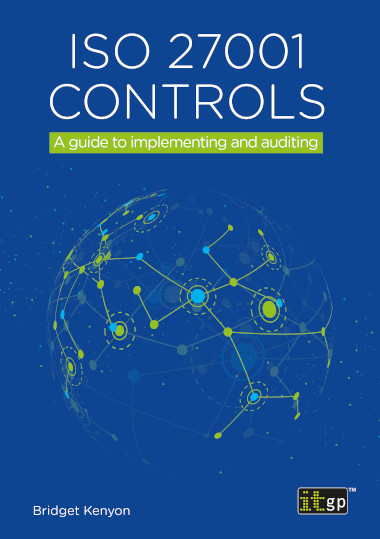
ISO 27001 controls – A guide to implementing and auditing
ISO 27001 controls – A guide to implementing and auditing Ideal for information security managers, auditors, consultants and organizations preparing for ISO 27001 certification, this book will help readers understand the requirements of an ISMS (information security management system) based on ISO 27001. Similarly, for anyone involved in internal or external audits, the book includes the definitive requirements that auditors must address when certifying organizations to ISO 27001 Buy now
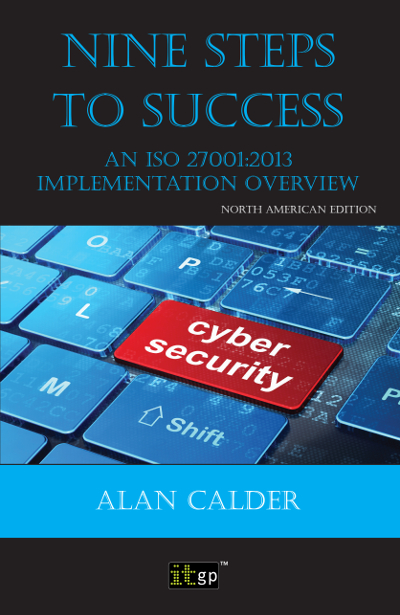
Nine Steps to Success – An ISO 27001 Implementation Overview, North American edition
Get to grips with the requirements of the ISO 27001 Standard and discover how to make your ISO 27001 implementation project a success with this must-have guide from international ISO 27001 expert Alan Calder. The ideal resource for anyone tackling ISO 27001 implementation for the first time, it details the key steps of an ISO 27001 project from inception to certification and explains each element of the ISO 27001 project in simple, non-technical language. Buy now
Information Security Risk Management for ISO 27001/ISO 27002
Information Security Risk Management for ISO 27001/ISO 27002Ideal for risk managers, information security managers, lead implementers, compliance managers and consultants, as well as providing useful background material for auditors, this book will enable readers to develop an ISO 27001-compliant risk assessment framework and deliver real, bottom-line business benefits. Buy now
It’s an information security framework designed to reduce payment card fraud by requiring organisations to implement technical and organisational defence measures.
We explain everything you need to know about the PCI DSS in this blog, including who it applies to, the benefits of compliance and what happens if you fail to meet its requirements.
Who needs PCI DSS compliance?
Any merchant or service provider that processes, transmits or stores cardholder state is subject to the PCI DSS.
Merchants are organisations that accept debit or credit card payments for goods or services.
Service providers are businesses that are directly involved in processing, storing or transmitting cardholder data on behalf of another entity.
Some organisations can be both a merchant and a service provider. For instance, an organisation that provides data processing services for other merchants will also be a merchant itself if it accepts card payments from them.
Benefits of PCI DSS compliance
The most obvious benefit of PCI DSS compliance is to reduce the risk of security incidents. When organisations implement its requirements, they shore up the most common weaknesses that attackers exploit.
According to the 2020 Trustwave Global Security Report, the majority of data breaches involving cardholder data were CNP (card-not-present) attacks. This indicates that e-commerce platforms are the most vulnerable, but this is only half the picture.
Data protection isn’t just about preventing cyber attacks; information can also be exposed by mistakes the organization makes. Such errors can also result in violations of the GDPR (General Data Protection Regulation) and other data protection laws.
PCI DSS compliance can help organisations prevent regulatory errors and the effects associated with it.
Is PCI DSS compliance mandatory?
The PCI DSS is a standard not a law, and is enforced through contracts between merchants, acquiring banks that process payment card transactions and the payment brands.
Compliance is mandatory for all organisations that process, store or transmit cardholder data. Covered organisations that fail to meet their requirements could face strict penalties.
Notably, the Standard doesn’t simply levy a one-off fine for non-compliance. Instead, organisations can be penalised between $5,000 (about €4,300) and $100,000 (about €86,000) a month until they achieve compliance.
Organisations can also face other punitive measures from their acquiring bank. For example, the bank might increase its transaction fees or terminate the relationship with the merchant altogether.
How do I achieve PCI DSS compliance?
The PCI DSS contains 12 requirements that organisations must meet if they are to achieve compliance.
They are combination of technical solutions, such as data encryption and network monitoring, alongside processes and policies to ensure that employees manage sensitive data effectively.
Those processes include steps such as changing default passwords, restricting physical access to locations where cardholder data is stored and creating an information security policy.
How do you know if you are PCI compliant?
To demonstrate that your organisation is PCI DSS compliant, organisations must audit their CDE (cardholder data environment).
There are three types of audit:
An RoC (Report on Compliance), which must be completed by a PCI QSA (qualified security assessor) organization such as IT Governance, or by an ISA (internal security assessor).
An SAQ (self-assessment questionnaire) signed off by a company officer. There are nine types of SAQ and it is essential that you choose the correct one.
The type of audit you must conduct, and your exact PCI DSS compliance requirements, will vary depending on your merchant or service provider level. This information is based on the number of card transactions processed per year.
Level 1 merchants are those process more than 6 million transactions per year, or those whose data has previously been compromised. They must complete the following each year:
RoC conducted by a QSA or ISA.
Quarterly scan by an ASV.
Level 2 merchants are those that process 1 million to 6 million transactions per year. They must complete the following each year:
RoC conducted by a QSA or ISA, or an SAQ (SAQ D) signed by a company officer (dependent on payment brand).
Quarterly scan by an ASV
Level 3 merchants are those that process 20,000 to 1 million transactions per year. They must complete the following each year:
SAQ signed by a company officer.
Quarterly scan by an ASV (dependent on SAQ completed).
Level 4 merchants are those that process fewer than 20,000 transactions per year. They must complete the following each year:
SAQ signed by a company officer.
Quarterly scan by an ASV (dependent on SAQ completed).
The audit requirements for service providers are more straightforward. Level 1 encompasses any organisation that process and/or store more than 300,000 transactions per year. They are required to conduct a RoC by a QSA or ISA and have an ASV conduct quarterly scans.
Service providers that transmit and/or store fewer than 300,000 transactions per year must complete either an RoC conducted by a QSA or an ISA, or an SAQ D signed by a company officer. They must also have an ASV conduct quarterly scans.
Get started with the PCI DSS
As a QSA company, IT Governance provides services to support organisations at each stage of each organisation’s PCI DSS compliance project. You can find out complete list of PCI DSS services and solutions on our website.
It contains everything you need to implement the Standard’s requirements, including template documents and a document checker to ensure you select and amend the appropriate records.
The toolkit supports all self-assessment questionnaires, regardless of your specific payment scenario.
It’s fully aligned with the PCI DSS, so you can be sure that your policies are accurate and compliant. All you have to do is fill in the sections that are relevant to your organization.
A critical privilege-escalation vulnerability could lead to backdoors for admin access nesting in web servers.
A popular WordPress SEO-optimization plugin, called All in One SEO, has a pair of security vulnerabilities that, when combined into an exploit chain, could leave website owners open to site takeover. The plugin is used by more than 3 million websites.
An attacker with an account with the site – such as a subscriber, shopping account holder or member – can take advantage of the holes, which are a privilege-escalation bug and an SQL-injection problem, according to researchers at Sucuri.
“WordPress websites by default allow any user on the web to create an account,” researchers said in a posting on Wednesday. “By default, new accounts are ranked as subscriber and do not have any privileges other than writing comments. However, certain vulnerabilities, such as the ones just discovered, allow these subscriber users to have vastly more privileges than they were intended to have.”
The pair is ripe for easy exploitation, according to Sucuri, so users should upgrade to the patched version, v. 4.1.5.3. Marc Montpas, a security researcher at Automattic, was credited with finding the bugs.
The Red Team Field Manual (RTFM) is a no fluff, but thorough reference guide for serious Red Team members who routinely find themselves on a mission without Google or the time to scan through a man page. The RTFM contains the basic syntax for commonly used Linux and Windows command line tools, but it also encapsulates unique use cases for powerful tools such as Python and Windows PowerShell. The RTFM will repeatedly save you time looking up the hard to remember Windows nuances such as Windows wmic and dsquery command line tools, key registry values, scheduled tasks syntax, startup locations and Windows scripting. More importantly, it should teach you some new red team techniques.
Starting Kali Linux 2021.4, the Samba client is now configured for Wide Compatibility so that it can connect to pretty much every Samba server out there, regardless of the version of the protocol in use. This change should make it easier to discover vulnerable Samba servers “out of the box”, without having to configure Kali.
With the latest update of Kaboxer tools no longer look out of place, as it brings support for window themes and icon themes. This allows the program to properly integrate with the rest of the desktop and avoids the usage of ugly fallback themes.
Here is a comparison of how zenmap looks with the default Kali Dark theme, compared to the old appearance:
New Tools in Kali Linux 2021.4
Here’s a quick run down of what’s been added (to the network repositories):
Dufflebag – Search exposed EBS volumes for secrets
Let’s try to understand what CRLF injection is. In response to an HTTP request from a web browser, a web server sends a response, which contains both the HTTP headers and the actual content of the website. There is a special combination of characters that separates the HTTP headers from the HTML response (the website content), namely a carriage return followed by a line feed.
When a header ends with a CRLF, a new header is created on the server. So, a web application or a user will know when a new line begins in a file or text block.
An attacker can inject information into HTTP responses by using the CRLF characters that separate HTTP responses. As long as the header and body end in *CRLF>*CRLF>, the browser will understand that the header ends. Consequently, they have the option to store data in the body of the answer, where HTML is stored.
If an attacker enters the ASCII code for carriage return (%0d) and line feed (%0a) in a HTTPS header, they could identify them easily. The result would look like this:
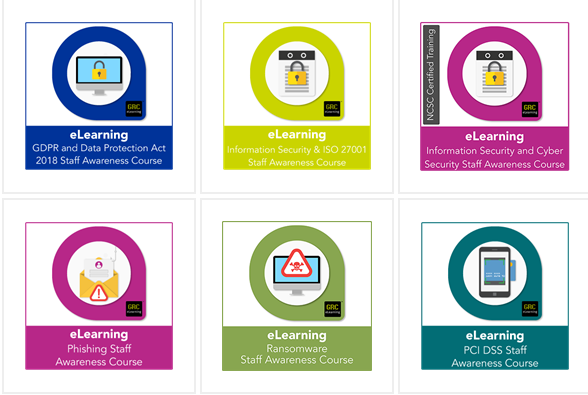
Developed by experts, ITG staff awareness training courses have been designed to give your employees the knowledge they need to protect your organization’s data while performing their roles, in compliance with relevant standards, laws and cyber security best practices.
Top 5 Cloud security challenges, risks and threats
Cloud services are an integral part of modern business. They provide a cost-effective way to store data; and with the rise in hybrid workforces, they deliver a reliable way for employees to access information remotely.
But as is often the case with technological solutions, the benefits of convenience comes with security risks. In this blog, we look at the top five Cloud security challenges that organisations face, and provide tips on how to overcome them.
This book, written by security architect Lee Newcombe, explains everything you need to know about Cloud security. It covers the key concepts of Cloud computing and the its security architectures, and then looks at the security considerations you must acknowledge.
It’s ideal for anyone looking at implementing Cloud services, whether that’s infrastructure-, platform-, software- or function-as-a-service.
In November, we discovered 81 publicly disclosed cyber security incidents, accounting for 223,615,390 breached records.
With one month left in 2021, the annual total running total of compromised records is to just shy of 5 billion.
Keep an eye out for our end-of-year report in the next few weeks, where we’ll break down the findings of these lists – or subscribe to our Weekly Round-up to get the latest news sent straight to your inbox.
In the meantime, you can find the full list of security incidents below, with those affecting UK organizations listed in bold.

![Hybrid Work Management: How to Manage a Hybrid Team in the New Workplace (A super-short book about how to analyze, plan, manage, and evaluate your team’s hybrid work arrangement) by [Hassan Osman]](https://m.media-amazon.com/images/I/41XzC+EMOFL.jpg)















![Cybersecurity Incident & Vulnerability Response Playbooks by [Cybersecurity and Infrastructure Security Agency]](https://m.media-amazon.com/images/I/51QvXBL8MYL._SX260_.jpg)