May 25 2023

What are the Common Security Challenges CISOs Face?

Category: CISO,vCISODISC @ 3:34 pm

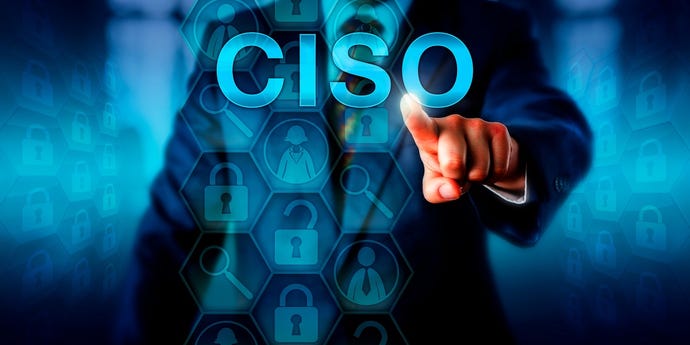
Chief Information Security Officers (CISOs) hold a critical and challenging role in today’s rapidly evolving cybersecurity landscape. Here are the common security challenges CISOs face.

As organizations increasingly rely on technology to drive their operations, CISOs face complex security challenges that demand their expertise and strategic decision-making.

These challenges arise from the constant emergence of sophisticated cyber threats, the need to protect sensitive data, and the ever-evolving regulatory landscape.

The role of a CISO requires balancing proactive risk mitigation with the ability to respond swiftly to incidents and breaches.

This article will delve into the top challenges CISOs face, including protecting digital assets, managing security incidents, ensuring compliance, dealing with insider threats, and the relentless pursuit of cyber resilience.

By understanding these challenges, CISOs can develop robust cybersecurity strategies and lead their organizations toward a secure and resilient future.

Who is a CISO?

Chief Information Security Officer (CISO) is a senior executive responsible for overseeing and administering an organization’s information security plan.

A CISO’s primary responsibility is safeguarding the confidentiality, availability, and integrity of an organization’s information assets and systems.

They are accountable for creating and enforcing strategies, policies, and procedures to defend against cyber threats, protect sensitive data, and mitigate security risks.

CISOs play a crucial role in maintaining an organization’s security posture by establishing and enforcing security standards, conducting risk assessments, and implementing appropriate security controls.

They collaborate with other executives, IT teams, and stakeholders to align security initiatives with business objectives and ensure that security measures are integrated into the organization’s operations.

In addition to their technical expertise, CISOs often engage in risk management, incident response planning, security awareness training, and compliance with regulatory requirements.

They stay updated on the latest cybersecurity trends, threats, and technologies to address emerging risks and implement appropriate security measures effectively.

The role of a CISO has become increasingly important as cyber threats evolve in complexity and frequency.

CISOs are responsible for safeguarding the organization’s sensitive information, maintaining the trust of customers and stakeholders, and ensuring business continuity in the face of cybersecurity challenges.

CISO Guide to Balancing Network Security Risks Offered by Perimeter 81 for free, helps to prevent your network from being at Risk.

What are all the Roles and Responsibilities of CISO?

  1. Developing and Implementing Information Security Strategy: The CISO is responsible for developing and implementing an overarching information security strategy aligned with the organization’s business objectives. This includes setting security goals, defining security policies and procedures, and establishing risk management frameworks.
  2. Leading the Security Team: The CISO manages and provides leadership to the security team, including hiring, training, and supervising security personnel. They ensure the team has the necessary skills, resources, and support to carry out their responsibilities effectively.
  3. Overseeing Security Operations: The CISO oversees day-to-day security operations, including incident response, vulnerability management, threat intelligence, and security monitoring. They ensure appropriate controls, technologies, and processes are in place to protect the organization’s assets.
  4. Risk Management: The CISO is responsible for identifying and assessing security risks to the organization’s information systems and assets. They develop and implement risk management strategies to safeguard critical data and systems, including risk mitigation, transfer, and acceptance.
  5. Compliance and Regulatory Requirements: The CISO ensures that the organization complies with relevant security regulations, industry standards, and legal requirements. They stay updated on emerging regulations and ensure appropriate controls and processes are in place to meet compliance obligations.
  6. Security Incident Response: The CISO leads the organization’s response to security incidents, including data breaches, malware attacks, and other security breaches. They establish incident response plans, coordinate efforts, and collaborate with relevant stakeholders, such as legal, PR, and law enforcement agencies.
  7. Security Awareness and Training: The CISO promotes a culture of security awareness throughout the organization. They develop and deliver security awareness programs and training initiatives to educate employees on security best practices and minimize human-related security risks.
  8. Vendor and Third-Party Risk Management: The CISO assesses and manages security risks associated with third-party vendors and partners. They establish vendor security requirements, conduct due diligence, and monitor compliance with security standards and contractual obligations.
  9. Security Governance and Reporting: The CISO provides regular reports and updates on the organization’s security posture to executive management, board members, and other relevant stakeholders. They ensure that security metrics and key performance indicators (KPIs) are established to measure the effectiveness of security programs.
  10. Incident Investigation and Forensics: In the event of security incidents, the CISO oversees the investigation and forensic analysis to identify the root cause, assess the impact, and prevent future occurrences. As required, they collaborate with internal and external resources, such as forensic experts and law enforcement agencies.

Security Challenges CISOs Face

CISOs face various common security challenges as they strive to protect their organizations’ digital assets and information. Perimeter 81 Guide helps CISOs to prevent their network from being at Risk. Some of the key challenges they encounter include:

  • Sophisticated Cyberattacks: CISOs must defend against increasingly sophisticated cyber threats, including advanced persistent threats (APTs), ransomware attacks, social engineering, and zero-day exploits. These attacks can bypass traditional security measures and require constant vigilance and adaptive security strategies.
  • Insider Threats: CISOs need to address the risks posed by insiders, including employees, contractors, or partners who have authorized access to systems and data. Insider threats can involve accidental data breaches, negligence, or malicious intent, requiring a balance between enabling productivity and implementing controls to prevent unauthorized access or data leakage.
  • Compliance and Regulatory Requirements: CISOs must ensure their organizations comply with industry-specific regulations, such as GDPR, HIPAA, PCI-DSS, or SOX, and evolving privacy laws. Navigating complex compliance requirements and maintaining a robust security posture to meet these standards can be a significant challenge.
  • Cloud Security: As organizations increasingly adopt cloud services and infrastructure, CISOs must address the unique security challenges associated with cloud computing. This includes securing data stored in the cloud, managing access controls, and ensuring the security of cloud service providers (CSPs) and their environments.
  • Security Skills Gap: CISOs often need more skilled cybersecurity professionals. The industry’s rapid growth and evolving threat landscape have resulted in high demand for cybersecurity talent, making recruiting and retaining qualified professionals challenging.
  • Third-Party Risk: Organizations rely on third-party vendors and suppliers, introducing potential security risks. CISOs must assess the security posture of third parties, establish contractual security obligations, and monitor their adherence to security standards to mitigate the risk of breaches through these external connections.
  • Security Awareness and Training: Human error remains a significant factor in cybersecurity incidents. CISOs must promote a strong security culture, provide regular training and awareness programs, and educate employees about cybersecurity best practices to minimize the risk of social engineering, phishing attacks, and other user-related vulnerabilities.
  • Incident Response and Recovery: CISOs must develop and test robust incident response plans to manage and recover from security incidents effectively. This involves identifying and containing breaches, conducting forensic investigations, and implementing remediation measures to minimize the impact and prevent future incidents.
  • Emerging Technologies: Adopting technologies like the Internet of Things (IoT), artificial intelligence (AI), and blockchain introduces new security challenges. CISOs must understand the security implications of these technologies, assess risks, and implement appropriate controls to protect against potential vulnerabilities and attacks.
  • Budget and Resource Constraints: CISOs often face budget limitations and the need to prioritize security initiatives. Balancing the allocation of resources to address immediate security needs while investing in long-term security capabilities can be a significant challenge.

What are the Security Compliance CISO Should Follow

As a Chief Information Security Officer (CISO), there are several security compliance frameworks and regulations that you should consider following, depending on the nature of your organization and its operations. Here are some of the key security compliance frameworks and regulations:

  1. General Data Protection Regulation (GDPR): If your organization deals with the personal data of individuals in the European Union (EU), GDPR sets requirements for the protection, processing, and transfer of personal data. It includes principles for data minimization, consent, data breach notification, and the rights of individuals.
  2. Payment Card Industry Data Security Standard (PCI DSS): PCI DSS applies to organizations that handle credit card information. It sets requirements for securing payment card data, including network security, encryption, access controls, and regular vulnerability assessments.
  3. Health Insurance Portability and Accountability Act (HIPAA): HIPAA applies to organizations in the healthcare industry that handle protected health information (PHI). It establishes requirements for the privacy and security of PHI, including access controls, encryption, risk assessments, and breach notification.
  4. Sarbanes-Oxley Act (SOX): SOX applies to publicly traded companies in the United States. It sets requirements for financial reporting and establishes controls and processes to ensure the accuracy and integrity of financial statements. While not solely focused on security, it includes provisions for protecting financial data.
  5. National Institute of Standards and Technology (NIST) Cybersecurity Framework: The NIST Cybersecurity Framework provides guidelines and best practices for managing cybersecurity risks. It covers risk assessment, security controls, incident response, and continuous monitoring.
  6. ISO 27001: ISO 27001 is an international standard that provides a framework for establishing, implementing, maintaining, and continually improving an information security management system (ISMS). It covers various aspects of information security, including risk management, access controls, incident management, and security awareness.
  7. Federal Information Security Management Act (FISMA): FISMA applies to U.S. federal agencies and sets requirements for securing federal information and systems. It mandates risk assessments, security controls, incident response planning, and continuous monitoring.

Security Challenges CISOs Face to Manage Security Team

Managing a security team as a Chief Information Security Officer (CISO) requires effective leadership, communication, and coordination. Here are some key aspects to consider when managing a security team:

  1. Establish Clear Roles and Responsibilities: Clearly define the roles and responsibilities of each team member to ensure everyone understands their specific duties and areas of expertise. This clarity helps streamline operations and avoid confusion.
  2. Set Goals and Objectives: Define strategic goals and objectives for the security team aligned with the organization’s overall security strategy. Communicate these goals to the team and regularly track progress to ensure everyone is working towards the same objectives.
  3. Provide Guidance and Mentorship: Offer team members guidance, mentorship, and professional development opportunities. Encourage skill development, certifications, and staying up-to-date with the latest security trends and technologies—support team members in their career growth.
  4. Foster Collaboration and Communication: Promote a collaborative and open communication culture within the team. Encourage knowledge sharing, cross-functional collaboration, and effective communication channels. Regular team meetings, brainstorming sessions, and updates are valuable for aligning efforts.
  5. Support Decision-Making: Empower team members to make decisions within their areas of responsibility. Provide guidance and support when needed, but encourage autonomy and ownership in decision-making. Foster an environment where team members feel comfortable taking calculated risks.
  6. Establish Incident Response Procedures: Develop clear incident response procedures and ensure the team is well-prepared to handle security incidents effectively. Conduct regular drills, tabletop exercises, and simulations to test and improve the team’s incident response capabilities.
  7. Stay Informed and Adapt: Stay up-to-date with the latest security threats, industry trends, and best practices. Encourage continuous learning and professional development for the team. Adapt security strategies and measures as the threat landscape evolves.
  8. Collaborate with Other Departments: Work closely with other departments, such as IT, legal, HR, and executive management, to ensure security initiatives are aligned with business objectives and integrated into overall organizational operations. Build relationships and foster a culture of security awareness throughout the organization.
  9. Regularly Evaluate and Improve: Regularly evaluate the team’s performance, processes, and procedures. Collect feedback from team members and stakeholders to identify areas for improvement. Implement changes and adjustments as necessary to enhance the team’s effectiveness and efficiency.
  10. Lead by Example: Demonstrate strong leadership skills, integrity, and a commitment to security best practices. Lead by example in adhering to security policies and procedures. Encourage a positive and supportive work environment.

Final Thoughts 

CISOs face many common security challenges as protectors of their organization’s digital assets and information.

From sophisticated cyberattacks and insider threats to compliance requirements and resource constraints, these challenges highlight the complex and evolving nature of the cybersecurity landscape.

CISOs must navigate these challenges by adopting a proactive and strategic approach to security, leveraging advanced technologies, fostering a strong security culture, and collaborating with stakeholders.

To overcome these challenges, CISOs must stay abreast of emerging threats, continuously evaluate and improve their security measures, and prioritize investments in critical security capabilities.

They must also foster strong partnerships with internal teams, third-party vendors, and industry peers to collectively address security challenges and share best practices.

While the security challenges CISOs face may seem daunting, they also present opportunities for innovation and growth.

By effectively addressing these challenges, CISOs can enhance their organizations’ security posture, safeguard critical assets, and instill confidence in customers and stakeholders.

Ultimately, the role of a CISO requires a comprehensive and adaptable approach to cybersecurity, where staying one step ahead of threats and continuously improving security measures are paramount.

By embracing these challenges, CISOs can help shape a secure and resilient future for their organizations in an increasingly interconnected and threat-filled digital landscape.

In what situations would a vCISO Service be appropriate?

Previous DISC InfoSec posts on CISO
InfoSec tools | InfoSec services | InfoSec books

Tags: CISO, vCISO


May 25 2023

CISO Criminalization, Vague Cyber Disclosure Rules Create Angst for Security Teams

Category: CISO,vCISODISC @ 8:53 am
Source: Zoonar GmbH via Alamy Stock Photo

In the wake of the ex-Uber CISO verdict, CISOs ask for clearer rules and less uncertainty in managing disclosures, amid jail-time fears.

Getting cybersecurity incident disclosure right can mean the difference between prison and freedom. But the rules remain woefully vague.

Chief information security officers (CISOs) and their teams know there’s a certain amount of risk intrinsically baked into the job. But the recent sentencing of former Uber CISO Joseph Sullivan for his role in covering up a 2016 data breach at the company has significantly upped the ante. 

SolarWinds CISO Tim Brown survived one of the most spectacular security breaches in history in 2020 in an epic supply chain attack, and emerged on the other side with the business — and his professional reputation — intact. In an interview with Dark Reading, he explained that CISOs are asking for clarity on rules around disclosures. The Federal Trade Commission (FTC) has rules, and beyond that, there is a vast and evolving mousetrap of rules, regulations, executive orders, and case law dictating how and when disclosures need to occur, and that’s before anyone considers the impact of an incident on the business.

“Liability is something that has CISOs concerned,” Brown says. “It’s a concerning time and creates stress and angst for teams. We want to be covered.”

A court found Uber’s Sullivan guilty of working to cover up the breach from FTC investigators, as well as trying to keep the breach secret from other Uber executives. Brown acknowledges that Sullivan made the mistake, in the view of the court, of trying to make disclosure decisions unilaterally, without legal guidance, which left him open to prosecution.

Sarbanes-Oxley Act for CISOs?

To avoid making such mistakes, CISOs need something in the mold of the 2002 Sarbanes-Oxley Act, which details financial reporting regulations for chief financial officers (CFOs), Brown says.

In the same way Sarbanes-Oxley prescribes steps that CFOs are expected to take to prevent financial fraud, Brown says that he would like to see new federal regulations that outline CISO requirements for preventing and responding to cybercrime on their watch.

The stakes are high: While Sullivan was only sentenced to three years’ probation for his role in attempting to bury Uber’s data breach, Judge William Orrick used Sullivan’s hearing as an opportunity to send a chilling warning to the next CISO unfortunate enough to find themselves in his court.

“If I have a similar case tomorrow, even if the defendant had the character of Pope Francis, they would be going to prison,” Judge Orrick said to Sullivan. “When you go out and talk to your friends, to your CISOs, you tell them that you got a break not because of what you did, not even because of who you are, but because this was just such an unusual one-off.”

Disclosure Maze

The litany of hazy rules and emerging guidelines doesn’t provide CISOs and cybersecurity teams with a clear path to compliance, meaning in-house counsel and outside legal advisers have become essential in helping organizations navigate the disclosure process maze.

“Enterprise security teams do not exist in a vacuum when it comes to evaluating disclosure of data breaches and security incidents,” says Melissa Bischoping, director of endpoint security research at Tanium, on the current disclosure landscape. “Their responses must be coordinated with legal and communications stakeholders to ensure they are meeting regulatory and legal requirements, and providing the appropriate level of information to the right consumers of the information.”

Beth Waller, an attorney and chair of cybersecurity and data privacy at Woods Rogers Vandeventer Black, says oversight bodies as well as consumers are driving cybersecurity incident transparency — and shrinking acceptable disclosure windows.

Waller points to a grab bag of regulations pushing disclosures, such as the Security and Exchange Commission’s demand for immediate data incident disclosure for publicly traded companies, as well as federal regulations on sectors like banking, healthcare, and critical infrastructure demanding disclosures within days of its discovery. Department of Defense contractors must notify the DoD of an incident within 72 hours, she points out.

“For international companies, regulations like the Europe’s General Data Protection Regulation (GDPR) drive similar timelines,” Waller says. “More and more, a company that wants to keep a data incident quiet cannot do so from a regulatory or legal standpoint.”

Disclosure Dangers

As pressure mounts on enterprise cybersecurity teams to disclose quickly, Dave Gerry, CEO of Bugcrowd, acknowledges the value of transparency for trust and the flow of information, but explains he is also concerned that rapid disclosure could rob security teams of priceless time to respond properly to cyberattacks.

“Incident disclosure needs to allow for the opportunity for the security organization to rapidly patch systems, fix code-level vulnerabilities, eject attackers, and generally mitigate their systems prior to publicly disclosing details ensure additional security incidents don’t come as a result of the disclosure,” Gerry adds. “Identifying the root cause and magnitude of the incident to avoid adding additional fear and confusion to the situation takes time, which is an additional consideration.”

Data ‘Duty of Care’ Defined

Making things more confusing, US state attorneys general are pushing for tougher regulations around cybersecurity incident disclosures, leaving each state with its own unique disclosure landscape riddled with broad, ill-defined requirements like taking “reasonable” actions to protect data.

Veteran CISO and VMware cyber strategist Karen Worstell notes that Colorado AG Philip Weiser took an important step toward clarifying CISO obligations last January, when he offered a definition of “Duty of Care” rules under the Colorado Privacy Act requiring reasonable action be taken to protect personal data.

According to Weiser, the definition was informed by actual cases that have come through his office, meaning it reflected how prosecutors viewed specific data breaches under their jurisdiction.

“First, we will evaluate whether a company has identified the types of data it collects and has established a system for how storing and managing that data — including ensuring regularly disposing of data it no longer needs,” Weiser said in prepared remarks regarding data breach rules. “Second, we will consider whether a company has a written information security policy. For companies that have no such policies or have ones that are outdated or exist only in theory with no attempt to train employees or comply with the policy, we will view more skeptically claims that their conduct is reasonable.”

Waller applauds Weiser’s move to clarify disclosure rules in his state. In Colorado, as well as Virginia, the attorney general has the sole authority to hold someone liable for breaking state privacy laws.

“Colorado Attorney General Weiser’s comments provide helpful background on the security considerations state attorney generals will consider in looking at bringing violations under these new data privacy laws,” Waller says.

Despite such strides forward, for now the rules still leave plenty of room for enterprise cybersecurity teams to get it wrong.

“The current emerging cacophony of new state privacy regulations, coupled with a hodgepodge of state data breach laws, means that we can hope a federal privacy law would eventually address the need for uniform guidance for entities experiencing a data breach,” Waller says.

“In the absence of federal guidance, the legal landscape remains simply complex,” Waller adds.

The slow churning of courts, regulatory bodies, and legislatures means it’s going to take time for all parties to get on the same page. But SolarWinds’ Brown expects more standardized rules for CISOs and their organizations to likely emerge over the next five or so years. In the meantime, he suggests keeping legal teams closely involved in all cyber incident responses.

“It will be evolving, and we will get crisper,” Brown says. “I’m hopeful.”

Source:

https://www.darkreading.com/operations/criminalization-of-cisos-creating-angst-among-cyber-teams

In what situations would a vCISO Service be appropriate?

Previous DISC InfoSec posts on CISO

InfoSec tools | InfoSec services | InfoSec books
Tags: Vague Cyber Disclosure Rules


Mar 12 2023

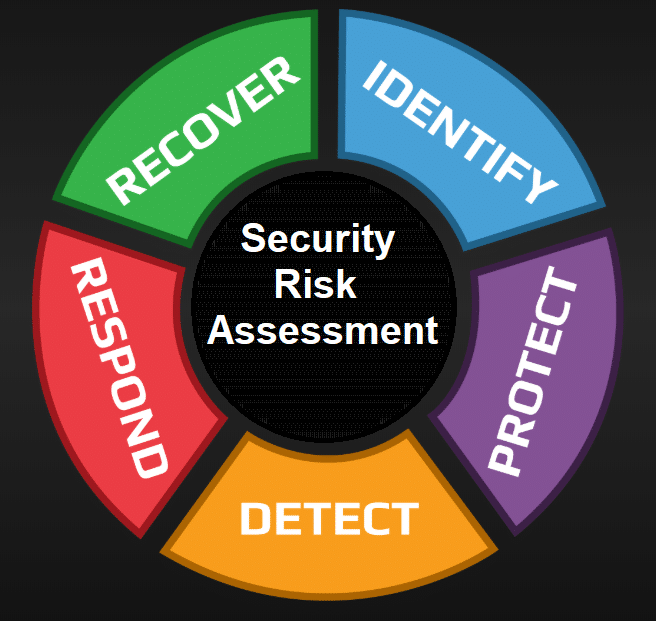
Security Risk Assessment Services

Category: Risk Assessment,Security Risk AssessmentDISC @ 11:16 pm

Security risk assessment services are crucial in the cybersecurity industry as they help organizations identify, analyze, and mitigate potential security risks to their systems, networks, and data. Here are some opportunities for providing security risk assessment services within the industry:

  1. Conducting Vulnerability Assessments: As a security risk assessment service provider, DISC can conduct vulnerability assessments to identify potential vulnerabilities in an organization’s systems, networks, and applications. You can then provide recommendations to mitigate these vulnerabilities and enhance the organization’s overall security posture.
  2. Performing Penetration Testing: Penetration testing involves simulating a real-world attack on an organization’s systems and networks to identify weaknesses and vulnerabilities. As a security risk assessment service provider, DISC can perform penetration testing to identify potential security gaps and provide recommendations to improve security.
  3. Risk Management: DISC can help organizations identify and manage risks associated with their information technology systems, data, and operations. This includes assessing potential threats, analyzing the impact of these threats, and developing plans to mitigate them.
  4. Compliance Assessment: DISC can help organizations comply with regulatory requirements by assessing their compliance with industry standards such as ISO 27001, HIPAA, or NIST-CSF. DISC can then provide recommendations to ensure that the organization remains compliant with these standards.
  5. Cloud Security Assessments: As more organizations move their operations to the cloud, there is a growing need for security risk assessment services to assess the security risks associated with cloud-based systems and applications. As a service provider, DISC can assess cloud security risks and provide recommendations to ensure the security of the organization’s cloud-based operations.
  6. Security Audit Services: DISC can provide security audit services to assess the overall security posture of an organization’s systems, networks, and applications. This includes reviewing security policies, processes, and procedures and providing recommendations to improve security.

By providing these services, DISC can help organizations identify potential security risks and develop plans to mitigate them, thereby enhancing their overall security posture.

In what situations would a vCISO Service be appropriate?

Transition plan from ISO 27001 2013 to ISO 27001 2022

We’d love to hear from you! If you have any questions, comments, or feedback, please don’t hesitate to contact us. Our team is here to help and we’re always looking for ways to improve our services. You can reach us by email (info@deurainfosec.com), or through our website’s contact form

Contact DISC InfoSec if you need further assistance in your ISO 27001 2022 transition Plan

InfoSec Threats | InfoSec books | InfoSec tools | InfoSec services

Tags: Security Risk Assessment


Jan 11 2023

How virtual CISOs can efficiently extend their services into compliance readiness

Category: CISO,vCISODISC @ 1:47 pm

Compliance services are emerging as one of the hottest areas of cybersecurity. While compliance used to be mainly the province of large enterprises, times have changed, and it is now a day-to-day concern for a growing number of small and medium businesses.

guide virtual CISOs

Even when these organizations are not regulated, SMEs often aim to follow compliance and/or security frameworks either for their own risk mitigation or in order to comply with the standards required by their customers. The driver is often their customers’ supply chain concerns and requirements. As large businesses adopt cybersecurity and compliance frameworks and agree to certain standards, they impose similar demands on their suppliers.

This is a major opportunity for virtual CISO (vCISO) providers assuming they can broaden their offerings to encompass compliance. vCISO service providers perform a vital role in building a comprehensive cybersecurity program for their SME customers. They ensure that organizations put basic security measures in place to reduce the risk of a cyberattack and adequate safeguards to protect sensitive information. As such, those delivering vCISO services are well-positioned to expand their services into compliance. Some have already extended their service portfolio by adding compliance-related services, adding value to their customers.

While this should be a natural and easy transition, many vCISO service providers struggle to make this move. Adding compliance and audit readiness services may be overwhelming – it requires a specific skill set and may be time-consuming.

Fortunately, vCISO platforms are emerging that integrate the compliance function and automate much of the work allowing vCISO service providers to easily add compliance services to their offering with no extra burden or cost.

In this guide we explain:

  • What compliance services are and why they are in demand
  • How vCISO providers can add value to the compliance sector
  • What the different compliance frameworks are and how they fit in with the CISO role
  • The upsell potential of compliance services
  • How compliance services tie into audit preparedness
  • How vCISOs in possession of detailed security assessments are well-positioned to provide compliance services
  • The platforms that can help vCISO providers automate security and compliance

Download the guide here.

Cybersecurity: The CISO’s View

Cybersecurity: The CISO's View

Cybersecurity Leadership

Download a Virtual CISO (#vCISO) and Security Advisory Fact Sheet | Cybersecurity Cheat Sheet

Tags: vCISO


Jul 18 2022

Virtual CISOs Are the Best Defense Against Accelerating Cyber-Risks

Category: CISO,Information Security,vCISODISC @ 11:17 am
A poor, permanent hire can be a very expensive error, whereas a mis-hire on a virtual CISO can be rapidly corrected.
CISO

The cybersecurity challenges that companies are facing today are vast, multidimensional, and rapidly changing. Exacerbating the issue is the relentless evolution of threat actors and their ability to outmaneuver security controls effortlessly.

As technology races forward, companies without a full-time CISO are struggling to keep pace. For many, finding, attracting, retaining, and affording the level of skills and experience needed is out of reach or simply unrealistic. Enter the virtual CISO (vCISO). These on-demand experts provide security insights to companies on an ongoing basis and help ensure that security teams have the resources they need to be successful.

How a vCISO Works
Typically, an engagement with a vCISO is long lasting, but in a fractional delivery model. This is very different from a project-oriented approach that requires a massive investment and results in a stack of deliverables for the internal team to implement and maintain. A vCISO not only helps to form the approach, define the action plan, and set the road map but, importantly, stays engaged throughout the implementation and well into the ongoing management phases.

The best vCISO engagements are long-term contracts, such as 12 to 24 months. Typically, there’s an upfront effort where the vCISO is more engaged in the first few months to establish an understanding, develop a road map, and create a rhythm with the team. Then, their support drops into a regular pace which can range from two to three days per week or five to ten days per month.

What to Expect From a vCISO
When bringing a vCISO on board, it’s important that person has three key attributes: broad and extensive experience in addressing cybersecurity challenges across many industries; business acumen and the ability to rapidly absorb complex business models and strategies; and knowledge of technology solutions and dynamics that can be explored to meet specific organizational needs.

The first thing a vCISO will focus on is prioritization, beginning with understanding a company’s risks. They will then organize actions that provide the greatest positive influence on mitigating these risks while ensuring sustainability in the program. The goal is to establish a security approach that addresses the greatest risks to the business in a way that has staying power and can provide inherent value to additional downstream controls.

Having extensive experience in the technical space, a vCISO can take into consideration the full spectrum of options — those existing within the business environment, established products and services in the marketplace, and new solutions entering the market. Just within that context, a vCISO can collaborate with the technical team to take advantage of existing solutions and identify enhancements that can further capabilities in a cost-efficient manner.

The Value of a vCISO
One of the most common findings is that companies often have a large portfolio of cybersecurity technology, but very little is fully deployed. Additionally, most tech teams are not leveraging all of the capabilities, much less integrating with other systems to get greater value. Virtual CISOs help companies save money by exploiting existing technical investments that dramatically improve security. And, since the improvement is focused on existing tools, the transition for the IT and security staff is virtually eliminated due to established familiarity with the environment.

Another essential value point of a vCISO is access to an informed and well-balanced view on risk and compliance. While cybersecurity is dominated by technical moving parts, the reality is the board, executive leadership, and management team needs to incorporate cyber-risks and related liabilities into the overall scope of risk across the business at an executive level. In this sense, leadership has a vast array of competing challenges, demands, and risks and some can be even more impactful than cybersecurity.

How to Convince the Executive Team
A CEO is under a constant barrage of challenges, problems, risks, and opportunities. Cybersecurity needs to be part of that formula. If one of the core values of having a vCISO is getting meaningful cyber-risk insights, then trust and confidence in that person is paramount and needs to be established from the beginning.

Another challenge is the team dynamic — at the heart of being a CEO is their success as a leader. Introducing what is essentially a consultant can be an adjustment for the team. It’s important that the vCISO hire fits the culture and can easily integrate with everyone on the team including the CIO, CTO, CPO, CRO, etc.

The conversation with the CFO will understandably have a heavy financial tone. For companies debating between a full-time CISO or a vCISO, it’s clear a poor permanent hire can be a very expensive error, whereas a mis-hire on a vCISO can be rapidly corrected.

As organizations continue to come to grips with the byproducts of digitization and new security challenges that often seem insurmountable, a vCISO can be an enormous value. Beyond offering an efficient and cost-effective model, they bring many advantages to businesses with fewer risks than a dedicated resource.

Source: https://www.darkreading.com/careers-and-people/virtual-cisos-are-the-best-defense-against-accelerating-cyber-risks

Ransomware’s Silver Bullet – The Virtual CISO Publication Series: Cybersecurity

DISC InfoSec

#InfoSecTools and #InfoSectraining

#InfoSecLatestTitles

#InfoSecServices

Ask DISC an InfoSec & compliance related question

Tags: CISO, vCISO, Virtual CISOs


Jan 05 2022

How can SMBs extend their SecOps capabilities without adding headcount?

Category: Security Operations CenterDISC @ 9:08 am

Outsourcing security: What’s on offer?

Fortunately, there is an alternative way for procuring security expertise: by retaining the services of managed security service providers (MSSPs) and managed detection and response (MDR) providers.

MSSPs usually assist organizations’ IT departments in managing the IT infrastructure and keeping it secure by managing security equipment/systems, monitoring security logs, supervising patch management, and similar preventative security measures. MDR providers concentrate on monitoring network traffic and data, providing threat hunting/detection services and responding to discovered threats – capabilities that are difficult for most SMBs to cultivate in-house due to resource limitations.

For example, when the existence of the Log4Shell vulnerability and a PoC for it was revealed, Milton Security, a California-based MDR provider, has been inundated with concerns and requests from customers, prospects, and the public asking to help make sense of the situation, provide credible and timely updates, and monitor networks for any suspicious activity that might be related to Log4j exploitation.

But they have also been getting a lot of requests for their application security testing, penetration testing, incident response, and even their vCISO service.

Winning the perpetual fight against crime by building a modern Security Operations Center (SOC)

Tags: SecOps, SOC


Nov 12 2021

Implementing and auditing an Information Security Management System in small and medium-sized businesses

Category: Information Security,ISO 27kDISC @ 11:02 pm

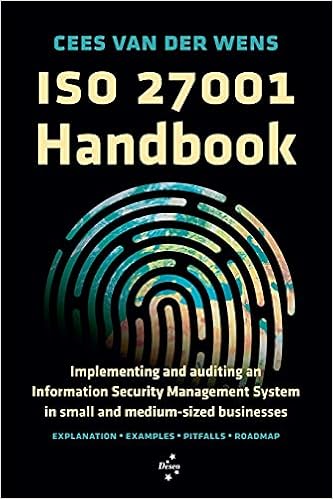
ISO 27001 Handbook

If you want to understand ISO 27001, this handbook is all you need. It not only explains in a clear way what to do, but also the reasons why.

This book helps you to bring the information security of your organization to the right level by using the ISO/IEC 27001 standard.

An organization often provides services or products for years before the decision is taken to obtain an ISO/IEC 27001 certificate. Usually, a lot has already been done in the field of information security, but after reading the requirements of the standard, it seems that something more needs to be done: an ‘information security management system’ must be set up. A what?

This handbook is intended to help small and medium-sized businesses establish, implement, maintain and continually improve an information security management system in accordance with the requirements of the international standard ISO/IEC 27001. At the same time, this handbook is also intended to provide information to auditors who must investigate whether an information security management system meets all requirements and has been effectively implemented.

This handbook assumes that you ultimately want your information security management system to be certified by an accredited certification body. The moment you invite a certification body to perform a certification audit, you must be ready to demonstrate that your management system meets all the requirements of the Standard. In this book, you will find detailed explanations, more than a hundred examples, and sixty-one common pitfalls. It also contains information about the rules of the game and the course of a certification audit.

ISO 27001 Certification

ISO 27001 Gap Assessment

DISC InfoSec vCISO as a Service

Tags: iso 27001, ISO 27001 2013, ISO 27001 2013 Gap Assessment, iso 27001 certification


May 28 2021

The evolution of the modern CISO

Category: CISO,vCISODISC @ 2:17 pm

The modern CISO

The role of CISO first emerged as organizations embraced digital revolutions and began relying on new data streams to help inform business decisions. As technology continued to advance and became more complex, so too did threat actors who saw new opportunities to disrupt businesses, by stealing or holding that data hostage for ransom.

As the years have gone by and cyberattacks have become more sophisticated, the role of the CISO has had to advance. The CISO has evolved from being the steward of data to also being a guardian for availability with the emergence of more destructive and disruptive attacks. The CISO also must be highly adaptable and serve as the connective tissue between security, privacy and ultimately, consumer trust.

The changing threat landscape

Previous blogs on CISO & vCISO

Virtual CISO - Virtual Chief Information Security Officer (vCISO)

Related latest CISO and vCISO titles

Tags: CISO, Fractional CISO, vCISO


Feb 14 2021

Want to become a CISO

Category: CISO,vCISODISC @ 1:08 pm

CISO role is not only limited to understanding infrastructure, technologies, threat landscape, and business applications but to sway people attitude and influence culture with relevant policies, procedures and compliance enforcement to protect an organization.

#CISO #vCISO
Explore more on CISO role:


Feb 11 2021

Cost Effective Cyber Security

Category: CISO,vCISODISC @ 11:41 am

DISC InfoSec provides cost effective Cybersecurity: CISO as a Service (CISOaaS)

A Chief Information Security Officer (CISO) is an executive responsible for cybersecurity. Many medium-sized organizations need a CISO but don’t have the budget for one. A Fractional CISO/ vCISO can deliver the value of a full-time CISO without the same level of investment.

Why do you may need one?

  • Lower your organizational cybersecurity risk with industry expert leadership.
  • Supplement your team with InfoSec program, policy and process experts to solve your most pressing needs.
  • Prioritize your cybersecurity investments with quantitative decision making.
  • vCISO for your Interim CISO needs.
  • vCISO program can put you on a path to success with your compliance initiatives, such as a NIST CSF compliance or ISO 27001 certification.

DISC InfoSec also performs technical control assessment such as (Web Application testing) which is imperative to your compliance and ISO 27001 certification process.

In short, as a CISOaaS we do all the legwork so you can focus on running your business.

Our vCISO advisory services are available to support the security/ technology leadership of your organization to implement and improve security and risk posture in today’s heightened security averse landscape.

If you are interested to know more about how can we assist you in your latest InfoSec and compliance project, schedule a short call on our calendar.

​​Latest DISC InfoSec blog feed

Chief Information Security Officer

Contact DISC InfoSec for any question


Oct 05 2020

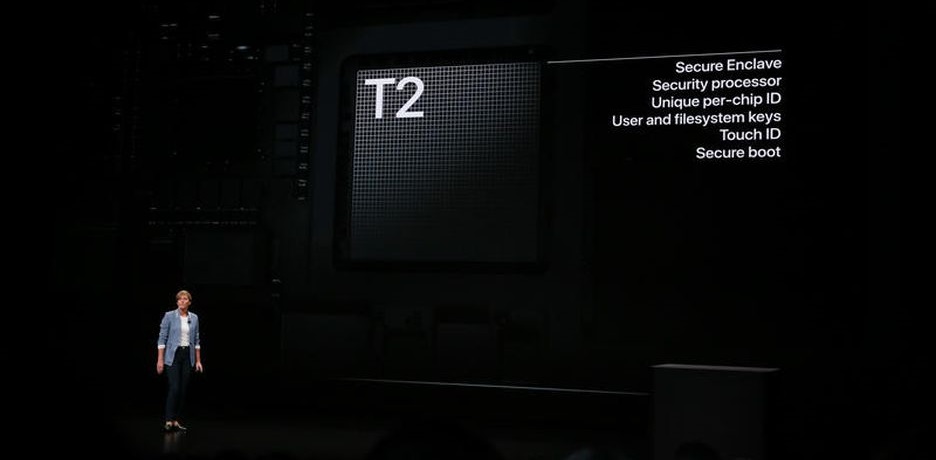
Hackers claim they can now jailbreak Apple’s T2 security chip

Category: Jail breakDISC @ 10:54 pm

Jailbreak involves combining last year’s checkm8 exploit with the Blackbird vulnerability disclosed this August.

Source: Hackers claim they can now jailbreak Apple’s T2 security chip | ZDNet


How to Disable T2 Security
httpv://www.youtube.com/watch?v=rzjXgPmVtdQ


👉 Download a Virtual CISO (#vCISO) and Security Advisory Fact Sheet & Cybersecurity Cheat Sheet

Download a Security Risk Assessment Steps paper!

DISC InfoSec 🔒 securing the business 🔒 via latest InfoSec titles

Subscribe to DISC InfoSec blog by Email


Oct 04 2020

Clinical Trials Hit by Ransomware Attack on Health Tech Firm

Category: RansomwareDISC @ 9:53 pm

No patients were affected, but the incident was another reminder of the risks in the increasingly common assaults on healthcare computer networks.

A Philadelphia company that sells software used in hundreds of clinical trials, including the crash effort to develop tests, treatments and a vaccine for the coronavirus, was hit by a ransomware attack that has slowed some of those trials over the past two weeks.

The attack on eResearch Technology, which has not previously been reported, began two weeks ago when employees discovered that they were locked out of their data by ransomware, an attack that holds victims’ data hostage until they pay to unlock it. ERT said clinical trial patients were never at risk, but customers said the attack forced trial researchers to track their patients with pen and paper.

Source: Clinical Trials Hit by Ransomware Attack on Health Tech Firm


Clinic.al Trials Hit by Ransomware Attack on Health Tech Firm
httpv://www.youtube.com/watch?v=9wYhmwTtZ3w&ab_channel=NewsHotDailyc


👉 Download a Virtual CISO (#vCISO) and Security Advisory Fact Sheet & Cybersecurity Cheat Sheet

Download a Security Risk Assessment Steps paper!

DISC InfoSec 🔒 securing the business 🔒 via latest InfoSec titles

Subscribe to DISC InfoSec blog by Email


Sep 29 2020

12 Bare-Minimum Benchmarks for AppSec Initiatives

Category: App SecurityDISC @ 1:40 pm

The newly published Building Security in Maturity Model provides the software security basics organizations should cover to keep up with their peers.

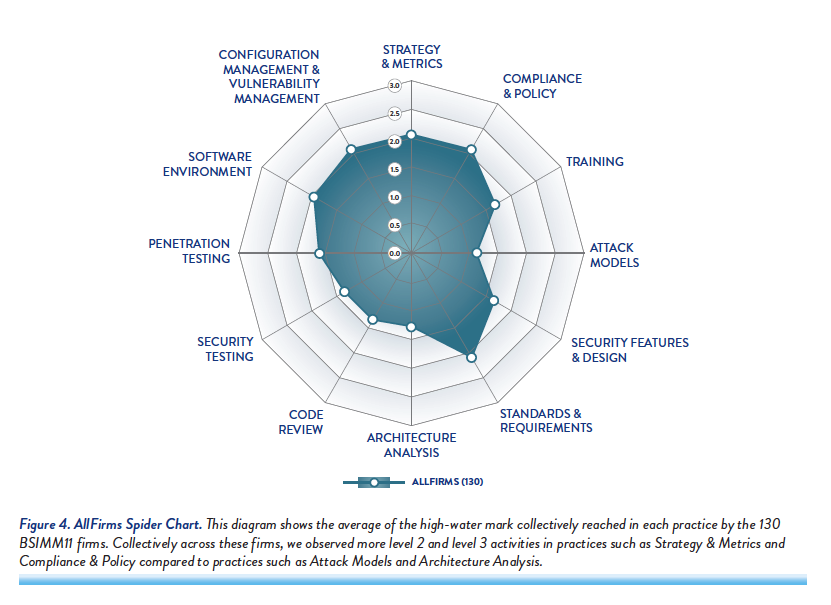
As application security methodology and best practices have evolved over more than a decade, the Building Security in Maturity Model (BSIMM) has been there each year to track how organizations are making progress. BSIMM11, released last week by Synopsys, is based on the software security practices in place at 130 different firms across numerous industries, including financial services, software, cloud, and healthcare.

The practices were measured by the model’s proprietary yardstick, which lumps 121 different software security metrics into four major domains: governance, intelligence, secure software development lifecycle (SSDL) touchpoints, and deployment. Each of these domains are further broken down into three practice categories containing numerous activities that slide from simple to very mature.

Similar to previous reports, BSIMM11 shows that most organizations are at the very least hitting the basics — including activities like performing external penetration testing and instituting basic software security training across development organizations. The following are the most common activities cited for each practice category, providing an excellent yardstick for the bare minimum that organizations should be doing to keep up with their peers.

Source: 12 Bare-Minimum Benchmarks for AppSec Initiatives


DISC InfoSec 🔒 securing the business 🔒 via latest InfoSec titles

Subscribe to DISC InfoSec blog by Email

👉 Download a Virtual CISO (#vCISO) and Security Advisory Fact Sheet & Cybersecurity Cheat Sheet

Download a Security Risk Assessment Steps paper!


Sep 28 2020

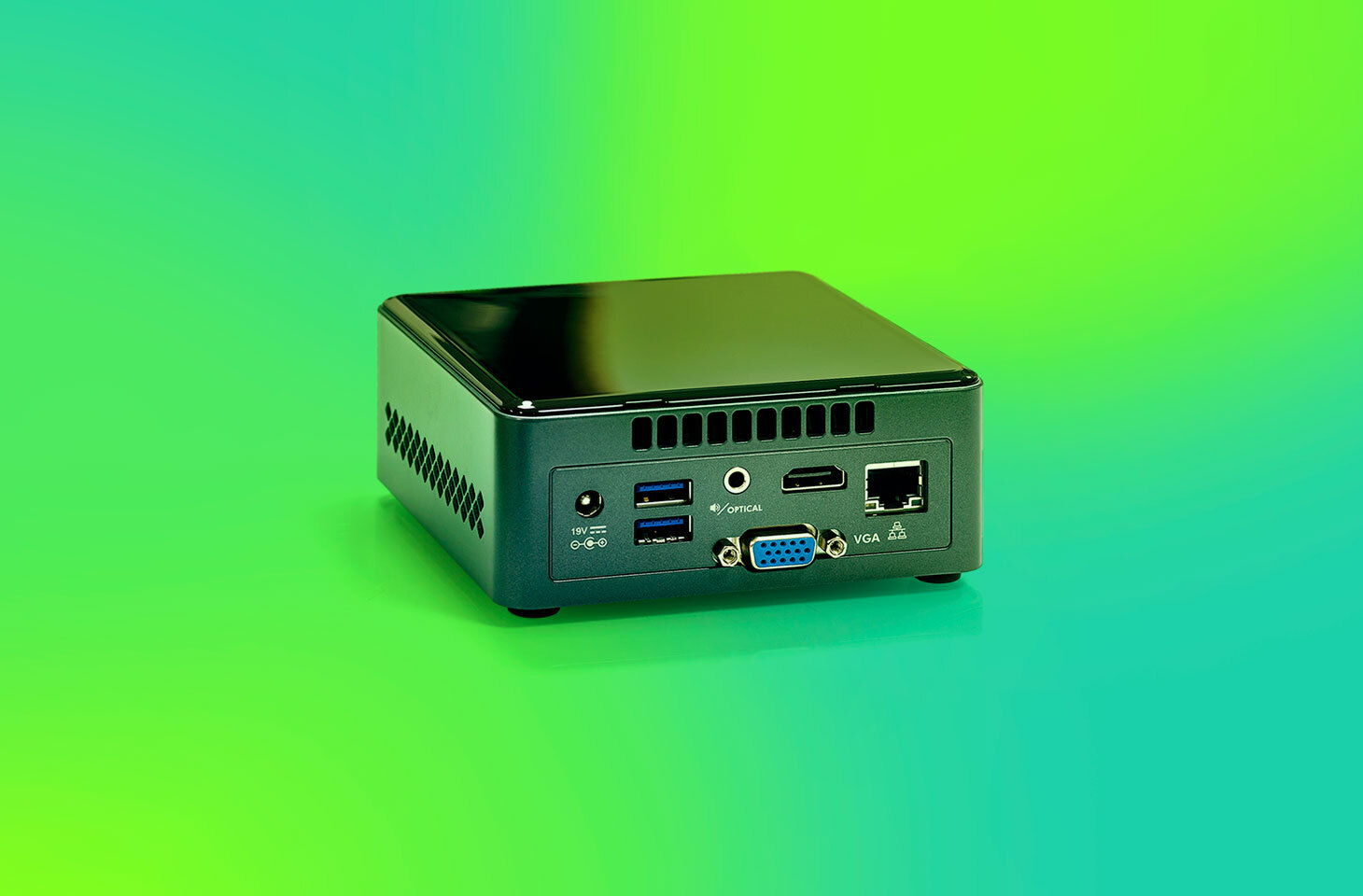
Thin clients from a security perspective

Category: Security playbook,VirtualizationDISC @ 1:58 pm

The mass transition to working from home clearly shows the best technologies for a secure and convenient remote environment.

Users receive the maximum security benefits by connecting to virtual desktops from thin clients.

A thin client is a terminal-mode device. It often doesn’t even have any internal storage, being just a box that connects to a server and lets users connect a monitor and peripheral devices (configuration may vary depending on the specific model). The thin client does not process or store any work data.

Of course, a thin client requires a good communications channel. In recent years, however, that’s not much of a hurdle.

Communication between a thin client and a server is usually conducted over an encrypted protocol, solving the problem of the unreliable network environment.

Source: Thin clients from a security perspective

2020 Security Playbook

1) Data discovery
2) Compartmented Data Access
3) Move to thin client
4) Increase focus on AAA


DISC InfoSec 🔒 securing the business 🔒 via latest InfoSec titles

Subscribe to DISC InfoSec blog by Email

👉 Download a Virtual CISO (#vCISO) and Security Advisory Fact Sheet & Cybersecurity Cheat Sheet

Download a Security Risk Assessment Steps paper!


Tags: Security playbook, Thin Client, Thin Client PC


Sep 27 2020

Enhance your privacy management with ISO 27701

Category: ISO 27kDISC @ 11:09 am

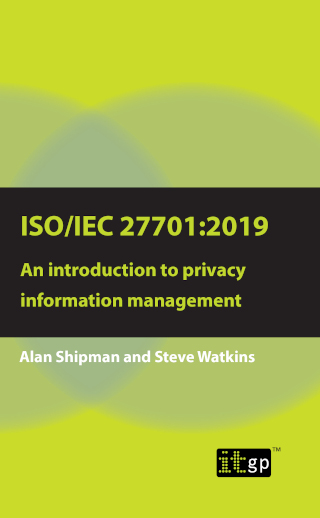
ISO/IEC 27701:2019 provides guidance on data protection, including how organizations should manage personal information, and helps demonstrate compliance with privacy regulations around the world, such as the GDPR.

The Standard integrates with the international information security management standard ISO/IEC 27001 to extend an ISMS (information security management system), enabling an organization to establish, implement, maintain and continually improve a PIMS (privacy information management system).

ITG pocket guide ISO/IEC 27701:2019: An introduction to privacy information management is an ideal primer for anyone implementing a PIMS based on ISO 27701.

Improve your privacy information management regime

Co-written by Alan Shipman, an acknowledged expert in the field of privacy and personal information and the project editor of ISO/IEC 27701, this pocket guide will help you understand the basics of privacy management, including:


  • What privacy information management means
  • How to manage privacy information successfully using a PIMS aligned to ISO/IEC 27701
  • Key areas of investment for a business-focused PIMS and
  • How your organization can demonstrate the degree of assurance it offers with regard to privacy information management.
ISO/IEC 27701:2019: An introduction to privacy information management
 

         Buy now

ISO 27701 Gap Analysis Tool


Download a Security Risk Assessment Steps paper!


DISC InfoSec 🔒 securing the business 🔒 via latest InfoSec titles

Subscribe to DISC InfoSec blog by Email

👉 Download a Virtual CISO (#vCISO) and Security Advisory Fact Sheet & Cybersecurity Cheat Sheet


Tags: ISO 27701, ISO 27701 Gap Analysis Tool, PIMS


Sep 24 2020

Hacker Accessed Network of U.S. Agency and Downloaded Data

Category: HackingDISC @ 10:24 pm

An unnamed U.S. federal agency was hit with a cyber-attack after a hacker used valid access credentials, authorities said on Thursday.

While many details of the hack weren’t revealed, federal authorities did divulge that the hacker was able to browse directories, copy at least one file and exfiltrate data, according to the Cybersecurity & Infrastructure Security Agency, known as CISA.

The hacker implanted malware that evaded the agency’s protection system and was able to gain access to the network by using valid access credentials for multiple users’ Microsoft 365 accounts and domain administrator accounts, according to authorities.

Source: Hacker Accessed Network of U.S. Agency and Downloaded Data


Security Risk assessment Quiz – Find Out How Your security risk assessment Stands Up!

Download a Security Risk Assessment Steps paper!

DISC InfoSec 🔒 securing the business 🔒 via latest InfoSec titles

Subscribe to DISC InfoSec blog by Email

👉 Download a Virtual CISO (#vCISO) and Security Advisory Fact Sheet & Cybersecurity Cheat Sheet


Sep 22 2020

Operation DisrupTor: police arrested 179 vendors engaged in the sale of illicit good

Category: CybercrimeDISC @ 1:54 pm

A global police sting dubbed Operation DisrupTor targeted vendors and buyers of illicit goods on the dark web, Europol announced.

Source: Operation DisrupTor: police arrested 179 vendors engaged in the sale of illicit good – Security Affairs

Security Risk assessment Quiz – Find Out How Your security risk assessment Stands Up!

Download a Security Risk Assessment Steps paper!

DISC InfoSec 🔒 securing the business 🔒 via latest InfoSec titles

Subscribe to DISC InfoSec blog by Email

👉 Download a Virtual CISO (#vCISO) and Security Advisory Fact Sheet & Cybersecurity Cheat Sheet


Sep 21 2020

Guard your data with these privacy-focused search engines & browsers

Category: Information Privacy,Web SecurityDISC @ 12:11 pm

Tracking allows the companies to improve their algorithm and app experience, but this experience comes at the cost of your digital data. In this guide, we’re going to focus on the search engines and browsers that you’ll want to use if you care about your online privacy.

Popular search engines and browsers do a great job at finding and browsing content on the web, but can do a better job at protecting your privacy while doing so.

With your data being the digital currency of our times, websites, advertisers, browsers, and search engines track your behavior your on the web to deliver tailored advertising, improve their algorithms, or improve their services.

Privacy-focused search engines

Below are the best privacy-focused search engines that do not track your searchers or display advertisements based on your cookies or interests.

Source: Guard your data with these privacy-focused search engines & browsers


Download a Security Risk Assessment Steps paper!

Security Risk assessment Quiz – Find Out How Your security risk assessment Stands Up!

DISC InfoSec 🔒 securing the business 🔒 via latest InfoSec titles

Subscribe to DISC InfoSec blog by Email

👉 Download a Virtual CISO (#vCISO) and Security Advisory Fact Sheet & Cybersecurity Cheat Sheet


Sep 14 2020

CISA: Chinese state hackers are exploiting F5, Citrix, Pulse Secure, and Exchange bugs

Category: HackingDISC @ 2:47 pm

CISA says attacks have started a year ago and some have been successful.

Source: CISA: Chinese state hackers are exploiting F5, Citrix, Pulse Secure, and Exchange bugs | ZDNet


Chinese Hackers Working w/ Ministry of State Security Charged w/ Global Computer Intrusion Campaign
httpv://www.youtube.com/watch?v=b8zhLOnXDdY&ab_channel=TheJusticeDepartment


The Hacker and the State: Cyber Attacks and the New Normal of Geopolitics

Download a Security Risk Assessment Steps paper!

Security Risk assessment Quiz – Find Out How Your security risk assessment Stands Up!

DISC InfoSec 🔒 securing the business 🔒 via latest InfoSec titles

Subscribe to DISC InfoSec blog by Email

👉 Download a Virtual CISO (#vCISO) and Security Advisory Fact Sheet & Cybersecurity Cheat Sheet


Sep 12 2020

Don’t pay the ransom, mate. Don’t even fix a price, say Australia’s cyber security bods

Category: RansomwareDISC @ 1:35 pm

Better yet – do the basics and your systems won’t get encrypted in the first place

Source: Don’t pay the ransom, mate. Don’t even fix a price, say Australia’s cyber security bods

The infoseccers strongly advised against paying the criminals:

Paying a ransom does not guarantee decryption of data. Open source reporting indicates several instances where an entity paid the ransom but the keys to decrypt the data were not provided. The ACSC has also seen cases where the ransom was paid, the decryption keys were provided, but the adversary came back a few months later and deployed ransomware again. The likelihood that an Australian organizations will be retargeted increases with every successful ransom payment.

It is generally much easier and safer to restore data from a backup than attempting to decrypt ransomware affected data.

“Many of these [attacks] could have been avoided or substantially mitigated by good cyber security practices,” sighed the ACSC in the report (PDF, 18 pages), which covered the months July 2019-June 2020.


How to recover your system from a Ransomware attack
httpv://www.youtube.com/watch?v=kJuibb9QaWk&ab_channel=CSO


Download a Security Risk Assessment Steps paper!

Security Risk assessment Quiz – Find Out How Your security risk assessment Stands Up!

DISC InfoSec 🔒 securing the business 🔒 via latest InfoSec titles

Subscribe to DISC InfoSec blog by Email

👉 Download a Virtual CISO (#vCISO) and Security Advisory Fact Sheet & Cybersecurity Cheat Sheet


« Previous PageNext Page »