Nov 26 2008

Cyber threats and overall security assessment

Category: Information Warfare,Risk AssessmentDISC @ 3:13 am

The main screen showing star names (color-code...
Image via Wikipedia

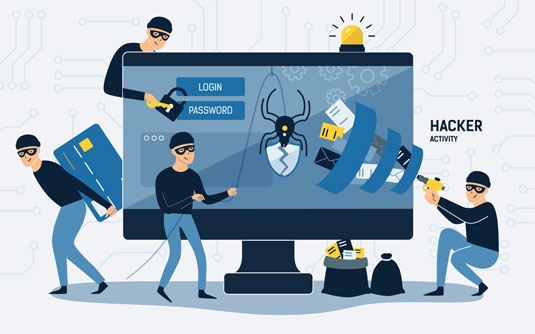
In the past when senior management (execs) needed to understand the financial implication of cyber threats and their exposures, they turned their questionnaires toward IT for relevant answers. In other words IT risk assessment was the answer in the past to understand the financial implications of cyber threats. The IT risk assessment is not the comprehensive or overall assessment of the company to understand the total implications of cyber threats. The overall assessment will not only include IT but also other departments like HR and legal etc… Basically cyber threats are neither IT issue and nor a legal or HR issue any more, it’s simply an enterprise management issue.

In old days the firewall was used as a major defense against potential cyber threats. The new cyber threats are sophisticated enough to demand better defense. New threats (virus, adware, worms, Trojan, spyware, spam, phishing) use modern techniques to bypass defenses. The potential risks of these new threats demand an immediate attention (of CFO or higher) and approval for resource allocation to protect against cyber threats. To make a solid business case for security ROI, senior level execs need to know the overall risk they are reducing, and their highest priority.

[TABLE=12]

ANSI and ISA have jointly released a document to assist senior management to prepare for financial implications for cyber threats. Basic essence of the guide is to provide a tool to execs to understand the financial implications of potential cyber threats to their organizations.

“The 40 page guide was put together by task force of risk management execs from more than two dozen organizations. The new guide offered by ANSI and the ISA recommends that CFO ask their various team’s questions about the biggest threats to data confidentiality, integrity and availability,” to get to know the existing controls in place and any relevant mitigation plan. Risk analysis of this information can help execs to map the cyber threats risks into correct financial terms and make better resource allocation.
The senior execs who want to implement information security as a process in their organization should consider ISO 27001 (ISMS) as a best practice, which provides a reasonable on-going due diligence to protect and safeguard organization data.

Reblog this post [with Zemanta]

Tags: availability, Business, Chief financial officer, cyber threats, data confidentiality, exposure, Financial services, Human resources, Insurance, integrity, isms, ISO/IEC 27001, Management, overall assessment, risk analysis, Risk Assessment, Risk management, roi, Security


Nov 17 2008

Harmful Spyware and their stealthier means

Category: Information Security,MalwareDISC @ 2:55 pm

Dozens of pop-up ads covering a desktop.

Spyware is utilized to gather information about a person with or without their consent and it intercept or record personal/financial information. Some spyware are capable of sending information back to another computer (originator of the spyware).

Characteristic of Spyware

• Compromise user machine without their knowledge
• Use vulnerabilities in the software to push a spyware code on the machine
• Install Trojans to gather data
• Gather personal and financial information to send it to attackers

Spyware are used to gather different kind of information which includes but not limited to advertising, corporate monitoring, child monitoring, governmental monitoring. Besides their legal use which is based on company policy or regulations monitoring spywares can be used for spying on a person without their consent. More common types of spywares are adware (serve advertising) and key-loggers (record keystrokes)

How you can get spyware on your machine: Spyware can be installed on your machine in many ways.

Below are some of the common ways to deliver spyware.
• Spyware can be installed on a computer via a virus or an email Trojan.
• Spyware can be installed on a computer by taking advantage of security flaws in Internet Explorer.
• Spyware sometime are included in the shareware program. User agreement for the shareware may make a reference to grant permission to allow the recording of your internet use
• Pop-up downloads are becoming a preferred method of installing spyware and adware. Pop-up download windows ask the users to download a program to their computers.
• Another popular way to distribute spyware is a drive-by download. It installs itself on the computer without user knowledge. It can be installed by simply visiting a website.

Windows Defender is software that helps protect your computer against pop-ups, and security threats caused by spyware and other unwanted software by detecting and removing known spyware from your computer. Most popular antivirus products now include adware and spyware scanning. You can find more adware and spyware removal tools at the Spyware Protection and Removal guide. This Web page includes links to popular spyware removal programs, as well as a number of useful articles. Also in Internet Explorer 7 (IE7) you can turn on/off the pop-up blocker. IE7 -> Tools -> Pop-Up Blocker. There is a pop-up blocker setting where you can allow exceptions for some sites and setup pop-up filter to high, medium and low.

Anti-Spyware, Registry Cleaner & PC Optimizer

Computer users particularly need to watch out for bogus spyware removal programs. They are dangerous because they punish the user for doing something right. Victims think that this will remove the spyware, instead in some cases computer users are paying to install a spyware.
Checkout the Rouge Anti-Spyware Products table

How to Protect from Spyware
httpv://www.youtube.com/watch?v=_w-DZNbq66I&feature=PlayList&p=18F23434175F964D&playnext=1&index=26

Reblog this post [with Zemanta]

Tags: adware, bogus spyware, drive-by download, financial information, Internet Explorer, keylogger, Pop-up ad, rouge anti-spyware, Security, shareware, Spyware, trojan, virus, Windows Defender, World Wide Web


Nov 04 2008

Open Network and Security

Category: Information Security,Open NetworkDISC @ 7:54 pm

Made and uploaded by John Manuel - JMK{{#if: |...

Open networks are heterogeneous environment where users like to use all the applications and systems at any given time. In a heterogeneous environment, each department run different hardware and software, but you can control the protocols which will work on this environment.

Universities are famous for open network. Most Universities network is comprised of a Bank (To give loan to students), a restaurant, and a bookstore which have credit card processing ability. Students, alumni, researchers, employee and staff need access to utilize resources. Now how would you control access if same person assume all the roles mentioned above. Universities are basically transient communities, where users come back and plug-in their new devices and expect an immediate access to all the resources. Where the reputation of openness is challenge at every step of the way, now the question is how can they maintain reputation and yet control the environment based on security policies.

Reasonable security can be accomplished by focusing on a process rather than adding yet another security control. The process is based on risk assessment program where you assess your critical assets based on threat and vulnerability pair and measure the likelihood and impact of a threat if a given vulnerability is exploited.

The process start with knowing your assets – Network registration will detect when you plug-in your new equipment. Before you get an access, it detects a hardware address and username. You can also control common misconfigurations and noncompliance issues with network registration process. Some vulnerability management systems discover assets and perform vulnerability and security configuration assessment to proactively identify and prioritize risks. New vulnerabilities are accessed from trusted site on a regular basis and when vulnerabilities are identified, the management system needs to have an ability to remediate to comply with the information security policy.

Most of the departments in an open network contains different systems and applications and basically have different security appetite. Distributed IT Governance can address this issue where you develop policies and procedures which fit their needs and hand it over to the department to comply.
Open network requires pretty much open borders, Instead of securing the network/system emphasis should be on data protection.

[TABLE=9]

Recent news from AT&T to make its network open where customers can use any handset of their choice, perhaps a reaction to in response to recent moves from Verizon and Google to promote open network. Specifically Verizon announced that it would allow “any device” and “any application” to operate on its network. These open networks does provide flexibility for customers but at the same time burden lies on the shoulders of the corporations to provide right balance of security and privacy with availability of the network.

In an open network, reasonable security can be achieved by embracing ISO 27k standard and eventually acquiring ISO 27001 (ISMS) certification. Information Security Management System (ISMS) can be a great value added process to manage ongoing monitoring, maintaining and for process improvement of an open network. ISMS as a process in-place provides reasonable security safeguard to your information and certainly help to minimize the liability in the court of law.

End-to-End Network Security: Defense-in-Depth by Omar Santos
httpv://www.youtube.com/watch?v=zTJSMjYd9c4

(Free Two-Day Shipping from Amazon Prime). Great books

Reblog this post [with Zemanta]

Tags: AT&T, Computers, Credit card, data protection, heterogeneous, impact, Information Security, Information Security Management System, isms, iso 27001, ISO 27k, ISO/IEC 27001, IT Governance, likelihood, Network registration, Omar Santos, Reasonable security, risk assessment program, security controls, threat, Universities network, Verizon, vulnerability, vulnerability management systems