InfoSec and Compliance – With 20 years of blogging experience, DISC InfoSec blog is dedicated to providing trusted insights and practical solutions for professionals and organizations navigating the evolving cybersecurity landscape. From cutting-edge threats to compliance strategies, this blog is your reliable resource for staying informed and secure. Dive into the content, connect with the community, and elevate your InfoSec expertise!
In this video for Help Net Security, Paul Calatayud, CISO at Aqua Security, talks about cloud native security and the problem with the lack of understanding of risks to this environment.
A recent survey of over 100 cloud professionals revealed that often businesses lead the charge in cloud, they see the opportunity, they move forward, but more and more critical compute finds its way into these cloud environments, and the security teams start to take notice. Often too late, though.
The survey shows that the awareness is starting to become a problem, and the risks are not fully understood. Organizations need to get ahead of these things. To be able to apply a good cloud native security strategy, understanding the risks is imperative.
Developers Remediate Less Than a Third of Vulnerabilities
Developers are regularly ignoring security issues as they deal with an onslaught of issues from security teams, even as they are expected to release software more frequently and faster than ever before.
In addition, developers fix just 32% of known vulnerabilities, and 42% of developers push vulnerable code once per month, according to Tromzo’s Voice of the Modern Developer Report.
The report, based on a survey of more than 400 U.S.-based developers who work at organizations where they currently have CI/CD tools in place, also found a third of respondents think developers and security are siloed.
Tromzo CTO and co-founder Harshit Chitalia pointed out the top security vulnerabilities of the past few years—Log4j, SolarWinds, Codecov—have all been supply chain attacks.
“This has made AppSec an urgent and top priority for CISOs worldwide,” he said. “In addition, everything as code with Kubernetes, Terraform and so on have made all parts of the development stack part of AppSec.”
From his perspective, the only way this big attack surface can be overcome is with security and development teams working hand in hand to secure the application in every step of the development cycle.
He added developers ignoring security issues is one of the fundamental issues AppSec engineers have with security.
“Security teams put their blood, sweat and tears into finding different vulnerabilities in code through orchestrating scanners and manual testing,” he said. “After all the work, seeing the issue on Jira queue for months is disappointing and quite frustrating.”
Fighting Friction
On the other hand, he pointed to developers who are now asked not only to develop features and fix bugs but also look at DevOps, performance and security of their applications.
“This leads to friction in priorities and, if unresolved, leads to unhappy employees,” he said. “The C-suite is very much aware of this problem, but they are stuck with security tools which are not created for developers. As application security is going through a big transformation, we believe the tooling will also shift.”
He explained there were several concerning findings from the survey but that two, in particular, stood out.
The first thing Chitalia found deeply concerning was the fact that 62% of developers are using 11 or more application security tools.
He said application security has evolved in recent years with AppSec teams now responsible for source-code analysis, DAST, bug bounty, dependency, secrets scanning, cloud scanning and language-specific scanners.
“This means developers are constantly fed information from these tools without any context and they have to triage and prioritize the workload these tools generate for them,” he said.
The second big worry was the fact that a third of vulnerabilities are noise.
“If someone told you that a third of the work you did needs to be thrown away every single day, how would you feel about that?” he asked. “But that’s the current state of application security.”
The following conversation about reviewing a SOC 2 report is one to avoid.
Potential Customer: “Hi Vendor Co., do you have a SOC 2?”
Vendor Co. Sales Rep: “Yes!”
Potential Customer: “Great! We can’t wait to start using your service.”
The output of a SOC 2 audit isn’t just a stamp of approval (or disapproval). Even companies that have amazing cybersecurity and compliance programs have a full SOC 2 report written about them by their auditor that details their cybersecurity program. SOC 2 reports facilitate vendor management by creating one deliverable that can be given to customers (and potential customers) to review and incorporate into their own vendor management programs.
Vendor security management is an important part of a company’s cybersecurity program. Most mature organizations’ process of vendor selection includes a vendor security review – a key part of which includes the review of a SOC 2 report.
SOC 2 reports can vary greatly in length but even the most basic SOC 2 report is dense with information that can be difficult to digest, especially if you aren’t used to reading them. This article will teach you how to read a SOC 2 report by providing a breakdown of the report’s content, with emphasis on how to pull out the important parts to look at from a vendor security review perspective.
Please note that you should not use this as a guide to hunt and peck your way through a SOC 2 report. It is important to read through the entire report to gain a full understanding of the system itself. However, this should help draw attention to the particular points of interest you should be looking out for when reading a report.
Many different auditing firms perform SOC 2 audits, some reports may look a little different from the others but the overall content is generally the same.
How to read a SOC 2 report: the Cover Page
Even the cover page of a SOC 2 report has a lot of useful information. It will have the type of SOC 2 report, date(s) covered, the relevant trust services criteria (TSC) categories, and the auditing firm that conducted the audit.
What Type of SOC 2 Report?
There are two types of SOC 2 reports that can be issued: A SOC 2 Type I and a SOC 2 Type II. The type of report will be denoted on the cover page. The key difference is the timeframe of the report:
A SOC 2 Type I is an attestation that the company complied with the SOC 2 criteria at a specific point in time.
A SOC 2 Type II is an attestation that the company complied with the SOC 2 criteria over a period of time, most commonly a 6 or 12 month period.
SOC 2 Type II reports are more valuable because they demonstrate a long-term commitment to a security program – and any issues over the time frame will be revealed. It’s possible for a company to get a SOC 2 Type I report then fail to adhere to their controls.
Key takeaway: If a company only has a SOC 2 Type I, ask if and when they are working on achieving a SOC 2 Type II. If they say they are not getting a Type II, this is indicative of a lower commitment to security.
When CISOs, CIOs, CTOs, security engineers, security analysts and security architects were asked to rank the primary capabilities of a traditional SIEM according to how satisfied they were with those capabilities, an interesting picture emerged. The survey results indicated that every primary capability of traditional SIEM solutions, at best, only somewhat met the majority of users’ needs. Some capabilities were irrelevant to many users. This tepid level of satisfaction is what drove many security teams to undertake the effort to build their own security monitoring tools.
Data Coverage and Data Use
Less than 25% of the respondents believed that their SIEM covered more than 75% of their security-relevant data. Nearly 17% responded that their existing platform covered less than a quarter of their data.
Furthermore, when asked if they believed their current SIEM platform were capable of handling the volume of security data their organization will generate in the future, a third of the respondents said they expected their existing platform to keep falling behind.
These results underscore the risks security teams (and their organizations) are forced to tolerate due to the cost and overhead required to bring high volumes of security-relevant data into traditional SIEM platforms. Without full visibility into all necessary data, security teams will undoubtedly have blind spots that impede their ability to protect their organizations.
OK, so what can they do instead? Well, a cloud-native architecture capable of ingesting, normalizing and analyzing terabytes of data per day cost-effectively is necessary to keep up.
Moving From Static to Dynamic
Security professionals are well aware of the static nature of traditional SIEM platforms. Many believe they pay too much for the capabilities provided and are concerned about what the future holds.
SIEMs were designed over ten years ago when the world was a very different place. The technology hasn’t evolved its approach to keep up with the needs of cloud-scale environments. Adequate security today depends on full visibility into security-relevant data, structured, scalable data lakes, cloud-native workflows and fast detection and response times. Security teams need a modern approach to security monitoring built for the cloud-first world.
The world relies on technology. So, a strong cybersecurity program is more important than ever. The challenge of achieving good cyber hygiene can be especially acute for small- and medium-sized businesses. This is particularly true for those with fully remote or hybrid work environments. Add to the mix limited resources and limited talent focused on cybersecurity, and the challenges can seem overwhelming.
Considering this, we’ve simplified things down to three key elements of a strong cybersecurity program. You need to know how to assess, remediate, and implement security best practices at scale. In more detail, this means:
Assessing your organization’s current cybersecurity program and its prioritization
Remediating endpoints at scale, bringing them into compliance with security best practices
Implementing cybersecurity policies and monitoring them to stay in compliance
1. Assess your organization’s current cybersecurity program
Taking the first step toward better cyber hygiene means understanding where your organization stands today. Conduct an honest assessment of your strengths and weaknesses in order to prioritize where to focus your efforts for your cybersecurity program. The challenge here is finding the right bar to measure yourself against. There are several frameworks that will do the job. Thus, it can be daunting to figure out which one is the right fit, especially if this is the first time you’re doing an assessment. Starting with the CIS Controls and CIS Benchmarks can help take the guesswork out of your assessment and provide peace of mind that you’re covering all of your bases.
Here’s what makes these two sets of best practices especially useful:
They tell you the “what” and the “how”: Many frameworks tell you what you should do, but not how to do it. CIS best practices give you both.
They are comprehensive and consensus-based: CIS best practices are developed in collaboration with a global community of cybersecurity experts. They’re also data-driven as explained in the CIS Community Defense Model.
They are mapped to other industry regulatory frameworks: CIS best practices have been mapped or referenced by several other industry regulatory requirements, including: NIST, FINRA, PCI DSS, FedRAMP, DISA STIGs, and many others. This means you can get the proverbial “two birds with one stone” by assessing against CIS best practices.
The CIS Controls are a prioritized and prescriptive set of safeguards that mitigate the most common cyber-attacks against systems and networks. The CIS Benchmarks are more than 100 configuration guidelines across 25+ vendor product families to safeguard systems against today’s evolving cyber threats. Both are available as free PDF downloads to help you get started.
2. Remediate endpoints at scale with CIS Build Kits
One of the challenges in applying any best practice framework is dedicating the time and resources to do the work. Luckily, CIS offers tools and resources to help automate and track the assessment process. The CIS Controls Self Assessment Tool (CIS CSAT) helps organizations assess the implementation of the CIS Controls. Additionally, the CIS Configuration Assessment Tool (CIS-CAT Pro Assessor) scans target systems for conformance to the CIS Benchmarks. CIS-CAT Pro Assessor allows you to move more quickly toward analyzing results and setting a strategy to remediate your gaps.
CIS resources and tools are designed to help you move toward compliance with best practices by remediating the gaps. Once you understand where your gaps are and how to fix them, you can use CIS Build Kits to achieve compliance at scale. CIS Build Kits are automated, efficient, repeatable, and scalable resources for rapid implementation of CIS Benchmark recommendations. You can apply them via the group policy management console in Windows, or through a shell script in Linux (Unix,*nix) environments.
Interested in trying out a Build Kit? CIS offers sample Build Kits that contain a subset of the recommendations within the CIS Benchmark. They provide you a snapshot of what to expect with the full CIS Build Kit.
3. Implement cybersecurity policies and monitor for compliance
Lastly, creating strong policies and monitoring conformance helps ensure that an organization is working toward a more robust cybersecurity program. Regularly monitoring conformance over time is critical. It helps you avoid configuration drift, and helps identify any new issues quickly. CIS tools can help monitor conformance and identify gaps.
CIS-CAT Pro Dashboard provides an easy-to-use graphical user interface for viewing CIS Benchmark conformance assessment results over time. Similarly, CIS CSAT Pro enables an organization to monitor implementation of the CIS Controls over time.
A strong cybersecurity program with CIS SecureSuite Membership
Any organization can start improving its cyber hygiene by downloading CIS’s free best practices, like the PDF versions of the CIS Benchmarks. But it’s important to know that you don’t have to go it alone. A cost-effective CIS SecureSuite Membership can be both a solution to your immediate security needs, as well as a long-term resource to help optimize your organization’s cybersecurity program.
You’ll get access to:
CIS-CAT Pro Assessor and Dashboard
CIS CSAT Pro
CIS Build Kits
CIS Benchmarks in various formats (Microsoft Word, Microsoft Excel, XCCDF, OVAL, XML) and more
Get the most out of CIS best practices for your cybersecurity program by signing up for a cost-effective CIS SecureSuite Membership.
Here are some resolutions to follow to ensure your organization safely navigates the new hybrid office model.
1. Increase security awareness. The human factor is always the weakest link in cybersecurity. CISOs must stretch communications skills and create new channels to deliver education about information security. They must expand messages beyond phishing warnings to include topics such as laws and regulations that connect security with the business. Information privacy is a key topic.
2. Know who is connecting. Throughout the pandemic, the challenge of secure connectivity has been persistent. The bottom line is that secure VPN, single sign-on, and two/multi factor authentication are a must to validate and only allow in authentic users. Access and security logs must be carefully analyzed to identify any suspicious activity.
3. Secure VPNs and patch updates. VPNs hit the headlines at the start of the pandemic because many companies reinstated VPNs that were previously disabled without patching them first. Hackers took advantage of the situation, scanning for devices that they could exploit. Routine patching must be part of the security model and must be a top priority when it comes to safeguarding a business with work-from-home employees.
4. Secure the cloud. The cloud and “on demand” models have become hugely important for helping users access the applications they need to do work from anywhere. While this shift to the cloud has its productivity benefits, it has not come without its security challenges. It is important to remember that cloud environments are not automatically secure when they are first created. Securing them requires knowledge and time. To keep business safe, security controls must span all environments – providing 360-degree application protection for both the application surface and the cloud application infrastructure.
5. Know your suppliers. The SolarWinds vulnerability highlighted the need for companies to thoroughly evaluate the tools and services they integrate into their operations. This includes the careful installation and configuration of the product or service, tracking patches and new releases from the vendor, and monitoring for any suspicious behavior. In a highly sensitive environment, some companies may choose not to use third-party products or services.
6. Know the enemy. From nation-state attacks and climate hacktivists to disgruntled employees, security teams need to understand the techniques, tactics, and procedures used by malicious actors. By getting to know their adversaries, security will be better prepared to detect and evict threat actors who might be targeting their environment. Many security companies issue threat alerts that can be used to gather the latest intel to inform a security strategy. Continuous monitoring and analysis are required to detect and respond to these threats as soon as possible.
7. Maintain visibility. Companies need to make sure they can maintain visibility and consistency of security control posture across a collection of platforms, infrastructures, and technologies. Having visibility and control via security and development dashboards is a must. These dashboards should provide actionable analytics, automation, and customized controls.
8. Balance the load. Companies need sufficient capacity to balance the load on the network and scale to meet the needs of remote workers. After all, there is no point in having a secure network if every time it is accessed by large numbers of employees it fails because it can’t cope with demand. Since employee productivity depends on applications being available and accessible, CISOs must find appropriate solutions that provide business continuity. Those with multiple data centers should use global load balancing to ensure availability across data centers and the cloud.
CISOs have much to address moving forward in the new year. Fortunately, these eight resolutions can help ensure continuous improvements for safely navigating the new (out-of-) office reality.
Fortunately, there is an alternative way for procuring security expertise: by retaining the services of managed security service providers (MSSPs) and managed detection and response (MDR) providers.
MSSPs usually assist organizations’ IT departments in managing the IT infrastructure and keeping it secure by managing security equipment/systems, monitoring security logs, supervising patch management, and similar preventative security measures. MDR providers concentrate on monitoring network traffic and data, providing threat hunting/detection services and responding to discovered threats – capabilities that are difficult for most SMBs to cultivate in-house due to resource limitations.
For example, when the existence of the Log4Shell vulnerability and a PoC for it was revealed, Milton Security, a California-based MDR provider, has been inundated with concerns and requests from customers, prospects, and the public asking to help make sense of the situation, provide credible and timely updates, and monitor networks for any suspicious activity that might be related to Log4j exploitation.
But they have also been getting a lot of requests for their application security testing, penetration testing, incident response, and even their vCISO service.
Winning the perpetual fight against crime by building a modern Security Operations Center (SOC)
As cybercrime sophistication reaches new heights, what can organizations do to tackle these new threats?
Phishing, identity theft, and ransomware are not new types of cyberattacks. What is new is bad actors increasingly using automation and other advanced technologies to more quickly identify and exploit vulnerabilities in organizations’ defenses to access or steal sensitive data without being detected.
One commonality among most attackers is their desire to achieve the most lucrative outcome. They view themselves as a business, and like any business, they want to increase their ROI. Using automated bots is an easy and inexpensive way to identify vulnerable targets and launch their attacks.
Therefore, organizations must build and enforce barriers that the criminal determines are too complex and expensive to overcome. One way to do so is by conducting extensive vetting during the new customer onboarding process that challenges customers to verify their identities. A rigorous approach to onboarding not only ensures the person creating a new user account is who they say they are and builds trust, but it will also compel a bad actor to give up and move on to their next target.
There is a serious user problem out there, and whether the user makes a mistake or is intentionally malicious, it can impact the entire system and the organization. But is it really a user problem?
In their session at (ISC)2 Security Congress, Ira Winkler, CISO with Skyline Technology Solutions and Tracy Celaya-Brown, president, Go Consulting International, said the user problem is really a cybersecurity people problem.
“People can’t do things that we don’t give them permission to do,” Winkler said. As long as a user has the ability to do certain tasks, click on links or see a spearphishing email show up in their inbox, they will make mistakes that can take down the network. The problem is not that users cause a loss, but that they can potentially initiate a loss, according to Winkler and Celaya-Brown.
A Failure of Leadership
One mistake shouldn’t take down an entire network. One person shouldn’t have the ability to cause universal panic because of the access permissions they are given. But it happens all the time, and the reason is failure of cybersecurity leadership. Remember the Twitter hack a few years ago where some of the most famous names on the social media site were victims of account takeovers? Winkler pointed out that social engineering techniques coupled with the fact that about one-fifth of Twitter’s employees had permissions to change passwords led to that massive cybersecurity failure. Or, in other words, the human problem was enabled by cybersecurity people and leadership who fell short in their responsibilities. Of course, you want users that will behave the way cybersecurity leadership wants them to, but the cybersecurity team needs to take a closer look at their actions, too.
“We have to take a closer look at why problems occur,” said Winkler. “The problem isn’t a user clicking on a link. The problem occurred when the user received the message.”
A global survey of 5,123 active IT, security and privacy professionals conducted by YouGov on behalf of Cisco found well over a third of organizations (39%) are relying on what they consider to be outdated security technologies.
Overall, the survey found organizations that upgrade IT and security technologies quarterly are about 30% more likely to excel at keeping up with the business than those that upgrade only every few years. The survey also suggested that security operations teams that integrate people, processes and platforms see a 3.5X performance boost over rivals. Automation also more than doubles the performance of less experienced people, the survey suggested.
Wendy Nather, head of advisory chief information security officers (CISOs) for Cisco Duo, a multifactor authentication platform, said the survey makes it clear there is a clear benefit to relying on vendors such as Cisco or a managed service provider (MSP) that automates the update process. However, while outsourced detection and response teams are perceived to be superior, an internal security team is still faster in terms of mean-time-to-respond (MTTR) to a cybersecurity event (six days versus 13 days).
Not surprisingly, the survey also found organizations with integrated technologies are seven times more likely to achieve high levels of process automation. Organizations that claim to have mature implementations of zero-trust or secure access service edge (SASE) architectures are 35% more likely to report strong security operations. In addition, organizations that leverage threat intelligence achieve 50% faster mean-time-to-repair when recovering from a cybersecurity attack.
Finally, the survey found the probability of maintaining business resilience doesn’t improve until business continuity and disaster recovery capabilities cover at least 80% of critical systems and that organizations that regularly test their business continuity and disaster recovery capabilities in multiple ways are 2.5 times are more likely to maintain business resiliency. Organizations that make chaos engineering a standard practice are also twice as likely to achieve high levels of resiliency, according to the survey.
Nather said cybersecurity teams should also invest more in observability and threat intelligence tools. Many cybersecurity teams are overly confident in the level of security they have implemented only to discover that, once provided with access to metrics, that the amount of malware in their environment is much higher than they thought. Until that moment arrives, many organizations are suffering from cybersecurity ‘ignorance is bliss,’ she added.
Regardless of the current level of confidence in cybersecurity, Nater noted that the shift to remote work coupled with investments in digital business transformation initiatives will drive more organizations to revisit their cybersecurity strategies in 2022. Organizations will also need to reconsider their approach to cloud security given the number of misconfigurations that are made by DevOps teams using infrastructure-as-code (IaC) tools to provision infrastructure with little appreciation for DevSecOps best practices.
Ultimately, the issue organizations must come to terms with is that trying to protect legacy infrastructure is much harder than relying on either a cloud service or an as-a-service platform that is continuously updated by someone else. Unfortunately, not every organization can afford to rip and replace all their legacy infrastructure overnight.
Build, automate, and manage your infrastructure on the most popular cloud platform – AWS
2022 is going to be a year of building greater resiliency and integrating this into all aspects of business operations. This will require organizations of all levels to review how they are responding to a larger scale of sophisticated threats. To build on the efforts of 2021, CISOs need to address how they can implement innovation into their business without making themselves more vulnerable to damaging attacks.
This is sometimes due to budgets, as many organizations have not placed a high enough priority on cybersecurity, despite the growing number of high-profile attacks. But even those who are paying high salaries are finding that generous compensation is still not enough to hire and retain talent in this field. While 33% of CISOs surveyed by ISSA said that salary was the reason they left one organization for another, that doesn’t explain most departures or job switches.
Meanwhile, despite high salaries, many currently employed cybersecurity professionals are feeling overwhelmed and under intense pressure, both because they are often short on manpower and because the stakes of their jobs are even higher now with the increased number and severity of attacks. The ISSA survey showed that 62% of cybersecurity employees face a heavier workload due to their organizations not being able to hire enough workers, and 38% say they feel burnt out.
If money isn’t enough, what else can companies do to attract and keep cybersecurity talent?
Write job descriptions that show off the skills employees will gain, not just what skills they need to apply. Cybersecurity is a rapidly growing and dynamic field offering many opportunities. But the field, by its very nature, requires that the best professionals are constantly learning on the job to keep up with the latest technologies and the latest types of threats and attacks. By letting candidates know what types of things they will learn on the job and what experiences they will gain, a company can set itself apart and offer the added value of professional growth, giving it an advantage in the recruitment process.
Look beyond academic education. Academic degrees in cybersecurity and related fields are no doubt helpful, but they are not the only way to become qualified for a job in the sector. If someone does not have a degree, it does not mean that they will not be an excellent candidate, especially if they have the relevant experience. This includes those coming from military or government backgrounds. In fact, with the rise in state-backed cyberattacks, any level of cybersecurity experience in government or military organizations is a considerable advantage and may be more valuable than those with academic degrees or years of corporate experience. A number of new programs, including one backed by Microsoft, also promise to offer training without necessarily granting degrees; these are also worthwhile credentials for candidates.
Teach and mentor on the job. Organizations should realize that current employees in their IT and related departments may be able, with the right training, to learn cybersecurity skills. This can be a way to build up a cybersecurity team internally. Those receiving training in-house should also be assigned mentors who can help them along the way. Building a team internally gives employees opportunities to grow, which can also lead to increased job satisfaction and retention.
Integrate cybersecurity into the overall business strategy, and let recruits know this. Companies should involve the cybersecurity team in all steps of their business, from product development to marketing, and not just relegate them to being on call for incident responses, or when something goes wrong.
While there are no guarantees that a business can detect a supply chain attack before it happens, there are 10 best practices that a business can consider to help mitigate risk and validate the security of its supply chain.
1. Evaluate the impact each supplier can have on your business if the supplier’s IT infrastructure is compromised. While a full-risk assessment is preferred, smaller organizations might not have the resources to conduct one. At a minimum, however, they should analyze the worst-case scenarios and ask questions such as:
How would a ransomware attack on this supplier’s systems impact my business?
How would my business be affected if the supplier’s source code was compromised by a Trojan virus?
If the supplier’s databases are compromised and data is stolen, how would that impact my business?
2. Evaluate internal IT resources and competencies for each supplier. Do they have a dedicated cybersecurity team led by a security manager or a CISO? It is important to identify the supplier’s security leadership because that is who can answer your questions. If the team is non-existent or poorly staffed with no real leadership, you may want to reconsider engaging with this supplier.
3. Meet with the supplier’s security manager or CISO to discover how they protect their systems and data. This can be a short meeting, phone call, or even an email conversation, depending on the risks identified in step 1.
4. Request evidence to verify what the supplier is claiming. Penetration reports are a useful way to do this. Be sure the scope of the test is appropriate and, whenever possible, request a report on two consecutive tests to verify that the supplier is acting on its findings.
5. If your supplier is a software provider, ask for an independent source code review. In some cases, the supplier may require an NDA to share the full report or may choose not to share it. When this happens, ask for an executive summary.
6. If your supplier is a cloud provider, you can scan the supplier’s networks, perform a Shodan search, or ask the supplier for a report of their own scans. If you plan to scan yourself, obtain a permit from the supplier and ask them to segregate customer addresses from their own so you are not scanning something irrelevant.
7. If the supplier is a software or cloud provider, find out if the supplier is running a bug bounty reward program. These programs help an organization find and fix vulnerabilities before attackers have a chance to exploit them.
8. Ask your suppliers how they are prioritizing their risks. For example, the Common Vulnerability Scoring System (CVSS) is a free and open industry standard for assessing the severity of computer system security vulnerabilities and assign severity scores so the supplier can prioritize risk responses.
9. Request the supplier’s patching reports. The fact that they have a report demonstrates their commitment to security and managing vulnerabilities. If possible, try to get a report that is produced by an independent entity.
10. Steps 1 through 9 should be repeated annually, depending on the risk to and impact on your business. For a low-impact supplier, this may be performed less often. For a supplier that is mission-critical to the business’s success and is high risk, the business may want to develop a permanent evaluation process. However, large SaaS and IaaS providers may not be willing to participate in ongoing evaluations.
If you want to understand ISO 27001, this handbook is all you need. It not only explains in a clear way what to do, but also the reasons why.
This book helps you to bring the information security of your organization to the right level by using the ISO/IEC 27001 standard.
An organization often provides services or products for years before the decision is taken to obtain an ISO/IEC 27001 certificate. Usually, a lot has already been done in the field of information security, but after reading the requirements of the standard, it seems that something more needs to be done: an ‘information security management system’ must be set up. A what?
This handbook is intended to help small and medium-sized businesses establish, implement, maintain and continually improve an information security management system in accordance with the requirements of the international standard ISO/IEC 27001. At the same time, this handbook is also intended to provide information to auditors who must investigate whether an information security management system meets all requirements and has been effectively implemented.
This handbook assumes that you ultimately want your information security management system to be certified by an accredited certification body. The moment you invite a certification body to perform a certification audit, you must be ready to demonstrate that your management system meets all the requirements of the Standard. In this book, you will find detailed explanations, more than a hundred examples, and sixty-one common pitfalls. It also contains information about the rules of the game and the course of a certification audit.
As if disruption to the global supply chain post-pandemic isn’t bad enough, cybercriminals are selling access, sometimes in the form of credentials, to shipping and logistics companies in underground markets.
That’s a worrisome, if not unexpected, development; a cybersecurity incident at a company that operates air, ground and maritime cargo transport on multiple continents and moves billions of dollars worth of goods could prove devastating to the global economy.
“At the moment, the global supply chain is extremely fragile. This makes the industry a top target from cybercriminals who will look to take advantage of today’s current situation,” said Joseph Carson, chief security scientist and advisory CISO at ThycoticCentrify. “The global chip shortage is resulting in major delays, with some stock unavailable or backlogged for more than six months, making it a prime attraction for cybercriminals to attempt to expose and monetize this via various scams. This includes redirecting shipments by changing logistic details or causing disruptions via ransomware.”
The actors, ranging from newcomers to prolific network access brokers, are selling credentials they obtained by leveraging known vulnerabilities in remote desktop protocol (RDP), VPN, Citrix and SonicWall and other remote access solutions, according to the Intel 471 researchers tracking them.
“No business or IT security team would willingly allow bad actors to exploit known vulnerabilities in remote access technologies, but this is exactly what is happening,” said Yaniv Bar-Dayan, CEO and co-founder of Vulcan Cyber, who believes much of the problem is a result of poor cybersecurity hygiene.
In one instance last August, an actor that has worked with groups deploying Conti ransomware said they had accessed “corporate networks belonging to a U.S.-based transportation management and trucking software supplier and a U.S.-based commodity transportation services company,” the researchers wrote in a blog post. “The actor gave the group access to an undisclosed botnet powered by malware that included a virtual network computing (VNC) function.” The group then used the botnet “to download and execute a Cobalt Strike beacon on infected machines, so group members in charge of breaching computer networks received access directly via a Cobalt Strike beacon session,” they said.
When company leaders and IT staff begin looking at their options around improving their security and discover hundreds of possible solutions, they can become overwhelmed. However, the best thing they can do is just start somewhere. IT and security specialists can get started by simply identifying the most critical risk areas in their business. Once they’ve taken that crucial first step, they can build the next steps around that risk assessment.
Cybersecurity is an ongoing strategic project. The initial goal shouldn’t be perfection. Instead, the goal can simply be to be better than yesterday.
Just start with a risk assessment
IT and security specialists can begin by pinpointing their organizations’ most critical risk areas and then taking the steps to secure them. IT specialists should conduct a full data and asset inventory and assess where the greatest risk lies.
Security professionals work hard to plan secure IT environments for organizations, but the developers who are tasked with implementing and carrying these plans and procedures are often left out of security planning processes, creating a fractured relationship between development and security.
This was the conclusion from a VMware and Forrester study of 1,475 IT and security managers, including CIOs and CISOs and managers with responsibility for security strategy and decision-making.
The report found security is still perceived as a barrier in organizations, with 52% of developer respondents saying they believed that security policies are stifling their ability to drive innovation.
Only one in five (22%) developers surveyed said they strongly agree that they understand which security policies they are expected to comply with and more than a quarter (27%) of the developers surveyed are not involved at all in security policy decisions, despite many of these decisions greatly impacting their roles.
The research indicated that security needs a perception shift and should be more deeply embedded across people, processes and technologies.
This means involving developers in security planning earlier and more often; learning to speak the language of the development team rather than asking development to speak security, sharing KPIs and increasing communication to improve relationships and automating security to improve scalability, the report recommended.
“Regardless of whether if it’s customer-facing functionality or a business logic concern, every line of code developed should prioritize security as a design feature,” he said. “Once security is taken as seriously as other drivers for DevOps adoption, then a fully holistic integration can be achieved.”
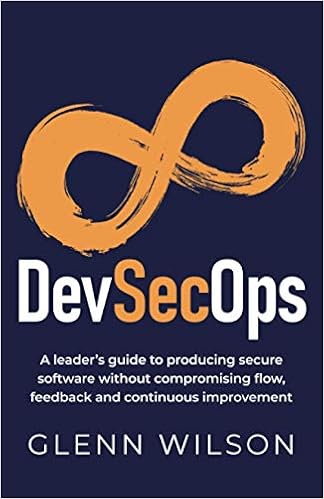
#DevSecOps: A leader’s guide to producing secure software without compromising flow, feedback and continuous improvement
At their core, boards approve the strategic direction of an organization as well as how the organization allocates resources and mitigates risk. Security leaders have to present metrics that align with business objectives to make an impact at the board level. Here’s why many security metrics often fall short of this goal:
Metrics such as the number of daily phishing alerts don’t provide context—that is, they don’t inform CISOs if the numbers are good news or bad news. If metrics don’t point to next steps such as changing processes, better configuration of products or identifying opportunities for automation, the path to action is unclear.
Metrics often illustrate how tools are being used, not the results they yield and what those actually mean. Metrics based on tools are considered the low-hanging fruit of the security world—they’re easily available, but they don’t help solve problems.
Often, organizations don’t address people, processes and technology—three key pillars necessary to construct a big-picture view of how a company’s security model is performing.
While these are metrics to avoid, there’s are different metrics that matter to leadership and are understandable to many more stakeholders—not just the security team. These metrics focus on the effectiveness of resources being deployed (i.e. the security program tools and people) as well as ensuring you have the proper visibility to mitigate risk.
The cloud broadens an organization’s attack surface to the point that CISOs must guard data across multiple clouds, tools, and on-premises locations. This further complicates their main objective of minimizing the risk of unauthorized data access and makes their job of ensuring information assets and technologies are adequately protected an arduous task.
Even worse, traditional security and governance models are ineffective for cloud architecture, partly because each cloud vendor has unique mechanisms for accessing data, which increases the chance of administrators making costly mistakes.
Conventional, centralized, or dictated approaches secure data by routing requests, access, and policies through IT – which limits the speed that a user could leverage the information. The array of clouds and cloud resources requires a more fluid approach to secure access.
Decentralized methods don’t work either, because business units have too much freedom in implementing policies about how data is used and with what tools. This creates silos and conflicts across business units and platforms, as cloud architectures need more uniformity across settings, tools, and departments.
The delegated governance model is becoming the more appropriate style, as it is ideal for streamlining multi-cloud security by combining the best of the above methods. It leverages IT’s uniform, top down policies (customized by line of business data stewards) and is based on IT’s provisioning of a secure platform for the business to access their tools of choice. The platform then distributes these central policies—configured by data stewards—into any repository or tool across clouds and on-premises for zero trust security.
Further, a recent Sophos survey found that the average post-attack remediation costs, including lost business, grew to nearly $2 million per incident in 2021, about 10 times the size of the ransom payment itself.
CISOs and hands-on security professionals are implementing several tactics to defend their organization, and these include proactive threat hunting and technical defenses like multi-factor authentication.
While these practices are helpful, they are focused on preventing attacks from happening in the first place while the harsh reality is that it’s no longer a question of if hackers are going to get in, but when. With so much at stake, why are data recovery and restoration often put on the back burner of the security conversationwhen it could be the most valuable tool in the security arsenal?




![Hybrid Work Management: How to Manage a Hybrid Team in the New Workplace (A super-short book about how to analyze, plan, manage, and evaluate your team’s hybrid work arrangement) by [Hassan Osman]](https://m.media-amazon.com/images/I/41XzC+EMOFL.jpg)