Jul 11 2011

Privacy and Law

Category: Information Privacy,Security and privacy LawDISC @ 1:55 pm

Your personal info is manageable and controlable most of the time as far as privacy is concern , until you have to use it for commercial use (to apply cxredit card, to apply for bank account or to apply for a job). then it depends on these commercial entities how they are goning to use, share, manage or secure your personal information. Most of the laws regarding privacy tells you how your privacy being violated but they leave to us how to make these commercial entities to protect our personal information or stop them from selling it to the highest bidder.

Below are the some of the privacy protection laws for consumers which you need to be aware of:

Privacy act of 1974: this legoslation prohibits the federal government from creating secret database on individuals and limits how agencies can share information. This give you the right to request your information and to sue the government for failing to follow the Act. This might be important to know for the people who are on the no fly list database. For more details check out http://www.epic.com/privacy/1974act/

Fair Credit Reporting Act: FCRA lets you access your cedit bureau records and corrects inaccuracies and it alos allows you to obtain free credit resport every year.

Telephone Consumer Protection Act: This law does not provides a whole lot of protection against telemarketing calls but TCPA made it illegal to send unsolicited fax advertisement.

Family Educational Rights and Privacy Act: FERPA limits sharing of the students and lets you opt out.

Gramm leach Bliley Act: GLBA allows you to tell your bank to stop sharing your information with third parties.

Health Insurance Portability and Privacy Act: HIPAA gives you access to your medical records and limits the disclosure of medical information by health care entity or provider

More on Privacy and Law


Jul 08 2011

How to protect ourselves from Payment Fraud

Category: Cyber Threats,Cybercrime,pci dssDISC @ 11:26 pm

Some basic advice has been issued by Apacs, and includes:

    * Don’t let your cards or your card details out of your sight when making a transaction
    * Do not keep your passwords, login details or Pins written down
    * Do not disclose Pins, login details or passwords in response to unsolicited emails
    * Only divulge card details over the phone when you have made the call or when you are familiar with the company
    * Access internet banking or shopping sites by typing the address into your browser. Never enter your personal details on a website you have accessed via a link from an e-mail
    * Shop at secure websites by checking that the security icon is showing in your browser window (a locked padlock or an unbroken key)
    * Always log out after shopping and save the confirmation e-mail as a record of your purchase

      For more advice you can visit:

      Spotting and avoid common scams, fraud and schemes online and offline

      How the scam works and what you need to do about it.

      and

      Online payment Security and Fraud Prevention

      Tags: Australia, Business, Credit card, Financial services, fraud, Internet fraud, Online banking


      Jul 07 2011

      Securing the Enterprise in a Changing World

      Category: Information SecurityDISC @ 10:31 pm

      RSA Conference 2011 Keynote – Securing the Enterprise in a Changing World – Bill Veghte

      An applications transformation has begun, creating both challenges and opportunities: with users (consumers) demanding everything as a service, anywhere, how can enterprises secure critical corporate infrastructure assets and information? Building security into applications, assessing risk– even before coding begins, and applying quality and operational management using ITIL concepts to the practice of security are key.

      Enterprise Security


      Jul 05 2011

      Newly released ISO/IEC 27005:2011 helps improve risk management

      Category: ISO 27k,Security Risk AssessmentDISC @ 12:55 pm

      /EINPresswire.com/ ISO 27005:2011, the newly released international information security risk management standard, is now available to the international community of business continuity and information security practitioners.

      Information security risk management is one of the core competencies of information security. This Standard is an essential companion to ISO/IEC 27001 and ISO/IEC 27002 and replaces ISO/IEC 27005:2008.

      ISO 27005:2011 supports the general concepts specified in ISO/IEC 27001 and is designed to assist the satisfactory implementation of information security based on a risk management approach. The Standard is applicable to all organisations of all types and sizes, which intend to manage risks that could compromise the organisations information security.

      IT Governance Ltd, an international distribution partner for IEC and a global leader in ISO27001 information, products and services, is making ISO/IEC 27005:2011 available from all its main websites. ISO 27005:2011 ISRM, can be downloaded today from www.itgovernance.co.uk/products/1852 .

      “The new ISO/IEC 27005:2011 is a much better standard than was the 2008 version”, comments Alan Calder, CEO of IT Governance, “First, it is a better written, more coherent standard. Second, it is aligned with the risk management standard ISO31000, which makes it easier to integrate Enterprise Risk Management approaches with information security risk management. Third, it provides good, practical guidance on carrying out the risk assessment required by ISO27001, together with clear guidance on risk scales. Fourth, it has good guidance on threats, vulnerabilities, likelihoods and impacts. ISO27005 should become standard additional guidance on risk assessment – the ISMS core competence – for all organisations tackling ISO27001.”

      Organisations that would like to save time and money whilst implementing the new Standard should consider applying vsRisk – an ISO27001:2005 compliant information security risk assessment tool produced by Vigilant Software, the specialist software subsidiary of IT Governance.

      vsRisk (www.itgovernance.co.uk/products/744) simplifies each step of an ISO27001 risk assessment, allowing compliance project managers to capture their information security policy and objectives, plus the scope of their information security management system, and undertake a rapid appraisal of all key areas, including groups, assets and owners. The tool makes ISO27001 compliance achievable for a far wider range of organisations and professionals by minimising the need for specialist knowledge and significantly undercutting the cost of generalist risk management tools.

      As well as supporting ISO/IEC 27001:2005 and ISO/IEC27002, vsRisk complies with BS7799-3:2006, ISO/IEC27005, NIST SP 800-30 and the UK’s Risk Assessment Standard.

      A copy of the ISO27005:2011 standard can be downloaded immediately from www.itgovernance.co.uk/products/1852 and the vsRisk CD-ROM can be ordered from www.itgovernance.co.uk/products/744 .


      Jul 03 2011

      Identity Theft Prevention | Credit Reports & Fraud Alerts

      Category: Identity Theft,Security AwarenessDISC @ 10:45 pm

      “Identity theft is the information age’s new crime. A criminal collects enough personal data on the victim to impersonate him to banks, credit card companies and other financial institutions. Then he racks up debt in the victim’s name, collects the cash and disappears. The victim is left holding the bag.
      While some of the losses are absorbed by financial institutions–credit card companies in particular–the credit-rating damage is borne by the victim. It can take years for the victim to completely clear his name.” Bruce Schneier

      http://www.youtube.com/watch?v=wyLzWYRC8CA

      More Info on Identity Theft Countermeasures and Safeguards


      Jun 29 2011

      TSA Is NOT Security It’s A JOKE!

      Category: Access Control,Information SecurityDISC @ 10:10 pm

      “Security measures that just force the bad guys to change tactics and targets are a waste of money,” said Bruce Schneier, “It would be better to put that money into investigations and intelligence.”

      The security boss of Amsterdam’s Schiphol Airport is calling for an end to endless investment in new technology to improve airline security.
      Marijn Ornstein said: “If you look at all the recent terrorist incidents, the bombs were detected because of human intelligence not because of screening … If even a fraction of what is spent on screening was invested in the intelligence services we would take a real step toward making air travel safer and more pleasant.”

      “TSA Is NOT Security It’s A JOKE!” Issac Yeffet
      http://www.youtube.com/watch?v=s7pICJ0i6Jc

      Don’t touch my Junk


      Jun 29 2011

      The weakest link in computer hacking?

      Category: Security AwarenessDISC @ 10:30 am
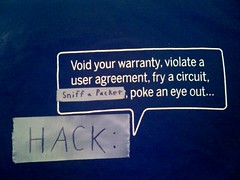
      Hack

      Image by copyfighting via Flickr

      The weakest link in computer hacking? Human error
      By Cliff Edwards, Olga Kharif,Michael Riley, Bloomberg News

      The U.S. Department of Homeland Security ran a test this year to see how hard it was for hackers to corrupt workers and gain access to computer systems. Not very, it turned out.

      Staff secretly dropped computer discs and USB thumb drives in the parking lots of government buildings and private contractors. Of those who picked them up, 60 percent plugged the devices into office computers, curious to see what they contained. If the drive or CD case had an official logo, 90 percent were installed.

      “There’s no device known to mankind that will prevent people from being idiots,” said Mark Rasch, director of network security and privacy consulting for Falls Church, Va.’s Computer Sciences Corp.

      The test showed something computer security experts have long known: Humans are the weak link in the fight to secure networks against sophisticated hackers. The intruders’ ability to exploit people’s vulnerabilities has tilted the odds in their favor and led to a spurt in cybercrimes.

      In real-life intrusions, executives of EMC Corp.’s RSA Security, Intel Corp. and Google Inc. were targeted with e-mails with traps set in the links. And employees unknowingly post vital information on Facebook or Twitter.

      It’s part of a $1 trillion problem, based on the estimated cost of all forms of online theft, according to McAfee Inc., the Santa Clara computer security company.

      Hundreds of incidents likely go unreported, said Rasch, who previously headed the Justice Department’s computer crime unit. Corporate firewalls costing millions to erect often succeed in blocking viruses and other forms of malware that infect computers and steal data such as credit card information and passwords. Human error can quickly negate those defenses.

      “Rule No. 1 is, don’t open suspicious links,” Rasch said. “Rule No. 2 is, see Rule No. 1. Rule No. 3 is, see Rules 1 and 2.”

      A full report on the Homeland Security study will be published this year, Sean McGurk, director of the department’s National Cybersecurity and Communications Integration Center, said at a June 16 conference in Washington.

      Tactics such as spear-phishing – sending a limited number of rigged e-mails to a select group of recipients – rely on human weaknesses like trust, laziness or even hubris.

      That’s what happened in March, when attackers used a clever ruse to exploit their discovery that RSA – the company that provides network-access tokens using random secondary passwords – was in a hiring campaign.

      Two small groups of employees received e-mails with attached Excel spreadsheets titled “2011 Recruitment Plan,” the company said in April. The e-mails were caught by the junk-mail screen. Even so, one employee went into the folder, retrieved the file and opened it.

      The spreadsheet contained an embedded Adobe Systems Inc. Flash file that exploited a bug, then unknown to San Jose’s Adobe, that allowed hackers to commandeer the employee’s PC. RSA said information related to its two-factor SecurID authentication process was taken.

      Banks may be forced to pay $50 million to $100 million to distribute new RSA SecurID devices, according to Avivah Litan, a Gartner Inc. research analyst.

      “The team that hacked us is very organized and had a lot of practice,” Uri Rivner, head of new technologies at RSA Security, said at a June 17 conference in Spain. “I can compare them to the Navy Seals Team Six, which hit Osama bin Laden.”

      The FBI began warning in early 2009 about a rise in spear-phishing attacks. To succeed, they require the target to open a link presumably sent by someone they know or trust.

      Total phishing attacks increased by 6.7 percent from June 2010 to May 2011, according to Symantec Corp.’s State of Spam & Phishing monthly report. The number of non-English phishing sites increased 18 percent month over month.

      Spear-phishing is evolving into what Rasch calls whale phishing: Targeting senior-level executives whose computers may have access to far more sensitive information that rank-and-file workers.

      Technology executives are attractive targets because their positions give them access to a trove of information, and they tend to believe they’re better protected from computer hackers than their employees, Rasch said.

      Hackers research decision makers by browsing social networks, reading up on news about the company, and creating e-mails and links that appear to be genuine and come from people that the targets know.

      “Phishing is on a different trajectory than it’s been in the past,” said Malcolm Harkins, Intel’s chief information-security officer.

      This article appeared on page D – 2 of the San Francisco Chronicle on June 28, 2011

      Hacking: The Art of Exploitation

      Tags: hackers, International Monetary Fund, McAfee, phishing, RSA SecurID, RSA Security, RSA The Security Division of EMC, SecurID


      Jun 28 2011

      InfraGard Insights: Separation of Duties and…

      Category: Information SecurityDISC @ 10:31 pm

      InfraGard is a FBI partner site – which is a public-private partnership devoted to sharing information about threats to US physical and Internet infrastructure.

      Discussion of two important principles of information security:
      Separation of Duties and the concept of least privilege and the Impact on System Administration.

      Principles of Information Security


      Jun 24 2011

      How safe is your personal information on social network?

      Category: Information PrivacyDISC @ 10:53 pm

      With corporations, criminals and governments all looking to capture your information via the internet, how safe are you once you logon?

      How to Be Invisible

      How Disappear Erase Digital Footprint


      Jun 22 2011

      President lays out cyberwar guidelines, report says

      Category: cyber securityDISC @ 10:40 am

      President Barack Obama has developed guidelines for how the U.S. should respond to–and initiate–cyberattacks, the Associated Press is reporting.

      Citing anonymous defense officials, the news service claims the guidelines include a wide range of cyberwar efforts to be employed by the U.S. during both peacetime and when conflicts are underway, including installing viruses on international computers and taking down a country’s electrical grid.

      According to the Associated Press, the guidelines also allow for defense officials to transmit code through another country’s network to ensure the connection can be made. Though it wouldn’t necessarily carry a dangerous payload at the time, that connection could be used in the future if an attack was authorized on the specific country.

      The Associated Press’ report on the president’s cyberwar guidelines comes just a week after the Chinese military called on its government to invest in more defense against the U.S.

      “The U.S. military is hastening to seize the commanding military heights on the Internet, and another Internet war is being pushed to a stormy peak,” the Chinese military wrote in its official newspaper, Liberation Army Daily. “Their actions remind us that to protect the nation’s Internet security, we must accelerate Internet defense development and accelerate steps to make a strong Internet army.”

      Read remaining post @ The Digital Home:


      Jun 15 2011

      LULZ Security Hacks CIA Website!

      Category: cyber security,Security BreachDISC @ 9:57 pm

      “Tango down – cia.gov – for the lulz,” the group, which had earlier claimed responsibility for hacking into the websites of the U.S. Senate, Sony, Nintendo and Fox News, wrote on its Twitter feed.

      “While some people think this is a fun game that can also help point out corporate security weaknesses, the truth is that companies and innocent customers are – in the worst cases – having their personal data exposed,” Sophos senior technology consultant Graham Cluley said.

      “There are responsible ways to inform a business that its website is insecure, or it has not properly protected its data – you don’t have to put innocent people at risk. What’s disturbing is that so many internet users appear to support LulzSec as it continues to recklessly break the law.”

      http://www.youtube.com/watch?v=AozrqppyEf0

      Cyber War: The Next Threat to National Security and What to Do About It


      Jun 14 2011

      Hacker Groups Attacks US Senate WebSite

      Category: cyber security,Security BreachDISC @ 11:04 pm
      Seal of the United States Senate.

      Image via Wikipedia

      US Senate Hacked! “We Don’t Like The U.S. Government Very Much” LULZ Security

      The video states some reasons in significant rise of hack attack by Lulz Security on US information assets including critical assets (US senate) which is a growing threat to national security.

      Leon Penetta warned in last week hearing that next Pearl Harbor might very well be a cyber attack which may affect power grid, financial system or government system.

      “The Computer systems of exective branch agencies and the congress were probed or attacked on an average of 1.8 billion times per month last year” Sen. Susan Collins (R-ME)

      http://www.youtube.com/watch?v=aFD3W6LhO04

      Cyber War: The Next Threat to National Security and What to Do About It

      Tags: Bethesda Softworks, Federal government of the United States, National security, Pearl Harbor, Sony, Susan Collins, United States, United States Senate


      Jun 12 2011

      U.S. Underwrites Internet Detour Around Censors

      Category: Information Privacy,Information SecurityDISC @ 11:05 pm

      By JAMES GLANZ and JOHN MARKOFF

      The Obama administration is leading a global effort to deploy “shadow” Internet and mobile phone systems that dissidents can use to undermine repressive governments that seek to silence them by censoring or shutting down telecommunications networks.

      The effort includes secretive projects to create independent cellphone networks inside foreign countries, as well as one operation out of a spy novel in a fifth-floor shop on L Street in Washington, where a group of young entrepreneurs who look as if they could be in a garage band are fitting deceptively innocent-looking hardware into a prototype “Internet in a suitcase.”

      Financed with a $2 million State Department grant, the suitcase could be secreted across a border and quickly set up to allow wireless communication over a wide area with a link to the global Internet.

      The American effort, revealed in dozens of interviews, planning documents and classified diplomatic cables obtained by The New York Times, ranges in scale, cost and sophistication.

      Some projects involve technology that the United States is developing; others pull together tools that have already been created by hackers in a so-called liberation-technology movement sweeping the globe.

      The State Department, for example, is financing the creation of stealth wireless networks that would enable activists to communicate outside the reach of governments in countries like Iran, Syria and Libya, according to participants in the projects.

      In one of the most ambitious efforts, United States officials say, the State Department and Pentagon have spent at least $50 million to create an independent cellphone network in Afghanistan using towers on protected military bases inside the country. It is intended to offset the Taliban’s ability to shut down the official Afghan services, seemingly at will.

      The effort has picked up momentum since the government of President Hosni Mubarak shut down the Egyptian Internet in the last days of his rule. In recent days, the Syrian government also temporarily disabled much of that country’s Internet, which had helped protesters mobilize.

      The Obama administration’s initiative is in one sense a new front in a longstanding diplomatic push to defend free speech and nurture democracy. For decades, the United States has sent radio broadcasts into autocratic countries through Voice of America and other means. More recently, Washington has supported the development of software that preserves the anonymity of users in places like China, and training for citizens who want to pass information along the government-owned Internet without getting caught.

      But the latest initiative depends on creating entirely separate pathways for communication. It has brought together an improbable alliance of diplomats and military engineers, young programmers and dissidents from at least a dozen countries, many of whom variously describe the new approach as more audacious and clever and, yes, cooler.

      Sometimes the State Department is simply taking advantage of enterprising dissidents who have found ways to get around government censorship. American diplomats are meeting with operatives who have been burying Chinese cellphones in the hills near the border with North Korea, where they can be dug up and used to make furtive calls, according to interviews and the diplomatic cables.

      The new initiatives have found a champion in Secretary of State Hillary Rodham Clinton, whose department is spearheading the American effort. “We see more and more people around the globe using the Internet, mobile phones and other technologies to make their voices heard as they protest against injustice and seek to realize their aspirations,” Mrs. Clinton said in an e-mail response to a query on the topic. “There is a historic opportunity to effect positive change, change America supports,” she said. “So we’re focused on helping them do that, on helping them talk to each other, to their communities, to their governments and to the world.”

      For remaining article on U.S. Underwrites Internet Detour Around Censors

      A version of this article appeared in print on June 12, 2011, on page A1 of the New York edition with the headline: U.S. Underwrites Internet Detour Around Censors..


      Jun 09 2011

      Citi credit card security breach discovered

      Category: Security BreachDISC @ 10:42 am
      Citigroup

      Image via Wikipedia

      “Citigroup says it has discovered a security breach in which a hacker accessed personal information from hundreds of thousands of accounts.

      Citigroup said the breach occurred last month and affected about 200,000 customers.”

      “During routine monitoring, we recently discovered unauthorized access to Citi’s account online,” said Citigroup, in a prepared statement. “A limited number — roughly 1 percent – of Citi bankcard customers’ accounting information (such as name, account number and contact information including email address) was viewed.”

      According to its annual report, Citigroup has about 21 million credit card accounts in North America, where the breach occurred.

      The statement went on to say that the customers’ Social Security numbers, dates of birth, card expiration dates and card security codes “were not compromised.”

      Well the routine monitoring discovered the Citi Group incident which clearly shows that intrusion was not discovered during the incident but after the incident had happened.
      Cyber intrusion cost will increase and depend upon how late the incident was detected. The organizations should change their corporate strategy to more proactive approach where they can maintain, monitor and improve security controls based on the current value of the information asset.

      If you’re a Citibank customer, we suggest you take a look at your account and immediately report any irregularities.

      Stopping Identity Theft: 10 Easy Steps to Security

      http://www.youtube.com/watch?v=KH0zno_6d9M

      Tags: Citigroup, Credit card, Customer, Financial Times, Online service provider, PlayStation Network, Security, Social Security number


      Jun 08 2011

      In cyberspy vs cyberspy, China has the edge

      Category: cyber securityDISC @ 12:11 pm
      USA-China

      Image via Wikipedia

      By Brian Grow and Mark Hosenb

      WASHINGTON: As America and China grow more economically and financially intertwined, the two nations have also stepped up spying on each other. Today, most of that is done electronically, with computers rather than listening devices in chandeliers or human moles in tuxedos.And at the moment, many experts believe China may have gained the upper hand.

      Though it is difficult to ascertain the true extent of America`s own capabilities and activities in this arena, a series of secret diplomatic cables as well as interviews with experts suggest that when it comes to cyber-espionage, China has leaped ahead of the United States.

      According to US investigators, China has stolen terabytes of sensitive data — from usernames and passwords for State Department computers to designs for multi-billion dollar weapons systems. And Chinese hackers show no signs of letting up.

      “The attacks coming out of China are not only continuing, they are accelerating,” says Alan Paller, director of research at information-security training group SANS Institute in Washington, DC.

      Secret US State Department cables, obtained by WikiLeaks and made available to Reuters by a third party, trace systems breaches — colourfully code-named “Byzantine Hades” by US investigators — to the Chinese military. An April 2009 cable even pinpoints the attacks to a specific unit of China`s People`s Liberation Army.

      Privately, US officials have long suspected that the Chinese government and in particular the military was behind the cyber-attacks. What was never disclosed publicly, until now, was evidence.

      US efforts to halt Byzantine Hades hacks are ongoing, according to four sources familiar with investigations. In the April 2009 cable, officials in the State Department`s Cyber Threat Analysis Division noted that several Chinese-registered websites were “involved in Byzantine Hades intrusion activity in 2006.”

      The sites were registered in the city of Chengdu, the capital of Sichuan Province in central China, according to the cable. A person named Chen Xingpeng set up the sites using the “precise” postal code in Chengdu used by the People`s Liberation Army Chengdu Province First Technical Reconnaissance Bureau (TRB), an electronic espionage unit of the Chinese military. “Much of the intrusion activity traced to Chengdu is similar in tactics, techniques and procedures to (Byzantine Hades) activity attributed to other” electronic spying units of the People`s Liberation Army, the cable says.

      Reconnaissance bureaus are part of the People`s Liberation Army`s Third Department, which oversees China`s electronic eavesdropping, according to an October 2009 report by the US-China Economic and Security Commission, a panel created by Congress to monitor potential national security issues related to US-China relations.

      Staffed with linguists and technicians, the Third Department monitors communications systems in China and abroad. At least six Technical Reconnaissance Bureaus, including the Chengdu unit, “are likely focused on defence or exploitation of foreign networks,” the commission report states.—Reuters

      Cyber War: The Next Threat to National Security and What to Do About It

      Tags: Chengdu, china, People's Liberation Army, SANS Institute, Sichuan, Sino-American relations, United States, WikiLeaks


      Jun 05 2011

      Hackers breach FBI partner’s site

      Category: Cybercrime,Security BreachDISC @ 10:45 pm

      LONDON — Nearly 180 passwords belonging to members of an Atlanta-based FBI partner organization have been stolen and leaked to the Internet, the group confirmed yesterday.

      The logins belonged to the local chapter of InfraGard, a public-private partnership devoted to sharing information about threats to US physical and Internet infrastructure, the chapter’s president said.

      “Someone did compromise the website,’’ Paul Farley, president of the InfraGard Atlanta Members Alliance, said in an e-mail exchange. “We do not at this time know how the attack occurred or the method used to reveal the passwords.’’

      Copies of the passwords — which appear to include users from the US Army, cybersecurity organizations, and major communications companies — were posted to the Internet by online hacking collective Lulz Security, which has claimed credit for a string of attacks in the past week.

      In a statement, Lulz Security also claimed to have used one of the passwords to steal nearly 1,000 work and personal e-mails from the chief executive of Wilmington, Del.,-based Unveillance. Lulz Security claimed it was acting in response to a recent report that the Pentagon was considering whether to classify some cyberattacks as acts of war.

      The FBI said yesterday steps were being taken to mitigate the damage.

      Kingpin: How One Hacker Took Over the Billion-Dollar Cybercrime Underground


      Jun 02 2011

      Google blaming Chinese hackers for security breach

      Category: cyber security,CybercrimeDISC @ 10:49 am
      Image representing Gmail as depicted in CrunchBase

      Image via CrunchBase

      For the second time in 17 months, Google is pointing its finger at China for a security breach in one of its systems.

      This time, Google says Chinese hackers were responsible for breaking into the personal Gmail accounts of several hundred people _ including those of senior U.S. government officials, military personnel and political activists.

      The latest cyber attack isn’t believed to be tied to a more sophisticated one that originated from China in late 2009 and early last year. That intrusion went after some of Google’s trade secrets and triggered a high-profile battle with China’s Communist government over online censorship. (AP, ccg)

      This seems pretty intrusive and targeted incident. I’m curious, what is a threshold trigger for declaring a cyber war between two countries. I understand this was not a very prolong incident but these small incidents here and there can certainly achieve some long term objectives for the other side. It is very difficult to prove the correct source of these incidents in the wild west of internet and also there is a lack of international law to pursue these cases as a criminal offense.

      Apparently the pentagon recently concluded that computer sabotage can constitute an act of war and justify the use of military force, the wall street journal reported this week.

      Well before the use of military force you have to prove beyond reasonable doubt that you are targeting the correct culprit nation. Well if this is the criteria to declare a war against other nation we better buy a good error and omission insurance. In cyber world it hard to prove and easy to spoof, where some groups will be eager to setup an easy victim to justify the use of military force…

      Clinton: China hacking charge “Vey Serious

      Cyber War: The Next Threat to National Security and What to Do About It

      Tags: Activism, china, Chinese language, CrunchBase, Gmail, Google, Jinan, Official, Security


      May 30 2011

      California computer glitch releases violent criminals

      Category: cyber securityDISC @ 12:33 pm

      RT.com

      Gang members, sex and drug convicts, and more were accidentally released from California state prisons after computer software designed to reduce prison numbers encountered a glitch.
      Around 450 dangerous inmates were let go unsupervised onto the streets of California, the state’s inspector general confirmed.

      A glitch in software lead to prison officials accidentally releasing “high risk of violence” inmates from jails as opposed to low risk inmates set for release to elevate the crowded prison system.

      In addition, over 1000 inmates deemed high risk for drug and property offenses were also mistakenly released.

      The information comes after the US Supreme Court upheld a lower decision and ordered California to alleviate prison overcrowding by releasing prisoners or building more prisons. The decision gives State prison officials only two years to cut the 143,335 prisoner count by around 33,000 either by reductions, new programs outside of prisons or constructing new prisons within the state.
      According to Renee Hansen, a spokesperson for the California inspector general, no attempts have been made to find or return the former inmates to prison or at least place them on supervised parole.

      The computer error placed all of those who were released on ‘non-revocable parole’ which means they do not have to report to parole officers. It also means they are free to live their lives and can only be sent back to jail if they are caught committing a new crime.

      The software was not designed to be discretionary based on the history of inmates and issues releases without consideration to their crimes or their risk of re-offending. It uses a database of arrests that does not correlate information regarding convictions and the facts surrounding a case.

      Effective Physical Security, Third Edition

      Tags: crime, Information Technology, Law, USA


      May 27 2011

      Hackers breach US defense contractors network

      Category: Cybercrime,Security BreachDISC @ 10:18 pm

      LONDON: Unknown hackers have broken into the security networks of Lockheed Martin Corp (LMT.N) and several other US military contractors, a source with direct knowledge of the attacks told this news agency.

      They breached security systems designed to keep out intruders by creating duplicates to “SecurID” electronic keys from EMC Corp’s (EMC.N) RSA security division, said the person who was not authorized to publicly discuss the matter.

      It was not immediately clear what kind of data, if any, was stolen by the hackers. But the networks of Lockheed and other military contractors contain sensitive data on future weapons systems as well as military technology currently used in battles in Iraq and Afghanistan.

      Weapons makers are the latest companies to be breached through sophisticated attacks that have pierced the defenses of huge corporations including Sony (SNE.N), Google Inc (GOOG.O) and EMC Corp (EMC.N). Security experts say that it is virtually impossible for any company or government agency to build a security network that hackers will be unable to penetrate.

      The Pentagon, which has about 85,000 military personnel and civilians working on cyber security issues worldwide, said it also uses a limited number of the RSA electronic security keys, but declined to say how many for security reasons.

      The hackers learned how to copy the security keys with data stolen from RSA during a sophisticated attack that EMC disclosed in March, according to the source.

      EMC declined to comment on the matter, as did executives at major defense contractors.

      Lockheed, which employs 126,000 people worldwide and had $45.8 billion in revenue last year, said it does not discuss specific threats or responses as a matter of principle, but regularly took actions to counter threats and ensure security. (Reuters)

      Managing Information Security Breaches

      Pentagon: Hack attacks can be act of war


      May 27 2011

      How to Manage Information Security Breaches Effectively

      Category: ISO 27k,Security BreachDISC @ 9:45 am

      A complete solution to manage an information security incident

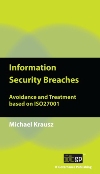
      Managing Information Security Breaches

      Even when organisations take precautions, they may still be at risk of a data breach. Information security incidents do not just affect small businesses; major companies and government departments suffer from them as well.

      A strategic framework
      Managing Information Security Breaches sets out a strategic framework for handling this kind of emergency. It focuses on the treatment of severe breaches and on how to re-establish safety and security once the breach has occurred. These recommendations support the controls for the treatment of breaches specified under ISO27001:2005.

      Top priorities
      The actions you take in response to a data breach can have a significant impact on your company’s future. Michael Krausz explains what your top priorities should be the moment you realise a breach has occurred. This book is essential reading for security officers, IT managers and company directors.

      Read this guide and learn how to …

    1. Avoid information security breaches
    2. The author uses cases he has investigated to illustrate the various causes of a breach, ranging from the chance theft of a laptop at an airport to more systematic forms of data theft by criminal networks. By analysing situations companies have experienced in real life, the case studies can give you a unique insight into the best way for your organisation to avoid a data breach.

    3. Plan your response
    4. If something did go wrong, how would you handle it? Even if you have done everything possible to prevent a data breach, you still need to know what to do, should one occur. This book offers advice on the strategies and tactics to apply in order to identify the source of the leak, keep the damage to a minimum, and recover as swiftly as possible.

    5. Preserve the trust of your customers
    6. If your company ever experiences an information security incident, then the way your customers see you will depend on how you react. This book tells you the key steps you need to take to hold on to the goodwill of your customers if a data breach occurs. The book also offers advice on what to do if you discover defamatory material about your business on YouTube or on forum sites.

    7. Improve management processes
    8. Information security breaches are committed, often by ambitious or embittered employees. This book looks at ways to reduce the risk of staff selling product designs or customer data to your competitors for personal gain.

      “Information security is a key Board responsibility. In today’s information economy, the confidentiality, availability and integrity of corporate information assets and intellectual property are more important for the long-term success of organisations than traditional, physical, tangible assets. This book is essential reading for security officers, IT managers and company directors to ensure they are prepared for, and can effectively manage, an information security breach, should it occur”.


      « Previous PageNext Page »