Jan 23 2013

How public distrust is affecting cyber security strategies

Category: cyber securityDISC @ 11:44 am

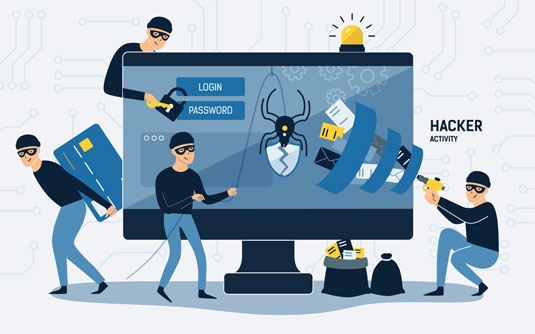
According to this article published in SC magazine ’80 per cent of the UK public implicitly do not trust organisations to keep their data safe; with nearly half (41 per cent) feeling that it has become inevitable their data will be compromised by hackers.’ Do your stakeholders trust you?

Consumer confidence in cyber security has clearly eroded over the past couple of years, and there is an urgent need for organisations of all industries, whether public or private, to reassure consumers they are capable of…
How public distrust is affecting cyber security strategies

Cyber Cecurity Strategy Titles

Tags: Computer security, Fire and Security, Government Communications Headquarters, Government of the United Kingdom, Minister for the Cabinet Office


Jan 17 2013

Project Planning outline for (ISO 27001) ISMS

Category: ISO 27kDISC @ 11:55 am

The project planning process includes steps to estimate the size of the project, estimate the scope of the effort and resources, assess project risks, and produce an acceptable schedule after negotiating with control owner.

Steps below provide a bullet list of project plan outline phases and action items of ISMS (ISO 27001). This is not the project plan, but rather a description of the project plan, so the detail is high level. However, this document defines the project and requires formal sign-off; therefore, be accurate as possible, any variations may require a formal project change, which adds to schedule and cost.

A generic ISO 27001 project outline includes the following:
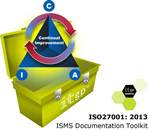
Project Initiation, Scope of the Project,Risk Assessment Methodology, Asset Register, Risk Assessment, Risk Treatment Plan, Statement of Applicability relevant to risk, Management approval for the Project outline. These steps are outlined in the figure above.

When an individual is assigned as project manager for a project, their success is determined by the complexity of a given project. Due to lack of necessary skills, sometime project manager are changed during the middle of the project. So what are those necessary skills which will determine the success of the project manager? Below are some of the necessary skills to run a successful ISO 27001 project.

• To posse’s an outstanding communication skills for all the stakeholders involved
• Be highly organized and an effective team leader
• Know how to negotiate between cross functional teams
• Resource oriented, problem solver and understand the relevant infrastructure

Must Read Project Management Books
1. A guide to the Project Management body of Knowledge 5th edition

2. The Concise Prince2

3. 50 Top IT Project Management Challenges

4. Prince 2 2009 manual

Tags: Information Security Management System, ISO/IEC 27001, Project Management, Project manager, Project plan, Project planning, Risk Assessment, Scope (project management)


Jan 15 2013

Management System Toolkits

Category: BCP,ISO 27kDISC @ 11:19 am

For 10 years IT Governance has been helping businesses build robust cyber defences, deliver improved IT services and comply with international and regulatory standards.

ITG understand that information technology is at the heart of every modern organisation. That is why ITG source, create and deliver IT products and services that meet the real world needs of today’s organisations, managers and practitioners.

ITG toolkits help small and medium organizations quickly adapt best management practice in technology governance, risk management and compliance. You don’t have to take ITG word for it. Download the demo and see if it fits your organizational needs.

ITG offer free trials of all our best-selling toolkits. These toolkits contain all the documents, templates and tools to help organizations quickly and cost-effectively implement a management system or IT standard.

Take a free toolkit demo today

ISO22301 Business Continuity Management System Documentation Toolkit

ISO27001 Cyber Security ISMS Documentation Toolkit

ITSM, ITIL & ISO20000 Implementation Toolkit

ISO9001 Quality Management System Documentation Toolkit

Business Transformation Toolkit


Jan 11 2013

Why SoD should be reviewed in every assessment

Category: Information Security,Security Risk AssessmentDISC @ 2:33 pm

Similar to other controls SoD (Segragation of Duties) plays an important role in reducing certain potential risk of an organization.

SoD minimize certail risks, by deviding a task so it will take more than one individual to complete a task or a critical process. SoD control has been traditionally used in accounting to minimize risk of collusion. For separation of duties we don’t want to give any individual so much control that they become a security risk without proper check and balance inplace. SoD is utilized to avoid unauthorized modification of data and to make sure critical data is available when needed by authorized personals, which includes but not limited to the availability of the services.

Separation of Duties (SoD) is not only an important principle of security but SoD control A10.1.3 of ISO 27001 wants organizations to implement this control.

Possible Controls to Implement SoD:

    * Separate the IT Dept from user function, meaning user should not be able to perform its own IT duties.
    * Separate the InfoSec and IT Dept. The individual responsible for the InfoSec has unique knowledge of organization security infrastructure, basically a knowledgeable InfoSec individual will have keys to the knigdom and should be segregated from the rest of the IT department. Also InfoSec individual should not be reporting to the IT director which is not only independence issue but conflict of interest. IT Dept is responsible for the avaiability of service whereas security professional is responsible for security (adding controls) to the same service.
    * The development and testing of application should be segregated. There should be a complete segregation of App development and App testing function. Also the person who put the App into production/operation and maintain should be a different individual.
    * Operation of IT should be seprate from maintenance of IT function in different teirs, meaning avaiability of the information should be separated from support & maintenance.
    * The database admin should be segregated from other IT function. DBA individuals are very knowledgeable super user and should not have any other IT duties.
    * Last but not the least about the main Uber user the Sys Admin (router, FW, Server, DT) should have a separate account when performing regular user function. These super users should be logged and audited on regular basis.

Related reference topics on DISC InfoSec

Related reference topics on eBay


Jan 04 2013

Controls against industrial Malware

Category: MalwareDISC @ 11:43 pm

Malicious software is called a malware and malware may include viruses, worms and trojans. A virus is a piece of code which is capable of replicating itself and mainly it depends on a host file (a document) to reach its target. However worm does not rely on the host file to reach the target but it does replicate. Main property of Trojan is concealment of code and ultimately used to get control of target system.

Modern day malware Stuxnet can manipulate Programmable Logic Controllers (PLCs) of critical infrastructure. Industrial Control System (ICS), SCADA, and manufactruing insdutry infrastructure is controled by the PLCs. Another malware, named Duqu, Flame by its discoverers, is similar to Stuxnet in many respects. Like modern trojans Duqu communicates with a command and control server in encrypted form which gives you an idea of sophistication to develop this malware. In the past year the discovery of the Stuxnet malware – and subsequently of the Flame, Duqu and most recently Gauss malware – has brought the issue of state-sponsored cyberwarfare into sharp focus in security community which are simply known as modern day (WMD) weapon of mass destruction.

The discovery of these modern day malware caused an uproar among the security community when it was found that these malware had been specifically designed as a highly targeted industrial espionage tool. Perhaps this create a frenzy out there to deveop these kind of tools but that bring out some questions which I’m unable to answer. Is it legal for a state to develop these tools? Is it legal for a state to use these tools in offense? do we have any international charter on the legality of these tools, otherwise Stuxnet, Duqu and Flame may set a wrong legal precedence of what’s good for the goose is good for the gander.

Main sources of malware infection may be USB drive, CD Rom, internet and unaware users but basically malware can install itself on your computer by simply visiting an infected/implanted website (pirated software, web sites with illegal content)

An organization should perform a comprehensive risk assessment on their malware policy to determine if they will accept the risk of adobe attachment and other executable files to pass through their perimeter gateway. Organization may need to consider all the possible sources of malware threats in their risk assessment which may include but not limited to spyware.

Malware Controls:
• High level formal malware policy and procedure. There should be a formal policy and procedure for USB drives if risk assessment determines that USB drive risk is not acceptable to business. Then there is a need to implement a control (policy, procedure, technical or training) or multiple of these controls to mitigate this risk to acceptable level.
• Anti-Virus policy which makes it mandatory to install, and signature file updates should take place on a regular interval (daily)
• Patch policy for all the latest patches, fixes and service packs that are published by the vendors
• Regular audit or review of anti-malware software and data file on the system
• All email attachment, software downloads should be checked for malware at the perimeter and adobe attachment and executable treated based on the risk assessment (drop, pass)
• User awareness training to possible infected email, spyware and infected website
• There should be a business continuity plan to recover from a possible malware attack

Related Books

Malware Titles from DISC InfoSec Store
Anti-Malware Software from DISC Infosec store
Anti-Virus software from DISC InfoSec Store
Anti-Malware Titles from eBay

Free Online Virus Scan

Norton Virus Scan | McAfee Virus Scan | Analyze suspicious files

Tags: anti virus, Malicious Software, Malware, Security, Spyware and Adware, trojan, Trojan Horses, Viruses


Dec 21 2012

How about considering a proper business continuity plan?

Category: BCPDISC @ 12:34 pm

As the world didn’t end on Dec 21, 2012, how about considering a proper business continuity plan for 2013?

ISO22301:2012 (ISO22301) Business Continuity Management Systems (BCSMS) – Requirements is the international business continuity standard.

Launched in May 2012 it replaced British Standard BS25999-2 and set outs the requirements for a Buisiness Continuity Management System (BCMS). ISO22301 is based on the ‘Plan-Do-Check-Act’ model as found in other management system standards.

Order a copy of the new ISO22301 Standard today

Order a copy of the new ISO22301 Toolkit today

Business Continuity Planning books from Amazon

Business Continuity Planning books from eBay

“BCP is the creation and validation of a practiced logistical plan for how organization will recover and restore partially or completely interrupted critical functions within a predetermine time after a disaster or extended disruption”

The first step in business continuity process is to consider the potential impact of each disaster or disruption. Next step is to determine the likelihood of the disruption or how likely this disruption will occur within a year and how many times. Both impact and likelihood will determine the risk to the organization critical asset in a sense if impact of the disruption is high the risk is high or if likelihood of the incident is high the risk is high. High risk disruption will attract more attention during planning process.

Risk Analysis:
• Understand the function of probabilities and risk reduction
• Identify potential risks to the organization
• Identify outside expertise required
• Identify vulnerabilities / threats / exposures
• Identify risk reduction / mitigation alternatives
• Identify credible information sources
• Interface with management to determine acceptable risk levels
• Document and present findings

BCP Plan:
• Understand clear objectives, available alternatives, their advantages, disadvantages, and cost ranges, including mitigation as a recovery strategy
• Identify viable recovery strategies with business functional areas
• Consolidate strategies
• Identify off-site storage requirements and alternative facilities
• Develop business unit consensus
• Present strategies to management to obtain commitment

Assessing the Effectiveness of a BCP Plan for an Individual Business Unit:
Business unit contingency planning was never more important than now. The success of BCP planning depends upon the feasibility and appropriateness of the plan. However, only comprehensive TESTING of the contingency plans could validate that and everyone hates testing. It is important that the Contingency Plan clearly identify those responsible for declaring a disaster and executing the plan. ISO22301 is the specification for implementing, establishing, and improving a business continuity management system (BCMS) within an organization.

The requirements in the standard are generic and are intended to be applicable to all organizations, regardless of type, size and nature of business. The extent of application of these requirements depends on the organization’s operating environment and complexity. ISO22301 can be used by internal and external parties, including certification bodies, to assess an organization’s ability to meet its own business continuity needs, as well as any customer, legal or regulatory needs.


Dec 17 2012

5 Essentials changes to harden Network Infrastructure

Category: Network securityDISC @ 4:09 pm

First principle to understand vulnerability assessment, one can’t exploit the vulnerability if a threat does not exist. So by default the services (ports) which are not required in a system (server) will present an unnecessary threat to be exploited if specific vulnerability exists in a system.

These unnecessary and unattended services are also the prime target of an attacker which they will find in reconnaissance session and ultimately exploit these vulnerabilities to get into a system. Modern networks should be resilient enough to handle the availability and bandwidth of traffic but also the daily barrage of attacks. Information security is a necessary evil to stay in business (cost of doing business) today. Compliance and regulatory fines aside, InfoSec is treated as business enabler in today’s business suite.

Below are five services which must be disabled unless there is a business reason. If you do have to enable one of these services then utilize compensatory controls to minimize the given risk to acceptable level.

1. Finger – the finger is TCP Unix service (port 79) which is utilized to determine who was logged on to system. After that all you have to find what is their password to get into the system and there are plenty of brute force applications out there to do that for you. Same service can be provided from other lookup secure services (like whois) which may minimize the risk in your environment. So make sure this service is disabled on all devices.

2. Telnet – is used for remote device management to get into system, no wonder a gold mine for a hacker. Like FTP, Telnet communicate in clear text, so it is insecure protocol. So it should be replaced with other secure services like SSH (port 22).

3. HTTP – is the most common user friendly web interface today. Because of its commonality the hackers have discovered several methods of exploiting HTTP service. Beside that HTTP is a clear text protocol as well which provides an extra advantage to a hacker. So it should be replaced with other secure services like Https (port 443).

4. NTP – Network Time protocol utilize to synchronize all the time clocks with a remote time server which also use to keep all the logs in sync for forensic or incident handling. If NTP is not required on a system it should be disabled.

5. ICMP – is data link layer protocol which provides information about neighboring network devices. ICMP flood, also known as Ping flood or Smurf attack, is type of Denial of Service attack that sends large amounts of (or just over-sized) ICMP packets to a machine in order to attempt to crash the TCP/IP stack on the machine and cause it to stop responding to TCP/IP requests. Some time it necessary to enable this protocol when troubleshooting, so only enable when necessary otherwise keep it disable.

Please feel free to comment and add more services which you think should be added to this list

Related Topics

Hardening Linux

Hardening Windows Systems

Tags: Denial-of-service attack, HTTP, HTTP Secure, Hypertext Transfer Protocol, Information Security, Internet Control Message Protocol, Network Time Protocol, Smurf attack


Dec 11 2012

Monitoring and reviewing third party InfoSec services

Category: ISO 27k,Vendor AssessmentDISC @ 12:25 pm

Control A10 of ISO 27001 mandates for outsourcing organization to monitor and review the performance of third party service provider on regular basis which includes the contractor working on critical assets within the scope. Service level Agreement (SLA) or Operation level Agreement (OLA) are the binding legal agreement which includes all the important services to fullfil the information security and compliance requirements of an organization.

Contract with service provider should require the need of standard reports on regular basis which should be reviewed at least monthly and attended by staff and management responsible for services. In these meetings, management should ensure that contractual requirements have been met by the service provider

Key management responsibilities should include but not limited to the followings:

    Outsourcing organization should decide which key metrics will be created to monitor the performance of service provider which will ensure that contractual clauses are met consistanly.
    For information security related services, reviewing all incidents for sepcified period (at least once a month) to make sure thay have been included in an organization treatment plan for appropriate corrective actions based on an organization risk priorty.


Related Articles and Info.

ISO 27001 is the litmus test for information security
Live Webinars feed for Governance, Risk and Compliance

Tags: Contract, Information Security, ISO/IEC 27001, Operational-level agreement, Service-level agreement, SLA


Dec 04 2012

Top 10 ways to avoid being tracked online

Category: Information PrivacyDISC @ 11:20 pm

By Stacey Vanek Smith

1. Read the agreements for all mobile phone apps before you download them. Some of them are scary! They will track your location using your GPS and some (like Facebook) will download ALL OF THE CONTACTS IN YOUR PHONE. Can’t remember who you’ve handed your data to? MyPermissions can help.

2. Read the Terms of Service Agreements for sites you give your information to. Especially sites you give your financial information to. You maybe thinking:”I’ve been on page 5 of Freedom for 8 months, HOW am I going to find the time to read online agreements?” ToS;DR can help.

3. Use a search engine that doesn’t track you, like DuckDuckGo or Startpage for searches you want to keep private. Google’s Incognito setting, Microsoft’s Do Not Track setting and other browser privacy settings are not always effective, because they typically leave the decision of whether to track you up to the website you visit. There are no regulations requiring websites honor a “Do Not Track” request.

4. Use a browser add-on like Ghostery, Privacyfix or Do Not Track Plus to see who is tracking you on any given website. You can use these tools to avoid being tracked altogether or to limit who can access your data.

5. Use a tool to encrypt your connection, like CyberGhost VPN or Tor (which routes your search through servers all over the globe, the way criminals in the movies route their calls to avoid having them traced). Be sure to use one of these tools if you are accessing the Internet through a public WiFi connection at a coffee shop, for instance.

6. Adjust your Facebook privacy settings so that only your friends can see your information. You know that 6 Degress of Kevin Bacon game? That should give you an idea of how many friends your friends have and how many thousands of people can see your information (not to mention the impressive scope of Bacon’s work)

7. Have different email addresses for different things, i.e. an email for work, a personal email, and an email you give to online stores. This makes it harder for companies to flesh out a profile of you. You can also use an email cloaking device like Gliph.

8. Use different passwords for different sites. A lot of sites store your password and know your email login name. You may be thinking that there is no way you will be able to remember any password more complicated than “Password,” but take heart! LastPass can help you with that.

9. Regularly clear out the cookies and caches in your computer. Many companies will track you for months if you don’t clean these out. Cookies aren’t the only way companies track you, but it will help. http://www.piriform.com/ccleaner This site can be used to clean up your cache.

10. Use a service that removes your data from data brokers, like DeleteMe, Safe Shepherd and Catalog Choice. They usually charge a monthly fee and they won’t remove your online profile entirely, but it will help.

Related articles

The growing art of data dodging
CONSUMER PROFILER: Look up your data mining profile
Information Privacy risks and safeguards


Dec 04 2012

Advanced Persistent Threats are the main challenge for businesses

Category: cyber security,ISO 27kDISC @ 11:27 am

Advanced Persistent Threats’ are top infosecurity challenge for businesses in 2013

Mitigating Advanced Persistent Threats (APT) is going to be a main challange and should be the highest of information security priorities for businesses in 2013, according to governance, risk management and compliance firm IT Governance.

Latest APT threats should be taken into account in an organization risk assessment process and depending on the current vulnerabilities, these threats should be treatetd based on the organization risk appetite. Risk appetite or risk threshold is where an organization draw a line to accept or treat any given risk to an organization.  

Alan Calder, Chief Executive of IT Governance, says: “Today, through benign neglect, staff carelessness or insufficient preparation, every business, large and small, is vulnerable to cyberattack. ITG Top 10 identifies the biggest online threats to your business in the coming year and shows how you can tackle these.”

1. Advanced Persistent Threats: APTs refer to coordinated cyberactivities by sophisticated criminals and state-level entities. With the aim of stealing information or compromising information systems, these target governments and corporations which have valuable intellectual property. By their very nature, manufacturing and the high-tech, oil and gas, finance and pharmaceutical industries all come under the greatest threat of attack by APTs. While there’s no single, stand-alone solution, coordinated and integrated preparations can help you rebuff, respond to and recover from possible attacks. Adopting ISO27001, the best practice infosecurity standard, is the most practical way for companies to develop and implement a tailor-made and comprehensive cybersecurity management system to counter the APT threat.

2. Cyberwar: Cyberespionage and cyberterrorism have become a major threat to UK and US governments. In the form of high-profile malware attacks, state-backed entities are seeking commercial advantage against international competitors, as well as preparing for a new front in modern warfare. China is the best known example of a state believed to engage in such activities, so much so that many larger corporations now forbid employees from taking their laptops on business trips into China for fear of data loss. Effective, enterprise-wide cyber-defence must therefore be in place at all levels, to provide strategic, tactical and operational protection, alongside linkages between operational management, operational processes and technical controls.

3. Cybercrime: As opposed to APTs or cyberwar, cybercrime is a threat to every individual and organisation, no matter how small. Cybercriminals exploit modern technologies in order to commit criminal activities, ranging from identity theft to the penetration of online financial services. All businesses should implement an integrated cybersecurity strategy which, among other issues, includes securing your cyber-perimeter to making sure that your staff are trained to recognise and respond to social engineering attacks and follow a well-thought-out social media strategy.

4. Personal data protection: 2012 has seen a slew of data breaches involving the theft of customers’ personal information. This trend will continue unless businesses change their approach to handling personal data. The proposed new EU Data Protection regulation aims to strengthen individual rights and tackle the challenges of globalisation and new technologies. The EU Commission is also putting pressure on businesses to tighten information security measures. Again, the most logical and sensible way to do this is via ISO27001 implementation and certification.

5. Mobile security: USB devices, laptops, tablets and mobile phones make it very easy for employees to transport massive amounts of information out of the door – potentially to your rivals. Also, whenever employees save username and password data onto their mobile devices, they make it exceptionally easy for fraudsters to crack the passwords of a range of applications, thereby increasing cyber risk. All confidential information stored on these devices must be encrypted to avoid data breaches as a result of theft or loss.

6. Data security: Given that many data breaches are due to human error, insider threats play a significant role. Continuous staff awareness training is essential, but companies also need to manage access to data as part of the overall information security management system. For example, restrict access to people with a ‘business need to know’, or set up a unique ID for users which, combined with logging and audits, protects against the ‘insider’.

7. Bring Your Own Device: BYOD policies are becoming the norm at a growing number of both companies and state organisations. Protecting and controlling company data on your staff’s personal mobile devices poses a stiff challenge – best answered by implementing a mobile device management policy.

8. Identity theft: Identity fraud, which involves someone pretending to be somebody else for financial or other gain, is rife. We all need to be aware of ‘phishing’ and ‘pharming’ emails, but we also need to be wary of how we use social media and how much personal information we provide. Antivirus software and spyware removal software alone cannot protect against these attacks. Effort also needs to go into user education to cut exposure to risk.

9. Payment Card Security: Ever-growing numbers of payment cards are being threatened as a result of the migration of payment apps onto mobile devices. Companies should apply regular website security testing, known as ‘vulnerability scanning’, which should be conducted by qualified ethical hackers. It’s also important to regularly apply all relevant patches, and to have a basic understanding of common hacking techniques and new threats and computer viruses.

10. Cloud continuity and security: If you are using a Cloud provider for mission-critical applications and data storage, check the contract carefully. What security policies does the provider have in place? Do they have ISO27001 certification? Evaluate the risks of using a Cloud provider and make them part of your own information security management system.

Tags: Advanced persistent threat, APT, Corporate governance of information technology, Information Security, iso 27001, threat


Nov 30 2012

Cyberattack: dangers, consequences and prevention

Category: cyber security,ISO 27kDISC @ 1:26 pm

Attacks on IT systems can have devastating consequences across industries – among them, the banking and financial sector. In order to protect the best interests of their customers, and the vast tracts of personal data for which they are responsible, banks have already been paying attention to their data protection practices, writes Alan Calder of IT Governance

The heartbeat and Achilles’ heel of every organisation, information technology (IT) is crucial to the functioning of the business world. Given this situation, attacks on IT systems can have devastating consequences across industries – among them, the banking and financial sector. In order to protect the best interests of their customers, and the vast tracts of personal data for which they are responsible, banks have already been paying attention to their data protection practices.

The threat landscape is by its very nature ever-changing, however, and sees the continual emergence of new forms of highly sophisticated cyberattack. As a result, banks and financial institutions are wise to upgrade to a distinctly more comprehensive form of cyber security.

A continually evolving threat

Successful cyberattacks – attacks on a business’ IT infrastructure by a malicious third party – are known to have severe consequences, both operationally and on the business’ reputation. Indeed, the UK government classifies cyberattacks as a ‘Tier 1 threat’ in the National Security Strategy, alongside international terrorism, international military crises and major accidents or natural hazards. The distinction between well-funded, state-sponsored cyberattackers and their ‘private sector’ counterparts is becoming more blurred, meaning that commercial organisations and individuals can increasingly find themselves on the receiving end of extremely sophisticated attacks. Symptomatic of this trend is Google’s move in June 2012 to begin warning Google account holders if they are believed to have been targeted by a state-sponsored attack.

In the world of retail banking, where IT plays such a crucial role, a cyberattack can have serious consequences in terms of practical and reputational damage. The sheer volume of personal customer data held by banks intensifies the threat and consequences of a successful cyberattack. In terms of data compliance and IT security, staff are, and always will be, the weakest link, mainly through a lack of understanding of responsibilities and not comprehending the severity of an IT security breach. These misunderstandings are far from trivial, however.

In addition, the threat landscape is constantly evolving. Today, for example, we are seeing the emergence of cyber fraud and cyber threat into the criminal mainstream. This fact, and the fact modern attacks now combine technological and social elements, means traditional technology-only defences are now inadequate. Thus, forms of security that, two years ago, might have been capable of protecting retail banking institutions, are now insufficient in the face of high-level cyberattacks.

A robust and comprehensive approach

In order to tackle specialised cyberattacks such as cyber fraud and cyber theft, banks and financial institutions would therefore do well to adopt a more robust approach to their cyber security. Ultimately, effective cyber security depends on establishing a defence strategy that is not only all-embracing but also interconnected.

One such strategy is that provided by the ISO27001 security management standard. The most significant international best practice standard currently available to any organisation seeking an intelligently organised and structured framework for tackling cyber risks, ISO27001 is, in essence, a management system. When effectively deployed, ISO27001 improves an organisation’s information security and resilience to ongoing and constantly evolving threats.

Above all, ISO27001 compliance supports organisations in building their defences against cyberattacks. Among other elements, this standard requires organisations to develop and test security incident response plans, or SIRPs; select and implement appropriate controls that reduce risk to an acceptable level, from securing cyber perimeters to training staff and securing inward- and outward-bound communication channels such as e-mails and instant messaging; and carry out risk assessments. Importantly, ISO27001 compliance also requires organisations to put in place a mechanism for auditing and management review of the effectiveness of selected controls – and of the management system that supports them.

Additional steps

In addition to establishing an organisation-wide security management standard, retail banks, as with other organisations, can go a long way towards significantly improving their data protection by introducing a number of basic measures. These measures include the implementation of regular staff awareness training about the threats and ramifications of a cyberattack, enterprise-wide policies on the use of encrypted USB sticks and laptops, and regular website and network penetration testing.

Otherwise known as ‘pen testing’, regular website and network penetration testing, for example, is vital to ensure hackers and cyber attackers are not given easy vulnerabilities to exploit. All internet-facing networks and resources are subject to automated, malicious probing.

When a vulnerability is detected, the exploitation of that vulnerability is also usually automatic. In a world where attacks on networks and applications are growing at an exponential rate, effective pen testing is the only way to establish true security. Quite rightly, the penalties incurred by organisations failing to defend themselves against such attacks are becoming ever steeper. Effective pen testing exposes and documents such weaknesses and recommends steps to reduce the risk.

Preparation is key

If knowledge is power, ignorance is danger – a danger that can impact banks on a number of fronts. If banks and financial institutions fail to refresh their data protection practices on a regular basis, educate their staff about the dangers of cyberattacks or enlighten their employees on the importance of data protection, they are at risk of being caught out by ever-more-sophisticated cyberattacks. Failure to prepare by adopting stringent security management standards is, ultimately, preparation to be vulnerable. .

Tags: Computer crime, Computer security, cyberwarfare, iso 27001, National Security Strategy, USB flash drive


Nov 27 2012

New ISO27013 Standard helps integrate ISO27001 with ISO20000

Category: ISO 27kDISC @ 2:27 pm

IT Governance Ltd, the global leader in IT governance, risk management and compliance, has announced that the highly anticipated ISO27013:2012 Standard has been published and is now available to buy from the company’s online shop at ITG

ISO27013:2012 focuses exclusively on the integrated implementation of ISO/IEC 27001 and ISO/IEC 20000-1 – two of the world’s leading and highly regarded standards. ISO/IEC 27001 deals with information security management systems (ISMS) and practically provides organisations with provides a powerful framework for sharing best practice and guidance on protection form cybercrime. ISO/IEC 20000-1:2011 is the international IT Service Management standard which enables organisations to ensure that their IT service management processes are aligned with the needs of the business.

The ISO27013:2012 Standard has been designed to help organisations implement both standards together, or implement one when one is already within the organisation. By doing this organisations can achieve increased customer satisfaction, competitive advantage, improved business operations and considerable cost-savings over time.

Organisations can purchase the ISO/IEC 20000-2:2012  and ISO 27013 from IT Governance .

Tags: Information Security Management System, International Organization for Standardization, isms, ISO 27013, ISO/IEC 20000, ISO/IEC 27001


Nov 27 2012

PCI Risk Assessment Tips Offered

Category: pci dssDISC @ 11:18 am


A credit card, the biggest beneficiary of the ...

A credit card, the biggest beneficiary of the Marquette Bank decision (Photo credit: Wikipedia)

Council Issues Guidelines to Address Security Shortcomings

In its just-released guidelines for ongoing risk assessments, the Payment Card Industry Security Standards Council notes three specific areas for improvement.

The guidelines, which are intended for any organization that handles credit or debit card data, offer specific recommendations for risk assessments, such as how to create an internal risk-assessment team and address risk reporting.

But Bob Russo, general manager of the PCI Council, points out that card data is only as secure as the weakest link in the payments chain. Compliance with PCI-DSS is the responsibility of all organizations and businesses that handle card data, he stresses. They must ensure that all links in the payments chain keep card-data protections up-to-date.

“The standard requires an annual risk assessment, because the DSS validation is only a snapshot of your compliance at a particular point in time,” Russo says.

Requirement 12.1.2 of the PCI-DSS states that any organization that processes or handles payment cards must perform a risk assessment at least annually. The PCI Council’s new recommendations include the need for:

  • A formalized risk assessment methodology that fits the culture of the organization;
  • A continuous risk assessment process that addresses emerging threats and vulnerabilities;
  • An approach that uses risk assessments to complement, not replace, ongoing PCI Data Security Standard compliance.

While the PCI Council does not enforce compliance, merchants, processors and others found to be out of PCI compliance after a breach or some other event will likely face steep fines from the card networks.

“Performing a risk assessment at least annually will help you identify the security gaps and address them,” Russo says. “The council received a lot of requests for clarity here. We hope the guidelines help them in their efforts to establish an annual process.”

To find out how to identify and address common threats in a risk assessment by Tracy Kitten …

Tags: Payment card, Payment card industry, Payment Card Industry Data Security Standard, PCI Council, pci dss, Risk Assessment


Nov 25 2012

Become Cyber Secure this Cyber Monday

Category: Information Security,ISO 27kDISC @ 9:50 pm


Black Friday / Cyber Monday


Tips for staying safe this Cyber Monday

Cyber Monday is a marketing term for the Monday after Black Friday, the Friday following Thanksgiving in the United States, created by companies to persuade people to shop online. The term made its debut on November 28, 2005 in a Shop.org press release entitled “‘Cyber Monday’ Quickly Becoming One of the Biggest Online Shopping Days of the Year.

Cyber Secure this Cyber Monday
Cyber Monday is the well known one day online retail sale following the American holiday of Thanksgiving. What better time to top up your Cyber Security with our ‘Become Cyber Secure this Cyber Monday’ special offers?

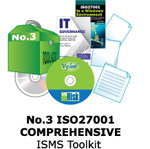
No 3 Comprehensive ISO27001 ISMS Toolkit – Buy before the end of November and get half a day of Live Online Consultancy Free!

Cyber Monday Security deals

Cyber Monday deals for password protected and encrypted USB drive

Shop Amazon – Cyber Monday Deals Week

Tags: CyberMonday, Online shopping


Nov 19 2012

PCI view of Risk Assessment

Category: pci dss,Security Risk AssessmentDISC @ 11:02 pm
Information Security Wordle: PCI DSS v1.2 (try #2)


Organizations that need to comply with PCI-DSS need to create their own risk assessment methodology that works for their specific business needs, according to a new report by the Payment Card Industry Security Standards Council (PCI SSC).

PCI Risk Assessment Special Interest Group says When developing their own risk assessment methodology, organizations may consider adapting an industry-standard methodology that is most appropriate for their particular culture and business climate.

 
Key recommendations include:
 
• A continuous risk assessment process enables ongoing discovery of emerging threats and vulnerabilities, allowing an organization to mitigate such threats and vulnerabilities in a proactive and timely manner
 
• Risk assessments must not be used as a means of avoiding or bypassing applicable PCI DSS requirements (or related compensating controls)
 
• Organizations should implement a formalized risk assessment methodology that best suits the culture and requirements of the organization

PCI view of things: 

The announcement
https://www.pcisecuritystandards.org/pdfs/pr_121116_risk_sig.pdf

And the V1 document (also attached)
https://www.pcisecuritystandards.org/documents/PCI_DSS_Risk_Assmt_Guidelines_v1.pdf

Below is my post on Risk management from prespective of ISO 27001 which has an Expert guidance on planning and implementing a risk assessment and protecting your business information

Information Security Risk Management for ISO 27001

Tags: International Organization for Standardization, ISO/IEC 27001, Methodology, Payment card industry, Payment Card Industry Data Security Standard, Risk Assessment, Risk management


Nov 15 2012

Tips for staying safe this Cyber Monday

Category: cyber security,CybercrimeDISC @ 12:52 pm

Cyber Monday deals

Cyber Monday, one of the largest online shopping days of the entire year, is coming November 26. The National Retail Federation estimates that shoppers spent more than $1.2 billion last year, doing more than a third of their holiday shopping online.

The issue? This influx of activity online, often times during business hours on a corporate network, is a holiday in itself for scammers and seasoned hackers.

As much as the bosses may not like it, the shopping on Monday is inevitable. So what should end users be mindful of to protect themselves AND the sensitive data on their personal or corporate networks?

FortiGuard Labs threat researchers, Guillaume Lovet and Derek Manky offer a few security tips to help you stay safe online.

1. Unsolicited e-mails: While it may be tempting to click on an email link that says, “Great Deal on iPads… 50% off!” Be careful! By clicking on that link, you could be taken to a compromised Website that downloads malware onto your computer. That malware can then be used to capture your computer key strokes, download additional malware, such as fake antivirus applications, or simply turn your computer into a spam generator.

What to do: If a deal looks too good to be true? It probably is. If you’re still tempted, simply place your cursor over the link (without clicking on it) and check to make sure the URL listed is where you were intending to go.

2. Nefarious search engine results: Search Engine Optimization (SEO) attacks (also known as search engine poisoning) typically occur during major events and holidays. This time of year, hackers may use search terms such as “Holiday Sale,” “Christmas bargains,” or “Year End Specials.” When a user clicks on the malicious link, they could be taken to a Website where their computer can be immediately compromised.

What to do: Same with the tip above, check the link before you click. Also, make sure if you do go to the site that the content looks relevant to what you searched for, versus lots of keywords globbed together on a page in random sentences

3. Unknown online retailers: If you discover an online store that’s offering unbelievable specials on holiday merchandise, do some digging to make sure it’s a legitimate store and not a false front that will disappear later that day along with your credit card information. And even if they are legitimate, you’ll want to make sure their site hasn’t been unknowingly compromised by SQL injection or other server attacks.

Compromised websites won’t always redirect you to a malicious site, but often will phish or try to surreptitiously install other forms of malware on your computer, such as Trojans, bots, keyloggers and rootkits, which are designed to harm systems and steal personal information.

What to do: Make sure your antivirus system is up-to-date, as well as intrusion prevention to help guard against these exploits. Without them, you may not even know that you’re infected.

4. Beware of friends sharing unsolicited links: Malicious links don’t always come from spam emails. They could come from your closest friend on Facebook or via e-mail whose machine has been unknowingly compromised. The infected machine may have a botnet that’s been programmed to comb through email or Facebook address books and send malicious links to everyone in them. The message might say, “Hey, check out the holiday sale going on here!” or “This place is have a 50% off Christmas sale!” By clicking on the link you could be taken to a malicious Website that installs malware on your system or phishes for your credit card credentials.

What to do: Use common sense. Does your friend normally update you on when sales come up? If you’re not sure, a quick private message or phone call to ask, “Did you mean to send me this?” could save you from compromising your personal (and corporate) sensitive information.

Tags: Credit card, Cyber Monday, National Retail Federation, Online shopping, SQL injection, Website


Nov 11 2012

Separation of Duties and ISO 27001

Category: ISO 27kDISC @ 11:49 pm
Organization clears your path

Organization clears your path

 Separation of Duties (SoD) is not only an important principle of security but SoD control  A10.1.3 of ISO 27001  wants organizations to implement this control.

For separation of duties we don’t want to give any individual so much control that they become a security risk without proper check and balance inplace. SoD is utilized to avoid unauthorized modification of data and to make sure critical data is available when needed by authorized personals, which includes but not limited to the availability of the services.

SoD has been used very frequently in financial organizations, but use of SoD control for other organizations should be risk based approach. If Risk assessment concludes that there’s a risk of collusion to commit a fraud and the risk is above the level of an organization risk threshold which will require an organization to minimize the risk of collusion by implementing SoD control and by usually splitting a process or a job to be completed by more than one individual. One person will have a management authorization to make a decision and other will execute or implement it.

Depending on the risk there is an urgent need to maintain and monitor this control which includes but not limited to audit trails. SoD control need to be audited on regular basis by independent party.

Tags: Information Security Management System, Internal control, ISO/IEC 27001


Nov 06 2012

New Tools for IT and Security professionals

Category: BCP,Information SecurityDISC @ 11:40 am

IT Governance continually striving to create, source and deliver products that can help IT and Information Security professionals in the real world. Check out their latest on Business Continuity, ITIL & ITSM and Information Security products below to help you in your current and future projects. This is a perfect time of the year to start adding some of these tools in your wish list and stay abreast in your area of expertise.

ISO22301 BCMS Implementation Toolkit
New release


ITIL Lite: A Road Map to Full or Partial ITIL Implementation – ITIL 2011 Edition
New release


ITIL Foundation Essentials: The exam facts you need
Published on 6th November


Resilient Thinking: Protecting Organisations in the 21st Century
Published on 8th November


ISO19770 SAM Process Guidance: A kick-start to your SAM programme
Published 13th November


Tags: Business, business continuity, Information Security, Information Technology, Information Technology Infrastructure Library, it service management, SAM, Software asset management


Nov 01 2012

10 reasons to ponder before using your smartphone for banking

Category: Smart PhoneDISC @ 11:55 am


Mobile Payment Security

01) There is no clear legislation that sets out your rights to receive a refund if your bank account is fraudulently emptied due to mobile bank app insecurity. The burden of proof seems to be on the user to protect their handset, operating system, software, mobile operator infrastructure and everything else in the “chain” of the transaction.

02) Of course you want to be able to use WiFi hotspots, this means you are in most cases operating on an insecure wireless network. It’s so easy for “bad guys” to sniff the air with a free utility and read your details.

03) Most users have not even set up a basic passcode on their devices (smartphones). Therefore if some gets access to the device, they have potentially access to their bank account.

04)  Most app stores do not test the security of apps. It is very easy for the “bad guys” to put Malware in the apps that can steal information from your device or other apps on your phone/device (e.g. banking app). Or it can happen when the app updates.

05) Most Smartphone device users have not installed security software on their device. Therefore they have less security than comparing to a laptop or PC with security software installed.

06) The average Smartphone users does not regularly perform OS (Operating System) updates. Many of these updates are critical security patches.

07) Due to performance issues, many of the lower cost handset manufacturers are disabling security features in order to improve performance of the device.

08) Malware on the Android platform smartphone alone has gone up over 400% in the last year

09) The technology that keeps apps separate on device does not separate them out into private sandboxes. This means that one app can read the details stored in another app without much difficulty.

10) ) If you check the T&C’s (terms and conditions) from  local  banking app and they may  want you to grant permission for the app to know your phone location (GeoIP).

Tags: Android, Geolocation, Malware, Operating system, Personal computer, Security, Smartphone, Wi-Fi


Oct 30 2012

Operation Procedures and ISMS

Category: ISO 27kDISC @ 11:18 am

In ISO 27001 Annex A control 10.1.1 makes it a requirement to identify all necessary operating procedures at policy level and then document these operating procedure based on the current environment. All of these operating procedures should be under strict document control meaning these procedures should be reviewed and updated at regular intervals based on the organization risk acceptance level. Also if your organization already has ISO20000 then the ISO20000 document control procedures are applicable to ISO 27001.

In ISO 27002 recommendation suggest the detail these operating procedures should address. The detailed work instructions will be directly proportional to the size of the organization and complexity of the task. The rule of thumb is another trained staff should be able to follow the instruction without much assistance. Also these procedures should have an input from cross functional team especially from security staff and the staff operating these procedures. The procedures should take into consideration vendor user manual instructions for all basic functions of the operations. The organizations which may outsource their IT and Security services need to specify the documentation requirement based on ISO 27001/ ISO 9000 in their contract and the relevant documents should be audited on regular basis to keep their required ISO certification

Below are some of the operating procedures.

  • Backup and restore procedures.
  • Handling of information based on the classification.
  • Contact list of all supporting staff including vendors to tackle unexpected events.
  • Detailed system restart and recovery procedures to tackle unexpected incidents

Tags: Information Security, Information Security Management System, International Organization for Standardization, ISO/IEC 27001, ISO/IEC 27002


« Previous PageNext Page »