InfoSec and Compliance – With 20 years of blogging experience, DISC InfoSec blog is dedicated to providing trusted insights and practical solutions for professionals and organizations navigating the evolving cybersecurity landscape. From cutting-edge threats to compliance strategies, this blog is your reliable resource for staying informed and secure. Dive into the content, connect with the community, and elevate your InfoSec expertise!
The OWASP Amass project performs network mapping of attack surfaces and external asset discovery using open-source information gathering and active reconnaissance techniques.
Osmedeus
Osmedeus is a workflow engine for offensive security that allows you to build and run a reconnaissance system on a wide range of targets, including domains, URLs, CIDRs, and GitHub repositories. It was designed to establish a strong foundation and can adapt and function automatically to perform reconnaissance tasks.
PhoneInfoga
PhoneInfoga is an advanced tool to scan international phone numbers. It allows you to gather basic information such as country, area, carrier, and line type, then use various techniques to find the VoIP provider or identify the owner. It works with a collection of scanners that must be configured for the tool to be effective.
Sherlock
Sherlock allows you to search social media accounts by username across social networks.
Shodan
Shodan is a search engine for Internet-connected devices. Discover how internet intelligence can help you make better decisions. The entire Shodan platform (crawling, IP lookups, searching, and data streaming) is available to developers. Use their API to understand whether users connect from a VPN, whether the website you’re visiting has been compromised, and more.
Social Analyzer
Social Analyzer is an API, CLI, and web app for analyzing and finding a person’s profile across social media and websites. It includes different analysis and detection modules; you can choose which modules to use during the investigation process. The analysis and public extracted information from this OSINT tool could help investigate profiles related to suspicious or malicious activities such as cyberbullying, cyber grooming, cyberstalking, and spreading misinformation.
SpiderFoot
SpiderFoot is an OSINT automation tool. It integrates with just about every data source available and utilizes a range of methods for data analysis, making that data easy to navigate. SpiderFoot has an embedded web-server for providing a clean and intuitive web-based interface but can also be used completely via the command-line.
theHarvester
theHarvester is a simple to use, yet powerful tool designed to be used during the reconnaissance stage of a red team assessment or penetration test. It performs OSINT gathering to help determine a domain’s external threat landscape. The tool gathers names, emails, IPs, subdomains, and URLs by using multiple public resources.
One of Mississippi’s largest hospital systems, Singing River Health System, suffered a cyberattack last week, leading to the shutdown of various internal services. The hospital system, which operates multiple hospitals and clinics along the Gulf Coast, detected unusual activity on its network and is cooperating with law enforcement. As a result of the attack, certain internal systems were taken offline to ensure their integrity during the investigation. The hospital’s IT security team is working to restore the offline systems, but the process is expected to take time. The hospital has not confirmed whether the attack involved ransomware or if a ransom will be paid. Patient services, including lab test results and radiology exams, are facing delays due to the attack. The incident highlights the ongoing challenges that hospitals face from cyberattacks, as this year has seen several healthcare institutions targeted by such attacks.
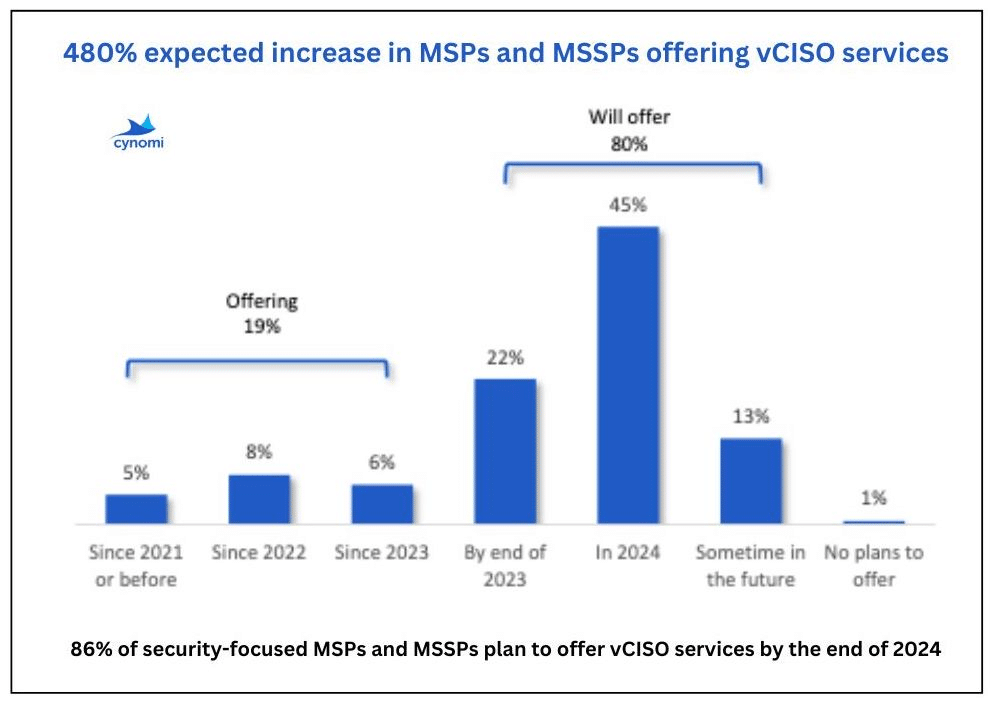
The frequency of cyberattacks is increasing, particularly targeting smaller businesses. However, most small and mid-size companies cannot afford a full-time security professional. To address this, they are turning to vCISO (virtual Chief Information Security Officer) services offered by Managed Service Providers (MSPs) and Managed Security Service Providers (MSSPs). These services provide access to external cybersecurity experts at a lower cost than hiring an in-house CISO.
A report by Cynomi, based on a survey of 200 executives in the U.S. and Canada, shows the rising demand for vCISO services among SMBs and how MSPs and MSSPs are responding to this demand. The report reveals that 84% of those not currently offering vCISO services but plan to do so by the end of 2024. The number of providers offering these services has been consistently growing, with 8% in 2022, 28% in 2023, and a projected 45% in 2024.
MSPs and MSSPs are motivated to offer vCISO services due to anticipated increased revenue, higher margins, easy upselling of other cybersecurity services, and enhanced client engagement. Although they foresee challenges such as limited in-house security knowledge and a lack of skilled cybersecurity personnel, vCISO platforms help mitigate these concerns.
Cynomi, a leading vCISO platform provider, aims to conduct annual studies on the growing trend of the vCISO role. They have also created a directory of prominent vCISO service providers to help SMBs find trusted security partners, offering details about services and technology platforms used by each provider.
The project aims to educate developers, designers, architects, managers, and organizations about the security issues when deploying Large Language Models (LLMs).
The organization is committed to raising awareness of the vulnerabilities and providing recommendations for hardening LLM applications.
“The OWASP Top 10 for LLM Applications Working Group is dedicated to developing a Top 10 list of vulnerabilities specifically applicable to applications leveraging Large Language Models (LLMs).” reads the announcement of the Working Group. “This initiative aligns with the broader goals of the OWASP Foundation to foster a more secure cyberspace and is in line with the overarching intention behind all OWASP Top 10 lists.”
The organization states that the primary audience for its Top 10 is developers and security experts who design and implement LLM applications. However the project could be interest to other stakeholders in the LLM ecosystem, including scholars, legal professionals, compliance officers, and end users.
“The goal of this Working Group is to provide a foundation for developers to create applications that include LLMs, ensuring these can be used securely and safely by a wide range of entities, from individuals and companies to governments and other organizations.” continues the announcement.
The Top Ten is the result of the work of nearly 500 security specialists, AI researchers, developers, industry leaders, and academics. Over 130 of these experts actively contributed to this guide.
Clearly the project is a work in progress, LLM technology continues to evolve, and the research on security risk will need to keep pace.
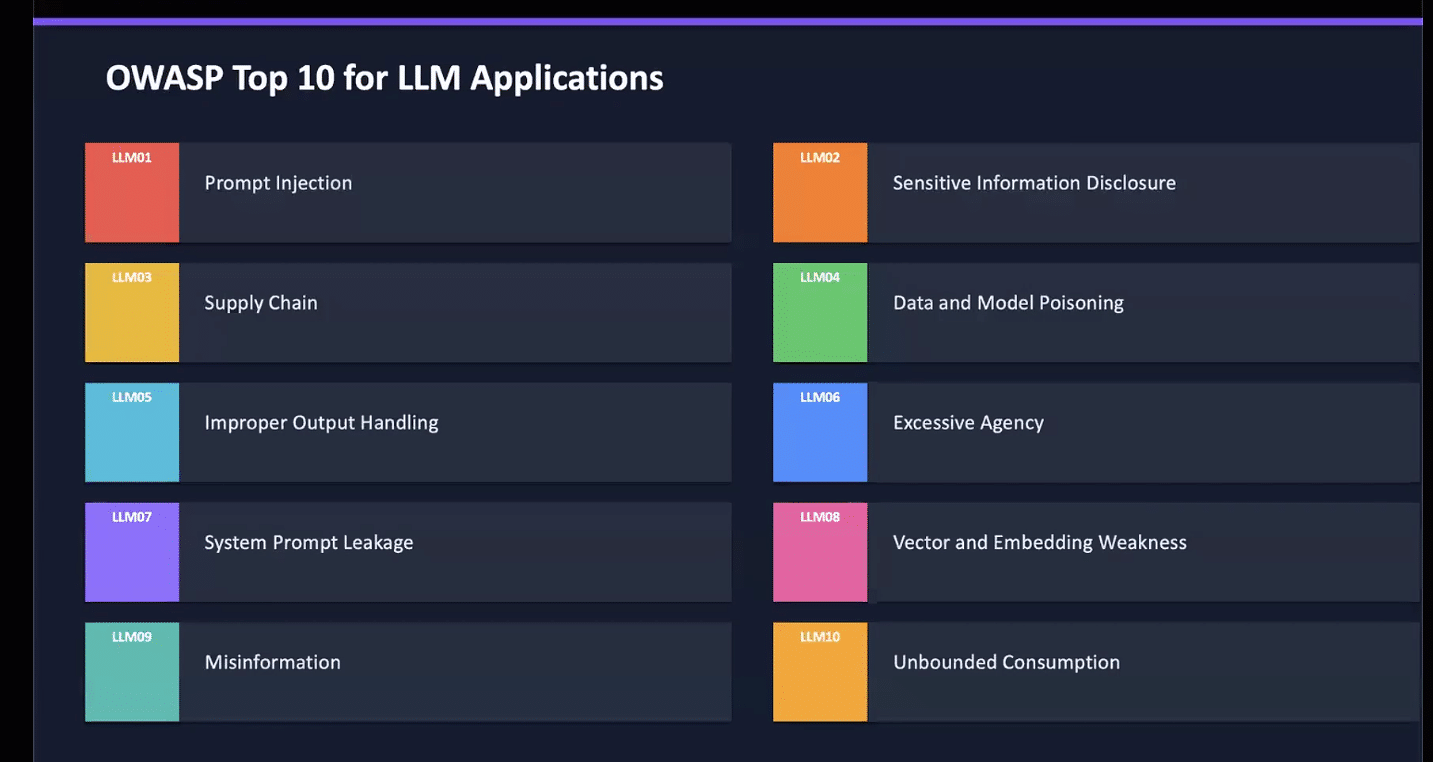
Below is the Owasp Top 10 for LLM version 1.0
LLM01: Prompt Injection
This manipulates a large language model (LLM) through crafty inputs, causing unintended actions by the LLM. Direct injections overwrite system prompts, while indirect ones manipulate inputs from external sources.
LLM02: Insecure Output Handling
This vulnerability occurs when an LLM output is accepted without scrutiny, exposing backend systems. Misuse may lead to severe consequences like XSS, CSRF, SSRF, privilege escalation, or remote code execution.
LLM03: Training Data Poisoning
This occurs when LLM training data is tampered, introducing vulnerabilities or biases that compromise security, effectiveness, or ethical behavior. Sources include Common Crawl, WebText, OpenWebText, & books.
LLM04: Model Denial of Service
Attackers cause resource-heavy operations on LLMs, leading to service degradation or high costs. The vulnerability is magnified due to the resource-intensive nature of LLMs and unpredictability of user inputs.
LLM05: Supply Chain Vulnerabilities
LLM application lifecycle can be compromised by vulnerable components or services, leading to security attacks. Using third-party datasets, pre-trained models, and plugins can add vulnerabilities.
LLM06: Sensitive Information Disclosure
LLM’s may inadvertently reveal confidential data in its responses, leading to unauthorized data access, privacy violations, and security breaches. It’s crucial to implement data sanitization and strict user policies to mitigate this.
LLM07: Insecure Plugin Design
LLM plugins can have insecure inputs and insufficient access control. This lack of application control makes them easier to exploit and can result in consequences like remote code execution.
LLM08: Excessive Agency
LLM-based systems may undertake actions leading to unintended consequences. The issue arises from excessive functionality, permissions, or autonomy granted to the LLM-based systems.
LLM09: Overreliance
Systems or people overly depending on LLMs without oversight may face misinformation, miscommunication, legal issues, and security vulnerabilities due to incorrect or inappropriate content generated by LLMs.
LLM10: Model Theft
This involves unauthorized access, copying, or exfiltration of proprietary LLM models. The impact includes economic losses, compromised competitive advantage, and potential access to sensitive information.
At DISC InfoSec, we help organizations navigate this landscape by aligning AI risk management, governance, security, and compliance into a single, practical roadmap. Whether you are experimenting with AI or deploying it at scale, we help you choose and operationalize the right frameworks to reduce risk and build trust. Learn more at DISC InfoSec.
How CISOs can succeed in a challenging landscape Reimagining operational resilience and recovery in 2023
#CISOs face mounting demands to develop information security strategies that effectively safeguard their organizations against an ever-evolving threat landscape. A strong information security stance is imperative, but the requirements for security and risk management are intricate and distinct for each organization. The alignment of business priorities and suitable solutions may not always be apparent, while swift results and cost-effective measures are crucial.
In your opinion, what are the key characteristics of an effective CISO? How do you balance technical expertise and leadership skills?
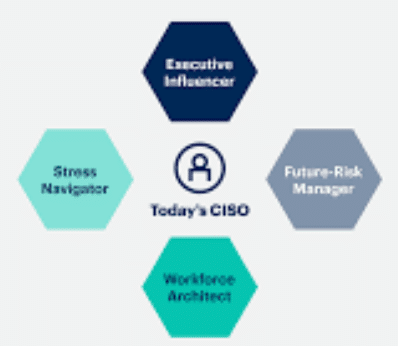
A CISO needs to wear many hats across the business and juggle many competing priorities. They need to be a customer support representative, a product partner, a manager, a visionary, a strategist, and of course, a security expert.
I have found that some of the most important characteristics are to be friendly, honest, and emphatic. Being a friend to the organization and people you work with, rather than leading with just policies and demands, is critical to getting more done and the success of your team.
It may sound counterintuitive, but a good CISO must get out from behind the technology and understand the people they are serving. Of course, you must maintain a high level of technology knowledge, but if you find yourself only sitting in front of a firewall console, you’re probably in the wrong job.
Given the rapid rate of technological change, how should CISOs approach building an organization’s security posture?
With the more-rapidly-than-ever changing environment, you can rarely rely solely on multi-year strategies or multi-quarter roadmaps. You must be ready for constant change and quickly adapt to it.
CISOs must create a security strategy built around anticipating outcomes and a feedback loop to gather information during incidents, assessments, threat analysis, and research. The information gathered should then be turned into metrics which will give insights into if the strategy is working, and, if necessary, how to evolve the strategy.
In today’s business environment, a CISO must communicate complex security issues. How can you ensure you’re understood by all stakeholders, including those who aren’t as tech-savvy
Though CISOs play a lead role in managing an organization’s security posture, it is important that cybersecurity efforts manifest as a shared responsibility across an organization. From new hires to the C-suite, cybersecurity should be a communicated priority for all employees. Everyone should care about security, and if they don’t do it, it’s because they don’t understand something about the situation or ask.
Just as much as a CISO needs to learn about the business, they must also educate other business leaders on what’s out there and the landscape of evolving threats. Then, it’s important to connect these threats and the solutions back to the goals of that part of the business so teams can fully understand the role they can play in mitigating risk.
With declining trust in institutions, how can CISOs help organizations build and maintain trust among customers, employees, and stakeholders?
It’s important to prioritize security and proactively communicate initiatives with stakeholders. However, building and maintaining trust isn’t a one-size-fits-all approach. CISOs must possess the ability to effectively communicate and educate all stakeholders about the specific cyber risks relevant to their organization while also proactively outlining how it is prepared to address those risks. Implementing robust, proactive security measures and emphasizing the protection of sensitive data will reassure customers, stakeholders, and employees alike that their information is secure. Swiftly acting on emerging and existing security threats also reinforces trust and demonstrates an organization’s proactive efforts in addressing threats before they become detrimental.
The role of a CISO encompasses a wide range of responsibilities, including compliance, disaster recovery, and stakeholder management. How can a CISO effectively manage such a diverse portfolio of tasks?
There are three ways I manage competing priorities: Focus, transparency, and accountability. A CISO must focus on the tasks that have the biggest ROIs, and not get distracted by the noise. Leading with transparency will make it clear to everyone within the organization why we are making changes or asks. And finally, security posture and response can only be improved when accountability is clear. And not just accountability of the security team, but accountability from across the organization where everyone understands the responsibility.
By making data-driven decisions and conducting continuous risk assessments, CISOs can strategically allocate resources to high-priority tasks. The delicate balance lies in leading these various aspects while leveraging the expertise of a skilled team to ensure comprehensive security protection across the organization. By staffing a knowledgeable team of security experts and empowering them to take ownership of their day-to-day responsibilities, CISOs can focus their time on providing strategic and executive-level oversight on key issues.
Given the constantly evolving threat landscape, how can a CISO maintain its technological expertise while focusing on leadership and collaboration?
From a leadership standpoint, the CISO is so much more than just security. It’s truly a business leader position, they are collaborating with the other business leaders to share the same resources. CISOs must understand the organizational goals, the customer needs, and the capacity of each team to prioritize security in collaboration with product management, IT leaders, CTO, etc.
CISOs must maintain fundamental technology knowledge but rely on the team’s subject matter expertise for deeper technical aspects. It’s important to find the right training, like CISSP, and vendor-specific certifications, without overwhelming yourself.
Superstar CISOs stand out from the rest due to their acute understanding of the growing threat landscape and the shortage of cybersecurity skills. However, they refuse to succumb to despair and instead leverage their existing assets effectively, notably by recognizing an overlooked security resource: their development teams.
In the era of DevSecOps hype, it’s common to say that security is everyone’s responsibility. But there are limits to what untrained and unmotivated workers – especially those who don’t work in IT – can do to make their organization more secure against cyberthreats.
For example, in the real world, travelers at a busy airport should feel responsible for reporting an unattended bag sitting alone in a suspicious location. However, they aren’t trained to inspect that bag to look for threats or empowered to take any actions on their own. At a company, it’s one thing to make everyone aware of cybersecurity, and another to educate them to make their organization more secure within the context of their role or to use the defensive tools they already have in place to counter threats and squash vulnerabilities.
For that, companies need to invest in upskilling. It’s far better, and oftentimes easier, to invest in the talented, loyal staff that are already a part of your organization than to try and hire new people from the outside. But even then, putting those learning resources in the best place to get the required results is key.
Developers already understand IT since they write much of the code for the programs being used by their organizations. And they are often ready, willing, and able to upskill in cybersecurity to help make them even more amazing at their jobs. Smart CISOs are tapping into that enthusiasm and providing developers with the education pathways they want and need, with the payoff being a reduction in common vulnerabilities (not to mention less pressure on overworked AppSec personnel).
Making sure developers get the right upskilling and support
The best CISOs know that upskilling is critical to success. But not just any training will do, especially for the development community who already have a good baseline understanding of IT. A “check-the-box” program won’t offer much return on investment and will likely frustrate developers into poor performance and a lifelong hatred of working with security teams.
Likewise, any solution that impedes their workflow, fails to stay agile with enterprise security goals, or cannot deliver the right education at the right time in an easily digestible format, is unlikely to result in foundational security awareness or skills.
Other secrets of superstar CISOs
Exemplary CISOs are also able to address other key pain points that traditionally flummox good cybersecurity programs, such as the relationships between developers and application security (AppSec) teams, or how cybersecurity is viewed by other C-suite executives and the board of directors.
For AppSec relations, good CISOs realize that developer enablement helps to shift security farther to the so-called left and closer to a piece of software’s origins. Fixing flaws before applications are dropped into production environments is important, and much better than the old way of building code first and running it past the AppSec team at the last minute to avoid those annoying hotfixes and delays to delivery. But it can’t solve all of AppSec’s problems alone. Some vulnerabilities may not show up until applications get into production, so relying on shifting left in isolation to catch all vulnerabilities is impractical and costly.
There also needs to be continuous testing and monitoring in the production environment, and yes, sometimes apps will need to be sent back to developers even after they have been deployed. A great CISO, with a foot in development and security, can smooth out those relations and keep everyone working as a team.
Getting other C-suite executives onboard with better security might be an even more difficult challenge, with leadership outside the CISO and CIO normally looking at business objectives and profits before anything else. To counter that, superstar CISOs know how to show a direct correlation between better, more mature cybersecurity and increased revenue, and how it can even provide a competitive advantage against the competition.
It’s not easy being a CISO, and certainly more challenging than at any other point in history. But those CISOs who master that adversity are becoming true superstars within their companies and communities. They competently employ agile developer upskilling, champion security culture, streamline relationships between the traditional rivals of development and AppSec teams, and encourage leadership to foster a security-first approach from the top down.
The cybersecurity talent issue is a significant challenge faced by organizations worldwide. Solving this problem requires a combination of short-term and long-term strategies to attract, develop, and retain skilled cybersecurity professionals. Here are some steps that can help address the cybersecurity talent shortage:
Education and Training: Invest in cybersecurity education and training programs at various levels, from primary education to advanced professional certifications. Collaborate with educational institutions and industry experts to design comprehensive and up-to-date curricula.
Promote Cybersecurity as a Career Choice: Raise awareness about the importance of cybersecurity as a career option. Target students and professionals from diverse backgrounds to encourage them to pursue cybersecurity careers.
Apprenticeships and Internships: Establish apprenticeship and internship programs to provide hands-on experience to aspiring cybersecurity professionals. This can help bridge the gap between theoretical knowledge and practical skills.
Industry Collaboration: Foster collaboration between academic institutions and the private sector. Industry partnerships can help ensure that cybersecurity programs align with current industry needs and practices.
Cyber Range and Simulations: Set up cyber ranges and simulations to provide a safe environment for individuals to practice and enhance their cybersecurity skills. These platforms allow trainees to learn through realistic scenarios without risking real-world systems.
Mentorship Programs: Create mentorship programs where experienced cybersecurity professionals can guide and support newcomers in their career development. This can be especially helpful in retaining talent and promoting professional growth.
Competitive Compensation and Benefits: Offer competitive salaries and benefits to attract skilled cybersecurity professionals. Recognize their value and contribution to the organization’s security posture.
Continuous Professional Development: Encourage and facilitate continuous learning and professional development for existing cybersecurity teams. This can be achieved through regular training, attending conferences, and participating in workshops.
Diversity and Inclusion: Promote diversity and inclusion within the cybersecurity workforce. A diverse team brings varied perspectives and problem-solving approaches, ultimately enhancing the overall security posture.
Public-Private Partnerships: Encourage partnerships between government agencies, private companies, and non-profit organizations to address the talent shortage collectively. Collaboration can lead to resource-sharing and more comprehensive solutions.
Automation and AI Solutions: Implement cybersecurity automation and AI technologies to augment the existing workforce. Automation can handle repetitive tasks, allowing professionals to focus on more complex issues.
Retaining Talent: Focus on employee retention by providing a supportive and rewarding work environment. Recognize and celebrate cybersecurity achievements and milestones within the organization.
Ethical Hacking Competitions and CTFs: Support and sponsor ethical hacking competitions and Capture The Flag (CTF) events. These challenges attract cybersecurity enthusiasts and offer valuable learning experiences.
By combining these strategies and adopting a long-term perspective, organizations can start making progress in solving the cybersecurity talent issue. Remember that cybersecurity is an ever-evolving field, and continuous efforts are needed to attract and retain skilled professionals.
At DISC InfoSec, we help organizations navigate this landscape by aligning AI risk management, governance, security, and compliance into a single, practical roadmap. Whether you are experimenting with AI or deploying it at scale, we help you choose and operationalize the right frameworks to reduce risk and build trust. Learn more at DISC InfoSec.
The presence of each third-party application increases the potential for attacks, particularly when end users install them without proper oversight or approval. IT security teams face challenges in obtaining comprehensive knowledge about the apps connected to their corporate SaaS platforms, including their permissions and activities.
In this Help Net Security video, Matt Radolec, Senior Director, Incident Response and Cloud Operations at Varonis, offers advice for CISO-level executives to enhance the security of corporate cloud data.
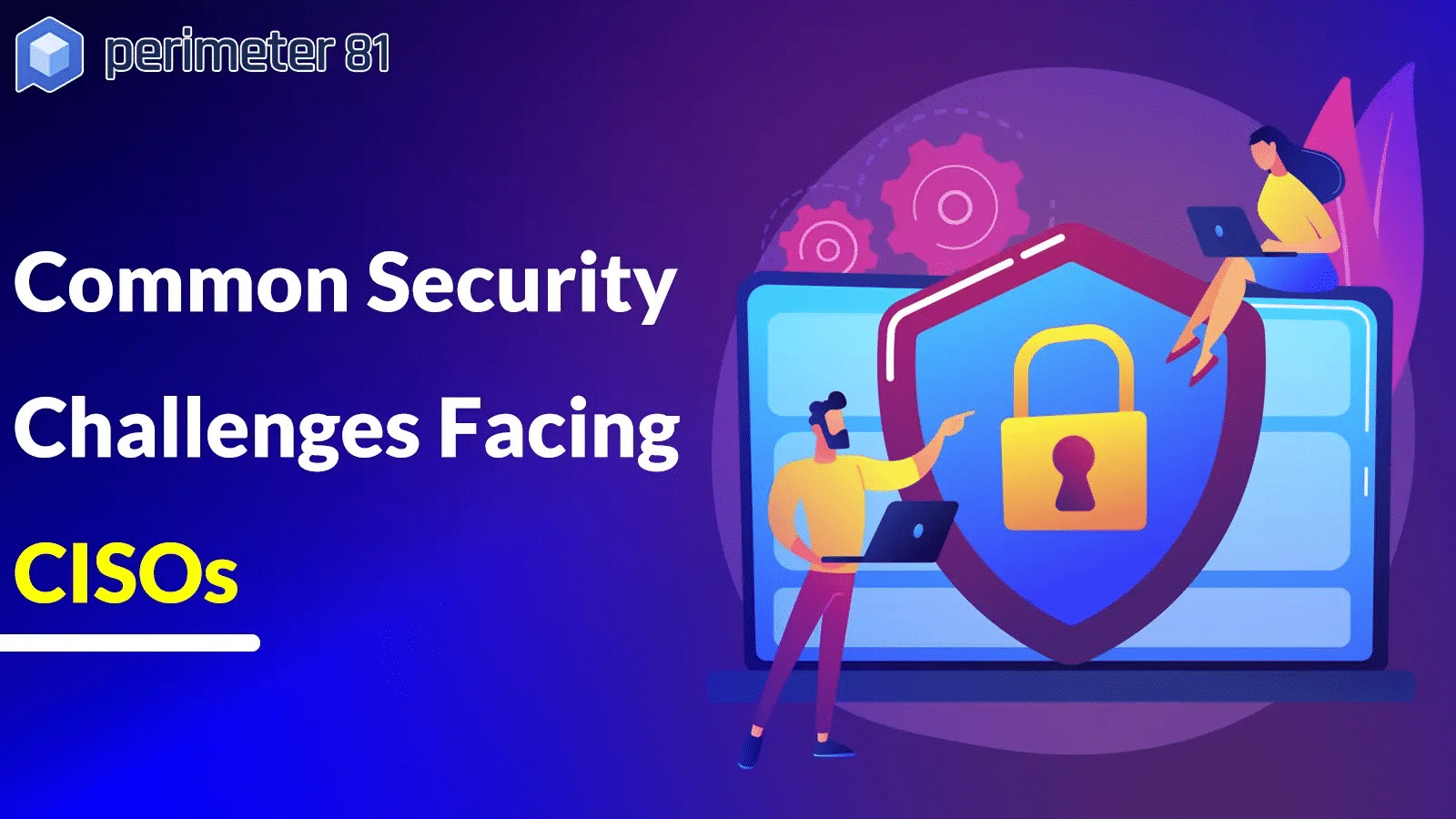
Chief Information Security Officers (CISOs) hold a critical and challenging role in today’s rapidly evolving cybersecurity landscape. Here are the common security challenges CISOs face.
As organizations increasingly rely on technology to drive their operations, CISOs face complex security challenges that demand their expertise and strategic decision-making.
These challenges arise from the constant emergence of sophisticated cyber threats, the need to protect sensitive data, and the ever-evolving regulatory landscape.
The role of a CISO requires balancing proactive risk mitigation with the ability to respond swiftly to incidents and breaches.
This article will delve into the top challenges CISOs face, including protecting digital assets, managing security incidents, ensuring compliance, dealing with insider threats, and the relentless pursuit of cyber resilience.
By understanding these challenges, CISOs can develop robust cybersecurity strategies and lead their organizations toward a secure and resilient future.
Who is a CISO?
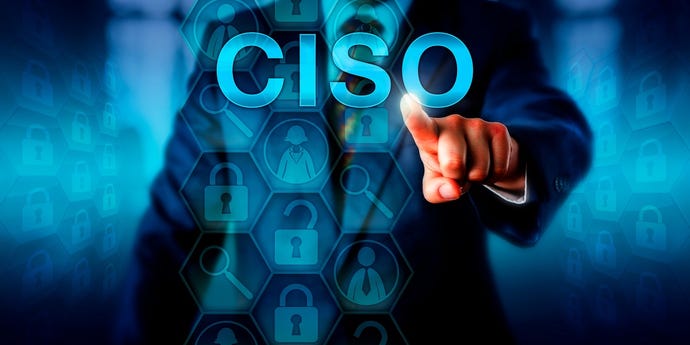
Chief Information Security Officer (CISO) is a senior executive responsible for overseeing and administering an organization’s information security plan.
A CISO’s primary responsibility is safeguarding the confidentiality, availability, and integrity of an organization’s information assets and systems.
They are accountable for creating and enforcing strategies, policies, and procedures to defend against cyber threats, protect sensitive data, and mitigate security risks.
CISOs play a crucial role in maintaining an organization’s security posture by establishing and enforcing security standards, conducting risk assessments, and implementing appropriate security controls.
They collaborate with other executives, IT teams, and stakeholders to align security initiatives with business objectives and ensure that security measures are integrated into the organization’s operations.
In addition to their technical expertise, CISOs often engage in risk management, incident response planning, security awareness training, and compliance with regulatory requirements.
They stay updated on the latest cybersecurity trends, threats, and technologies to address emerging risks and implement appropriate security measures effectively.
The role of a CISO has become increasingly important as cyber threats evolve in complexity and frequency.
CISOs are responsible for safeguarding the organization’s sensitive information, maintaining the trust of customers and stakeholders, and ensuring business continuity in the face of cybersecurity challenges.
What are all the Roles and Responsibilities of CISO?
Developing and Implementing Information Security Strategy: The CISO is responsible for developing and implementing an overarching information security strategy aligned with the organization’s business objectives. This includes setting security goals, defining security policies and procedures, and establishing risk management frameworks.
Leading the Security Team: The CISO manages and provides leadership to the security team, including hiring, training, and supervising security personnel. They ensure the team has the necessary skills, resources, and support to carry out their responsibilities effectively.
Overseeing Security Operations: The CISO oversees day-to-day security operations, including incident response, vulnerability management, threat intelligence, and security monitoring. They ensure appropriate controls, technologies, and processes are in place to protect the organization’s assets.
Risk Management: The CISO is responsible for identifying and assessing security risks to the organization’s information systems and assets. They develop and implement risk management strategies to safeguard critical data and systems, including risk mitigation, transfer, and acceptance.
Compliance and Regulatory Requirements: The CISO ensures that the organization complies with relevant security regulations, industry standards, and legal requirements. They stay updated on emerging regulations and ensure appropriate controls and processes are in place to meet compliance obligations.
Security Incident Response: The CISO leads the organization’s response to security incidents, including data breaches, malware attacks, and other security breaches. They establish incident response plans, coordinate efforts, and collaborate with relevant stakeholders, such as legal, PR, and law enforcement agencies.
Security Awareness and Training: The CISO promotes a culture of security awareness throughout the organization. They develop and deliver security awareness programs and training initiatives to educate employees on security best practices and minimize human-related security risks.
Vendor and Third-Party Risk Management: The CISO assesses and manages security risks associated with third-party vendors and partners. They establish vendor security requirements, conduct due diligence, and monitor compliance with security standards and contractual obligations.
Security Governance and Reporting: The CISO provides regular reports and updates on the organization’s security posture to executive management, board members, and other relevant stakeholders. They ensure that security metrics and key performance indicators (KPIs) are established to measure the effectiveness of security programs.
Incident Investigation and Forensics: In the event of security incidents, the CISO oversees the investigation and forensic analysis to identify the root cause, assess the impact, and prevent future occurrences. As required, they collaborate with internal and external resources, such as forensic experts and law enforcement agencies.
Security Challenges CISOs Face
CISOs face various common security challenges as they strive to protect their organizations’ digital assets and information. Perimeter 81 Guide helps CISOs to prevent their network from being at Risk. Some of the key challenges they encounter include:
Sophisticated Cyberattacks: CISOs must defend against increasingly sophisticated cyber threats, including advanced persistent threats (APTs), ransomware attacks, social engineering, and zero-day exploits. These attacks can bypass traditional security measures and require constant vigilance and adaptive security strategies.
Insider Threats: CISOs need to address the risks posed by insiders, including employees, contractors, or partners who have authorized access to systems and data. Insider threats can involve accidental data breaches, negligence, or malicious intent, requiring a balance between enabling productivity and implementing controls to prevent unauthorized access or data leakage.
Compliance and Regulatory Requirements: CISOs must ensure their organizations comply with industry-specific regulations, such as GDPR, HIPAA, PCI-DSS, or SOX, and evolving privacy laws. Navigating complex compliance requirements and maintaining a robust security posture to meet these standards can be a significant challenge.
Cloud Security: As organizations increasingly adopt cloud services and infrastructure, CISOs must address the unique security challenges associated with cloud computing. This includes securing data stored in the cloud, managing access controls, and ensuring the security of cloud service providers (CSPs) and their environments.
Security Skills Gap: CISOs often need more skilled cybersecurity professionals. The industry’s rapid growth and evolving threat landscape have resulted in high demand for cybersecurity talent, making recruiting and retaining qualified professionals challenging.
Third-Party Risk: Organizations rely on third-party vendors and suppliers, introducing potential security risks. CISOs must assess the security posture of third parties, establish contractual security obligations, and monitor their adherence to security standards to mitigate the risk of breaches through these external connections.
Security Awareness and Training: Human error remains a significant factor in cybersecurity incidents. CISOs must promote a strong security culture, provide regular training and awareness programs, and educate employees about cybersecurity best practices to minimize the risk of social engineering, phishing attacks, and other user-related vulnerabilities.
Incident Response and Recovery: CISOs must develop and test robust incident response plans to manage and recover from security incidents effectively. This involves identifying and containing breaches, conducting forensic investigations, and implementing remediation measures to minimize the impact and prevent future incidents.
Emerging Technologies: Adopting technologies like the Internet of Things (IoT), artificial intelligence (AI), and blockchain introduces new security challenges. CISOs must understand the security implications of these technologies, assess risks, and implement appropriate controls to protect against potential vulnerabilities and attacks.
Budget and Resource Constraints: CISOs often face budget limitations and the need to prioritize security initiatives. Balancing the allocation of resources to address immediate security needs while investing in long-term security capabilities can be a significant challenge.
What are the Security Compliance CISO Should Follow
As a Chief Information Security Officer (CISO), there are several security compliance frameworks and regulations that you should consider following, depending on the nature of your organization and its operations. Here are some of the key security compliance frameworks and regulations:
General Data Protection Regulation (GDPR): If your organization deals with the personal data of individuals in the European Union (EU), GDPR sets requirements for the protection, processing, and transfer of personal data. It includes principles for data minimization, consent, data breach notification, and the rights of individuals.
Payment Card Industry Data Security Standard (PCI DSS): PCI DSS applies to organizations that handle credit card information. It sets requirements for securing payment card data, including network security, encryption, access controls, and regular vulnerability assessments.
Health Insurance Portability and Accountability Act (HIPAA): HIPAA applies to organizations in the healthcare industry that handle protected health information (PHI). It establishes requirements for the privacy and security of PHI, including access controls, encryption, risk assessments, and breach notification.
Sarbanes-Oxley Act (SOX): SOX applies to publicly traded companies in the United States. It sets requirements for financial reporting and establishes controls and processes to ensure the accuracy and integrity of financial statements. While not solely focused on security, it includes provisions for protecting financial data.
National Institute of Standards and Technology (NIST) Cybersecurity Framework: The NIST Cybersecurity Framework provides guidelines and best practices for managing cybersecurity risks. It covers risk assessment, security controls, incident response, and continuous monitoring.
ISO 27001: ISO 27001 is an international standard that provides a framework for establishing, implementing, maintaining, and continually improving an information security management system (ISMS). It covers various aspects of information security, including risk management, access controls, incident management, and security awareness.
Federal Information Security Management Act (FISMA): FISMA applies to U.S. federal agencies and sets requirements for securing federal information and systems. It mandates risk assessments, security controls, incident response planning, and continuous monitoring.
Security Challenges CISOs Face to Manage Security Team
Managing a security team as a Chief Information Security Officer (CISO) requires effective leadership, communication, and coordination. Here are some key aspects to consider when managing a security team:
Establish Clear Roles and Responsibilities: Clearly define the roles and responsibilities of each team member to ensure everyone understands their specific duties and areas of expertise. This clarity helps streamline operations and avoid confusion.
Set Goals and Objectives: Define strategic goals and objectives for the security team aligned with the organization’s overall security strategy. Communicate these goals to the team and regularly track progress to ensure everyone is working towards the same objectives.
Provide Guidance and Mentorship: Offer team members guidance, mentorship, and professional development opportunities. Encourage skill development, certifications, and staying up-to-date with the latest security trends and technologies—support team members in their career growth.
Foster Collaboration and Communication: Promote a collaborative and open communication culture within the team. Encourage knowledge sharing, cross-functional collaboration, and effective communication channels. Regular team meetings, brainstorming sessions, and updates are valuable for aligning efforts.
Support Decision-Making: Empower team members to make decisions within their areas of responsibility. Provide guidance and support when needed, but encourage autonomy and ownership in decision-making. Foster an environment where team members feel comfortable taking calculated risks.
Establish Incident Response Procedures: Develop clear incident response procedures and ensure the team is well-prepared to handle security incidents effectively. Conduct regular drills, tabletop exercises, and simulations to test and improve the team’s incident response capabilities.
Stay Informed and Adapt: Stay up-to-date with the latest security threats, industry trends, and best practices. Encourage continuous learning and professional development for the team. Adapt security strategies and measures as the threat landscape evolves.
Collaborate with Other Departments: Work closely with other departments, such as IT, legal, HR, and executive management, to ensure security initiatives are aligned with business objectives and integrated into overall organizational operations. Build relationships and foster a culture of security awareness throughout the organization.
Regularly Evaluate and Improve: Regularly evaluate the team’s performance, processes, and procedures. Collect feedback from team members and stakeholders to identify areas for improvement. Implement changes and adjustments as necessary to enhance the team’s effectiveness and efficiency.
Lead by Example: Demonstrate strong leadership skills, integrity, and a commitment to security best practices. Lead by example in adhering to security policies and procedures. Encourage a positive and supportive work environment.
Final Thoughts
CISOs face many common security challenges as protectors of their organization’s digital assets and information.
From sophisticated cyberattacks and insider threats to compliance requirements and resource constraints, these challenges highlight the complex and evolving nature of the cybersecurity landscape.
CISOs must navigate these challenges by adopting a proactive and strategic approach to security, leveraging advanced technologies, fostering a strong security culture, and collaborating with stakeholders.
To overcome these challenges, CISOs must stay abreast of emerging threats, continuously evaluate and improve their security measures, and prioritize investments in critical security capabilities.
They must also foster strong partnerships with internal teams, third-party vendors, and industry peers to collectively address security challenges and share best practices.
While the security challenges CISOs face may seem daunting, they also present opportunities for innovation and growth.
By effectively addressing these challenges, CISOs can enhance their organizations’ security posture, safeguard critical assets, and instill confidence in customers and stakeholders.
Ultimately, the role of a CISO requires a comprehensive and adaptable approach to cybersecurity, where staying one step ahead of threats and continuously improving security measures are paramount.
By embracing these challenges, CISOs can help shape a secure and resilient future for their organizations in an increasingly interconnected and threat-filled digital landscape.
In the wake of the ex-Uber CISO verdict, CISOs ask for clearer rules and less uncertainty in managing disclosures, amid jail-time fears.
Getting cybersecurity incident disclosure right can mean the difference between prison and freedom. But the rules remain woefully vague.
Chief information security officers (CISOs) and their teams know there’s a certain amount of risk intrinsically baked into the job. But the recent sentencing of former Uber CISO Joseph Sullivan for his role in covering up a 2016 data breach at the company has significantly upped the ante.
SolarWinds CISO Tim Brown survived one of the most spectacular security breaches in history in 2020 inan epic supply chain attack, and emerged on the other side with the business — and his professional reputation — intact. In an interview with Dark Reading, he explained that CISOs are asking for clarity on rules around disclosures. The Federal Trade Commission (FTC) has rules, and beyond that, there is a vast and evolving mousetrap of rules, regulations, executive orders, and case law dictating how and when disclosures need to occur, and that’s before anyone considers the impact of an incident on the business.
“Liability is something that has CISOs concerned,” Brown says. “It’s a concerning time and creates stress and angst for teams. We want to be covered.”
A court found Uber’s Sullivan guilty of working to cover up the breach from FTC investigators, as well as trying to keep the breach secret from other Uber executives. Brown acknowledges that Sullivan made the mistake, in the view of the court, of trying to make disclosure decisions unilaterally, without legal guidance, which left him open to prosecution.
Sarbanes-Oxley Act for CISOs?
To avoid making such mistakes, CISOs need something in the mold of the 2002 Sarbanes-Oxley Act, which details financial reporting regulations for chief financial officers (CFOs), Brown says.
In the same way Sarbanes-Oxley prescribes steps that CFOs are expected to take to prevent financial fraud, Brown says that he would like to see new federal regulations that outline CISO requirements for preventing and responding to cybercrime on their watch.
The stakes are high: While Sullivan was only sentenced to three years’ probation for his role in attempting to bury Uber’s data breach, Judge William Orrick used Sullivan’s hearing as an opportunity to send a chilling warning to the next CISO unfortunate enough to find themselves in his court.
“If I have a similar case tomorrow, even if the defendant had the character of Pope Francis, they would be going to prison,” Judge Orrick said to Sullivan. “When you go out and talk to your friends, to your CISOs, you tell them that you got a break not because of what you did, not even because of who you are, but because this was just such an unusual one-off.”
Disclosure Maze
The litany of hazy rules and emerging guidelines doesn’t provide CISOs and cybersecurity teams with a clear path to compliance, meaning in-house counsel and outside legal advisers have become essential in helping organizations navigate the disclosure process maze.
“Enterprise security teams do not exist in a vacuum when it comes to evaluating disclosure of data breaches and security incidents,” says Melissa Bischoping, director of endpoint security research at Tanium, on the current disclosure landscape. “Their responses must be coordinated with legal and communications stakeholders to ensure they are meeting regulatory and legal requirements, and providing the appropriate level of information to the right consumers of the information.”
Beth Waller, an attorney and chair of cybersecurity and data privacy at Woods Rogers Vandeventer Black, says oversight bodies as well as consumers are driving cybersecurity incident transparency — and shrinking acceptable disclosure windows.
Waller points to a grab bag of regulations pushing disclosures, such as the Security and Exchange Commission’s demand for immediate data incident disclosure for publicly traded companies, as well as federal regulations on sectors like banking, healthcare, and critical infrastructure demanding disclosures within days of its discovery. Department of Defense contractors must notify the DoD of an incident within 72 hours, she points out.
“For international companies, regulations like the Europe’s General Data Protection Regulation (GDPR) drive similar timelines,” Waller says. “More and more, a company that wants to keep a data incident quiet cannot do so from a regulatory or legal standpoint.”
Disclosure Dangers
As pressure mounts on enterprise cybersecurity teams to disclose quickly, Dave Gerry, CEO of Bugcrowd, acknowledges the value of transparency for trust and the flow of information, but explains he is also concerned that rapid disclosure could rob security teams of priceless time to respond properly to cyberattacks.
“Incident disclosure needs to allow for the opportunity for the security organization to rapidly patch systems, fix code-level vulnerabilities, eject attackers, and generally mitigate their systems prior to publicly disclosing details ensure additional security incidents don’t come as a result of the disclosure,” Gerry adds. “Identifying the root cause and magnitude of the incident to avoid adding additional fear and confusion to the situation takes time, which is an additional consideration.”
Data ‘Duty of Care’ Defined
Making things more confusing, US state attorneys general are pushing for tougher regulations around cybersecurity incident disclosures, leaving each state with its own unique disclosure landscape riddled with broad, ill-defined requirements like taking “reasonable” actions to protect data.
Veteran CISO and VMware cyber strategist Karen Worstell notes that Colorado AG Philip Weiser took an important step toward clarifying CISO obligations last January, when he offered a definition of “Duty of Care” rules under the Colorado Privacy Act requiring reasonable action be taken to protect personal data.
According to Weiser, the definition was informed by actual cases that have come through his office, meaning it reflected how prosecutors viewed specific data breaches under their jurisdiction.
“First, we will evaluate whether a company has identified the types of data it collects and has established a system for how storing and managing that data — including ensuring regularly disposing of data it no longer needs,” Weiser said in prepared remarks regarding data breach rules. “Second, we will consider whether a company has a written information security policy. For companies that have no such policies or have ones that are outdated or exist only in theory with no attempt to train employees or comply with the policy, we will view more skeptically claims that their conduct is reasonable.”
Waller applauds Weiser’s move to clarify disclosure rules in his state. In Colorado, as well as Virginia, the attorney general has the sole authority to hold someone liable for breaking state privacy laws.
“Colorado Attorney General Weiser’s comments provide helpful background on the security considerations state attorney generals will consider in looking at bringing violations under these new data privacy laws,” Waller says.
Despite such strides forward, for now the rules still leave plenty of room for enterprise cybersecurity teams to get it wrong.
“The current emerging cacophony of new state privacy regulations, coupled with a hodgepodge of state data breach laws, means that we can hope a federal privacy law would eventually address the need for uniform guidance for entities experiencing a data breach,” Waller says.
“In the absence of federal guidance, the legal landscape remains simply complex,” Waller adds.
The slow churning of courts, regulatory bodies, and legislatures means it’s going to take time for all parties to get on the same page. But SolarWinds’ Brown expects more standardized rules for CISOs and their organizations to likely emerge over the next five or so years. In the meantime, he suggests keeping legal teams closely involved in all cyber incident responses.
“It will be evolving, and we will get crisper,” Brown says. “I’m hopeful.”
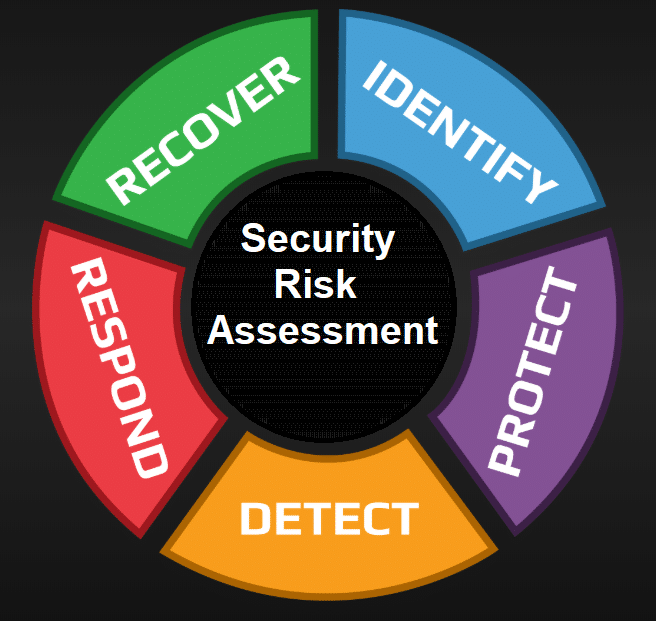
Security risk assessment services are crucial in the cybersecurity industry as they help organizations identify, analyze, and mitigate potential security risks to their systems, networks, and data. Here are some opportunities for providing security risk assessment services within the industry:
Conducting Vulnerability Assessments: As a security risk assessment service provider, DISC can conduct vulnerability assessments to identify potential vulnerabilities in an organization’s systems, networks, and applications. You can then provide recommendations to mitigate these vulnerabilities and enhance the organization’s overall security posture.
Performing Penetration Testing: Penetration testing involves simulating a real-world attack on an organization’s systems and networks to identify weaknesses and vulnerabilities. As a security risk assessment service provider, DISC can perform penetration testing to identify potential security gaps and provide recommendations to improve security.
Risk Management: DISC can help organizations identify and manage risks associated with their information technology systems, data, and operations. This includes assessing potential threats, analyzing the impact of these threats, and developing plans to mitigate them.
Compliance Assessment: DISC can help organizations comply with regulatory requirements by assessing their compliance with industry standards such as ISO 27001, HIPAA, or NIST-CSF. DISC can then provide recommendations to ensure that the organization remains compliant with these standards.
Cloud Security Assessments: As more organizations move their operations to the cloud, there is a growing need for security risk assessment services to assess the security risks associated with cloud-based systems and applications. As a service provider, DISC can assess cloud security risks and provide recommendations to ensure the security of the organization’s cloud-based operations.
Security Audit Services: DISC can provide security audit services to assess the overall security posture of an organization’s systems, networks, and applications. This includes reviewing security policies, processes, and procedures and providing recommendations to improve security.
By providing these services, DISC can help organizations identify potential security risks and develop plans to mitigate them, thereby enhancing their overall security posture.
We’d love to hear from you! If you have any questions, comments, or feedback, please don’t hesitate to contact us. Our team is here to help and we’re always looking for ways to improve our services. You can reach us by email (info@deurainfosec.com), or through our website’s contact form
Contact DISC InfoSec if you need further assistance in your ISO 27001 2022 transition Plan
Compliance services are emerging as one of the hottest areas of cybersecurity. While compliance used to be mainly the province of large enterprises, times have changed, and it is now a day-to-day concern for a growing number of small and medium businesses.
Even when these organizations are not regulated, SMEs often aim to follow compliance and/or security frameworks either for their own risk mitigation or in order to comply with the standards required by their customers. The driver is often their customers’ supply chain concerns and requirements. As large businesses adopt cybersecurity and compliance frameworks and agree to certain standards, they impose similar demands on their suppliers.
This is a major opportunity for virtual CISO (vCISO) providers assuming they can broaden their offerings to encompass compliance. vCISO service providers perform a vital role in building a comprehensive cybersecurity program for their SME customers. They ensure that organizations put basic security measures in place to reduce the risk of a cyberattack and adequate safeguards to protect sensitive information. As such, those delivering vCISO services are well-positioned to expand their services into compliance. Some have already extended their service portfolio by adding compliance-related services, adding value to their customers.
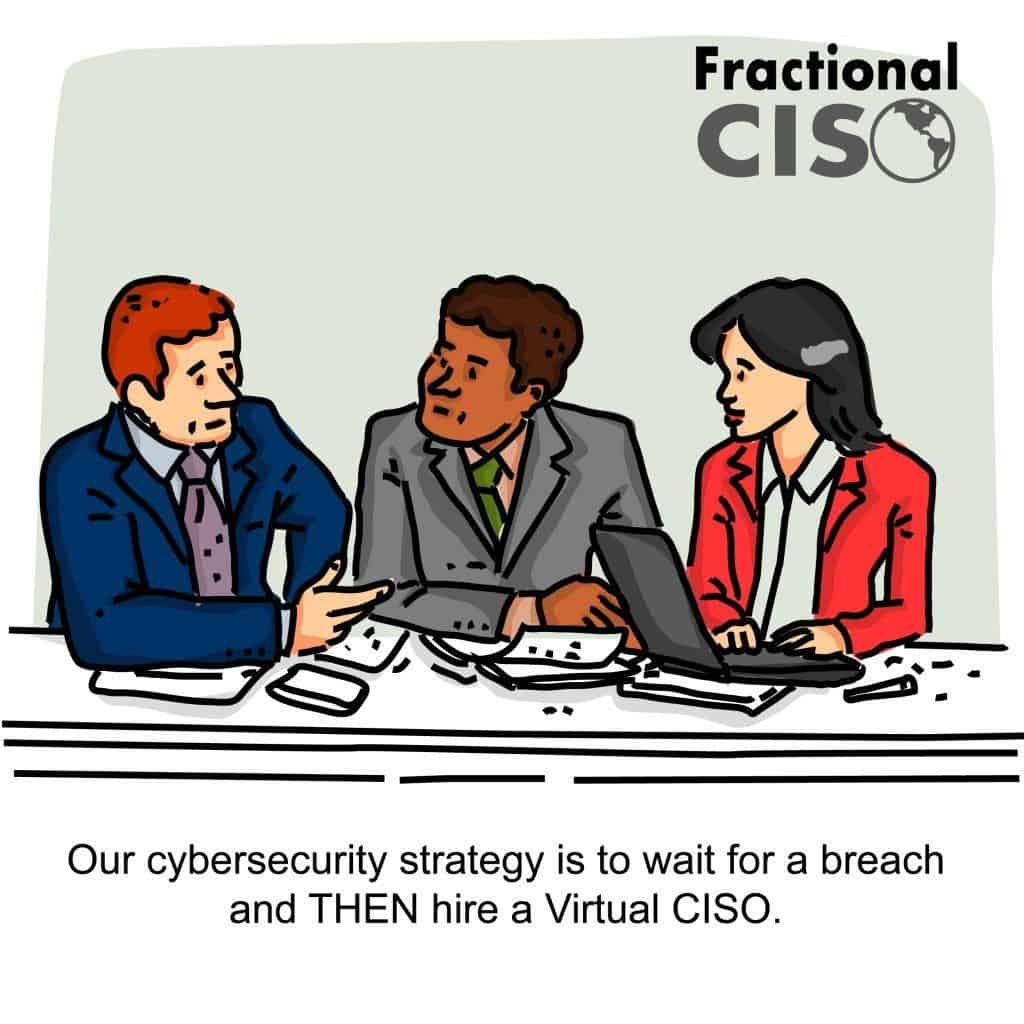
While this should be a natural and easy transition, many vCISO service providers struggle to make this move. Adding compliance and audit readiness services may be overwhelming – it requires a specific skill set and may be time-consuming.
Fortunately, vCISO platforms are emerging that integrate the compliance function and automate much of the work allowing vCISO service providers to easily add compliance services to their offering with no extra burden or cost.
A poor, permanent hire can be a very expensive error, whereas a mis-hire on a virtual CISO can be rapidly corrected.
The cybersecurity challenges that companies are facing today are vast, multidimensional, and rapidly changing. Exacerbating the issue is the relentless evolution of threat actors and their ability to outmaneuver security controls effortlessly.
As technology races forward, companies without a full-time CISO are struggling to keep pace. For many, finding, attracting, retaining, and affording the level of skills and experience needed is out of reach or simply unrealistic. Enter the virtual CISO (vCISO). These on-demand experts provide security insights to companies on an ongoing basis and help ensure that security teams have the resources they need to be successful.
How a vCISO Works Typically, an engagement with a vCISO is long lasting, but in a fractional delivery model. This is very different from a project-oriented approach that requires a massive investment and results in a stack of deliverables for the internal team to implement and maintain. A vCISO not only helps to form the approach, define the action plan, and set the road map but, importantly, stays engaged throughout the implementation and well into the ongoing management phases.
The best vCISO engagements are long-term contracts, such as 12 to 24 months. Typically, there’s an upfront effort where the vCISO is more engaged in the first few months to establish an understanding, develop a road map, and create a rhythm with the team. Then, their support drops into a regular pace which can range from two to three days per week or five to ten days per month.
What to Expect From a vCISO When bringing a vCISO on board, it’s important that person has three key attributes: broad and extensive experience in addressing cybersecurity challenges across many industries; business acumen and the ability to rapidly absorb complex business models and strategies; and knowledge of technology solutions and dynamics that can be explored to meet specific organizational needs.
The first thing a vCISO will focus on is prioritization, beginning with understanding a company’s risks. They will then organize actions that provide the greatest positive influence on mitigating these risks while ensuring sustainability in the program. The goal is to establish a security approach that addresses the greatest risks to the business in a way that has staying power and can provide inherent value to additional downstream controls.
Having extensive experience in the technical space, a vCISO can take into consideration the full spectrum of options — those existing within the business environment, established products and services in the marketplace, and new solutions entering the market. Just within that context, a vCISO can collaborate with the technical team to take advantage of existing solutions and identify enhancements that can further capabilities in a cost-efficient manner.
The Value of a vCISO One of the most common findings is that companies often have a large portfolio of cybersecurity technology, but very little is fully deployed. Additionally, most tech teams are not leveraging all of the capabilities, much less integrating with other systems to get greater value. Virtual CISOs help companies save money by exploiting existing technical investments that dramatically improve security. And, since the improvement is focused on existing tools, the transition for the IT and security staff is virtually eliminated due to established familiarity with the environment.
Another essential value point of a vCISO is access to an informed and well-balanced view on risk and compliance. While cybersecurity is dominated by technical moving parts, the reality is the board, executive leadership, and management team needs to incorporate cyber-risks and related liabilities into the overall scope of risk across the business at an executive level. In this sense, leadership has a vast array of competing challenges, demands, and risks and some can be even more impactful than cybersecurity.
How to Convince the Executive Team A CEO is under a constant barrage of challenges, problems, risks, and opportunities. Cybersecurity needs to be part of that formula. If one of the core values of having a vCISO is getting meaningful cyber-risk insights, then trust and confidence in that person is paramount and needs to be established from the beginning.
Another challenge is the team dynamic — at the heart of being a CEO is their success as a leader. Introducing what is essentially a consultant can be an adjustment for the team. It’s important that the vCISO hire fits the culture and can easily integrate with everyone on the team including the CIO, CTO, CPO, CRO, etc.
The conversation with the CFO will understandably have a heavy financial tone. For companies debating between a full-time CISO or a vCISO, it’s clear a poor permanent hire can be a very expensive error, whereas a mis-hire on a vCISO can be rapidly corrected.
As organizations continue to come to grips with the byproducts of digitization and new security challenges that often seem insurmountable, a vCISO can be an enormous value. Beyond offering an efficient and cost-effective model, they bring many advantages to businesses with fewer risks than a dedicated resource.
Fortunately, there is an alternative way for procuring security expertise: by retaining the services of managed security service providers (MSSPs) and managed detection and response (MDR) providers.
MSSPs usually assist organizations’ IT departments in managing the IT infrastructure and keeping it secure by managing security equipment/systems, monitoring security logs, supervising patch management, and similar preventative security measures. MDR providers concentrate on monitoring network traffic and data, providing threat hunting/detection services and responding to discovered threats – capabilities that are difficult for most SMBs to cultivate in-house due to resource limitations.
For example, when the existence of the Log4Shell vulnerability and a PoC for it was revealed, Milton Security, a California-based MDR provider, has been inundated with concerns and requests from customers, prospects, and the public asking to help make sense of the situation, provide credible and timely updates, and monitor networks for any suspicious activity that might be related to Log4j exploitation.
But they have also been getting a lot of requests for their application security testing, penetration testing, incident response, and even their vCISO service.
Winning the perpetual fight against crime by building a modern Security Operations Center (SOC)
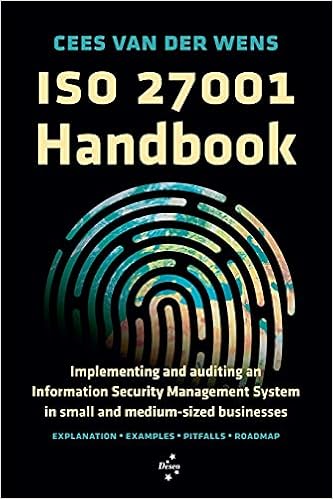
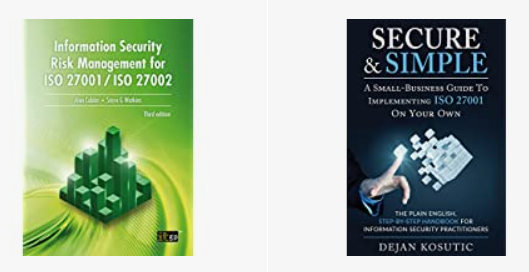
If you want to understand ISO 27001, this handbook is all you need. It not only explains in a clear way what to do, but also the reasons why.
This book helps you to bring the information security of your organization to the right level by using the ISO/IEC 27001 standard.
An organization often provides services or products for years before the decision is taken to obtain an ISO/IEC 27001 certificate. Usually, a lot has already been done in the field of information security, but after reading the requirements of the standard, it seems that something more needs to be done: an ‘information security management system’ must be set up. A what?
This handbook is intended to help small and medium-sized businesses establish, implement, maintain and continually improve an information security management system in accordance with the requirements of the international standard ISO/IEC 27001. At the same time, this handbook is also intended to provide information to auditors who must investigate whether an information security management system meets all requirements and has been effectively implemented.
This handbook assumes that you ultimately want your information security management system to be certified by an accredited certification body. The moment you invite a certification body to perform a certification audit, you must be ready to demonstrate that your management system meets all the requirements of the Standard. In this book, you will find detailed explanations, more than a hundred examples, and sixty-one common pitfalls. It also contains information about the rules of the game and the course of a certification audit.
The role of CISO first emerged as organizations embraced digital revolutions and began relying on new data streams to help inform business decisions. As technology continued to advance and became more complex, so too did threat actors who saw new opportunities to disrupt businesses, by stealing or holding that data hostage for ransom.
As the years have gone by and cyberattacks have become more sophisticated, the role of the CISO has had to advance. The CISO has evolved from being the steward of data to also being a guardian for availability with the emergence of more destructive and disruptive attacks. The CISO also must be highly adaptable and serve as the connective tissue between security, privacy and ultimately, consumer trust.
CISO role is not only limited to understanding infrastructure, technologies, threat landscape, and business applications but to sway people attitude and influence culture with relevant policies, procedures and compliance enforcement to protect an organization.
DISC InfoSec providescost effective Cybersecurity:CISO as a Service (CISOaaS)
A Chief Information Security Officer (CISO) is an executive responsible for cybersecurity. Many medium-sized organizations need a CISO but don’t have the budget for one. A Fractional CISO/ vCISO can deliver the value of a full-time CISO without the same level of investment.
Why do you may need one?
Lower your organizational cybersecurity risk with industry expert leadership.
Supplement your team with InfoSec program, policy and process experts to solve your most pressing needs.
Prioritize your cybersecurity investments with quantitative decision making.
vCISO for your Interim CISO needs.
vCISO program can put you on a path to success with your compliance initiatives, such as a NIST CSF compliance or ISO 27001 certification.
DISC InfoSec also performs technical control assessment such as (Web Application testing) which is imperative to your compliance and ISO 27001 certification process.
In short, as a CISOaaS we do all the legwork so you can focus on running your business.
Our vCISO advisory services are available to support the security/ technology leadership of your organization to implement and improve security and risk posture in today’s heightened security averse landscape.
If you are interested to know more about how can we assist you in your latest InfoSec and compliance project, schedule a short call on our calendar.