DISC InfoSec
#InfoSecTools and #InfoSectraining
Ask DISC an InfoSec & compliance related question
InfoSec and Compliance – With 20 years of blogging experience, DISC InfoSec blog is dedicated to providing trusted insights and practical solutions for professionals and organizations navigating the evolving cybersecurity landscape. From cutting-edge threats to compliance strategies, this blog is your reliable resource for staying informed and secure. Dive into the content, connect with the community, and elevate your InfoSec expertise!
Sep 01 2022
Aug 23 2022
| For a limited time only, ITG is offering bestselling implementation guides free with each toolkit purchase.* All the pre-written policies and procedures you’ll ever need. Written by our expert team of in-house consultants, who have been delivering cyber security and data privacy consultancy for years. Reviewed throughout the year to ensure you’re always working from the most up-to-date documentation, in line with the latest guidance and standard revisions, including free upgrades. Accessible on our Cloud-based platform, DocumentKits, so you can collaborate with team members, viewing, editing and downloading documents any time, anywhere. |
GDPR Toolkit Receive a free copy of EU General Data Protection Regulation (GDPR) – An implementation and compliance guide Code: GDPR-DK-NEW-0822 ISO 27001 Toolkit Receive a free copy of ISO 27001 controls – A guide to implementing and auditing Code: ISO27001-DK-NEW-0822 |
Aug 22 2022
Aug 04 2022
Whether you’re a small organisation with limited resources or an international firm, achieving ISO 27001 certification will be a challenge.
Anyone who has already been through the process will know that. You must assemble a team, conduct a gap analysis and risk assessment, apply security controls, create documentation and perform staff awareness training. And that’s before you even get into internal audits and certification audits.
To make matters more complicated, once you’ve certified to ISO 27001, you must maintain your compliance status and regularly recertify.
Organisations must do this to ensure that they have maintained their compliance practices and accounted for changes in the way they operate.
In this blog, we look at the key issues you must address if you are to maintain ISO 27001 compliance.
An organisation’s ISO 27001 certification lasts three years. The certificate itself will state the date at which certification was issued and when it will expire.
As that day approaches, the organisation must apply for recertification. This can be with the same body that performed the initial audit or it can be with another registrar.
Organisations can ensure that their ISO 27001 practices remain compliant by following these seven steps.
Your ISMS (information security management system) was built to address risks that you identified during the certification process, but the threat landscape is constantly evolving.
As such, you must regularly monitor the risks you face to ensure that your defences are adequate. Part of this process will involve vulnerability scans and other tools that can automatically spot new risks. However, you should also perform more rigorous tests on a regular basis.
To remain compliant, you must complete an ISO 27001 risk assessment at least once a year or whenever you make substantial changes to your organisation.
You can use the results of the assessment to determine whether your controls work as intended and whether additional defences should be adopted.
The policies and processes you wrote during the initial implementation will have been created specifically for the way your organisation operated at that time.
However, your operations will no doubt evolve and you need to ensure that your documentation takes that into account. Have you made a significant change in the way you perform certain actions? Have you undertaken new activities involving sensitive data? Has the physical premises changed in any way?
If the answer to any of those questions is yes, then you must amend your documentation accordingly.
An internal audit provides a comprehensive review of the effectiveness of your ISMS. Alongside a risk assessment and a documentation review, it will help you assess the status of your ISO 27001 compliance.
You will have conducted an internal audit as part of your initial certification process, so you should already have the framework to hand, which you can repeat as part of your compliance maintenance.
Unless you are extremely lucky, the maintenance practices outlined above will reveal weaknesses that you must address if you are to remain compliant.
Remedying those vulnerabilities will take time and resources, which requires you to gain board-level approval. As such, you should keep senior management informed of both your activities maintaining the ISMS and the benefits that it has brought.
For example, your defences might have played a direct role in preventing a data breach or cyber attack. If so, you should have logged and investigated the event, in which case you’ll have proof of the ISMS’s effectiveness that you can bring to the board.
An ISMS isn’t just about preventing security breaches, though. It also helps organisations operate more efficiently and responsibly. You should also provide evidence of this, presenting key performance indicators and interviews with employees and other stakeholders.
In addition to informing the board of the ISMS’s successes, you should also involve them in the review process. This is where you can discuss opportunities for improvement or necessary changes that must be made.
There is no requirement for how often the management review should take place, but it should be at least once a year and ideally every six months.
If there’s a theme to these tips, it’s that your ISMS isn’t set in stone. As such, it should evolve to meet the threats that your organisation faces.
By regularly monitoring the effectiveness of your ISMS, you should be able to perform corrective actions that prevent weaknesses from spilling over into major problems. Some of these changes could be minor tweaks to processes and policies, or the addition of a new tool.
However, some corrective actions will require a significant overhaul of your practices. These should be discussed during the management review process and could involve ongoing adjustments and monitoring.
One of the key principles of ISO 27001 is that effective information security is everybody’s responsibility. Compliance should not be left to the IT department or managers.
Anyone in the organisation that handles sensitive data plays a role in the organisation’s security. They must understand their obligations for protecting sensitive information and appreciate the stakes involved.
You are required to provide staff awareness training as part of your certification process, but those lessons should be repeated on a regular basis. As with your management review, it should be at least annually but ideally twice yearly.
For organisations looking for a quick and effective way to meet their staff awareness training requirements, IT Governance is here to help.

ITG Information Security & ISO 27001 Staff Awareness E-Learning Course contains guidance on everything you need to know about the international standard for information security.
With this 45-minute training course, you can enable your employees to demonstrate their competence in information security and ISO 27001 with digital badges.
The package comes with an annual licence, making it quick and easy to refresh employees’ knowledge on a regular basis.
#InfoSecTools and #InfoSectraining
Ask DISC an InfoSec & compliance related question
Aug 02 2022

#InfoSecTools and #InfoSectraining
Ask DISC an InfoSec & compliance related question
Jul 21 2022

Build your ISO 27001 knowledge and win new business with Advisera’s free ISO 27001 online courses. And you can be sure that you chose the right learning partner, since all Advisera’s courses are now accredited by ASIC, the internationally respected assurance body for online learning providers worldwide.
The courses’ structure is simple:
You can choose the course based on your specific needs:
The online courses are suitable both for beginners and experienced professionals.
Learn at your preferred speed from any location at any time.
Jun 20 2022

If you have planned an ISO 27001 implementation, but you are unsure of whether you should go with the 2013 revision or wait for the 2022 revision to be published, we have a solution for you.
Buy the ISO 27001:2022 toolkit now, and receive the 2013 revision toolkit for free! Then you’ll have time to go over your implementation plans and decide if you should start with the project right now, or postpone it until later. With this bundle, you are covered for whatever option you choose.
#InfoSecTools and #InfoSectraining
Jun 14 2022
May 29 2022
Advisera Assistant – a fast and efficient tool that determines what ISO tools you need in less than 30 seconds. Try it now:

Apr 05 2022
ISO 27701 specifies the requirements for establishing, implementing, maintaining, and continually improving a PIMS (privacy information management system).
Compliance with ISO 27701 shows customers and stakeholders that your organization takes privacy legislation seriously. ISO 27701 serves as an extension to ISO 27001. Organizations that have implemented ISO 27001 will be able to incorporate the controls and requirements of ISO 27701 to extend their existing data security practices to achieve complete coverage of data security and privacy management.
ITG Certified ISO 27701 PIMS Lead Implementer Training Course covers the key steps involved in implementing and maintaining an ISO 27701-compliant PIMS.

If you are already an ISO 27701 expert, have you considered developing your career as an auditor? ITG Certified ISO 27701 PIMS Lead Auditor Training Course teaches you how to extend an ISO 27001 audit program and conduct a PIMS audit against ISO 27701.

Enhance your privacy management with ISO 27701
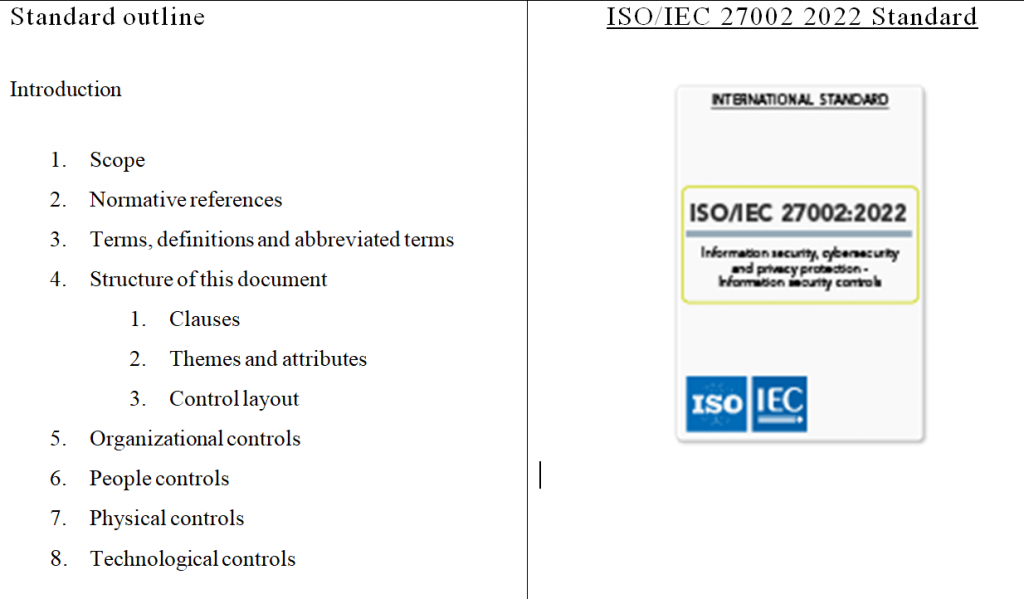
ISO/IEC 27701 2019 Standard and Toolkit
Feb 15 2022
| Certified ISO 27001 ISMS Lead Auditor Training Course |

ISO 27001 Lead Auditor is the qualification of choice for ISO 27001 professionals, recognized by employers worldwide.
Implementing and maintaining compliance with the Standard requires comprehensive knowledge of ISO 27001.
ITG Certified ISO 27001 ISMS Lead Auditor Training Course gives participants a solid understanding of the requirements of an ISO 27001 audit and the knowledge to ensure conformity to the Standard.
If you are already a qualified ISO 27001 auditor, enhance your career by taking ITG Certified ISO 27701 PIMS Lead Auditor Training Course, which will teach you how to conduct audits against ISO 27701, in line with international data protection regimes.
Enhance your privacy management with ISO 27701
ISO/IEC 27701 2019 Standard and Toolkit
ISO 27701 Standard

Jan 13 2022
| ISO 27001 certification requires organizations to prove their compliance with the Standard with appropriate documentation, which can run to thousands of pages for more complex businesses. But with the ISO 27001 Cybersecurity Toolkit, you have all the direction and tools at hand to streamline your project. |
![]() |
| ISO 27001 Cybersecurity Toolkit Accelerate your ISO 27001 cybersecurity project and benefit from ready-to-use policies and procedures. The toolkit includes: A complete set of mandatory and supporting documentation templates Helpful project tools to ensure complete coverage of the Standard Guidance documents and direction from expert ISO 27001 practitioners |
Dec 28 2021
| Now that the festive frenzies have almost finished and you still have a few quiet days to spend at home, this is a great time to invest in your education. Enhance your knowledge of ISO 27001 with our wide range of books. Available in a variety of formats, including audiobook, softcover, Kindle and ePub, they cover everything you need to know about ISO 27001 and how to implement it. You can also focus on gaining an ISO 27001 qualification and top up your CPD/CPE points with our self-paced training courses. Until January 3, you can get 10% off self-paced training courses by using the promo code XMASTRAIN at checkout*. |
![]() ISO 27001 controls – A guide to implementing and auditing |
| ISO 27001 controls – A guide to implementing and auditing Ideal for information security managers, auditors, consultants and organizations preparing for ISO 27001 certification, this book will help readers understand the requirements of an ISMS (information security management system) based on ISO 27001. Similarly, for anyone involved in internal or external audits, the book includes the definitive requirements that auditors must address when certifying organizations to ISO 27001 Buy now |
![]() Nine Steps to Success – An ISO 27001 Implementation Overview, North American edition |
| Get to grips with the requirements of the ISO 27001 Standard and discover how to make your ISO 27001 implementation project a success with this must-have guide from international ISO 27001 expert Alan Calder. The ideal resource for anyone tackling ISO 27001 implementation for the first time, it details the key steps of an ISO 27001 project from inception to certification and explains each element of the ISO 27001 project in simple, non-technical language. Buy now |
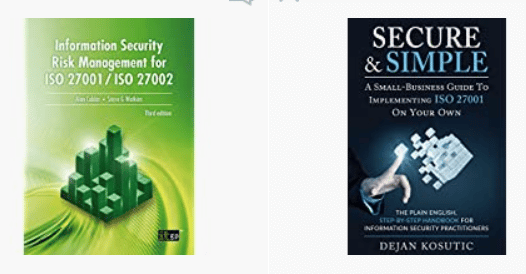
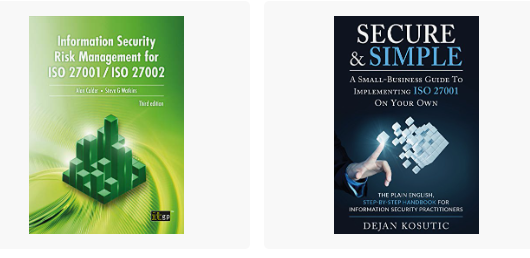
![]() Information Security Risk Management for ISO 27001/ISO 27002 |
| Information Security Risk Management for ISO 27001/ISO 27002Ideal for risk managers, information security managers, lead implementers, compliance managers and consultants, as well as providing useful background material for auditors, this book will enable readers to develop an ISO 27001-compliant risk assessment framework and deliver real, bottom-line business benefits. Buy now |
Nov 12 2021

If you want to understand ISO 27001, this handbook is all you need. It not only explains in a clear way what to do, but also the reasons why.
This book helps you to bring the information security of your organization to the right level by using the ISO/IEC 27001 standard.
An organization often provides services or products for years before the decision is taken to obtain an ISO/IEC 27001 certificate. Usually, a lot has already been done in the field of information security, but after reading the requirements of the standard, it seems that something more needs to be done: an ‘information security management system’ must be set up. A what?
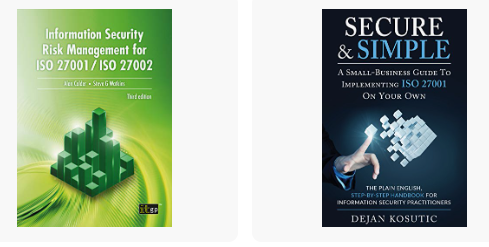
This handbook is intended to help small and medium-sized businesses establish, implement, maintain and continually improve an information security management system in accordance with the requirements of the international standard ISO/IEC 27001. At the same time, this handbook is also intended to provide information to auditors who must investigate whether an information security management system meets all requirements and has been effectively implemented.
This handbook assumes that you ultimately want your information security management system to be certified by an accredited certification body. The moment you invite a certification body to perform a certification audit, you must be ready to demonstrate that your management system meets all the requirements of the Standard. In this book, you will find detailed explanations, more than a hundred examples, and sixty-one common pitfalls. It also contains information about the rules of the game and the course of a certification audit.

Aug 26 2021
There are numerous ways of approaching the implementation of an ISMS. The most common method to follow is a ‘Plan Do Check Act’ process.
ISO 27001 is the international security standard that details the requirements of an ISMS.
ISO 27001, along with the best-practice guidelines contained in ISO 27002, serve as two excellent guides to get you started with implementing an ISMS.
A certified ISMS, independently audited by an approved certification body, can serve as the necessary reassurance to customers and potential clients that the organization has taken the steps required to protect their information assets from a range of identified risks.
The strength of an ISMS is based on the robustness of the information security risk assessment, which is key to any implementation.
The ability to recognize the full range of risks that the organization and its data may face in the foreseeable future is a precursor to implementing the necessary mitigating measures (known as ‘controls’).
ISO 27001 provides a list of recommended controls that can serve as a checklist to assess whether you have taken into consideration all the controls necessary for legislative, business, contractual, or regulatory purposes.
ISO 27001 Risk Assessment and Gap Assessment

Aug 03 2021

Anyone with an interest in information security will have encountered ISO 27001, the international standard that describes best practice for an ISMS (information security management system).
However, you might not be as familiar with ISO 27002. It’s a supplementary standard that provides advice on how to implement the security controls listed in Annex A of ISO 27001.
Although ISO 27001 is the more well-known standard – and the one that organisations certify to – neither can be considered in isolation. This blog explains why that’s the case, helping you understand how each standard works and the differences between them.
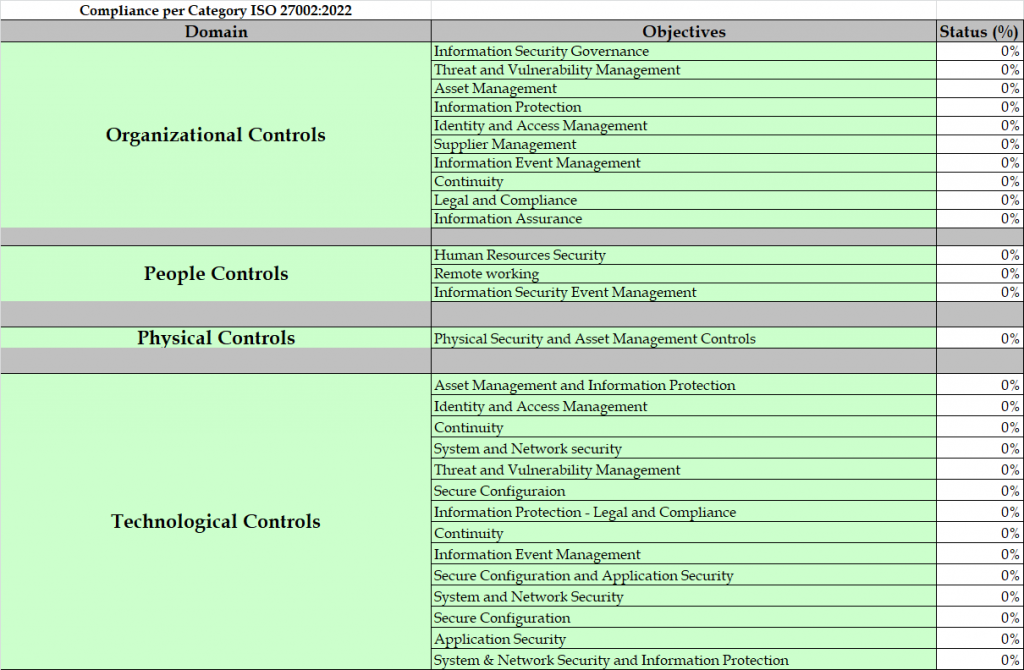
ISO 27001 is the central framework of the ISO 27000 series, which is a series of documents relating to various parts of information security management.
The Standard contains the implementation requirements for an ISMS. These are essentially an overview of everything you must do achieve compliance.
This is particularly useful at the start of your project, or if you’re looking for general advice but can’t commit to a full-scale implementation project.
To meet these requirements, organisations must:
ISO 27002 is a supplementary standard that focuses on the information security controls that organisations might choose to implement.
These controls are listed in Annex A of ISO 27001, which is what you’ll often see information security experts refer to when discussing information security controls. However, whereas Annex A simply outlines each control in one or two sentences, ISO 27002 dedicates an average of one page per control.
This is because the Standard explains how each control works, what its objective is, and how you can implement it.
There are three main differences between ISO 27001 and ISO 27001:
If ISO 27001 went into as much detail as ISO 27002, it would be unnecessarily long and complicated.
Instead, it provides an outline of each aspect of an ISMS, with specific advice being found in additional standards. ISO 27002 is only one of these. For example, ISO 27003 covers ISMS implementation guidance and ISO 27004 covers the monitoring, measurement, analysis and evaluation of the ISMS.
You can certify to ISO 27001 but not to ISO 27002. That’s because ISO 27001 is a management standard that provides a full list of compliance requirements, whereas supplementary standards such as ISO 27002 address one specific aspect of an ISMS.
A key thing to consider when implementing an ISMS is that not all information security controls will apply to your organisation.
ISO 27001 makes that clear, specifying that organisations conduct a risk assessment to identify and prioritise information security threats. ISO 27002 doesn’t mention this, so if you were to pick up the Standard by itself, it would be practically impossible to figure out which controls you should adopt.
ISO 27001 and ISO 27002 have different objectives and will be helpful in different circumstances.
If you’re starting out with the Standard or are planning your ISMS implementation framework, then ISO 27001 is ideal. You should refer to ISO 27002 once you’ve identified the controls that you’ll be implementing to learn more about how each one works.
You can find out more about how to implement a best-practice ISMS by enrolling on our ISO27001 Certified ISMS Foundation Training Course.
This one-day course provides a comprehensive introduction to the key elements required to comply with ISO 27001. You’ll learn from expert information security consultants and have the chance to review case studies and participate in group discussions and practical exercises.
Developed by the team that led the world’s first successful ISO 27001 implementation project, this one-day course provides a comprehensive introduction to Standard.
You’ll learn from expert information security consultants, as they explain:
Source: ISO 27001 vs. ISO 27002
Previous blog posts on ISO27k
Pentests are required for ISO 27001 or SOC2 audits
With ISO27001 how you should choose the controls needed to manage the risks
The importance of the Statement of Applicability in ISO 27001 – with template
Steps to implement ISMS (ISO 27001)
How FAIR & ISO 27001 Work Together
ISO 27001 Handbook: Implementing and auditing an Information Security Management System in small and medium-sized businesses

Jul 14 2021
Apr 13 2021

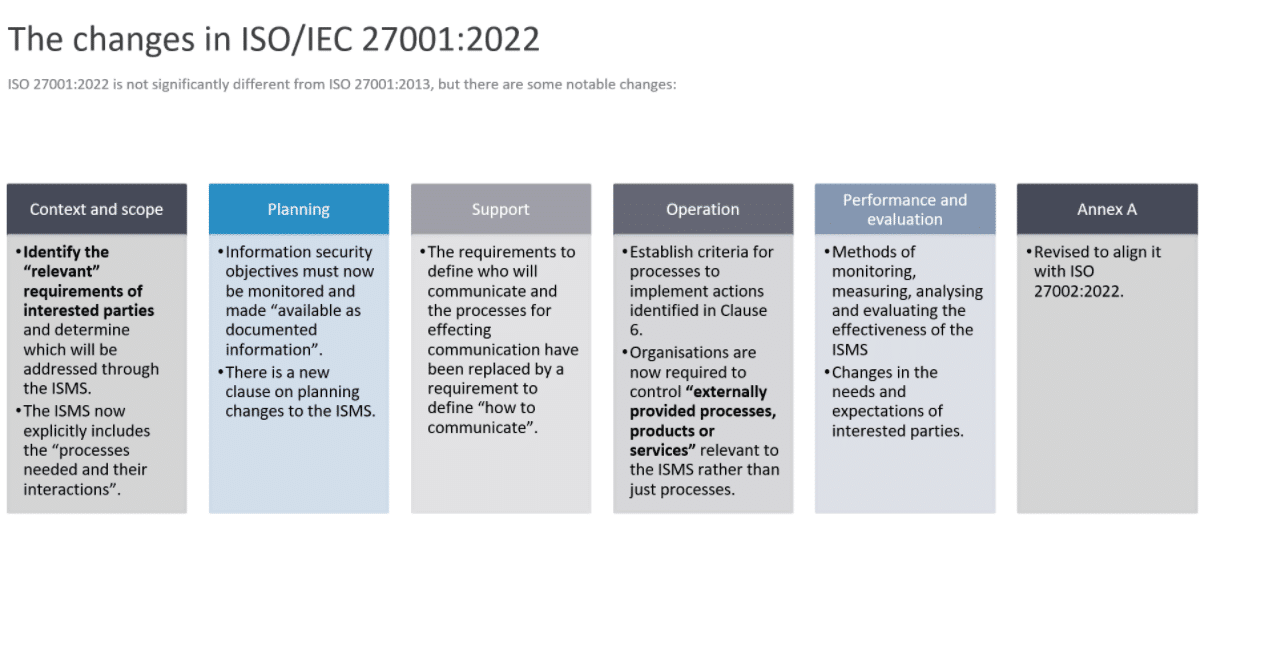
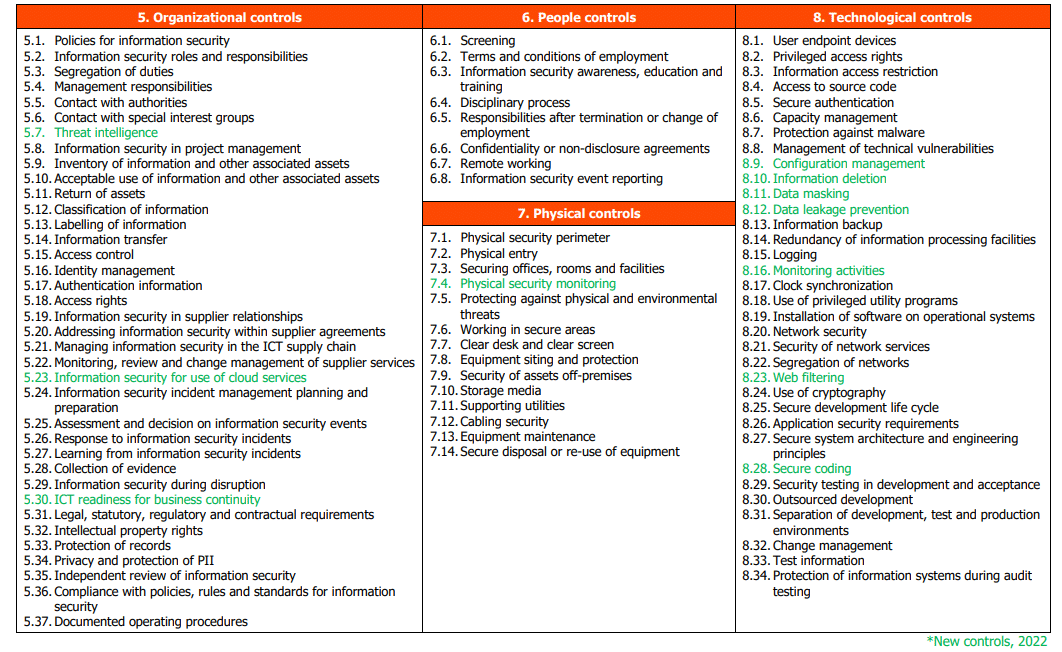
ISO is shaking up the familiar structure of the ISO 27001/27002 control framework after over 20 years of stability.
Originally published as British Standard BS 7799 Part 1 and 2 in the late 1990s, adopted as the ISO 17799 standard in 2000, and then renumbered as ISO 27001/27002, the name has changed a few times but the structure of the controls has remained intact until now.
Historically ISO has resisted major changes given that so many organizations globally have adopted ISO 27001/27002 for their security policies, security programs and certifications, and considering that numerous countries have adopted or incorporated them into their own national standards.
Publication of the final standard is expected to occur in the next year.
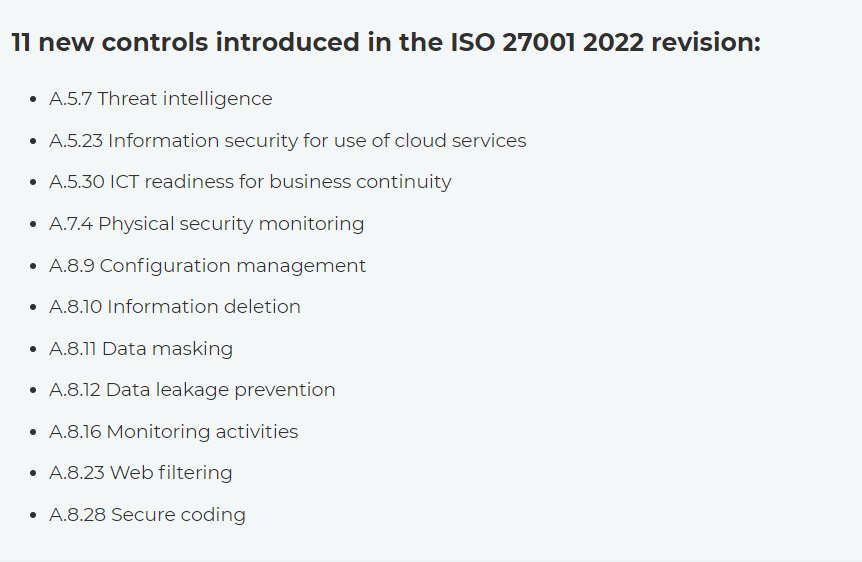
What is changing with the update to ISO 27002?

Apr 13 2021
As required by ISO27001 the risks identified in the risk assessment need to be ones that if they happened would result in the loss of Confidentiality Integrity and/or Availability (CIA) of information in the scope of the ISMS. As also required by ISO27001 those controls that are necessary to modify each risk need to be determined. Each risk gets a list of one or more controls.
This article gives some advice about how to choose/determine the controls for each risk and how control sets (e.g. Annex A, ISO27017, ISO27018, NIST CSF, CSA) can be used to help with this and as a quality check on the risk assessment.
A good question!
“Needed to manage the risk”. Yes, I know that this just rephrases the word “necessary”….
In many cases this is a simple (or perhaps tricky!) matter of judgment but each control should be checked if it is necessary by asking questions like these:
![Secure & Simple – A Small-Business Guide to Implementing ISO 27001 On Your Own: The Plain English, Step-by-Step Handbook for Information Security Practitioners by [Dejan Kosutic]](https://m.media-amazon.com/images/I/51BN2rT3+yL.jpg)
Mar 27 2021
Chloe Biscoe 23rd March 2021
Documentation is a crucial part of any ISO 27001 implementation project, and one of the most important documents you need to complete is the SoA (Statement of Applicability).
In this blog, we explain what an SoA is, why it’s important and how to produce one.
An SoA summarises your organisation’s position on each of the 114 information security controls outlined in Annex A of ISO 27001.
Clause 6.1.3 of the Standard states an SoA must:
Every control should have its own entry, and in cases where the control has been selected, the SoA should link to relevant documentation about its implementation.
Organisations are only required to implement controls that are appropriate to the risks they face. They should determine which controls apply to them by conducting an ISO 27001 gap analysis and risk assessment.
These processes help organisations identify the risks they face, which they can match to the relevant control.
Annex A provides a useful outline of each control. Still, you’ll probably need something more in-depth when it comes to the implementation process. That’s where ISO 27002 comes in. It’s a supplementary standard in the ISO 27000 series, providing a detailed overview of information security controls.
ISO 27002 provides detailed information on each control, explaining how each one works and providing advice on how to implement it.
You’ll therefore benefit from having copies of both standards when creating your SoA.
The SoA is a useful document for everyday operational use because it provides comprehensive coverage of your organisation’s information security measures.
You can refer to it to understand how and why your organisation is tackling certain risks and accepting others.
This is especially important when ensuring continual improvement within your organisation. You can assess whether the controls you’ve implemented are working as intended and assess whether other controls might be more suitable.
Likewise, you can review why you chose to accept risks and determine whether the threat landscape has increased significantly enough to warrant a change.
An SoA also has significant regulatory consequences. If you are investigated for a data breach, you can use the document to demonstrate that your defences were the result of an ISO 27001-compliant risk assessment.
Completing the SoA can seem like a daunting task, but there are a few things you can do to simplify the process.
For a start, you should consider delegating each part of the process to the relevant person. You can ask someone in the HR department to provide information regarding the way they process personal data, and do the same for IT, marketing and so on.
Breaking it down this way saves time – as you aren’t relying on one person or a small team to understand every part of your organisation. It also makes it easier to understand specific issues that your business faces.
Another way to simplify the SoA is by consulting ISO 27002. This is a supplementary standard that focuses on the information security controls that organisations might choose to implement.
These controls are listed in Annex A of ISO 27001, but whereas that document simply outlines each control in one or two sentences, ISO 27002 dedicates an average of one page per control.
Finally, you should consider pooling together the documents you’ve created as part of your ISO 27001 implementation project – namely, the inventory of information assets, the risk assessment, the risk treatment plan.
Each of these documents provides a partial picture of your information security practices, but when you consider them altogether, you get a much clearer picture, which you can use to inform your SoA.

Those looking for help creating their SoA should take a look at our ISO 27001 Toolkit.
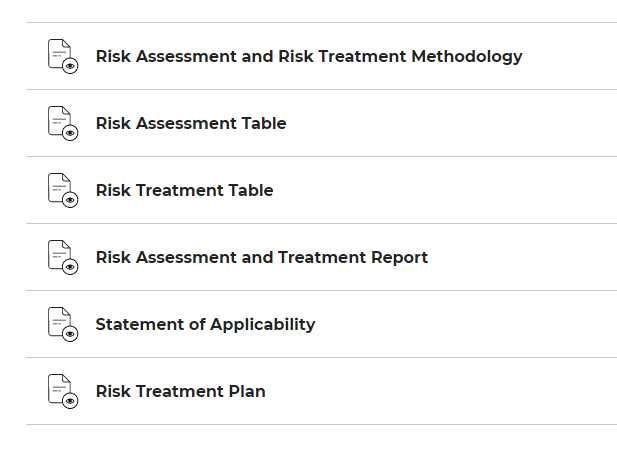
The toolkit includes: