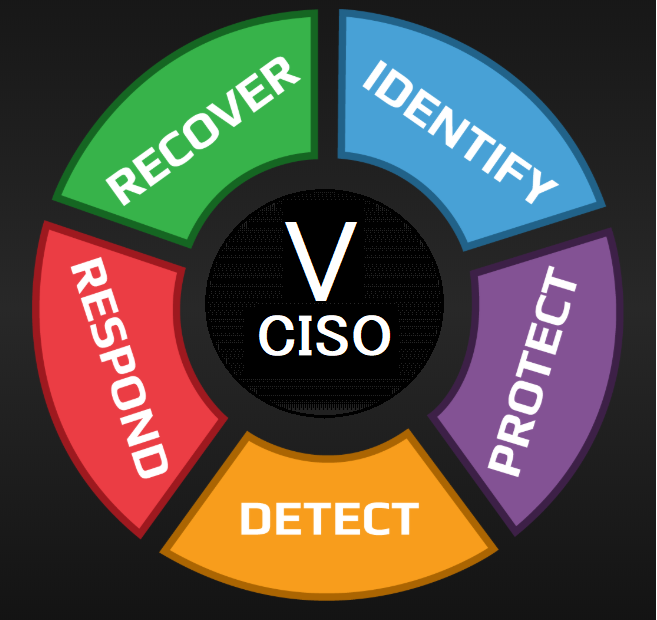
For security controls to be effective, apply the pillars of information security
— Principle of least privilege
— Separation of duties
— Economy of mechanisim
— Complete mediation
— Open design
Information Security: Principles and Practice
InfoSec and Compliance – With 20 years of blogging experience, DISC InfoSec blog is dedicated to providing trusted insights and practical solutions for professionals and organizations navigating the evolving cybersecurity landscape. From cutting-edge threats to compliance strategies, this blog is your reliable resource for staying informed and secure. Dive into the content, connect with the community, and elevate your InfoSec expertise!

Mar 10 2012
For security controls to be effective, apply the pillars of information security
— Principle of least privilege
— Separation of duties
— Economy of mechanisim
— Complete mediation
— Open design
Information Security: Principles and Practice
Feb 21 2012
A summary of the challenges facing today’s IT project manager
Discussions on project management forums highlight many of the challenges facing a project manager during the course of a project. Unclear requirements, scope creep and undefined roles are well-trodden issues that can derail a project. Other challenges are less obvious, often more subtle, but equally destructive.
Facing up to the challenges
This book offers a focused and concise summary of 50 challenges facing today’s IT project manager. The authors draw on years of practical experience (rather than classroom theory) to outline these challenges and offer useful tips and advice on how to deal with them.
Challenge and response
Readers of this book will be better equipped to respond to key project management challenges, including
• Building the team – getting the right resources, matching skills/knowledge, defining roles and responsibilities.
• Project scope – clarifying assumptions, avoiding ambiguity, getting the time/cost estimates right.
• Politics – communicating with management and stakeholders, dealing with conflict, handling interference and micro-managing.
• Risk awareness – identifying inside/outside influences, recognising inbound and outbound dependencies.
• Time management – using the right planning tools, balancing work versus meetings.
• Failure – handling the blame game, protecting the team, rescuing the project.
This book condenses into a handy summary much of the information and advice that can be found in project management related books and discussion forums. It is an ideal reference for anyone involved in IT project management, from professional service organisations (PSO) and project management offices (PMO), through to active project managers and studying graduates.
Buy this book and deliver your next project on time, on budget and to specification!
About the authors
Premanand Doraiswamy has over 14 years’ experience working in IT project management with Fortune 500 companies in various industries and is the author of IT Project Management – 30 Steps to Success, also published by IT Governance.
Premi Shiv is a quality assurance specialist with 7 years’ experience in IT processes and management solutions. With an optimistic approach and organisational skills, she has carved a niche in quality assurance.
Sep 01 2011
information security eBooks download sites
Strategic-Information-Security
The-New-School-of-Information-Security
Insider’s Guide to Security Clearances
Information Security Risk Analysis by Thomas R. Peltier
Information Security Risk Analysis, 2 Ed. by Thomas R. Peltier
Information Security Risk Analysis By Tom Peltier shows you how to use cost-effective risk analysis techniques to identify and quantify the threats–both accidental and purposeful–that your organization faces. The book steps you through the qualitative risk analysis process using techniques such as PARA (Practical Application of Risk Analysis) and FRAP (Facilitated Risk Analysis Process) to:
Evaluate tangible and intangible risks
Use the qualitative risk analysis process
Identify elements that make up a strong Business Impact Analysis
Conduct risk analysis with confidence
Jul 07 2011
RSA Conference 2011 Keynote – Securing the Enterprise in a Changing World – Bill Veghte
An applications transformation has begun, creating both challenges and opportunities: with users (consumers) demanding everything as a service, anywhere, how can enterprises secure critical corporate infrastructure assets and information? Building security into applications, assessing risk– even before coding begins, and applying quality and operational management using ITIL concepts to the practice of security are key.
Jun 29 2011
“Security measures that just force the bad guys to change tactics and targets are a waste of money,” said Bruce Schneier, “It would be better to put that money into investigations and intelligence.”
The security boss of Amsterdam’s Schiphol Airport is calling for an end to endless investment in new technology to improve airline security.
Marijn Ornstein said: “If you look at all the recent terrorist incidents, the bombs were detected because of human intelligence not because of screening … If even a fraction of what is spent on screening was invested in the intelligence services we would take a real step toward making air travel safer and more pleasant.”
“TSA Is NOT Security It’s A JOKE!” Issac Yeffet
http://www.youtube.com/watch?v=s7pICJ0i6Jc
Jun 28 2011
InfraGard is a FBI partner site – which is a public-private partnership devoted to sharing information about threats to US physical and Internet infrastructure.
Discussion of two important principles of information security:
Separation of Duties and the concept of least privilege and the Impact on System Administration.
Principles of Information Security
Jun 12 2011

By JAMES GLANZ and JOHN MARKOFF
The Obama administration is leading a global effort to deploy “shadow” Internet and mobile phone systems that dissidents can use to undermine repressive governments that seek to silence them by censoring or shutting down telecommunications networks.
The effort includes secretive projects to create independent cellphone networks inside foreign countries, as well as one operation out of a spy novel in a fifth-floor shop on L Street in Washington, where a group of young entrepreneurs who look as if they could be in a garage band are fitting deceptively innocent-looking hardware into a prototype “Internet in a suitcase.”
Financed with a $2 million State Department grant, the suitcase could be secreted across a border and quickly set up to allow wireless communication over a wide area with a link to the global Internet.
The American effort, revealed in dozens of interviews, planning documents and classified diplomatic cables obtained by The New York Times, ranges in scale, cost and sophistication.
Some projects involve technology that the United States is developing; others pull together tools that have already been created by hackers in a so-called liberation-technology movement sweeping the globe.
The State Department, for example, is financing the creation of stealth wireless networks that would enable activists to communicate outside the reach of governments in countries like Iran, Syria and Libya, according to participants in the projects.
In one of the most ambitious efforts, United States officials say, the State Department and Pentagon have spent at least $50 million to create an independent cellphone network in Afghanistan using towers on protected military bases inside the country. It is intended to offset the Taliban’s ability to shut down the official Afghan services, seemingly at will.
The effort has picked up momentum since the government of President Hosni Mubarak shut down the Egyptian Internet in the last days of his rule. In recent days, the Syrian government also temporarily disabled much of that country’s Internet, which had helped protesters mobilize.
The Obama administration’s initiative is in one sense a new front in a longstanding diplomatic push to defend free speech and nurture democracy. For decades, the United States has sent radio broadcasts into autocratic countries through Voice of America and other means. More recently, Washington has supported the development of software that preserves the anonymity of users in places like China, and training for citizens who want to pass information along the government-owned Internet without getting caught.
But the latest initiative depends on creating entirely separate pathways for communication. It has brought together an improbable alliance of diplomats and military engineers, young programmers and dissidents from at least a dozen countries, many of whom variously describe the new approach as more audacious and clever and, yes, cooler.
Sometimes the State Department is simply taking advantage of enterprising dissidents who have found ways to get around government censorship. American diplomats are meeting with operatives who have been burying Chinese cellphones in the hills near the border with North Korea, where they can be dug up and used to make furtive calls, according to interviews and the diplomatic cables.
The new initiatives have found a champion in Secretary of State Hillary Rodham Clinton, whose department is spearheading the American effort. “We see more and more people around the globe using the Internet, mobile phones and other technologies to make their voices heard as they protest against injustice and seek to realize their aspirations,” Mrs. Clinton said in an e-mail response to a query on the topic. “There is a historic opportunity to effect positive change, change America supports,” she said. “So we’re focused on helping them do that, on helping them talk to each other, to their communities, to their governments and to the world.”
For remaining article on U.S. Underwrites Internet Detour Around Censors
A version of this article appeared in print on June 12, 2011, on page A1 of the New York edition with the headline: U.S. Underwrites Internet Detour Around Censors..
May 24 2011

CMS Security Handbook: The Comprehensive Guide for WordPress, Joomla, Drupal, and Plone
Open Source Software certainly does have the potential to be more secure than its closed source counterpart. But make no mistake, simply being open source is no guarantee of security.
Learn how to secure Web sites built on open source CMSs (Content Management Systems)
Web sites built on Joomla!, WordPress, Drupal, or Plone face some unique security threats. If you’re responsible for one of them, this comprehensive security guide, the first of its kind, offers detailed guidance to help you prevent attacks, develop secure CMS-site operations, and restore your site if an attack does occur. You’ll learn a strong, foundational approach to CMS operations and security from an expert in the field.
• More and more Web sites are being built on open source CMSs, making them a popular target, thus making you vulnerable to new forms of attack
• This is the first comprehensive guide focused on securing the most common CMS platforms: Joomla!, WordPress, Drupal, and Plone
• Provides the tools for integrating the Web site into business operations, building a security protocol, and developing a disaster recovery plan
• Covers hosting, installation security issues, hardening servers against attack, establishing a contingency plan, patching processes, log review, hack recovery, wireless considerations, and infosec policy
CMS Security Handbook is an essential reference for anyone responsible for a Web site built on an open source CMS.
May 19 2011

Employee security awareness, firewalls, data leakage protection, and collaboration are all key components of a healthy information security ecosystem, according to a panel at the MIT Sloan CIO Symposium held Wednesday.
The moderator, Owen McCusker of Sonalysts, asked the panel to describe what companies can do to create a healthy information security ecosystem.
Michael Daly, director of IT security services at Raytheon, said that his company has developed information security guidelines that include employee security awareness training, firewalls and data segregation, and “command and control blocking” that focuses on outbound traffic.
“There are always going to be vulnerabilities on your systems that are unpatched. There is nothing you are going to be able to do about it. So you ask yourself, ‘If I’m attacked, what am I going to do next?’ Watch for the traffic that is leaving your network. That is a key point”, Daly told conferences attendees.
Defense in depth is a key information security strategy, noted David Saul, chief scientist at State Street, a Boston-based financial institution. “You need to use all of the tools you have available”, he stressed.
“You need to have firewalls, you need to have data leakage protection….You need to have a combination of technologies…as well as employee awareness”, he said.
Saul also recommended information security collaboration across industries. He noted that there is an organization in New England called the Advanced Cyber Security Center that brings together information security experts from the financial, defense, health care, energy, and high-tech industries to share best practices and threat information and expertise.
Kurt Hakenson, chief technologist for Northrop Grumman’s Electronic Systems, added that collaboration should be not only across industries but also among industry peers.
“Security folks tend to be protective about information about breaches. There is always a balance about sharing that information with your industry peers. You will find that for the operational folks that are involved in the day-to-day work, relationships are critical. Being able to get on the phone is so important, because the adversaries who are targeting you are using the same techniques. They are socially aware”, Hakenson said.
Daly noted that Raytheon and Northrop Grumman are involved with the US government in Project Stonewall, a defense industry group that shares threat information in real time.
Allen Allison, chief security officer at cloud service provider NaviSite, said that providers also share information about security threats. “We undertake analysis of what traffic should look like, does look like, or can look like compared to the norm. We share that with all of our partners”, Allison noted.
This article is featured in:
Compliance and Policy • Data Loss • Internet and Network Security • Security Training and Education
There are always going to be threats and vulnerabilities in your infrastructure that are unaddressed, there is no such thing as an absolute security. Watch for the traffic leaving your company to monitor an incident and have a comprehensive incident handling program to manage an incident.
It’s all about priortizing risks and mitigating them in cost effective way.
May 16 2011

by Consumer Reports
Banking from a public computer
Keylogging malware that can capture account numbers, passwords, and other vital data is a risk that has been linked to use of open Wi-Fi connections and public computers such as those in hotel lobbies.
Using unfamiliar ATMs
Thieves have been known to put out-of-order signs on a legitimate ATM and set up nearby freestanding bogus ones that “skim” data from your card. ATMs located inside banks within view of surveillance cameras aren’t risk-free, but they pose more challenges for crooks installing skimming equipment.
Two other important pieces of advice related to ATMs: Separate your PIN code from your ATM or debit card. Almost 1 in 10 people carry their code with the card, says ACI Worldwide, a payment systems company. And when typing your PIN into an ATM or card reader, use your free hand to shield the keypad from the view of hidden cameras or anyone nearby.
Dropping your guard at gas pumps
Card-skimming at gas stations is likely to increase during summer months, especially in vacation areas, so use cash or credit cards at the pumps if possible. If you must use a debit card, select the option to have the purchase processed as a credit-card transaction rather than typing in your PIN.
Ignoring your credit or debit cards
Monitor your accounts at least weekly to spot and report unauthorized transactions as soon as possible. Use services offered by your bank or card issuer that can help protect you, such as an e-mail or text alert if a transaction occurs for more than a certain amount.
Abandoning your receipts
Many transactions, such as filling up your tank and making a debit-card withdrawal, leave a paper trail. Don’t toss away receipts in the ATM lobby or leave them at the gas pump. Hold on to them until your transactions have cleared your bank account to make sure the totals match. Then shred the receipts if they have any information a thief might use.
Trashing your bills
Thieves harvest sensitive data from account statements and other financial documents placed in the trash and use them for ID theft, says Inspector Michael Romano of the U.S. Postal Inspection Service. Shred them first.
1. Watch out for imposters
The fastest-growing scam in the past year has been imposter fraud, according to the latest annual report on consumer complaints from the Federal Trade Commission. Thieves claiming to be someone they’re not (such as a friend or relative stranded overseas in need of cash to get home, a bill collector, or an employee of a government agency) use Facebook messages, e-mail, phone calls, and text messages to persuade people to send money or divulge personal information such as Social Security or account numbers. Last year, 60,000 people reported that they were affected by this form of fraud, up from just five cases reported in 2008.
2. Learn to parallel park
Car thieves are becoming more professional. They’re stealing new cars by putting them on a flatbed tow truck, our expert says. Parallel parking hinders access to the front and rear of your car, making it difficult to tow. Also, be careful about whom you bump into at the grocery store, especially if your car has keyless entry and a push-button ignition. A thief with an antenna and a small kit of electronics can transmit your key’s code to another thief standing near your car, allowing him to open it, start it, and drive it away.
3. Hide the stuff in your car
Don’t leave electronics and other valuables visible inside your car. GPS units are less of a magnet these days; cell phones and laptops more so. Holiday gifts are a big target, so don’t stack them up in the backseat. Is there a worse move? Yes. Leaving your stuff in the back of a pickup truck.
4. Change your PIN
Make it a habit to routinely change the secret code for your debit card or ATM card. That gives you better protection against any thieves or skimming schemes.
5. Keep a financial inventory
Once a year take out all of the cards in your wallet, make a list of the account numbers and contact information you’ll need to cancel cards if they become lost or stolen, and hide it in a safe place, says Mark Rasch, a former Department of Justice computer-crime prosecutor who is a director at CSC, a business technology firm based in Falls Church, Va.
6. Change your Wi-Fi password
If you have a home wireless network, choose the highest-security option. That way your Web-browsing and financial transactions will be more protected. Go a step further and create your own administrative password rather than rely on a default password supplied by the router.
8 ways to protect your Facebook privacy
May 09 2011

Today’s economy is about protecting the information assets which is essential to existence of an organization. After a major incident or a security breach it is unthinkable to say it is not going to affect your bottom line. Most of the organization has to comply with various standards and regulations and a breach in a state of non compliance will be business limiting factor, and the organization may be liable to contractual penalties and loss of potential business from current and future customers.
So Information Security Management System defined as a protection of information from various threats and risks on daily basis. Therefore mitigating information security risks are becoming a critical corporate discipline alongside with other business functions such as HR, IT or accounting.
Mitigating business risks not only improve the business efficiency but also maximize the return on investment and business opportunities.
It is a mistake to assume that information security is solely a technical problem left for IT to solve. These titles below are a non-technical discussion of security information management. It offers a framework that will help business leaders better understand and mitigate risks, prioritize resources and spending, and realize the benefits of security information management.
Apr 29 2011

Image via Wikipedia
In movies the hacker tries to hack into a Department of Defense computer by speed-typing passwords. We all know reality is nothing like this and we see it as the joke that it is.
But business management don’t see the inherent risks as affecting business bottom line but a hindrance to another new project; they don’t see the research, the probing, the social engineering, risk impact, risk probability and overall risk as security professional do. It is our job as a security professional to show the risks in business terms to management so they can make a reasonable decision based on business risk threshold rather than emphasis on hinderance to bottom line. Remember the return on investment in security is part of doing business, it’s about reducing risks on ongoing basis and keep the company profitable on long term basis (keep making the money).
Emphasize management’s accountability for the risk and most importantly for residual risks (remaining risk after implementing a control). Put the onus on the Information Asset Owner who should be at the management level not a technical staff (may delegate responsibilities in small companies). Make clear recommendations but let them make the key decisions AND make them accountable if things may go wrong.
So yes, management is more impressed by flash and glamour, Because they know and good at analyzing the business risks but take the security risks as business inhibiting to their new project and may like to accept the risks rather than taking the time to address the issue which should be a corrective control to mitigate the existing risk to acceptable level.
What do you think – Do the Hollywood movies add any value in a sense to emphasis the information security risks as a threat to business folks or they just fictional stories which make business people ignore the information security threat?
Which one is your favorite hacker movie….

Mar 04 2011
Net Neutrality at Stake – Check it out how it matters to your privacy and security
Jan 09 2011
CISSP: Certified Information Systems Security Professional Study Guide
CISSP: Certified Information Systems Security Professional Study Guide
Totally updated for 2011, here’s the ultimate study guide for the CISSP exam
Considered the most desired certification for IT security professionals, the Certified Information Systems Security Professional designation is also a career-booster. This comprehensive study guide covers every aspect of the 2011 exam and the latest revision of the CISSP body of knowledge. It offers advice on how to pass each section of the exam and features expanded coverage of biometrics, auditing and accountability, software security testing, and other key topics. Included is a CD with two full-length, 250-question sample exams to test your progress.
CISSP certification identifies the ultimate IT security professional; this complete study guide is fully updated to cover all the objectives of the 2011 CISSP exam
Provides in-depth knowledge of access control, application development security, business continuity and disaster recovery planning, cryptography, Information Security governance and risk management, operations security, physical (environmental) security, security architecture and design, and telecommunications and network security
Also covers legal and regulatory investigation and compliance
Includes two practice exams and challenging review questions on the CD
Professionals seeking the CISSP certification will boost their chances of success with CISSP: Certified Information Systems Security Professional Study Guide, 5th Edition.
From the Back Cover
Comprehensive preparation for the 2011 CISSP certification exam
With pages of in-depth coverage, real-world scenarios, and detailed explanations of all domains from the Common Body of Knowledge (CBK) for the CISSP certification exam, this complete guide not only thoroughly prepares you for the exam, it also helps you develop practical skills for success on the job. Key topics include access control, business continuity, cryptography, biometrics, and more. You’ll also find helpful advice on how to pass each section of the exam. Inside, find:
Full coverage of all exam objectives in a systematic approach, so you can be confident you’re getting the instruction you need for the exam
Real-world scenarios that put what you’ve learned in the context of actual job roles
Challenging review questions in each chapter to prepare you for exam day
Exam Essentials, a key feature in each chapter that identifies critical areas you must become proficient in before taking the exam
A handy tear card that maps every official exam objective to the corresponding chapter in the book, so you can track your exam prep objective by objective
Look inside for complete coverage of all exam objectives.
SYBEX TEST ENGINE
Test your knowledge with advanced testing software. Includes all chapter review questions and two full-length, 250-question practice exams.
ELECTRONIC FLASHCARDS
Reinforce your understanding with electronic flashcards.
Also on CD, you’ll find the entire book in searchable and printable PDF. Study anywhere, any time, and approach the exam with confidence.
Includes Real-World Scenarios, Written Labs, and
Leading-Edge Exam Prep Software Featuring:
Custom Test Engine
Two Full-Length, 250-Question Practice Exams
Electronic Flashcards
Entire Book in PDF
Jan 06 2011
Security 2020: Reduce Security Risks This Decade
Identify real security risks and skip the hype. After years of focusing on IT security, we find that hackers are as active and effective as ever. This book gives application developers, networking and security professionals, those that create standards, and CIOs a straightforward look at the reality of today’s IT security and a sobering forecast of what to expect in the next decade. It debunks the media hype and unnecessary concerns while focusing on the knowledge you need to combat and prioritize the actual risks of today and beyond.
IT security needs are constantly evolving; this guide examines what history has taught us and predicts future concerns
Points out the differences between artificial concerns and solutions and the very real threats to new technology, with startling real-world scenarios
Provides knowledge needed to cope with emerging dangers and offers opinions and input from more than 20 noteworthy CIOs and business executives
Gives you insight to not only what these industry experts believe, but also what over 20 of their peers believe and predict as well
With a foreword by security expert Bruce Schneier, Security 2020: Reduce Security Risks This Decade supplies a roadmap to real IT security for the coming decade and beyond.
Order this book for advice on how to reduce IT security risks on emerging threats to your business in coming years. Security 2020: Reduce Security Risks This Decade
From the Back Cover
Learn what’s real, what’s hype, and what you can do about it
For decades, security experts and their IT peers have battled the black hats. Yet the threats are as prolific as ever and more sophisticated. Compliance requirements are evolving rapidly and globalization is creating new technology pressures. Risk mitigation is paramount. What lies ahead?
Doug Howard and Kevin Prince draw upon their vast experience of providing security services to many Fortune-ranked companies, as well as small and medium businesses. Along with their panel of security expert contributors, they offer real-world experience that provides a perspective on security past, present, and future. Some risk scenarios may surprise you. Some may embody fears you have already considered. But all will help you make tomorrow’s IT world a little more secure than today’s.
Over 50 industry experts weigh in with their thoughts
Review the history of security breaches
Explore likely future threats, including social networking concerns and doppelganger attacks
Understand the threat to Unified Communication and Collaboration (UCC) technologies
Consider the impact of an attack on the global financial system
Look at the expected evolution of intrusion detection systems, network access control, and related safeguards
Learn to combat the risks inherent in mobile devices and cloud computing
Study 11 chilling and highly possible scenarios that might happen in the future

Dec 30 2010
Order Information Security Law: The Emerging Standard for Corporate Compliance today!
Information Security Law: The Emerging Standard for Corporate Compliance
In today’s business environment, virtually all of a company’s daily transactions and all of its key records are created, used, communicated, and stored in electronic form using networked computer technology. Most business entities are, quite literally, fully dependent upon information technology and an interconnected information infrastructure.
Emerging information security compliance requirements.
While this reliance on technology provides tremendous economic benefits, it also creates significant potential vulnerabilities that can lead to major harm to a company and its various stakeholders. As a result, public policy concerns regarding these risks are driving the enactment of numerous laws and regulations that require businesses to adequately address the security of their own data.
Information Security Law: The Emerging Standard for Corporate Compliance is designed to help companies understand this developing law of information security, the obligations it imposes on them, and the standard for corporate compliance that appears to be developing worldwide. ISO/IEC 27001, the international information security standard, should be read alongside this book.
Emerging global legal framework – and compliance in multiple jurisdictions.
This book takes a high level view of the multitude of security laws and regulations, and summarizes the global legal framework for information security that emerges from them. It is written for companies struggling to comply with several information security laws in multiple jurisdictions, as well as for companies that want to better understand their obligations under a single law. It explains the common approach of most security laws, and seeks to help businesses understand the issues that they need to address to become generally legally compliant.
About the Author
The author, Thomas J. Smedinghoff, is an attorney and partner in a Privacy, Data Security, and Information Law Practice in Chicago. He has been actively involved in developing e-business and information security legal policy, both in the US and globally. He currently serves as a member of the US Delegation to the United Nations Commission on International Trade Law (UNCITRAL) and chairs the International Policy Coordinating Committee of the American Bar Association (ABA) Section of Science & Technology Law.
ORDER YOUR COPY OF THIS INFORMATIVE BOOK ON INFORMATION SECURITY LAW NOW….Information Security Law: The Emerging Standard for Corporate Compliance

Author: Thomas J Smedinghoff
Publisher: IT Governance Publishing
Format: Softcover
ISBN: 9781905356669
Pages:185
Published Date: 7th October 2008
Availability: Immediate
Nov 29 2010
Google Bomb: The Untold Story of the $11.3M Verdict That Changed the Way We Use the Internet [Paperback]
John W. Dozier Jr. (Author), Sue Scheff (Author), Michael Fertik (Author)
Google Bomb (n) or ‘link bomb’: Internet slang for a certain kind of attempt to raise the ranking of a given page in results from a Google search. (Wikipedia)
Nov 22 2010
A guide to effective techniques for business analysis – order your copy now!
This book provides 72 possible techniques for business analysts and applies them within a framework of stages. Some of these stages are Investigate Situation, Define Requirements and Manage Change.
The development of business analysis as a professional discipline has extended the role of the business analyst who now needs the widest possible array of tools. This is where this book will help you succeed. It is packed chock-full of the tools that will allow to succeed where you would have once failed.
The book complements Business Analysis, Second Edition.
Key Features and Benefits
Business Analysis Techniques: 72 Essential Tools for Success details 72 easy-to-use techniques for business analysis. Using these techniques you will find new and more efficient ways of working.
Written by a highly knowledgeable team of authors with years of experience in business analysis, this book shares their experience with you.
Designed to be used as a companion manual to Business Analysis, Second Edition – the official BCS textbook on business analysis.
Authors: James Cadle, Debra Paul and Paul Turner
Publisher: BCS
ISBN 10: 1906124612
ISBN 13: 9781906124236
Pages: 250
Format: Softcover
Published Date: 1 February 2010
Using the right techniques for any task is essential. This guide for business analysts is one that will shed light on the techniques that business analysts need to function effectively and efficiently. Buy today – Business Analysis Techniques: 72 Essential Tools for Success
Aug 23 2010
How a digital copier can become a treasure trove for an identity thief, because they have a hard drive which permanently store all images which have been digitally printed, scanned, faxed, emailed or copied on that printer. Storing images on the hard drive can be a huge threat to the security of an organization and a serious breach to the privacy law when these printers need maintenance, needed to be returned at end of a lease period or simply retired without erasing the data from the hard drive.
Due diligence of erasing the data before an identity thief gets their paws on it is squarely falls on the shoulder of the organization who owns the digital printer.
Below is the video which optimize the risk of digital copier
Jul 22 2010

10 non-negotiables for Internet security covering 10 tips for safe Internet experience either at home or the workplace.
Watch 10 non-negotiables for Internet security video
Essential Computer Security: Everyone’s Guide to Email, Internet, and Wireless Security