How LLM capabilities could rapidly erode the value of traditional cybersecurity models:
The speaker opens by emphasizing the credibility and urgency of the topic, introducing a leading expert working on language model security at Anthropic. The central theme is not theoretical risk, but an immediate and rapidly evolving reality: language models are already capable of performing advanced security tasks that were once limited to elite human researchers.
The core insight is stark—modern LLMs can now autonomously discover and exploit zero-day vulnerabilities in critical software systems. This capability has emerged only within the past few months, marking a sharp inflection point. Previously, such tasks required deep expertise, time, and specialized tooling; now they can be triggered with minimal input and no sophisticated setup.
The simplicity of execution is particularly alarming. By giving a model a basic prompt—essentially asking it to act like a participant in a capture-the-flag (CTF) challenge—researchers observed that it could independently identify serious vulnerabilities. This dramatically lowers the barrier to entry, meaning attackers no longer need advanced skills to launch meaningful cyberattacks.
The speaker highlights that this shift undermines a long-standing equilibrium in cybersecurity. For decades, defenders had a relative advantage due to the effort required to find and exploit vulnerabilities. LLMs disrupt this balance by scaling offensive capabilities, enabling faster and broader exploitation than defenders can realistically match.
A concrete example illustrates this risk: an LLM discovered a critical SQL injection vulnerability in a widely used content management system. More concerning, the model didn’t just identify the flaw—it successfully generated a working exploit capable of extracting sensitive credentials without authentication. This demonstrates a full attack chain, from discovery to exploitation, executed autonomously.
Even more troubling is the model’s ability to handle complex exploitation scenarios. In this case, the vulnerability required a blind SQL injection, which traditionally demands nuanced reasoning and iterative testing. The LLM managed to execute the attack effectively, highlighting that these systems are not just fast—they are increasingly sophisticated.
The second example pushes this even further: the model identified a heap buffer overflow in the Linux kernel, one of the most hardened and scrutinized codebases in existence. This vulnerability required understanding multi-step interactions between clients and server processes—something that typically exceeds the capabilities of automated tools like fuzzers.
What makes this discovery remarkable is not just the vulnerability itself, but the reasoning behind it. The LLM generated a detailed explanation of the exploit, including a step-by-step attack flow. This level of contextual understanding suggests that LLMs are evolving beyond pattern matching into something closer to structured problem-solving.
The rate of progress is another critical factor. Models released just months ago were largely incapable of these tasks, while newer versions can perform them reliably. This rapid improvement follows an exponential trend, meaning today’s cutting-edge capability could become widely accessible within a year, including to low-skilled attackers.
Finally, the speaker warns that the biggest risk lies in the transition period. While long-term solutions like secure programming languages, formal verification, and better system design may eventually favor defenders, the near-term reality is different. During this phase, vulnerabilities will be discovered faster than they can be fixed, creating a dangerous window where attackers gain a significant advantage.
Perspective
This transcript signals a fundamental shift: cybersecurity is moving from a skill-constrained domain to a compute-constrained one. When exploitation becomes automated and scalable, traditional cybersecurity value—manual testing, expertise-driven assessments, and periodic audits—degrades rapidly.
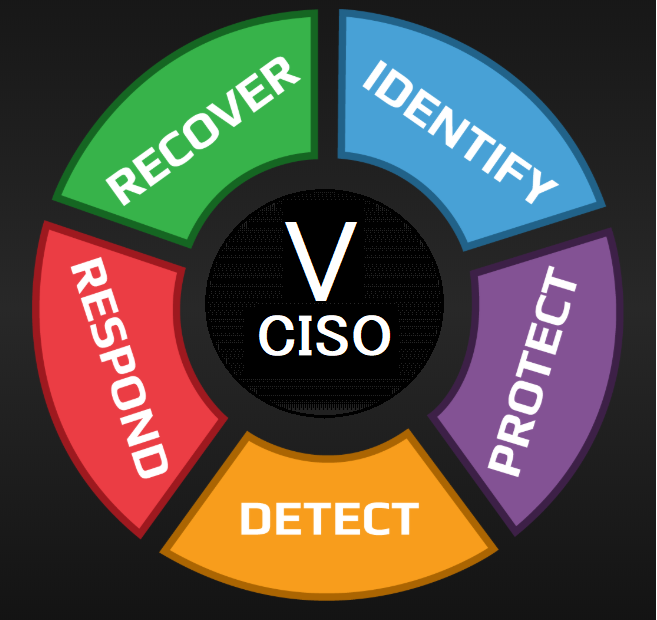
For organizations (especially in GRC and vCISO services), this means the value will shift from finding vulnerabilities to:
- Continuous monitoring and validation
- Runtime detection and response
- Secure-by-design architectures
- AI-aware threat modeling
Example:
A traditional pentest might take weeks and uncover a handful of issues. An LLM-powered attacker could scan thousands of services in parallel and generate working exploits in hours. If defenders still operate on quarterly or annual cycles, they are already outpaced.
Bottom line:
Cybersecurity organizations that rely on scarcity of expertise will lose value. Those that adapt to speed, automation, and AI-native defense models will define the next generation of security.
- The cheapest security control you’ll ever implement is the component you decided not to build
- AI Handoffs: How Uncertainty Propagates—and How to Fix It
- The Security Risks Hiding in AI Agent Memory
- AI Log Retention: Why Every AI Log Doesn’t Deserve the Same Shelf Life
- The AI Agent Harness Is the New Security Boundary