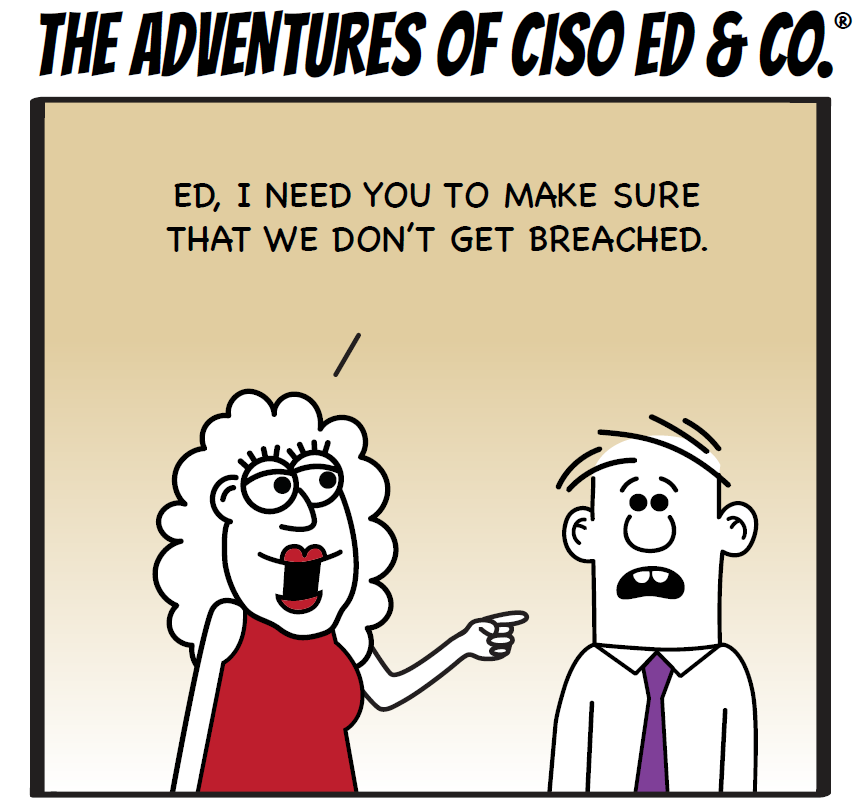
InfoSec and Compliance – With 20 years of blogging experience, DISC InfoSec blog is dedicated to providing trusted insights and practical solutions for professionals and organizations navigating the evolving cybersecurity landscape. From cutting-edge threats to compliance strategies, this blog is your reliable resource for staying informed and secure. Dive into the content, connect with the community, and elevate your InfoSec expertise!
Capitalizing on the urgency companies have to launch new digital businesses, cybersecurity vendors create partnerships to close product gaps quickly. An understanding of how the new alliances can deliver results must be part of every CISO’s purchasing decision process. But partnerships can be something of a slippery slope.
Today, CISOs face the conflicting problem of securing operations while supporting business growth. IT and cybersecurity teams are stretched thin attempting to scale endpoint security for virtual workforces, while securing their customer identities and transactions. CIOs and CISOs are turning to vendors they rely on for immediate help. In turn, cybersecurity vendors’ quick fix is to create as many partnerships as possible to close product gaps and close the upsell or new sale.
What’s driving market demand is the pressure CIOs and CISOs have to deliver results. Companies’ boards of directors are willing to double down on digital business plan investments and accelerate them. According to the 2021 Gartner Board of Directors’ survey, 60% of the boards rely on digital business initiatives to improve operations performance, and 50% want to see technology investments deliver improved cost optimization.
Company boards have a high level of enthusiasm for technology spending in general and cybersecurity especially. As a result, Gartner predicts the combined endpoint security and network access market will be a $111 billion opportunity. For such cybersecurity companies, partnerships are a quick path to lucrative deals and higher profits.
Partnerships alone will not solve the conflicting demands for IT resources to secure a business while driving new business growth. They are not a panacea for the biggest challenges facing IT today. Trusting the wrong partnerships can cost millions of dollars, lose months of productive time, and even cause a new digital venture to fail. Due diligence of nascent cybersecurity partnerships needs to go beyond comparing partners’ financial statements and into the specifics of how multiple technologies are performing in actual, live scenarios today. Ten ways stand out as means to guide decision making.
If you’re building a career in information security the Certified Information Systems Security Professional (CISSP) is the must-have qualification to help you progress. It is a globally recognized standard that demonstrates your competence as an IT professional.
This course will prepare you with the knowledge and skills to complete the CISSP exam, which will get you Certified Information Systems Security Professional status. professional. Covering topics including cloud computing, mobile security, application development security, and risk management, you will gain the knowledge to best manage information security issues back in your organization.
Duration: 5 days
“I would highly recommend the course to a friend, and in fact I already have! I’d also recommend it to a security team within an organization, even if they’re not specifically targeting a CISSP certification as it teaches a broad range of best practices and will help instill a culture of security and best practice in any organization.”
Who should attend?
This training course is intended for professionals who have at least 5 years of recent full-time professional work experience in 2 or more of the 8 domains of the CISSP common body of knowledge (CBK), such as:
Security consultants
Security managers
IT directors/managers
Security auditors
Security architects
Security analysts
Security systems engineers
Chief information security officers
Security directors
Network architects
Please note: A one year experience waiver is available with a 4-year college degree, or regional equivalent, or additional credentials from the (ISC)² approved list, thus requiring four years of direct full-time professional security work experience in 2 or more of the 8 domains of the CISSP CBK.
Don’t have 5 years of experience? – Become an Associate of (ISC)²
The role of CISO first emerged as organizations embraced digital revolutions and began relying on new data streams to help inform business decisions. As technology continued to advance and became more complex, so too did threat actors who saw new opportunities to disrupt businesses, by stealing or holding that data hostage for ransom.
As the years have gone by and cyberattacks have become more sophisticated, the role of the CISO has had to advance. The CISO has evolved from being the steward of data to also being a guardian for availability with the emergence of more destructive and disruptive attacks. The CISO also must be highly adaptable and serve as the connective tissue between security, privacy and ultimately, consumer trust.
ISO is shaking up the familiar structure of the ISO 27001/27002 control framework after over 20 years of stability.
Originally published as British Standard BS 7799 Part 1 and 2 in the late 1990s, adopted as the ISO 17799 standard in 2000, and then renumbered as ISO 27001/27002, the name has changed a few times but the structure of the controls has remained intact until now.
Historically ISO has resisted major changes given that so many organizations globally have adopted ISO 27001/27002 for their security policies, security programs and certifications, and considering that numerous countries have adopted or incorporated them into their own national standards.
Publication of the final standard is expected to occur in the next year.
As required by ISO27001 the risks identified in the risk assessment need to be ones that if they happened would result in the loss of Confidentiality Integrity and/or Availability (CIA) of information in the scope of the ISMS. As also required by ISO27001 those controls that are necessary to modify each risk need to be determined. Each risk gets a list of one or more controls.
This article gives some advice about how to choose/determine the controls for each risk and how control sets (e.g. Annex A, ISO27017, ISO27018, NIST CSF, CSA) can be used to help with this and as a quality check on the risk assessment.
What do we mean by necessary?
A good question!
“Needed to manage the risk”. Yes, I know that this just rephrases the word “necessary”….
In many cases this is a simple (or perhaps tricky!) matter of judgment but each control should be checked if it is necessary by asking questions like these:
what effect this control has on the likelihood or impact of this risk? Only controls that have more than a negligible effect on the likelihood or impact should be designated as “necessary”.
what would happen to this risk if this control is not in place or stops working properly? Your answer should be “the business continues to operate and deliver all its services but we have just increased the likelihood and/or impact of something going wrong that stops us delivering this service and/or gets in the way of meeting our objectives”. If this is not your answer then this control is unlikely to be “necessary” and should not be included.
Here are five signs that a virtual CISO may be right for your organization.
1. You have a lot to protect
Companies produce more data than ever, and keeping track of it all is the first step to securing it. A virtual CISO can identify what data needs to be protected and determine the negative impact that compromised data can have, whether that impact is regulatory, financial or reputational.
2. Your organization is complex
Risk increases with employee count, but there are many additional factors that contribute to an organization’s complexity: the number of departments, offices and geographies; how data is used and shared; the distribution of architecture; and the life cycle of applications, data and the technology stack.
A virtual CISO offers an unbiased, objective view, and can sort out the complexity of a company’s IT architecture, applications and services. They can also determine how plans for the future add complexity, identify and account for the corresponding risk, and recommend security measures that will scale to support future demand.
3. Your attack surface is broad
For many organizations, potential vulnerabilities, especially those that share a great deal of data within the organization, may not be obvious at first glance. Virtual CISOs can identify both internal and external threats, determine their probability and quantify the impact they could have on your organization. And at a more granular level, they can determine if those same threats are applicable to competitors, which can help maintain competitiveness within your market.
4. Your industry is highly regulated
Organizations in regulated industries like healthcare, finance, energy/power and insurance will have data that is more valuable, which could make them a bigger target for bad actors. Exposure is even more of a concern due to potential noncompliance. Virtual CISOs bring a wealth of expertise on regulatory standards. They can implement processes to maintain compliance and offer recommendations based on updates to applicable rules and regulations.
5. Your risk tolerance is low
An organization without a great deal of sensitive data may have a much greater tolerance for risk than a healthcare provider or a bank, but an honest assessment is important in determining how much risk each organization should accept. A virtual CISO can coordinate efforts to examine perceived and actual risk, identify critical vulnerabilities and provide a better picture of risk exposure that can inform future decisions.
Cybersecurity is growing more complex, and organizations of all sizes, especially those in regulated industries, require a proven security specialist who can address the aforementioned challenges and ensure that technology and processes are in place to mitigate security risks.
As Jack Jones, co-founder of RiskLens, tells the story, he started down the road to creating the FAIR™ model for cyber risk quantification because of “two questions and two lame answers.” As CISO at Nationwide insurance, he presented his pitch for cybersecurity investment and was asked:
“How much risk do we have?”
“How much less risk will we have if we spend the millions of dollars you’re asking for?”
To which Jack could only answer “Lots” and “Less.”
“If he had asked me to talk more about the ‘vulnerabilities’ we had or the threats we faced, I could have talked all day,” he recalled in the FAIR book, Measuring and Managing Information Risk.
In that moment, Jack saw the need for a way that cybersecurity teams could communicate risk to senior executives and boards of directors in the language of business, dollars and cents.
Some CISOs are still in the position of Jack pre-quantification – talking all day and delivering lame answers, from the board’s point of view. Here’s a short guide to what they’re not saying – and how RiskLens, the analytics platform built on FAIR, can provide the right answers.
1. I don’t really know what our top risks are
I can ask a group of subject matter experts in the company to vote on a top risks list based on their opinions, but that’s as close as I can get.
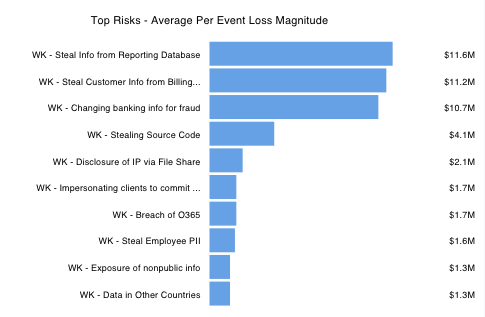
Top Risks is the first report that many new RiskLens users run, and it only takes minutes, using the Rapid Risk Assessment capability of the RiskLens platform. The platform guides you through properly defining a set of risks (say, from your risk register) for quantitative analysis according to the FAIR standard. To speed the process, the platform draws on data from pre-populated loss tables. The resulting analysis quickly stack-ranks the risks for probable size of loss in dollar terms, across several parameters.
2. I can’t give you an ROI on the money you give me to invest in cybersecurity
You see, cybersecurity is different from other programs you’re asked to invest in – it’s constantly changing and never-ending. You never really hit a point of success; you just chip away at the problem.
With Top Risks in hand, RiskLens clients can dig deeper on individual scenarios and run a Detailed Analysis to expose the drivers of risk to see, for instance, what types of threat actors account for the highest frequency of attacks or what classes of assets account for the highest probable losses. Then they can run the Risk Treatment Analysis capability of the platform to evaluate controls for their ROI in risk reduction.
3. I can’t really tell you if things are getting better on cyber risk.
I can show you our progress with compliance checklists and maturity scales, and I hope you’ll assume that’s reducing risk.
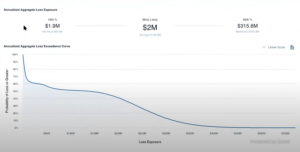
While compliance with NIST CSF, CIS Controls, etc. is good and useful, these frameworks don’t measure performance outcomes in reducing risk – that takes a quantitative approach. The RiskLens platform can aggregate risk scenarios to generate risk assessment reports showing risk across the enterprise or by business unit, in dollar terms – and to show risk exposure over time. It’s easy to update and re-run risk assessments, thanks to the platform’s Data Helpers that store risk data for re-use. Update a Data Helper, and all the related risk scenarios update at the same time – and so do the aggregated risk assessments.
4. I can’t help you set a risk appetite.
I don’t really know how much risk we have and am pretty much operating on the principle that no risk is acceptable.
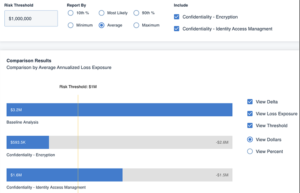
Boards should have a strong sense of their appetite for risk in cyber as in all fields, but qualitative (high-medium-low) cyber risk analysis only supports vague appetite statements that are difficult to follow in practice. On the RiskLens platform, a CISO can input a dollar figure for “risk threshold” as a hypothetical, and run the analyses to rank how the various risk scenarios stack up against that limit, making a risk appetite a practical target.
5. I don’t know how to align cyber risk management with the other forms of risk management we do.
Enterprise risk, operational risk, market risk, financial risk—I’ve heard their board presentations in quantitative terms. But cyber is just different.
Quantification is the answer – reporting on cyber risk in the same financial terms that the rest of enterprise risk management programs employ finally gives the board what it wants to hear on cyber risk management. ISACA, the National Association of Corporate Directors and the COSO ERM framework have all recommended FAIR for board reporting. As an ISACA white paper said,
The more a risk-management measurement resembles the financial statements and income projections that the board typically sees, the easier it is for board members to manage cybersecurity risk…FAIR can enable the economic representation of cybersecurity risk that is sorely missing in the boardroom, but can illuminate cybersecurity exposure.
Infection Monkey is an open source Breach and Attack Simulation tool that lets you test the resilience of private and public cloud environments to post-breach attacks and lateral movement, using a range of RCE exploiters.
Infection Monkey was created by Israeli cybersecurity firm Guardicore to test its own segmentation offering. Developer Mike Salvatore told told The Stack: “Infection Monkey was inspired by Netflix’s Chaos Monkey.
“Chaos Monkey randomly disables production instances to incentivize engineers to design services with reliability and resilience in mind. We felt that the same principles that guided Netflix to create a tool to improve fault tolerance could be applied to network security. Infection Monkey can be run continuously so that security-related shortcomings in a network’s architecture can be quickly identified and remediated.”
The company recently added a Zero Trust assessment, as well as reports based on the MITRE ATT&CK framework.
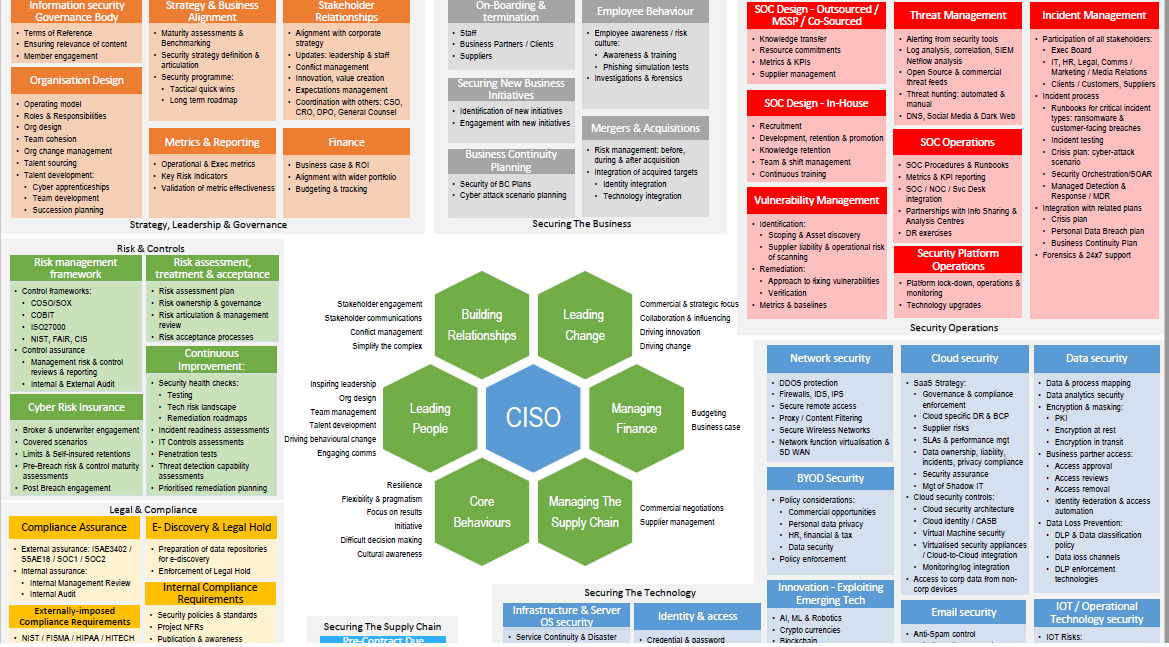
CISO role is not only limited to understanding infrastructure, technologies, threat landscape, and business applications but to sway people attitude and influence culture with relevant policies, procedures and compliance enforcement to protect an organization.
DISC InfoSec providescost effective Cybersecurity:CISO as a Service (CISOaaS)
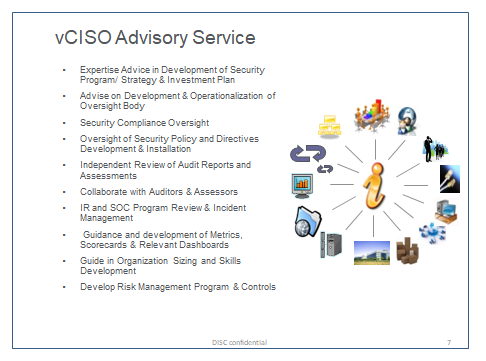
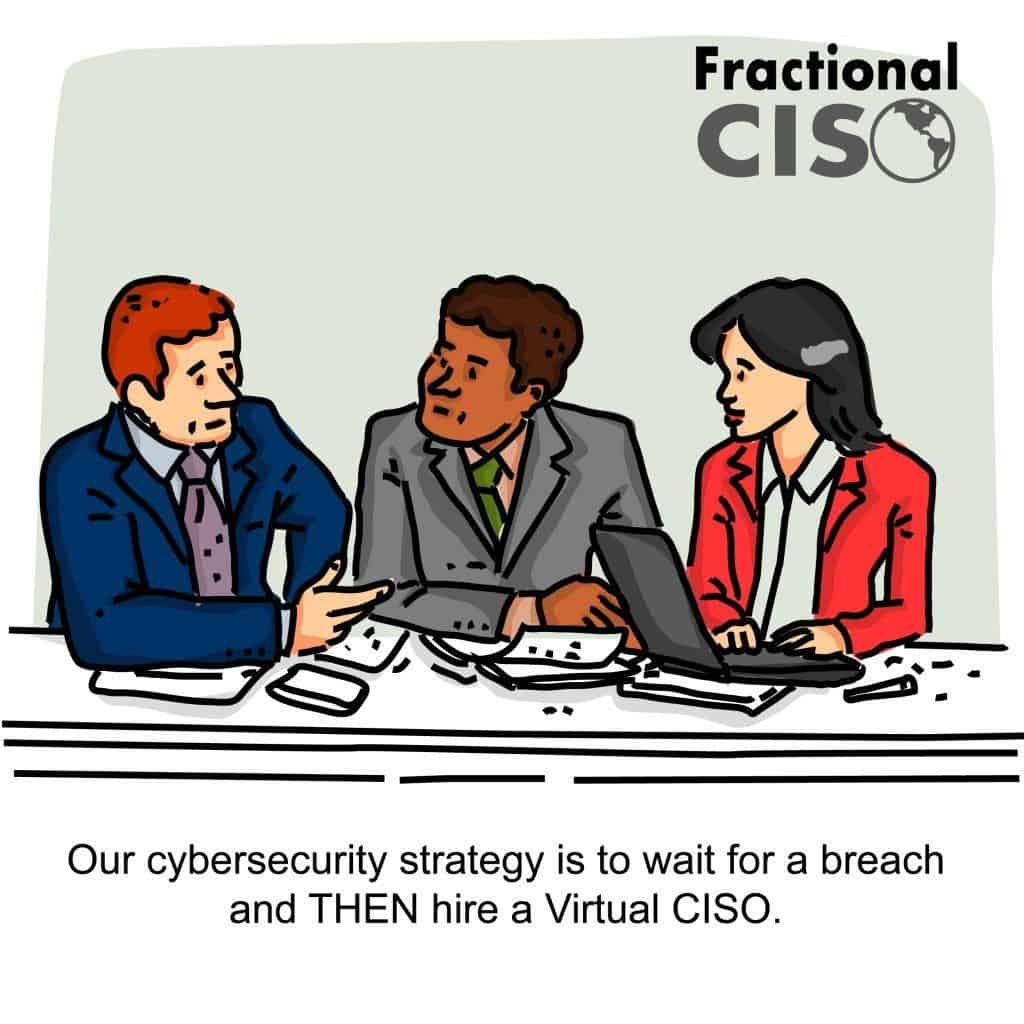
A Chief Information Security Officer (CISO) is an executive responsible for cybersecurity. Many medium-sized organizations need a CISO but don’t have the budget for one. A Fractional CISO/ vCISO can deliver the value of a full-time CISO without the same level of investment.
Why do you may need one?
Lower your organizational cybersecurity risk with industry expert leadership.
Supplement your team with InfoSec program, policy and process experts to solve your most pressing needs.
Prioritize your cybersecurity investments with quantitative decision making.
vCISO for your Interim CISO needs.
vCISO program can put you on a path to success with your compliance initiatives, such as a NIST CSF compliance or ISO 27001 certification.
DISC InfoSec also performs technical control assessment such as (Web Application testing) which is imperative to your compliance and ISO 27001 certification process.
In short, as a CISOaaS we do all the legwork so you can focus on running your business.
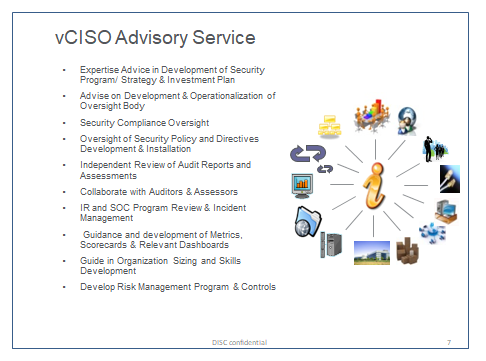
Our vCISO advisory services are available to support the security/ technology leadership of your organization to implement and improve security and risk posture in today’s heightened security averse landscape.
If you are interested to know more about how can we assist you in your latest InfoSec and compliance project, schedule a short call on our calendar.
Twitter Inc had stepped up its search for a chief information security officer in recent weeks, two people familiar with the effort told Reuters, before the breach of high-profile accounts on Wednesday raised alarms about the platform’s security. Twitter said hackers had targeted employees with access to its internal systems and “used this access to take control of many highly-visible (including verified) accounts.”
The second and third rounds of hijacked accounts tweeted out messages telling users to send bitcoin to a given address in order to get more back. Publicly available blockchain records show the apparent scammers received more than $100,000 worth of cryptocurrency.
The U.S. House Intelligence Committee was in touch with Twitter regarding the hack, according to a committee official who did not wish to be named.
What a crazy world we live in – employees working from home, “dirty” personal devices being used to access corporate data, furloughed employees still maintaining corporate IT assets and access – all while the quantity and variety of cyberattacks and fraud is drastically increasing. Corporate security executives have never had a harder set of challenges to deal with.
The collective response to this question is that security executives are most worried about the increase in phishing campaigns and fraud, especially with distracted employees who aren’t as diligent with security hygiene while working from home. As one executive stated, “My greatest concern right now is social engineering resulting from cyberattacks on people wherever they are. High stress means reduced cognitive functions, so attackers may find it easier to do social engineering, which opens the door to everything else.”
Other major concerns include mitigating the impact of an increased attack surface and the need to enhance remote access controls to make certain organizational security levels are met despite a large majority of employees working remotely. For example, one executive further explained that she was most focused on mitigating the impact of this increased attack surface, particularly enhancing remote access controls such that the organization would be secure even if 100% of the employees were now remote. Enhancements to firewall, NAC, DLP and other solutions were required. Vendor risk also was a much greater concern for this executive, with third parties potentially now more vulnerable.
By: Melissa Musser, CPA, CITP, CISA, Risk & Advisory Services Principal, and Darren Hulem, IT and Risk Analyst The COVID-19 crisis, with a new reliance on working from home and an overburdened healthcare system, has opened a new door for cybercriminals. New tactics include malicious emails claiming the recipient was exposed COVID-19, to attacks on…Read more ›
Small- to medium-sized nonprofits and associations are particularly at risk, and many are now employing an outsourced Chief Information Security Officer (CISO), also known as a Virtual CISO (vCISO), as part of their cybersecurity best practices.
vCISO model not only offers flexibility over time as the organization changes, providers are also able to deliver a wide range of specialized expertise depending on the client’s needs.
The vCISO offers a number of advantages to small- and medium-sized organizations and should be part of every nonprofit’s or association’s risk management practices.
What are enterprises seeking in their next CISO – a technologist, a business leader or both? Joyce Brocaglia of Alta Associates shares insights on the key qualities
What kinds of CISOs are being replaced? Brocaglia says that an inability to scale and a tactical rather than strategic orientation toward their role are two reasons companies are looking to replace the leaders of their security teams—or place them underneath a more senior cybersecurity executive. They are looking for professionals with broad leadership skills rather than a “one-trick pony.”
Today’s organizations want the CISO to be intimately involved as a strategic partner in digital transformation initiatives being undertaken. This means that their technical expertise must be broader than just cybersecurity, and they must have an understanding of how technology impacts the business—for the better and for the worse. And candidates must be able to explain the company’s security posture to the board and C-suite in language they understand—and make recommendations that reflect an understanding of strategic risk management.
CISOs who came up through the cybersecurity ranks are sometimes at a disadvantage as the CISO role becomes more prominent—and critical to the business. Professionals in this position will do well to broaden their leadership skills and credentials, sooner rather than later.







![Secure & Simple – A Small-Business Guide to Implementing ISO 27001 On Your Own: The Plain English, Step-by-Step Handbook for Information Security Practitioners by [Dejan Kosutic]](https://m.media-amazon.com/images/I/51BN2rT3+yL.jpg)