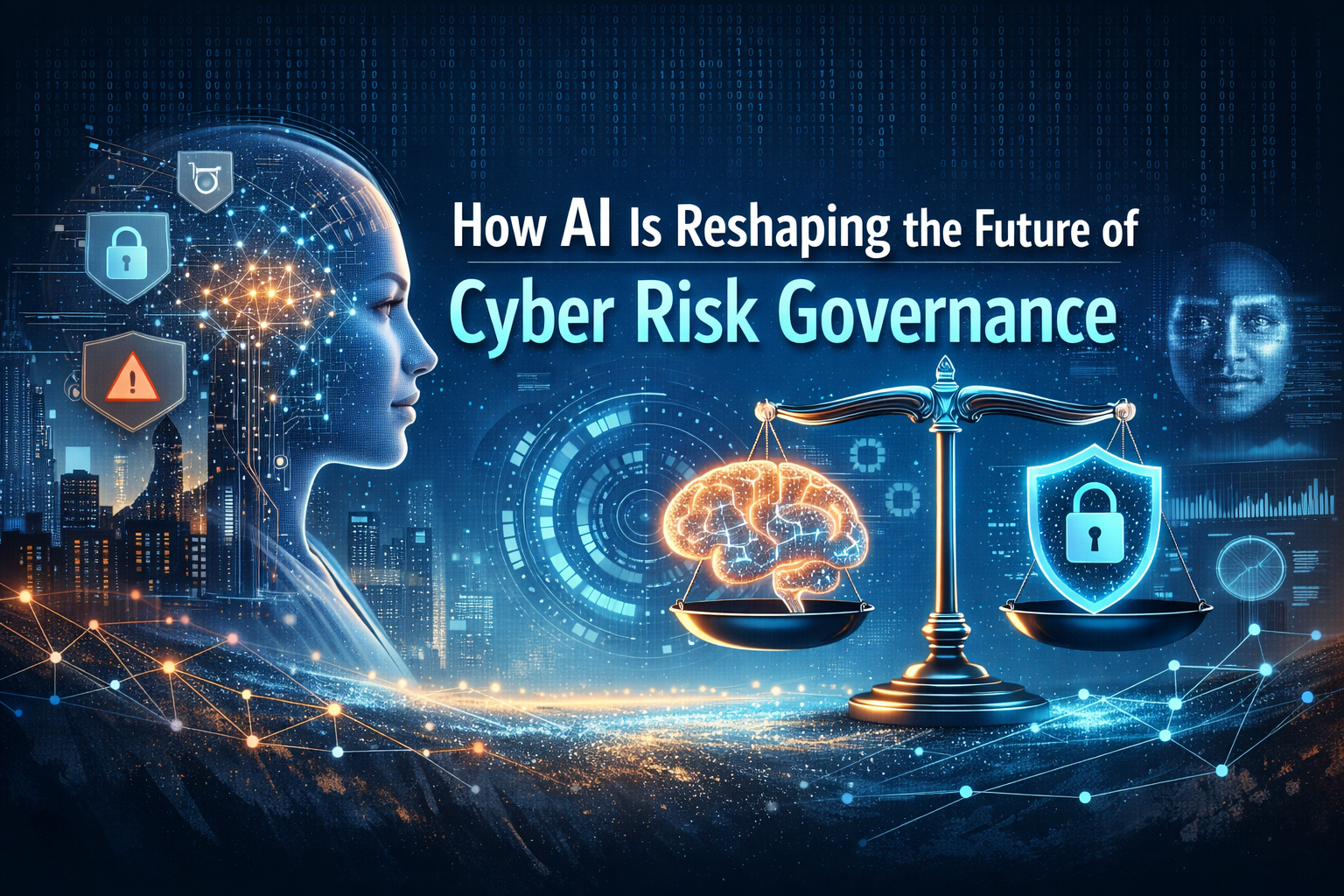
“Balancing the Scales: What AI Teaches Us About the Future of Cyber Risk Governance”
1. The AI Opportunity and Challenge
Artificial intelligence is rapidly transforming how organizations function and innovate, offering immense opportunity while also introducing significant uncertainty. Leaders increasingly face a central question: How can AI risks be governed without stifling innovation? This issue is a recurring theme in boardrooms and risk committees, especially as enterprises prepare for major industry events like the ISACA Conference North America 2026.
2. Rethinking AI Risk Through Established Lenses
Instead of treating AI as an entirely unprecedented threat, the author suggests applying quantitative governance—a disciplined, measurement-focused approach previously used in other domains—to AI. Grounding our understanding of AI risks in familiar frameworks allows organizations to manage them as they would other complex, uncertain risk profiles.
3. Familiar Risk Categories in New Forms
Though AI may seem novel, the harms it creates—like data poisoning, misleading outputs (hallucinations), and deepfakes—map onto traditional operational risk categories defined decades ago, such as fraud, disruptions to business operations, regulatory penalties, and damage to trust and reputation. This connection is important because it suggests existing governance doctrines can still serve us.
4. New Causes, Familiar Consequences
Where AI differs is in why the risks happen. The article mentions a taxonomy of 13 AI-specific triggers—including things like model drift, lack of explainability, or robustness failures—that drive those familiar risk outcomes. By breaking down these root causes, risk leaders can shift from broad fear of AI to measurable scenarios that can be prioritized and governed.
5. Governance Structures Are Lagging
AI is evolving faster than many governance systems can respond, meaning organizations risk falling behind if their oversight practices remain static. But the author argues that this lag isn’t an inevitability. By combining the discipline of operational risk management, rigorous model validation, and quantitative analysis, governance can be scalable and effective for AI systems.
6. Continuity Over Reinvention
A key theme is continuity: AI doesn’t require entirely new governance frameworks but rather an extension of what already exists, adapted to account for AI’s unique behaviors. This reduces the need to reinvent the wheel and gives risk practitioners concrete starting points rooted in established practice.
7. Reinforcing the Role of Governance
Ultimately, the article emphasizes that AI doesn’t diminish the need for strong governance—it amplifies it. Organizations that integrate traditional risk management methods with AI-specific insights can oversee AI responsibly without overly restricting its potential to drive innovation.
My Opinion
This article strikes a sensible balance between AI optimism and risk realism. Too often, AI is treated as either a magical solution that solves every problem or an existential threat requiring entirely new paradigms. Grounding AI risk in established governance frameworks is pragmatic and empowers most organizations to act now rather than wait for perfect AI-specific standards. The suggestion to incorporate quantitative risk approaches is especially useful—if done well, it makes AI oversight measurable and actionable rather than vague.
However, the reality is that AI’s rapid evolution may still outpace some traditional controls, especially in areas like explainability, bias, and autonomous decision-making. So while extending existing governance frameworks is a solid starting point, organizations should also invest in developing deeper AI fluency internally, including cross-functional teams that merge risk, data science, and ethical perspectives.
Source: What AI Teaches Us About the Future of Cyber Risk Governance

InfoSec services | InfoSec books | Follow our blog | DISC llc is listed on The vCISO Directory | ISO 27k Chat bot | Comprehensive vCISO Services | ISMS Services | AIMS Services | Security Risk Assessment Services | Mergers and Acquisition Security
At DISC InfoSec, we help organizations navigate this landscape by aligning AI risk management, governance, security, and compliance into a single, practical roadmap. Whether you are experimenting with AI or deploying it at scale, we help you choose and operationalize the right frameworks to reduce risk and build trust. Learn more at DISC InfoSec.
- MITRE ATT&CK: Turning Blind Spots into Real-World Cyber Defense
- When AI Hacks Faster Than Humans: The Coming Collapse of Traditional Cybersecurity Value
- SOC 2 Isn’t Enough: Moving Beyond Compliance Theater to Real Risk Management
- When AI Becomes the Attack Surface: Lessons from the McKinsey Lilli Incident
- Why Every Company Needs a CISO (or at Least vCISO-Level Leadership)