
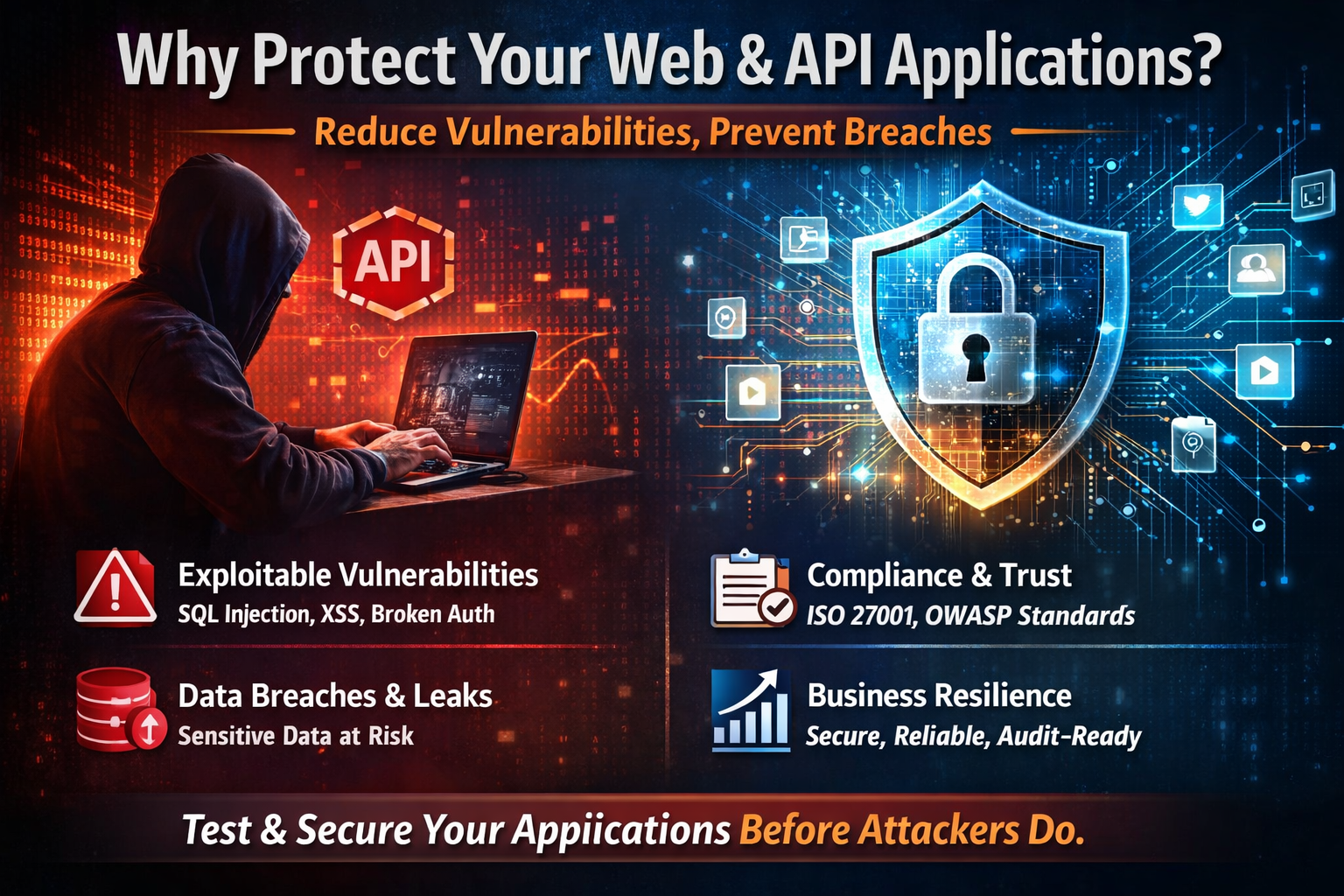
Secure Your Web & API Applications Before Attackers Do: Reduce Vulnerabilities, Prevent Breaches with DISC InfoSec
Modern businesses are powered by web applications and APIs—but they are also the primary entry points for cyberattacks. APIs expose critical data, services, and backend systems, making them highly attractive targets for attackers exploiting weaknesses like broken authentication, injection flaws, and misconfigurations. Without proactive testing, these vulnerabilities remain hidden—until they are exploited in a breach.
At DISC InfoSec, we help organizations take control of this growing risk through comprehensive Application Security Testing (AST) across web and API platforms. Our approach is designed to uncover real-world vulnerabilities before attackers do—protecting your applications, data, and business operations from evolving threats.
Our methodology combines vulnerability assessments, penetration testing, and automated scanning to deliver deep visibility into your application security posture. By simulating real-world attack scenarios, we identify critical weaknesses such as SQL injection, cross-site scripting (XSS), insecure endpoints, and authentication flaws—ensuring nothing is left exposed.
We go beyond one-time testing by enabling continuous security throughout your development lifecycle. Integrated into DevSecOps and CI/CD pipelines, our testing helps detect vulnerabilities early—when they are faster and cheaper to fix—reducing the overall attack surface and preventing costly breaches.
APIs are the backbone of modern digital ecosystems, and securing them is critical to protecting sensitive data. Our API security testing ensures that every endpoint, token, and data exchange is validated and protected—preventing unauthorized access, data leakage, and service disruptions while maintaining customer trust.
With DISC InfoSec, you also gain a compliance-driven security advantage. Our services align with leading frameworks such as ISO 27001, OWASP Top 10, and regulatory requirements—helping you demonstrate strong security posture, pass audits faster, and build confidence with customers, partners, and stakeholders.
The result is simple: reduced vulnerabilities, minimized breach risk, and stronger business resilience. In a threat landscape where applications are constantly under attack, DISC InfoSec ensures your web and API platforms are not just functional—but secure, compliant, and built to withstand real-world cyber threats.
Perspective:
Protecting applications—especially web and API platforms—is no longer just a technical best practice; it’s a business survival requirement. Modern architectures are API-first, which means your most valuable data and core business logic are constantly exposed to the internet. Every endpoint becomes a potential entry point. If vulnerabilities like broken authentication, injection flaws, or misconfigurations go unchecked, attackers don’t need to “break in”—they simply log in or query your APIs the way they were never intended to be used.
What makes this more critical today is the speed and scale of exploitation. Attackers are heavily automated, continuously scanning for weaknesses across thousands of applications at once. A single overlooked vulnerability in a web form or API endpoint can be discovered and weaponized within hours. Unlike infrastructure attacks, application-layer attacks are harder to detect because they often look like legitimate traffic—making prevention through proactive testing far more effective than relying on detection alone.
From a risk perspective, application vulnerabilities directly translate to data breaches, regulatory exposure, and revenue loss. Whether it’s customer data leakage, unauthorized transactions, or service disruption, the impact goes beyond IT—it affects brand trust, customer retention, and even valuation. In industries moving toward standards like ISO 27001 and secure-by-design principles, application security is becoming a board-level concern, not just a developer responsibility.
My view is simple: if your business runs on applications—and most do—then application security testing must be continuous, not periodic. It needs to be embedded into development (DevSecOps), aligned with risk management, and treated as a core control—not an afterthought. Organizations that do this well don’t just reduce vulnerabilities; they build resilience, accelerate sales cycles, and earn customer trust in a market where security is now a differentiator.

InfoSec services | InfoSec books | Follow our blog | DISC llc is listed on The vCISO Directory | ISO 27k Chat bot | Comprehensive vCISO Services | ISMS Services | AIMS Services | Security Risk Assessment Services | Mergers and Acquisition Security
At DISC InfoSec, we help organizations navigate this landscape by aligning AI risk management, governance, security, and compliance into a single, practical roadmap. Whether you are experimenting with AI or deploying it at scale, we help you choose and operationalize the right frameworks to reduce risk and build trust. Learn more at DISC InfoSec.
- Measure What Matters: Security & AI Readiness Scorecard
- Security Is a People Problem: Culture, Behavior, and Decisions Drive Cyber Resilience
- Security Driven by Business Value: Focus, Prioritize, Protect What Matters Most
- Claude Mythos and the Future of Cybersecurity: Powerful—and Potentially Dangerous
- Hackers at Machine Speed: The AI Cybersecurity Reality





