
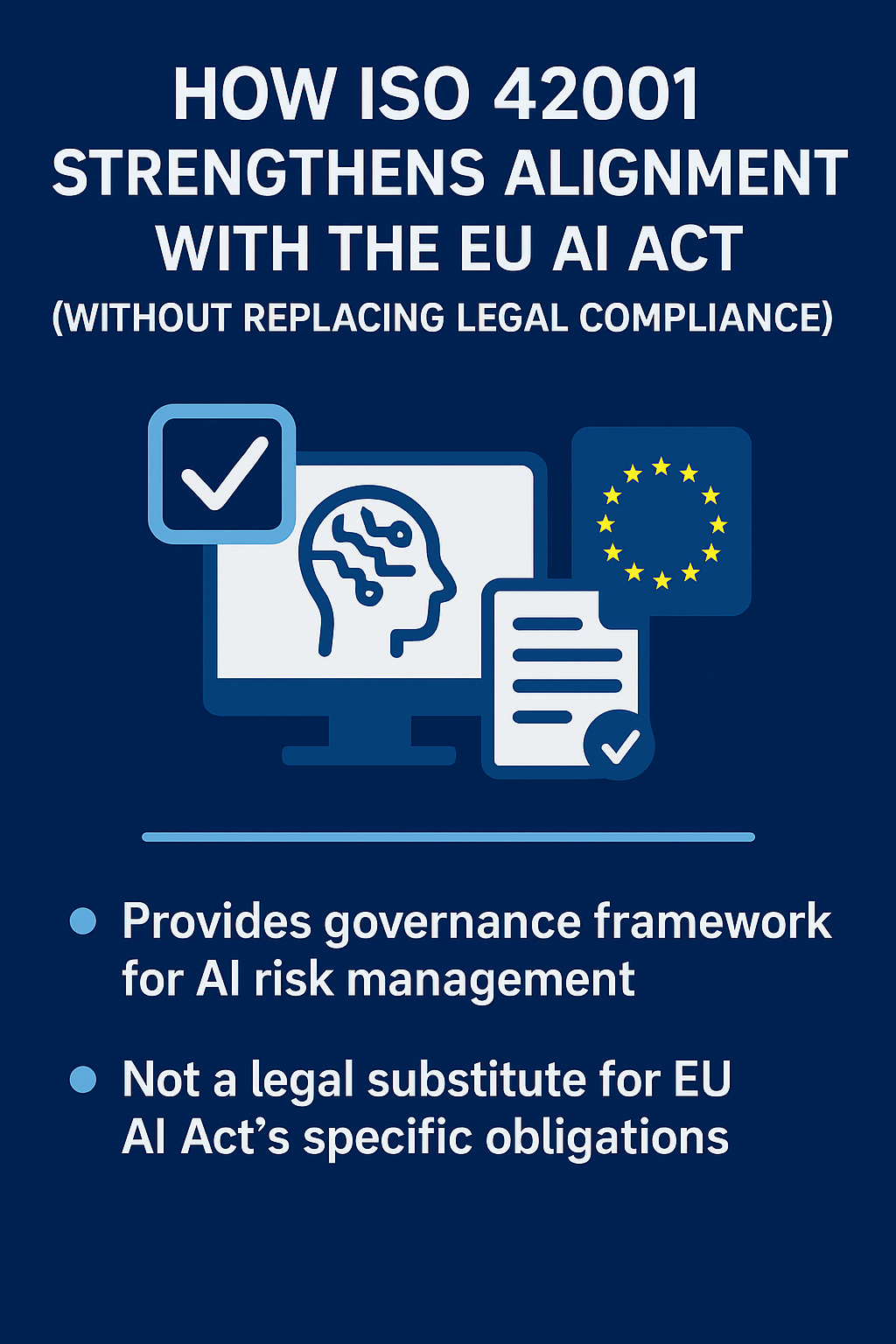
— What ISO 42001 Is and Its Purpose
ISO 42001 is a new international standard for AI governance and management systems designed to help organizations systematically manage AI-related risks and regulatory requirements. Rather than acting as a simple checklist, it sets up an ongoing framework for defining obligations, understanding how AI systems are used, and establishing controls that fit an organization’s specific risk profile. This structure resembles other ISO management system standards (such as ISO 27001) but focuses on AI’s unique challenges.
— ISO 42001’s Role in Structured Governance
At its core, ISO 42001 helps organizations build consistent AI governance practices. It encourages comprehensive documentation, clear roles and responsibilities, and formalized oversight—essentials for accountable AI development and deployment. This structured approach aligns with the EU AI Act’s broader principles, which emphasize accountability, transparency, and risk-based management of AI systems.
— Documentation and Risk Management Synergies
Both ISO 42001 and the EU AI Act call for thorough risk assessments, lifecycle documentation, and ongoing monitoring of AI systems. Implementing ISO 42001 can make it easier to maintain records of design choices, testing results, performance evaluations, and risk controls, which supports regulatory reviews and audits. This not only creates a stronger compliance posture but also prepares organizations to respond with evidence if regulators request proof of due diligence.
— Complementary Ethical and Operational Practices
ISO 42001 embeds ethical principles—such as fairness, non-discrimination, and human oversight—into the organizational governance culture. These values closely match the normative goals of the EU AI Act, which seeks to prevent harm and bias from AI systems. By internalizing these principles at the management level, organizations can more coherently translate ethical obligations into operational policies and practices that regulators expect.
— Not a Legal Substitute for Compliance Obligations
Importantly, ISO 42001 is not a legal guarantee of EU AI Act compliance on its own. The standard remains voluntary and, as of now, is not formally harmonized under the AI Act, meaning certification does not automatically confer “presumption of conformity.” The Act includes highly specific requirements—such as risk class registration, mandated reporting timelines, and prohibitions on certain AI uses—that ISO 42001’s management-system focus does not directly satisfy. ISO 42001 provides the infrastructure for strong governance, but organizations must still execute legal compliance activities in parallel to meet the letter of the law.
— Practical Benefits Beyond Compliance
Even though it isn’t a standalone compliance passport, adopting ISO 42001 offers many practical benefits. It can streamline internal AI governance, improve audit readiness, support integration with other ISO standards (like security and quality), and enhance stakeholder confidence in AI practices. Organizations that embed ISO 42001 can reduce risk of missteps, build stronger evidence trails, and align cross-functional teams for both ethical practice and regulatory readiness.
My Opinion
ISO 42001 is a valuable foundation for AI governance and a strong enabler of EU AI Act compliance—but it should be treated as the starting point, not the finish line. It helps organizations build structured processes, risk awareness, and ethical controls that align with regulatory expectations. However, because the EU AI Act’s requirements are detailed and legally enforceable, organizations must still map ISO-level controls to specific Act obligations, maintain live evidence, and fulfill procedural legal demands beyond what ISO 42001 specifies. In practice, using ISO 42001 as a governance backbone plus tailored compliance activities is the most pragmatic and defensible approach.
Emerging Tools & Frameworks for AI Governance & Security Testing
Free ISO 42001 Compliance Checklist: Assess Your AI Governance Readiness in 10 Minutes
AI Governance Tools: Essential Infrastructure for Responsible AI
Bridging the AI Governance Gap: How to Assess Your Current Compliance Framework Against ISO 42001
ISO 27001 Certified? You’re Missing 47 AI Controls That Auditors Are Now Flagging
Understanding Your AI System’s Risk Level: A Guide to EU AI Act Compliance
Building an Effective AI Risk Assessment Process
ISO/IEC 42001: The New Blueprint for Trustworthy and Responsible AI Governance
AI Governance Gap Assessment tool
How ISO 42001 & ISO 27001 Overlap for AI: Lessons from a Security Breach
ISO 42001:2023 Control Gap Assessment – Your Roadmap to Responsible AI Governance
InfoSec services | InfoSec books | Follow our blog | DISC llc is listed on The vCISO Directory | ISO 27k Chat bot | Comprehensive vCISO Services | ISMS Services | Security Risk Assessment Services | Mergers and Acquisition Security




December 30th, 2025 11:07 am
[…] How ISO 42001 Strengthens Alignment With the EU AI Act (Without Replacing Legal Compliance) […]