Evolution of Agentic AI
1. Machine Learning
Machine Learning represents the foundation of modern AI, focused on learning patterns from structured data to make predictions or classifications. Techniques such as regression, decision trees, support vector machines, and basic neural networks enable systems to automate well-defined tasks like forecasting, anomaly detection, and image or object recognition. These systems are effective but largely reactive—they operate within fixed boundaries and lack reasoning or adaptability beyond their training data.
2. Neural Networks
Neural Networks expand on traditional machine learning by enabling deeper pattern recognition through layered architectures. Convolutional and recurrent neural networks power image recognition, speech processing, and sequential data analysis. Capabilities such as deep reinforcement learning allow systems to improve through feedback, but decision-making is still task-specific and opaque, with limited ability to explain reasoning or generalize across domains.
3. Large Language Models (LLMs)
Large Language Models introduce reasoning, language understanding, and contextual awareness at scale. Built on transformer architectures and self-attention mechanisms, models like GPT enable in-context learning, chain-of-thought reasoning, and natural language interaction. LLMs can synthesize knowledge, generate code, retrieve information, and support complex workflows, marking a shift from pattern recognition to generalized cognitive assistance.
4. Generative AI
Generative AI extends LLMs beyond text into multimodal creation, including images, video, audio, and code. Capabilities such as diffusion models, retrieval-augmented generation, and multimodal understanding allow systems to generate realistic content and integrate external knowledge sources. These models support automation, creativity, and decision support but still rely on human direction and lack autonomy in planning or execution.
5. Agentic AI
Agentic AI represents the transition from AI as a tool to AI as an autonomous actor. These systems can decompose goals, plan actions, select and orchestrate tools, collaborate with other agents, and adapt based on feedback. Features such as memory, state persistence, self-reflection, human-in-the-loop oversight, and safety guardrails enable agents to operate over time and across complex environments. Agentic AI is less about completing individual tasks and more about coordinating context, tools, and decisions to achieve outcomes.
Key Takeaway
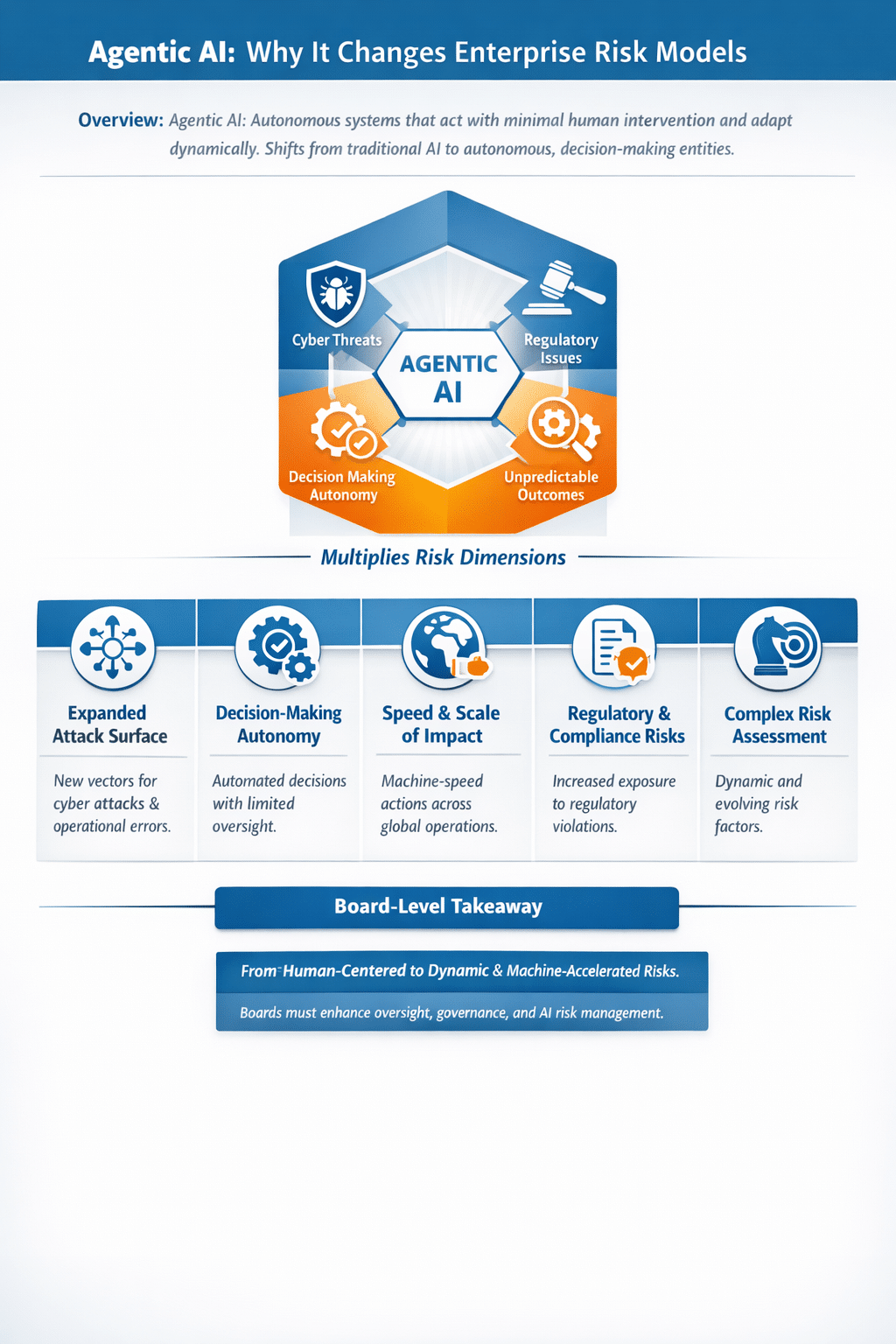
The evolution toward Agentic AI is not a single leap but a layered progression—from learning patterns, to reasoning, to generating content, and finally to autonomous action. As organizations adopt agentic systems, governance, risk management, and human oversight become just as critical as technical capability.
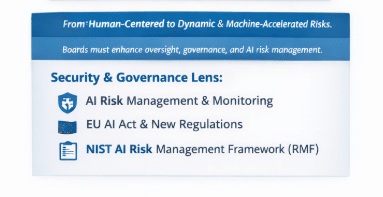
Security and governance lens (AI risk, EU AI Act, NIST AI RMF)
InfoSec services | InfoSec books | Follow our blog | DISC llc is listed on The vCISO Directory | ISO 27k Chat bot | Comprehensive vCISO Services | ISMS Services | AIMS Services | Security Risk Assessment Services | Mergers and Acquisition Security
At DISC InfoSec, we help organizations navigate this landscape by aligning AI risk management, governance, security, and compliance into a single, practical roadmap. Whether you are experimenting with AI or deploying it at scale, we help you choose and operationalize the right frameworks to reduce risk and build trust. Learn more at DISC InfoSec.
- From Risk to Resilience: A 5-Step Playbook for Securing AI in the Modern Threat Era
- Which AI Governance Framework Should You Adopt First? A Practical Guide for U.S., EU, and Global Organizations
- MITRE ATT&CK: Turning Blind Spots into Real-World Cyber Defense
- When AI Hacks Faster Than Humans: The Coming Collapse of Traditional Cybersecurity Value
- SOC 2 Isn’t Enough: Moving Beyond Compliance Theater to Real Risk Management