The Rise of the AI-Native Consulting Model
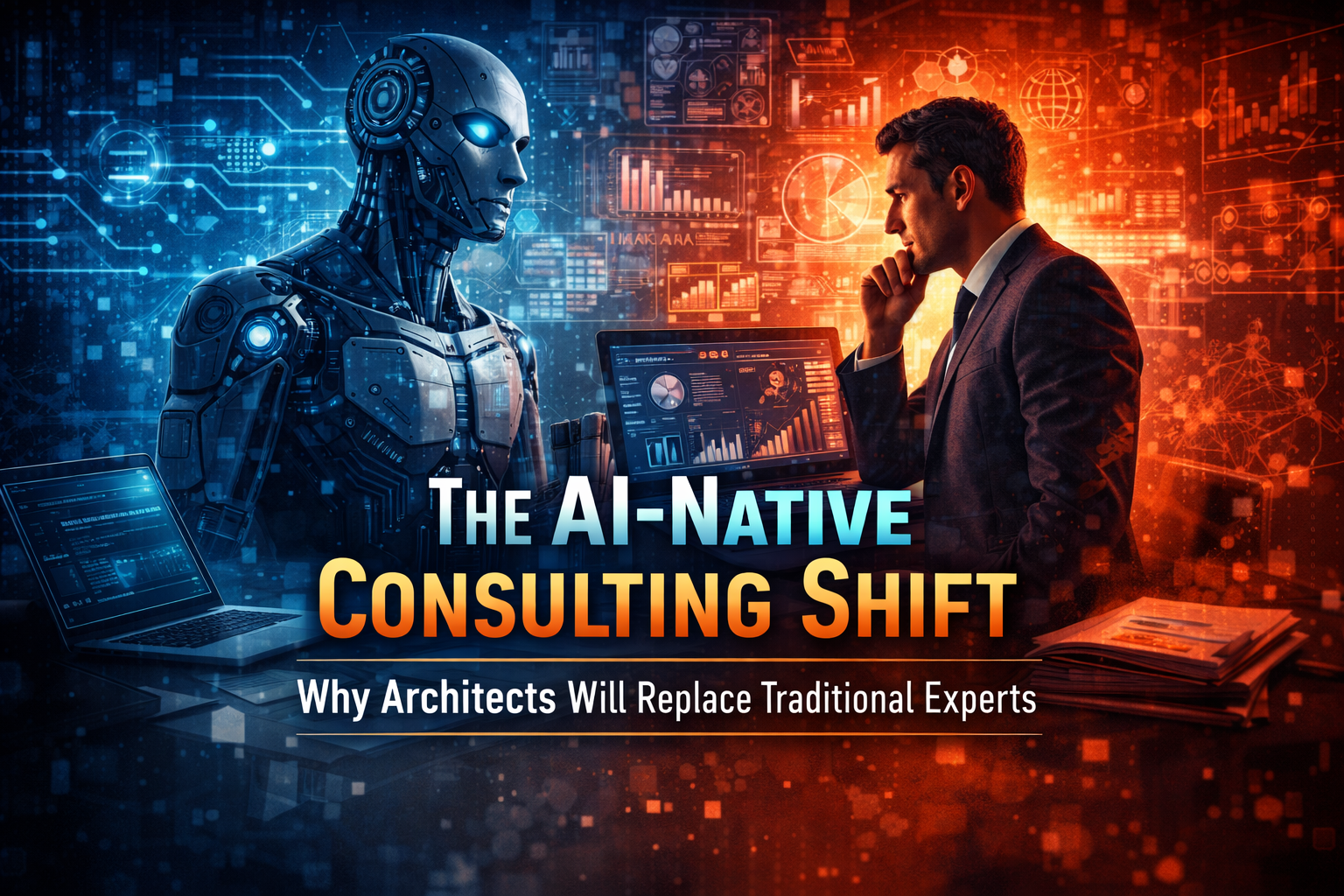
The consulting industry is experiencing a structural shock. Work that once took seasoned consultants weeks—market analysis, competitive research, strategy modeling, and slide creation—can now be completed by AI in minutes. This isn’t a marginal efficiency gain; it’s a fundamental change in how value is produced. The immediate reaction is fear of obsolescence, but the deeper reality is transformation, not extinction.
What’s breaking down is the traditional consulting model built on billable hours, junior-heavy execution, and the myth of exclusive expertise. Large firms are already acknowledging a “scaling imperative,” where AI absorbs the repetitive, research-heavy work that once justified armies of analysts. Clients are no longer paying for effort or time spent—they’re paying for outcomes.
At the same time, a new role is emerging. Consultants are shifting from “doers” to designers—architects of human-machine systems. The value is no longer in producing analysis, but in orchestrating how AI, data, people, and decisions come together. Expertise is being redefined from “knowing more” to “designing better collaboration between humans and machines.”
Despite AI’s power, there are critical capabilities it cannot automate. Navigating organizational politics, aligning stakeholders with competing incentives, and sensing resistance or fear inside teams remain deeply human skills. AI can model scenarios and probabilities, but it cannot judge whether a 75% likelihood of success is acceptable when a company’s survival or reputation is at stake.
This reframes how consultants should think about future-proofing their careers. Learning to code or trying to out-analyze AI misses the point. The competitive edge lies in governance design, ethical oversight, organizational change, and decision accountability—areas where AI must be guided, constrained, and supervised by humans.
The market signal is already clear: within the next 18–24 months, AI-driven analysis will be table stakes. Clients will expect outcome-based pricing, embedded AI usage, and clear governance models. Consultants who fail to reposition will be seen as expensive intermediaries between clients and tools they could run themselves.
My perspective: The “AI-Native Consulting Model” is not about replacing consultants with machines—it’s about elevating the role of the consultant. The future belongs to those who can design systems, govern AI behavior, and take responsibility for decisions AI cannot own. Consultants won’t disappear, but the ones who survive will look far more like architects, stewards, and trusted decision partners than traditional experts delivering decks.

InfoSec services | InfoSec books | Follow our blog | DISC llc is listed on The vCISO Directory | ISO 27k Chat bot | Comprehensive vCISO Services | ISMS Services | AIMS Services | Security Risk Assessment Services | Mergers and Acquisition Security
At DISC InfoSec, we help organizations navigate this landscape by aligning AI risk management, governance, security, and compliance into a single, practical roadmap. Whether you are experimenting with AI or deploying it at scale, we help you choose and operationalize the right frameworks to reduce risk and build trust. Learn more at DISC InfoSec.
- AI-Accelerated Offense: Why Security Programs Must Move Now, Not Later
- AI Governance Explained: Accountability, Trust, and Control in the Age of AI
- Measure What Matters: Security & AI Readiness Scorecard
- Security Is a People Problem: Culture, Behavior, and Decisions Drive Cyber Resilience
- Security Driven by Business Value: Focus, Prioritize, Protect What Matters Most