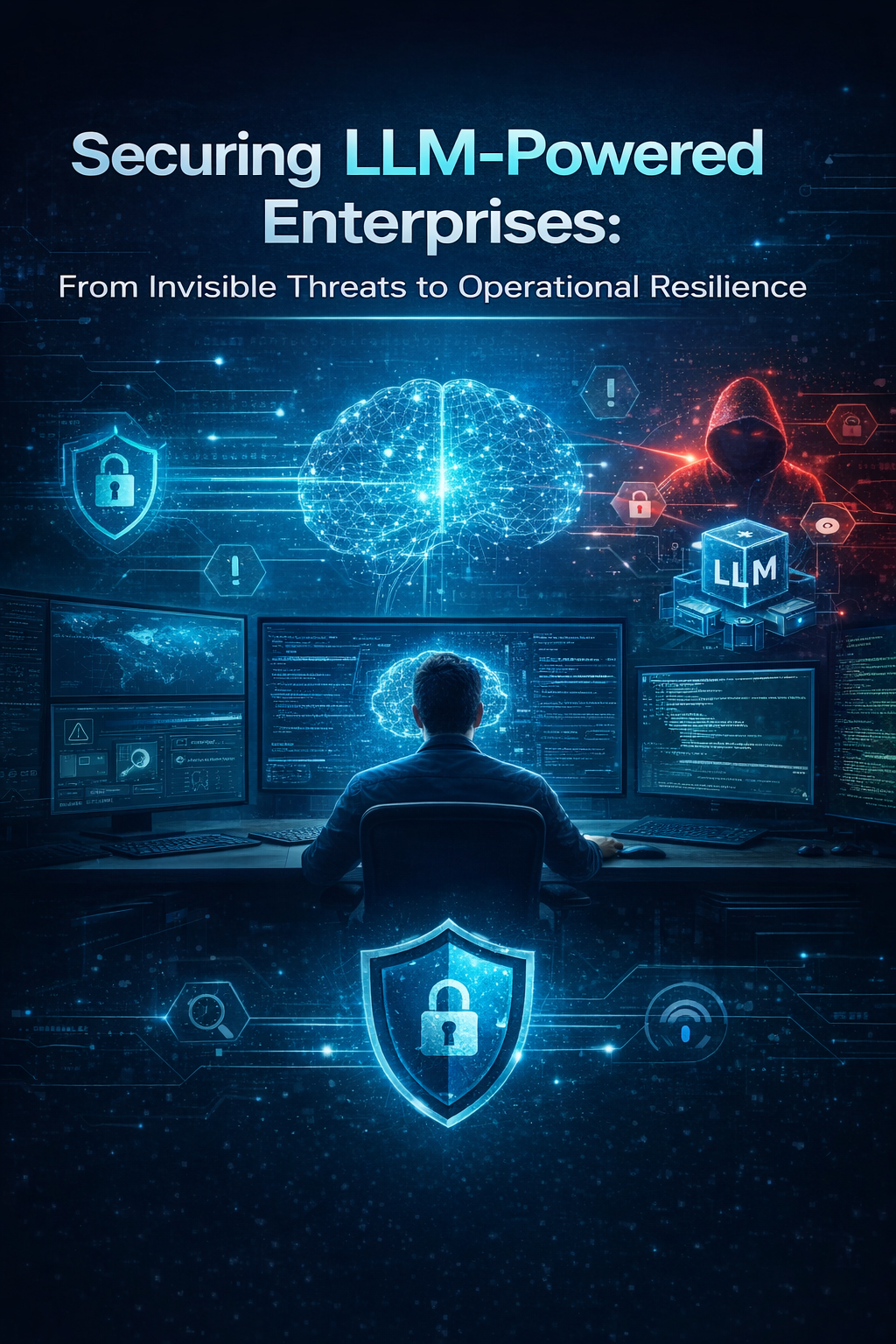
Protecting an organization that relies heavily on LLMs starts with a mindset shift: you’re no longer just securing systems—you’re securing behavior. LLMs are probabilistic, adaptive, and highly dependent on data, which means traditional security controls alone are not enough. You need to understand how these systems think, fail, and can be manipulated.
The first step is visibility. You need a complete inventory of where LLMs are used—customer support, code generation, internal tools—and what data they interact with. Without this, you’re operating blind, and blind spots are where attackers thrive.
Next is data governance. Since LLMs are only as trustworthy as their inputs, you must control training data, prompt inputs, and output usage. This includes preventing sensitive data leakage, ensuring data integrity, and maintaining clear boundaries between trusted and untrusted inputs.
Attack surface analysis becomes critical. LLMs introduce new vectors like prompt injection, jailbreaks, data poisoning, and model extraction. Each of these requires specific defenses, such as input validation, context isolation, and strict access controls around APIs and model endpoints.
You then need secure architecture design. This means isolating LLMs from critical systems, enforcing least privilege access, and implementing guardrails that constrain what the model can do—especially when connected to tools, databases, or code execution environments.
Testing your defenses requires adopting an adversarial mindset. Red teaming LLMs is essential—simulate real-world attacks like malicious prompts, indirect injections through external data, and attempts to exfiltrate secrets. If you’re not actively trying to break your own system, someone else will.
Monitoring and detection must evolve as well. Traditional logs aren’t enough—you need to monitor prompt/response patterns, anomalies in model behavior, and signs of abuse. This includes detecting subtle manipulation attempts that may not trigger conventional alerts.
Incident response for LLMs is another new frontier. You need playbooks for scenarios like model misuse, data leakage, or harmful outputs. This includes the ability to quickly disable features, roll back models, and communicate risks to stakeholders.
Governance and compliance tie it all together. Frameworks like AI risk management and emerging standards help ensure accountability, auditability, and alignment with regulations. This is especially important as AI becomes embedded in business-critical operations.
Finally, resilience is the goal. You won’t prevent every attack—but you can design systems that limit impact and recover quickly. This includes fallback mechanisms, human-in-the-loop controls, and continuous improvement based on lessons learned.
Perspective:
LLM security isn’t just a technical challenge—it’s an operational one. The biggest mistake organizations make is treating AI like traditional software. It’s not. It’s dynamic, opaque, and constantly evolving. The winners in this space will be those who embrace continuous validation, adversarial thinking, and governance by design. In a world where AI drives decisions at scale, security is no longer about preventing failure—it’s about containing it before it becomes systemic risk.

InfoSec services | InfoSec books | Follow our blog | DISC llc is listed on The vCISO Directory | ISO 27k Chat bot | Comprehensive vCISO Services | ISMS Services | AIMS Services | Security Risk Assessment Services | Mergers and Acquisition Security
Is your AI strategy truly audit-ready today?
AI governance is no longer optional. Frameworks like ISO/IEC 42001 AI Management System Standard and regulations such as the EU AI Act are rapidly reshaping compliance expectations for organizations using AI.
DISC InfoSec brings deep expertise across AI, cybersecurity, and regulatory compliance to help you build trust, reduce risk, and stay ahead of evolving mandates—with a proven track record of success.
Ready to lead with confidence? Let’s start the conversation.
At DISC InfoSec, we help organizations navigate this landscape by aligning AI risk management, governance, security, and compliance into a single, practical roadmap. Whether you are experimenting with AI or deploying it at scale, we help you choose and operationalize the right frameworks to reduce risk and build trust. Learn more at DISC InfoSec.
- Securing LLM-Powered Enterprises: From Invisible Threats to Operational Resilience
- Cyber Resilience Maturity Model: From Reactive Security to Operational Resilience
- From Risk to Resilience: A 5-Step Playbook for Securing AI in the Modern Threat Era
- Which AI Governance Framework Should You Adopt First? A Practical Guide for U.S., EU, and Global Organizations
- MITRE ATT&CK: Turning Blind Spots into Real-World Cyber Defense