
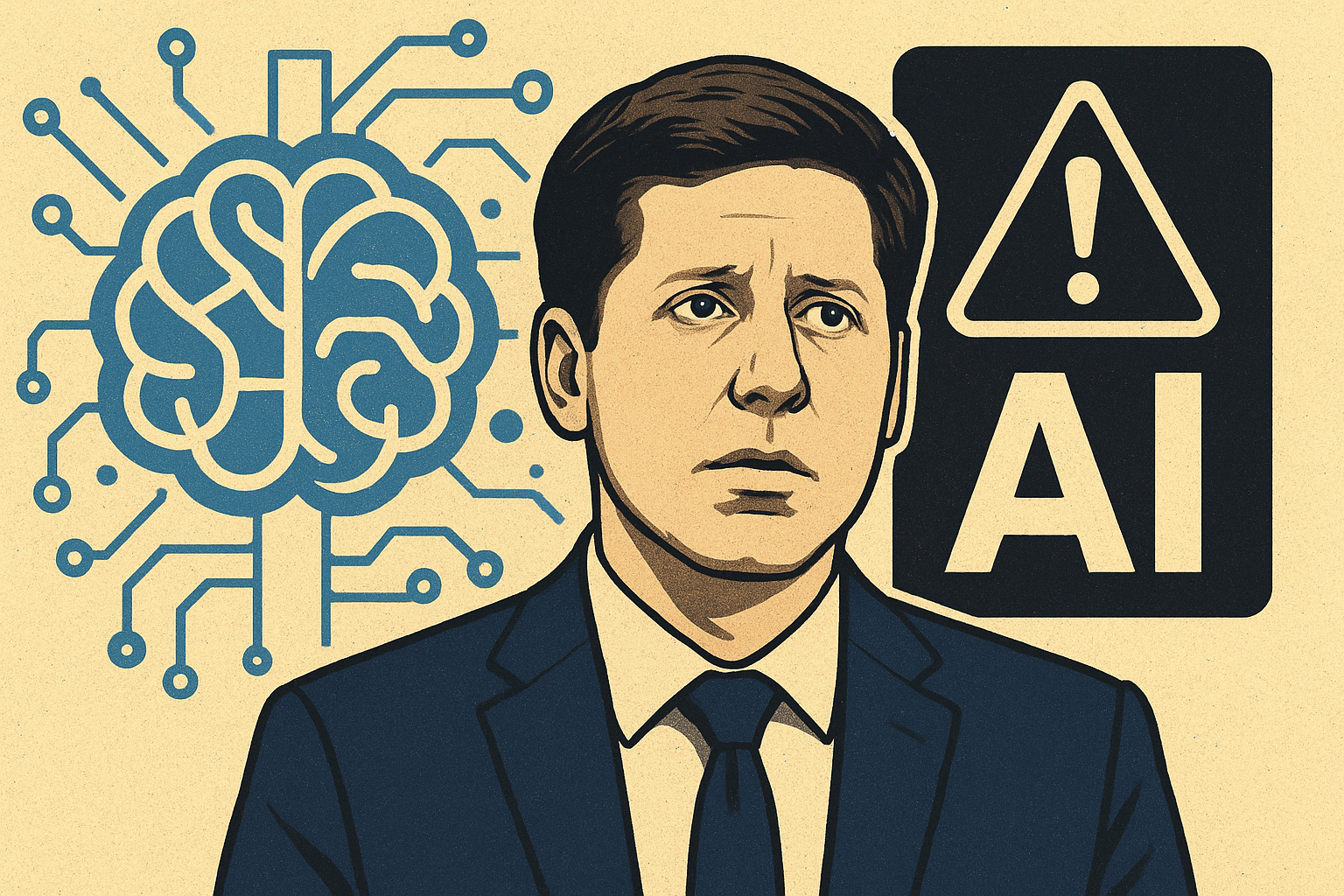
1. Sam Altman — CEO of OpenAI, the company behind ChatGPT — recently issued a sobering warning: he expects “some really bad stuff to happen” as AI technology becomes more powerful.
2. His concern isn’t abstract. He pointed to real‑world examples: advanced tools such as Sora 2 — OpenAI’s own AI video tool — have already enabled the creation of deepfakes. Some of these deepfakes, misusing public‑figure likenesses (including Altman’s own), went viral on social media.
3. According to Altman, these are only early warning signs. He argues that as AI becomes more accessible and widespread, humans and society will need to “co‑evolve” alongside the technology — building not just tech, but the social norms, guardrails, and safety frameworks that can handle it.
4. The risks are multiple: deepfakes could erode public trust in media, fuel misinformation, enable fraud or identity‑related crimes, and disrupt how we consume and interpret information online. The technology’s speed and reach make the hazards more acute.
5. Altman cautioned against overreliance on AI‑based systems for decision-making. He warned that if many users start trusting AI outputs — whether for news, advice, or content — we might reach “societal‑scale” consequences: unpredictable shifts in public opinion, democracy, trust, and collective behavior.
6. Still, despite these grave warnings, Altman dismissed calls for heavy regulatory restrictions on AI’s development and release. Instead, he supports “thorough safety testing,” especially for the most powerful models — arguing that regulation may have unintended consequences or slow beneficial progress.
7. Critics note a contradiction: the same company that warns of catastrophic risks is actively releasing powerful tools like Sora 2 to the public. That raises concerns about whether early release — even in the name of “co‑evolution” — irresponsibly accelerates exposure to harm before adequate safeguards are in place.
8. The bigger picture: what happens now will likely shape how society, law, and norms adapt to AI. If deepfake tools and AI‑driven content become commonplace, we may face a future where “seeing is believing” no longer holds true — and navigating truth vs manipulation becomes far harder.
9. In short: Altman’s warning serves partly as a wake‑up call. He’s not just flagging technical risk — he’s asking society to seriously confront how we consume, trust, and regulate AI‑powered content. At the same time, his company continues to drive that content forward. It’s a tension between innovation and caution — with potentially huge societal implications.
🔎 My Opinion
I think Altman’s public warning is important and overdue — it’s rare to see an industry leader acknowledge the dangers of their own creations so candidly. This sort of transparency helps start vital conversations about ethics, regulation, and social readiness.
That said, I’m concerned that releasing powerful AI capabilities broadly, while simultaneously warning they might cause severe harm, feels contradictory. If companies push ahead with widespread deployment before robust guardrails are tested and widely adopted, we risk exposing society to misinformation, identity fraud, erosion of trust, and social disruption.
Given how fast AI adoption is accelerating — and how high the stakes are — I believe a stronger emphasis on AI governance, transparency, regulation, and public awareness is essential. Innovation should continue, but not at the expense of public safety, trust, and societal stability.
Further reading on this topic
CEO of ChatGPT’s Parent Company: ‘I Expect Some Really Bad Stuff To Happen’-Here’s What He Means
- Top 15 Kali Linux Tools for AI Governance with Use Cases
- Risk Management with GRC platform: Mapping ISO 42001 Clause 6 to AI Governance
- Guardrails for Agentic AI: Security Measures to Prevent Excessive Agency
- AI Security for LLMs: From Prompts to Trust Boundaries
- The Fragility of AI Safety: How One Prompt Can Undo Alignment in Top LLMs
InfoSec services | ISMS Services | AIMS Services | InfoSec books | Follow our blog | DISC llc is listed on The vCISO Directory | ISO 27k Chat bot | Comprehensive vCISO Services | Security Risk Assessment Services | Mergers and Acquisition Security



December 2nd, 2025 3:08 pm
[…] ChatGPT CEO Warns of AI Risks: Balancing Innovation with Societal Safety […]