1. Smart contract security is best understood through real-world experience, where both failures and successes reveal how theoretical risks manifest in production systems. Case studies provide concrete evidence of how design choices, coding practices, and governance decisions directly impact security outcomes in blockchain projects.
2. By examining past incidents, developers and security leaders gain clarity on how vulnerabilities emerge—not only from flawed code, but also from poor assumptions, rushed deployments, and insufficient review processes. These lessons underscore that smart contract security is as much about discipline as it is about technology.
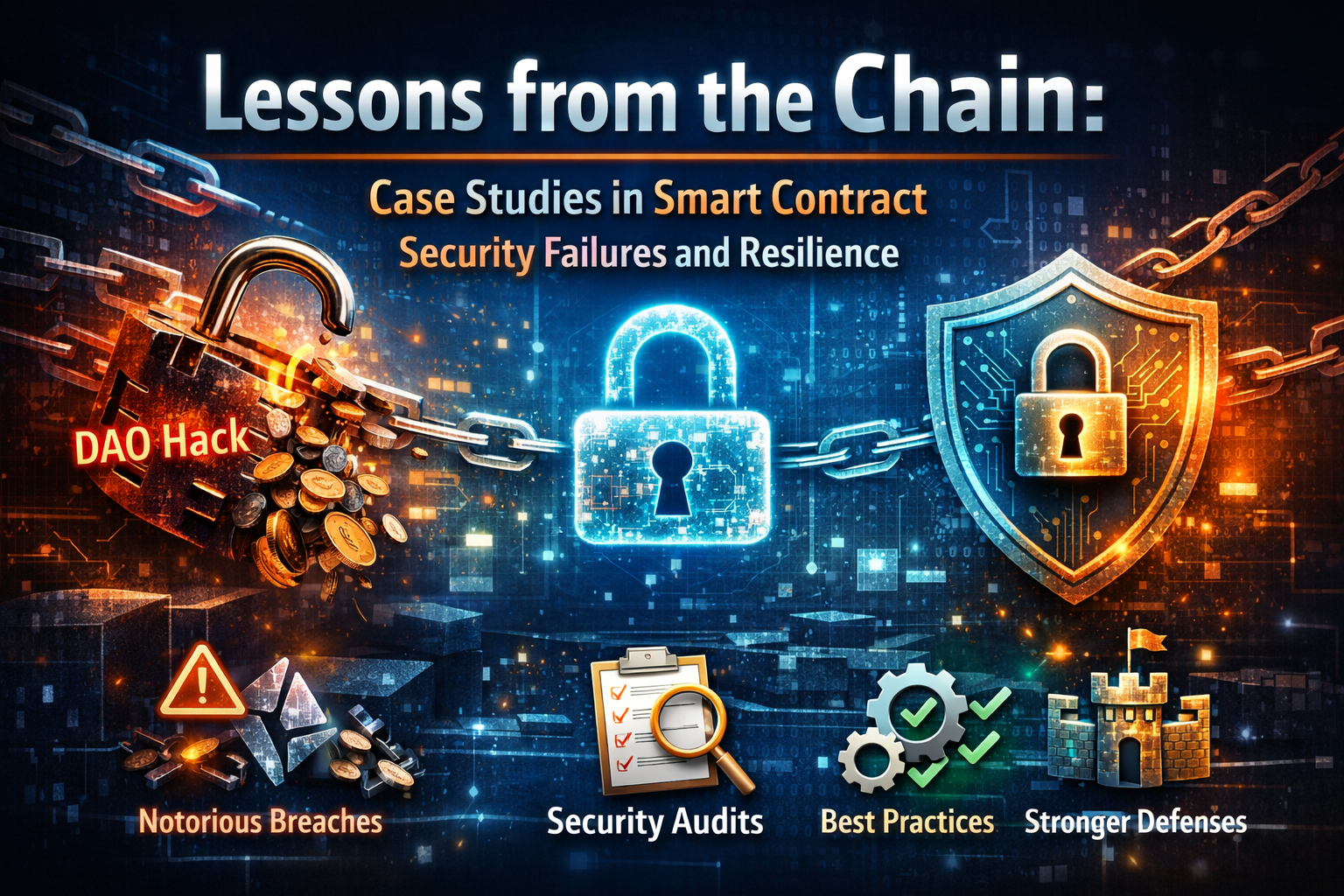
3. High-profile breaches, such as the DAO hack, serve as foundational learning points for the industry. These incidents exposed how subtle logic flaws and unanticipated interactions could be exploited, leading to massive financial losses and long-term reputational damage.
4. Beyond recounting what happened, such case studies break down the technical root causes—reentrancy issues, improper state management, and inadequate access controls—highlighting how oversights at the design stage can cascade into catastrophic failures.
5. A recurring theme across breaches is the absence of rigorous auditing and threat modeling. These events reinforced the necessity of independent security reviews, formal verification, and adversarial thinking before smart contracts are deployed on immutable ledgers.
6. In contrast, this also highlights projects that responded to early failures by fundamentally improving their security posture. These teams embedded security best practices from the outset, demonstrating that proactive design significantly reduces exploitability.
7. Successful implementations show how learning from industry mistakes leads to stronger architectures, including modular contract design, upgrade mechanisms, and clearly defined trust boundaries. Adaptation, rather than avoidance, became the path to resilience.
8. From these collective experiences, industry standards began to emerge. Structured auditing processes, standardized testing frameworks, bug bounty programs, and open collaboration among developers now form the backbone of modern smart contract security practices.
9. The chapter integrates these lessons into actionable guidance, helping readers translate historical insights into practical controls. This synthesis bridges the gap between knowing past failures and preventing future ones in active blockchain projects.
10. Ultimately, these case studies encourage a holistic, security-first mindset. By internalizing both cautionary tales and proven successes, developers and project leaders are empowered to make security an integral part of their development lifecycle, contributing to a safer and more resilient blockchain ecosystem.
It’s a strong and practical piece that strikes a good balance between cautionary lessons and actionable insights. I like that it doesn’t just recount high-profile hacks like the DAO incident but also highlights how teams adapted and improved security practices afterward. That makes it forward-looking, not just retrospective.
The emphasis on embedding security into the development lifecycle is especially important—it moves smart contract security from being an afterthought to a core part of project design. One minor improvement could be adding more concrete examples of modern tools or frameworks (like formal verification tools, auditing platforms, or automated testing suites) to make the guidance even more actionable.
Overall, it’s informative for developers, project managers, and even executives looking to understand blockchain risks, and it effectively encourages a proactive, security-first mindset.
InfoSec services | InfoSec books | Follow our blog | DISC llc is listed on The vCISO Directory | ISO 27k Chat bot | Comprehensive vCISO Services | ISMS Services | AIMS Services | Security Risk Assessment Services | Mergers and Acquisition Security
At DISC InfoSec, we help organizations navigate this landscape by aligning AI risk management, governance, security, and compliance into a single, practical roadmap. Whether you are experimenting with AI or deploying it at scale, we help you choose and operationalize the right frameworks to reduce risk and build trust. Learn more at DISC InfoSec.
- Securing LLM-Powered Enterprises: From Invisible Threats to Operational Resilience
- Cyber Resilience Maturity Model: From Reactive Security to Operational Resilience
- From Risk to Resilience: A 5-Step Playbook for Securing AI in the Modern Threat Era
- Which AI Governance Framework Should You Adopt First? A Practical Guide for U.S., EU, and Global Organizations
- MITRE ATT&CK: Turning Blind Spots into Real-World Cyber Defense