Many small and medium businesses are attractive targets for cybercriminals because they hold valuable data and often lack extensive IT resources. Threats like ransomware, phishing and business email compromise can disrupt operations, damage reputation, and cause financial loss. Recognizing that no business is too small to be targeted is the first step toward protection.
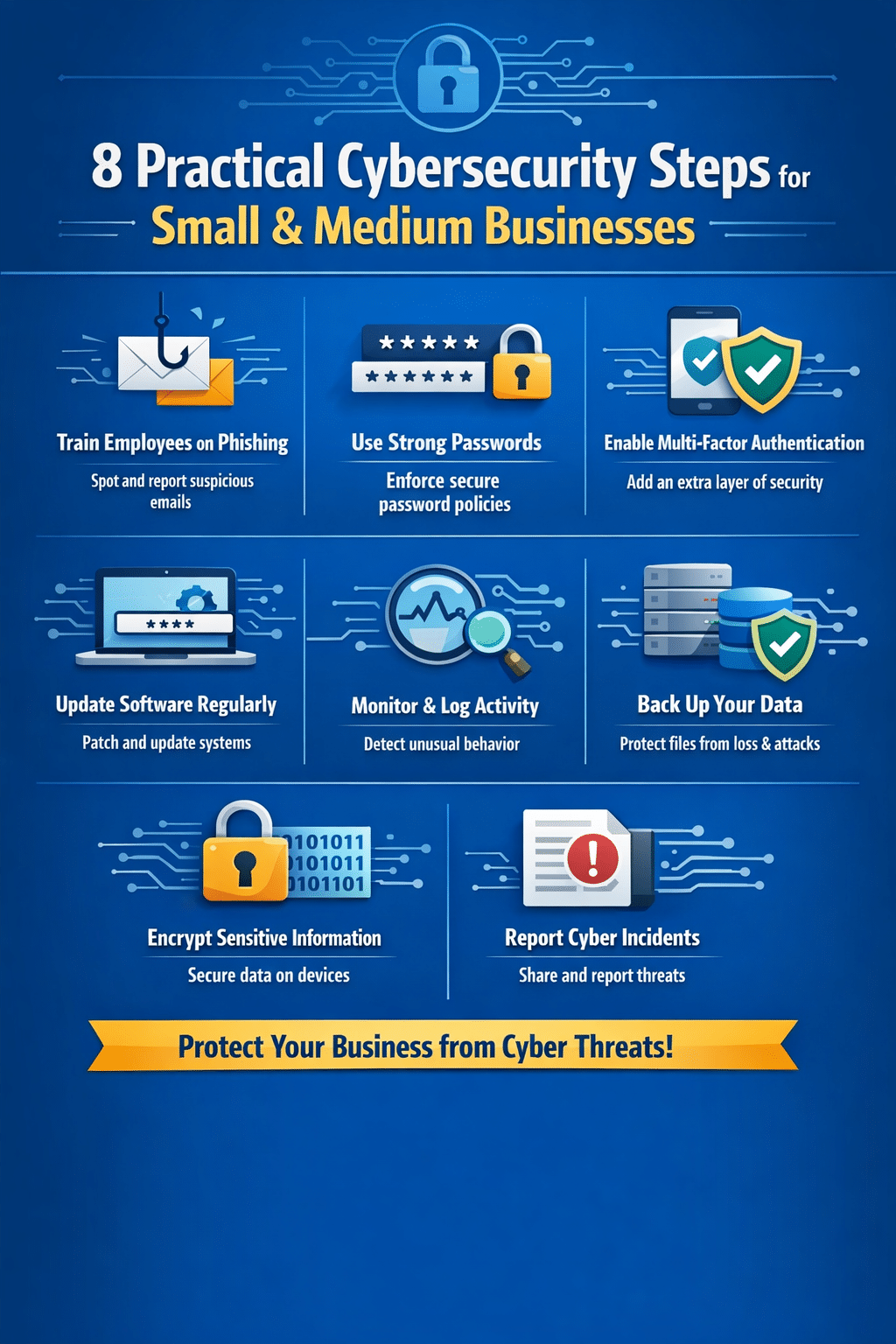
1. Teach employees to recognize and report phishing attacks. Phishing is one of the primary ways attackers gain access. Regular awareness training helps staff spot suspicious emails, links, and requests, reducing the chance that a click triggers a breach.
2. Require strong passwords across your organization. Weak or reused passwords are easily guessed or brute-forced. Establish a strong password policy and consider tools like password managers so employees can securely store unique credentials.
3. Implement multifactor authentication (MFA). Adding MFA means users must provide more than just a password to access accounts. This extra layer of verification dramatically reduces the odds that attackers can impersonate employees, even if they obtain a password.
4. Keep systems and software up to date. Outdated software often contains known security flaws that attackers exploit. Having regular patching schedules and enabling automatic updates wherever possible keeps your systems protected against many common vulnerabilities.
5. Enable logging and monitoring. Logging system activity gives you visibility into what’s happening on your network. Monitoring logs helps detect suspicious behavior early, so you can respond before an incident becomes a major breach.
6. Back up your business data regularly. Ransomware and other failures can cripple operations if you can’t access critical files. Maintain backups following a reliable strategy—such as the 3-2-1 rule—to ensure you can restore data quickly and resume business functions.
7. Encrypt sensitive data and devices. Encryption transforms your data into unreadable code for anyone without access keys. Applying encryption to data at rest and in transit helps protect information even if a device is lost or a system is compromised.
8. Report cyber incidents and share threat information. If an incident occurs, reporting it to agencies like CISA helps the broader business community stay informed about emerging threats and may provide access to additional guidance or alerts.
Taken together, these steps create a practical cybersecurity foundation for your business. Start with basics like employee training and MFA, then build up to backups, encryption, and incident reporting to strengthen your resiliency against evolving threats.
Source: You Can Protect Your Business from Online Threats (CISA)
InfoSec services | InfoSec books | Follow our blog | DISC llc is listed on The vCISO Directory | ISO 27k Chat bot | Comprehensive vCISO Services | ISMS Services | AIMS Services | Security Risk Assessment Services | Mergers and Acquisition Security
- MITRE ATT&CK: Turning Blind Spots into Real-World Cyber Defense
- When AI Hacks Faster Than Humans: The Coming Collapse of Traditional Cybersecurity Value
- SOC 2 Isn’t Enough: Moving Beyond Compliance Theater to Real Risk Management
- When AI Becomes the Attack Surface: Lessons from the McKinsey Lilli Incident
- Why Every Company Needs a CISO (or at Least vCISO-Level Leadership)