Zero Trust is often misunderstood in cybersecurity discussions. Many assume it means trusting no one at all or treating every user as a threat. In reality, its purpose is much simpler and more practical: replacing assumptions with explicit decisions.
Traditional enterprise environments tend to accumulate trust over time. Networks become flatter, exceptions pile up, and access grows because legacy processes are rarely revisited. What once made sense eventually becomes risk through inertia.
Zero Trust challenges this pattern by forcing deliberate thinking. Instead of default access, organizations are encouraged to clearly define who needs access, from where they should connect, under what conditions access is granted, and how long it should last.
This shift brings unexpected benefits. When applied correctly, Zero Trust can actually reduce complexity. Access rules become clearer, security decisions are easier to justify, and audits are smoother because intent is documented rather than assumed.
The hardest parts of Zero Trust are rarely technical. Tools can enable it, but they don’t define it. The real challenges lie in ownership, alignment across teams, and having shared clarity on access decisions.
Without organizational buy-in, Zero Trust initiatives often stall or become checkbox exercises. With it, the approach integrates naturally into daily operations.
Ultimately, Zero Trust works best when it’s treated as an architectural mindset, not a product to be purchased. When organizations think this way, Zero Trust becomes sustainable and effective rather than complex and fragile.
My opinion: Zero Trust is one of the few security concepts that actually improves both security and operational clarity when done right.
In practice, I’ve seen Zero Trust succeed not because of sophisticated tools, but because it forces organizations to confront uncomfortable questions about access, ownership, and accountability. That discipline alone eliminates a surprising amount of hidden risk. When teams can clearly explain why someone has access, security stops being reactive and becomes intentional.
Where Zero Trust fails is when it’s treated as a vendor-driven initiative or a network-only problem. Slapping a “Zero Trust” label on identity tools or segmentation projects without changing decision-making habits just recreates old trust models with new technology.
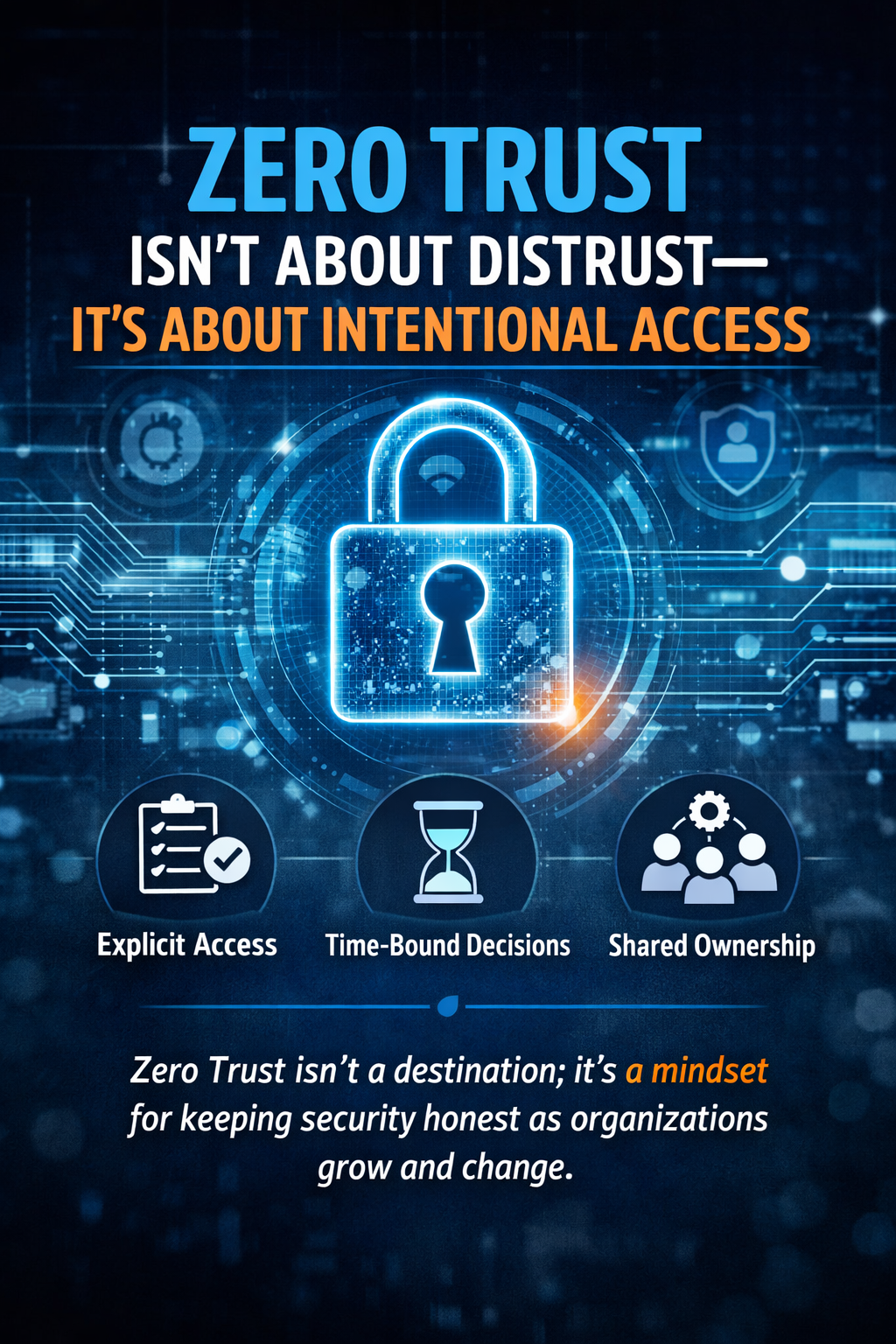
When leaders embrace Zero Trust as a mindset—explicit access, time-bound decisions, and shared ownership—it scales well and ages gracefully. In that sense, Zero Trust isn’t a destination; it’s a way to keep security architecture honest as organizations grow and change.
Agentic AI + Zero Trust: A Guide for Business Leaders
InfoSec services | InfoSec books | Follow our blog | DISC llc is listed on The vCISO Directory | ISO 27k Chat bot | Comprehensive vCISO Services | ISMS Services | AIMS Services | Security Risk Assessment Services | Mergers and Acquisition Security
At DISC InfoSec, we help organizations navigate this landscape by aligning AI risk management, governance, security, and compliance into a single, practical roadmap. Whether you are experimenting with AI or deploying it at scale, we help you choose and operationalize the right frameworks to reduce risk and build trust. Learn more at DISC InfoSec.
- When AI Hacks Faster Than Humans: The Coming Collapse of Traditional Cybersecurity Value
- SOC 2 Isn’t Enough: Moving Beyond Compliance Theater to Real Risk Management
- When AI Becomes the Attack Surface: Lessons from the McKinsey Lilli Incident
- Why Every Company Needs a CISO (or at Least vCISO-Level Leadership)
- How ISO 27001 Lead Auditors Should Evaluate AI Risks in an ISMS